

 HOME
HOME PRODUCT CENTER
 ABOUT US
 DOWNLOAD CENTER
 SUPPORT CENTER
 SUBSCRIBE
 BLOG
BLOGDTF Printer Exhaust Systems Explained
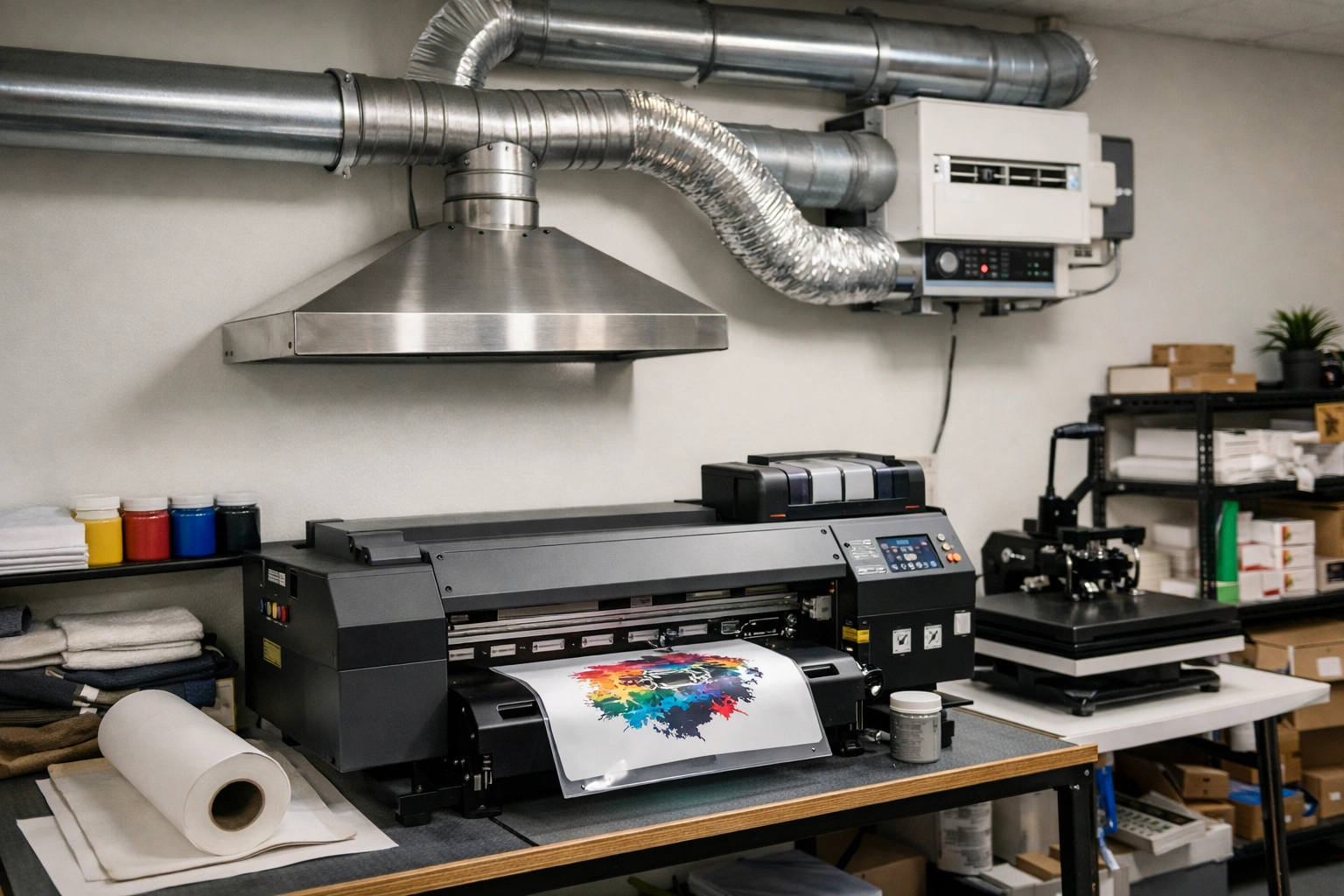
The Direct to Film (DTF) printing industry has grown rapidly over the past few years, becoming a preferred solution for custom apparel, promotional products, and small-to-medium printing businesses. DTF printing is valued for its ability to produce vibrant colors, sharp details, and durable prints on a wide range of fabrics. However, as DTF technology continues to evolve, many print operators focus primarily on printers, inks, and heat presses—often overlooking a critical part of the setup: the exhaust and ventilation system.
A DTF printer exhaust system plays a vital role in maintaining a safe, efficient, and professional printing environment. During the DTF process, inks, adhesives, powders, and curing stages can release fumes, fine particles, and heat into the surrounding air. Without proper ventilation, these by-products can negatively impact worker health, reduce equipment lifespan, and compromise print quality.
This article provides an in-depth, practical guide to DTF printer exhaust systems. You will learn what they are, why ventilation matters, how exhaust systems work, key components to look for, installation best practices, maintenance tips, and long-term benefits. Whether you operate a small home-based setup or a commercial printing facility, understanding exhaust systems is essential for building a sustainable and compliant DTF printing operation.
What Is a DTF Printer?
A DTF printer is a digital printing machine designed to print designs onto a special PET film rather than directly onto fabric. The printed design is coated with adhesive powder and then cured using heat. Once cured, the film can be transferred onto textiles using a heat press, creating a strong and long-lasting bond.
The DTF process typically involves the following steps:
Printing the design onto a DTF film using water-based pigment inks
Applying hot-melt adhesive powder to the printed area
Curing the adhesive using a heat source
Transferring the design onto fabric using a heat press
While this workflow is efficient and versatile, it also generates fumes, airborne particles, and heat—especially during powder curing and ink drying. This is where a properly designed exhaust system becomes essential.
Understanding DTF Printer Exhaust Systems
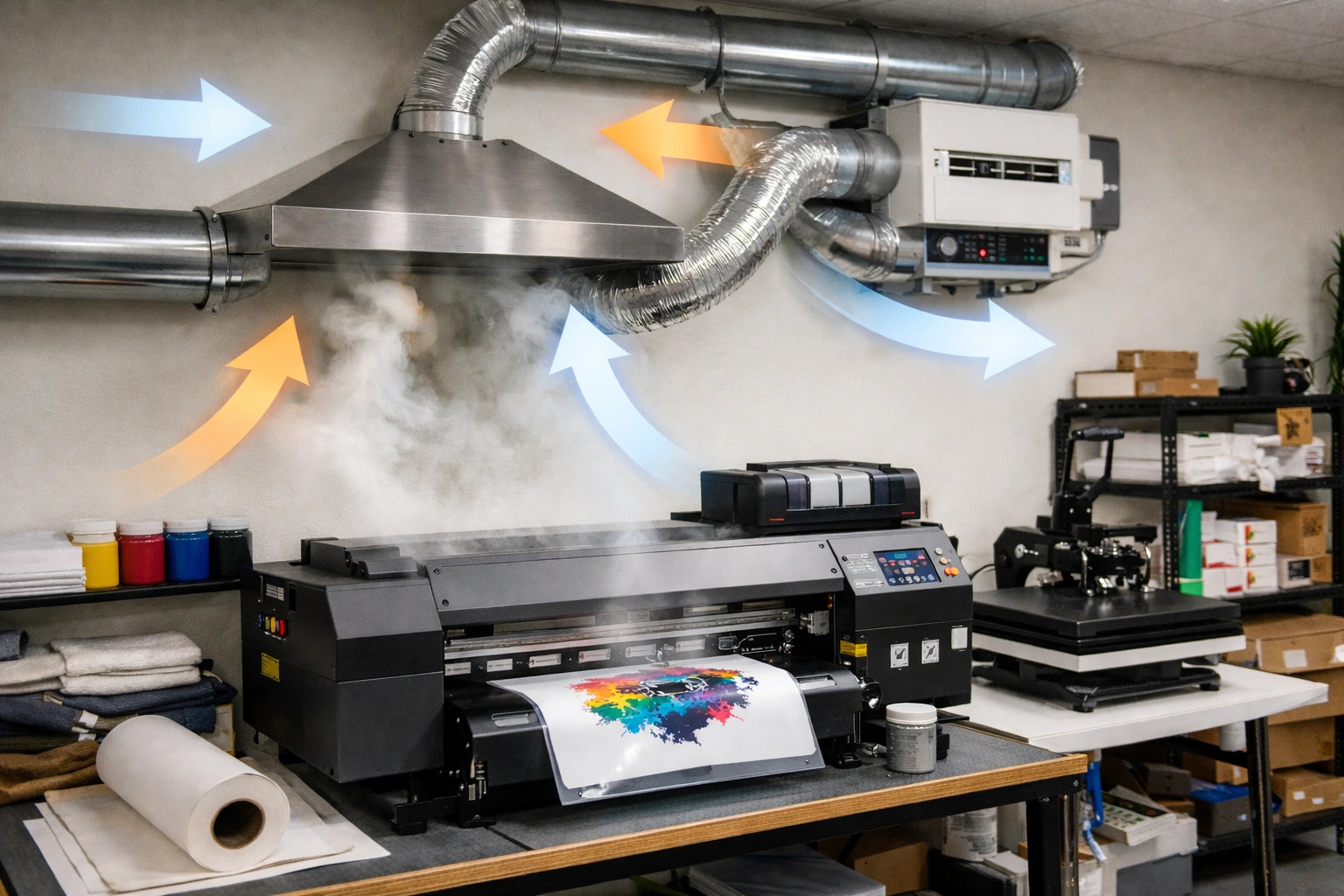
A DTF printer exhaust system is designed to remove contaminated air from the printing area and replace it with clean, fresh air. The system captures fumes, fine dust particles, excess heat, and odors produced during the printing and curing processes and safely expels them outside or filters them before recirculation.
Unlike general room ventilation, a dedicated exhaust system focuses on localized air extraction near the source of emissions. This targeted approach ensures better air quality, improved safety, and consistent production conditions.
An effective exhaust system typically includes:
Exhaust fans or blowers
Ducting and vents
Filtration units
Airflow control mechanisms
Together, these components work to maintain stable airflow and reduce the accumulation of harmful substances in the workspace.
Why Ventilation Matters in DTF Printing
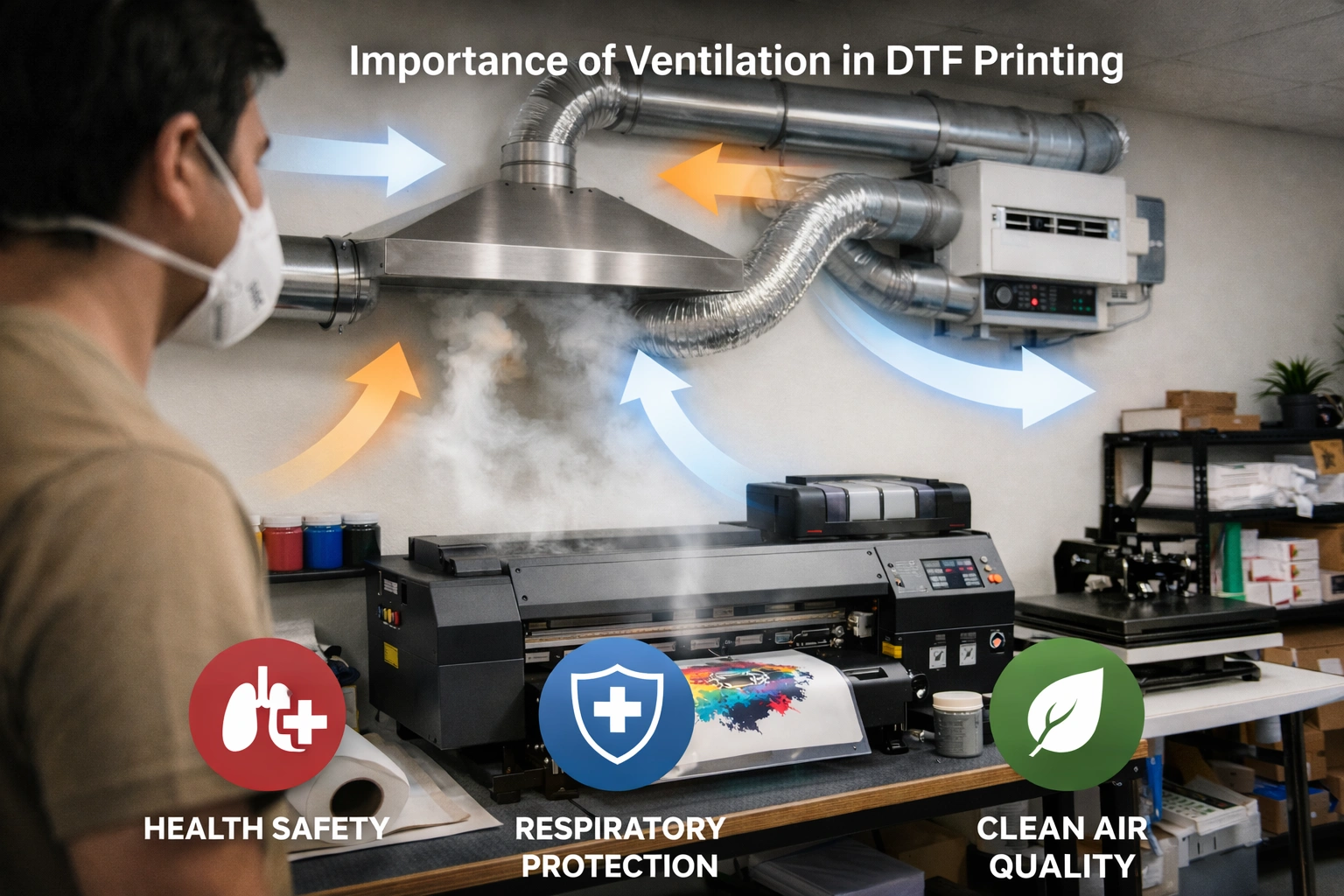
1. Health and Workplace Safety
DTF printing materials can release volatile organic compounds (VOCs), fine adhesive powder particles, and ink fumes. Prolonged exposure to these elements can cause headaches, respiratory irritation, dizziness, and long-term health risks.
Proper ventilation helps by:
Removing harmful fumes from the breathing zone
Reducing inhalation of fine powder and ink particles
Maintaining oxygen-rich air circulation
Creating a safer and more comfortable workspace
A well-ventilated environment not only protects operators but also ensures compliance with workplace safety standards.
2. Protecting Equipment and Reducing Downtime
DTF printers are sensitive machines that rely on stable environmental conditions. Excess heat, humidity, and airborne particles can cause internal damage over time.
A proper exhaust system supports equipment longevity by:
Preventing overheating of electronic components
Reducing moisture buildup that leads to ink clogging
Minimizing dust accumulation inside print heads and motors
Lowering the risk of unexpected breakdowns
By maintaining cleaner air, businesses can reduce maintenance costs and extend the operational life of their printers.
3. Maintaining Print Quality and Consistency
Air quality directly affects DTF print results. Poor ventilation can cause uneven curing, ink inconsistencies, and surface contamination.
Good airflow ensures:
Stable ink viscosity and drying conditions
Uniform adhesive curing
Reduced chances of smudging or adhesion failure
Consistent color output across print batches
For businesses focused on professional-grade results, proper ventilation is non-negotiable.
4. Odor Control and Customer Comfort
DTF printing odors can linger in enclosed spaces, making the environment uncomfortable for workers and visitors. This is especially important for retail shops or shared workspaces.
An exhaust system effectively:
Removes strong ink and adhesive odors
Improves overall workplace comfort
Creates a cleaner, more professional atmosphere
Key Components of an Effective DTF Exhaust System
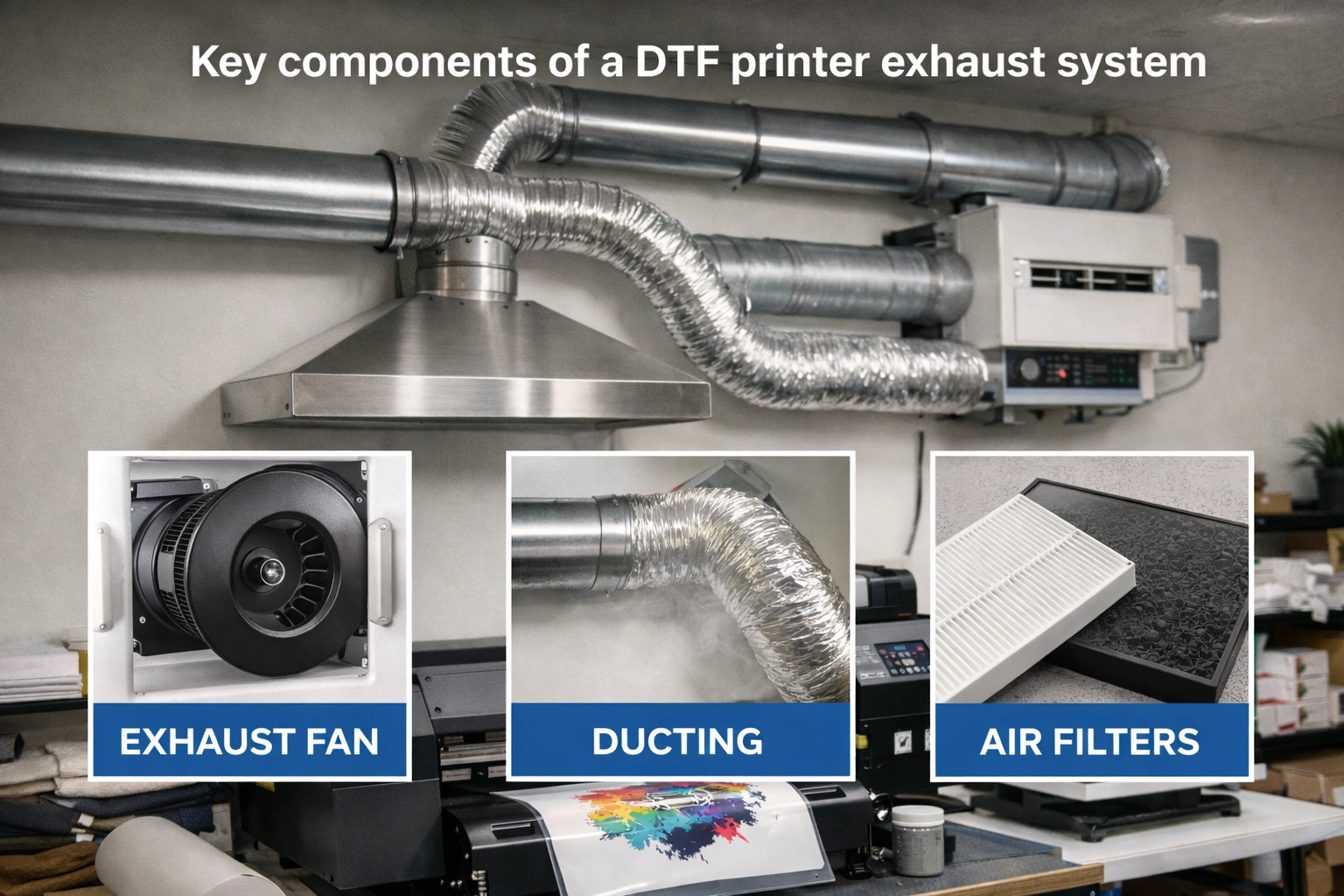
1. Exhaust Fans and Blowers
The fan is the heart of the exhaust system. It creates negative pressure that pulls contaminated air away from the printer.
Important considerations include:
Airflow capacity suitable for your printer size
Energy-efficient motor design
Continuous operation capability
Compatibility with filtration systems
2. Ductwork Design
Ducting transports air from the printer area to the exhaust outlet. Poor duct design can reduce system efficiency.
Best practices include:
Using smooth, rigid ducts for minimal resistance
Keeping duct runs as short as possible
Avoiding sharp bends that restrict airflow
Sealing joints properly to prevent air leaks
3. Filtration Systems
Filters capture fine particles and reduce odors before air is expelled or recirculated.
Common filter types include:
Pre-filters for large particles
HEPA filters for fine dust and powders
Activated carbon filters for odor and VOC removal
Regular filter replacement is essential to maintain performance.
4. Airflow Regulation and Controls
Adjustable airflow allows operators to match ventilation levels with production intensity.
Benefits include:
Energy savings during low usage
Improved airflow during heavy printing
Better control over workspace conditions
5. Noise Reduction Features
Industrial exhaust systems can be loud if not designed properly. Noise-reduction measures improve working conditions.
These may include:
Insulated ducts
Low-noise fans
Vibration-dampening mounts
How to Install a DTF Printer Exhaust System
Step 1: Evaluate Your Workspace
Consider room size, ceiling height, printer location, and nearby walls or windows. Identify where fumes are most concentrated.
Step 2: Choose the Right Exhaust System
Select equipment designed for DTF printing output levels. Avoid undersized systems that fail to remove contaminants effectively.
Step 3: Plan Airflow Direction
Ensure that fresh air enters the workspace while contaminated air exits efficiently. Proper airflow balance prevents negative pressure issues.
Step 4: Professional Installation
While basic setups may be DIY-friendly, professional installation ensures correct airflow calculations, safe electrical connections, and regulatory compliance.
Step 5: Test and Optimize
After installation, test airflow performance and make adjustments to fan speed, duct placement, or filtration as needed.
Maintenance and Best Practices
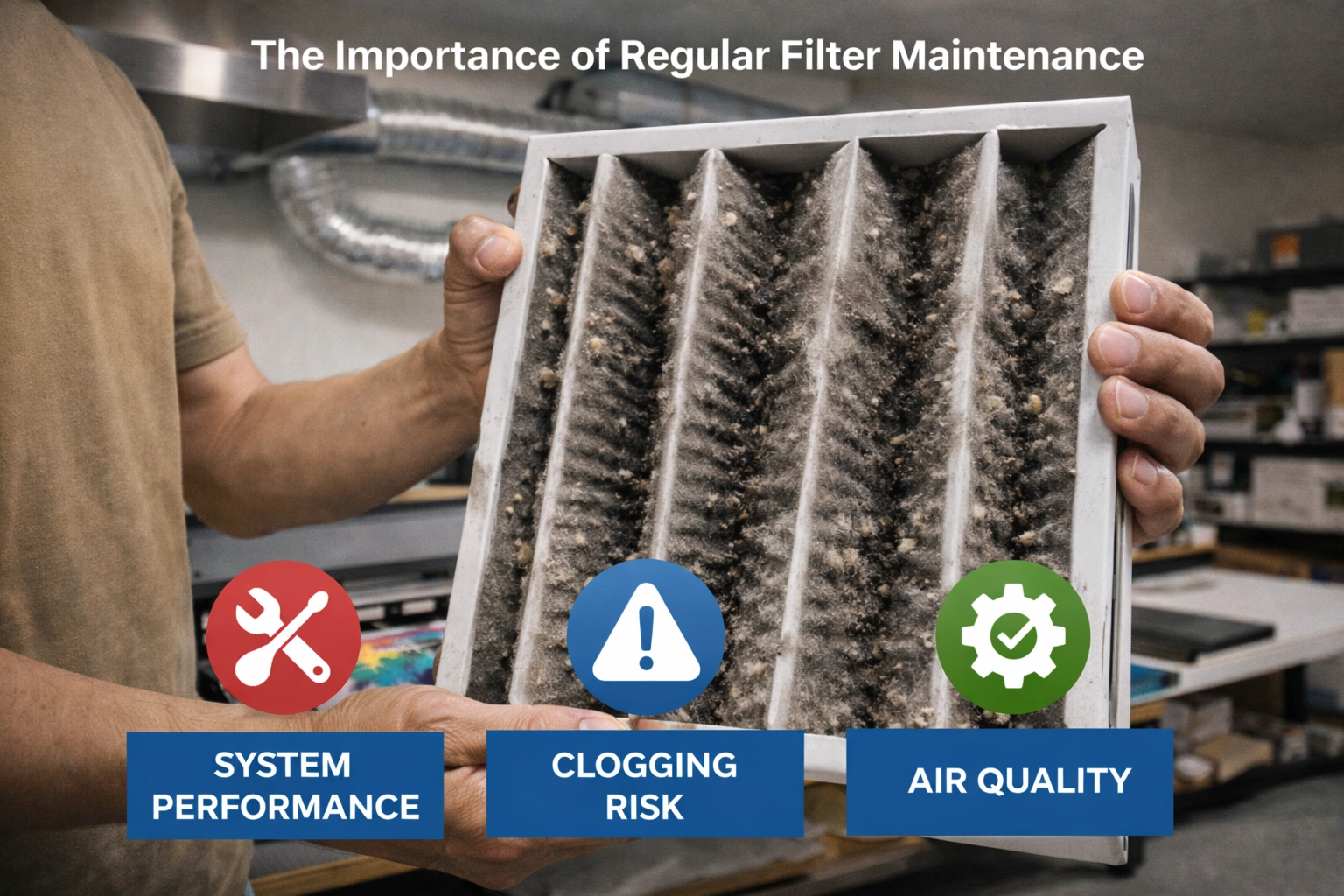
To keep your exhaust system working efficiently:
Inspect filters every 1–2 months
Clean ducts periodically to remove buildup
Check fan motors for wear or noise
Ensure vents are unobstructed
Monitor air quality during peak production
Consistent maintenance prevents performance loss and unexpected failures.
Common Mistakes to Avoid
Relying only on general room ventilation
Using undersized exhaust fans
Ignoring filter maintenance
Poor duct layout with excessive bends
Exhausting air back into enclosed spaces
Avoiding these mistakes saves money and improves long-term results.
Long-Term Benefits of a Proper Exhaust System
Investing in a reliable DTF printer exhaust system delivers measurable returns:
Healthier and safer employees
Higher print consistency and quality
Reduced equipment maintenance costs
Improved productivity
Better regulatory compliance
Enhanced professional reputation
Over time, these benefits far outweigh the initial installation cost.
Conclusion
A DTF printer exhaust system is not an optional accessory—it is a foundational component of a professional printing setup. Proper ventilation protects worker health, preserves equipment, and ensures consistent print quality. As DTF printing continues to expand across commercial and home-based businesses, investing in an efficient exhaust system is essential for long-term success.
By understanding how exhaust systems work, choosing the right components, and maintaining them regularly, you can create a safer, cleaner, and more productive printing environment. A well-ventilated workspace is not just good practice—it is smart business.explore our high-quality DTF printers here
DTF powder shaker machine applying adhesive powder in direct to film printing process
Frequently Asked Questions (FAQ)
What fumes are produced during DTF printing?
DTF printing can release VOCs, ink vapors, adhesive powder particles, and curing fumes, especially during heat application.
How often should exhaust system filters be replaced?
Filters should be inspected monthly and typically replaced every 3–6 months, depending on usage volume.
Is a DTF exhaust system mandatory?
While not always legally required, proper ventilation is strongly recommended for health, safety, and print quality.
Can a home-based DTF setup use an exhaust system?
Yes, compact exhaust systems are available and highly recommended for home studios.
Does an exhaust system increase electricity costs?
There may be a small increase, but improved efficiency, reduced repairs, and better productivity often result in overall cost savings.