

 HOME
HOME PRODUCT CENTER
 ABOUT US
 DOWNLOAD CENTER
 SUPPORT CENTER
 SUBSCRIBE
 BLOG
BLOGInk Degassing in DTF Printing
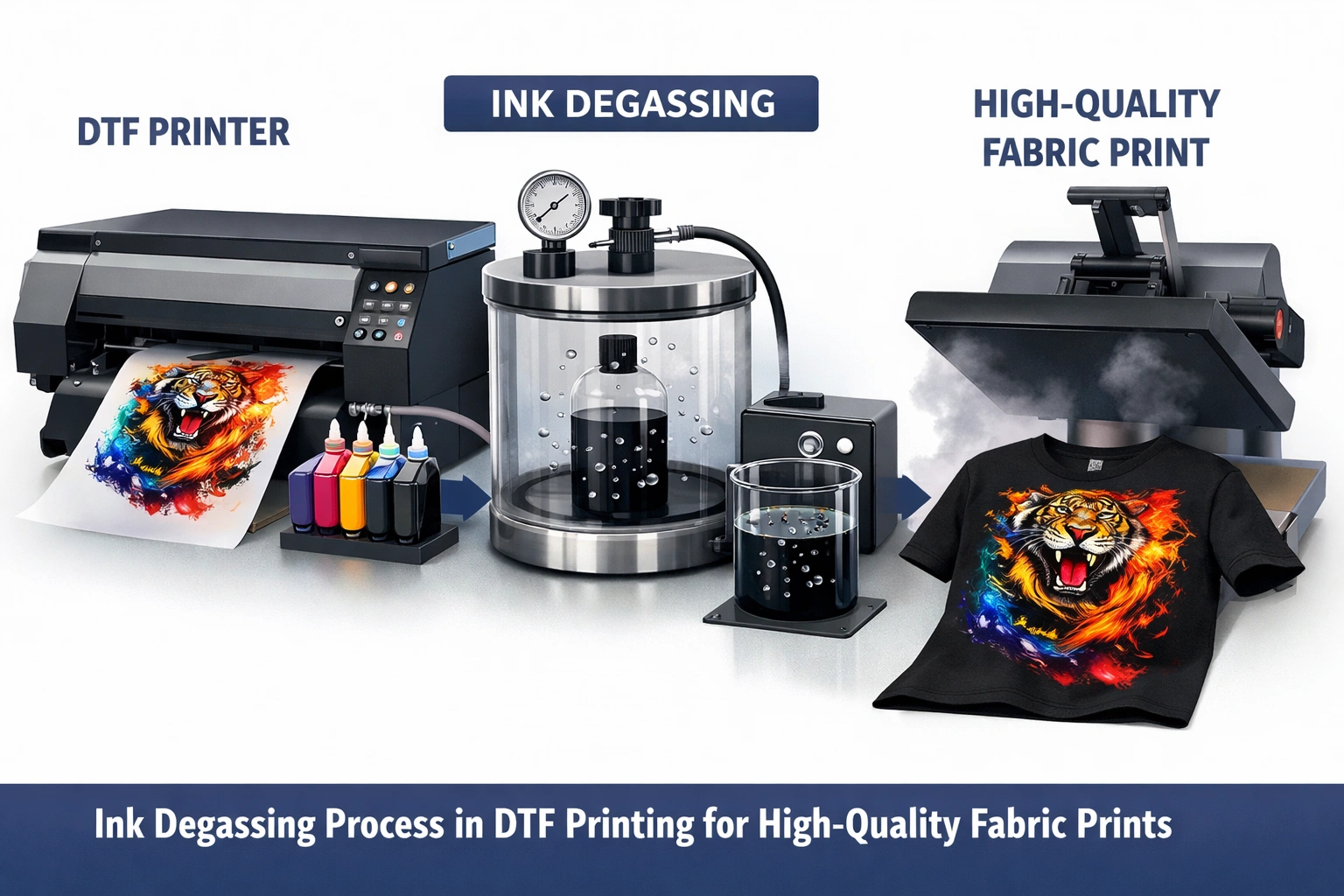
Direct-to-Film (DTF) printing has quickly become one of the most preferred methods for custom apparel decoration. Its ability to deliver vibrant colors, fine details, and long-lasting prints on a wide range of fabrics makes it an attractive solution for both small businesses and large-scale production units. However, despite its many advantages, DTF printing is highly sensitive to ink quality and ink handling practices.
One often overlooked but critically important factor in DTF print quality is ink degassing. Trapped air inside printer ink may seem harmless, but in reality, it can severely affect color consistency, adhesion, printhead performance, and overall production efficiency. Air bubbles inside ink disrupt smooth ink flow, introduce defects in prints, and increase machine maintenance costs.
This article provides a deep, practical, and technical explanation of why ink degassing matters in DTF printing, how air bubbles form, their impact on print quality, and the best professional practices to eliminate or minimize them. Whether you are a beginner or an experienced DTF operator, understanding ink degassing can significantly improve your output quality and operational reliability.
Understanding Ink Behavior in DTF Printing
DTF printing involves depositing specially formulated pigment inks onto a transfer film, followed by adhesive powder application and heat curing. Unlike traditional textile printing methods, DTF ink must perform multiple roles at once:
Flow smoothly through micro-nozzles
Form consistent droplets
Bond evenly to film
Transfer cleanly to fabric
For this complex process to work correctly, ink must be chemically stable and physically uniform. Even microscopic inconsistencies, such as trapped air, can disturb the balance of the entire workflow.
Ink viscosity, surface tension, and pigment suspension must remain stable throughout printing. Air bubbles interfere with all three, making ink degassing an essential quality-control step rather than an optional practice.
What Is Ink Degassing?
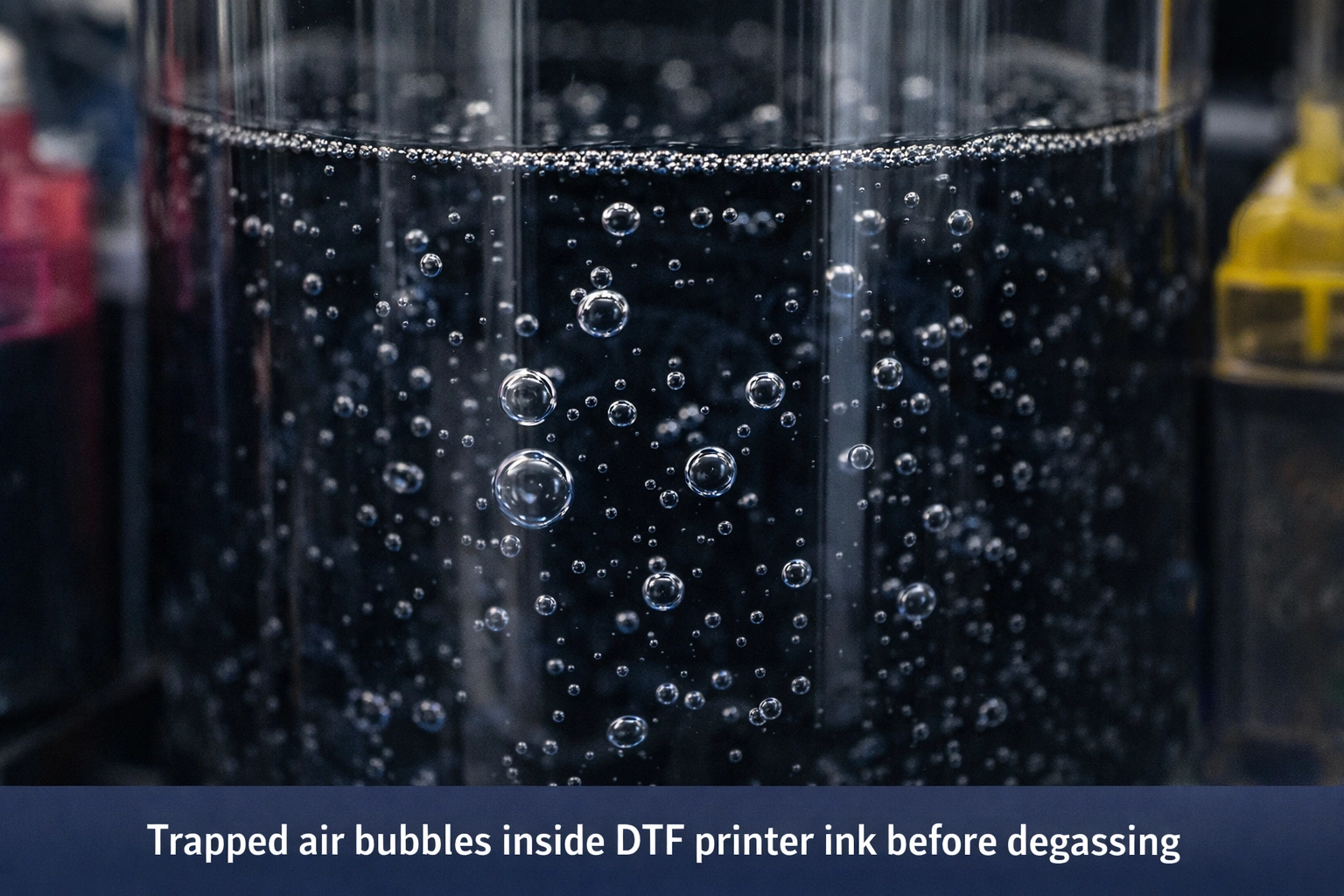
Ink degassing is the process of removing trapped or dissolved air from printing ink before it enters the printer system. During manufacturing, transportation, storage, and mixing, air can become trapped inside ink. This air may exist as visible bubbles or as microscopic gas pockets suspended within the liquid.
Degassing allows these air pockets to escape, ensuring the ink flows smoothly and consistently through ink lines, dampers, and printhead nozzles.
In high-precision printing systems like DTF printers, even tiny air bubbles can lead to print defects, nozzle misfires, or system instability.
Why Air Bubbles Are Dangerous for DTF Print Quality
1. Uneven Ink Flow
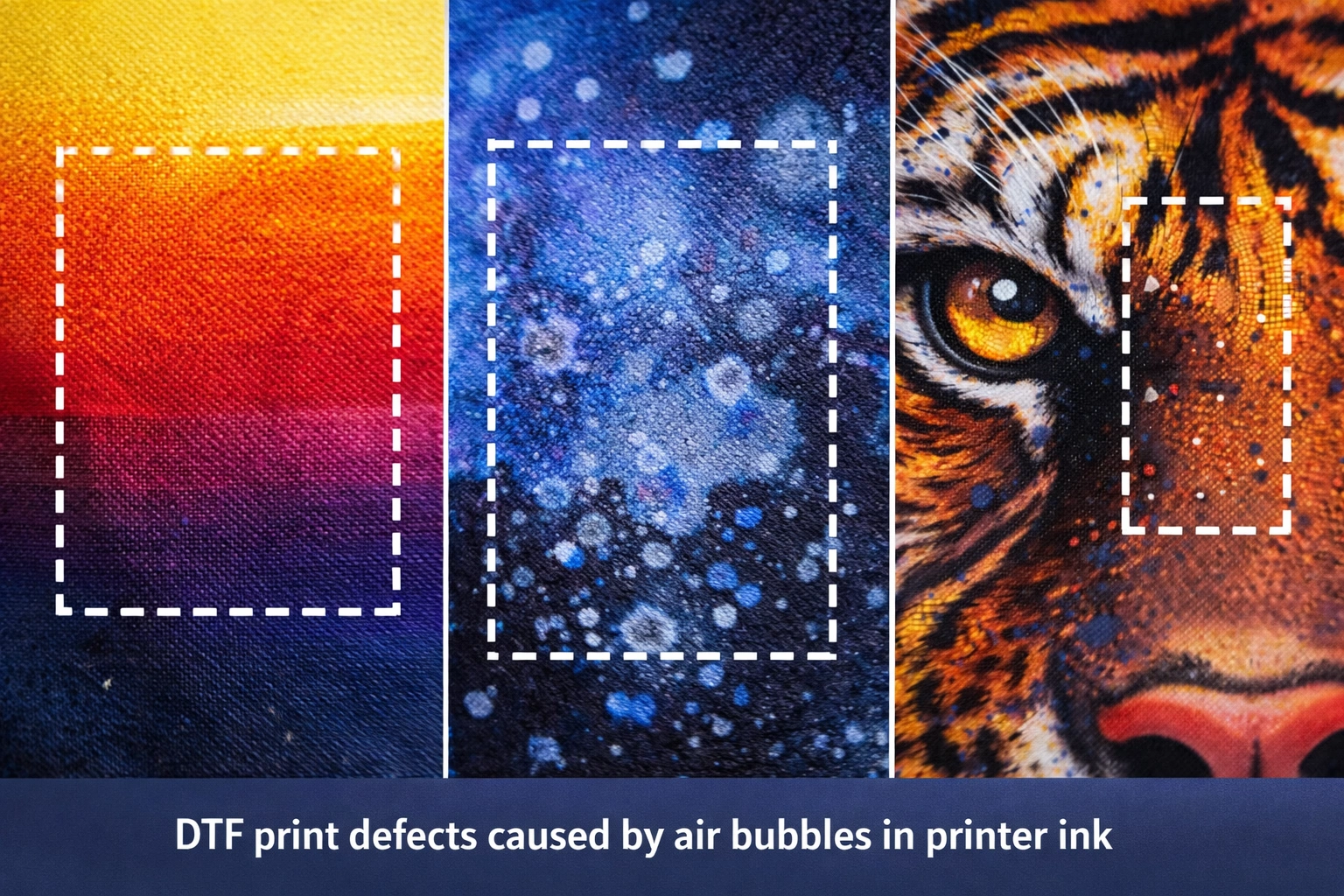
Air bubbles interrupt continuous ink flow. When bubbles pass through ink channels or printhead nozzles, they cause irregular ink discharge. This leads to inconsistent ink density on the transfer film, resulting in uneven colors and patchy prints.
2. Color Inconsistency and Banding
One of the most common visual defects caused by air bubbles is banding. Because ink is not deposited uniformly, horizontal or vertical lines may appear in solid color areas. Gradients lose smooth transitions, and fine details become distorted.
3. Weak Film Adhesion
For DTF printing to succeed, ink must adhere evenly to the transfer film before the adhesive powder is applied. Air-contaminated ink does not settle properly, reducing surface contact. This leads to poor bonding, which may cause peeling, cracking, or fading after washing.
4. Printhead Nozzle Dropouts
Printhead nozzles are designed to eject liquid ink, not air. When bubbles pass through, no ink is released, causing missing dots in the design. Repeated bubble exposure can permanently damage nozzle performance.
5. Increased Cleaning Cycles
Air bubbles often trigger nozzle blockages, forcing operators to run frequent cleaning cycles. Excessive cleaning wastes ink, increases downtime, and shortens printhead lifespan.
Common Causes of Air Bubbles in DTF Ink
Low-Quality or Poorly Formulated Ink
Inferior inks often lack proper stabilizers and surfactants. This makes them more prone to air entrapment during agitation, pumping, or temperature changes.
Aggressive Ink Mixing
Shaking ink bottles too vigorously introduces air into the liquid. Improper stirring techniques can trap bubbles instead of allowing pigments to blend smoothly.
Temperature Fluctuations
Rapid changes in temperature cause ink expansion and contraction. This can release dissolved gases and form bubbles, especially in cold storage conditions.
Improper Storage Conditions
Storing ink bottles partially open, exposed to sunlight, or in unstable environments allows air to enter and remain trapped in the ink.
Ink Refilling Errors
Pouring ink quickly or allowing air to enter ink lines during refilling introduces bubbles directly into the system.
The Science Behind Ink Degassing
Ink contains dissolved gases due to pressure changes during manufacturing and packaging. When ink pressure drops or temperature rises, these gases are released as bubbles. Degassing works by encouraging these gases to escape before the ink is used.
Professional degassing methods reduce internal pressure or apply controlled agitation, allowing air to rise to the surface and dissipate without affecting ink chemistry.
Professional Ink Degassing Methods for DTF Printing
Vacuum Degassing
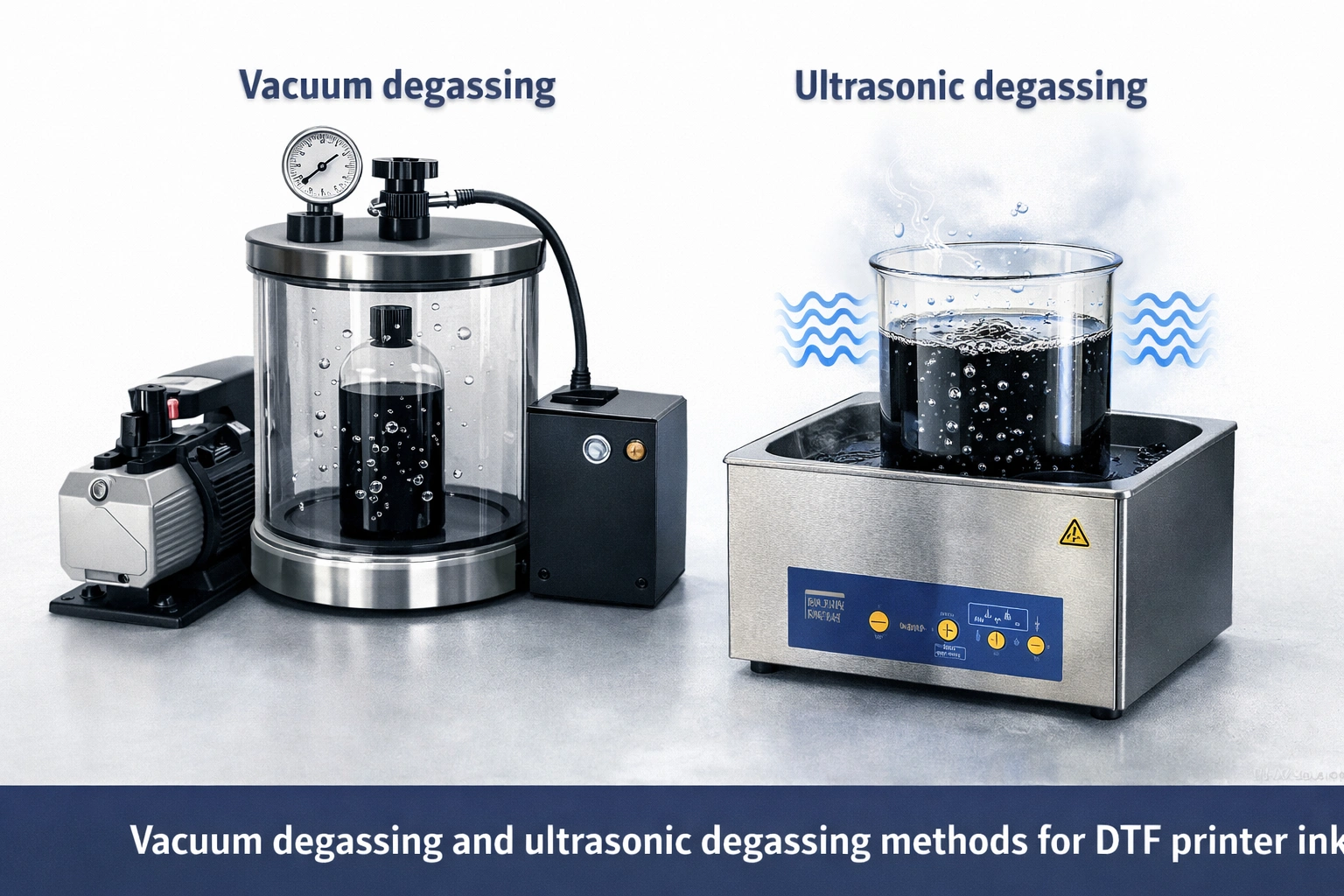
Vacuum degassing is one of the most effective methods used in professional printing environments. Ink is placed inside a vacuum chamber, where pressure reduction causes trapped air to expand and escape.
Advantages:
Highly effective
Removes microscopic air bubbles
Improves long-term ink stability
Limitations:
Requires specialized equipment
Not always practical for small setups
Ultrasonic Degassing
Ultrasonic degassing uses high-frequency sound waves to agitate ink. These vibrations force air bubbles to rise to the surface.
Advantages:
Fast process
Suitable for small batches
Limitations:
Excessive exposure can alter ink temperature
Requires careful timing
Resting and Settling Method
Allowing ink to rest undisturbed for several hours lets bubbles naturally rise and escape. While not as effective as mechanical methods, it is useful for small operations.
Best Practices to Prevent Air Bubble Formation
Use Premium DTF Ink
High-quality inks are formulated to minimize air retention. Always source ink from reliable manufacturers that specialize in DTF printing.
Mix Ink Correctly
Instead of shaking, gently roll ink bottles horizontally. This blends pigments without introducing excessive air.
Maintain Stable Room Conditions
Keep your printing environment at a consistent temperature and humidity level. Sudden changes increase bubble formation.
Degas Ink Before First Use
New ink bottles often contain trapped air from transportation. Degassing before loading them into the printer significantly improves consistency.
Handle Refills Carefully
Pour ink slowly and avoid introducing air into ink lines. Ensure ink tubes remain sealed and filled at all times.
How Ink Degassing Improves Production Efficiency
Proper degassing does more than improve print quality. It also enhances workflow efficiency by:
Reducing print failures
Lowering ink waste
Extending printhead lifespan
Minimizing maintenance downtime
In high-volume DTF operations, these benefits directly translate into cost savings and improved customer satisfaction.
Long-Term Impact of Ignoring Ink Degassing
Neglecting ink degassing can cause cumulative damage. Over time, repeated nozzle stress, chemical instability, and mechanical wear reduce printer accuracy and reliability. What begins as minor print defects can evolve into expensive hardware failures.
Investing time in proper ink preparation is significantly cheaper than replacing printheads or losing clients due to inconsistent quality.
Ink Degassing vs Ink Filtration
Ink filtration removes solid contaminants, while degassing removes trapped gases. Both processes are important but serve different purposes. Degassing should never be replaced by filtration alone, as filters cannot remove air bubbles.
When Should You Degas Ink?
Before first use of new ink
After long-term storage
When switching colors
If print defects suddenly appear
After temperature changes during transport
Regular degassing ensures stable ink performance across different printing conditions.
Industry Trends and Future Developments
As DTF printing technology advances, ink formulations are becoming more stable and bubble-resistant. Some modern printers include built-in degassing systems. However, manual ink handling will always require operator awareness and best practices.
Ink degassing will remain a critical factor in achieving professional-grade DTF results.
Conclusion
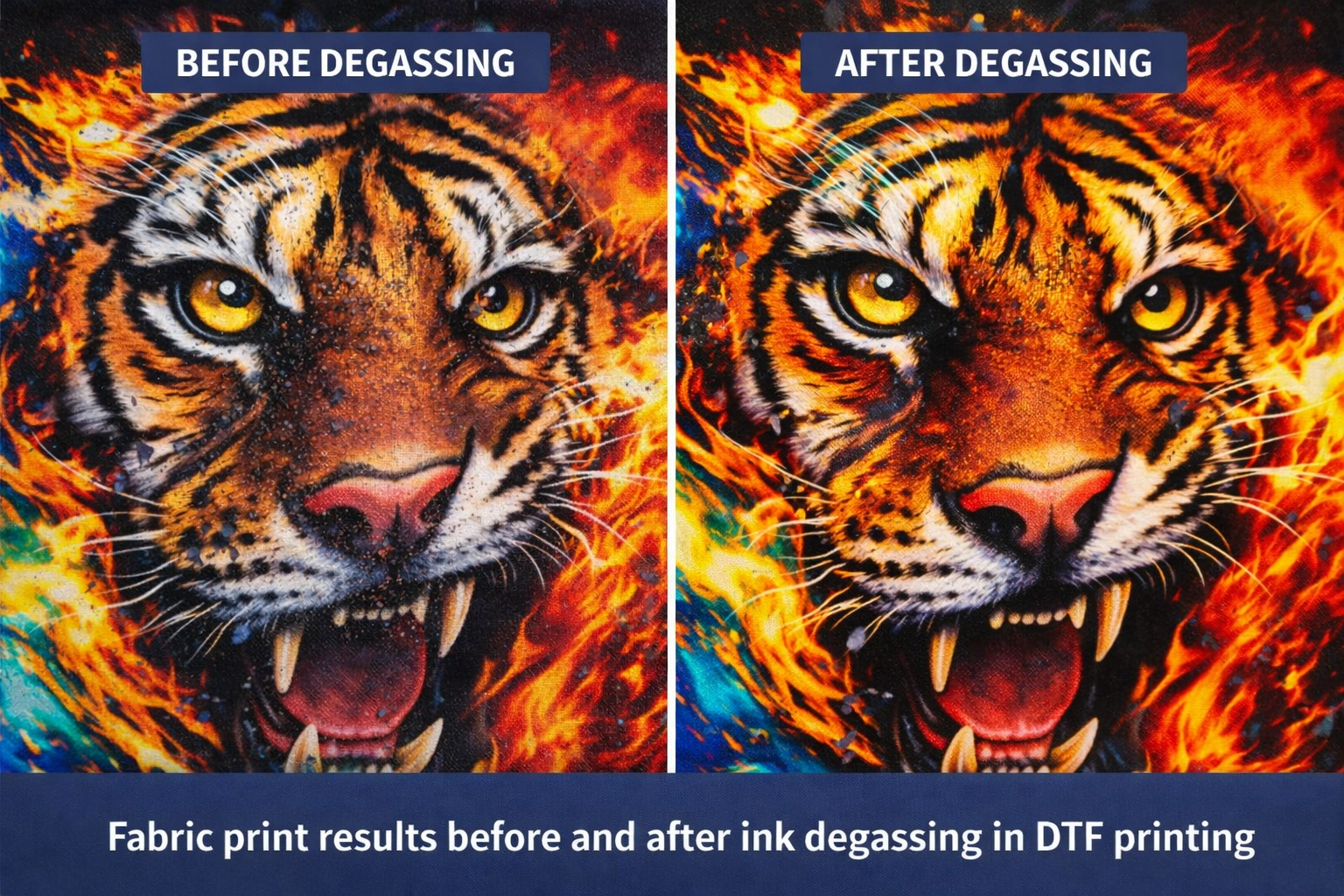
Ink degassing plays a crucial role in ensuring consistent, high-quality DTF prints. Air bubbles may seem insignificant, but their impact on ink flow, color accuracy, adhesion, and equipment health is substantial. By understanding how air enters ink and implementing proper degassing and handling techniques, DTF operators can dramatically improve print reliability and reduce operational costs.
Consistent ink preparation is not just a technical step—it is a quality assurance practice that defines professional DTF printing standards.Explore our high-quality DTF printers here
Frequently Asked Questions
What is ink degassing in DTF printing?
Ink degassing is the process of removing trapped air from DTF ink to ensure smooth ink flow and consistent print quality.
Can air bubbles damage a DTF printer?
Yes, repeated air exposure can clog nozzles, cause misfiring, and shorten printhead lifespan.
Is degassing required for every print job?
Not always, but degassing is strongly recommended when using new ink, after storage, or when defects appear.
What is the easiest degassing method for beginners?
Allowing ink to rest undisturbed and gentle rolling before use is the simplest method.
Does high-quality ink eliminate the need for degassing?
High-quality ink reduces bubble formation but does not eliminate the need for proper ink handling.