

 HOME
HOME PRODUCT CENTER
 ABOUT US
 DOWNLOAD CENTER
 SUPPORT CENTER
 SUBSCRIBE
 BLOG
BLOGComplete Guide to DTF Printing
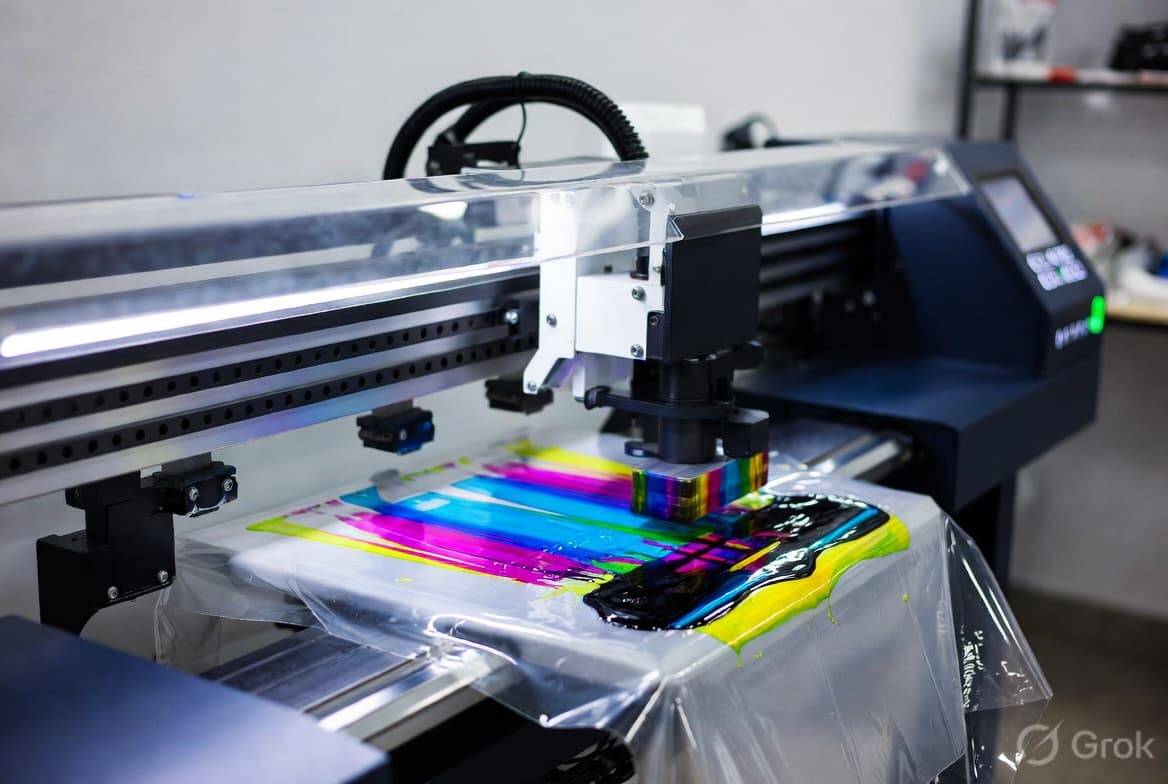
The custom printing industry has experienced tremendous growth in recent years. Businesses, entrepreneurs, and creative individuals are constantly searching for better ways to produce high-quality personalized products. Among the many printing technologies available today, Direct to Film (DTF) printing has emerged as one of the most innovative and efficient solutions.
DTF printing is rapidly becoming popular because it allows users to print vibrant designs on a wide range of materials without the complex processes required by traditional printing techniques. From custom clothing and personalized gifts to promotional products for businesses, DTF printing offers a flexible and cost-effective way to bring creative ideas to life.
Whether you are a small business owner looking to start a printing venture or a designer who wants more control over product customization, understanding how DTF printing works can open many opportunities. This technology has simplified the printing process while maintaining professional-level quality, making it suitable for beginners as well as experienced print professionals.
In this detailed guide, you will learn everything about DTF printing, including how it works, its advantages, applications, equipment requirements, and how you can start a successful DTF printing business.
What is DTF Printing?
DTF printing, short for Direct to Film printing, is a modern printing method in which a design is first printed onto a special transfer film. After printing, a layer of adhesive powder is applied to the film. The printed film is then cured using heat and finally transferred onto a product such as fabric using a heat press.
Unlike traditional methods like screen printing or direct-to-garment (DTG) printing, DTF printing does not require pretreatment of fabric in most cases. This makes the process simpler and more efficient.
One of the key advantages of this method is that the design is transferred using a film layer, which allows it to work on many types of materials including cotton, polyester, blends, and even some non-fabric surfaces.
Because of its ability to produce detailed designs with bright colors and strong durability, DTF printing has become one of the fastest-growing technologies in the custom printing industry.
How DTF Printing Works
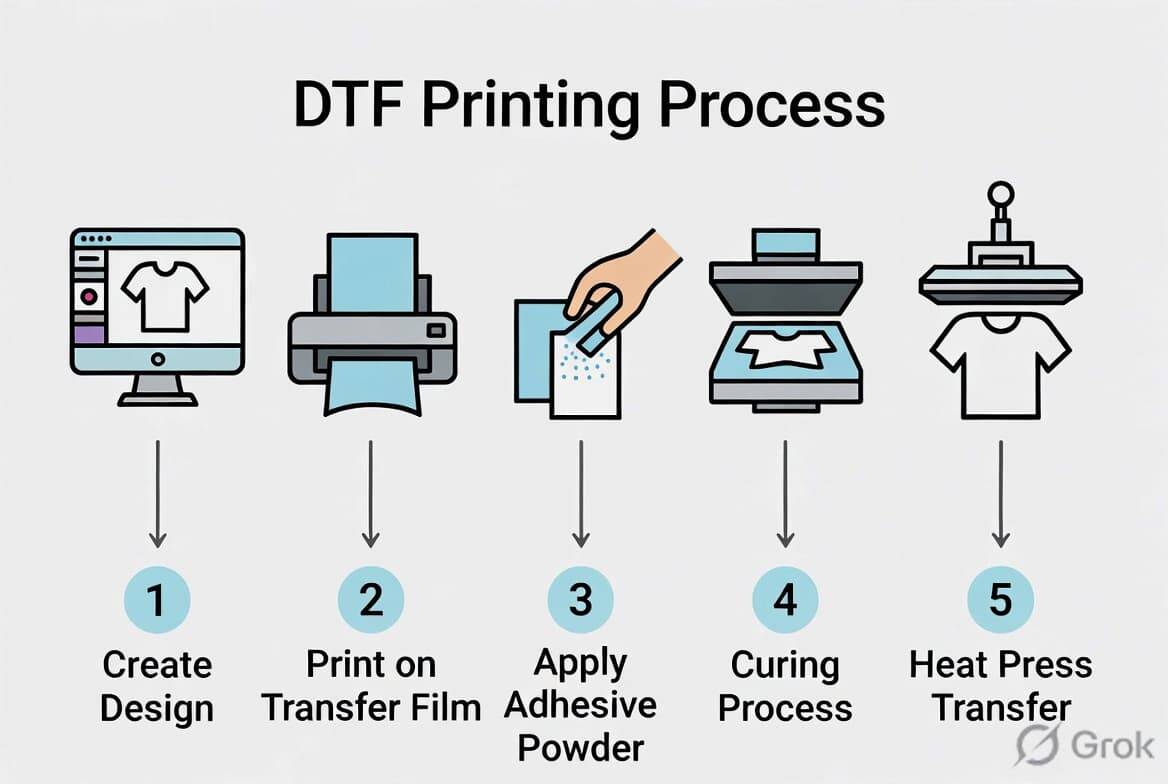
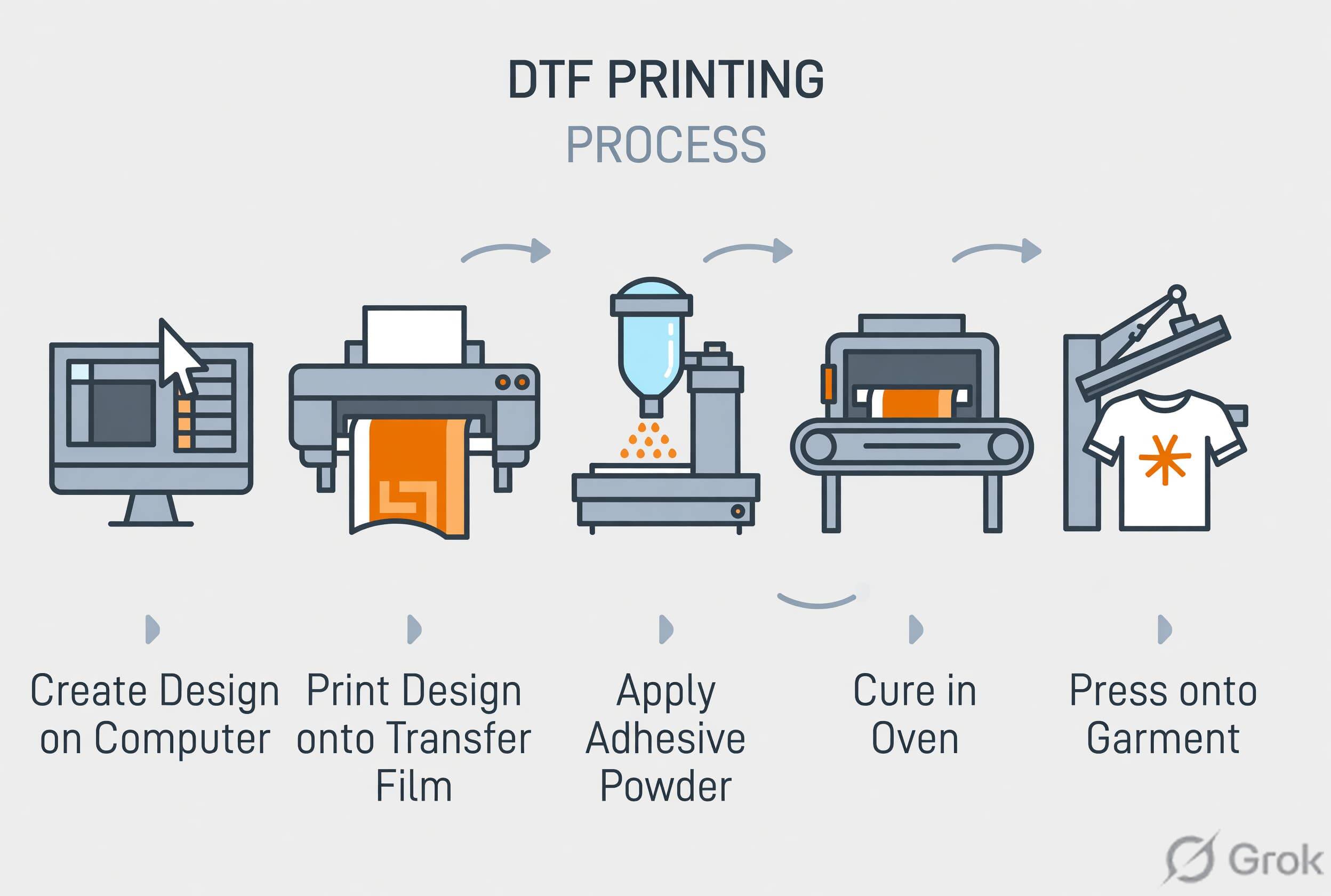
The DTF printing process involves several important steps that ensure the final design is high quality and long lasting.
1. Designing the Artwork
The process begins with creating the design using graphic design software. Designers usually prepare the artwork in high resolution to ensure the final print looks sharp and professional. The design can include multiple colors, gradients, and intricate details.
2. Printing on the Film
After the design is ready, it is printed onto a special PET transfer film using a DTF printer. The printer uses specialized inks that allow vibrant colors and excellent adhesion during the transfer process.
3. Applying Adhesive Powder
Once the design is printed on the film, a special adhesive powder is evenly applied over the wet ink. This powder sticks to the printed areas and helps bond the design to the final material.
4. Curing the Film
The film with adhesive powder is then cured using heat. This step melts the adhesive powder slightly so it becomes ready for the transfer process.
5. Heat Transfer
Finally, the prepared film is placed on the target material and pressed using a heat press machine. Heat and pressure transfer the design from the film to the surface, resulting in a vibrant and durable print.
Advantages of DTF Printing
DTF printing offers many advantages compared to traditional printing methods. These benefits have made it a preferred choice for many printing businesses.
High Print Quality
DTF printing produces bright colors and sharp details. Even complex designs with gradients and small elements can be printed accurately.
Wide Material Compatibility
One of the biggest advantages of DTF printing is its versatility. It works on many materials such as cotton, polyester, blends, denim, and some synthetic fabrics.
No Fabric Pretreatment Required
Unlike some other printing methods, DTF printing typically does not require fabric pretreatment, which saves time and simplifies production.
Cost Effective for Small Runs
Screen printing can become expensive when producing small quantities because each color requires a separate screen. DTF printing eliminates this issue, making it more economical for small batches.
Durable Prints
DTF prints are known for their durability. The designs resist cracking, peeling, and fading even after multiple washes.
Suitable for Detailed Designs
Because the process uses digital printing, it allows highly detailed artwork with unlimited color options.
Key Features of Modern DTF Printers
When selecting a DTF printer, it is important to consider certain features that affect performance and productivity.
Print Resolution
Higher resolution printers produce sharper images and smoother gradients. This is especially important for professional printing businesses.
Printing Speed
The speed of the printer determines how many products can be produced in a day. Businesses with high order volumes usually prefer faster machines.
Ink Quality
High-quality inks ensure bright colors, strong adhesion, and long-lasting prints.
Film Compatibility
A good DTF printer should support various types of transfer films for better flexibility.
Software Integration
Compatibility with design software allows easier workflow and faster printing preparation.
Ease of Maintenance
Printers that are easy to clean and maintain reduce downtime and improve productivity.
Popular Applications of DTF Printing
fquipment Needed for DTF Printing
DTF printing is used in many industries because of its flexibility and quality.
Custom Apparel
One of the most common uses of DTF printing is creating custom clothing such as t-shirts, hoodies, jackets, and sweatshirts. Businesses can easily produce small batches with unique designs.
Personalized Gifts
Customized gifts are increasingly popular. DTF printing makes it possible to create personalized items such as printed cushions, bags, caps, and more.
Promotional Products
Companies use custom printed products for marketing and brand promotion. DTF printing helps create high-quality promotional items like branded shirts, tote bags, and merchandise.
Event Merchandise
Events such as concerts, festivals, conferences, and exhibitions often require custom merchandise. DTF printing allows organizers to create memorable items quickly.
Sports Team Uniforms
Sports teams often require customized jerseys with logos, player names, and numbers. DTF printing allows detailed customization while maintaining durability.
Small Business Products
Entrepreneurs who sell products online frequently use DTF printing to create unique items for their customers.
DTF Printing vs Other Printing Methods
Understanding the difference between DTF and other printing techniques can help businesses choose the right method.
DTF vs Screen Printing
Screen printing is excellent for large production runs but requires complex setup. DTF printing is faster and more flexible for small orders and detailed designs.
DTF vs DTG Printing
Direct-to-garment printing works well on cotton fabrics but has limitations with synthetic materials. DTF printing can handle a wider variety of fabrics.
DTF vs Heat Transfer Vinyl
Heat transfer vinyl requires cutting individual shapes from vinyl sheets. DTF printing allows full-color images without cutting.
Equipment Needed for DTF Printing
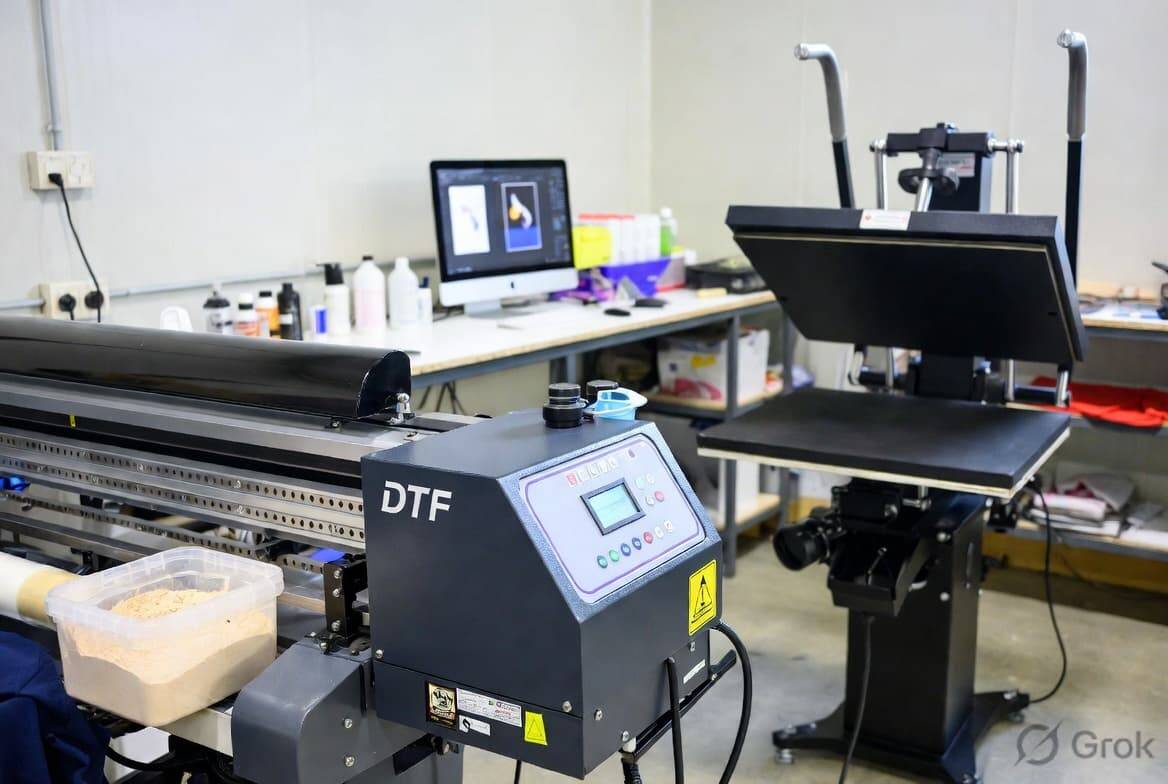
Starting a DTF printing setup requires several pieces of equipment.
DTF Printer
The printer is the most important component. It prints designs onto transfer film using specialized inks.
PET Transfer Film
This film acts as the medium that carries the printed design before it is transferred onto the final product.
DTF Ink
Special inks are used to produce vibrant colors and ensure proper adhesion.
Adhesive Powder
The powder helps the printed design stick to the material during heat transfer.
Heat Press Machine
A heat press applies the required temperature and pressure to transfer the design from the film to the product.
Curing Equipment
Some setups use curing ovens or heat stations to prepare the adhesive powder before transfer.
How to Start a DTF Printing Business
Starting a DTF printing business can be profitable if done with proper planning.
Market Research
Before investing in equipment, study the market demand and identify your target audience.
Choose the Right Equipment
Investing in reliable equipment ensures better print quality and fewer technical issues.
Create Sample Products
Producing sample items helps showcase your capabilities to potential customers.
Build an Online Presence
Use social media platforms and online marketplaces to promote your products.
Focus on Unique Designs
Creative and unique designs can help your brand stand out from competitors.
Offer Customization
Customers love personalized products. Offering customization options can increase sales.
Tips for Producing High Quality DTF Prints
To get the best results from DTF printing, follow these practical tips.
Use high-resolution artwork to maintain print clarity.
Choose high-quality films and inks to ensure durability.
Maintain the printer regularly to prevent clogging and technical problems.
Use proper heat press settings for different fabrics.
Store transfer films properly to avoid damage.
Testing prints before large production runs helps prevent costly mistakes.
Future of DTF Printing
The future of DTF printing looks very promising. As customization continues to grow in popularity, more businesses are adopting this technology to produce personalized products.
Advancements in printer technology, ink formulations, and transfer materials are making the process faster and more efficient. In addition, the increasing demand for small batch production and personalized merchandise is driving the adoption of DTF printing worldwide.
Many small businesses and startups are choosing DTF printing because it offers professional quality results without the complexity of traditional printing setups.
As technology continues to evolve, DTF printing will likely become even more accessible and widely used across multiple industries.
Conclusion
DTF printing has revolutionized the custom printing industry by providing a simple, versatile, and cost-effective way to produce high-quality prints. Its ability to work on various materials, create vibrant designs, and handle small production runs makes it an excellent choice for businesses and creative professionals.
From custom apparel and promotional products to personalized gifts and event merchandise, the applications of DTF printing are nearly limitless. Entrepreneurs looking to enter the custom printing market can benefit greatly from adopting this technology.
With proper equipment, creative designs, and effective marketing strategies, a DTF printing business can become a profitable and scalable venture. As the demand for personalized products continues to rise, DTF printing will remain an important tool for businesses seeking to deliver unique and high-quality customized items.
Frequently Asked Questions
What materials can be used with DTF printing?
DTF printing works on a wide variety of materials including cotton, polyester, fabric blends, denim, and certain synthetic fabrics.
Are DTF prints long lasting?
Yes, DTF prints are known for their durability. When applied correctly, they can withstand multiple washes without fading or cracking.
Is DTF printing suitable for beginners?
Many modern DTF printers are designed to be user friendly. With basic training and practice, beginners can quickly learn the process.
Can DTF printing handle complex designs?
Yes, this method supports highly detailed artwork, gradients, and multiple colors without limitations.
Is DTF printing profitable?
If managed properly with good design, marketing, and quality control, a DTF printing business can be highly profitable due to the growing demand for customized products.