

 HOME
HOME PRODUCT CENTER
 ABOUT US
 DOWNLOAD CENTER
 SUPPORT CENTER
 SUBSCRIBE
 BLOG
BLOGDTF Printing Break-Even Guide
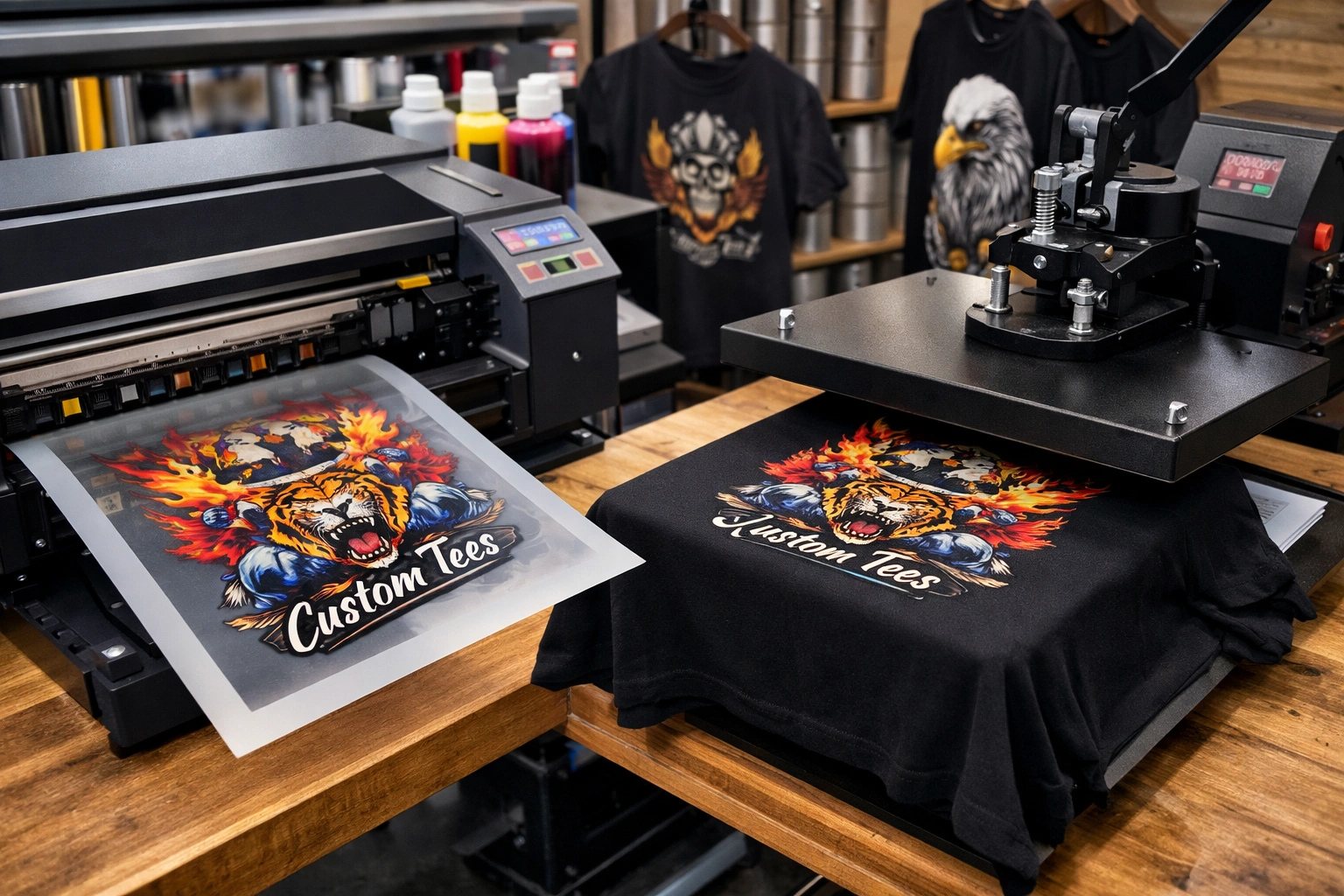
The custom apparel industry has undergone a massive transformation in recent years, and one of the most impactful innovations driving this change is Direct-to-Film (DTF) printing. Unlike traditional printing techniques that are often limited by fabric type, color, or order quantity, DTF printing offers unmatched flexibility, vibrant color output, and scalability. Because of these advantages, many entrepreneurs and small businesses are entering the DTF printing market to build profitable print-on-demand ventures.
However, while DTF printing offers strong income potential, long-term success depends heavily on financial planning. One of the most critical financial concepts every DTF business owner must understand is the break-even point. Without knowing your break-even point, you are essentially running your business without a financial compass. You may generate sales, but you won’t truly know whether you are moving toward profit or silently absorbing losses.
This guide provides a complete, practical, and beginner-friendly explanation of how to calculate, analyze, and reduce your break-even point in a DTF printing business. Whether you are just starting or already operating, this article will help you make data-driven decisions, price your products correctly, and build a sustainable printing business.
What Is a Break-Even Point?
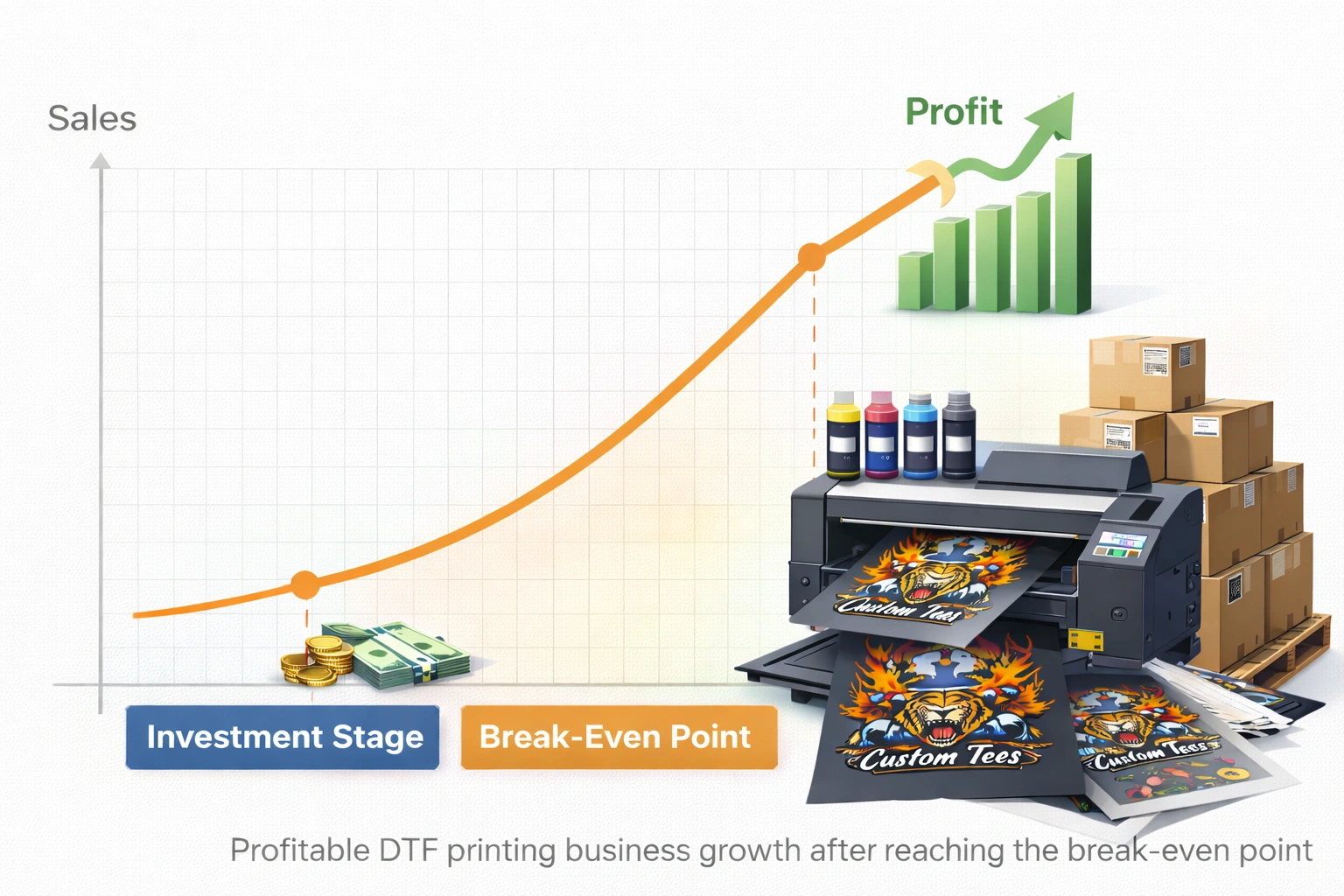
In simple financial terms, the break-even point is the level of sales at which your total revenue equals your total costs. At this stage, your business is not making a profit, but it is also not incurring a loss. Every unit sold after the break-even point contributes directly to profit.
For a DTF printing business, understanding the break-even point answers critical questions such as:
How many prints or garments must I sell each month to cover expenses?
Is my current pricing strategy sustainable?
Can I afford to invest in better equipment or marketing?
How long will it take before my business becomes profitable?
Knowing these answers allows you to plan growth logically rather than relying on assumptions.
Why Break-Even Analysis Is Crucial for DTF Printing Businesses
DTF printing businesses operate with a mix of equipment investment, consumable costs, and operational expenses. Without proper break-even analysis, many new printing businesses fail not because of lack of demand, but because of poor cost management.
Here’s why break-even analysis is especially important in DTF printing:
High Initial Investment
DTF printers, heat presses, curing systems, and RIP software require upfront capital.Ongoing Consumable Costs
Ink, film, adhesive powder, and maintenance are recurring expenses.Competitive Market Pricing
Many businesses compete on price, which can shrink profit margins if costs aren’t controlled.Seasonal Demand Fluctuations
Apparel demand often changes with seasons, festivals, and trends.
By understanding your break-even point, you can navigate all these challenges with confidence.
Understanding the Cost Structure of a DTF Printing Business
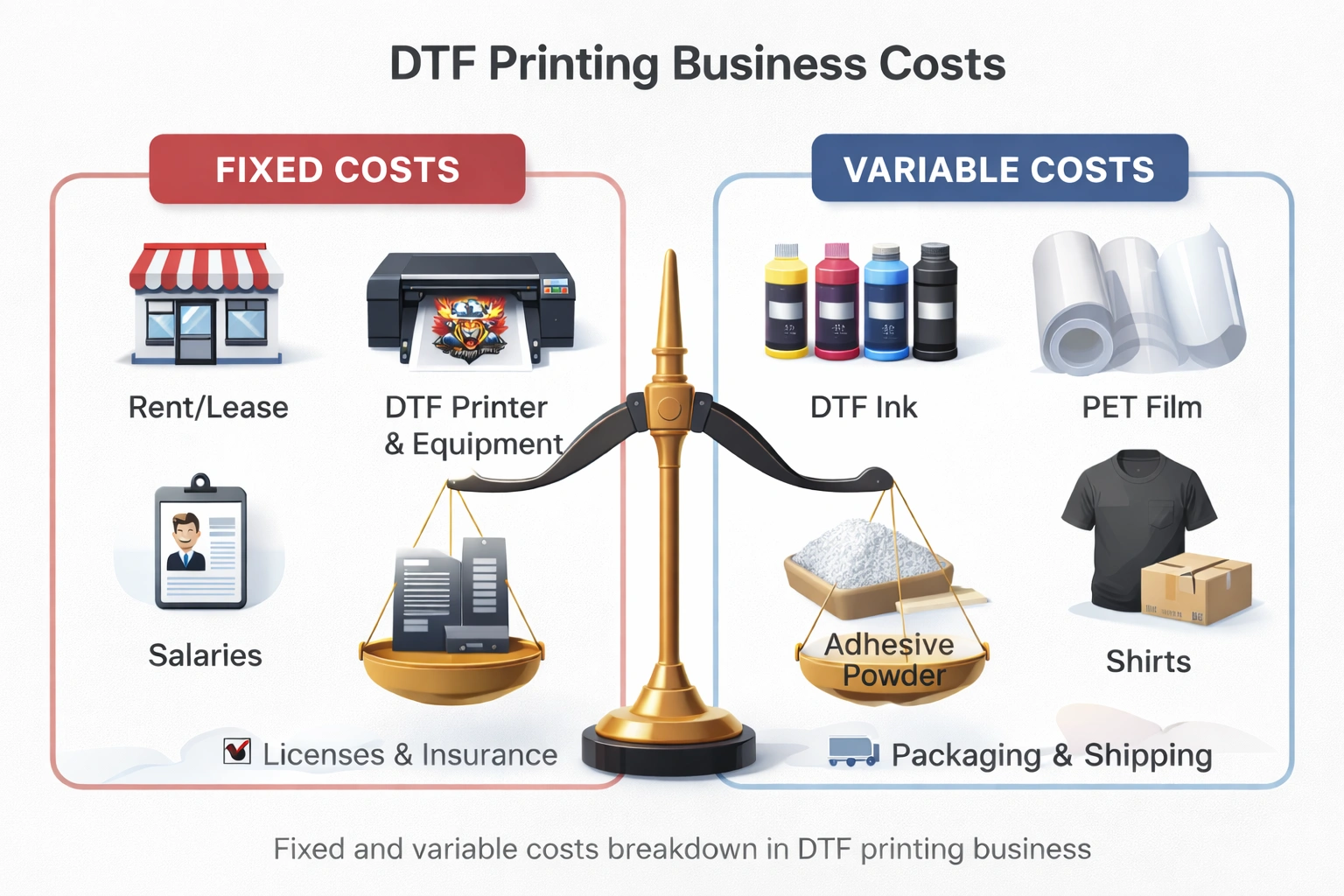
To calculate your break-even point accurately, you must first understand your cost structure. These costs are divided into fixed costs and variable costs.
Fixed Costs in DTF Printing
Fixed costs remain constant regardless of how many prints or garments you produce. Even if you do not print a single shirt in a month, these costs still apply.
Common Fixed Costs Include:
Workspace rent or lease
DTF printer purchase or EMI
Heat press and curing equipment
Software subscriptions
Salaries or wages (if applicable)
Internet and basic utilities
Business licenses and insurance
Marketing tools or website hosting
Fixed costs determine the minimum financial burden your business must cover each month.
Variable Costs in DTF Printing
Variable costs change based on your production volume. The more you print, the higher these costs become.
Common Variable Costs Include:
DTF ink consumption
PET film usage
Adhesive powder
Cleaning fluids and maintenance supplies
Blank garments
Packaging materials
Shipping and delivery costs
Power consumption linked to production
Tracking variable costs accurately is essential because even small miscalculations can significantly affect profitability.
The Break-Even Formula Explained
Once you clearly understand your costs, calculating the break-even point becomes straightforward.
Basic Formula:
Break-Even Point (Units) = Fixed Costs ÷ (Selling Price per Unit – Variable Cost per Unit)
Let’s understand each element:
Fixed Costs: Monthly operational expenses
Selling Price per Unit: Price at which one printed item is sold
Variable Cost per Unit: Cost incurred to produce one item
Practical Break-Even Calculation Example
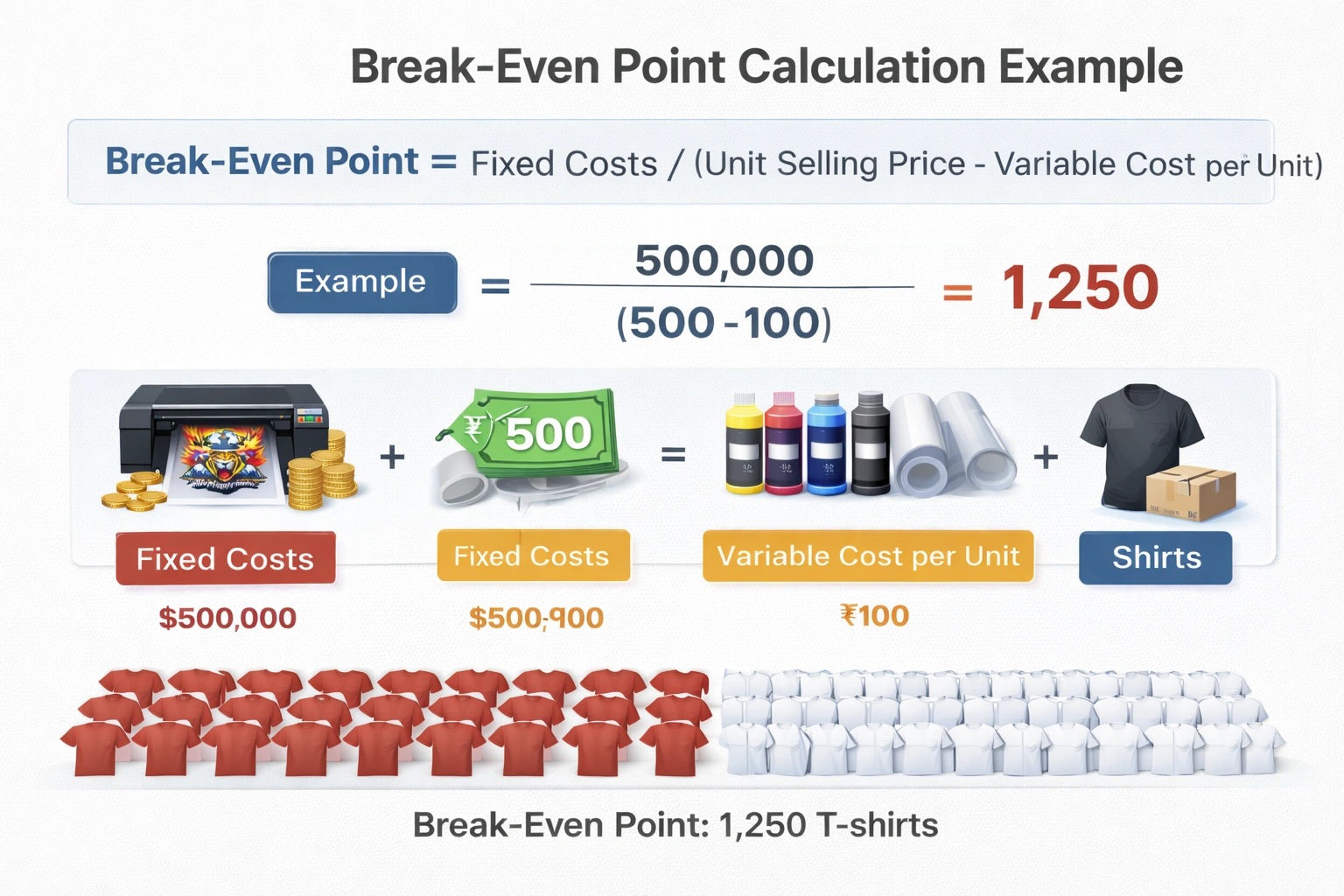
Assume the following scenario:
Monthly Fixed Costs: $5,000
Selling Price per Print: $25
Variable Cost per Print: $10
Calculation:
Break-Even Units = 5,000 ÷ (25 – 10)
Break-Even Units = 5,000 ÷ 15
Break-Even Units = 333.33
This means you must sell 334 units per month to cover all costs. Any sale beyond this point contributes to profit.
Interpreting Your Break-Even Results
Your break-even number should guide your business strategy:
If your sales target feels realistic, your model is healthy
If the number feels too high, you must adjust costs or pricing
If your market demand is lower than your break-even level, the business needs restructuring
Break-even analysis is not about discouragement—it’s about clarity.
Factors That Influence the Break-Even Point
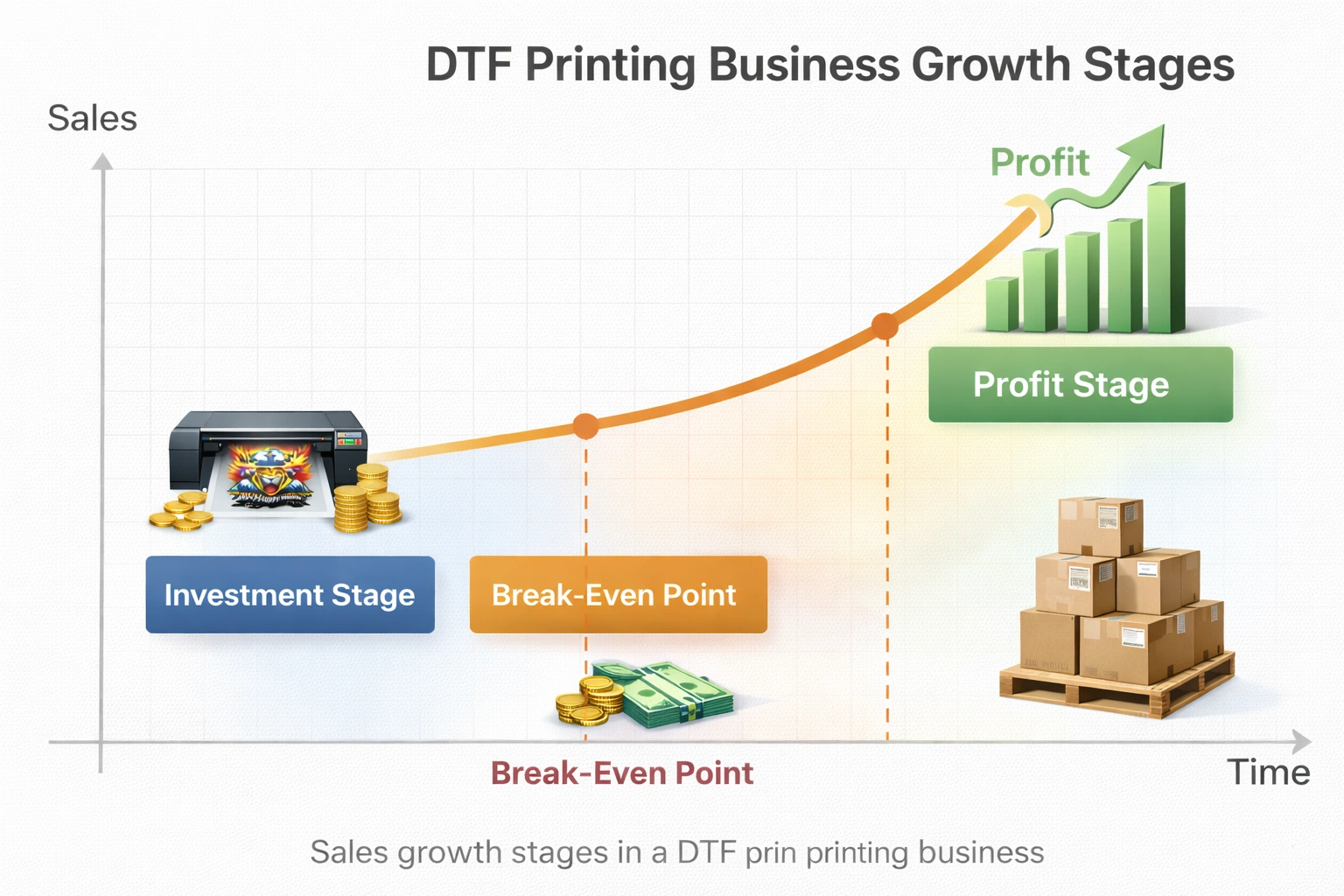
Several internal and external factors affect your break-even point over time.
Pricing Strategy
Your selling price has a direct impact on break-even volume. Even a small price increase can significantly lower the number of units required to break even, provided the market accepts it.
Material Quality and Cost
Higher-quality inks and films increase variable costs but can improve customer satisfaction, reduce reprints, and increase repeat business. Poor quality materials may seem cheaper but often increase hidden costs.
Production Efficiency
Faster workflows, reduced wastage, and fewer errors lower variable costs per unit. Efficient production directly reduces your break-even threshold.
Sales Volume and Bulk Orders
Bulk orders help spread fixed costs across more units, effectively lowering the cost per unit and improving margins.
Market Competition
Highly competitive markets may limit pricing flexibility. Understanding competitor pricing helps you position your offerings strategically without underpricing.
How to Reduce Your Break-Even Point
Lowering your break-even point makes your business safer and more resilient.
Control Fixed Costs
Start from home or a shared workspace
Lease equipment instead of buying outright
Delay hiring until demand increases
Review subscriptions and remove unused tools
Optimize Variable Costs
Buy ink and film in bulk
Compare suppliers regularly
Reduce wastage through staff training
Maintain equipment to avoid costly breakdowns
Improve Product Pricing
Instead of competing only on price, add value:
Faster delivery
Premium print quality
Custom packaging
Design assistance
Value-based pricing improves margins without hurting demand.
Increase Sales Through Marketing
Strong marketing reduces the time required to reach break-even.
Social media promotion
Local business partnerships
Online marketplaces
Seasonal campaigns
Referral incentives
Higher visibility leads to higher sales velocity.
Scaling After Break-Even
Once your break-even point is consistently achieved:
Reinvest profits into better equipment
Expand product offerings
Increase production capacity
Build brand authority
Scaling before reaching break-even often leads to financial stress, so patience is key.
Common Break-Even Mistakes to Avoid
Ignoring maintenance and hidden costs
Underpricing to win customers
Not updating cost calculations regularly
Overestimating sales demand
Expanding too early
Avoiding these mistakes keeps your business financially stable.
Frequently Asked Questions (FAQ)
What does break-even mean in business?
Break-even is the point where total revenue equals total expenses, resulting in zero profit and zero loss.
How often should break-even be recalculated?
You should recalculate whenever there is a change in rent, material costs, pricing, or production volume.
Can offering premium products lower break-even?
Yes, higher-margin products reduce the number of units required to cover costs.
Is break-even the same for every month?
No, seasonal demand, promotions, and cost changes can shift the break-even point.
Is break-even analysis useful for small DTF businesses?
Absolutely. It is even more critical for small businesses with limited cash flow.
Conclusion
A DTF printing business can be highly profitable, but only when financial clarity guides decision-making. Understanding your break-even point allows you to price confidently, manage costs effectively, and scale strategically. Instead of guessing, you gain control over your business direction.
By consistently tracking costs, improving efficiency, and strengthening your sales strategy, you move faster from survival to profitability. Break-even analysis is not just a financial calculation—it is the foundation of long-term success in the DTF printing industry. explore our high-quality DTF printers here.