

 HOME
HOME PRODUCT CENTER
 ABOUT US
 DOWNLOAD CENTER
 SUPPORT CENTER
 SUBSCRIBE
 BLOG
BLOGDTF Printing Minimum Order Guide
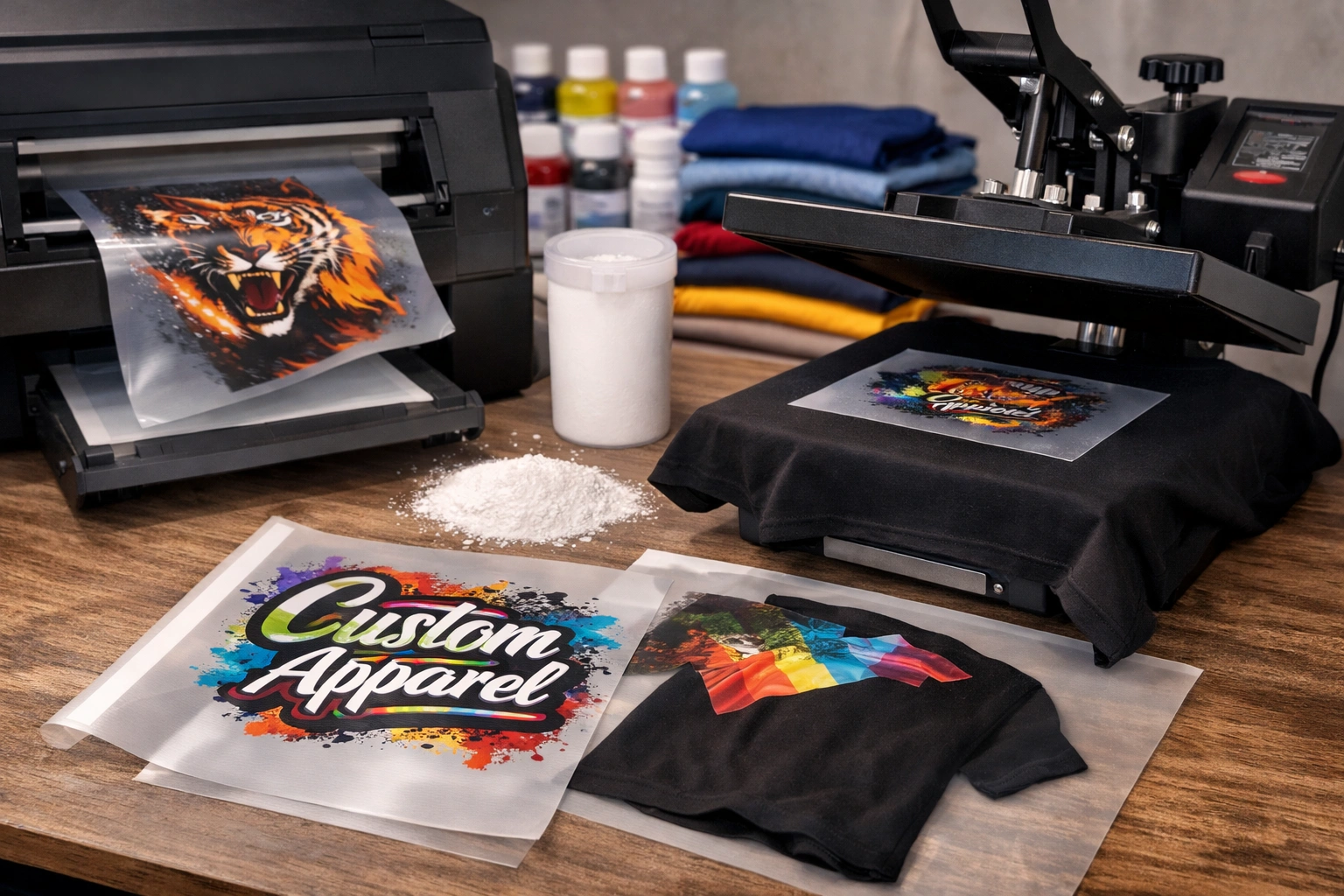
Direct to Film (DTF) printing has rapidly become one of the most popular decoration methods in the custom apparel and merchandise industry. From startups and online clothing brands to established print shops, DTF printing is valued for its flexibility, vibrant output, and durability across a wide range of fabrics. Unlike traditional printing methods that demand bulk production to remain cost-effective, DTF printing allows businesses to operate with lower risk and higher creative freedom.
However, one critical factor that often confuses buyers and sellers alike is the minimum order quantity (MOQ). Whether you are a small business testing new designs, a reseller fulfilling custom orders, or a print service provider managing production costs, understanding MOQ in DTF printing is essential for profitability and operational efficiency.
This in-depth guide explains DTF printing MOQs from every angle—what they are, why they exist, how suppliers determine them, and how you can strategically choose the right MOQ to balance cost, quality, and flexibility. By the end of this article, you will be equipped to make informed decisions that support long-term growth without unnecessary financial pressure.
What Is DTF Printing?
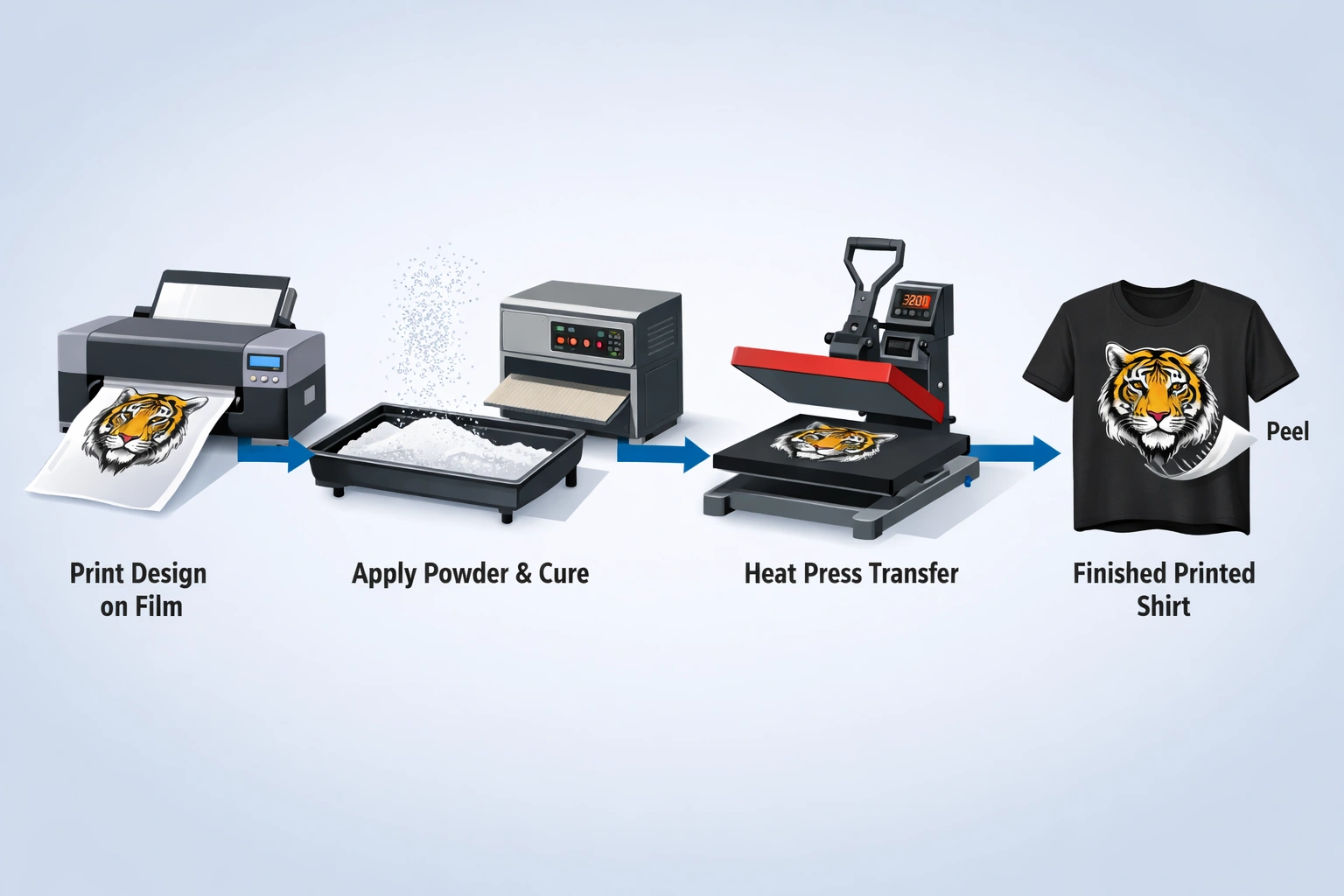
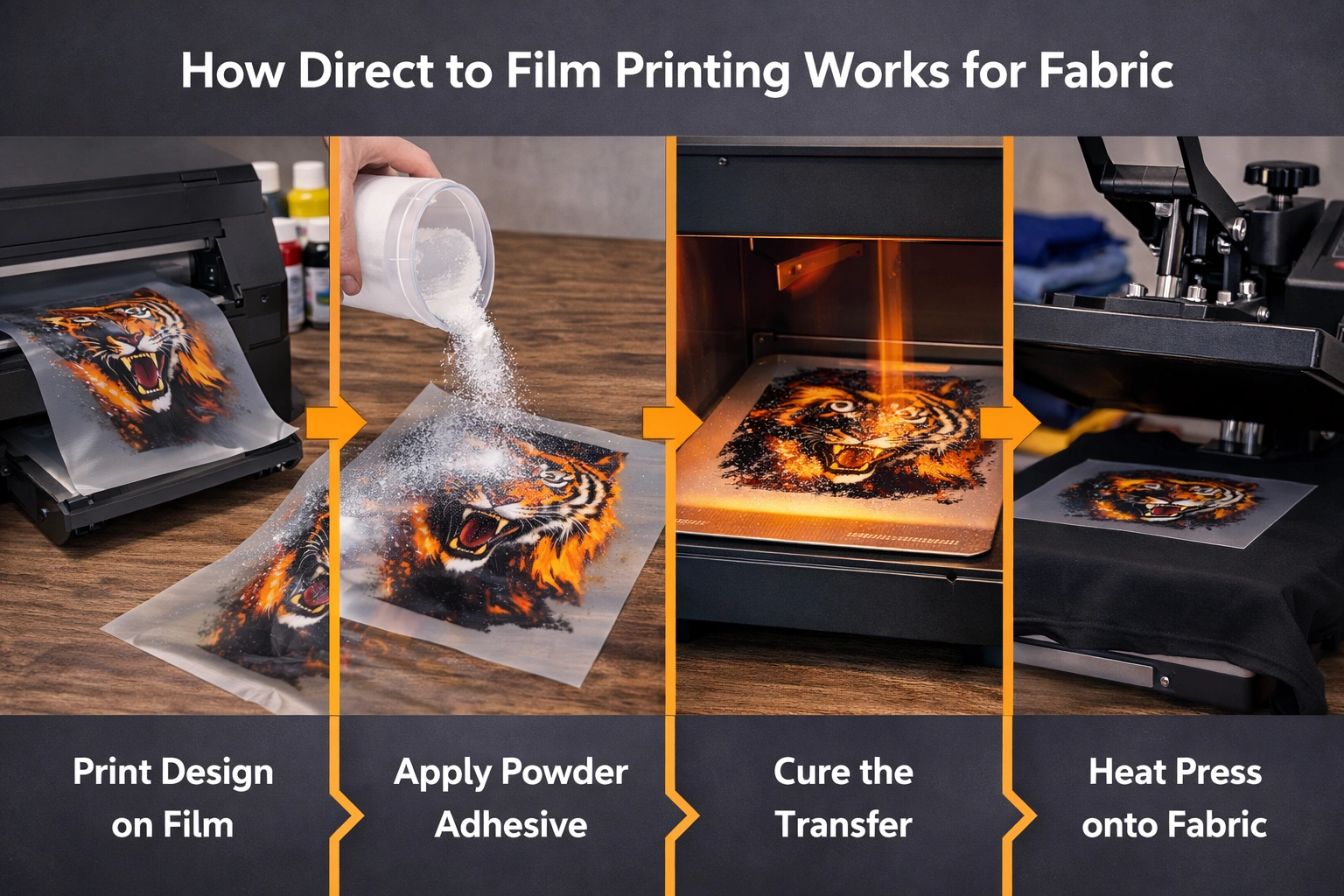
DTF printing is a modern textile decoration process where designs are printed onto a special PET film using DTF inks. After printing, an adhesive powder is applied to the design, which is then cured using heat. The finished transfer can later be heat-pressed onto garments or other fabric-based surfaces.
This process separates printing from application, allowing designs to be stored, shipped, or applied on demand.
Key Characteristics of DTF Printing
Color Vibrancy
DTF printing produces rich, sharp, and consistent colors, including solid whites and fine gradients.
Material Compatibility
DTF transfers work on cotton, polyester, blends, nylon, denim, and even leather.
Durability
Properly applied DTF prints resist cracking, peeling, and fading, even after repeated washes.
Production Flexibility
Designs can be printed in advance and applied later, making inventory management easier.
Low Entry Barrier
DTF does not require expensive screens or plates, making it ideal for small orders.
Understanding Minimum Order Quantity (MOQ)
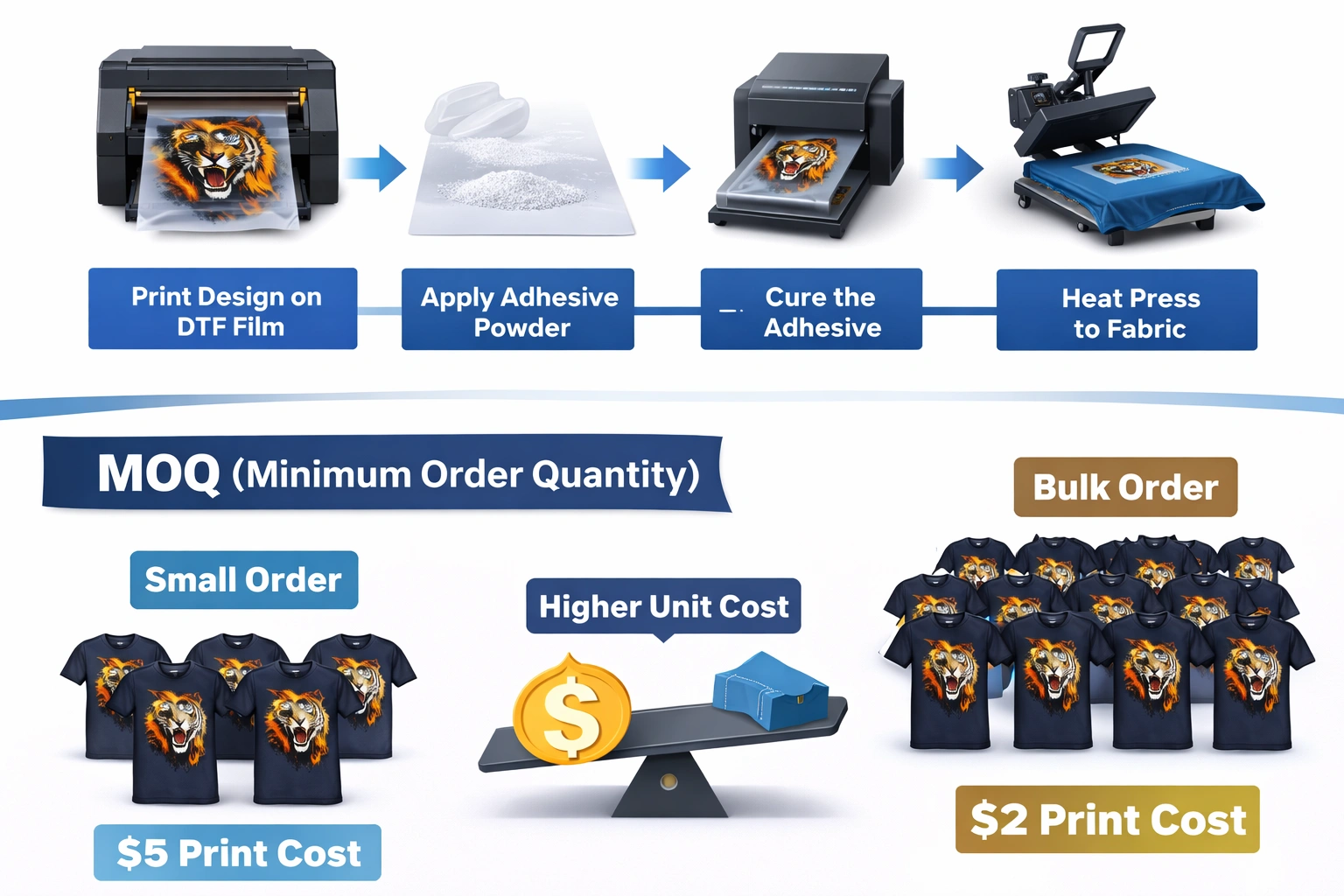
Minimum Order Quantity (MOQ) refers to the smallest number of units a supplier is willing to produce or sell in a single order. In DTF printing, MOQs can be defined in several ways:
Minimum number of prints per design
Minimum film size (for example, A3 or A4 sheets)
Minimum order value (monetary threshold)
MOQs exist to ensure that production remains efficient and profitable for suppliers while maintaining consistent quality.
Why MOQs Matter in DTF Printing
MOQs directly influence your pricing, profit margins, production planning, and inventory strategy. Ignoring MOQ considerations can result in unnecessary costs or missed opportunities.
Cost Efficiency
Printing setup, ink usage, film handling, and curing all involve fixed costs. Very small orders may increase the cost per print significantly.
Production Planning
Suppliers organize workflows based on batch sizes. MOQs help streamline scheduling and reduce downtime.
Inventory Control
Understanding MOQ helps prevent overstocking designs that may not sell or under-ordering high-demand products.
Risk Management
Lower MOQs reduce financial risk when launching new designs or seasonal collections.
Typical MOQ Ranges in DTF Printing
There is no universal MOQ for DTF printing. However, most suppliers follow general ranges based on their production scale.
Small print shops: 5–10 transfers per design
Medium suppliers: 20–50 transfers per design
Large commercial suppliers: 100+ transfers per design or minimum sheet quantities
Some suppliers apply MOQs per order instead of per design, allowing multiple designs in one batch as long as the total quantity meets the requirement.
Factors That Influence DTF Printing MOQ
1. Supplier Size and Equipment
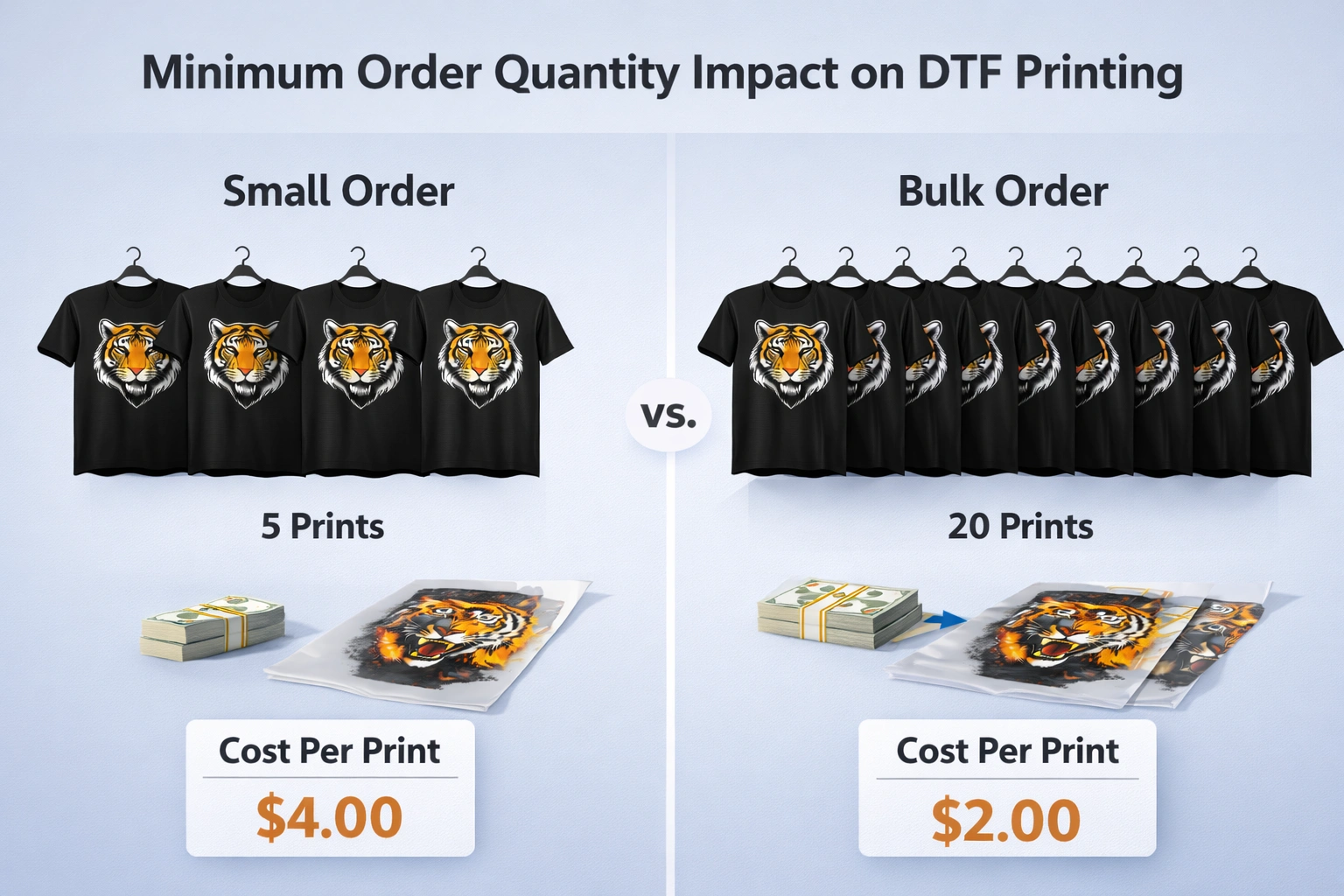
High-volume production facilities often require higher MOQs to keep machines running efficiently. Smaller shops are more flexible but may charge higher per-unit prices.
2. Design Size and Coverage
Large designs consume more ink, film, and adhesive powder, which can increase the minimum quantity required.
3. Color Complexity
Designs with heavy white ink layers or multiple color gradients may require higher MOQs to justify setup time.
4. Customization Level
Highly customized or personalized prints may have lower MOQs but higher per-unit costs.
5. Order Frequency
Regular clients often receive more flexible MOQ terms compared to one-time buyers.
How to Find the Right MOQ for Your Business
Step 1: Define Your Business Goals
Ask yourself:
Are you testing a new design?
Are you fulfilling custom client orders?
Are you producing for retail resale?
Clear goals help determine whether low MOQ flexibility or bulk pricing is more important.
Step 2: Evaluate Demand Forecasts
Analyze your sales data, audience size, and expected order volume. Printing too few units may cause delays, while printing too many can lead to unsold inventory.
Step 3: Compare Multiple Suppliers
Never rely on a single supplier quote. Compare:
MOQ requirements
Per-unit pricing
Turnaround time
Quality consistency
Some suppliers offer tiered pricing where costs drop significantly at higher quantities.
Step 4: Balance Cost vs Flexibility
Lower MOQs provide flexibility but often come with higher costs per print. Higher MOQs reduce cost per unit but increase upfront investment.
The best approach is to calculate break-even points for different order sizes.
MOQ Strategies for Different Business Models
Small Businesses and Startups
Choose suppliers with low MOQs
Focus on best-selling designs
Avoid overproduction
Prioritize fast turnaround
Online Custom Apparel Stores
Use print-on-demand or low MOQ suppliers
Batch similar orders
Keep minimal inventory
Wholesale and Bulk Sellers
Negotiate higher MOQ discounts
Standardize designs
Optimize production scheduling
Print Service Providers
Offer multiple MOQ tiers to customers
Educate clients on cost benefits
Bundle designs to meet supplier MOQs
Common MOQ Mistakes to Avoid
Ordering Too Small
Very low quantities can lead to high per-unit costs, reducing profit margins.
Ignoring Supplier Policies
Overlooking setup fees, sheet size limits, or design-based MOQs can cause unexpected charges.
Compromising on Quality
Selecting the lowest MOQ supplier without quality checks can damage brand reputation.
Lack of Negotiation
Many suppliers are open to negotiation, especially for repeat orders.
Benefits of Flexible MOQ Policies
Flexible MOQs empower businesses to operate more efficiently.
Reduced financial risk
Faster market testing
Higher design experimentation
Improved cash flow management
Flexibility is particularly valuable in fashion and promotional markets where trends change rapidly.
How to Negotiate Better MOQ Terms
Commit to repeat orders
Combine multiple designs
Offer longer-term partnerships
Pay upfront for better pricing
Clear communication and consistency build trust with suppliers over time.
Future Trends in DTF Printing MOQs
As DTF technology advances, MOQs are expected to become even more flexible due to:
Faster printers
Improved ink efficiency
Automated workflows
Growing competition among suppliers
This trend will benefit small businesses and creators by lowering entry barriers.
Conclusion
Understanding minimum order quantity in DTF printing is not just about meeting supplier requirements—it is about making smarter business decisions. The right MOQ helps you control costs, reduce risk, manage inventory, and scale efficiently.
By carefully assessing your needs, comparing suppliers, and planning strategically, you can find the perfect balance between flexibility and affordability. Whether you are launching a new brand, expanding your product line, or optimizing production, mastering MOQ strategy will give you a competitive edge in the evolving DTF printing market.explore our high-quality DTF printers here and empower your printing journey.
Frequently Asked Questions (FAQ)
What is the standard MOQ for DTF printing?
Most suppliers set MOQs between 5 and 50 prints per design, depending on production capacity.
Can multiple designs be included in one order?
Yes, many suppliers allow mixed designs, but MOQs may apply per design or per sheet.
Does low MOQ increase cost?
Yes, lower MOQs often result in higher per-unit pricing due to setup and material costs.
Is MOQ negotiable?
In many cases, yes—especially for repeat customers or bulk commitments.
Which MOQ is best for beginners?
Low MOQ suppliers are ideal for beginners testing designs or entering the market.