

 HOME
HOME PRODUCT CENTER
 ABOUT US
 DOWNLOAD CENTER
 SUPPORT CENTER
 SUBSCRIBE
 BLOG
BLOGDTF Powder Shaker Mesh Size Explained
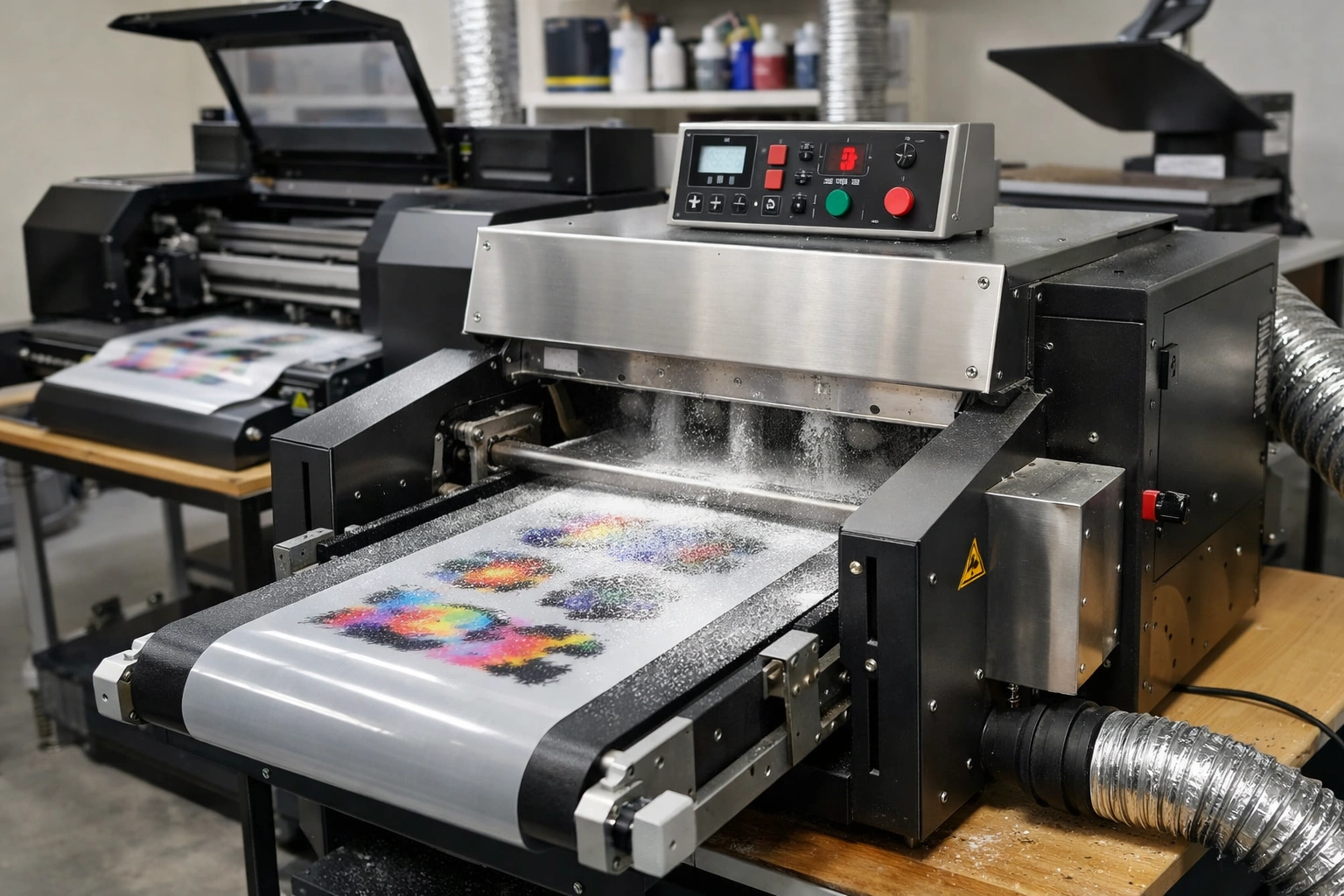
Direct to Film (DTF) printing has rapidly become one of the most preferred digital printing technologies for apparel and textile decoration. Its ability to deliver vibrant colors, fine details, and long-lasting prints across a wide range of fabrics makes it ideal for both small businesses and large-scale production units. However, achieving consistent and premium output in DTF printing is not just about using a good printer or high-quality ink. One of the most overlooked yet critical components in the entire workflow is the DTF powder shaker, particularly its mesh size.
The mesh size of a powder shaker directly controls how adhesive powder is applied to the printed film. This single factor influences adhesion strength, surface smoothness, color clarity, wash durability, production efficiency, and overall print quality. Many printing issues—such as rough textures, weak bonding, cracking, dull colors, or excessive powder waste—can often be traced back to an incorrect mesh size selection.
This article provides a deep, practical, and production-focused explanation of how DTF powder shaker mesh size impacts transfer quality. Whether you are a beginner exploring DTF printing or an experienced print professional looking to optimize results, this guide will help you make informed decisions and avoid costly mistakes.
Understanding the Role of DTF Powder in Printing
In the DTF process, adhesive powder plays the role of a bonding agent between the printed ink and the final substrate. After the design is printed onto a PET film using DTF inks, adhesive powder is applied to the wet ink layer. This powder melts during the curing process and later reactivates under heat pressing, permanently bonding the design to the fabric.
The quality of this adhesive layer determines:
How well the print sticks to the fabric
How smooth the final surface feels
How bright and accurate the colors appear
How long the print lasts after washing and stretching
Uneven or excessive powder application can ruin even the best-designed artwork. That is why controlled and uniform powder distribution is essential—and this is where mesh size becomes critical.
What Does Mesh Size Mean in a DTF Powder Shaker?
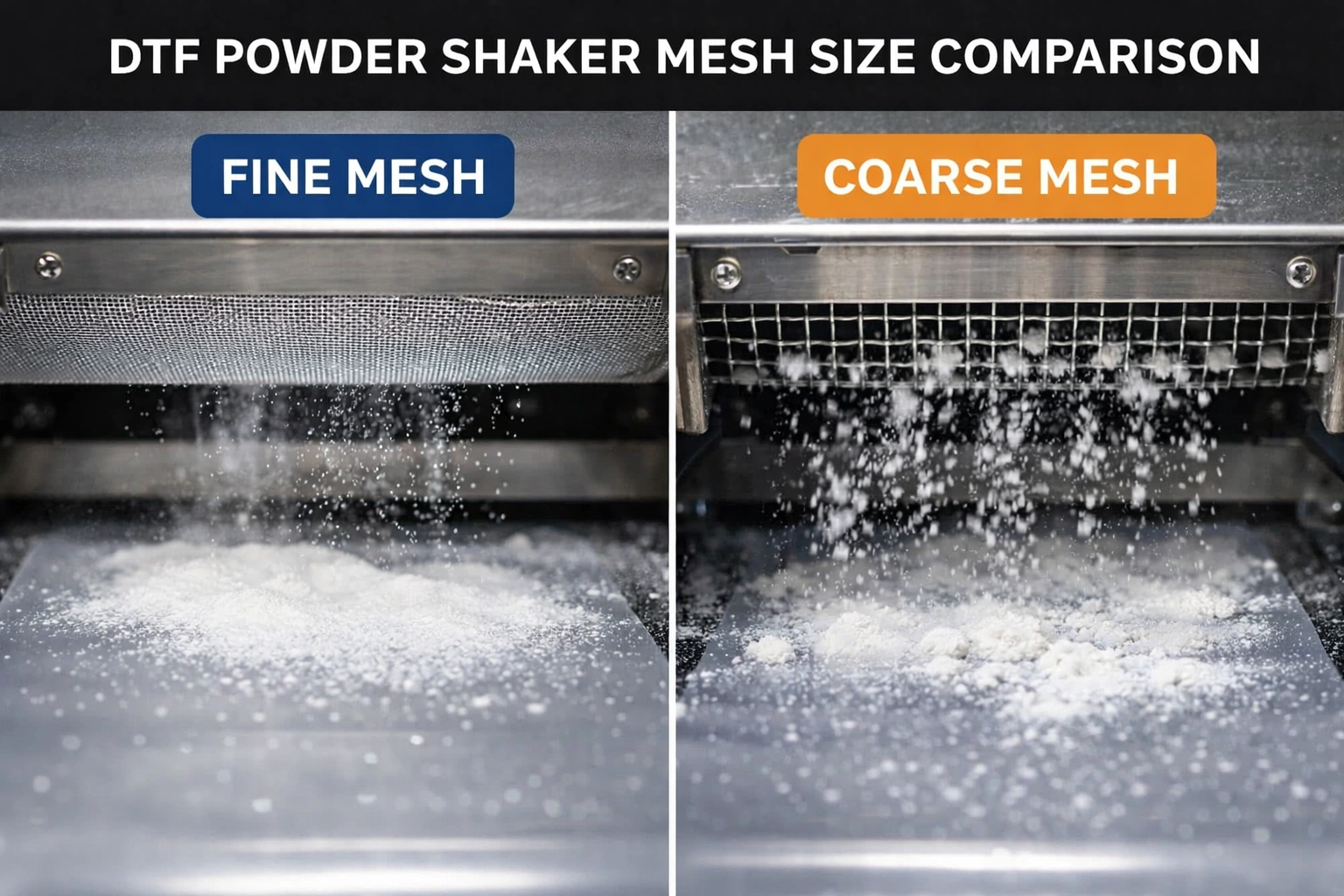
Mesh size refers to the number of openings per inch in the shaker screen. It determines how much powder can pass through and how evenly it is distributed over the printed film.
Fine mesh = more openings per inch → smaller powder flow
Coarse mesh = fewer openings per inch → heavier powder flow
For example:
100–120 mesh: Fine application
80–100 mesh: Medium application
60–80 mesh: Heavy application
Each range serves a specific purpose and must be matched carefully with design type, powder quality, fabric, and production speed.
Why Mesh Size Matters in DTF Transfer Quality
Mesh size is not just a mechanical specification—it directly affects multiple performance parameters of the final print.
1. Adhesive Layer Control
A fine mesh creates a thinner, more controlled adhesive layer. This helps the ink bond properly without forming lumps or uneven textures. A thick adhesive layer caused by coarse mesh can lead to raised prints, rough touch, and cracking after washing.
2. Surface Smoothness and Feel
Prints applied with the correct mesh size feel softer and more natural on fabric. Excess powder from a coarse mesh creates a stiff, rubbery surface that customers often dislike.
3. Color Sharpness and Detail Retention
Fine mesh sizes allow ink details to remain crisp. When too much powder covers the ink, small details can blur, text may lose sharp edges, and gradients may appear muddy.
4. Wash Durability
Uniform powder application improves wash resistance. Inconsistent powder coverage often results in partial peeling or cracking after repeated washes.
Fine Mesh vs Medium Mesh vs Coarse Mesh: A Detailed Comparison
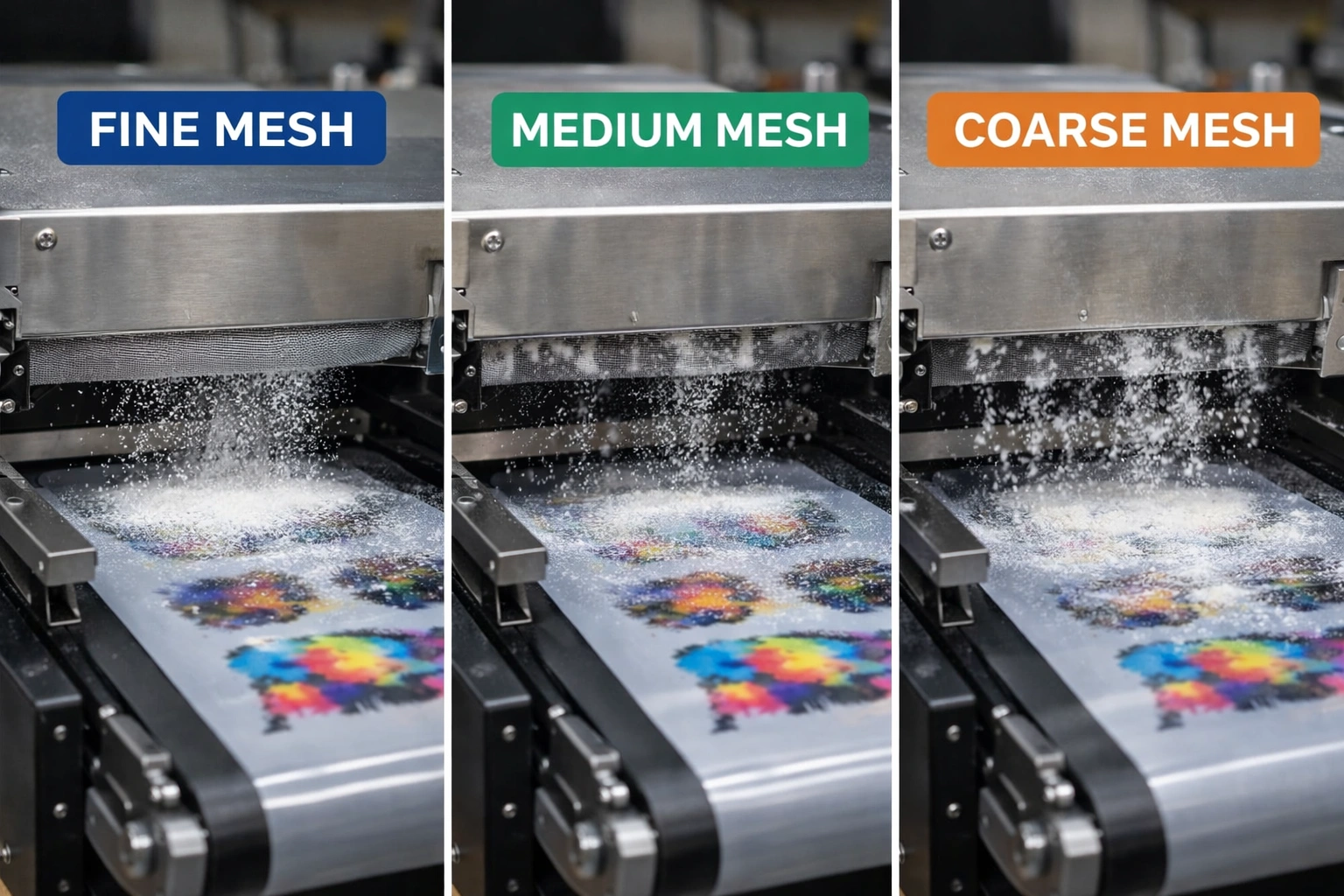
Fine Mesh Powder Shakers (100–150 Mesh)
Fine mesh shakers are best suited for high-detail prints and premium quality output.
Advantages
Precise powder application
Excellent detail retention
Smooth finish
Better color vibrancy
Lower powder consumption
Limitations
Slower production speed
Requires good powder quality
Needs regular cleaning to avoid clogging
Best for
Small text designs
Photorealistic artwork
Fashion garments
Premium T-shirts and hoodies
Medium Mesh Powder Shakers (80–100 Mesh)
Medium mesh offers a balance between quality and productivity.
Advantages
Good coverage with moderate control
Faster workflow than fine mesh
Suitable for most commercial jobs
Limitations
Slightly thicker feel than fine mesh
May struggle with ultra-fine details
Best for
Logos
Standard apparel prints
Daily production jobs
Coarse Mesh Powder Shakers (60–80 Mesh)
Coarse mesh allows heavy powder flow and faster operation.
Advantages
Strong adhesion
Faster processing
Works well with thick inks
Limitations
Rough surface texture
Higher powder waste
Reduced color sharpness
Best for
Large solid designs
Workwear
Promotional items
Thick fabrics
How Mesh Size Impacts Color Vibrancy
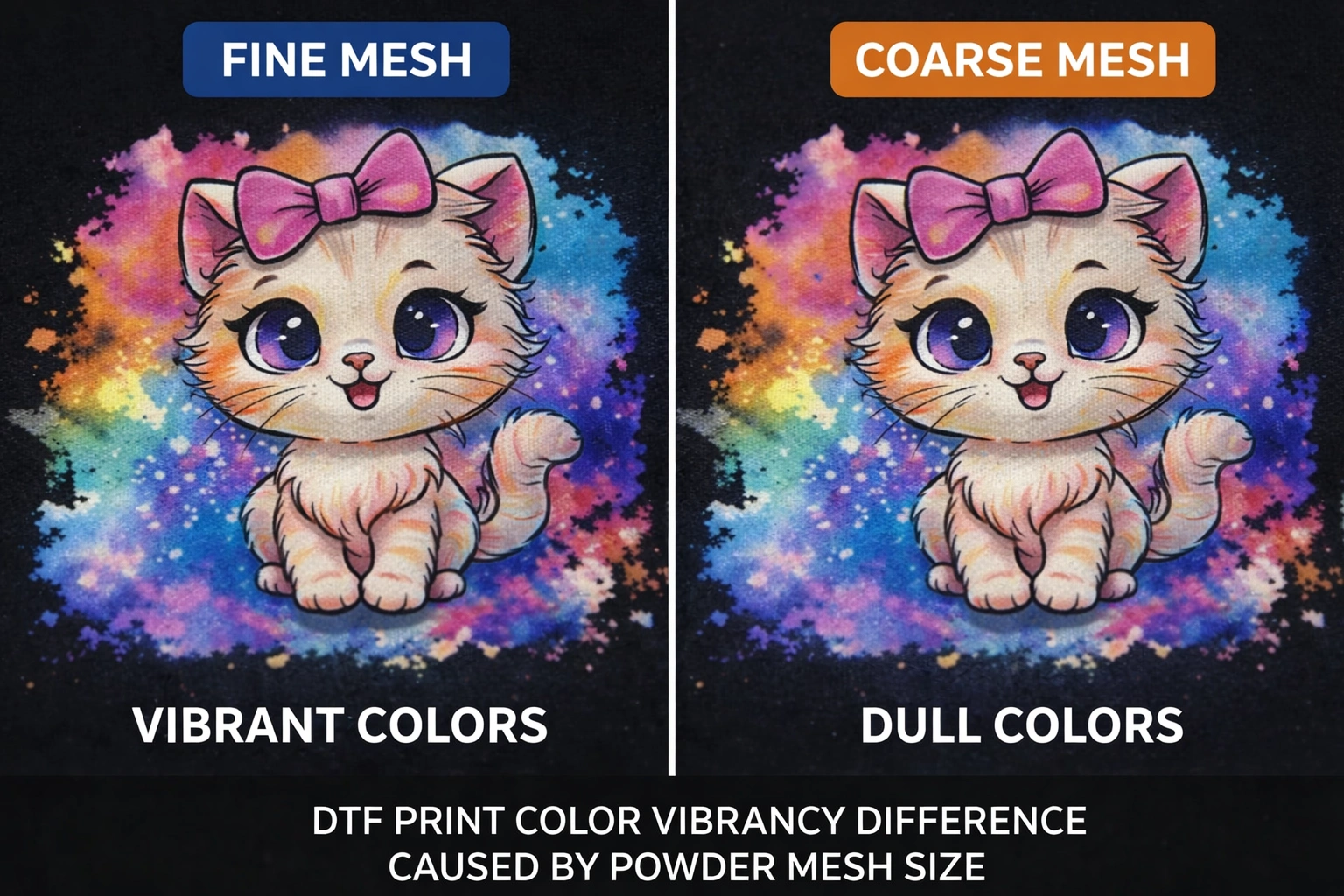
Color vibrancy in DTF printing depends on how well the ink layer remains visible after powder application. Fine mesh sizes prevent over-coverage, allowing light to reflect properly from the ink layer. This results in richer colors and sharper contrasts.
With coarse mesh, excessive powder partially covers the ink surface, diffusing light and dulling colors. This is especially noticeable in:
Bright reds
Neon shades
Gradients
Skin tones
For brands that prioritize visual appeal, mesh size selection becomes a branding decision, not just a technical one.
Mesh Size and Transfer Efficiency
Transfer efficiency refers to how consistently a print transfers from film to fabric without defects. Proper mesh size ensures:
Even melting during curing
Uniform heat reactivation
Clean peel without residue
Incorrect mesh size can cause:
Powder gaps → weak adhesion
Powder buildup → cracking
Uneven melting → peeling edges
Fine and medium mesh sizes generally offer higher transfer success rates when calibrated correctly.
Cost and Waste Considerations
Mesh size directly impacts operating costs.
Fine mesh
Lower powder consumption
Fewer reprints
Reduced waste
Higher upfront equipment cost
Coarse mesh
Higher powder usage
More cleanup
Increased chance of rejects
Over time, fine or medium mesh systems usually deliver better return on investment despite higher initial costs.
Choosing the Right Mesh Size for Your DTF Setup
Design Type
Detailed designs → Fine mesh
Bold graphics → Medium or coarse mesh
Fabric Material
Cotton & blends → Fine or medium mesh
Polyester & thick fabrics → Medium or coarse mesh
Powder Quality
Fine powders → Fine mesh
Granular powders → Medium mesh
Production Volume
Low to medium volume → Fine mesh
High volume → Medium mesh
Common Mistakes Related to Mesh Size
Using coarse mesh for detailed designs
Ignoring powder quality compatibility
Not cleaning mesh regularly
Assuming one mesh fits all jobs
Prioritizing speed over quality
Avoiding these mistakes can dramatically improve print consistency.
Maintenance Tips for Long-Term Performance
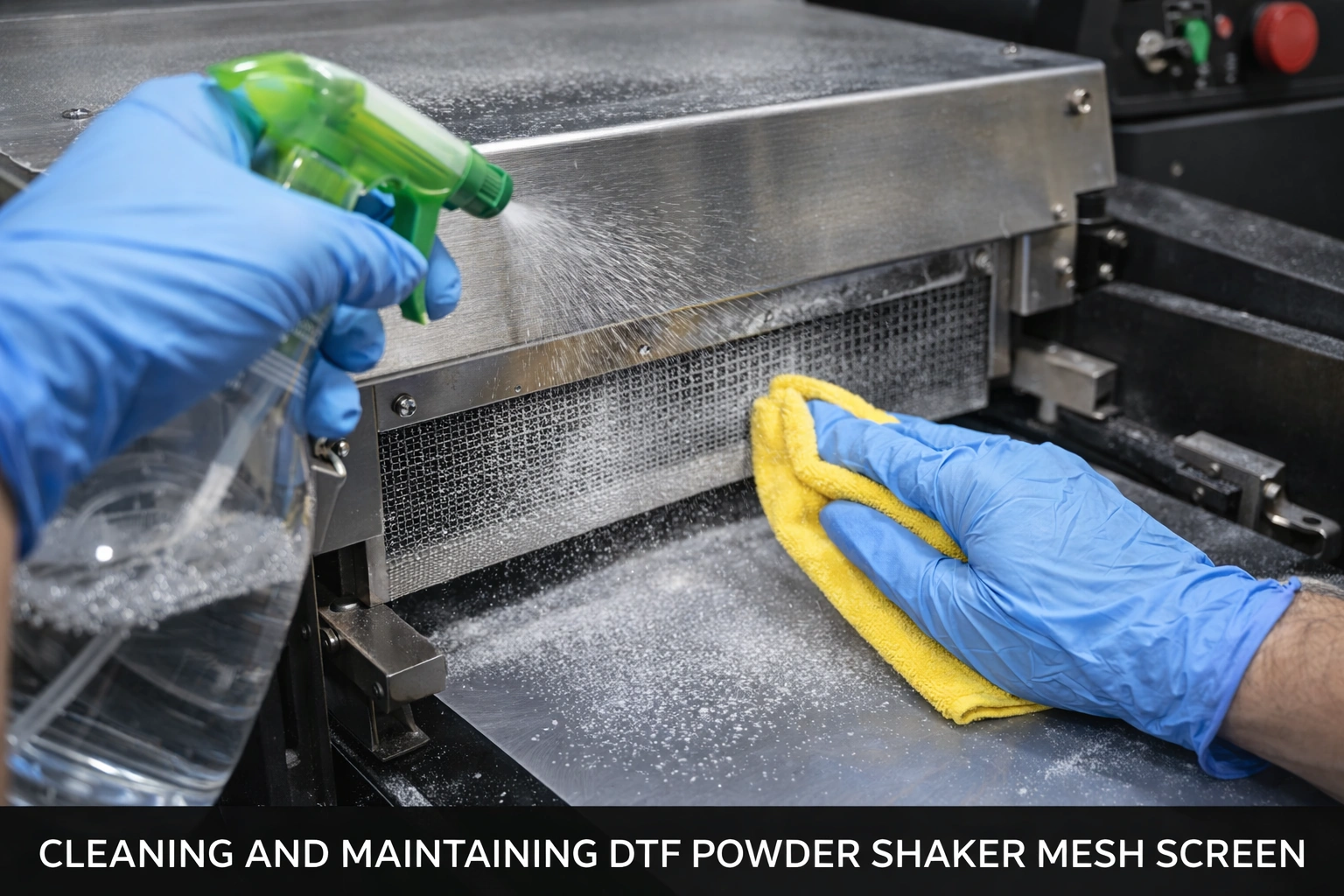
Clean mesh screens daily
Avoid moisture in powder storage
Inspect mesh for wear
Replace damaged screens immediately
Calibrate shaker settings periodically
Well-maintained mesh screens maintain uniform powder flow and reduce downtime.
Conclusion
The mesh size of a DTF powder shaker is one of the most influential yet underestimated factors in achieving high-quality DTF prints. From adhesive control and surface feel to color vibrancy and durability, mesh size affects every stage of the transfer process.
There is no universal “best” mesh size. The right choice depends on your design complexity, fabric type, powder quality, and production goals. By understanding how different mesh sizes perform and aligning them with your workflow, you can significantly improve print quality, reduce waste, and increase customer satisfaction.explore our high-quality DTF printers here
Mastering mesh size selection is not just a technical upgrade—it is a competitive advantage in the evolving DTF printing market.
Frequently Asked Questions (FAQ)
What mesh size is ideal for high-detail DTF prints?
A fine mesh between 100–150 is ideal for intricate designs and premium quality output.
Can one mesh size be used for all jobs?
No. Different designs and fabrics require different mesh sizes for optimal results.
Does mesh size affect wash durability?
Yes. Proper mesh size ensures uniform adhesion, improving wash resistance.
How often should mesh screens be cleaned?
Daily cleaning is recommended, especially for fine mesh screens.
Is fine mesh always better than coarse mesh?
Not always. Fine mesh offers better detail, but coarse mesh may be suitable for thick fabrics and bold designs.