

 HOME
HOME PRODUCT CENTER
 ABOUT US
 DOWNLOAD CENTER
 SUPPORT CENTER
 SUBSCRIBE
 BLOG
BLOGDTF Printer Tension Systems Explained
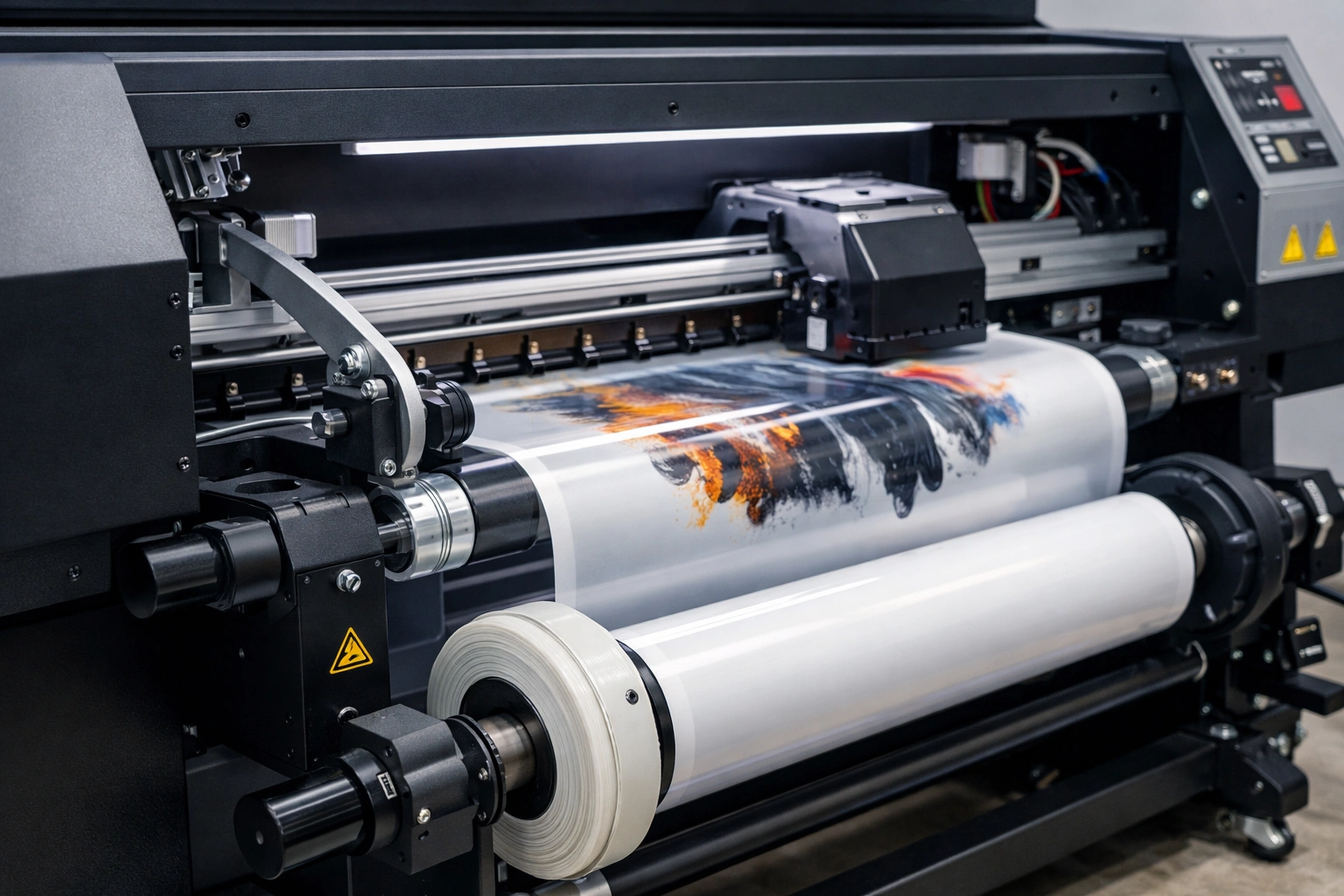
Direct to Film (DTF) printing has rapidly become one of the most preferred garment decoration technologies due to its flexibility, color vibrancy, and ability to print on a wide range of fabrics. From small print shops to large-scale apparel manufacturers, DTF printing offers an efficient solution for high-quality textile printing. However, while much attention is given to inks, print heads, and curing processes, one critical component often overlooked is the tension system.
The tension system plays a foundational role in ensuring smooth film movement, accurate printing, and consistent output. Even the most advanced DTF printer can produce poor results if the tension system is unstable or improperly calibrated. This article provides a deep, practical understanding of DTF printer tension systems, their types, working principles, challenges, maintenance practices, and how they directly impact print quality and production efficiency.
By the end of this guide, you will clearly understand why tension systems are essential and how optimizing them can significantly improve your DTF printing workflow.
Understanding DTF Printing Technology
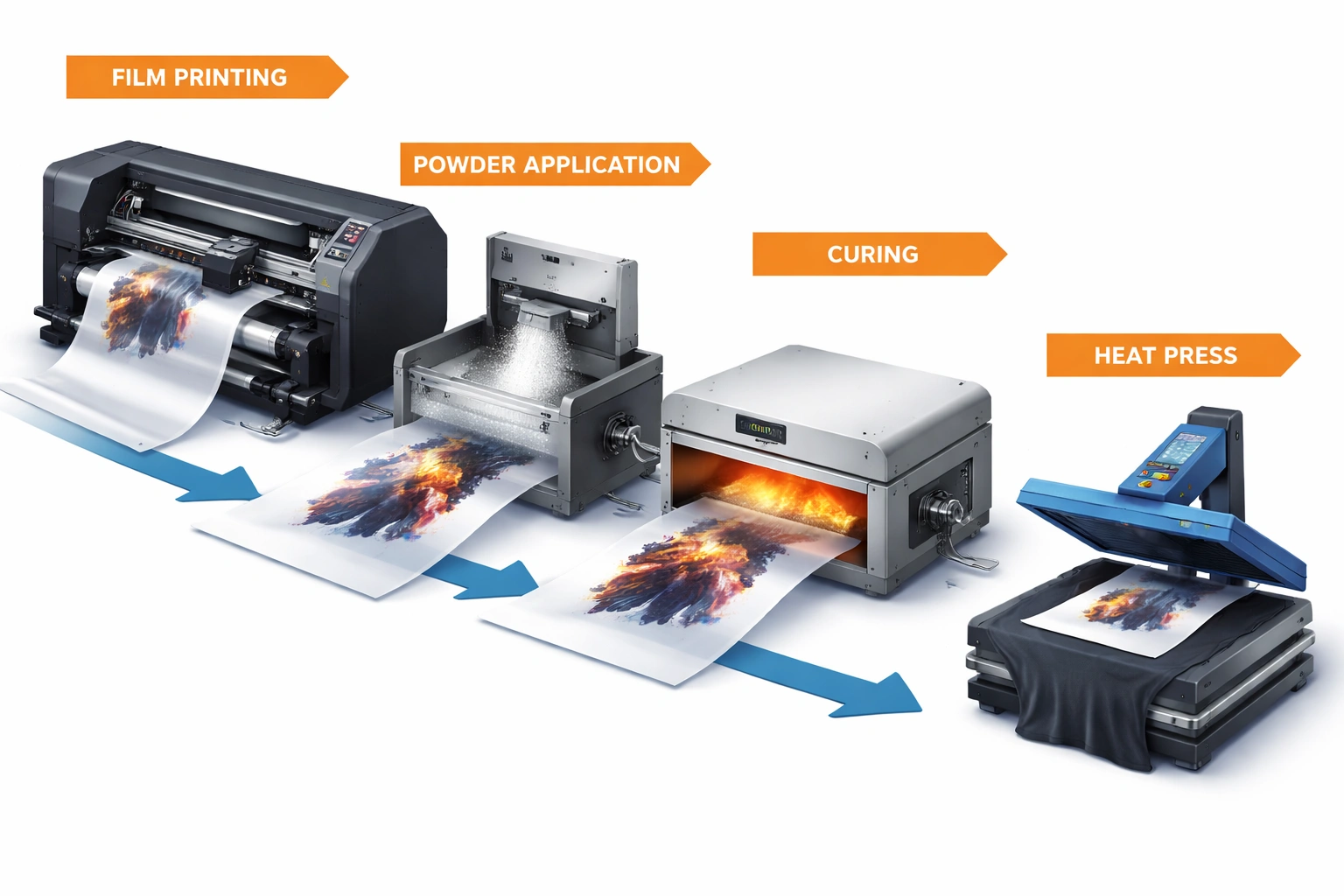
DTF printing is a digital transfer process where designs are printed onto a specially coated film instead of directly onto fabric. After printing, adhesive powder is applied, cured, and then heat-pressed onto garments. This method allows printers to work with cotton, polyester, blends, nylon, and even dark fabrics without pretreatment.
The accuracy of this entire process depends heavily on controlled film movement. The film must pass through the printer smoothly, evenly, and without distortion. This is where the tension system becomes indispensable.
Unlike paper printing, DTF films are thin, flexible, and sensitive to stretching or wrinkling. Any fluctuation in film tension can result in registration errors, ink spread, banding, or inconsistent adhesive application.
What Is a Tension System in a DTF Printer?
A tension system is a mechanical or electronic mechanism designed to regulate the amount of force applied to the DTF film as it moves through the printer. Its primary purpose is to maintain a stable, uniform tension level from the film supply roll to the take-up reel.
In simple terms, the tension system ensures that:
The film does not sag or slack
The film does not stretch or deform
The film remains flat and aligned during printing
The print head maintains a consistent distance from the film surface
Without proper tension control, the film feed becomes unpredictable, leading to quality defects and production downtime.
Why Tension Control Is Critical in DTF Printing
1. Film Stability During Printing
Stable film movement is essential for accurate ink placement. If the film shifts or vibrates while printing, the result can be blurred graphics or uneven ink layers. A properly tuned tension system keeps the film steady and flat throughout the printing cycle.
2. Consistent Print Registration
DTF designs often involve multiple passes of white and color inks. Any misalignment caused by inconsistent tension can lead to ghosting, color overlap errors, or halo effects around the design.
3. Protection of Print Heads
Uneven tension can cause the film to rise unexpectedly, increasing the risk of head strikes. Print head damage is one of the costliest issues in DTF printing, and proper tension control significantly reduces this risk.
4. Reduced Material Waste
Film misfeeds, wrinkles, and skewing often result in failed prints. By maintaining consistent tension, businesses can reduce wasted film, ink, powder, and labor.
5. Improved Production Speed
When tension is stable, printers can operate at higher speeds without compromising quality. This improves overall productivity and order turnaround time.
How DTF Printer Tension Systems Work
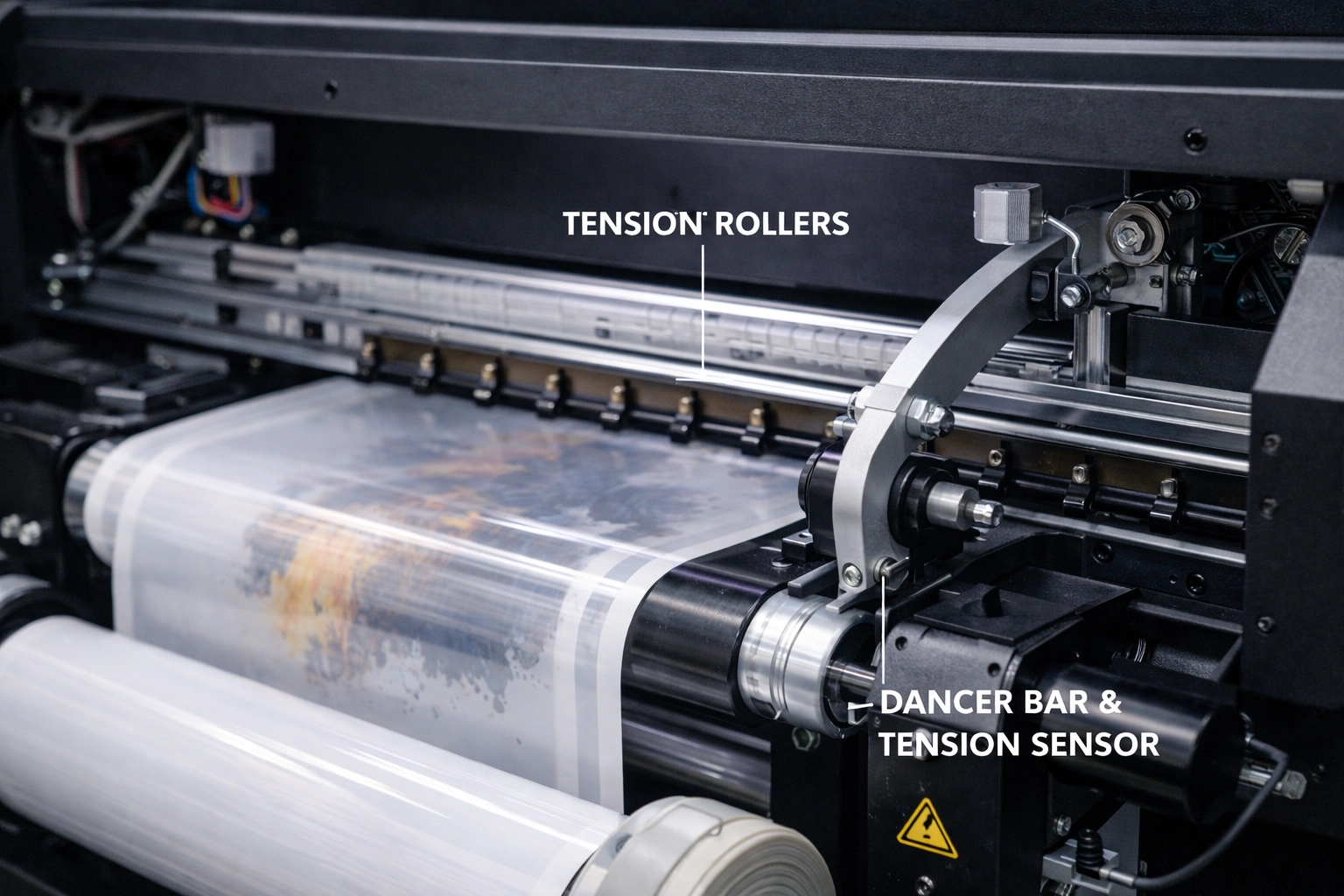
A typical DTF tension system works by balancing resistance between the film supply roll and the take-up mechanism. The system continuously compensates for changes in roll diameter, film weight, and printing speed.
Key components include:
Supply shaft or film holder
Tension rollers or dancer bars
Sensors or mechanical springs
Motors or pneumatic regulators
Take-up reel system
As the film unwinds, the tension system adjusts resistance to ensure uniform pressure regardless of how much film remains on the roll.
Types of Tension Systems Used in DTF Printers
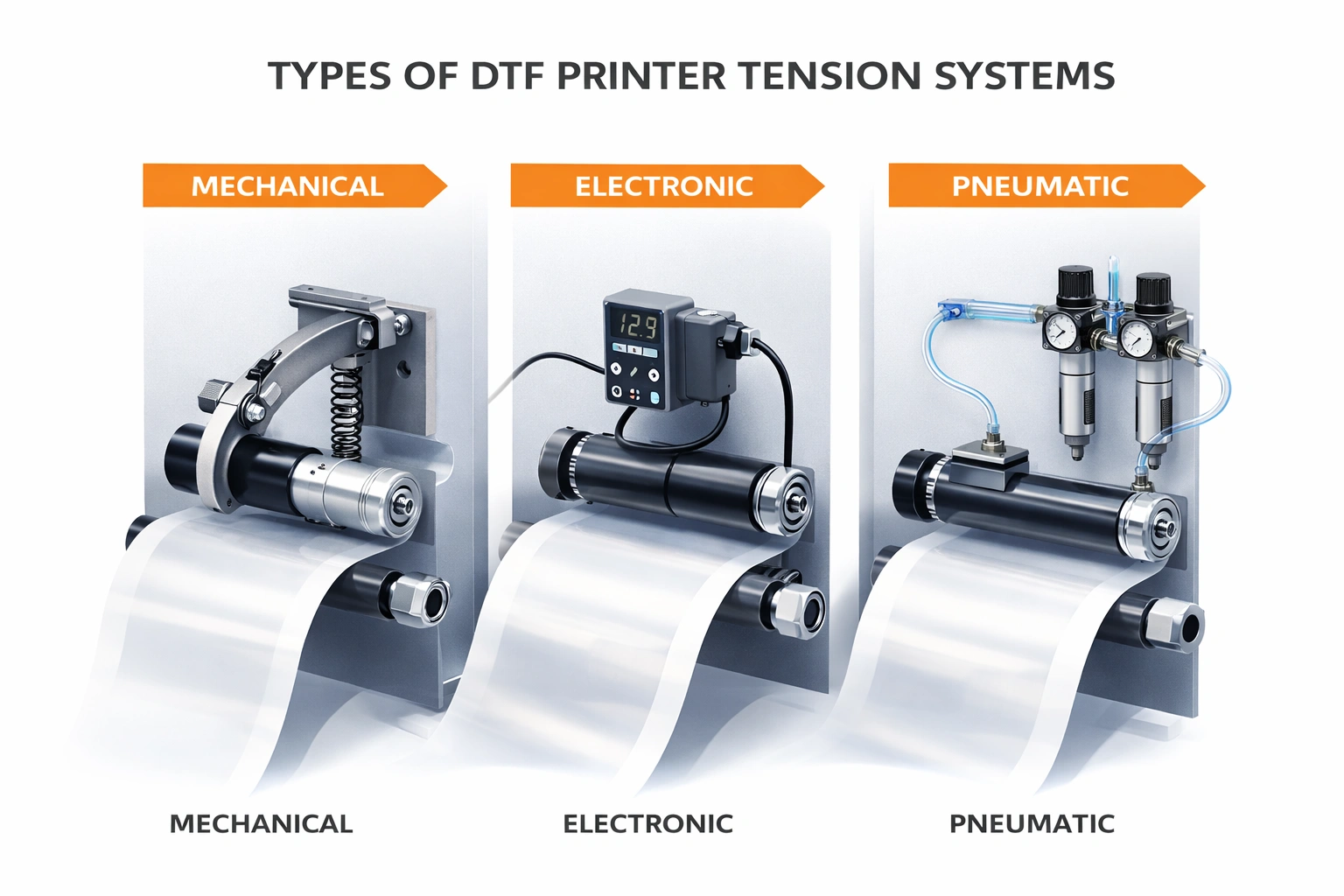
Mechanical Tension Systems
Mechanical tension systems rely on springs, weighted arms, or friction-based components to regulate film tension. These systems are commonly found in entry-level and mid-range DTF printers.
Advantages:
Simple design
Low cost
Easy to repair
Limitations:
Manual adjustment required
Less precise under variable speeds
Performance can degrade over time due to wear
Mechanical systems are best suited for small operations with consistent media usage.
Electronic Tension Control Systems
Electronic tension systems use sensors, servo motors, and control boards to automatically adjust film tension in real time. These systems are typically found in professional and industrial-grade DTF printers.
Advantages:
High precision
Automatic adjustment
Stable performance at high speeds
Limitations:
Higher cost
Requires skilled maintenance
More complex troubleshooting
Electronic systems are ideal for high-volume production environments where consistency and speed are critical.
Pneumatic Tension Systems
Pneumatic tension systems use controlled air pressure to regulate film tension. These systems respond quickly to tension changes and are highly sensitive.
Advantages:
Smooth and responsive control
Suitable for delicate films
Consistent tension under varying conditions
Limitations:
Requires air supply
More expensive setup
Needs regular air system maintenance
Pneumatic systems are often used in advanced industrial printing setups.
Key Features to Look for in a DTF Tension System
Adjustability
An effective tension system should allow easy adjustment based on film thickness, width, and printing speed. Whether manual or automatic, fine-tuning capability is essential.
Real-Time Feedback
Advanced systems include sensors that monitor tension continuously and make instant corrections. This prevents sudden changes that could affect print quality.
Material Compatibility
The tension system should work efficiently with various DTF film types, including matte, glossy, hot peel, and cold peel films.
Build Quality
Durable rollers, bearings, and guides reduce vibration and ensure long-term reliability.
Common Tension-Related Problems in DTF Printing
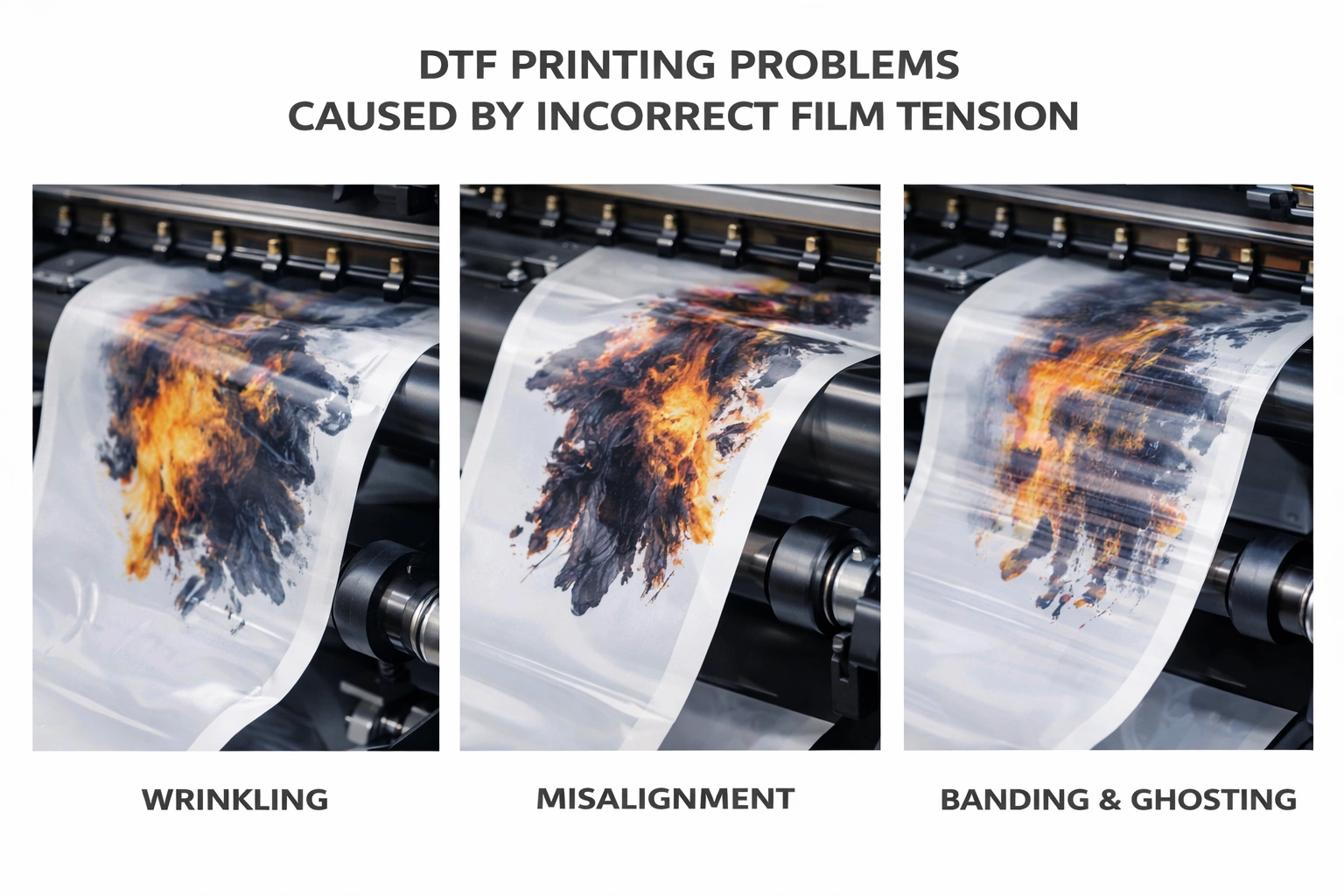
Wrinkled or Skewed Film
This usually indicates insufficient or uneven tension. It can cause distorted prints and poor adhesive bonding.
Banding or Ghosting
Inconsistent film movement can lead to irregular ink deposition, resulting in visible lines or double images.
Film Slippage
Excessively low tension may cause the film to slip during printing, affecting design placement accuracy.
Excessive Film Stretching
Over-tensioning can stretch the film, leading to size distortion and registration errors during heat transfer.
How to Optimize Tension Settings
Start with manufacturer-recommended settings
Adjust gradually, not abruptly
Test with small prints before full production
Monitor film behavior during printing
Recheck settings when changing film rolls
Consistency is more important than tightness. The goal is smooth, controlled movement—not maximum tension.
Maintenance Practices for Long-Term Performance
Regular maintenance ensures that the tension system continues to operate efficiently:
Clean rollers and guides weekly
Inspect springs, belts, and sensors
Lubricate moving parts if required
Replace worn components promptly
Calibrate electronic systems periodically
Preventive maintenance minimizes downtime and extends equipment life.
Choosing the Right DTF Printer Based on Tension System
When investing in a DTF printer, evaluate:
Production volume requirements
Types of films you plan to use
Available technical support
Ease of tension adjustment
Long-term maintenance costs
A reliable tension system may increase upfront cost but delivers better consistency and lower operating expenses over time.
Future Trends in DTF Tension Technology
As DTF printing continues to evolve, tension systems are becoming smarter and more automated. Emerging trends include:
AI-based tension optimization
Self-calibrating systems
Integration with print management software
Predictive maintenance alerts
These advancements aim to further reduce human error and maximize productivity.
Conclusion
Tension systems are a critical yet often underestimated component of DTF printers. They directly influence print quality, production efficiency, material usage, and equipment longevity. Whether mechanical, electronic, or pneumatic, a well-designed tension system ensures smooth film feeding and consistent results.
By understanding how tension systems work and maintaining them properly, print businesses can significantly enhance output quality while reducing waste and downtime. Investing time and attention in tension optimization is not optional—it is essential for long-term success in DTF printing.explore our high-quality DTF printers here
Frequently Asked Questions
What is the main function of a tension system in a DTF printer?
Its primary function is to maintain stable and consistent film movement during printing, ensuring accurate ink placement and high-quality output.
How often should tension settings be adjusted?
Adjustments should be made whenever film type, thickness, or width changes, and periodic checks should be performed during regular maintenance.
Can poor tension damage a DTF printer?
Yes, improper tension can lead to print head strikes, misfeeds, and mechanical stress, resulting in costly repairs.
Are automatic tension systems worth the investment?
For high-volume or professional printing operations, automatic systems offer better consistency, reduced errors, and improved productivity.
What signs indicate tension system problems?
Wrinkled film, ghosting, banding, skewed prints, and unusual noises are common indicators of tension-related issues.