

 HOME
HOME PRODUCT CENTER
 ABOUT US
 DOWNLOAD CENTER
 SUPPORT CENTER
 SUBSCRIBE
 BLOG
BLOGDTF vs DTG Printing: Differences in Fabric, Workflow, Cost and Production
Choosing between DTF and DTG printing can directly affect fabric compatibility, production workflow, operating costs, print quality, and the types of custom apparel a business can offer. Both technologies use digital inkjet printing and are suitable for on-demand apparel decoration, but they approach the printing process in very different ways.
In DTF vs DTG printing, the key distinction is simple: DTF prints the design onto a transfer film before it is heat-pressed onto the garment, while DTG prints ink directly onto the fabric. Understanding this difference makes it easier to select the right solution for your products, order volume, and production environment.
What Is the Difference Between DTF and DTG Printing?
DTF stands for Direct-to-Film. The design is printed onto a specialized PET transfer film using color and white ink. Adhesive powder is then applied to the printed area, followed by a curing stage. The finished transfer is finally applied to the garment with a heat press.
DTG, or Direct-to-Garment printing, applies textile ink directly to the garment. It is particularly well suited to cotton and cotton-blend apparel and is often selected for detailed, full-color artwork and small-batch personalized products. MTuTech describes its DTG systems as using water-based textile inks, while its DTF systems are designed for cotton, polyester, blends, and dark fabrics.
The difference in printing direction leads to different requirements for fabric, preparation, equipment, and finishing.
DTF vs DTG: Fabric Compatibility and Print Feel
Fabric selection is one of the most important factors in the DTF vs DTG decision.
DTG is generally strongest on cotton and cotton-rich garments. MTuTech’s current DTG guidance identifies 100% cotton as the preferred material, with cotton/polyester blends also producing good results. Polyester, nylon, and spandex may require additional considerations or specialized processes.
DTF is considerably more flexible across fabric types. A single DTF workflow can be used for cotton, polyester, blends, denim, canvas, nylon, and other textile products. It also works effectively with both light and dark garments because the white ink layer provides an opaque base for the color image.
The finished print also feels different. DTG ink becomes part of the textile surface and can provide a soft, natural hand feel, particularly on suitable cotton garments. DTF creates a transfer layer on top of the fabric, producing a smooth and slightly more noticeable surface.
Fabric Comparison
Factor | DTF Printing | DTG Printing |
Cotton | Excellent | Excellent |
Polyester | Excellent | More limited |
Cotton blends | Excellent | Good |
Nylon | Suitable for many applications | More challenging |
Dark garments | Excellent | Requires white-ink workflow |
White/light garments | Excellent | Excellent |
Print feel | Smooth transfer surface | Softer, integrated feel |
Fabric flexibility | Very high | Best on cotton-based fabrics |
For businesses producing different garment types, DTF Printers can provide a broader material range with one core workflow.
DTF vs DTG Workflow: Step-by-Step Guides
The production workflow is another major difference between the two technologies.
Step-by-Step Guide: DTF Printing
Step 1: Prepare the artwork
Create the design in the appropriate color space and prepare the file for the DTF RIP workflow.
Step 2: Print onto transfer film
The printer applies CMYK color and a white ink layer to the DTF film.
Step 3: Apply adhesive powder
Hot-melt adhesive powder is applied to the wet printed area. Excess powder is removed before curing.
Step 4: Cure the transfer
Heat cures the adhesive, creating a finished transfer that can be stored or immediately applied.
Step 5: Heat press the garment
Place the transfer on the apparel and apply the recommended heat, pressure, and time settings.
Step 6: Peel and finish
After pressing and the appropriate cooling period, peel away the film to reveal the finished graphic.
MTuTech’s DTF workflow follows this print–powder–cure–press process, with its current systems designed to integrate automatic powder handling and curing depending on the model.
Step-by-Step Guide: DTG Printing
Step 1: Prepare the artwork
Adjust the artwork for the garment’s printable area and optimize resolution and color.
Step 2: Prepare the garment
The garment is positioned on the appropriate platen. Pretreatment is commonly required, particularly when printing on dark garments.
Step 3: Load the garment
Place the prepared garment flat and align it accurately.
Step 4: Print directly onto the fabric
The DTG printer lays down the color image and white ink underbase when required.
Step 5: Cure the print
Heat pressing or an appropriate curing system fixes the ink to the garment.
Step 6: Inspect and pack
Check color, alignment, coverage, and print quality before the finished product is packed.
Because the garment itself goes through the printer, DTG eliminates the separate film-transfer stage. However, garment preparation can add labor and handling to the workflow.
Cost Comparison: Which Technology Is More Economical?
Equipment price is only one part of the total cost of apparel printing. A more useful comparison considers consumables, labor, pretreatment, production time, maintenance, and the number of products that can be supported.
For example, MTuTech’s current DTF information estimates consumable costs for a standard 12 × 12-inch design at approximately $0.35–$0.63 per shirt, including film, adhesive powder, and ink. Its DTG cost guidance gives approximately $0.70–$1.45 for light garments and $1.70–$3.20 for dark garments, including ink, pretreatment, and labor. Actual costs vary according to artwork coverage, ink density, garment type, equipment, labor rates, and production settings.
Cost Comparison Table
Cost Factor | DTF | DTG |
Ink | Required | Required |
Transfer film | Required | Not required |
Adhesive powder | Required | Not required |
Pretreatment | Generally not required | Commonly required |
Heat press/curing | Required | Required |
Labor steps | More finishing stages | More garment preparation |
Consumable cost | Often lower per transfer | Can be higher, especially on dark garments |
Best cost advantage | Mixed fabrics, repeat transfers, scalable production | Small batches of premium cotton apparel |
DTF can also create an additional business opportunity: transfers can be produced in advance and applied later. This allows printers to separate transfer production from garment fulfillment and potentially reduce turnaround pressure during busy periods.
Production Speed and Scalability
Production speed depends heavily on printer configuration, artwork size, print mode, operator workflow, and finishing equipment, so advertised machine speed should not be treated as a direct one-to-one comparison.
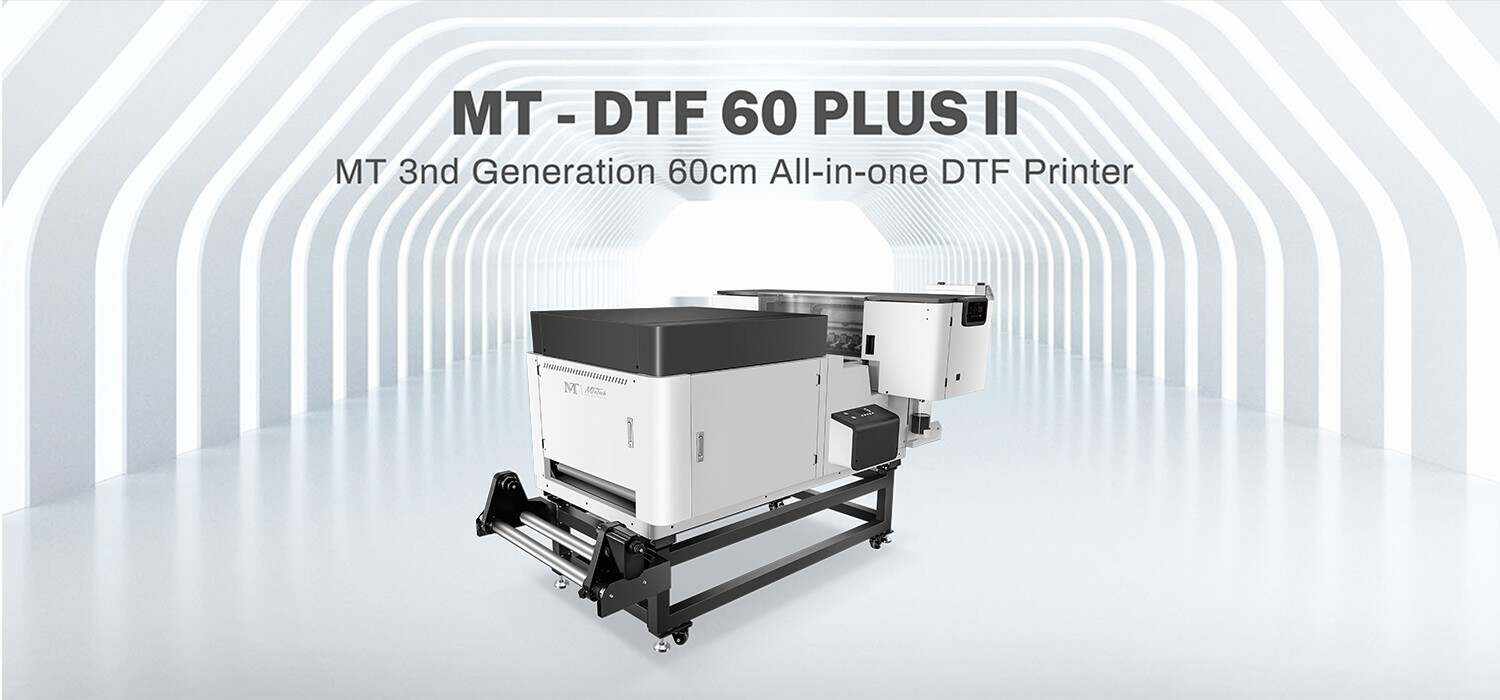
MTuTech’s current DTF portfolio includes systems ranging from compact models to production-oriented 60 cm machines. Its MT-DTF 60Plus II, for example, is listed at up to 20 m²/h and up to 220 T-shirt prints per hour based on a 30 × 30 cm print area.
Its DTG lineup includes both single-station and double-station systems. The current MT-DTG is listed at approximately one minute per T-shirt, while the MT-DTG Pro is listed at approximately 40 seconds per T-shirt under specified production conditions.
The practical difference is therefore not simply “which printer is faster.” DTF separates the printing process from garment application, which can make production planning easier when multiple garments use the same design. DTG can be highly efficient for direct, single-garment production where the artwork changes frequently.
Which Printing Method Fits Your Business?
The best choice in the DTF vs DTG debate depends on what you sell and how you produce it.
Choose DTF When Fabric Versatility Matters
DTF is a strong option for businesses producing garments across cotton, polyester, blends, sportswear, workwear, denim, and other materials. It is also suitable when dark garments and bold, full-color graphics are part of the product mix.
Choose DTG When Soft Hand Feel Is the Priority
DTG is particularly attractive for cotton-based T-shirts, sweatshirts, and other garments where a soft print feel and detailed photographic artwork are important.
Choose DTF for Flexible Production Models
DTF works well for businesses handling varied order quantities, multiple garment styles, and designs that may need to be printed before the final garment is selected.
Choose DTG for Direct On-Demand Personalization
DTG can be an efficient choice when each garment is printed individually and customers frequently request different artwork, especially for cotton apparel.
DTF vs DTG: Final Comparison
Feature | DTF | DTG |
Printing method | Print on film, then transfer | Print directly on garment |
Fabric range | Very broad | Primarily cotton-based |
Dark garments | Excellent | Excellent with appropriate white-ink process |
Soft hand feel | Good | Excellent |
Pretreatment | Generally unnecessary | Often required |
Workflow | Print → powder → cure → press | Prepare → print → cure |
Production flexibility | Excellent | Very good |
Small custom orders | Excellent | Excellent |
Mixed-fabric orders | Excellent | More limited |
Transfer storage | Possible | No |
Best fit | Versatile apparel production | Premium cotton-focused personalization |
Build a More Flexible Custom Apparel Production Strategy
There is no universal winner in the DTF vs DTG comparison. DTF offers greater fabric versatility, a transferable production workflow, and strong economics for businesses serving diverse apparel categories. DTG offers a direct printing process and a soft, integrated print feel that is particularly appealing for cotton-based products.
For businesses that want to expand beyond a single garment type, a broader Custom Apparel Solution can combine the right equipment, workflow, and application strategy according to production volume and product mix.
MTuTech currently offers both DTF and DTG equipment, including entry-level and production-oriented configurations. Reviewing the available DTG Printers alongside DTF systems can help businesses compare fabric requirements, workflow complexity, throughput, and operating economics before investing in equipment.
Ultimately, the right technology is the one that matches your garments, artwork, order volume, labor structure, and growth plan. For broad fabric compatibility and highly flexible apparel production, DTF is often the more versatile choice. For cotton-focused products where print feel and direct garment personalization are priorities, DTG remains a highly capable solution.