

 HOME
HOME PRODUCT CENTER
 ABOUT US
 DOWNLOAD CENTER
 SUPPORT CENTER
 SUBSCRIBE
 BLOG
BLOG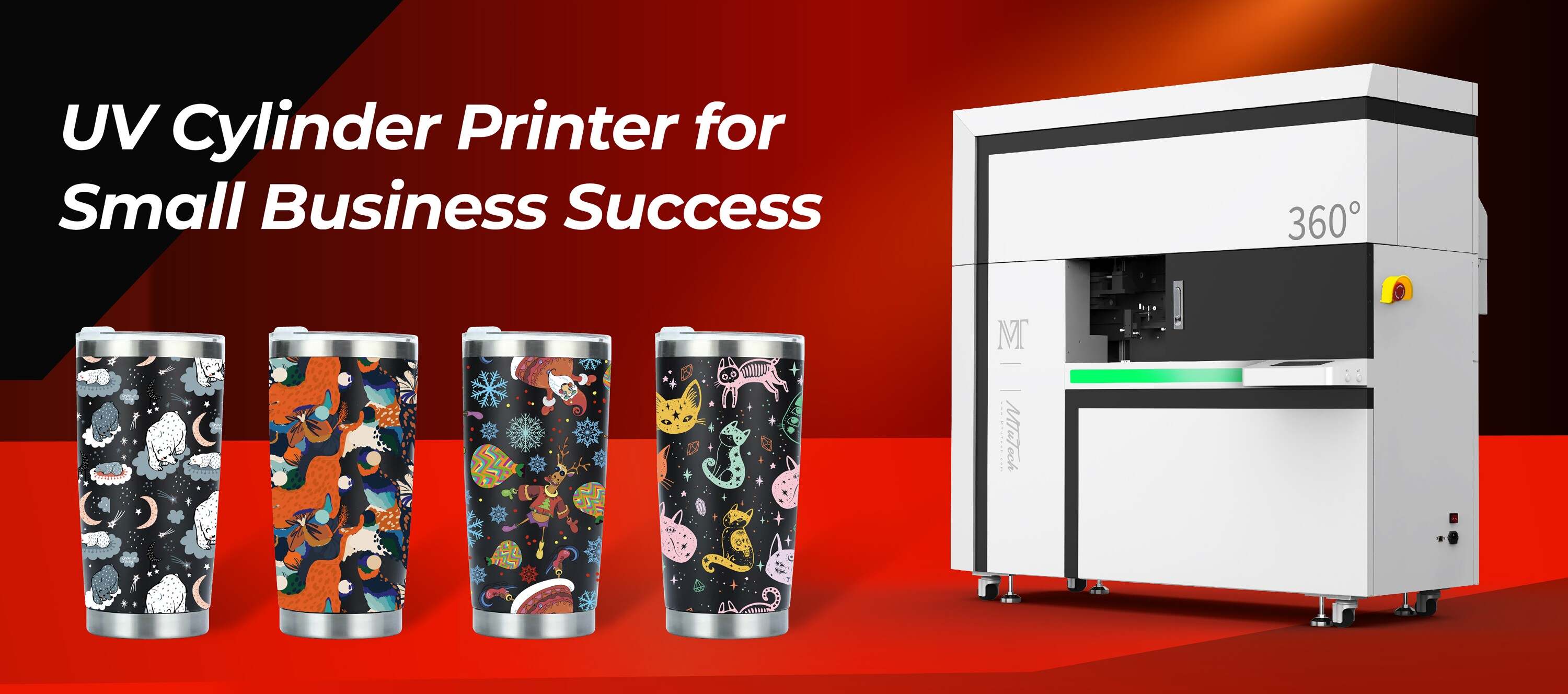
The Difference Between UV Flatbed and Rotary Tumbler Printers
Introduction
In the world of printing technology, understanding the nuances between various printers can greatly influence the success of your business. Among the standout options are UV flatbed printers and rotary tumbler printers. Each of these technologies offers unique capabilities suited for different applications, especially in custom print jobs for various surfaces. This blog delves into the key differences, benefits, and features of UV flatbed and rotary tumbler printers to help you make an informed decision.
Understanding UV Flatbed Printers
UV flatbed printers are versatile machines designed for printing on rigid and flat surfaces. These printers use ultraviolet (UV) light to cure ink as it is printed, allowing for sharp, vibrant images with excellent durability. They are widely used in signage, packaging, and promotional items due to their ability to print on a variety of materials.
Working Principle
The printing process involves the following steps:
·
Ink is sprayed onto the substrate using print heads.
·
·
The UV light immediately cures the ink, resulting in quick drying times.
·
·
Because the ink is cured as it is applied, the colors are rich and the print is resistant to scratches and fading.
·
Applications
UV flatbed printers can handle a broad range of materials, making them ideal for various applications:
·
Signage and banners
·
·
Wood and metal surfaces
·
·
Glass and acrylic items
·
·
Stone and ceramics
·
Benefits of UV Flatbed Printers
·
High quality and detailed prints
·
·
Ability to print on various substrates
·
·
Fast turnaround times due to immediate curing
·
·
Environmentally friendly with minimal VOC emissions
·
Exploring Rotary Tumbler Printers
Rotary tumbler printers, on the other hand, are specifically designed for cylindrical objects, such as tumblers, bottles, and other drinkware. They use a combination of UV printing technology and a rotary mechanism to ensure even and precise printing around curved surfaces.
Working Principle
The operation of rotary tumbler printers is distinct and comprises several steps:
·
The tumbler is securely placed in the printer's rotary mechanism.
·
·
As the tumbler rotates, the print heads apply ink onto the surface.
·
·
Similar to UV flatbed printing, UV light cures the ink instantly, allowing for vibrant and durable results.
·
Applications
Rotary tumbler printers are particularly suited for:
·
Custom drinkware, such as insulated tumblers and travel mugs
·
·
Promotional items and merchandise
·
·
Personalized gifts for events (weddings, birthdays, etc.)
·
Benefits of Rotary Tumbler Printers
·
Highly efficient for cylindrical objects
·
·
Consistent print quality around curved surfaces
·
·
Fast production speeds for large batches
·
·
Ideal for customized designs and intricate graphics
·
Key Differences
While both UV flatbed printers and rotary tumbler printers use UV technology, the differences in their design and application are significant:
1. Printing Surface
The most obvious difference lies in the surfaces they can print on:
·
UV flatbed printers are designed for flat and rigid materials.
·
·
Rotary tumbler printers specialize in curved surfaces—perfect for drinkware.
·
2. Print Quality
Both printers provide high-quality prints, but their application affects how that quality is perceived:
·
Flatbed printers excel in sharp detail and color accuracy on flat materials.
·
·
Rotary printers provide excellent wrap-around prints that stand out on cylindrical items.
·
3. Speed and Efficiency
Production efficiency differs based on the target items:
·
Flatbed printers can handle larger sheets, making them effective for larger signs and graphics.
·
·
Rotary printers are optimized for high-volume production of similar items, making batch processing quicker.
·
4. Versatility
Consider the versatility of each printer:
·
UV flatbed printers can print on an extensive range of materials, which is beneficial for businesses that require flexibility.
·
·
Rotary printers are more specialized but excel in their niche of drinkware and cylindrical items.
·
Choosing the Right Printer for Your Needs
Deciding between a UV flatbed printer and a rotary tumbler printer hinges on your specific requirements:
When to Choose UV Flatbed Printers
·
If you need to print on various flat materials and require high-resolution images.
·
·
When producing diverse products ranging from signage to décor.
·
When to Choose Rotary Tumbler Printers
·
If your primary focus is on customized drinkware and promotional items.
·
·
When you want quick and efficient production of large volumes of cylindrical products.
·
Conclusion
In summary, both UV flatbed and rotary tumbler printers have their unique advantages, tailored to different types of printing jobs. Understanding these differences is essential for any business looking to invest in printing technology. By evaluating your specific needs—be it versatility or specialization—you can select the printer that aligns best with your production goals. To explore more about rotary tumbler printers and their capabilities, explore our high-quality Tumbler printers here. Making an informed choice will ensure your printing investments yield the best results and meet your customers' demands effectively.
FAQ
Can UV flatbed printers print on curved surfaces?
While UV flatbed printers are highly versatile, they are not designed for curved surfaces like tumblers. They are best suited for flat and rigid materials.
What is the typical maintenance required for these printers?
Both UV flatbed and rotary tumbler printers require regular maintenance, including cleaning inkjet nozzles, calibrating print heads, and ensuring that UV lights are functioning properly to maintain print quality.
Are rotary tumbler printers only suitable for drinkware?
While rotary tumbler printers are primarily designed for drinkware, they can also be used for other cylindrical objects, such as bottles and certain promotional merchandise.
What's the average cost difference between these two types of printers?
The cost can vary widely based on the brand, model, and features. Generally, UV flatbed printers tend to be more expensive due to their versatility, while rotary tumbler printers are often more affordable as they specialize in a niche application.