

 HOME
HOME PRODUCT CENTER
 ABOUT US
 DOWNLOAD CENTER
 SUPPORT CENTER
 SUBSCRIBE
 BLOG
BLOGDirect to Garment Printing: A Complete Guide to Lighting for Quality Checks
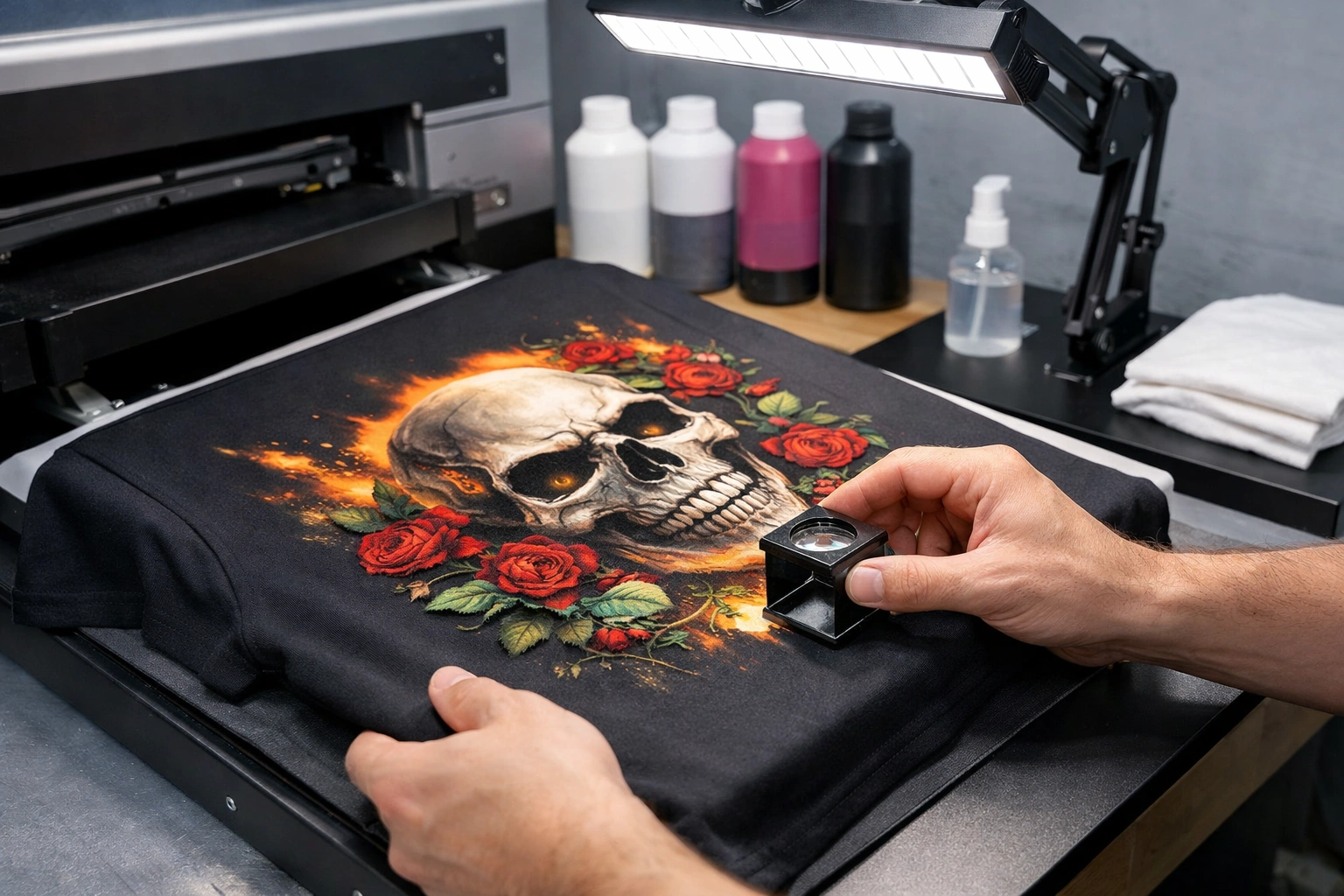
Direct to Garment (DTG) printing has transformed the custom apparel industry by enabling high-resolution, full-color designs to be printed directly onto fabric. From small print-on-demand businesses to large-scale production units, DTG technology has become a standard choice. However, even the most advanced DTG printer cannot guarantee perfect results without a strong quality control process. One of the most critical—yet often ignored—elements of that process is proper lighting during print inspection.
This detailed guide explains why lighting is essential for DTG print quality checks, how to create an ideal inspection setup, and how correct lighting improves consistency, efficiency, and customer satisfaction.
Understanding DTG Printing and Quality Control
DTG printing uses specialized inkjet technology to apply water-based inks directly onto garments. Unlike screen printing, DTG allows unlimited colors, smooth gradients, and photographic detail in a single print process.
Because DTG prints are highly detailed, even small issues—such as banding, uneven ink coverage, poor curing, or fabric absorption problems—can impact the final result. These issues are often subtle and may not be visible under poor lighting conditions.
Quality control acts as the final checkpoint before a garment is shipped. It ensures that each print meets defined standards for color accuracy, sharpness, alignment, durability, and overall appearance. Since most of these checks rely on visual inspection, lighting plays a central role.
Why Lighting Is Critical in DTG Print Quality Checks

Lighting directly affects how the human eye perceives color, contrast, texture, and fine details. A print that looks acceptable under dim or uneven lighting may show defects under brighter or more neutral conditions.
Proper lighting allows operators to accurately evaluate:
Color accuracy and consistency
Sharpness and edge definition
Banding, streaks, or printhead defects
Ink saturation and fabric penetration
Overspray or ink mist around fine details
Surface texture and curing uniformity
Without standardized lighting, quality decisions become subjective, leading to inconsistent results, reprints, and customer dissatisfaction.
The Science of Light and Human Vision
Human vision is highly sensitive to lighting changes. Different light sources emit different color temperatures, which can alter how colors appear. Warm lighting enhances reds and yellows, while cool lighting emphasizes blues and reduces warmth.
For DTG printing, where color accuracy is critical, these shifts can cause incorrect approvals. Standardized, daylight-balanced lighting removes uncertainty and improves inspection accuracy.
Benefits of Proper Lighting for DTG Inspection
Improved Defect Detection
Correct lighting improves contrast and visibility, making it easier to spot fine defects such as micro-banding, uneven ink application, or minor color shifts.
Accurate Color Evaluation
Customers expect printed garments to match approved designs. Proper lighting ensures colors are evaluated under neutral conditions, reducing complaints and returns.
Consistent Print Quality Across Orders
Standardized lighting ensures consistency between operators, shifts, and repeat orders—especially important for branded and bulk production.
Reduced Waste and Reprints
Identifying defects early prevents flawed garments from reaching customers, reducing material waste and operational costs.
Professional Workflow
A dedicated, well-lit inspection area reinforces quality standards and reflects a professional production environment.
Essential Elements of an Optimal Lighting Setup
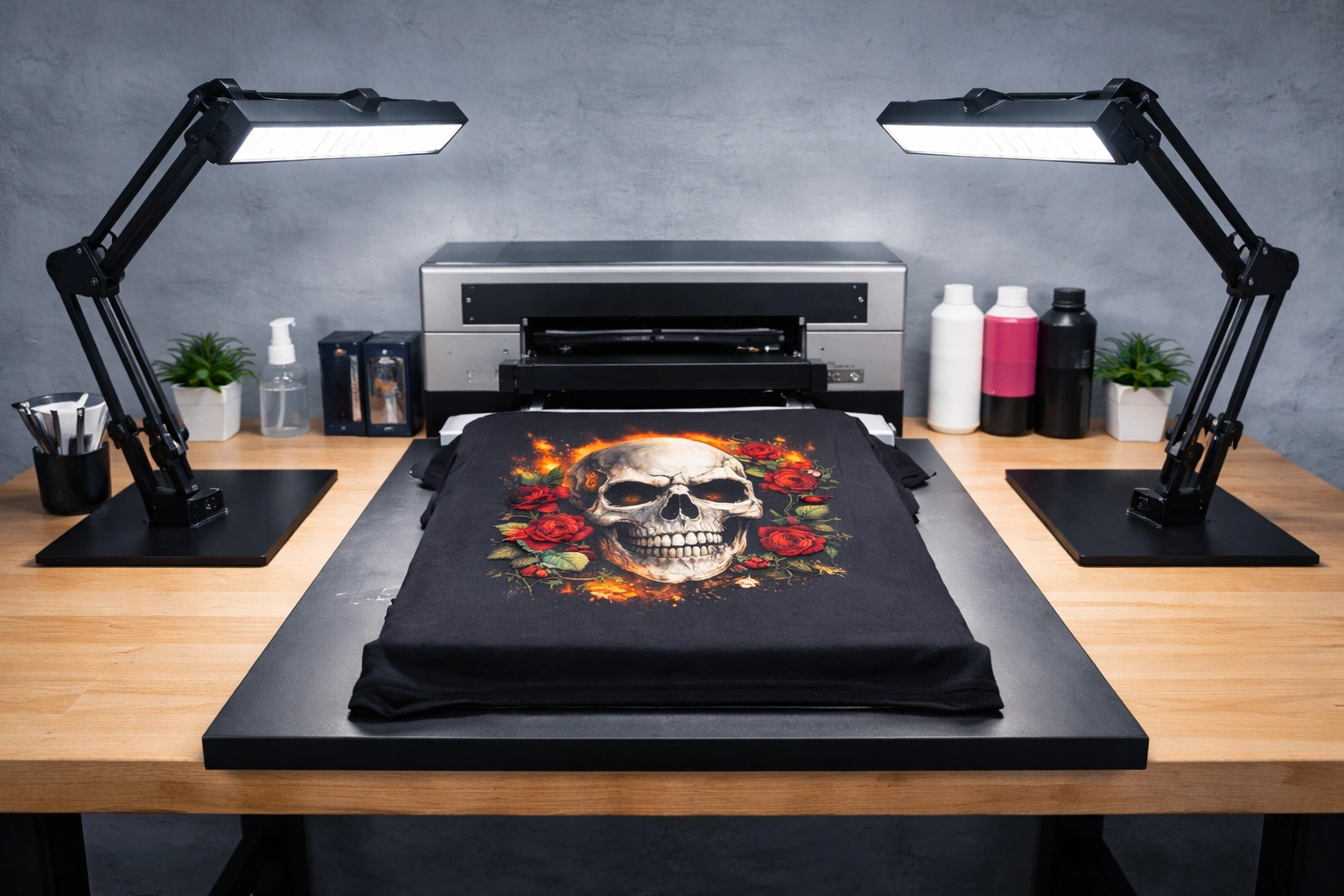
Creating an effective lighting setup involves more than adding brighter lights. Several technical factors must work together.
Lighting Intensity (Lux Levels)
Lighting intensity is measured in lux. For DTG print inspection, a range of 1,800–2,000 lux is recommended. This level reveals fine details without causing glare or eye strain.
Using a light meter helps maintain consistent brightness over time.
Color Temperature and CRI
Color temperature should fall between 5,000K and 6,500K, closely matching natural daylight.
Equally important is the Color Rendering Index (CRI). A CRI of 90 or higher ensures accurate color reproduction during inspection.
Balanced and Diffused Lighting
Harsh direct light creates shadows and glare. Diffused lighting spreads illumination evenly across the garment, improving clarity.
Light panels, diffusers, or softbox-style fixtures are ideal for DTG inspection areas.
Directional Lighting and Shadow Control
Multiple light sources from different angles help minimize shadows and reveal surface imperfections. Side lighting is especially useful for detecting raised ink or uneven curing.
Uniform Lighting Distribution
Uniform lighting ensures all parts of the garment are evaluated equally. Poor fixture placement can cause dark spots and misleading results.
Adjustability and Flexibility
Different fabrics and ink finishes interact with light differently. Adjustable fixtures allow operators to fine-tune lighting angles and intensity as needed.
Designing a Dedicated DTG Inspection Station
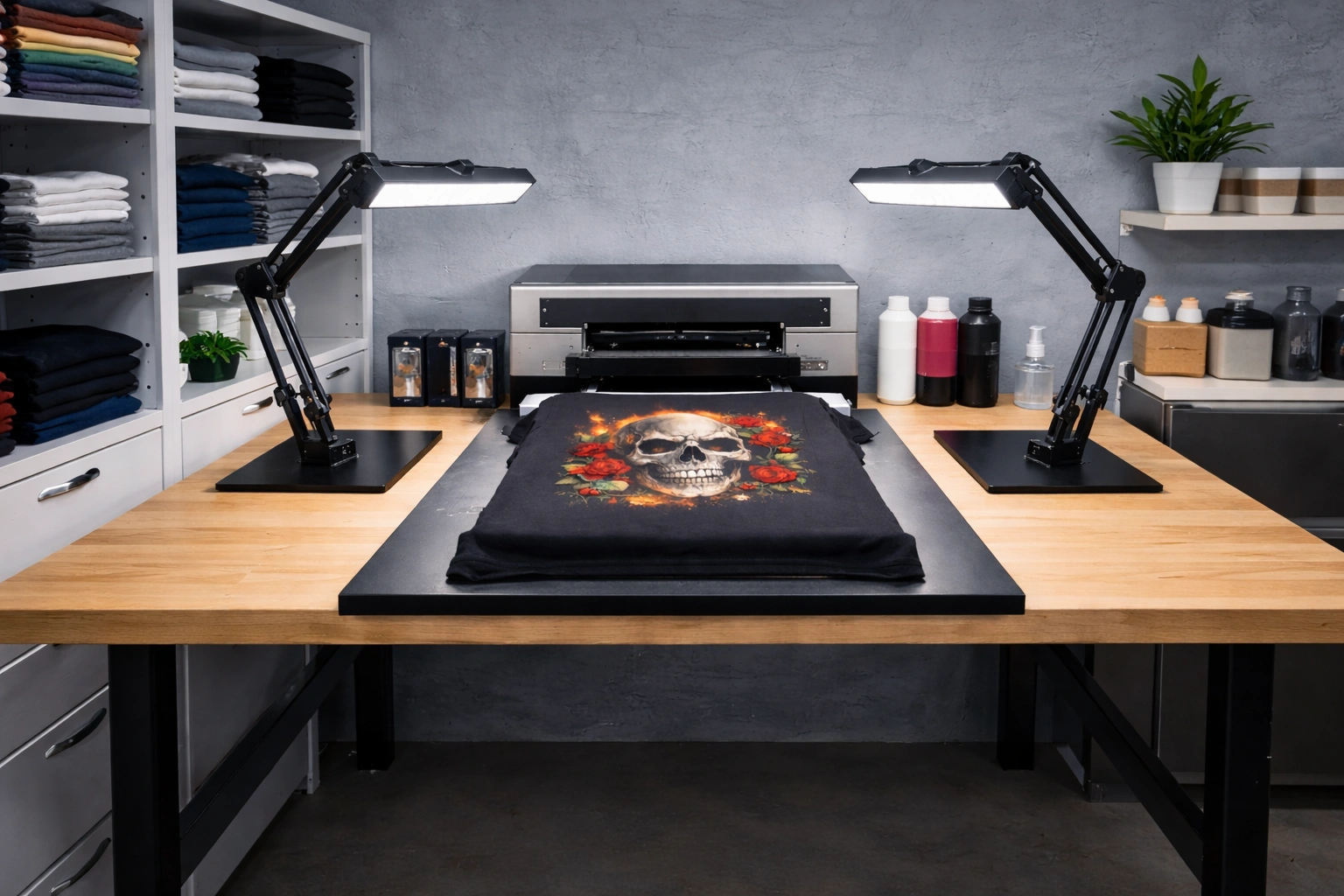
A dedicated inspection station helps standardize quality control and improve workflow efficiency. This area should be separate from printing and curing zones.
Best Practices for Inspection Areas
Neutral-colored walls and surfaces
Matte finishes to reduce reflections
Stable mounting for lighting fixtures
Enough space to inspect garments from multiple angles
Garments should be laid flat or placed on mannequins to simulate real-world wear conditions.
Common Lighting Mistakes to Avoid
Mixing Different Light Sources
Using fluorescent, incandescent, and LED lights together creates inconsistent color temperatures and unreliable inspections.
Relying on Ambient Room Lighting
General room lighting changes throughout the day and is unsuitable for precise DTG inspection.
Poor Maintenance
Dust, aging bulbs, and misaligned fixtures reduce light quality. Regular maintenance is essential.
Ignoring Operator Comfort
Poor lighting causes eye strain and fatigue, increasing the risk of inspection errors.
Long-Term Impact of Proper Lighting on DTG Businesses
As DTG operations grow, maintaining consistency becomes more challenging. Standardized lighting provides a constant reference point across staff, shifts, and locations.
Documenting lighting specifications—lux levels, color temperature, CRI, and fixture placement—helps replicate inspection conditions across multiple workstations.
Lighting and Customer Satisfaction
Customers may never see the inspection area, but they experience the outcome. Consistent, high-quality prints build trust, reduce complaints, and increase repeat business.
Lighting and DTG Printers Working Together
High-quality DTG printers reduce defects, but inspection lighting remains the final safeguard. Even the best equipment benefits from proper visual quality control.
Future Trends in DTG Quality Inspection
Automation and AI-based inspection systems rely heavily on controlled lighting environments. Investing in proper lighting today prepares businesses for future advancements.
Conclusion
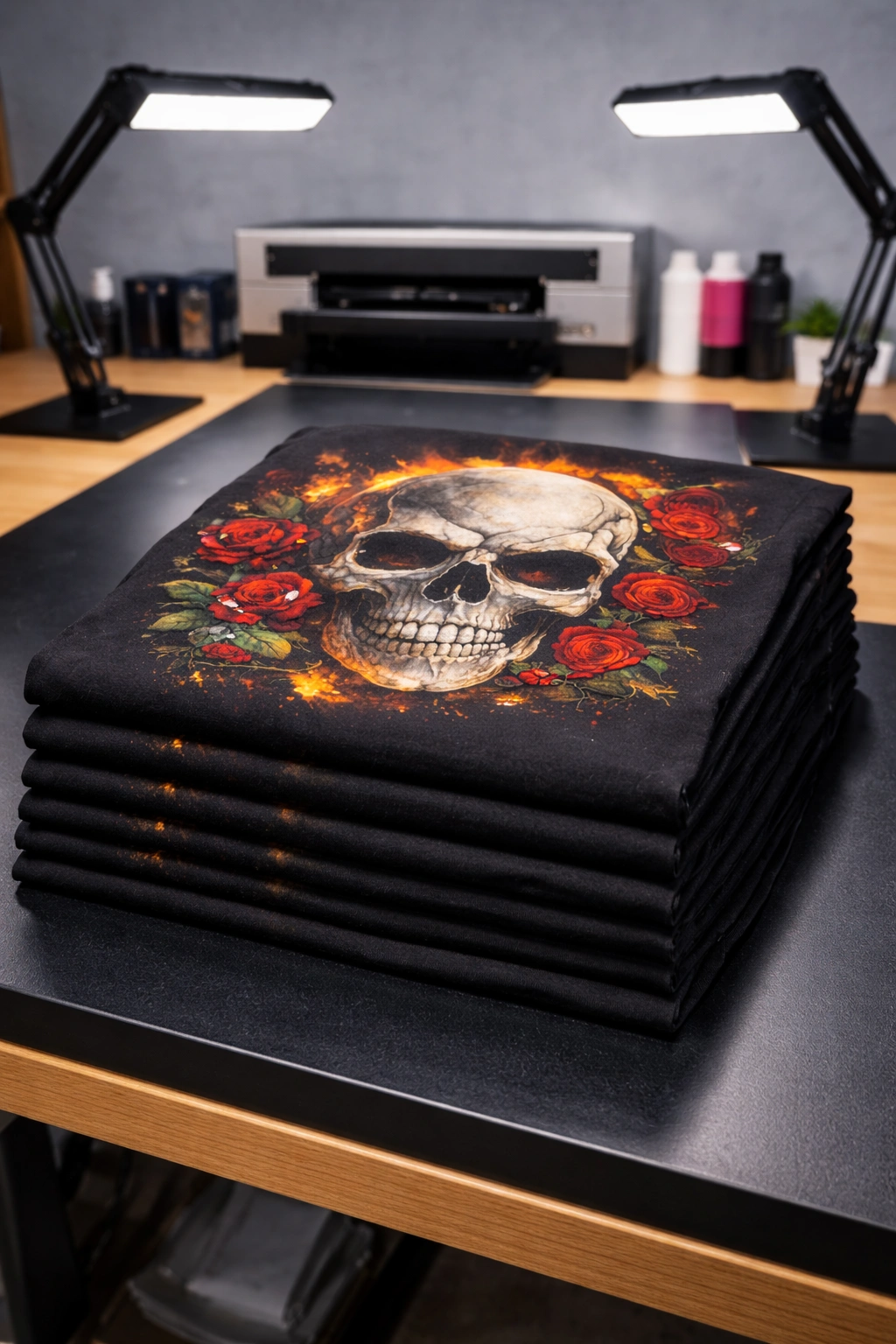
Proper lighting is a fundamental part of DTG quality control. A setup that is bright, balanced, uniform, and adjustable enables accurate inspections, consistent quality, and satisfied customers.
In a competitive market, optimizing lighting for DTG print quality checks is a smart, long-term investment that improves efficiency, reduces waste, and supports sustainable business growth.Explore our high-quality DTG printers here