

 HOME
HOME PRODUCT CENTER
 ABOUT US
 DOWNLOAD CENTER
 SUPPORT CENTER
 SUBSCRIBE
 BLOG
BLOGDTG Printer Ink Cost Per Shirt Explained
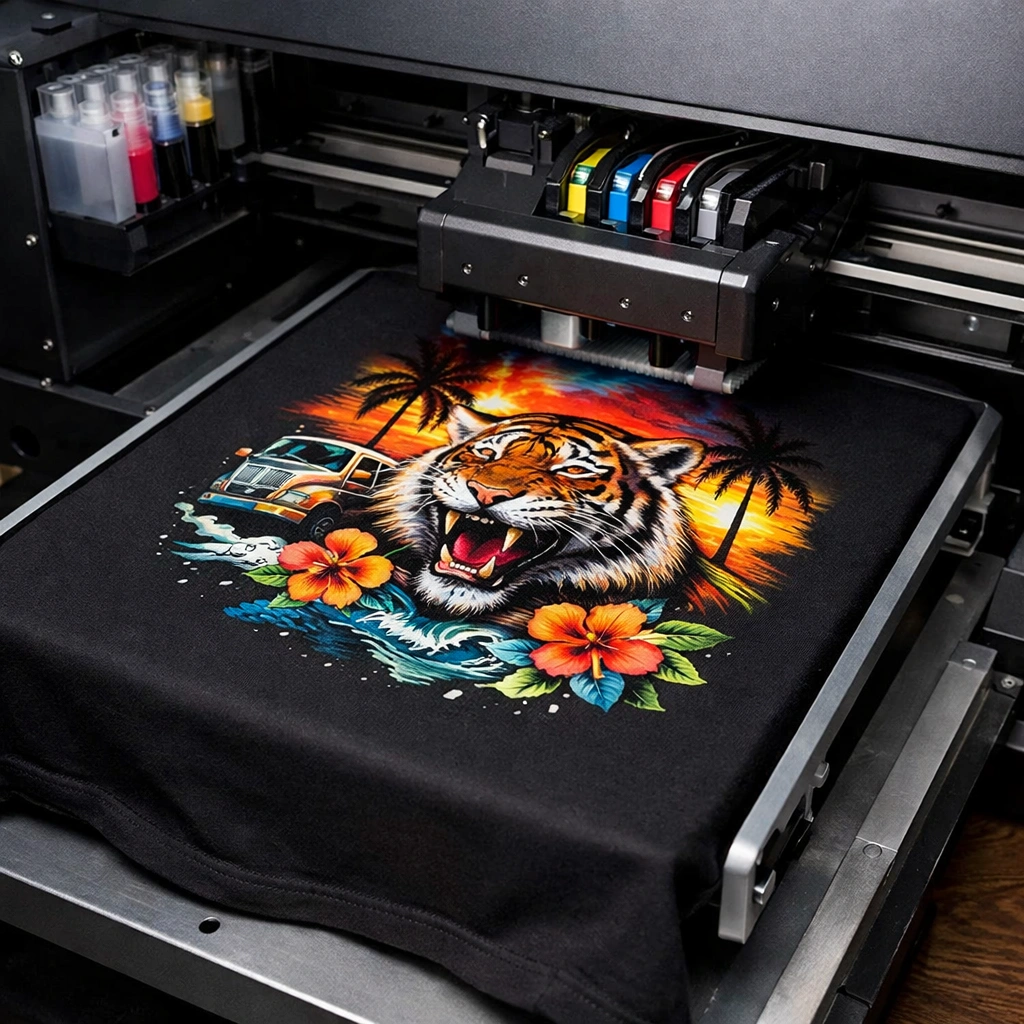
Direct-to-Garment (DTG) printing has transformed the custom apparel industry by making it possible to print high-resolution, full-color designs directly onto fabric with minimal setup. From small online clothing brands to established print-on-demand businesses, DTG printing has become a preferred method for producing short runs, personalized designs, and complex artwork.
However, despite its creative flexibility, DTG printing comes with one major challenge that directly affects profitability: ink cost per shirt. Many print shop owners underestimate how much ink contributes to the overall production cost, leading to inaccurate pricing, shrinking margins, and unexpected losses.
Understanding how to calculate ink cost per shirt in DTG printing is not just a technical exercise—it is a business necessity. Ink is one of the most expensive consumables in DTG printing, and its usage varies significantly based on multiple factors such as design coverage, garment color, printer model, and ink formulation.
This article provides a complete, step-by-step breakdown of how DTG ink costs work, what influences them, and how to accurately calculate ink cost per shirt. Whether you are starting a DTG business or optimizing an existing one, this guide will help you make data-driven decisions, price your products correctly, and improve long-term profitability.
What Is DTG Printing and Why Ink Cost Matters
DTG printing uses specialized inkjet printers designed to apply water-based textile inks directly onto garments. Unlike screen printing, which requires screens and setup for each color, DTG allows for direct digital printing with unlimited colors in a single pass.
While this technology offers unmatched design freedom, it also means that ink consumption is directly tied to the artwork itself. Every gradient, shadow, highlight, and color layer uses ink—and the more ink used, the higher the cost per print.
Ink cost matters because:
It affects your per-shirt production cost
It determines your pricing strategy
It influences your profit margins
It impacts your ability to scale your business sustainably
Failing to calculate ink cost accurately often leads to underpricing products or misjudging profitability.
Key Factors That Influence Ink Cost Per Shirt in DTG Printing
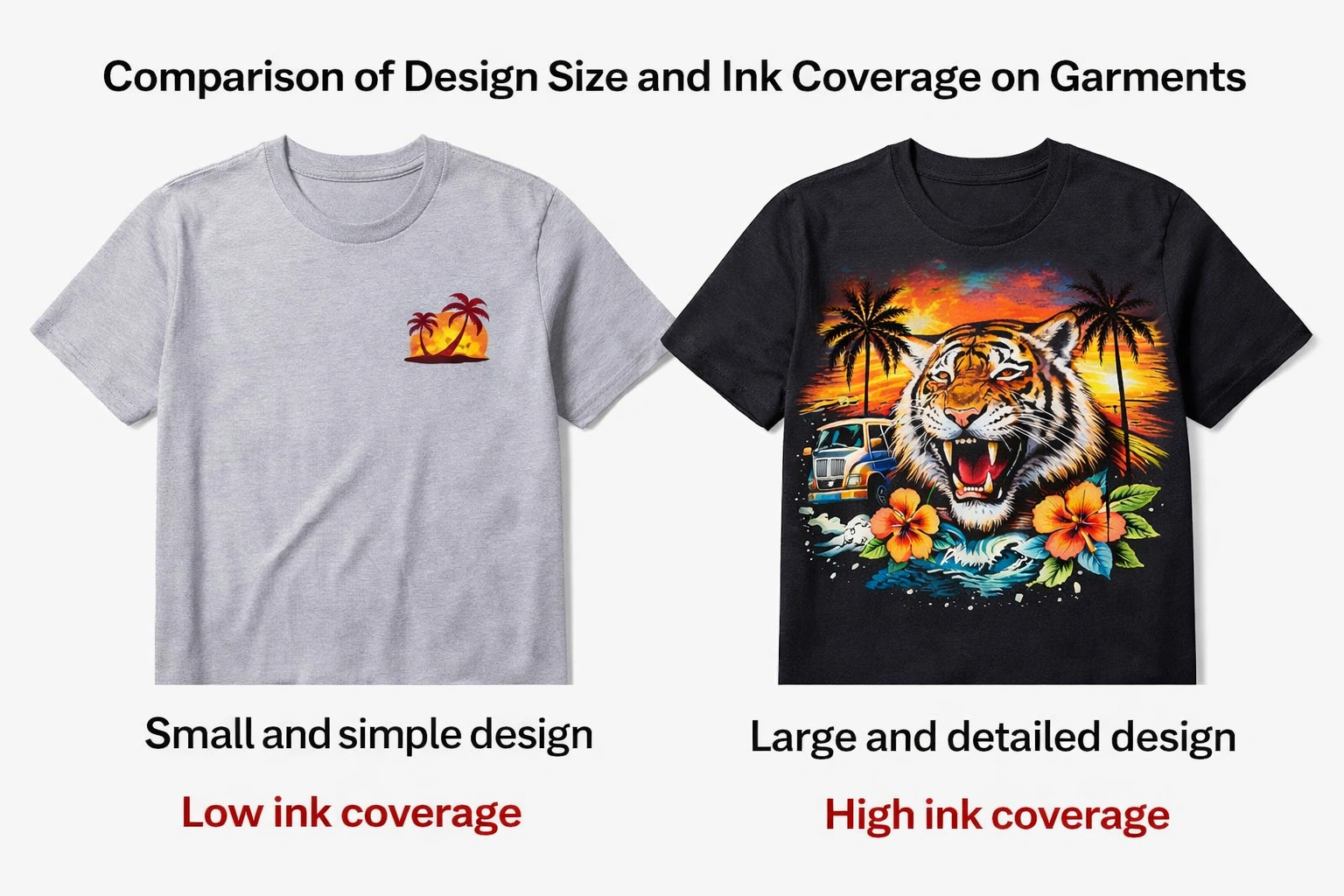
Ink cost in DTG printing is not fixed. It fluctuates based on several interconnected variables. Understanding these factors is essential before attempting any cost calculation.
1. Design Size and Print Area Coverage
The most obvious factor influencing ink consumption is the size of the design. A small chest logo uses significantly less ink than a full-front or all-over print.
However, size alone is not the full story. What truly matters is ink coverage, which refers to how much of the print area is filled with ink.
For example:
A large design with thin outlines may use less ink than a smaller design with solid color blocks
Vector-style artwork generally consumes less ink than photorealistic images
Heavy gradients and shadows increase ink usage
The higher the ink saturation, the higher the ink cost per shirt.
2. Color Complexity and Number of Colors
DTG printers mix colors digitally using CMYK inks (Cyan, Magenta, Yellow, and Black), along with white ink for underbase printing on dark garments.
Designs with:
Multiple color layers
Deep gradients
High contrast
Photographic elements
will require more ink than flat, minimal designs.
White ink, in particular, is more expensive and is used heavily when printing on dark garments. Any design printed on black, navy, or deep-colored shirts will almost always require a white underbase, increasing ink consumption significantly.
3. Garment Color and Fabric Type
The color of the garment plays a major role in ink usage:
Light-colored garments typically require only CMYK inks
Dark-colored garments require a white ink base plus CMYK layers
Fabric type also affects absorption:
Cotton absorbs ink efficiently and requires predictable ink levels
Blended fabrics may need more ink for proper color vibrancy
Lower-quality fabrics may require heavier ink application to avoid dull prints
All these variables impact how much ink is needed per shirt.
4. DTG Printer Model and Ink Efficiency
Not all DTG printers consume ink at the same rate. Modern machines are designed with:
Advanced printhead technology
Optimized ink droplet control
Improved color management systems
These features help reduce ink waste while maintaining print quality.
Older or poorly maintained printers may:
Over-spray ink
Waste ink during cleaning cycles
Require multiple passes to achieve acceptable quality
This increases ink consumption and raises the cost per shirt.
5. Ink Brand, Formulation, and Price
DTG inks vary widely in price and performance depending on:
Brand reputation
Pigment density
Color vibrancy
Wash durability
High-quality inks often cost more per liter but may require less volume to achieve strong coverage, balancing out the cost over time.
Cheaper inks may appear economical initially but often require heavier application, increasing overall ink usage and reducing print longevity.
6. Pretreatment Process and Its Effect on Ink Usage
Pretreatment is essential for DTG printing, especially on dark garments. A properly applied pretreatment layer allows ink to sit on the fabric surface rather than soaking in.
When pretreatment is poorly applied:
Ink spreads excessively
Colors appear dull
More ink is required to compensate
Efficient pretreatment reduces ink absorption, improves color sharpness, and helps lower ink consumption per shirt.
Understanding DTG Ink Measurement Units
To calculate ink cost accurately, you must understand how DTG ink is measured.
DTG ink is typically sold in:
Milliliters (ml)
Liters (L)
Most DTG printers track ink usage in milliliters per print. This data is crucial for precise cost calculations.
Step-by-Step Guide to Calculating Ink Cost Per Shirt
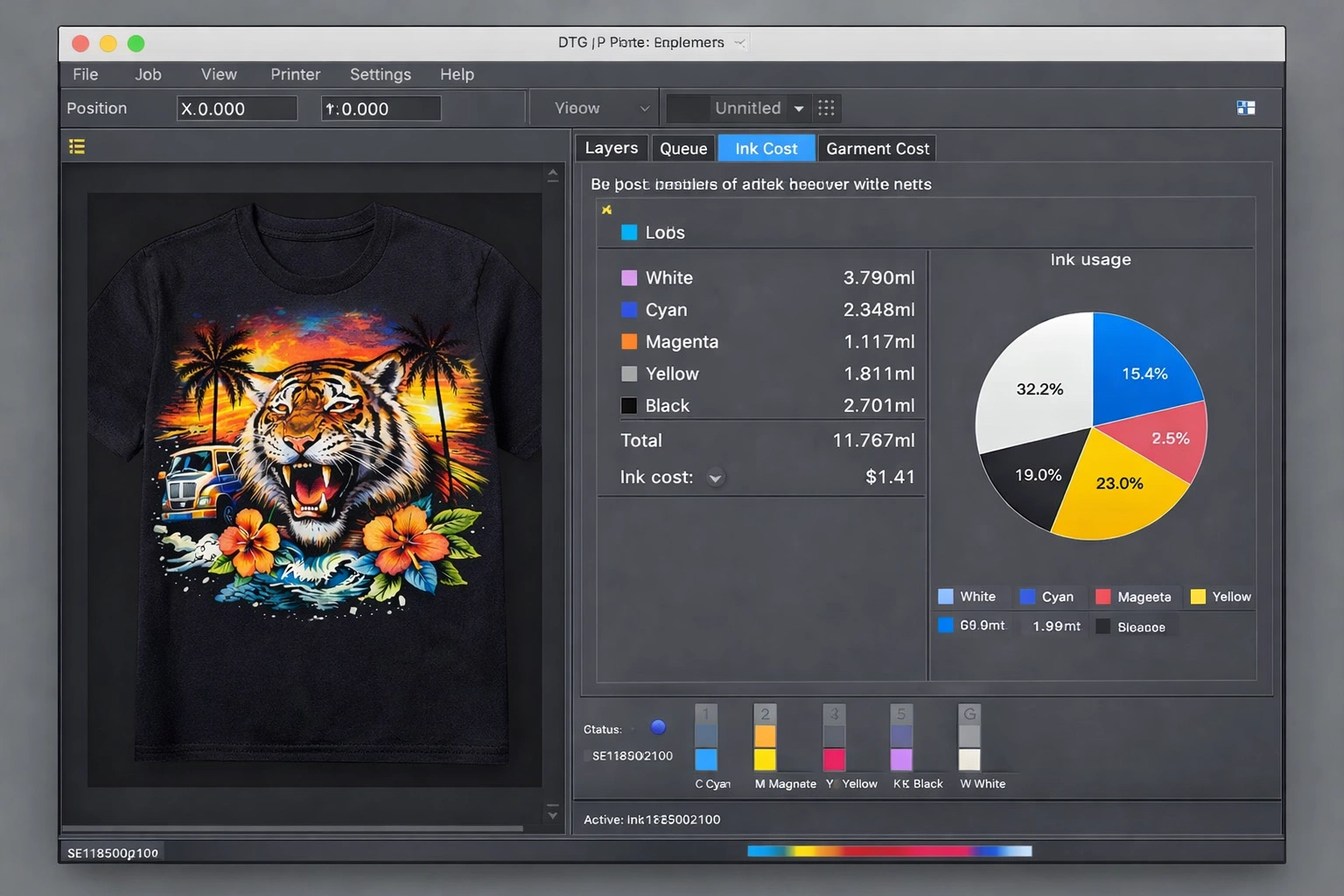
Now let’s break down the calculation process in a clear and practical way.
Step 1: Identify Ink Cartridge Price and Volume
Start by checking:
Cartridge or bottle price
Total ink volume (in milliliters)
For example:
Ink cartridge price: $120
Ink volume: 1000 ml
Ink cost per milliliter:
120 ÷ 1000 = $0.12 per ml
Step 2: Measure Ink Usage Per Print
Most DTG printers provide ink usage data through:
Printer software
RIP software
Production reports
For example:
CMYK ink used: 6 ml
White ink used: 4 ml
Total ink usage: 10 ml per shirt
Step 3: Calculate Ink Cost Per Shirt
Multiply ink usage by cost per milliliter:
10 ml × $0.12 = $1.20 ink cost per shirt
This is your direct ink cost for that print.
Step 4: Account for Ink Waste and Maintenance
Ink is also consumed during:
Printhead cleaning cycles
Nozzle checks
Ink purging
A realistic calculation adds 10–20% extra ink cost to account for waste.
Adjusted ink cost:
$1.20 + 15% = $1.38 per shirt
Step 5: Track Average Ink Cost Across Orders
Ink cost varies from design to design. To get a realistic number:
Track ink usage across multiple prints
Calculate an average ink cost per shirt
Use this average for pricing decisions
Typical DTG Ink Cost Ranges Per Shirt
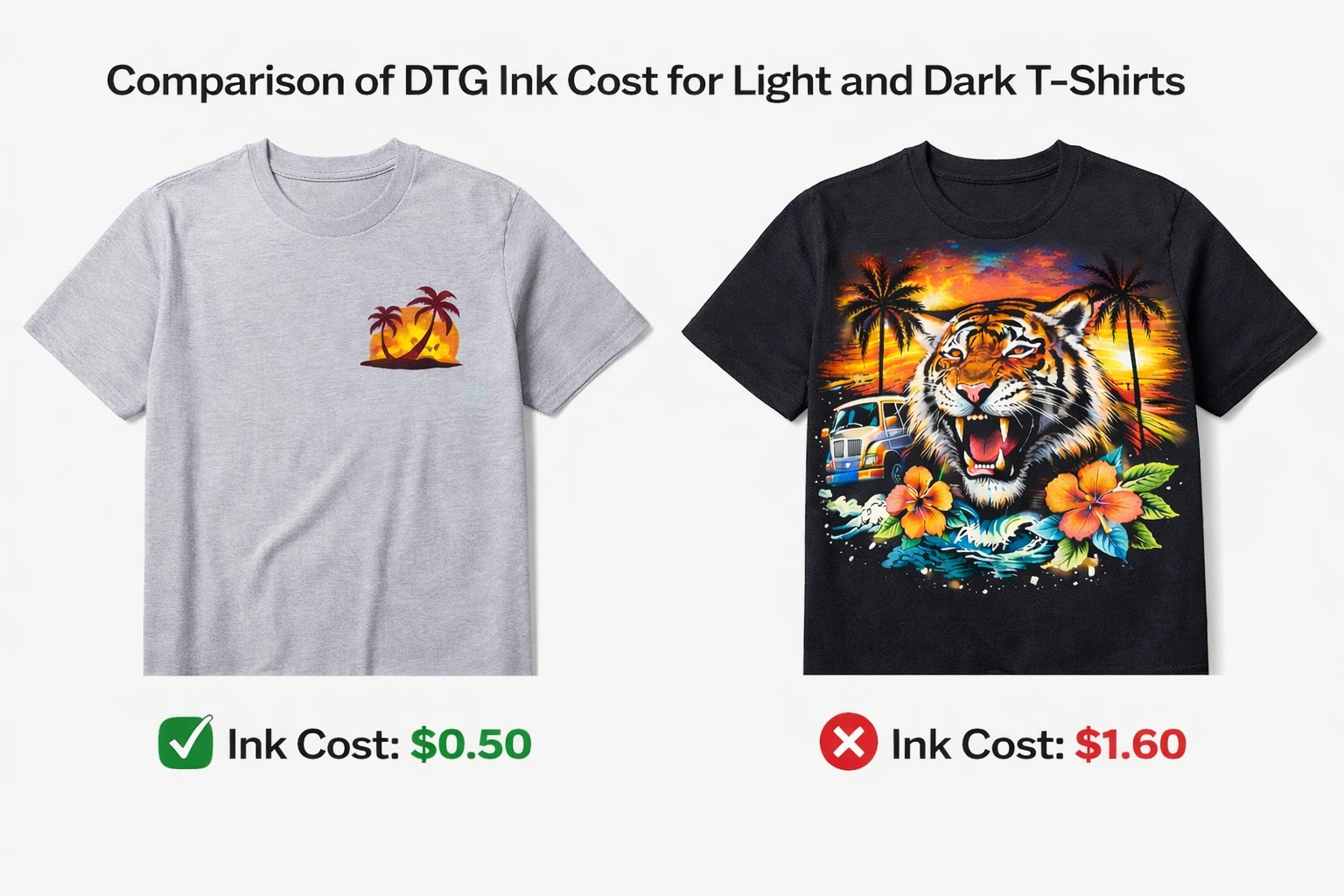
While exact costs vary, industry averages provide useful benchmarks:
Light-colored shirts: $0.30 – $0.70
Dark-colored shirts: $1.00 – $2.00
Heavy full-front designs: $2.50 or more
These ranges depend on design density, printer efficiency, and ink pricing.
How to Reduce Ink Cost Without Sacrificing Quality
Lowering ink cost does not mean lowering print quality. Smart optimization makes a big difference.
Optimize Artwork
Reduce unnecessary solid fills
Avoid excessive shadows
Use transparent backgrounds where possible
Improve Pretreatment Accuracy
Apply even, consistent layers
Avoid over-pretreating garments
Maintain Your Printer
Regular nozzle checks
Proper humidity control
Scheduled maintenance
Choose Efficient Ink Profiles
Use optimized RIP settings
Avoid over-saturation presets
DTG Ink Cost vs Other Printing Methods
DTG printing excels in:
Short runs
Complex designs
Personalization
However, ink cost per shirt is higher compared to:
Screen printing for bulk orders
Heat transfer for simple designs
Understanding this helps you choose the right method for each order.
Common Mistakes When Calculating DTG Ink Cost
Many businesses make these errors:
Ignoring white ink usage
Forgetting maintenance ink waste
Using estimated numbers instead of real data
Pricing based on competitors instead of actual costs
Avoiding these mistakes protects your margins.
Pricing Strategy Based on Ink Cost
Ink cost should be part of a larger pricing formula that includes:
Blank garment cost
Labor
Pretreatment
Electricity
Overhead
Profit margin
Knowing your exact ink cost allows confident, competitive pricing.
Long-Term Benefits of Tracking Ink Cost Accurately
Consistent tracking leads to:
Better profit forecasting
Smarter design decisions
Reduced waste
Higher operational efficiency
Over time, these improvements compound into stronger business growth.
Conclusion
Ink cost per shirt is one of the most critical variables in DTG printing profitability. While it may seem complex at first, breaking it down into measurable components makes it manageable and predictable.
By understanding how design complexity, garment color, printer efficiency, ink pricing, and pretreatment affect ink usage, you can calculate accurate ink costs and price your products with confidence. Regular tracking, optimization, and maintenance not only reduce costs but also improve print quality and customer satisfaction.Explore our high-quality DTG printers here
Mastering ink cost calculation is not just about saving money—it is about building a sustainable, scalable DTG printing business.
Frequently Asked Questions (FAQs)
Can DTG ink cost vary from one print to another?
Yes. Ink usage depends on design coverage, colors, garment type, and printer settings.
Is white ink always required?
White ink is mainly used for dark garments to ensure color vibrancy.
How often should ink cost be reviewed?
Ideally, monthly or whenever you change ink brands, printer settings, or garment types.
Does cheaper ink reduce costs?
Not always. Low-quality ink may require heavier application, increasing overall usage.