

 HOME
HOME PRODUCT CENTER
 ABOUT US
 DOWNLOAD CENTER
 SUPPORT CENTER
 SUBSCRIBE
 BLOG
BLOGDTG Printing for Bulk Orders: A Complete Professional Guide
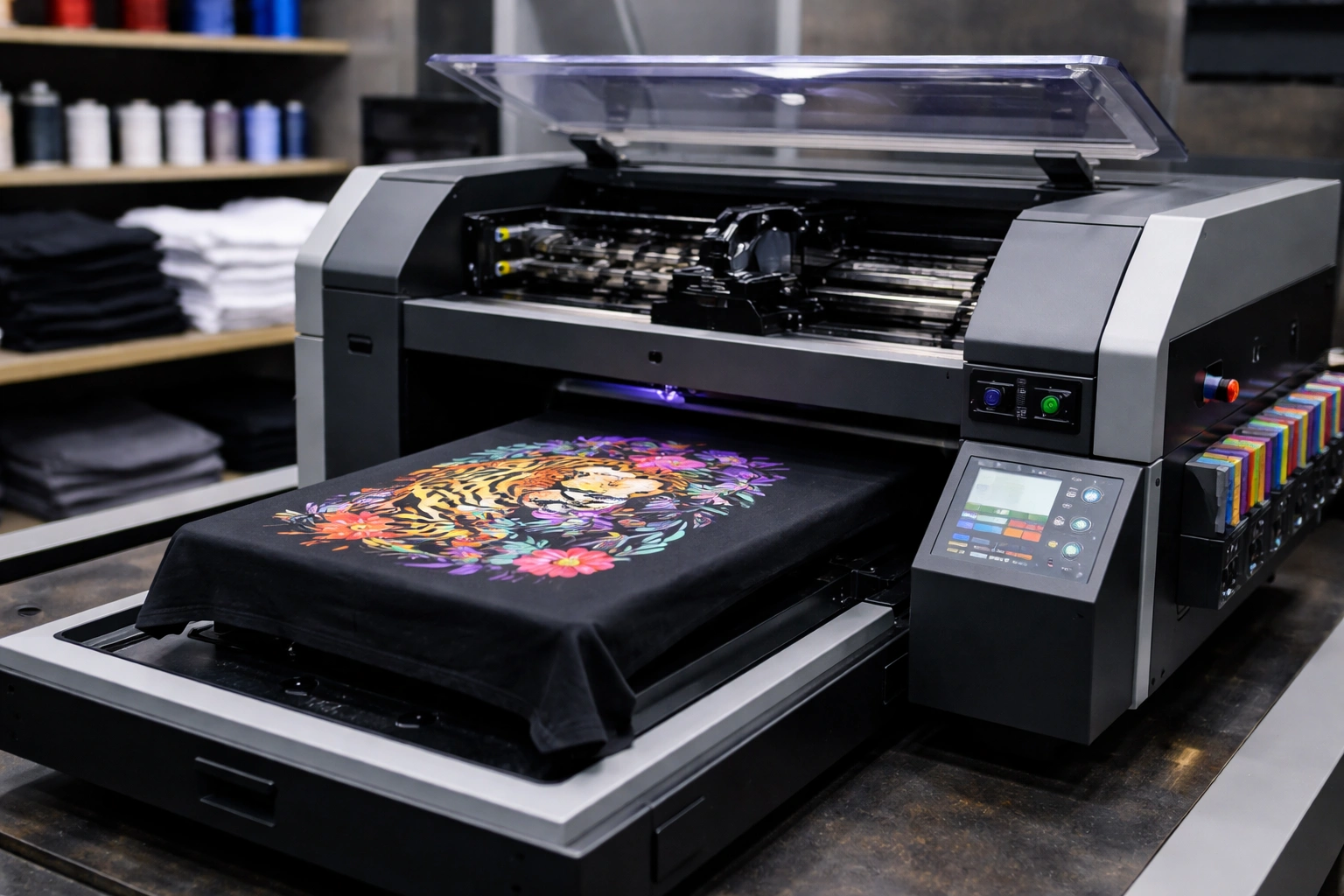
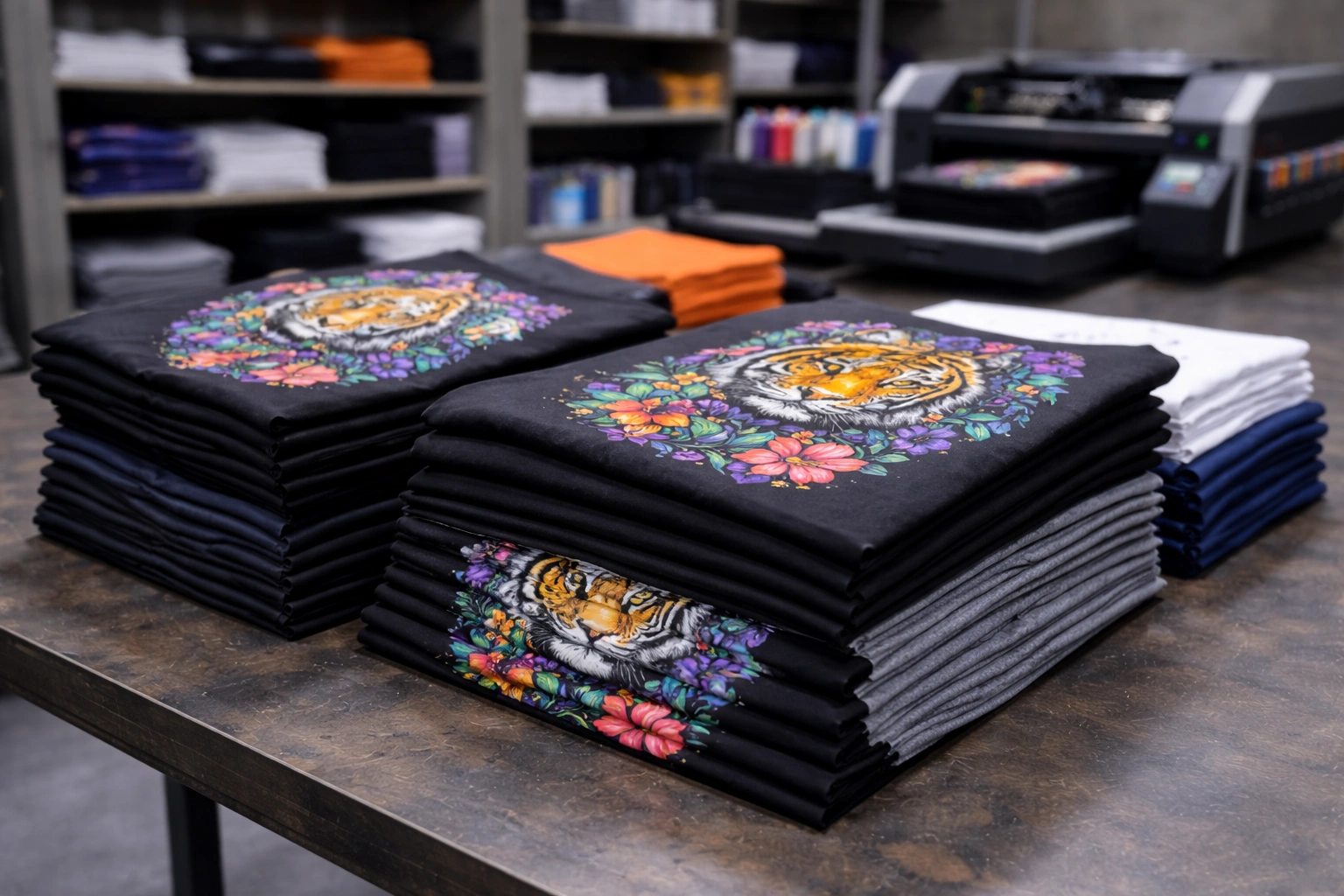
Direct-to-Garment (DTG) printing has transformed the modern apparel printing industry. What was once considered suitable mainly for small runs and personalized designs has now evolved into a scalable, professional solution capable of handling bulk orders with impressive quality and consistency. Advances in DTG printer technology, ink chemistry, workflow automation, and garment pretreatment have pushed this method into mainstream commercial production.
However, managing bulk DTG orders is not simply about printing more garments. It requires strategic planning, efficient workflows, quality control systems, and a clear understanding of both technical and business challenges. Without the right processes in place, large DTG orders can lead to production delays, color inconsistencies, wasted garments, and dissatisfied customers.
This comprehensive guide explains how to successfully manage bulk orders using DTG printing. From understanding the core advantages of DTG in high-volume production to optimizing workflow, selecting the right equipment, and maintaining print quality at scale, this article will help print businesses, apparel brands, and entrepreneurs confidently handle bulk DTG projects while maintaining profitability and customer satisfaction.
Understanding DTG Printing in a Bulk Production Environment
DTG printing works by spraying water-based textile inks directly onto garments using specialized inkjet technology. Unlike screen printing, which requires physical screens for each color, DTG relies on digital files, allowing for detailed designs, gradients, and photographic images.
Traditionally, DTG was viewed as slow compared to screen printing for large orders. Today, that perception has changed. Modern DTG printers offer faster print speeds, improved white ink circulation systems, higher nozzle durability, and automated pretreatment options. When combined with a well-organized workflow, DTG can efficiently handle bulk orders without sacrificing quality.
Bulk DTG production is best suited for:
Medium to large quantities with complex or multi-color designs
Orders requiring consistent branding across multiple garment sizes
Projects where setup flexibility and quick design changes are valuable
Businesses aiming to reduce inventory risk through on-demand production
Understanding these strengths helps determine when DTG is the right solution for bulk orders.
Key Advantages of Handling Bulk Orders with DTG Printing
Cost Efficiency Through Digital Setup
One of the biggest advantages of DTG printing for bulk orders is the absence of screen setup costs. In screen printing, each color requires a separate screen, increasing expenses as designs become more complex. DTG eliminates this issue entirely by printing directly from a digital file.
For bulk orders with detailed artwork, this digital workflow significantly reduces setup time and upfront costs, making DTG a cost-effective choice even at higher volumes.
Exceptional Print Quality and Detail
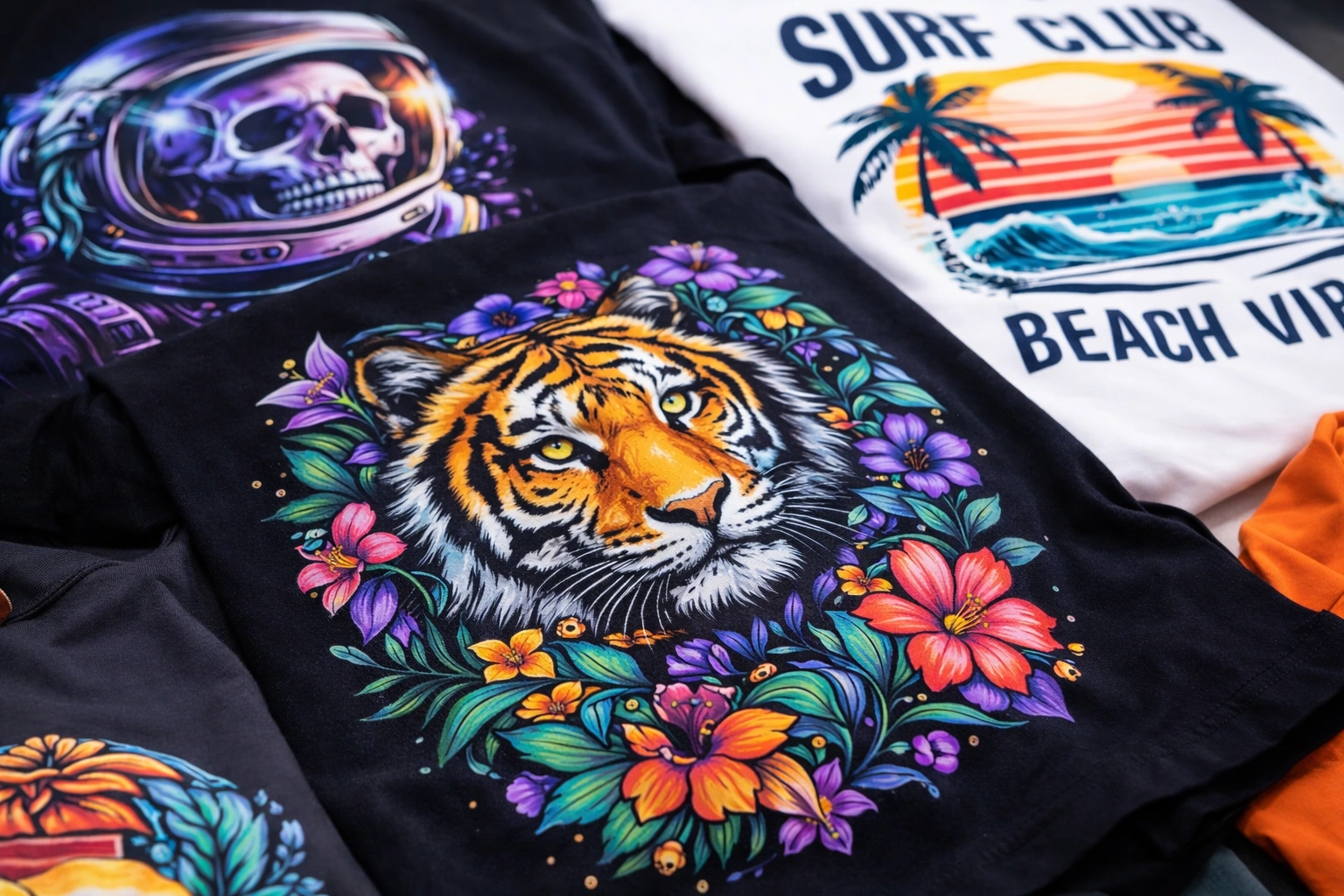
DTG printing excels at producing high-resolution designs with smooth color transitions and fine details. This is especially beneficial for brands that prioritize premium aesthetics, such as fashion labels, corporate merchandise, and promotional apparel.
When producing bulk orders, DTG ensures that every garment matches the approved digital design precisely, maintaining consistency across the entire batch.
Faster Turnaround for Complex Designs
While screen printing may be faster for simple one-color designs at extremely high volumes, DTG often outperforms it for complex artwork. Once the workflow is optimized, printing multiple garments with the same design becomes a repeatable and predictable process.
This makes DTG ideal for bulk orders with tight deadlines, especially when customers request detailed graphics or frequent reorders.
Scalability Without Inventory Pressure
DTG printing supports on-demand and just-in-time production models. Businesses can print bulk orders as needed instead of maintaining large inventories of pre-printed garments. This reduces storage costs, minimizes waste, and allows for greater flexibility in responding to market demand.
Preparing for Bulk DTG Orders
Clear Communication with Clients
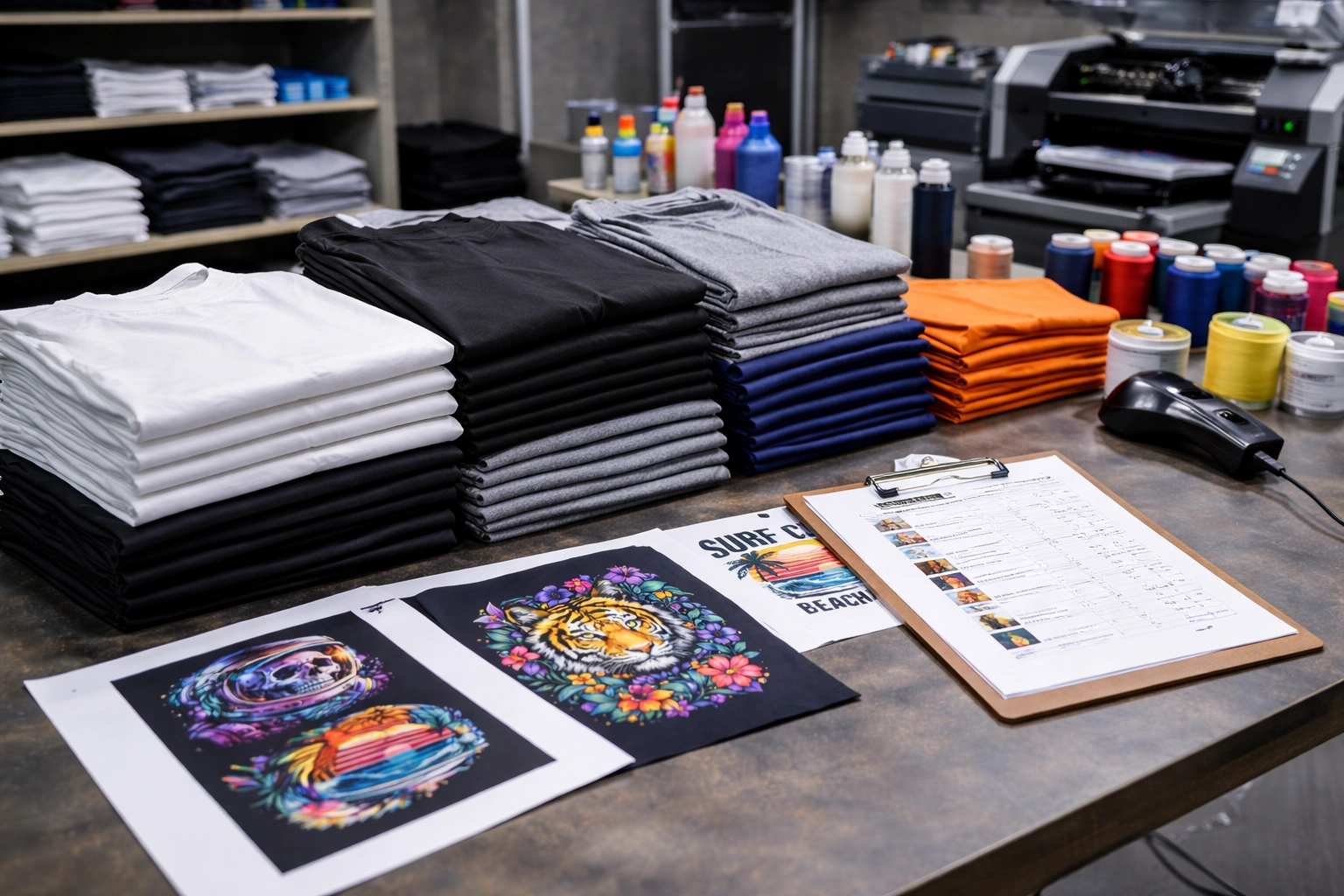
Successful bulk DTG printing begins long before the printer is turned on. Clear communication with the customer is essential. Every detail must be confirmed in advance, including:
Final artwork and file format
Print size and placement
Garment type, fabric composition, and color
Quantity breakdown by size
Delivery timeline
Miscommunication at this stage can lead to costly mistakes, especially when dealing with hundreds or thousands of garments.
Artwork Optimization for DTG Printing
High-quality artwork is critical for bulk DTG success. Designs should be prepared in high resolution, typically at least 300 DPI, and in the correct color mode. Transparency, gradients, and fine details should be reviewed carefully to ensure accurate reproduction.
Before bulk production, artwork should be tested and adjusted if necessary to match fabric type and ink behavior.
Garment Selection and Fabric Considerations
Not all garments perform equally in DTG printing. Cotton and cotton-rich blends generally produce the best results because they absorb water-based inks effectively.
For bulk orders, consistency is key. Using the same garment brand, fabric type, and color throughout the order ensures uniform results and simplifies color management.
Workflow Optimization for Bulk DTG Printing
Pretreatment Management
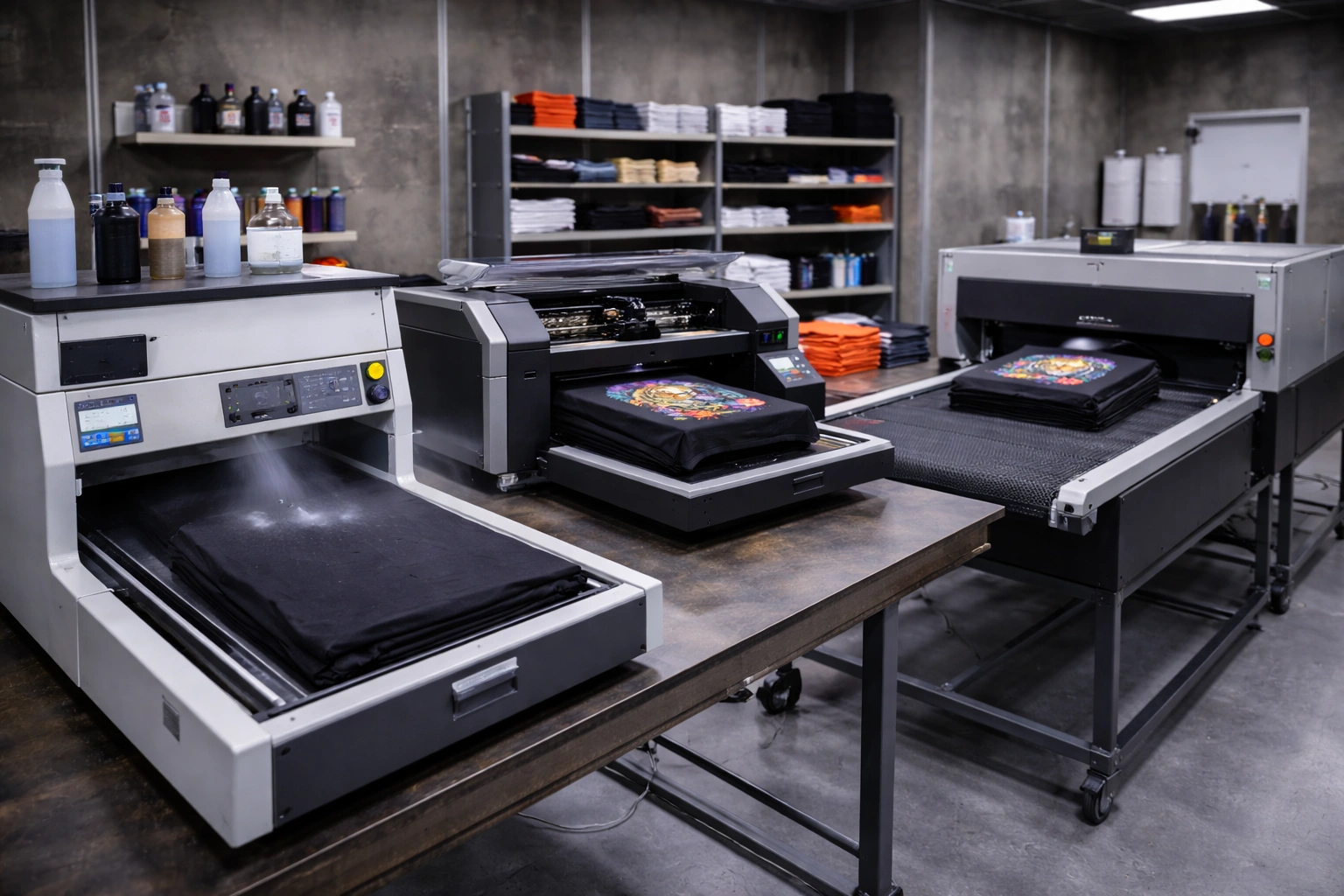
Pretreatment is one of the most critical steps in DTG printing, especially for dark garments. A consistent pretreatment process ensures proper ink adhesion, vibrant colors, and wash durability.
For bulk orders, automated pretreatment machines or carefully standardized manual processes help maintain uniform application across all garments.
Batch Printing Strategy
Organizing garments into batches based on size, color, or design placement improves efficiency. Batch printing reduces setup adjustments and minimizes downtime between prints.
Labeling garments and maintaining a clear production sequence also helps prevent errors during high-volume printing.
Drying and Curing Control
Proper curing is essential for durability and wash resistance. Bulk orders require consistent curing temperatures and times to avoid under- or over-curing.
Using conveyor dryers or heat presses with precise temperature control ensures reliable results across large quantities.
Choosing the Right DTG Printer for Bulk Orders
A DTG printer designed for bulk production should offer:
High print speed without compromising quality
Reliable white ink circulation systems
Durable print heads
Large print area for oversized designs
Easy maintenance and downtime reduction
Investing in professional-grade DTG equipment enables businesses to scale operations confidently and meet bulk order demands efficiently.
Quality Control in Bulk DTG Production
Quality control is essential when producing large quantities. Even minor inconsistencies can become major issues when multiplied across hundreds of garments.
Effective quality control practices include:
Inspecting test prints before full production
Regular nozzle checks during printing
Monitoring color consistency throughout the batch
Verifying curing results before packaging
Implementing checkpoints at each stage of production helps catch issues early and reduces waste.
Managing Time and Labor Efficiently
Bulk DTG printing requires careful labor planning. Assigning specific roles—such as pretreatment, printing, curing, and inspection—helps streamline production.
Cross-training staff ensures flexibility and prevents bottlenecks during peak production periods.
Cost Management and Pricing Strategy
Accurate cost calculation is critical for profitable bulk DTG orders. Costs include:
Ink consumption
Pretreatment chemicals
Garment cost
Labor
Equipment maintenance
Pricing should reflect these factors while remaining competitive. Offering tiered pricing for larger quantities can attract bulk clients while protecting margins.
Common Challenges in Bulk DTG Printing and How to Overcome Them
Ink Consistency Issues
Regular printer maintenance and ink agitation prevent clogging and color variation. Scheduled cleaning routines are essential for bulk production.
Production Delays
Buffer time should always be built into production schedules. Equipment downtime, file revisions, or curing delays can occur, and contingency planning helps avoid missed deadlines.
Design Changes Mid-Production
Design changes during bulk orders should be avoided whenever possible. Final approval and sample testing before production minimize disruptions and additional costs.
Future of DTG Printing for Bulk Orders
DTG technology continues to evolve, with faster printers, improved inks, and greater automation. As production speeds increase and costs decrease, DTG is becoming increasingly competitive for larger volumes.
Businesses that invest early in optimized DTG workflows will be well-positioned to meet growing demand for customized and high-quality apparel.
Conclusion
Handling bulk orders with DTG printing is no longer a limitation—it is an opportunity. With the right planning, equipment, workflow, and quality control measures, DTG can deliver professional-grade results at scale.
By understanding the strengths of DTG, preparing thoroughly, and optimizing each stage of production, print businesses can confidently take on bulk orders, maintain consistent quality, and build long-term customer relationships. As technology continues to advance, DTG printing will play an increasingly important role in high-volume apparel production.Explore our high-quality DTG printers here
Frequently Asked Questions
Can DTG printing handle large volumes effectively?
Yes, with modern equipment and optimized workflows, DTG can efficiently handle bulk orders while maintaining high quality.
Is DTG suitable for dark garments in bulk orders?
Absolutely. With proper pretreatment and white ink application, DTG produces vibrant results on dark fabrics.
Is DTG more expensive than screen printing for bulk orders?
For simple designs at extremely high volumes, screen printing may still be cheaper. However, for complex designs and moderate to large quantities, DTG is often more cost-effective.