

 HOME
HOME PRODUCT CENTER
 ABOUT US
 DOWNLOAD CENTER
 SUPPORT CENTER
 SUBSCRIBE
 BLOG
BLOGDTG Printing for Modern Corporate Branding
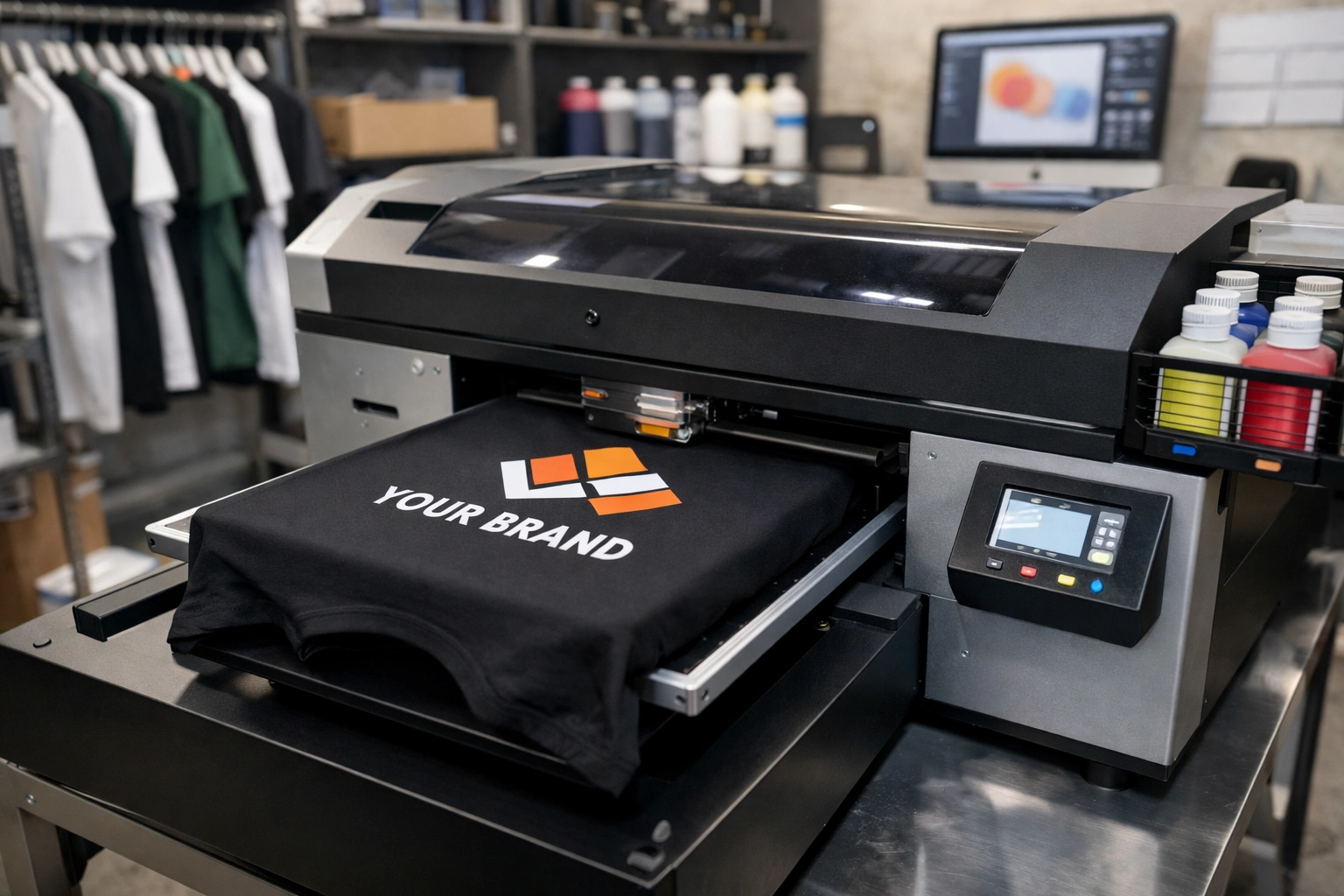
In today’s competitive marketplace, brands are no longer judged solely by the products or services they offer. Consumers now expect meaningful connections, consistent visual identities, and personalized experiences across every touchpoint. From startup founders to global enterprises, companies are continuously searching for innovative branding tools that are cost-effective, scalable, and impactful. One solution that has gained rapid momentum is Direct-to-Garment (DTG) printing.
DTG printing has transformed how businesses approach branded apparel and promotional merchandise. Unlike traditional printing methods that rely on screens or transfer films, DTG technology prints designs directly onto fabric using specialized inkjet printers. This results in high-resolution images, vibrant colors, and unmatched design flexibility — all without the high setup costs associated with older methods.
As branded clothing and merchandise become increasingly essential in marketing strategies, DTG printing stands out as a powerful branding asset. Whether companies are producing staff uniforms, promotional giveaways, event apparel, or retail collections, DTG enables them to create custom designs quickly while maintaining premium quality standards.
This comprehensive guide explores how DTG printing enhances corporate branding, its advantages over traditional printing methods, how to choose the right DTG printer, and how businesses can leverage this technology for sustainable growth. If you’re looking to modernize your branding approach while maintaining cost efficiency and creative freedom, DTG printing deserves your attention.
What Is DTG Printing?
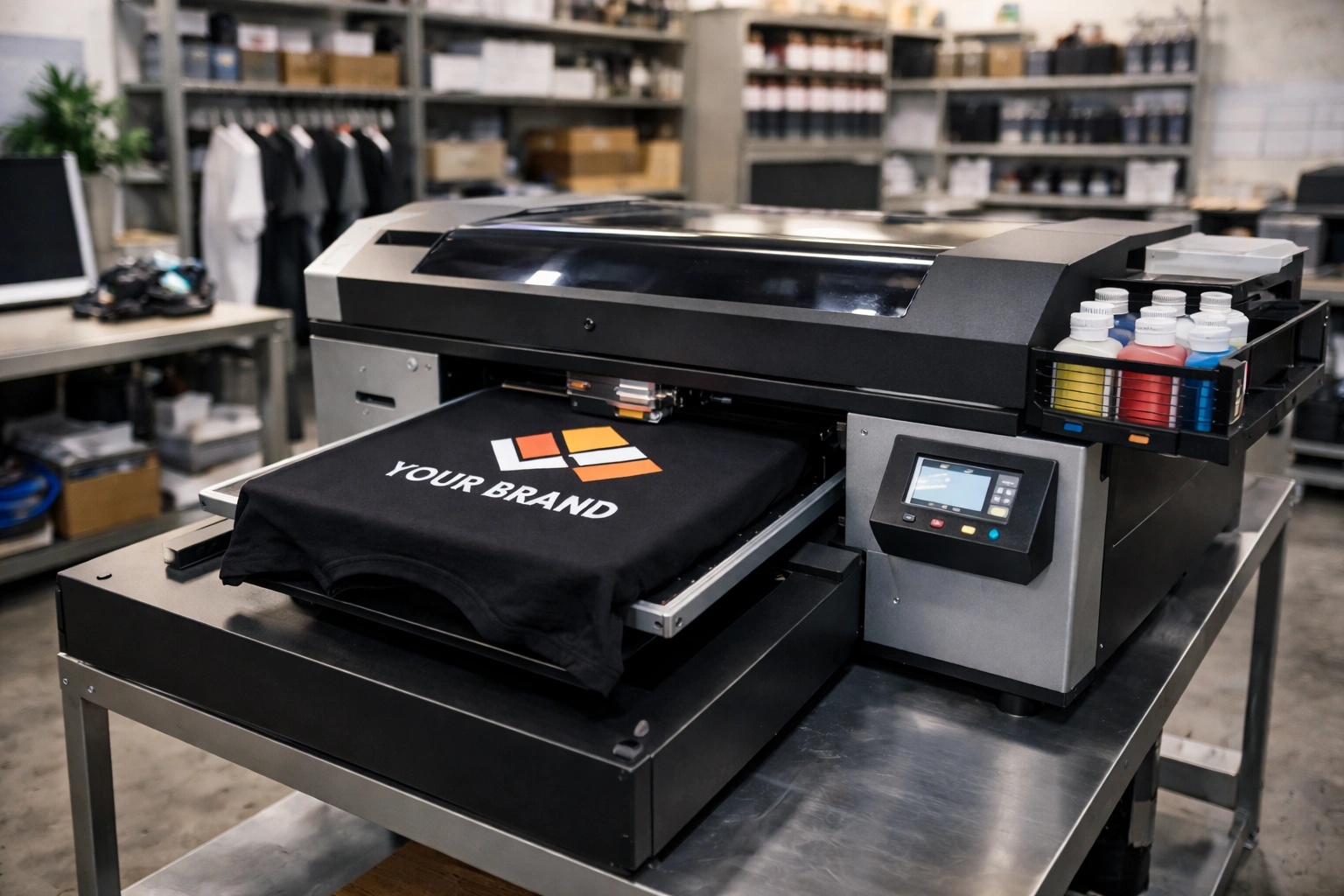
Direct-to-Garment printing is a digital textile printing process that applies water-based inks directly onto garments, much like how an inkjet printer works on paper. The printer sprays microscopic droplets of ink into the fabric fibers, allowing the image to become part of the garment rather than sitting on top of it.
Before printing, garments are typically pre-treated with a special solution that helps the ink bond with the fabric and improves color vibrancy. Once cured with heat, the design becomes durable, wash-resistant, and soft to the touch — making it ideal for wearable branding applications.
DTG printing excels at producing full-color artwork, gradients, and intricate designs without requiring additional setup steps. This makes it particularly suitable for short production runs, print-on-demand services, and custom personalization projects.
Unlike screen printing, which requires a separate stencil for each color, DTG allows unlimited color combinations in a single print run. This capability has redefined how brands approach creative expression on apparel and merchandise.
Why DTG Printing Matters in Corporate Branding
Branding is more than a logo — it’s how people experience and remember your business. Apparel and promotional products play a crucial role in building brand awareness, reinforcing identity, and establishing emotional connections with customers and employees alike.
DTG printing supports corporate branding efforts in several important ways:
It allows brands to produce high-quality, professional merchandise without minimum order quantities.
It enables quick turnaround times for time-sensitive campaigns and events.
It supports personalization and customization for targeted marketing initiatives.
It ensures visual consistency across different garment styles and colors.
Whether you're launching a startup or managing a multinational enterprise, DTG printing provides the agility and precision required to maintain brand integrity in today’s fast-moving business environment.
Key Benefits of DTG Printing for Businesses
1. Exceptional Print Quality
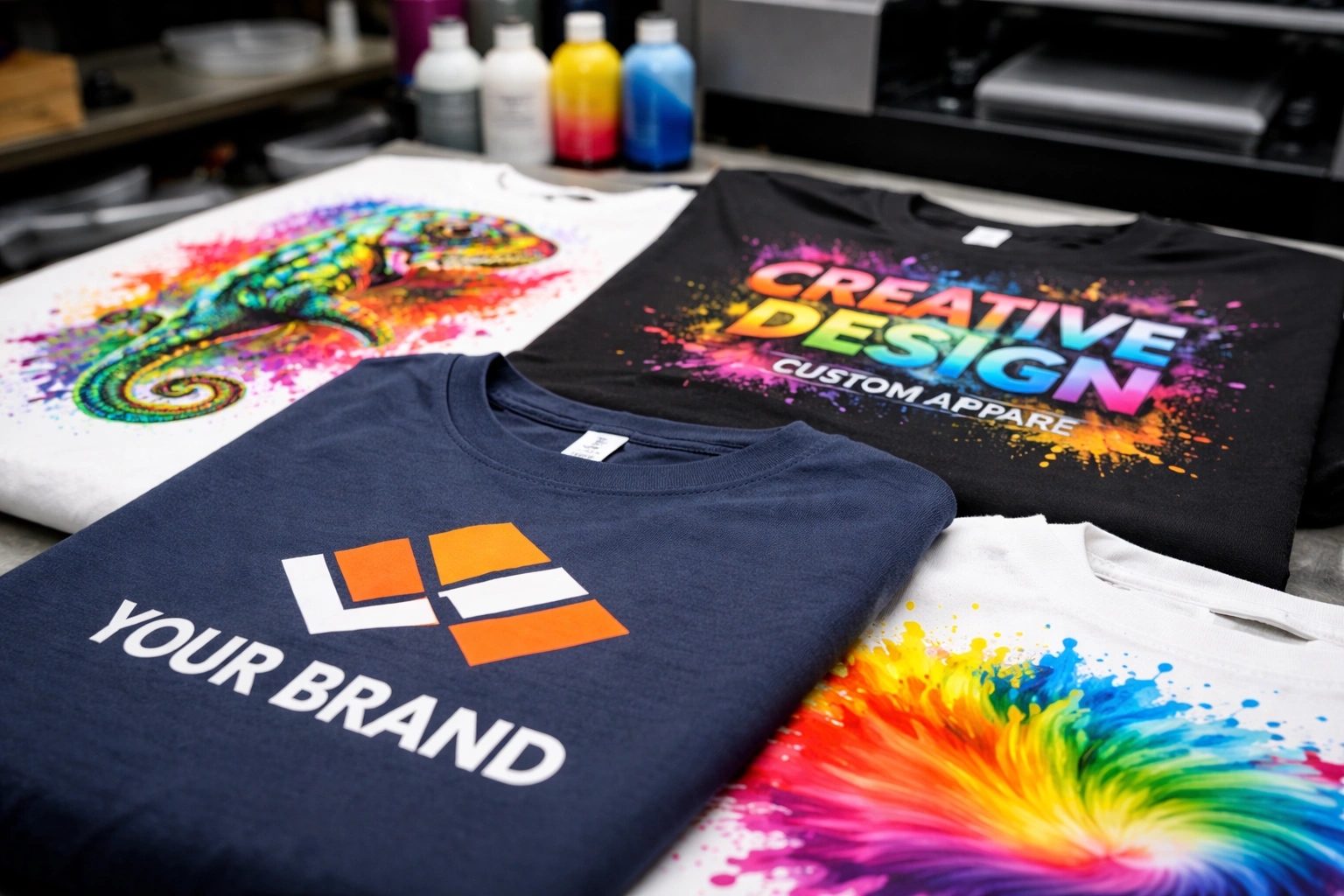
DTG technology produces photographic-quality prints with smooth gradients, sharp edges, and vibrant color accuracy. Since the ink penetrates the fabric fibers rather than sitting on top, designs feel soft and natural while retaining visual clarity.
This level of detail is especially important for corporate logos, typography, and brand artwork that require exact color matching and sharp line definition. Businesses that prioritize premium branding experiences often turn to DTG because it meets both aesthetic and durability standards.
2. Unlimited Color Capabilities
Traditional printing techniques typically limit the number of colors that can be used without increasing production costs. DTG printing eliminates this restriction entirely. Whether your design includes one color or a hundred, the cost and complexity remain the same.
This allows marketing teams and designers to fully explore creative concepts without compromising due to technical constraints. Complex artwork, gradients, shadow effects, and detailed illustrations are all easily achievable with DTG.
3. Low Setup Costs and No Minimum Orders
One of the biggest barriers in traditional printing methods is setup expense. Screen printing, for example, requires stencil creation and press preparation, which makes small orders inefficient and costly.
DTG printing requires no setup, making it ideal for:
Small batch production
Custom one-off garments
Test marketing campaigns
On-demand fulfillment
Businesses can produce exactly what they need, when they need it — reducing waste, inventory costs, and upfront investment.
4. Faster Turnaround Times
Speed is critical in modern branding. Whether preparing merchandise for a product launch, trade show, seasonal campaign, or internal event, businesses need fast production without sacrificing quality.
DTG printers can move from artwork approval to finished garment in minutes. This streamlined workflow enables same-day or next-day production, making DTG one of the fastest apparel decoration solutions available.
5. Design Flexibility and Customization
DTG printing empowers businesses to personalize merchandise at scale. This capability is especially valuable in:
Employee onboarding kits
Customer loyalty programs
Influencer marketing campaigns
Event merchandise
Personalized giveaways
Each garment can feature a different name, design variation, or message without increasing production complexity. This personalization enhances emotional engagement and brand recall.
6. Eco-Friendly Printing Option
Many DTG inks are water-based, non-toxic, and biodegradable, making the process significantly more environmentally friendly than solvent-based printing methods. Additionally, DTG printing supports on-demand production, reducing overstock and textile waste.
For brands with sustainability goals, DTG provides a responsible manufacturing solution that aligns with eco-conscious values while maintaining high-quality output.
DTG Printing vs. Traditional Printing Methods
Understanding how DTG compares to other apparel printing techniques helps businesses make informed decisions about their branding strategies.
DTG vs. Screen Printing
Screen printing is best suited for large volume runs with limited colors. It produces durable prints and works well for simple designs. However, it requires expensive setup, longer preparation time, and becomes cost-effective only at scale.
DTG printing, on the other hand:
Has no setup costs
Handles unlimited colors
Is ideal for short runs and custom designs
Produces softer prints
For corporate branding projects involving multiple design variations, employee personalization, or small batch campaigns, DTG is often the superior choice.
DTG vs. Heat Transfer Vinyl (HTV)
HTV involves cutting designs from vinyl sheets and applying them to garments using heat presses. While affordable for simple logos and text, HTV lacks the detail and durability of DTG and often results in stiff, plastic-like finishes.
DTG offers:
Greater design complexity
Softer feel
Longer-lasting prints
More professional appearance
For businesses prioritizing premium branding quality, DTG outperforms vinyl-based methods.
DTG vs. Dye Sublimation
Sublimation printing works best on polyester garments and light-colored fabrics. It permanently dyes the fabric fibers, making it extremely durable, but it limits fabric choice and design versatility.
DTG printing works on cotton and cotton blends and supports dark garments, making it far more versatile for corporate apparel needs.
Applications of DTG Printing in Corporate Branding
DTG printing enables businesses to create professional, customized merchandise across a wide range of applications.
Employee Uniforms and Workwear
Custom uniforms foster brand consistency and professional appearance across teams. DTG allows businesses to print logos, names, and department identifiers on garments with ease — without minimum order requirements.
This is especially valuable for companies with high employee turnover, seasonal staff, or location-based customization needs.
Event Merchandise and Trade Shows
Trade shows, conferences, and corporate events rely heavily on branded apparel to increase visibility and engagement. DTG allows businesses to produce limited-edition designs, event-specific graphics, and attendee giveaways on short notice.
Because there’s no setup cost, businesses can easily test designs or produce multiple variations for different audiences.
Promotional Products and Giveaways
Branded t-shirts, hoodies, tote bags, and accessories remain among the most effective promotional tools. DTG printing allows marketers to produce visually striking merchandise that recipients actually want to wear — increasing brand impressions and long-term exposure.
Retail Apparel and Private Labels
DTG printing supports on-demand fulfillment models, enabling brands to sell custom apparel without maintaining inventory. This model is ideal for startups, influencers, niche brands, and e-commerce stores seeking scalable production solutions.
Businesses can test designs, collect feedback, and iterate rapidly — reducing financial risk while maximizing creative freedom.
Personalized Marketing Campaigns
Personalization drives engagement. DTG printing allows brands to customize apparel with customer names, regional slogans, limited edition artwork, or campaign-specific messaging — all without changing production workflows.
This capability makes DTG ideal for loyalty programs, influencer collaborations, product launches, and experiential marketing initiatives.
How DTG Printing Works: Step-by-Step
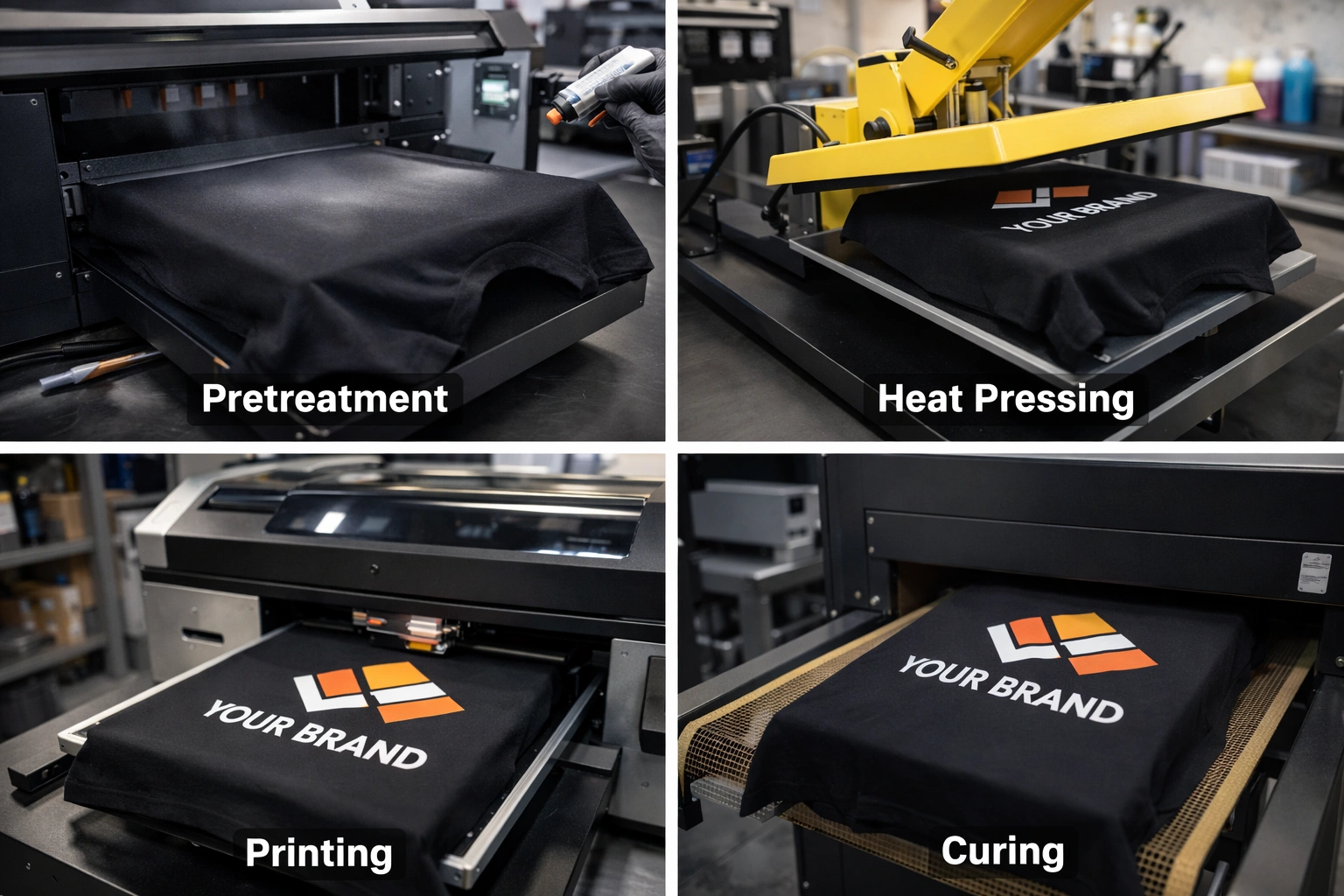
Understanding the DTG workflow helps businesses appreciate its efficiency and scalability.
Step 1: Artwork Preparation
Designs are created using graphic design software such as Adobe Illustrator, Photoshop, or similar platforms. Files are typically exported in high-resolution formats (PNG, TIFF) with transparent backgrounds.
Color management and resolution optimization ensure accurate print output and brand consistency.
Step 2: Garment Pretreatment
Before printing, garments — especially dark fabrics — are sprayed with a pretreatment solution that helps the ink bond to fibers and enhances color vibrancy. This step prevents ink absorption and improves wash durability.
Step 3: Heat Pressing
Pretreated garments are heat pressed to flatten fibers and remove moisture. This creates a smooth printing surface and ensures consistent ink application.
Step 4: Printing
The garment is placed onto the printer platen, and the DTG printer sprays ink directly into the fabric using precision inkjet technology. The process takes just a few minutes per garment.
Step 5: Curing
After printing, garments are cured using heat presses or conveyor dryers to set the ink permanently. Once cured, the garment is ready for packaging, shipping, or immediate use.
Key Features to Look for in a DTG Printer
Selecting the right DTG printer is crucial for achieving consistent quality, efficient workflows, and long-term business success.
Print Resolution and Image Accuracy
High-resolution output ensures that logos, typography, and graphics remain crisp and professional. Look for printers capable of producing fine details and smooth gradients at high DPI levels.
Color accuracy is especially important for brand consistency. Advanced color management systems and ICC profiling support accurate reproduction across different garment colors and fabrics.
Speed and Productivity
Production speed affects turnaround time and operational scalability. High-performance DTG printers can produce dozens of garments per hour while maintaining print consistency.
Businesses handling bulk orders, seasonal demand spikes, or fast-moving campaigns should prioritize printers with reliable throughput and minimal downtime.
Fabric Compatibility
While DTG printing performs best on cotton, many modern printers support cotton blends, tri-blends, bamboo, modal, and even certain treated synthetics.
Versatile fabric compatibility expands your product offerings and enables greater customization for corporate clients.
White Ink Performance
White ink capability is essential for printing on dark garments. Look for printers with:
Stable white ink circulation systems
Anti-clogging technology
Automated maintenance cycles
Reliable white ink performance ensures vibrant results across all garment colors.
Ease of Maintenance and Reliability
DTG printers require regular maintenance to ensure consistent print quality and longevity. Machines with automated cleaning cycles, intuitive interfaces, and remote diagnostics simplify operations and reduce downtime.
Reliability is especially important for businesses offering print-on-demand services or meeting tight deadlines.
Software Integration
Modern DTG printers integrate with RIP (Raster Image Processor) software that manages color profiles, print layouts, ink usage, and workflow automation.
Look for printers that support industry-standard RIP platforms and allow easy file preparation and batch processing.
How DTG Printing Enhances Brand Consistency
Brand consistency builds trust, recognition, and loyalty. DTG printing supports consistent branding across apparel by ensuring:
Accurate color reproduction across garment colors and materials
Precise logo placement and sizing
Repeatable quality across production runs
Customization without compromising brand guidelines
This consistency strengthens brand presence in internal culture, customer-facing interactions, and public environments.
Cost Considerations and ROI of DTG Printing
Lower Initial Investment
Compared to traditional screen printing equipment, DTG printers require less upfront investment and significantly lower setup costs. Businesses can begin producing professional-grade apparel with minimal infrastructure.
Reduced Waste and Inventory Risk
DTG printing supports on-demand production, allowing businesses to print only what they sell. This reduces unsold inventory, storage costs, and material waste — improving profitability and sustainability.
Faster Time-to-Market
Shorter production cycles allow businesses to respond quickly to trends, seasonal demands, and customer feedback. Faster launches improve competitiveness and revenue potential.
Increased Customer Satisfaction
Customization capabilities lead to more meaningful customer experiences, higher perceived value, and stronger emotional engagement — driving repeat business and brand advocacy.
DTG Printing for Small Businesses and Startups
DTG technology has democratized apparel printing, allowing entrepreneurs and small businesses to compete with established brands.
Key advantages for small businesses include:
No minimum order requirements
Affordable production runs
Easy product testing
Scalable growth potential
Low operational complexity
Startups can launch clothing brands, promotional merchandise lines, or internal branding initiatives without significant capital investment — making DTG an ideal entry point into custom apparel production.
DTG Printing for Large Enterprises and Corporate Teams
Enterprise organizations benefit from DTG printing in several strategic ways:
Rapid production for internal events and campaigns
Employee personalization across departments
Global brand consistency with localized customization
Agile marketing support for regional initiatives
Cost-efficient short-run production
DTG supports modern enterprise branding strategies by enabling flexibility without sacrificing quality or professionalism.
Sustainability and Environmental Impact of DTG Printing
Sustainability has become a critical priority for modern brands. DTG printing supports environmentally responsible manufacturing through:
Water-based, non-toxic inks
Reduced chemical waste
Lower energy consumption compared to traditional methods
On-demand production that minimizes overstock and landfill waste
Brands seeking eco-friendly production solutions increasingly adopt DTG printing as part of their sustainability initiatives — improving corporate responsibility profiles while meeting consumer expectations.
Best Practices for Successful DTG Printing
To maximize print quality and operational efficiency, businesses should follow these best practices:
Choose High-Quality Garments
Fabric quality directly impacts print results. Premium cotton garments with smooth weaves produce better ink absorption and sharper designs.
Use Optimized Artwork Files
Ensure artwork files are high-resolution, properly sized, and color-managed. Vector designs and high-DPI raster images deliver the best output quality.
Maintain Regular Printer Cleaning
DTG printers require consistent maintenance to prevent ink clogging and ensure long-term performance. Following manufacturer cleaning schedules extends machine lifespan and print consistency.
Test Prints Before Full Production
Running test prints allows businesses to confirm color accuracy, sizing, and placement before committing to full runs — reducing errors and waste.
Implement Proper Pretreatment Techniques
Correct pretreatment application ensures ink adhesion, vibrancy, and durability — especially on dark garments. Automated pretreatment machines improve consistency and efficiency.
The Future of DTG Printing in Corporate Branding
DTG technology continues to evolve, with innovations in:
Faster print speeds
Enhanced ink formulations
Expanded fabric compatibility
Automated workflows
AI-powered color correction
As personalization and on-demand manufacturing become central to branding strategies, DTG printing is poised to play an even more significant role in corporate merchandising and apparel production.
The integration of e-commerce platforms with DTG workflows will further streamline custom apparel fulfillment — allowing businesses to offer real-time customization and global distribution at scale.
Common Challenges in DTG Printing and How to Overcome Them
Ink Clogging
White ink contains titanium dioxide pigments that can settle over time, leading to clogging. Choosing printers with automated circulation systems and performing routine maintenance minimizes this risk.
Color Inconsistency
Improper color profiling or artwork preparation can lead to color discrepancies. Using calibrated monitors, RIP software, and ICC profiles ensures consistent output.
Fabric Limitations
DTG works best on cotton-rich fabrics. For polyester-heavy garments, pretreatment formulations and ink technologies must be carefully selected to prevent dye migration and color distortion.
Scaling Production
As order volumes increase, businesses may need multiple printers, automated pretreatment systems, and production workflows to maintain efficiency.
How to Choose the Right DTG Printer for Your Business
When selecting a DTG printer, businesses should evaluate:
Production volume requirements
Fabric types and garment colors
Budget constraints
Maintenance support and warranty options
Software compatibility
Manufacturer reputation and technical support
A well-chosen DTG printer becomes a long-term asset that drives branding innovation, operational efficiency, and revenue growth.
Frequently Asked Questions (FAQs)
What is DTG printing?
DTG (Direct-to-Garment) printing is a digital textile printing method that applies ink directly onto garments using specialized inkjet printers, producing high-resolution, full-color designs with a soft finish.
How durable are DTG prints?
When properly printed and cured, DTG prints can last for years without cracking or fading, especially when washed according to garment care instructions.
Is DTG printing better than screen printing?
DTG is better for short runs, complex designs, and personalized garments. Screen printing is more cost-effective for large quantities of simple designs. The best option depends on production volume and design complexity.
What fabrics work best for DTG printing?
DTG works best on 100% cotton and cotton-blend fabrics. Some advanced printers can handle treated polyester and specialty fabrics with proper pretreatment.
Can DTG printing be used for business logos?
Yes. DTG is ideal for corporate logos because it delivers precise color accuracy, sharp details, and consistent reproduction across garment styles.
Is DTG printing environmentally friendly?
DTG printing uses water-based, non-toxic inks and supports on-demand production, making it one of the most eco-friendly apparel printing methods available.
Conclusion
Direct-to-Garment printing has reshaped how businesses approach corporate branding, offering unmatched flexibility, speed, and quality in custom apparel production. By eliminating setup costs and enabling unlimited design complexity, DTG empowers brands to personalize merchandise, respond rapidly to market demands, and maintain visual consistency across campaigns.
From startups and e-commerce entrepreneurs to enterprise marketing teams and global corporations, DTG printing delivers scalable, sustainable, and cost-effective branding solutions that meet the demands of modern commerce. Its ability to produce premium-quality garments on demand positions it as one of the most powerful tools in today’s branding landscape.Explore our high-quality DTG printers here
As personalization, sustainability, and agility continue to define successful brand strategies, DTG printing will remain at the forefront of innovation — helping businesses create meaningful connections through wearable brand experiences.