

 HOME
HOME PRODUCT CENTER
 ABOUT US
 DOWNLOAD CENTER
 SUPPORT CENTER
 SUBSCRIBE
 BLOG
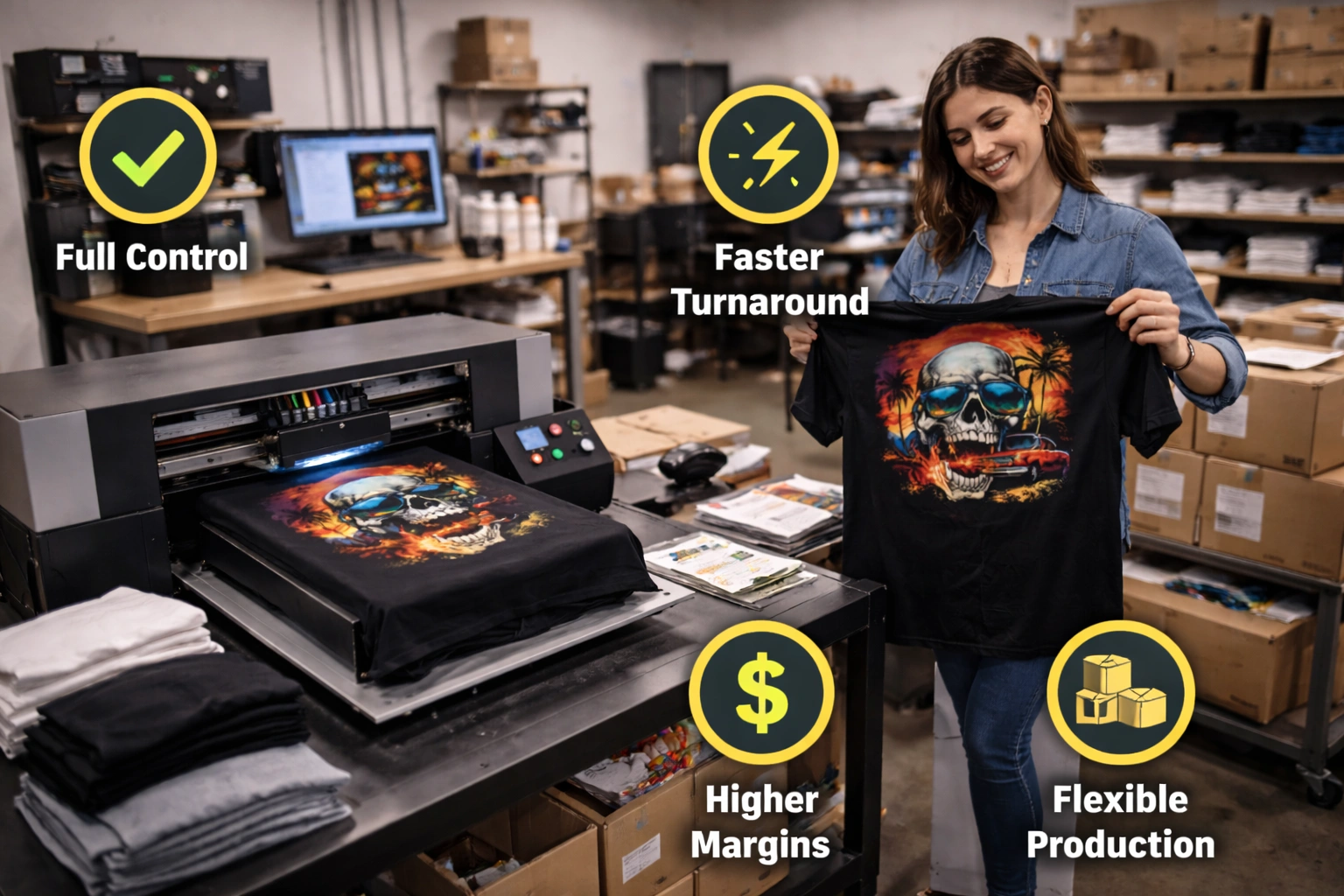
BLOGDirect to Garment (DTG) printing has transformed the custom apparel industry by making it possible to print highly detailed, full-color designs directly onto fabric. From startups launching print-on-demand clothing brands to established businesses expanding their personalization offerings, DTG printing has become a key technology. As demand grows, businesses face an important strategic decision: should DTG printing be outsourced to a third-party service provider, or should it be handled in-house with owned equipment? At first glance, owning a DTG printer may seem like the ideal solution. It promises control, flexibility, and potentially higher profit margins. However, DTG printing is not just about pressing a button and printing a design. It requires capital investment, technical expertise, consistent maintenance, and a steady flow of orders to justify costs. Outsourcing, on the other hand, removes many operational burdens but introduces trade-offs related to control, turnaround time, and dependency on external vendors. This article provides an in-depth, completely original analysis of outsourcing DTG printing versus managing it in-house. It is designed to help business owners, entrepreneurs, and decision-makers understand the financial, operational, and strategic implications of each option so they can make an informed choice aligned with their long-term goals. Direct to Garment printing is a digital printing process where specialized inkjet technology applies water-based inks directly onto textiles, typically cotton or cotton-blend garments. Unlike traditional screen printing, DTG does not require screens, stencils, or extensive setup. Designs are printed directly from a digital file, making the process ideal for short runs, custom designs, and highly detailed artwork. DTG printing excels in producing photorealistic images, gradients, and multi-color designs with minimal setup time. Because of this flexibility, it has become popular among custom apparel brands, online stores, promotional product companies, and small-scale manufacturers catering to niche markets. However, DTG printing also comes with specific requirements. Pretreatment is often necessary to ensure ink adhesion and color vibrancy. The machines require frequent cleaning, especially of white ink systems, and consistent environmental conditions to maintain print quality. These factors play a significant role in deciding whether outsourcing or in-house production is the better route. Outsourcing DTG printing means partnering with a third-party service provider who handles the entire printing process on your behalf. You supply the artwork and order details, and the provider prints and ships the finished garments to you or directly to your customers. This model is commonly used by print-on-demand businesses, e-commerce brands, designers, and companies that want to offer custom apparel without investing in printing infrastructure. Outsourcing can be local or international, depending on cost structures, quality expectations, and delivery requirements. Before deciding on outsourcing, it is essential to understand both its advantages and limitations in detail. One of the most significant advantages of outsourcing DTG printing is the elimination of upfront capital expenditure. DTG printers are expensive machines, and the total cost does not end with the printer itself. Pretreatment equipment, heat presses, curing systems, inks, maintenance supplies, and workspace setup all add to the initial investment. For startups or small businesses with limited budgets, outsourcing allows entry into the custom apparel market without major financial risk. Instead of investing large sums upfront, businesses can pay per order, preserving cash flow for marketing, branding, and customer acquisition. DTG printing involves more than just printing designs. Operators must manage file preparation, color profiles, pretreatment application, curing times, and garment handling. In-house production requires trained staff and consistent oversight to ensure quality. Outsourcing shifts these responsibilities to experienced professionals who specialize in DTG printing. This allows business owners to focus on core activities such as sales, design, customer service, and business growth rather than daily production challenges. Established DTG printing providers invest heavily in skilled technicians, calibrated equipment, and optimized workflows. Their experience enables them to handle a wide range of designs, fabrics, and order volumes efficiently. By outsourcing, businesses benefit from this expertise without having to build it internally. This often results in more consistent print quality, fewer errors, and better overall customer satisfaction. Outsourcing makes it easier to scale operations up or down based on demand. During peak seasons or promotional campaigns, a reliable DTG printing partner can handle increased order volumes without requiring additional investment from your side. Similarly, during slow periods, you are not burdened with fixed costs such as equipment depreciation, staff salaries, or maintenance expenses. This flexibility is particularly valuable for businesses with fluctuating demand. DTG printers require regular maintenance to function properly. White ink systems, in particular, need daily cleaning to prevent clogging. Unexpected breakdowns can halt production and lead to missed deadlines. When you outsource, maintenance and downtime risks are absorbed by the service provider. This reduces operational stress and ensures continuity, even if equipment issues arise on their end. One of the main disadvantages of outsourcing is limited control over the production process. You rely on the service provider for print quality, color accuracy, garment handling, and finishing. While reputable providers maintain high standards, there may still be variations that are beyond your immediate control. For businesses that prioritize absolute precision or frequent design changes, this lack of control can be frustrating. Outsourcing can introduce delays, especially during peak seasons when service providers handle large volumes of orders. Production queues, shipping times, and communication delays can affect delivery schedules. If your business model depends on fast turnaround or same-day printing, outsourcing may not always meet customer expectations. Although outsourcing eliminates upfront costs, the per-unit cost of DTG printing is generally higher compared to in-house production at scale. Service providers include their operational expenses and profit margins in pricing. As order volumes increase, these per-unit costs can add up and potentially reduce overall profitability compared to owning and operating your own equipment. Outsourcing creates dependency on third-party providers. Any issues related to their capacity, reliability, or business stability can directly impact your operations. Changes in pricing, service quality, or delivery policies may require you to find alternative providers, which can disrupt workflows and customer relationships. In-house DTG printing involves purchasing your own equipment and managing the entire printing process internally. This approach is common among established brands, high-volume producers, and businesses that require complete control over production. While in-house printing offers several advantages, it also comes with responsibilities that must be carefully evaluated. Owning a DTG printer gives you complete control over print quality, color accuracy, garment selection, and finishing details. Design changes can be implemented instantly, and test prints can be produced without additional costs. This level of control is especially beneficial for brands focused on premium quality, unique designs, or rapid prototyping. In-house production allows for quicker order fulfillment, as there is no reliance on external providers or shipping delays. This is ideal for businesses offering express delivery, custom orders, or limited-edition drops. Faster turnaround can also improve customer satisfaction and brand reputation. Once initial investments are recovered, in-house DTG printing can be more cost-effective for businesses with consistent, high-volume orders. Per-unit costs decrease as production increases, improving profit margins over time. Managing printing internally reduces the risk of design leaks or intellectual property concerns. Sensitive designs, exclusive collections, or proprietary artwork remain within your organization. Purchasing a DTG printer and related equipment requires significant capital. In addition to the machine, businesses must invest in workspace setup, environmental controls, and ongoing supplies. For many small businesses, this financial commitment can be risky, especially if order volumes are uncertain. DTG printers require daily maintenance and periodic servicing. Staff must be trained to operate the equipment correctly and troubleshoot issues as they arise. Maintenance downtime can disrupt production schedules and increase costs if not managed effectively. Scaling in-house production often means purchasing additional machines, hiring more staff, and expanding workspace. This can be expensive and time-consuming compared to outsourcing, where capacity is more flexible. When comparing outsourcing and in-house DTG printing, cost analysis should go beyond initial investment. Businesses must consider total cost of ownership, including equipment depreciation, maintenance, labor, utilities, and consumables. Outsourcing offers predictable per-order pricing and minimal risk, making it suitable for low to medium volumes. In-house production can be more economical at higher volumes but requires consistent demand to justify expenses. A detailed cost projection based on realistic order volumes is essential before making a decision. Quality is a critical factor in custom apparel. Outsourcing providers often deliver excellent results due to specialized expertise, but variations may occur across different partners. In-house printing allows for direct quality control but depends heavily on operator skill and machine condition. Businesses must assess whether they can maintain consistent standards internally. Customer expectations for fast delivery continue to rise. In-house printing generally offers faster fulfillment, while outsourcing may introduce delays depending on provider capacity and logistics. However, many professional DTG service providers offer expedited options that can match in-house timelines at an additional cost. There is no universal answer to whether outsourcing or in-house DTG printing is better. The right choice depends on factors such as business size, budget, order volume, quality requirements, and growth strategy. Outsourcing is often ideal for startups, small businesses, and brands testing the market. In-house printing suits established businesses with predictable demand and a focus on long-term cost efficiency and control. DTG printing offers incredible opportunities for customization, creativity, and business growth. Choosing between outsourcing and in-house production is a strategic decision that impacts costs, operations, and customer experience. Outsourcing provides flexibility, lower risk, and access to expertise, making it an attractive option for many businesses. In-house DTG printing offers control, speed, and potential cost savings at scale but requires significant investment and commitment. By carefully evaluating your business goals, resources, and market demands, you can select the approach that aligns best with your vision and positions your brand for sustainable success.Explore our high-quality DTG printers here What is DTG printing best used for? Is outsourcing DTG printing suitable for startups? When does in-house DTG printing become cost-effective? Can businesses combine outsourcing and in-house printing?DTG Printing Outsourcing vs In-House Production
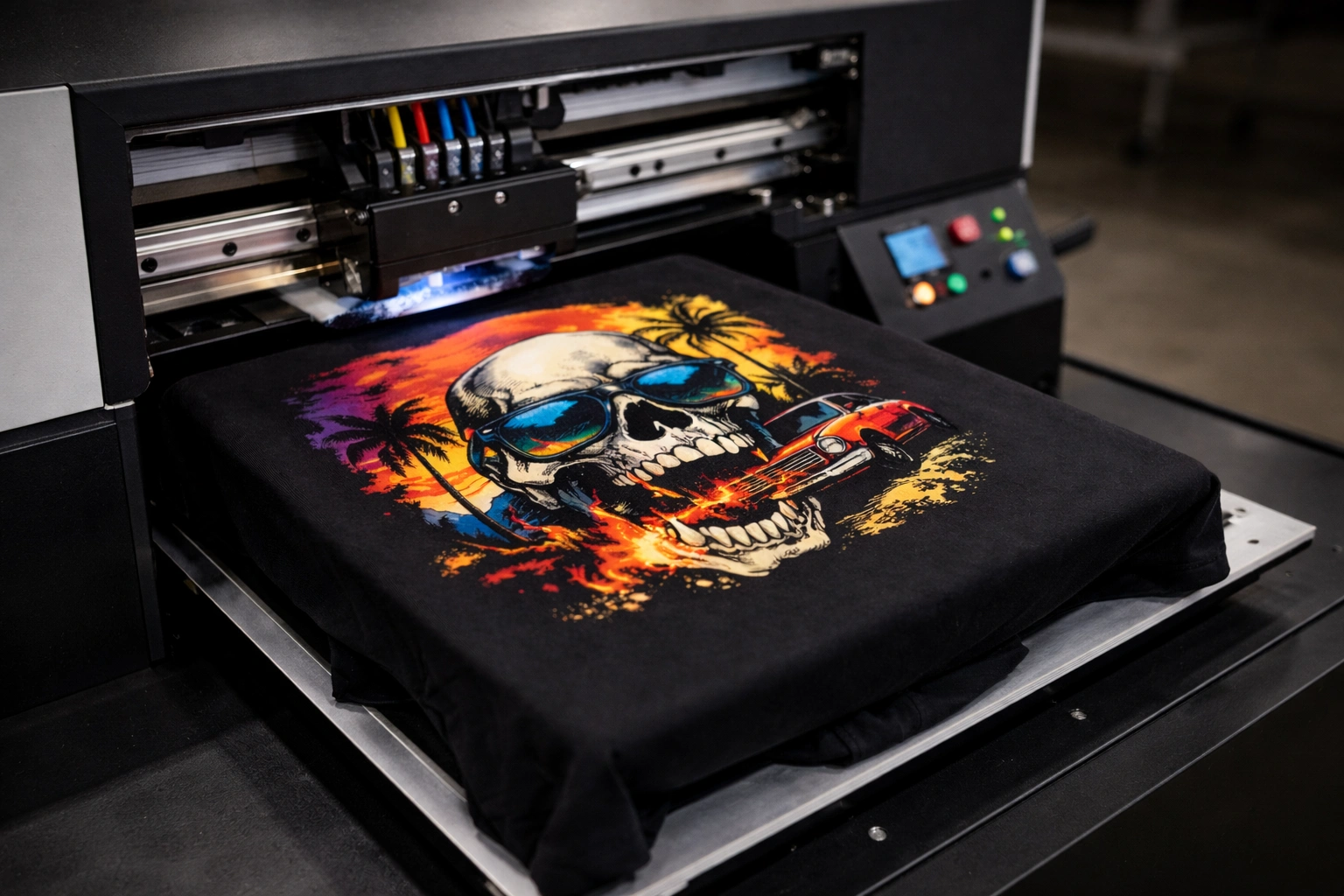
What Is DTG Printing?
Understanding Outsourcing in DTG Printing
Benefits of Outsourcing DTG Printing
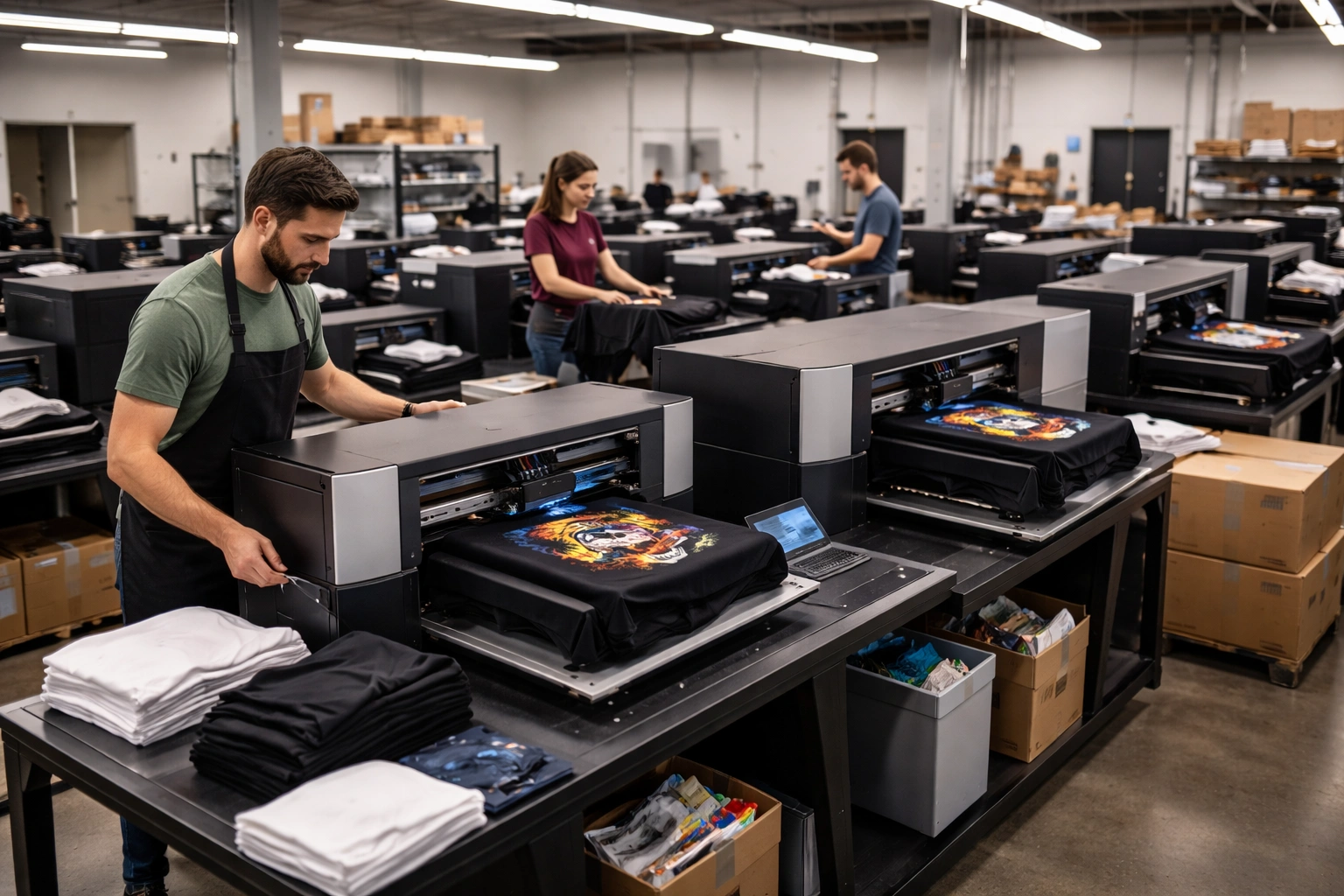
Lower Initial Investment
Reduced Operational Complexity
Access to Professional Expertise
Scalability and Flexibility
No Maintenance or Downtime Concerns
Drawbacks of Outsourcing DTG Printing
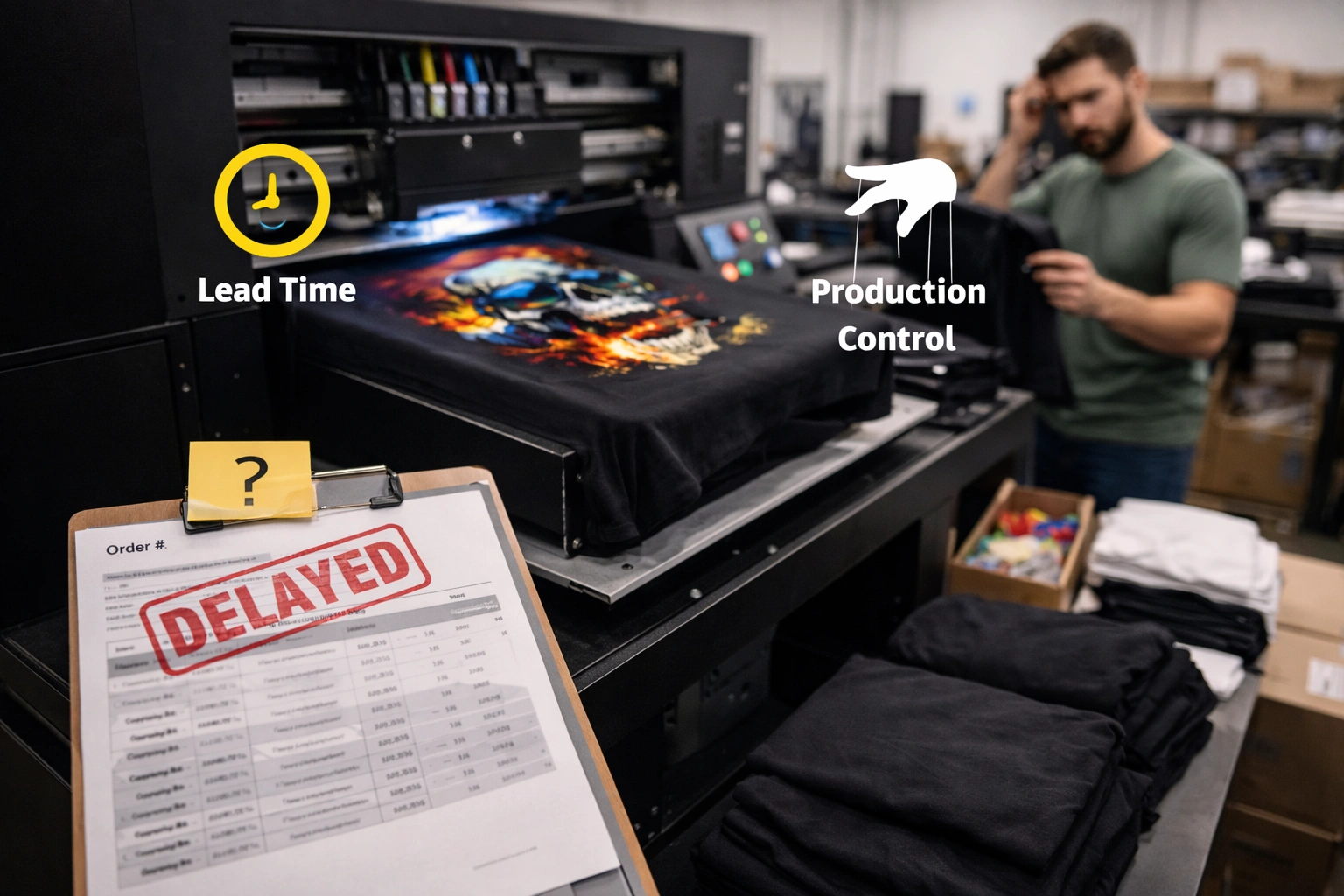
Reduced Control Over Production
Longer Turnaround Times
Per-Unit Costs
Dependence on External Partners
In-House DTG Printing Explained
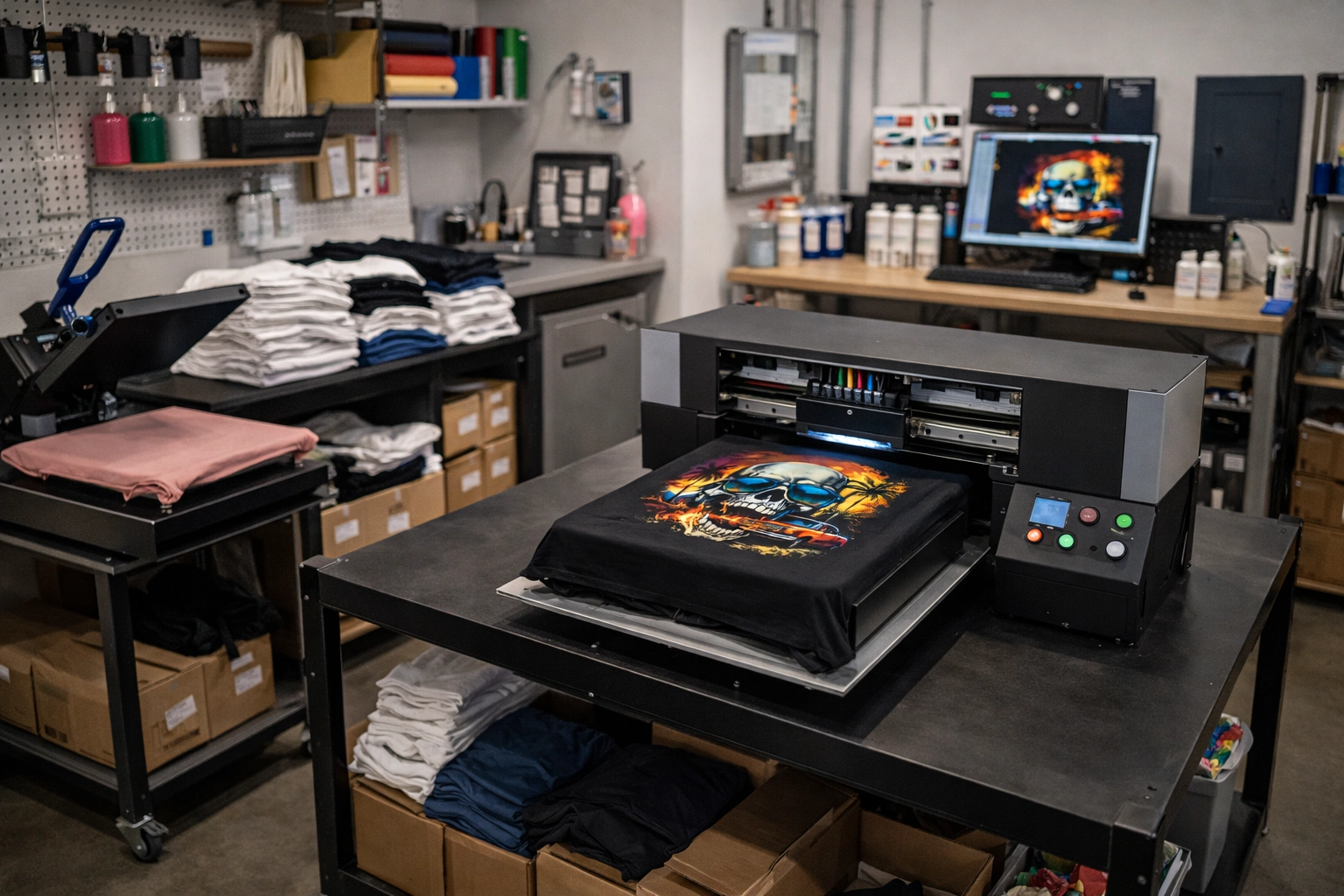
Advantages of In-House DTG Printing
Full Creative and Production Control
Faster Turnaround Times
Lower Cost at Higher Volumes
Brand Confidentiality
Challenges of In-House DTG Printing
High Initial Investment
Ongoing Maintenance and Training
Limited Scalability
Cost Comparison: Outsourcing vs In-House
Quality Considerations
Turnaround Time and Customer Experience
Which Option Is Right for Your Business?
Conclusion
Frequently Asked Questions
DTG printing is best suited for full-color, detailed designs, small batch orders, and personalized garments where flexibility and design complexity are important.
Yes, outsourcing is often ideal for startups because it minimizes financial risk and allows businesses to focus on branding and sales.
In-house DTG printing typically becomes cost-effective when order volumes are consistent and high enough to offset initial investments and operating costs.
Yes, many businesses use a hybrid approach, outsourcing overflow orders or specialty jobs while handling core production internally.
Online Inquiry
Lastest News
-
6:01 pm · 12 May 26
DTG Printer Misalignment Issues: Calibration Step by Step
-
5:13 pm · 11 May 26
Why Your DTG White Ink Looks Gray and How to Fix It
-
5:49 pm · 9 May 26
DTG Printer Ink Bleeding on Polyester: Prevention Techniques
-
10:11 am · 8 May 26
Fixing DTG Print Cracking After Multiple Washes