

 HOME
HOME PRODUCT CENTER
 ABOUT US
 DOWNLOAD CENTER
 SUPPORT CENTER
 SUBSCRIBE
 BLOG
BLOGDTG Printer Technology and Modern Print Head Innovation
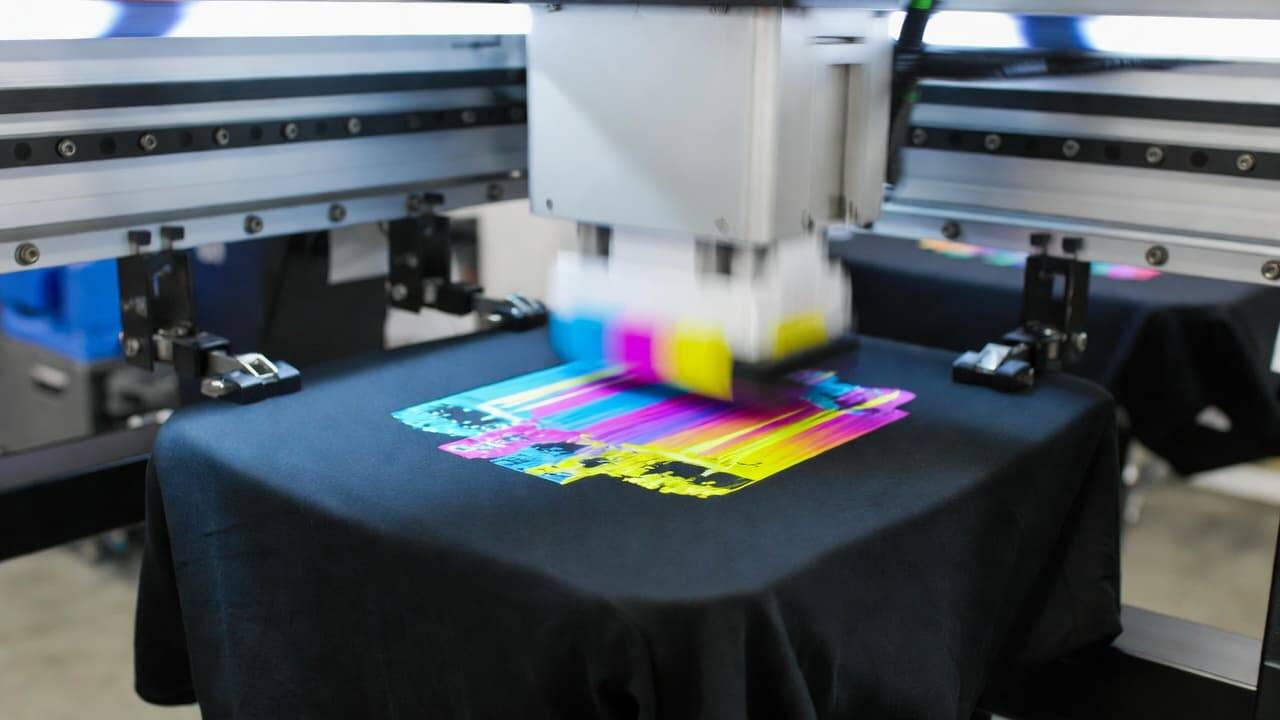
Digital textile printing has transformed the custom apparel industry, and among all available methods, Direct to Garment (DTG) printing stands out as one of the most advanced and flexible solutions. Over the past decade, DTG technology has evolved rapidly, offering higher speed, sharper detail, and improved color performance. At the center of this evolution lies one essential component: the print head.
The print head is the driving force behind every successful DTG print. It determines how accurately ink is placed on fabric, how fast production runs, and how vibrant the final output appears. If you want to understand DTG printing in depth—or invest in a high-performance machine—understanding print head technology is absolutely essential.
In this guide, we will explore how modern DTG printer print heads work, their advantages, advanced features, and why they are critical for producing professional-quality textile prints.
Understanding DTG Printing Technology
Direct to Garment printing is a digital printing process that transfers designs directly onto fabric using specialized inkjet technology. Unlike traditional printing techniques such as screen printing, DTG does not require screens, stencils, or complex setup processes.
Instead, DTG printers operate similarly to office inkjet printers—but on fabric. Designs are digitally processed and printed directly onto garments like t-shirts, hoodies, tote bags, and more.
This digital workflow offers several advantages:
No minimum order quantity
Ideal for complex and multi-color designs
Quick turnaround times
Reduced setup requirements
On-demand production capability
However, the real performance of a DTG printer depends heavily on its print head technology.
What Is a Print Head in a DTG Printer?
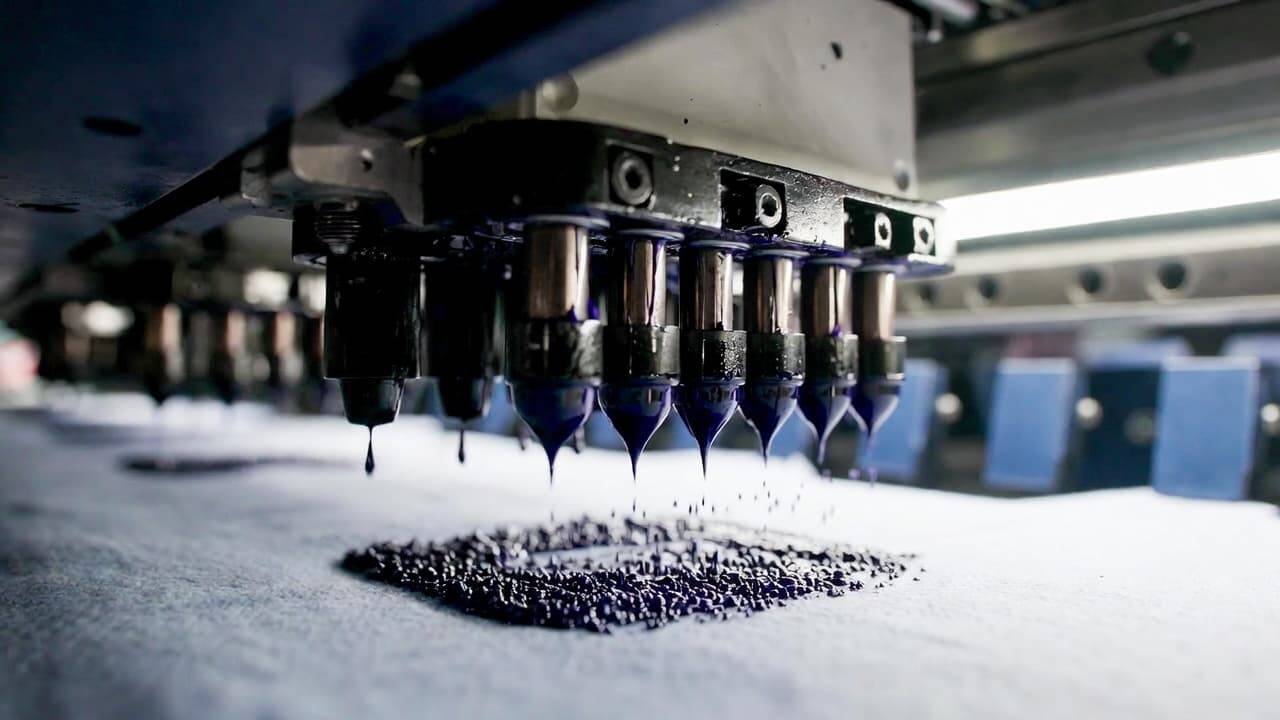
The print head is the most important mechanical component inside a DTG printer. It contains microscopic nozzles that eject ink droplets onto the fabric with extreme precision.
These droplets are carefully controlled in terms of:
Size
Placement
Volume
Frequency
Every design detail—fine lines, gradients, shadows, and vibrant colors—is created by how accurately these ink droplets are placed.
In simple terms, the print head determines:
Print clarity
Color accuracy
Production speed
Ink efficiency
Machine durability
Without advanced print head technology, even the best DTG printer cannot produce professional-quality results.
How Modern DTG Print Head Technology Works
Modern DTG printers use highly advanced inkjet systems that control thousands of nozzles simultaneously. These nozzles spray microscopic droplets of water-based textile ink onto the garment surface.
The process involves:
Digital file processing
Ink droplet formation
Precise droplet placement
Layered ink deposition
Heat curing for durability
The quality of each step depends on how well the print head performs.
Thanks to technological advancements, modern print heads are now faster, more accurate, and more durable than earlier models. This improvement has significantly raised the standards of DTG printing across the industry.
Key Benefits of Advanced DTG Print Heads
1. Superior Print Quality
One of the biggest advantages of modern print heads is their ability to produce extremely detailed and photorealistic designs.
Traditional printing methods like screen printing work well for simple graphics but struggle with:
Complex gradients
High-resolution photographs
Fine typography
Multi-color artwork
Modern DTG print heads use micro-droplet technology to place ultra-small ink droplets precisely where needed. This allows smooth color transitions, sharp outlines, and accurate skin tones in photographic prints.
The result is vibrant, professional-quality prints that meet today’s high consumer expectations.
2. Faster Production Speed
Speed is critical for printing businesses, especially when handling bulk orders or time-sensitive projects.
Modern DTG print heads feature:
Increased nozzle count
Multi-channel ink systems
Higher droplet firing frequency
This means more ink droplets are released per second, allowing designs to be printed faster without compromising quality.
Higher speed directly translates to:
Greater daily production capacity
Reduced turnaround time
Improved profitability
For businesses aiming to scale operations, print speed becomes a major competitive advantage.
3. Reduced Operational Costs
DTG printing already eliminates many costs associated with traditional methods, such as:
Screen preparation
Film positives
Color separations
Manual setup time
Advanced print heads further reduce operational expenses by:
Minimizing ink waste
Improving ink placement efficiency
Offering longer lifespan
Reducing maintenance downtime
Although modern DTG printers may have a higher initial cost, the long-term savings often make them more economical.
4. Consistency and Reliability
Consistency is crucial in commercial printing. Customers expect identical results across multiple garments.
Modern print head systems ensure:
Uniform droplet size
Stable ink flow
Precise repeatability
Reduced banding issues
This consistency builds brand reputation and reduces rejected prints.
Advanced Features of Modern DTG Print Heads
When evaluating a DTG printer, understanding its core print head features is essential. Here are the most important technologies driving modern DTG performance.
Micro Piezo Technology
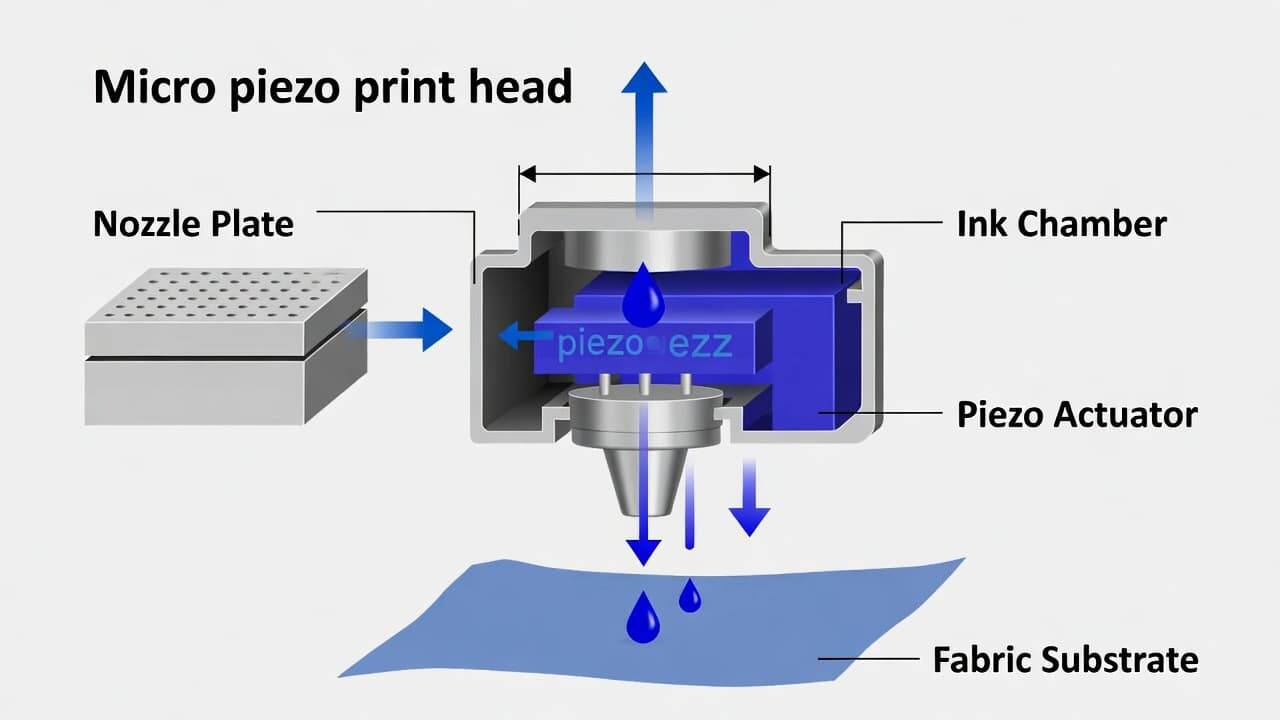
Micro Piezo technology controls ink droplet ejection using mechanical pressure instead of heat. This allows extremely accurate control over droplet size and placement.
Benefits include:
Precise ink volume control
Better detail reproduction
Smooth gradients
Compatibility with textile inks
Because the ink is not heated during ejection, the chemical structure remains stable, resulting in better durability and color performance.
Variable Droplet Technology
Not every part of a design requires the same droplet size. Fine details need smaller droplets, while large color areas require larger droplets for faster coverage.
Variable droplet technology allows the print head to adjust droplet size dynamically based on the artwork.
This results in:
Sharper fine lines
Faster fill areas
Improved tonal range
Optimized ink usage
The combination of speed and precision makes this feature essential for professional DTG printing.
High Nozzle Density
Modern print heads contain thousands of microscopic nozzles arranged in multiple rows.
A higher nozzle density provides:
Faster print passes
Smoother coverage
Improved color blending
Reduced visible print lines
This directly impacts production efficiency and final output quality.
Automatic Nozzle Check and Cleaning Systems
Blocked nozzles can lead to:
Missing lines
Faded areas
Color inconsistencies
Modern DTG printers include automated nozzle detection and cleaning systems that:
Identify clogged nozzles
Perform self-cleaning cycles
Reduce manual intervention
Minimize downtime
This ensures consistent performance and extends print head life.
DTG vs Traditional Printing Methods
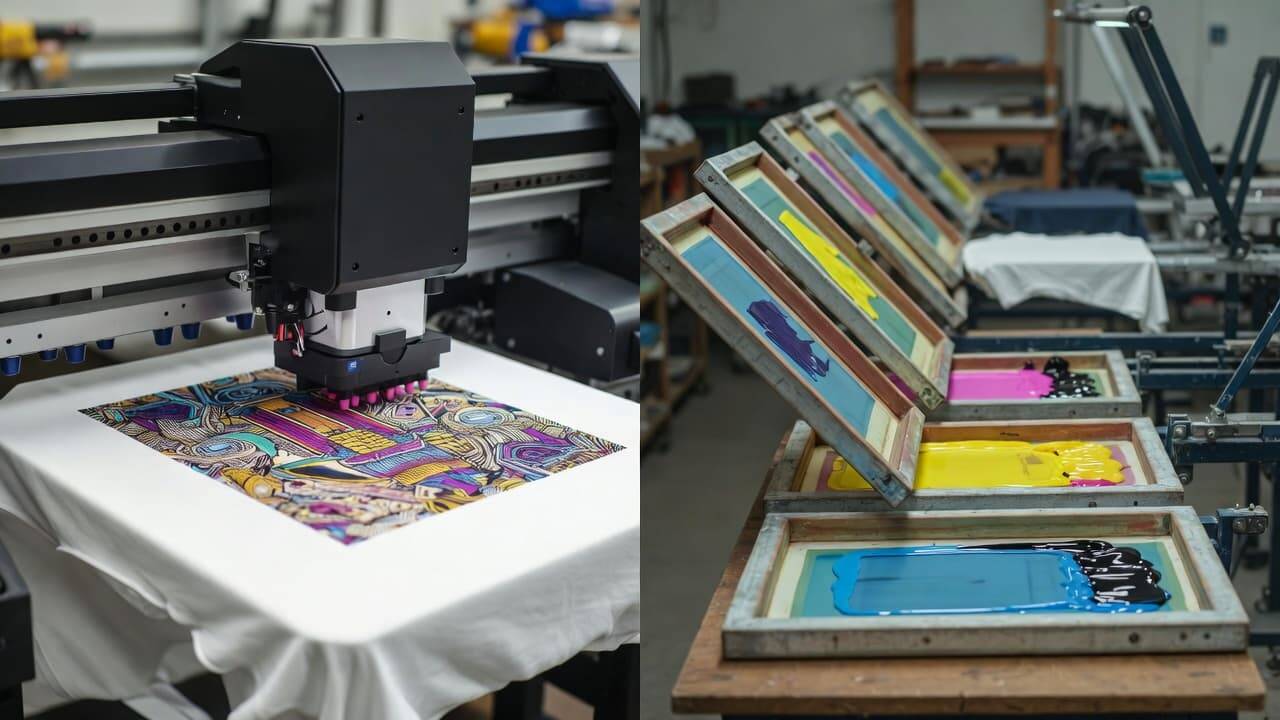
To understand the importance of print head innovation, it helps to compare DTG with traditional printing methods.
Screen Printing
Screen printing works well for bulk orders and simple designs but involves:
Setup time
Screen creation
Limited color flexibility
Higher minimum order quantities
DTG printing eliminates these barriers, especially for small or customized orders.
Heat Transfer Printing
Heat transfer methods are easy to use but may lack durability and texture quality compared to DTG.
DTG printing offers:
Softer hand feel
Better wash durability
More natural integration with fabric
For businesses focused on premium apparel, DTG often becomes the preferred solution.
Why Print Head Quality Matters When Buying a DTG Printer
When investing in a DTG printer, many buyers focus only on price or brand. However, the real performance indicator is the print head technology.
Before purchasing, consider:
Type of print head used
Nozzle count
Ink compatibility
Cleaning system efficiency
Replacement cost
Manufacturer support
A strong print head system ensures long-term reliability and return on investment.
Applications of Modern DTG Printing
Thanks to improved print head technology, DTG printers are now widely used for:
Custom t-shirt printing
Fashion brands
Print-on-demand businesses
Promotional merchandise
Personalized gifts
Corporate apparel
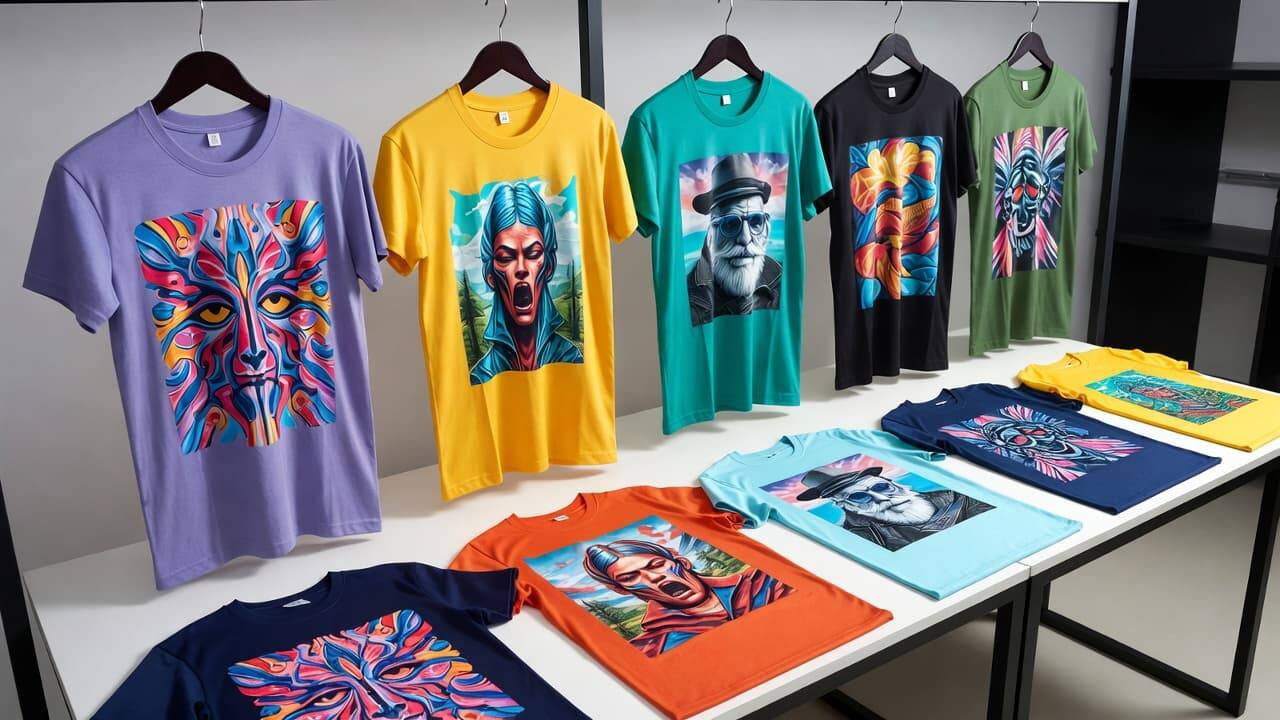
The ability to print detailed, full-color designs quickly makes DTG suitable for both startups and established businesses.
Future Trends in DTG Print Head Innovation
The DTG industry continues to evolve. Future developments are expected to focus on:
Even faster print speeds
AI-based nozzle monitoring
Improved ink efficiency
Hybrid printing systems
Enhanced eco-friendly ink compatibility
As print head engineering advances, DTG printing will become even more efficient and accessible.
Final Thoughts
The growth of Direct to Garment printing has been fueled largely by innovations in print head technology. From superior image quality to faster production speeds and lower operational costs, the print head is the core engine that drives DTG performance.
Understanding how modern print heads function helps business owners make smarter purchasing decisions and maximize production efficiency.
If you are planning to invest in a high-performance DTG printer, prioritize advanced print head technology. It is not just a component—it is the foundation of consistent, professional textile printing.
Explore our high-quality DTG printers here
Frequently Asked Questions
What is the role of a print head in a DTG printer?
The print head controls the microscopic ink droplets that are sprayed onto the garment. It directly affects print quality, speed, and consistency.
Why are modern DTG print heads better than older models?
Modern print heads feature advanced droplet control, higher nozzle density, and automatic cleaning systems. These improvements deliver sharper prints, faster production, and reduced maintenance.
Are advanced DTG printers worth the investment?
Although advanced DTG printers may have a higher initial cost, they often provide better long-term value through improved efficiency, reduced waste, and consistent output quality.
How long does a DTG print head last?
The lifespan depends on usage, maintenance, and ink quality. With proper care and regular cleaning, modern print heads can last for extended periods while maintaining performance.