

 HOME
HOME PRODUCT CENTER
 ABOUT US
 DOWNLOAD CENTER
 SUPPORT CENTER
 SUBSCRIBE
 BLOG
BLOGEntry-Level vs Industrial UV DTF Printers
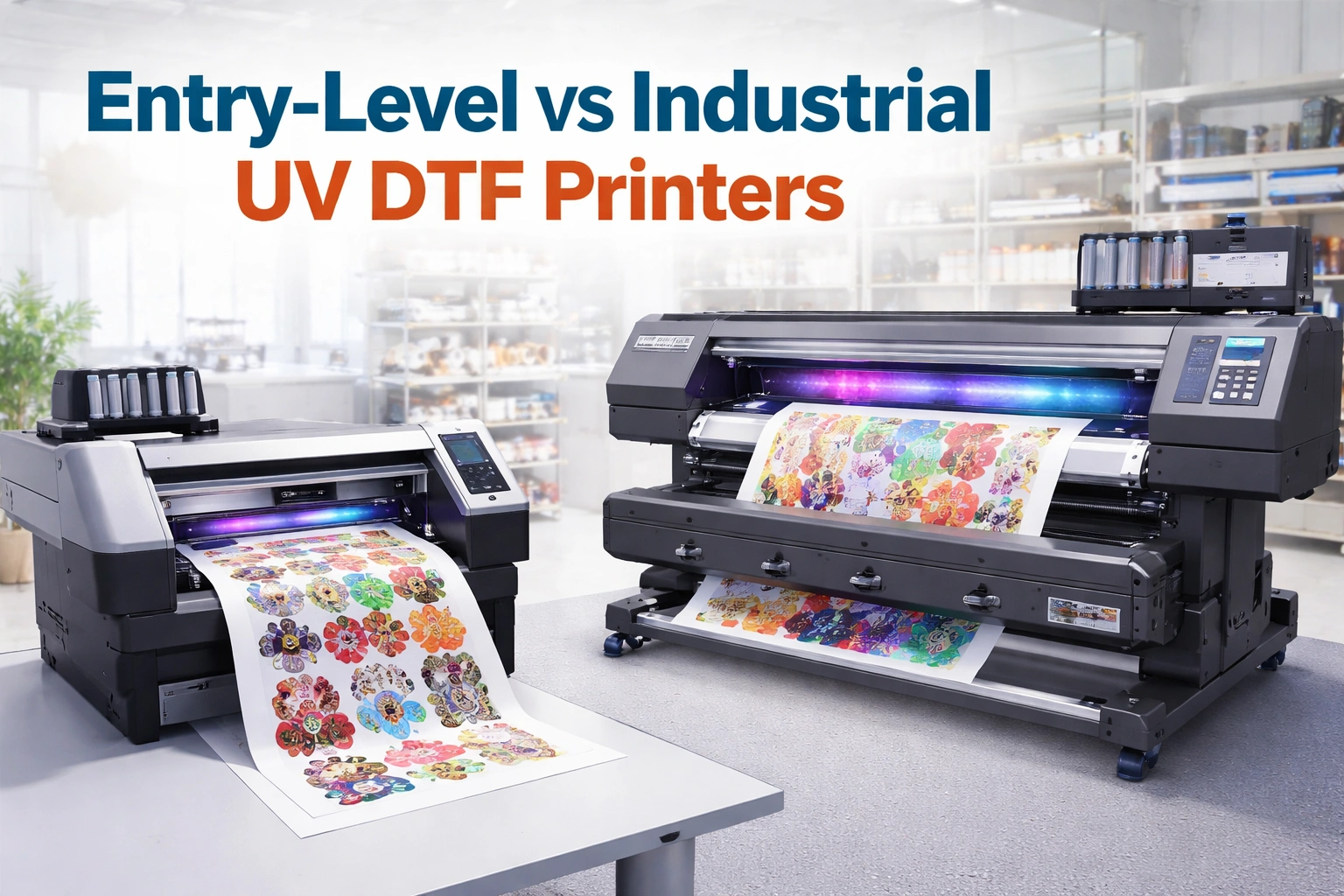
The global printing industry is evolving rapidly as businesses look for faster, more flexible, and higher-quality printing solutions. Among the newest and most powerful technologies gaining popularity is UV DTF (Direct to Film) printing. This method has transformed how custom graphics are produced and applied across multiple surfaces, from promotional products to industrial components.
As interest in UV DTF printing grows, buyers often face one major question: Should you invest in an entry-level UV DTF printer or an industrial UV DTF printer? The answer depends on several factors, including budget, production volume, business goals, and operational requirements.
This article provides a detailed, unbiased comparison of entry-level and industrial UV DTF printers, explaining how they differ, where each excels, and how to choose the right machine for your specific needs. Whether you are a startup, a growing print business, or an established production house, this guide will help you make a confident and informed decision.
What Is UV DTF Printing?
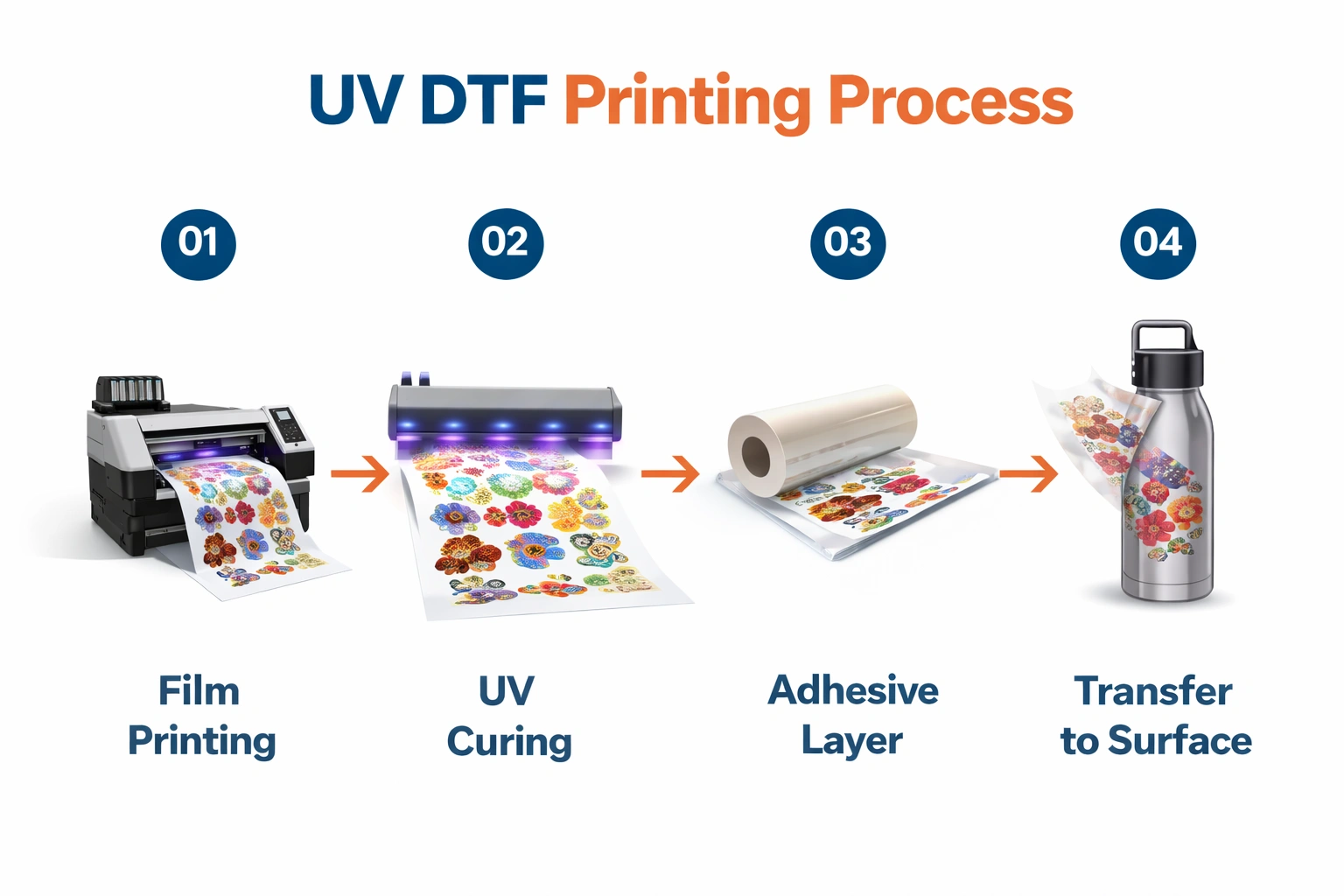
UV DTF (Direct to Film) printing is an advanced digital printing technique that uses UV-curable inks printed onto a special film. The printed design is then transferred onto the final surface using pressure, creating a strong and durable bond.
Unlike traditional printing methods that require direct printing on the substrate, UV DTF allows designs to be applied to irregular, curved, or hard-to-print surfaces without compromising quality.
How UV DTF Printing Works
The design is printed onto a transfer film using UV-curable inks.
UV lamps instantly cure the ink, locking colors in place.
An adhesive layer is applied over the cured print.
The design is transferred to the final substrate by pressing and peeling the film.
This process results in sharp graphics, rich colors, and long-lasting prints.
Key Advantages of UV DTF Printing
Before comparing printer types, it is important to understand why UV DTF printing has become so popular across industries.
Superior Print Quality
UV DTF printing delivers high-resolution output, vibrant colors, and excellent detail. Fine text, gradients, and complex graphics are reproduced accurately.
Wide Material Compatibility
UV DTF prints can be applied to:
Glass
Plastic
Metal
Wood
Acrylic
Ceramic
Leather
This makes the technology extremely versatile.
Excellent Durability
UV-cured inks are resistant to:
Scratches
Water
UV exposure
Chemicals
Prints maintain their appearance even in harsh environments.
No Special Surface Coating Required
Unlike some printing methods, UV DTF does not require pre-treatment or coating of the substrate, saving time and cost.
Environmentally Conscious Printing
Most UV inks emit low VOCs, making UV DTF printing more eco-friendly compared to solvent-based systems.
Understanding Entry-Level UV DTF Printers
What Are Entry-Level UV DTF Printers?
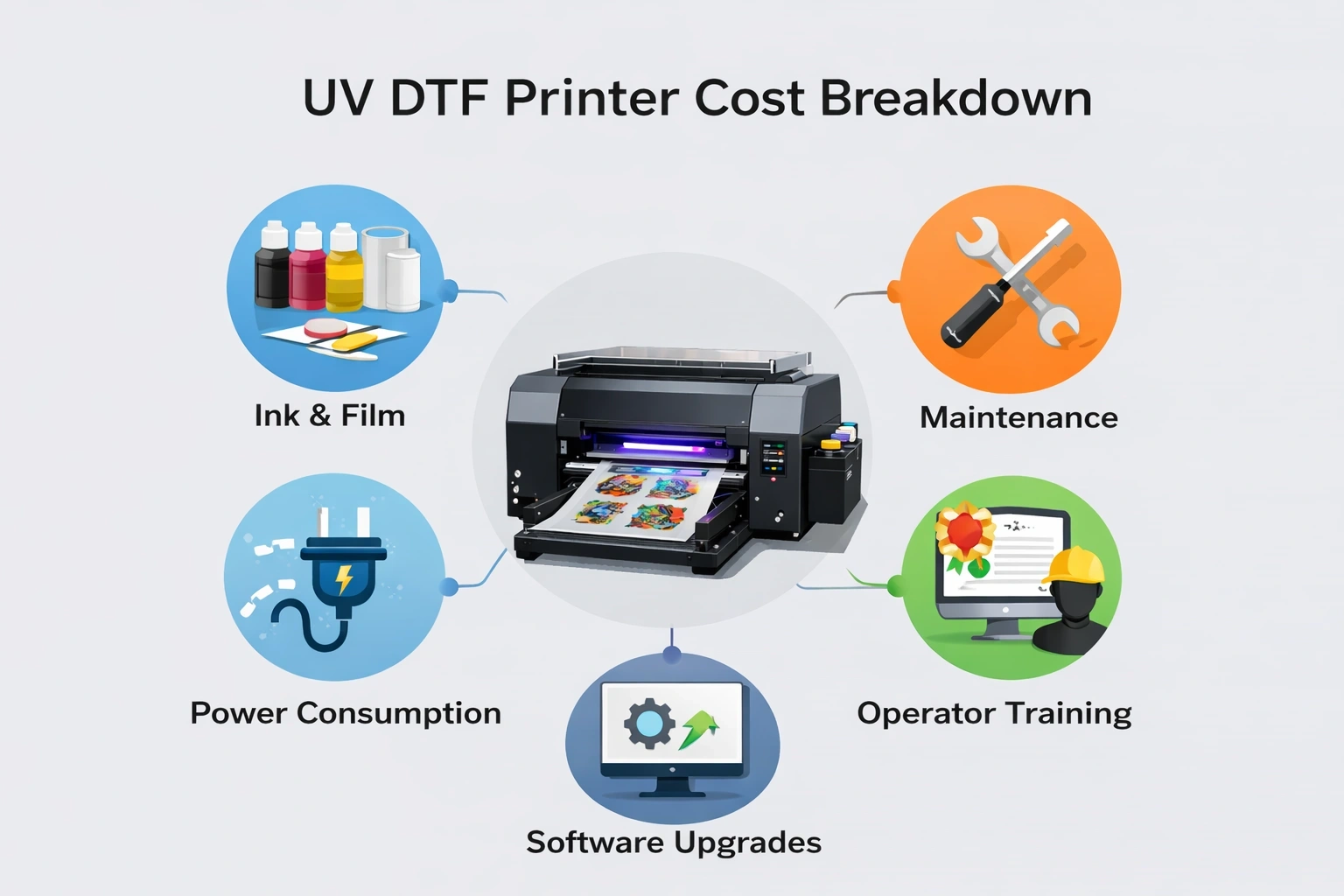
Entry-level UV DTF printers are designed for small businesses, startups, and individuals who want to enter the UV DTF market with minimal financial risk. These machines focus on affordability, ease of use, and compact design.
They are ideal for businesses producing custom items, limited batches, or personalized products.
Key Features of Entry-Level UV DTF Printers
Affordable Pricing
Entry-level UV DTF printers typically fall within a lower price range, making them accessible to beginners and small operations.
Compact Size
Most entry-level models have a smaller footprint, allowing them to fit easily in home studios, small shops, or shared workspaces.
User-Friendly Operation
These printers are built with:
Simple software interfaces
Pre-configured settings
Basic maintenance procedures
This reduces the learning curve for new users.
Moderate Production Speed
Entry-level printers are suitable for:
Small orders
Custom jobs
On-demand printing
However, they may struggle with continuous high-volume production.
Basic Maintenance Requirements
Maintenance tasks such as cleaning and calibration are generally simple and can be handled without specialized technicians.
Limitations of Entry-Level UV DTF Printers
While entry-level machines offer excellent value, they do come with certain limitations:
Slower printing speeds
Limited print width options
Shorter duty cycles
Fewer automation features
These factors can impact productivity as demand grows.
Who Should Choose Entry-Level UV DTF Printers?
Entry-level UV DTF printers are best suited for:
Startups testing the UV DTF market
Freelancers and designers
Small print shops
Promotional product businesses
Entrepreneurs with limited budgets
If your focus is customization, flexibility, and learning, an entry-level printer is often the smartest starting point.
Understanding Industrial UV DTF Printers
What Are Industrial UV DTF Printers?
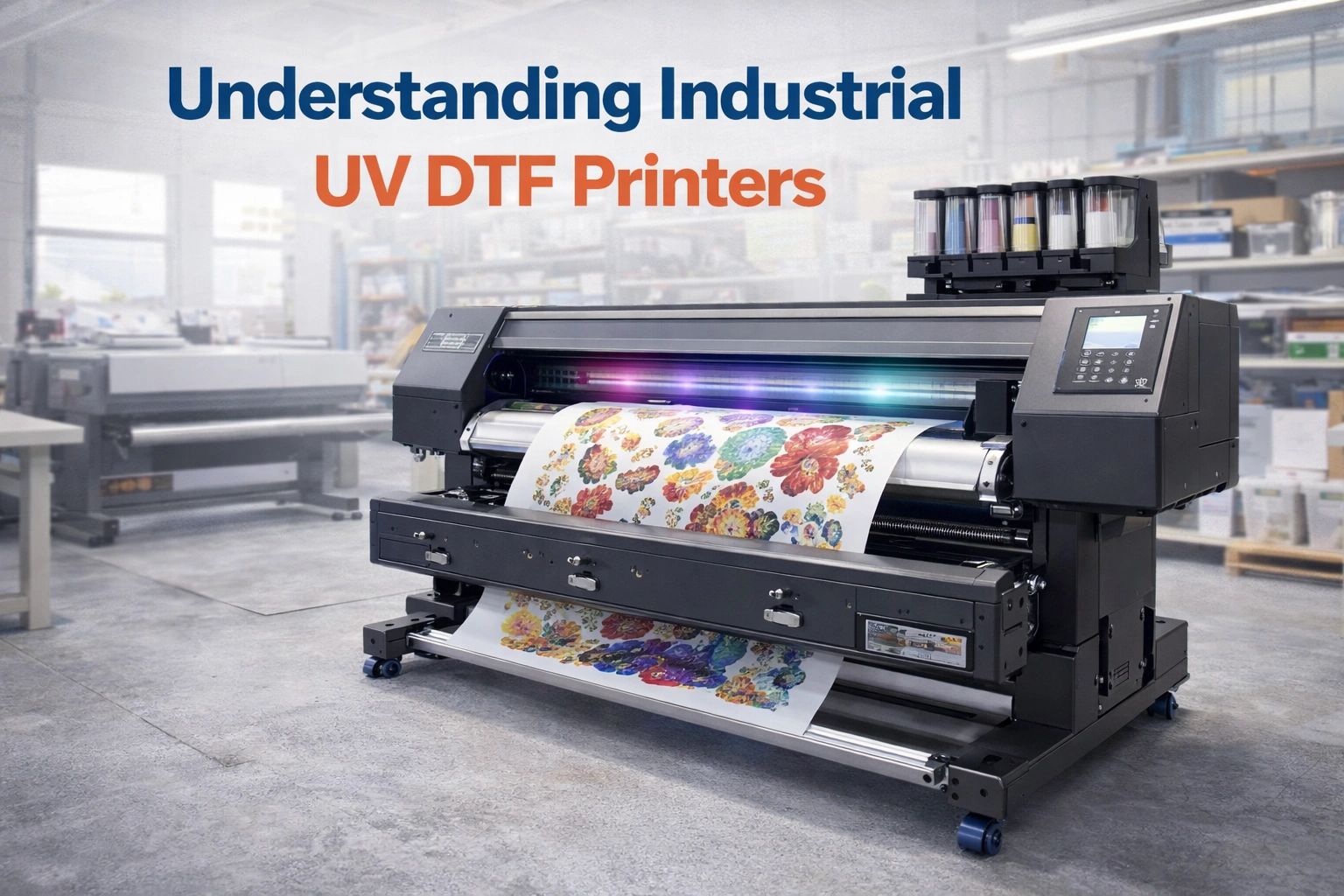
Industrial UV DTF printers are built for high-volume, commercial production environments. These machines prioritize speed, automation, reliability, and consistent output over extended operating hours.
They are designed to handle large workloads without performance degradation, making them suitable for professional printing businesses.
Key Features of Industrial UV DTF Printers
High-Speed Printing
Industrial machines use advanced printheads that enable:
Faster print speeds
Continuous operation
Reduced turnaround times
This is critical for meeting tight deadlines.
Advanced Ink Management Systems
Industrial printers feature:
Automated ink circulation
Temperature control
Anti-clogging mechanisms
These systems ensure consistent print quality even during long production runs.
Automation and Smart Controls
Common automation features include:
Auto cleaning cycles
Media alignment systems
Intelligent software integration
Automation reduces manual labor and minimizes errors.
Large Production Capacity
Industrial printers can handle:
Bulk orders
Large-format designs
Multiple jobs simultaneously
This improves efficiency and lowers cost per unit.
Heavy-Duty Construction
Built with industrial-grade components, these machines are designed for:
Long operational hours
Reduced downtime
Extended lifespan
Limitations of Industrial UV DTF Printers
Despite their power, industrial UV DTF printers may not suit everyone:
High upfront investment
Larger space requirements
Higher power consumption
More complex maintenance
These factors make them less suitable for small or low-volume businesses.
Who Should Choose Industrial UV DTF Printers?
Industrial UV DTF printers are ideal for:
Established print shops
Large-scale manufacturers
Businesses with consistent high demand
Companies planning aggressive expansion
If your business prioritizes speed, scalability, and long-term efficiency, industrial machines are the better option.
Entry-Level vs Industrial UV DTF Printers: Side-by-Side Comparison
Cost and Investment
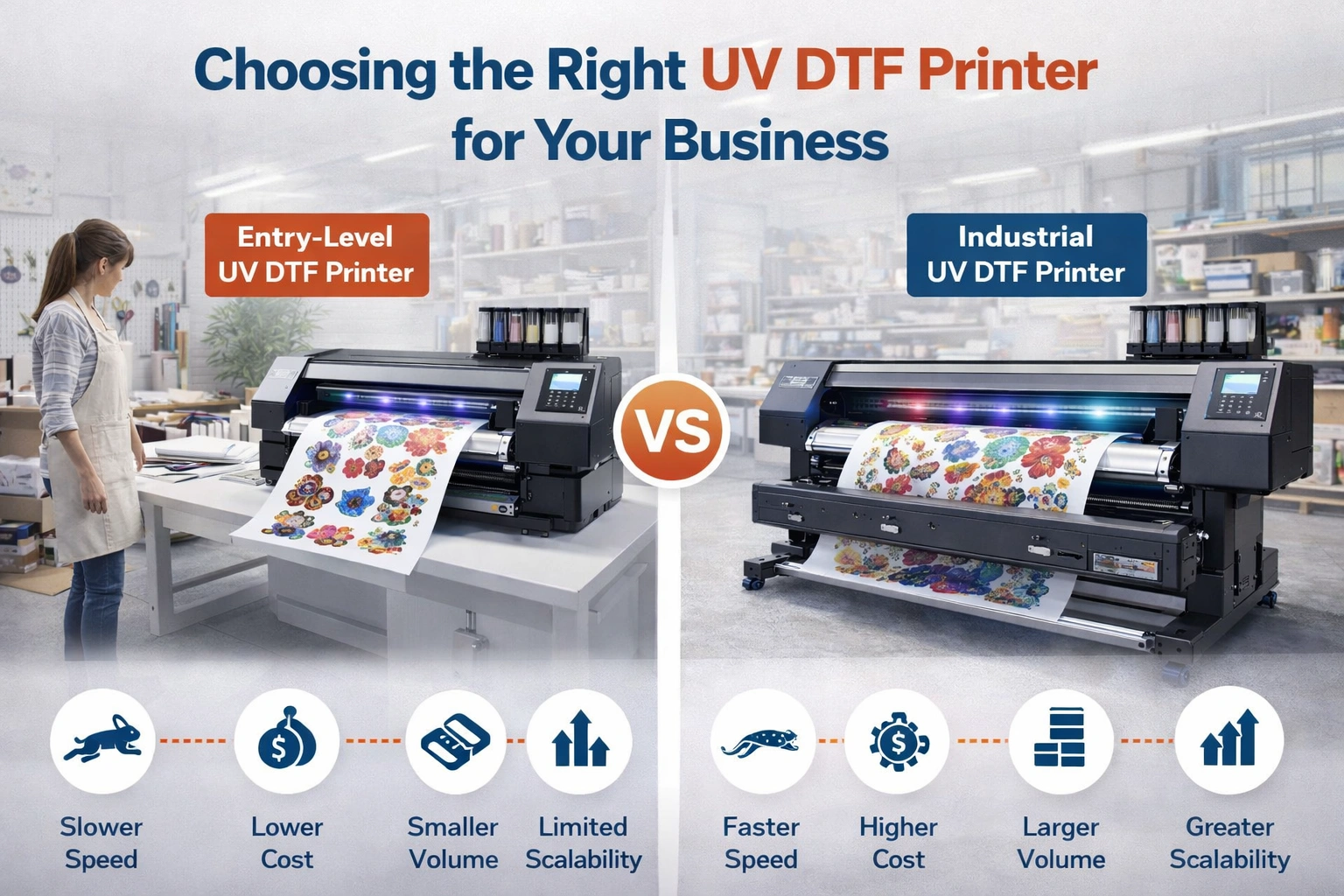
Entry-level printers require a lower initial investment, making them attractive for beginners. Industrial printers involve a higher upfront cost but offer better long-term ROI for high-volume operations.
Production Volume
Entry-level printers handle limited daily output efficiently, while industrial printers are built for continuous mass production.
Print Speed and Efficiency
Industrial printers significantly outperform entry-level models in speed, reducing job completion time.
Ease of Use
Entry-level printers are easier to operate, whereas industrial machines may require trained staff.
Scalability
Industrial printers offer greater scalability, allowing businesses to grow without upgrading equipment frequently.
Operating Costs and Maintenance
Ink Consumption
Industrial printers consume more ink overall but are more efficient per print. Entry-level printers may have higher per-unit ink costs.
Maintenance Frequency
Entry-level machines require more frequent manual maintenance, while industrial printers rely on automated systems.
Downtime Impact
Downtime has a bigger financial impact in industrial environments, which is why these machines are engineered for reliability.
Choosing the Right UV DTF Printer for Your Business
Before making a decision, ask yourself the following questions:
What is my monthly production volume?
What is my available budget?
Do I have space for a large machine?
Am I targeting custom orders or bulk production?
Do I plan to scale in the next 1–2 years?
Your answers will clearly point toward either an entry-level or industrial UV DTF printer.
Common Mistakes to Avoid When Buying a UV DTF Printer
Buying industrial equipment without sufficient demand
Underestimating maintenance requirements
Ignoring after-sales support and warranty
Choosing based on price alone
A well-informed purchase always delivers better results.
Future Trends in UV DTF Printing
The UV DTF market continues to evolve with:
Faster printheads
Improved ink formulations
Smarter automation
Energy-efficient designs
Businesses that invest wisely today will benefit from long-term growth opportunities.
Final Conclusion
Choosing between an entry-level and an industrial UV DTF printer is not about which machine is better overall, but which one is better for your business right now.explore our high-quality UV-DTF printers here
Entry-level UV DTF printers are perfect for beginners, small businesses, and creative entrepreneurs who value flexibility and affordability. Industrial UV DTF printers, on the other hand, are designed for companies that demand speed, volume, and long-term scalability.
By carefully evaluating your goals, budget, and production needs, you can select a UV DTF printer that supports both your current operations and future growth.
A thoughtful investment today will ensure consistent quality, higher profitability, and a strong competitive edge in the evolving printing industry.