

 HOME
HOME PRODUCT CENTER
 ABOUT US
 DOWNLOAD CENTER
 SUPPORT CENTER
 SUBSCRIBE
 BLOG
BLOGChoosing the Right Print Bed Size for UV Printing
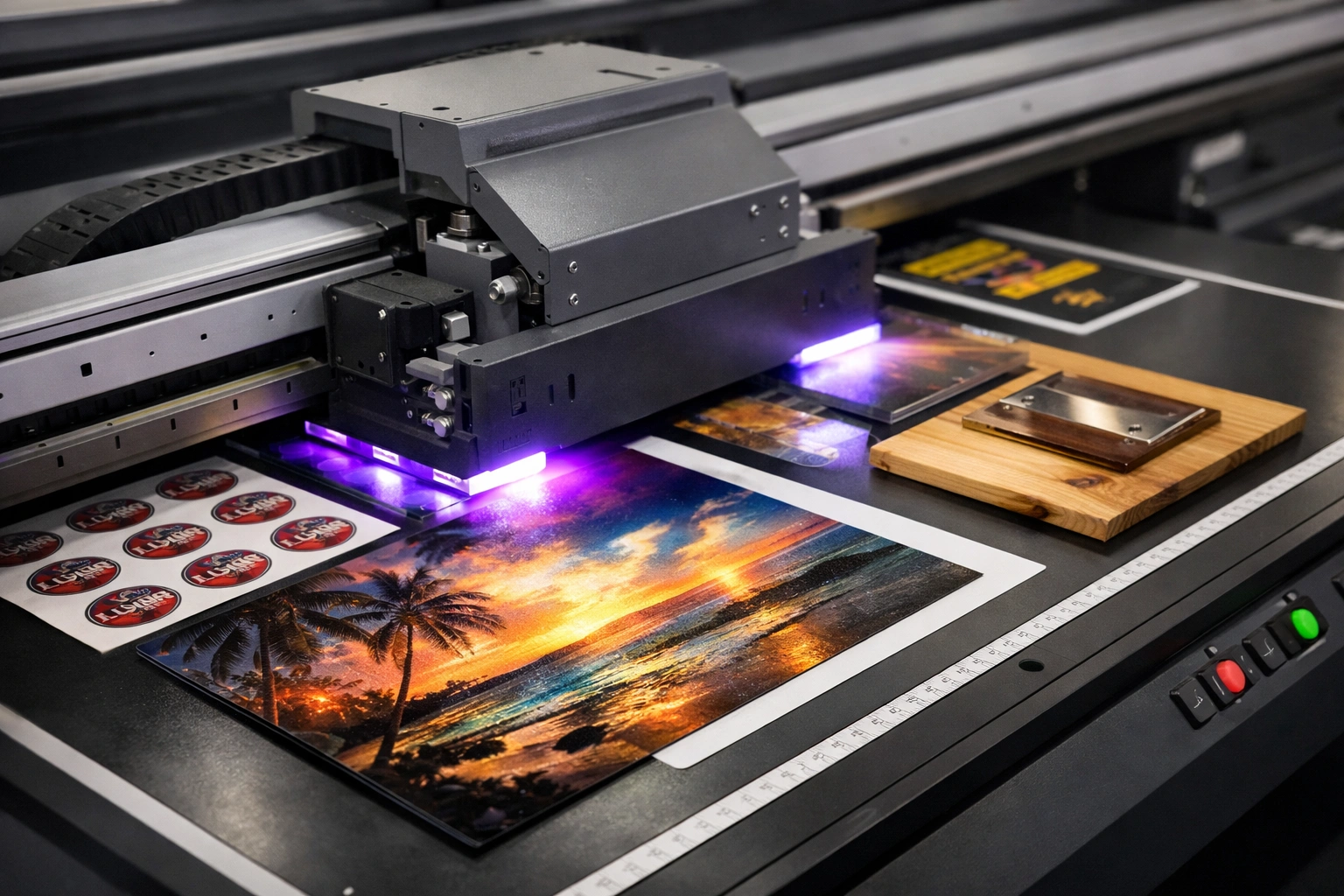
Selecting the correct print bed size is one of the most important decisions when working with UV printing technology. While ink quality, print heads, and software often receive most of the attention, the print bed acts as the foundation of the entire printing process. A well-matched print bed size directly impacts productivity, print accuracy, material compatibility, operational efficiency, and long-term business growth.
For beginners entering the UV printing industry, print bed selection can feel overwhelming. For experienced professionals, choosing the wrong size can limit expansion, increase costs, and reduce workflow efficiency. Whether you are printing promotional items, industrial panels, decorative pieces, or customized products, the size of the print bed determines what is possible and how efficiently it can be achieved.
This comprehensive guide explains everything you need to know about UV printer print bed sizes. From understanding UV printing technology to evaluating real-world business requirements, this article will help you choose a print bed size that aligns perfectly with your present needs while remaining adaptable for future growth.
Understanding UV Printing Technology
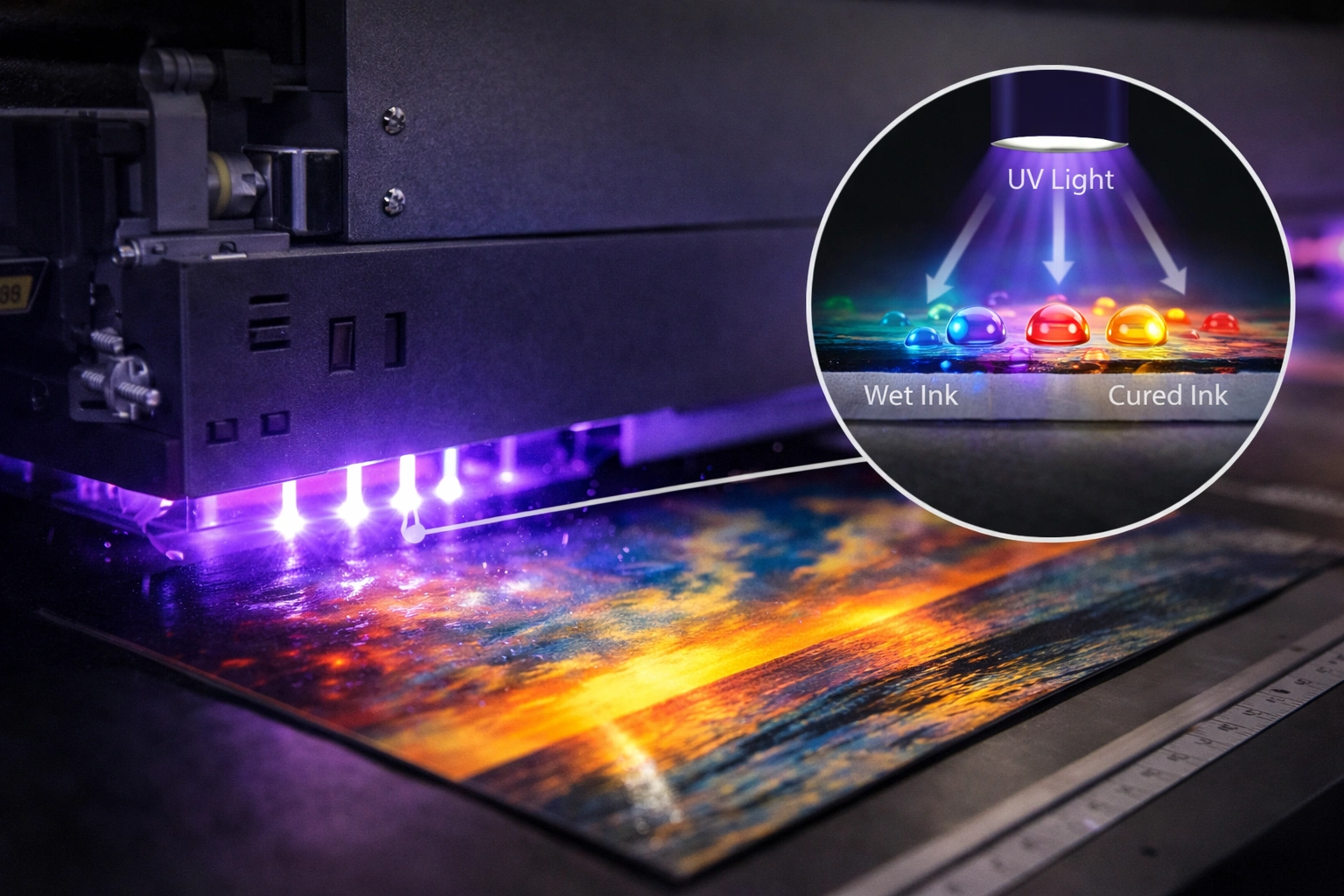
Before discussing print bed sizes, it is important to understand how UV printing works and why the bed size plays such a critical role.
UV printers use ultraviolet light to instantly cure ink as it is deposited onto a surface. Unlike traditional solvent or water-based printing, UV ink does not absorb into the material. Instead, it cures on the surface, creating sharp details, vibrant colors, and excellent durability.
This technology allows printing on a wide range of rigid and flexible substrates, including:
Acrylic
Glass
Wood
Metal
Plastic
Ceramic
PVC boards
Leather
Foam sheets
Because UV printing is contact-free and surface-based, proper material placement and stability on the print bed are essential. The print bed ensures alignment, flatness, and consistent print height—making its size a core component of print accuracy.
Why Print Bed Size Matters in UV Printing
The print bed size is not just about how big an image you can print. It influences multiple operational and financial aspects of your printing setup.
Productivity and Workflow Efficiency
A larger print bed allows multiple items to be printed in a single job. This reduces setup time, improves batch production, and increases daily output. Smaller beds may require multiple runs for the same workload, increasing labor time and machine usage.
Print Accuracy and Stability
Correct bed sizing ensures that materials fit securely without overhanging or shifting. Proper support minimizes vibration, alignment errors, and misprints—especially important for high-resolution or multi-layer UV printing.
Material Versatility
Different products require different material sizes. A limited bed restricts the types of jobs you can accept, while a flexible bed size opens doors to new applications such as signage, panels, and custom décor.
Cost Control
An oversized print bed may consume more power, space, and maintenance resources than necessary. Conversely, a bed that is too small may increase labor costs and waste due to inefficient production methods.
Key Factors to Consider When Choosing Print Bed Size
Selecting the ideal print bed size requires balancing technical requirements, business goals, and workspace limitations. Below are the most important factors to evaluate.
1. Type of Printing Projects
Your primary applications should guide your decision.
If your focus is on small products such as phone cases, keychains, labels, badges, or promotional gifts, a compact print bed is often sufficient.
If you plan to print signage, acrylic boards, metal plates, wooden panels, or decorative wall pieces, a medium or large print bed becomes essential.
For businesses offering custom industrial printing, furniture panels, or architectural décor, large-format print beds are a necessity rather than an option.
Understanding your core product offerings helps prevent over-investment or under-capacity.
2. Material Dimensions and Thickness
Print bed size must match the dimensions of the materials you regularly use.
If your substrates frequently exceed standard sizes, a small bed will force you to trim materials or divide designs, increasing waste and production time.
Thickness also matters. UV printers often have height adjustment limits, and larger beds are typically better equipped to handle thicker materials such as wood slabs or layered acrylic sheets.
Always consider both length, width, and height compatibility.
3. Production Volume and Speed Requirements
For low-volume or custom work, smaller beds are manageable and cost-effective.
For high-volume production environments, larger print beds significantly improve throughput by allowing multiple items to be printed simultaneously. This reduces per-unit printing time and improves delivery speed.
High-volume businesses benefit greatly from beds that support batch layouts and nesting multiple designs in one print cycle.
4. Workspace Size and Layout
Your physical workspace plays a major role in print bed selection.
Large UV printers require ample floor space, ventilation, and operator movement areas. Installing an oversized printer in a tight workspace can reduce efficiency and create safety risks.
Measure your available space carefully and account for:
Printer footprint
Material loading area
Maintenance access
Operator movement
Storage for raw materials
A well-planned layout improves workflow and reduces long-term operational issues.
5. Printer Capabilities and Machine Specifications
Not all UV printers support all bed sizes. Each model has engineering limits related to gantry design, curing system coverage, and print head travel.
Always verify:
Maximum printable area
Supported bed size
Load capacity
Flatness tolerance
Choosing a bed size beyond the printer’s optimized range can reduce print quality and machine lifespan.
Common UV Print Bed Sizes and Their Applications

Understanding standard print bed categories helps match equipment to real-world applications.
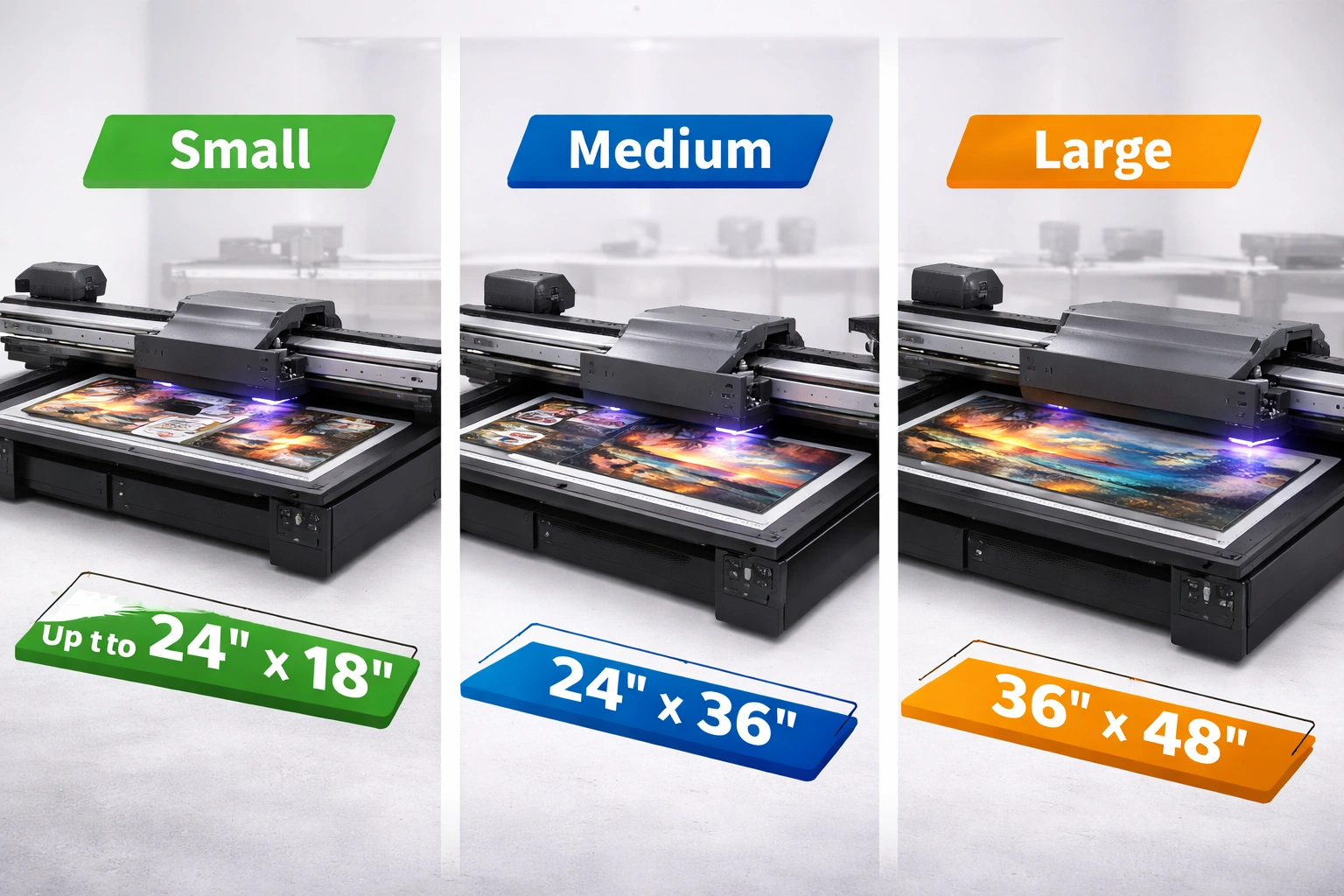
Small Print Beds (Up to 24" × 18")
These are ideal for:
Promotional products
Small signage
Labels and tags
Personalized gifts
Phone covers and accessories
Small beds are cost-effective, space-saving, and easy to operate. They are best suited for startups, custom gift businesses, and low-volume operations.
Medium Print Beds (24" × 36")
This size range is considered the most versatile.
Common uses include:
Retail signage
Acrylic nameplates
Packaging prototypes
Decorative panels
Industrial marking
Medium beds offer a strong balance between capability and cost, making them popular for growing businesses.
Large Print Beds (36" × 48" and Above)
Large-format beds are designed for:
Wall panels
Architectural signage
Furniture components
Glass and metal panels
Commercial décor
They support high-volume production and large materials but require more space, power, and investment.
Matching Print Bed Size with Substrate Types
UV printing supports a wide range of substrates, but print bed compatibility is essential for consistent results.
Flat, rigid materials perform best on properly sized beds with strong vacuum or clamping systems.
Irregular or oversized materials require sufficient bed coverage to avoid edge lifting or alignment errors.
When selecting a bed size, consider not only current substrates but also materials you may want to offer in the future.
Future-Proofing Your UV Printing Setup
One of the most common mistakes in equipment purchasing is planning only for current needs.
A slightly larger print bed than your immediate requirement can provide:
Room for business expansion
Ability to accept larger orders
Flexibility to explore new markets
Reduced need for costly upgrades
While over-buying can be inefficient, under-buying often leads to faster obsolescence.
Cost Considerations and Return on Investment
Print bed size directly influences the total cost of ownership.
Larger beds generally cost more due to:
Stronger frames
Larger curing systems
Extended gantry mechanisms
Higher power consumption
However, they can also deliver higher revenue potential through increased production capacity.
When evaluating cost, consider:
Initial purchase price
Operating expenses
Maintenance requirements
Revenue opportunities
A properly sized bed often pays for itself faster than an undersized one.
Maintenance and Long-Term Care
Regardless of size, proper maintenance is essential for print bed longevity.
Key maintenance practices include:
Regular surface cleaning
Checking bed flatness
Inspecting vacuum zones or clamps
Preventing ink buildup
Monitoring wear and tear
Larger beds require more frequent inspection due to increased surface area, but consistent care ensures reliable performance for years.
Common Mistakes to Avoid When Choosing Print Bed Size
Many buyers make avoidable errors during selection.
Common mistakes include:
Choosing based only on price
Ignoring future expansion plans
Overlooking workspace limitations
Underestimating production volume
Failing to test material compatibility
Avoiding these pitfalls leads to better long-term satisfaction and operational efficiency.
How Print Bed Size Impacts Print Quality
Print bed size affects:
Material stability
Ink curing consistency
Alignment accuracy
Multi-layer print precision
A bed that properly supports materials reduces vibration and ensures uniform curing, resulting in sharper images and longer-lasting prints.
Custom vs Standard Print Bed Sizes
Some manufacturers offer customized print bed dimensions.
Custom beds can be beneficial for specialized industries, but they often increase cost and limit machine compatibility.
Standard sizes provide easier maintenance, better spare part availability, and broader software support.
For most businesses, standard sizes offer the best balance between flexibility and reliability.
Final Checklist Before Making a Decision
Before finalizing your choice, ask yourself:
What materials will I print most often?
What is my average job size?
How much production volume do I expect?
Do I have enough workspace?
Will my business expand in the next 2–3 years?
Clear answers to these questions lead to confident decision-making.
Conclusion
Choosing the right print bed size for UV printing is a strategic decision that directly impacts productivity, print quality, and business growth. The ideal print bed supports your current applications while allowing flexibility for future expansion.
By carefully evaluating project types, material dimensions, production volume, workspace limitations, and long-term goals, you can select a print bed size that maximizes efficiency and return on investment.
UV printing offers immense creative and commercial potential. With the right print bed size as your foundation, you can unlock new opportunities, deliver consistent quality, and scale your operations with confidence.explore our high-quality UV-DTF printers here.
Frequently Asked Questions (FAQ)
What happens if my print bed is too small?
A small print bed limits material size, increases production time, and may require multiple print passes, reducing efficiency.
Is a larger print bed always better?
Not necessarily. Larger beds cost more and require more space. The best size depends on your actual printing needs.
Can I print small items on a large print bed?
Yes. Large beds can handle small items efficiently by printing multiple pieces in one batch.
Does print bed size affect ink curing?
Yes. Proper bed size ensures uniform curing and stable material placement, improving print quality.
How long does a UV printer print bed last?
With proper maintenance, a print bed can last many years without performance issues.