

 HOME
HOME PRODUCT CENTER
 ABOUT US
 DOWNLOAD CENTER
 SUPPORT CENTER
 SUBSCRIBE
 BLOG
BLOGFrom Screen Printing to UV Printing
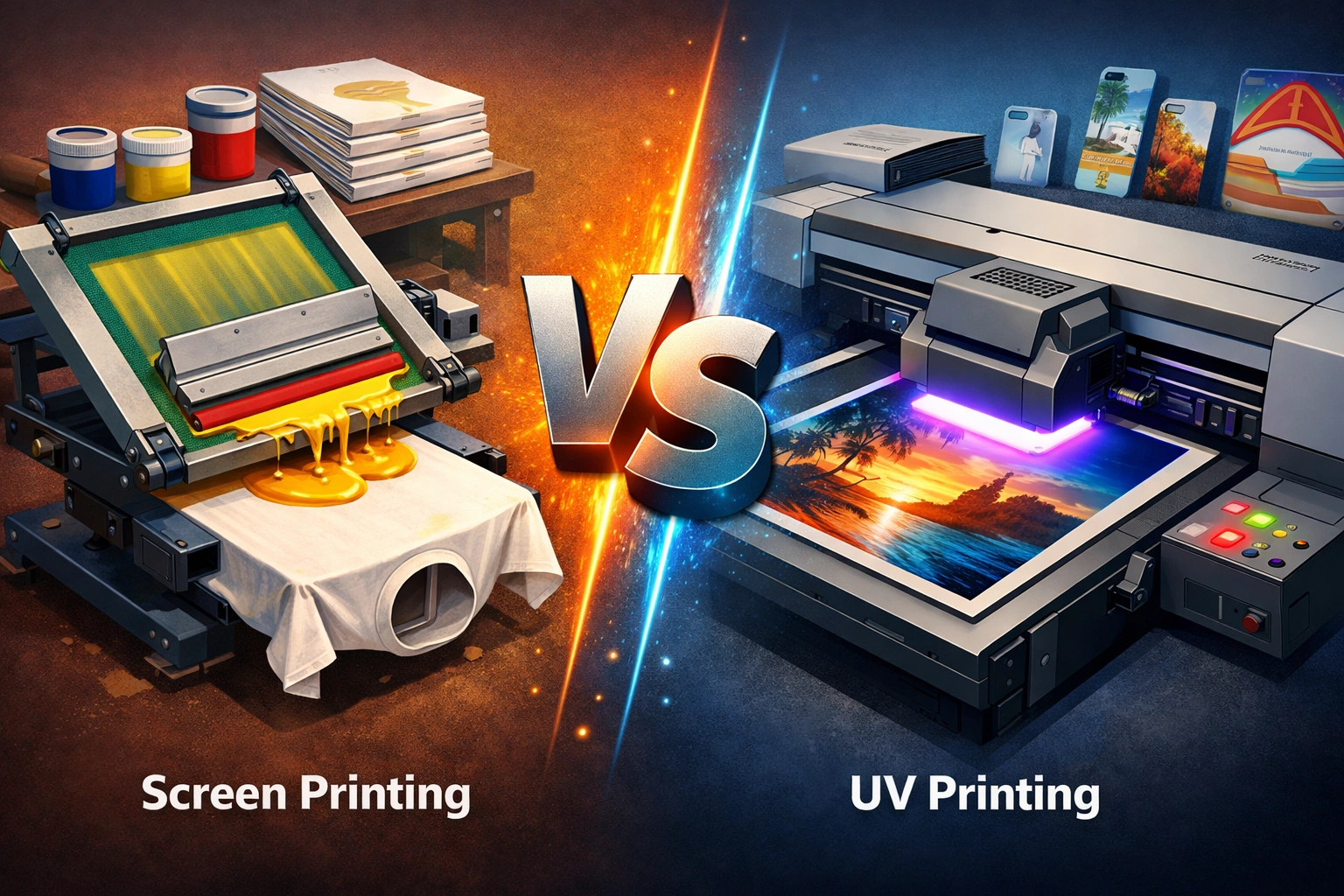
The custom printing industry is evolving faster than ever, driven by technological innovation, rising customer expectations, and the demand for faster turnaround times. For decades, screen printing has been one of the most trusted and widely used printing techniques, valued for its durability and ability to handle bulk production. However, as businesses look for greater flexibility, precision, and efficiency, UV printing has emerged as a powerful alternative.
Transitioning from screen printing to UV printing is no longer just a trend—it has become a strategic decision for print businesses aiming to stay competitive. UV printing offers superior print quality, instant curing, reduced waste, and the ability to print on a wide variety of materials. This comprehensive guide will help you understand UV printing in depth, compare it with screen printing, and walk you through a smooth and practical transition process.
Understanding Traditional Screen Printing
Before moving forward, it is important to understand why screen printing has remained relevant for so long.
Screen printing is a printing process where ink is pushed through a mesh screen onto a substrate using a stencil. Each color requires a separate screen, making the process time-consuming for multi-color designs. While it delivers long-lasting prints, it often involves higher setup costs, longer drying times, and material wastage.
Key Characteristics of Screen Printing
Best suited for large-volume production
Strong ink adhesion and durability
Limited design flexibility for complex artwork
Longer setup and cleanup process
Requires skilled labor
While screen printing still works well for certain applications, its limitations become evident in a market that demands speed, customization, and precision.
What Is UV Printing?
UV printing, or ultraviolet printing, is a modern digital printing method that uses ultraviolet light to instantly cure ink as it is printed. Instead of waiting for ink to dry naturally, UV lamps harden the ink immediately, allowing prints to be handled right after production.
This instant curing process enables sharper details, richer colors, and the ability to print on both absorbent and non-absorbent surfaces. UV printing is widely used across industries due to its efficiency and versatility.
How UV Printing Technology Works
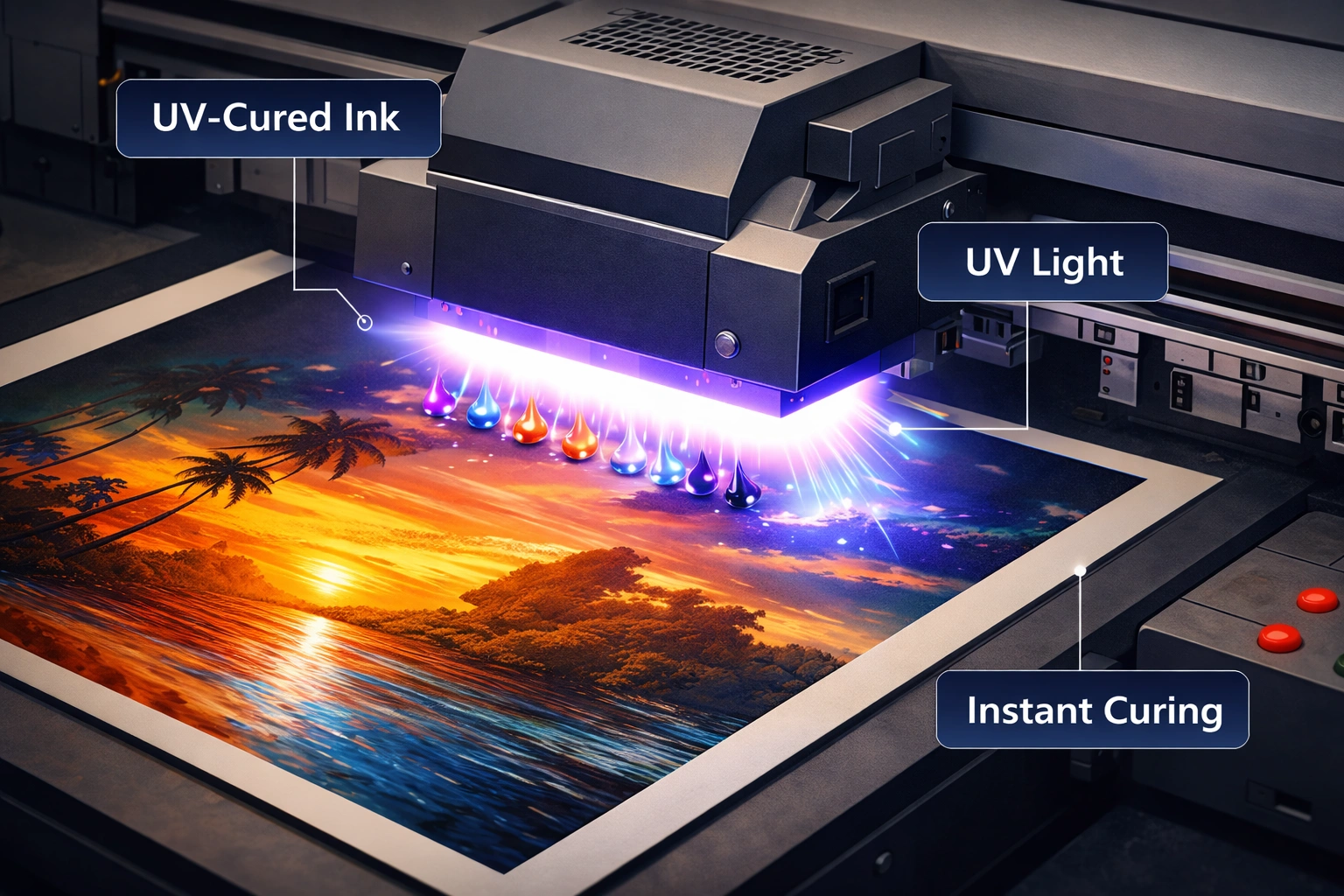
The UV printing process is straightforward yet highly advanced:
The printer deposits UV-curable ink onto the surface.
UV LED or mercury lamps follow closely behind the print heads.
The UV light instantly cures the ink.
The ink hardens on the surface without spreading or soaking.
Because the ink cures instantly, it stays on top of the substrate, resulting in crisp edges and vibrant colors.
UV Printing vs Screen Printing: A Detailed Comparison
1. Print Quality and Precision
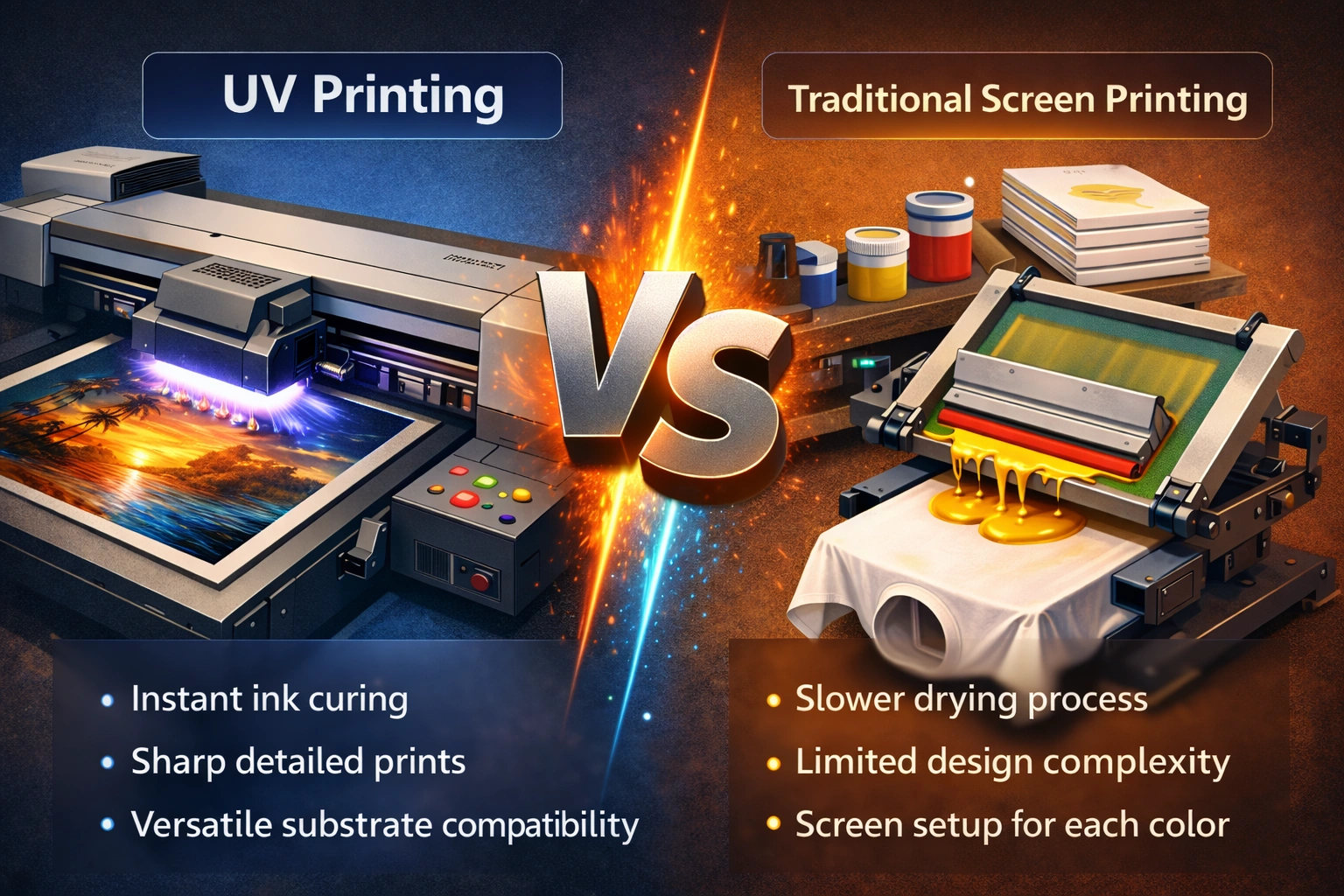
UV printing delivers extremely sharp images with fine details and smooth gradients. Screen printing, while durable, struggles with intricate designs and photo-realistic prints.
2. Production Speed
Screen printing requires setup time, drying time, and multiple passes. UV printing allows for instant curing, significantly reducing production time and enabling faster order fulfillment.
3. Design Flexibility
UV printers can handle complex, multi-color designs without additional setup. Screen printing requires separate screens for each color, increasing time and cost.
4. Material Compatibility
UV printing works on glass, acrylic, metal, wood, plastic, leather, ceramic, and more. Screen printing is more limited in terms of surface compatibility.
5. Waste and Sustainability
UV printing produces minimal waste because there are no screens, chemicals, or excess ink. Screen printing often results in ink wastage and chemical disposal issues.
Common Applications of UV Printing
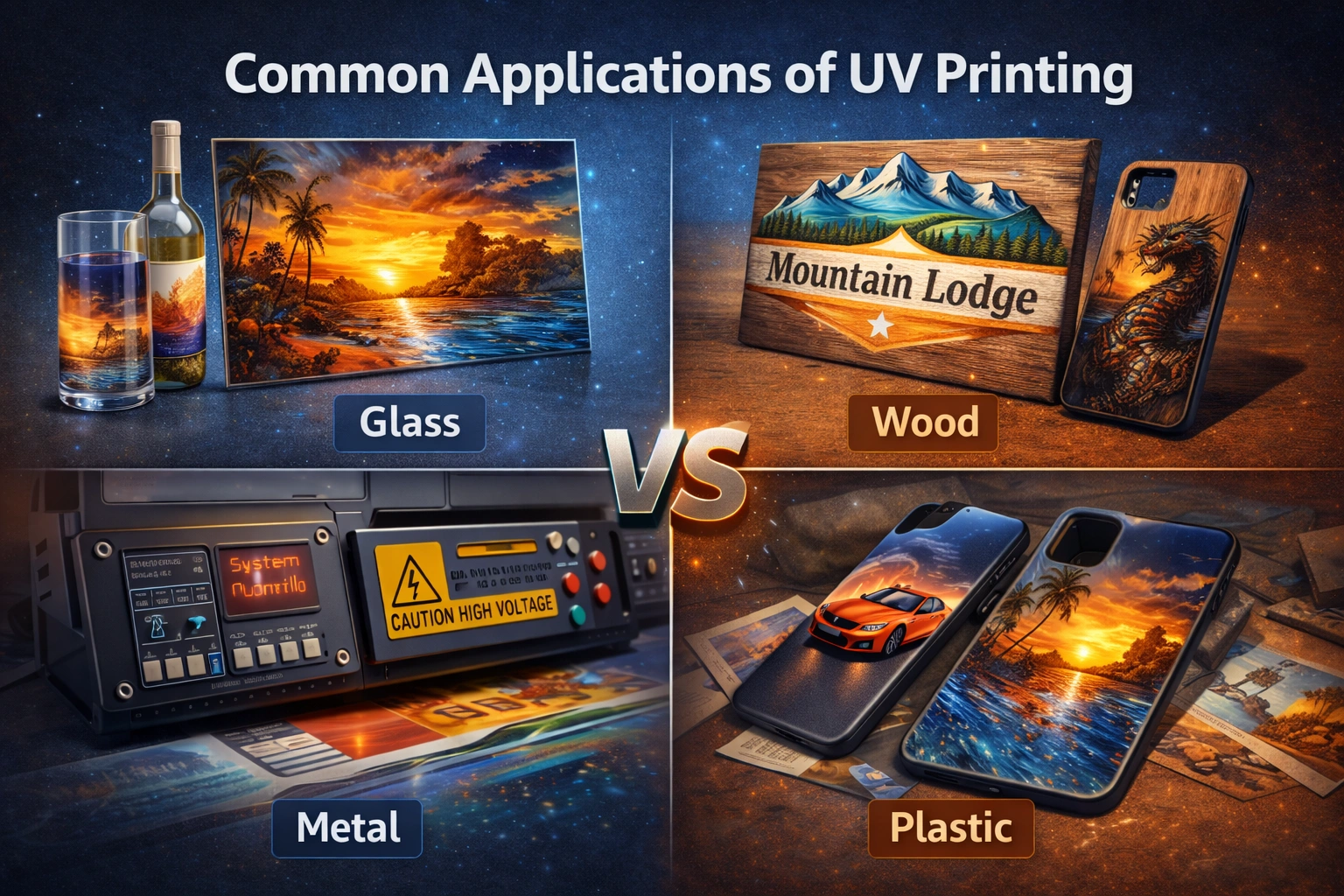
UV printing is widely adopted across industries due to its flexibility and durability.
Commercial Applications
Packaging prototypes
Product labels
Signboards and displays
Promotional merchandise
Industrial Applications
Control panels
Nameplates
Industrial signage
Custom and Specialty Products
Phone covers
Personalized gifts
Decorative panels
Corporate branding items
Why Businesses Are Switching to UV Printing
1. Superior Print Quality
UV printing produces vibrant, high-resolution prints that stand out in competitive markets. Fine text, gradients, and images look sharper compared to traditional methods.
2. Faster Turnaround Time
Instant curing means no waiting. Jobs can be completed, packed, and shipped on the same day, improving customer satisfaction.
3. Expanded Product Range
With UV printing, businesses can offer customized printing on almost any surface, opening new revenue streams.
4. Eco-Friendly Printing
UV inks contain fewer volatile organic compounds (VOCs), making them safer for operators and better for the environment.
5. Lower Long-Term Costs
Although the initial investment is higher, UV printing reduces labor, waste, and rework costs over time.
Step-by-Step Guide to Transitioning from Screen Printing to UV
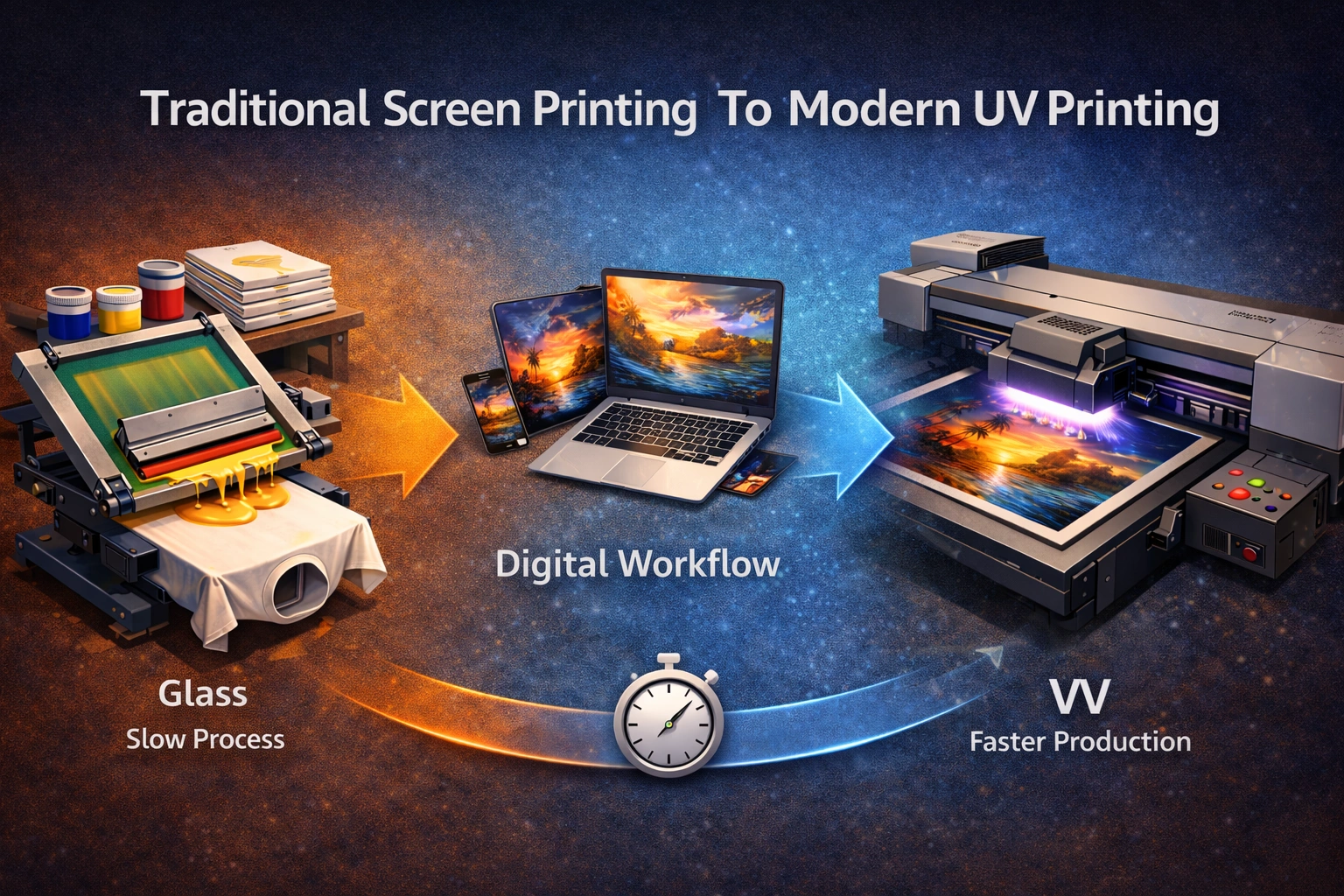
Printing
Step 1: Analyze Your Business Goals
Identify why you want to switch. Are you aiming for faster production, better quality, or expanded services? Clear goals help you choose the right equipment and strategy.
Step 2: Choose the Right UV Printer
When selecting a UV printer, consider:
Print resolution
Print speed
Maximum print size
Substrate compatibility
Technical support and service availability
Step 3: Prepare Your Workspace
UV printers require stable power supply, proper ventilation, and dust-free conditions. Ensure your workspace meets these requirements.
Step 4: Train Your Team
UV printing involves digital workflows, RIP software, and printer calibration. Proper training ensures consistent results and minimizes errors.
Step 5: Update Your Workflow
Digital printing simplifies workflows. Files go directly from design software to print, eliminating manual steps like screen preparation.
Step 6: Test Before Full-Scale Production
Run sample prints on different materials. Test adhesion, color accuracy, and durability before offering UV printing services to clients.
Cost Considerations When Switching to UV Printing
Initial Investment
UV printers are more expensive upfront than screen printing setups. However, this cost is often offset by higher productivity and lower operational expenses.
Ink and Maintenance Costs
UV inks are premium inks, but they last longer and reduce wastage. Routine maintenance ensures consistent performance.
Return on Investment (ROI)
Businesses often recover their investment quickly by offering premium printing services and faster delivery.
Maintenance and Care of UV Printers
Proper maintenance extends the life of your UV printer:
Regular nozzle checks
Proper ink circulation
Cleaning print heads
Using recommended inks only
Following manufacturer guidelines
A well-maintained UV printer delivers consistent quality and reduces downtime.
Challenges You May Face During Transition
Learning Curve
Digital printing technology requires technical understanding. Training and practice solve this challenge.
Higher Initial Costs
The upfront investment may feel high, but long-term gains outweigh the cost.
Ink Compatibility Issues
Using non-recommended inks can affect print quality and machine life. Always use certified UV inks.
Marketing Your UV Printing Services
Once you transition, let your customers know.
Highlight faster delivery times
Showcase high-quality samples
Promote eco-friendly printing
Offer customization options
Clear communication helps justify premium pricing and builds trust.
Future of UV Printing
UV printing technology continues to evolve with better LED systems, faster speeds, and improved ink formulations. As demand for personalization and quick delivery grows, UV printing is expected to dominate the custom printing industry.
Conclusion
Transitioning from screen printing to UV printing is a smart move for businesses looking to improve efficiency, quality, and profitability. While screen printing still has its place, UV printing offers unmatched flexibility, faster production, and superior results. By understanding the technology, planning carefully, and training your team, you can make a smooth transition and position your business for long-term success.explore our high-quality UV-DTF printers here.
Frequently Asked Questions (FAQs)
What is the biggest advantage of UV printing over screen printing?
The biggest advantage is instant curing, which allows faster production and superior print quality.
Is UV printing suitable for small businesses?
Yes, especially for businesses offering customized or short-run printing services.
Does UV printing last as long as screen printing?
UV prints are highly durable and resistant to fading, scratches, and moisture.
Can UV printing replace screen printing completely?
Not entirely. Screen printing is still useful for very large bulk orders, but UV printing covers a wider range of applications.
Is UV printing safe for indoor use?
Yes, modern UV printers use LED technology with minimal emissions, making them safe for indoor environments.