

 HOME
HOME PRODUCT CENTER
 ABOUT US
 DOWNLOAD CENTER
 SUPPORT CENTER
 SUBSCRIBE
 BLOG
BLOGAugmented Vision Systems for Large-Format UV Printing
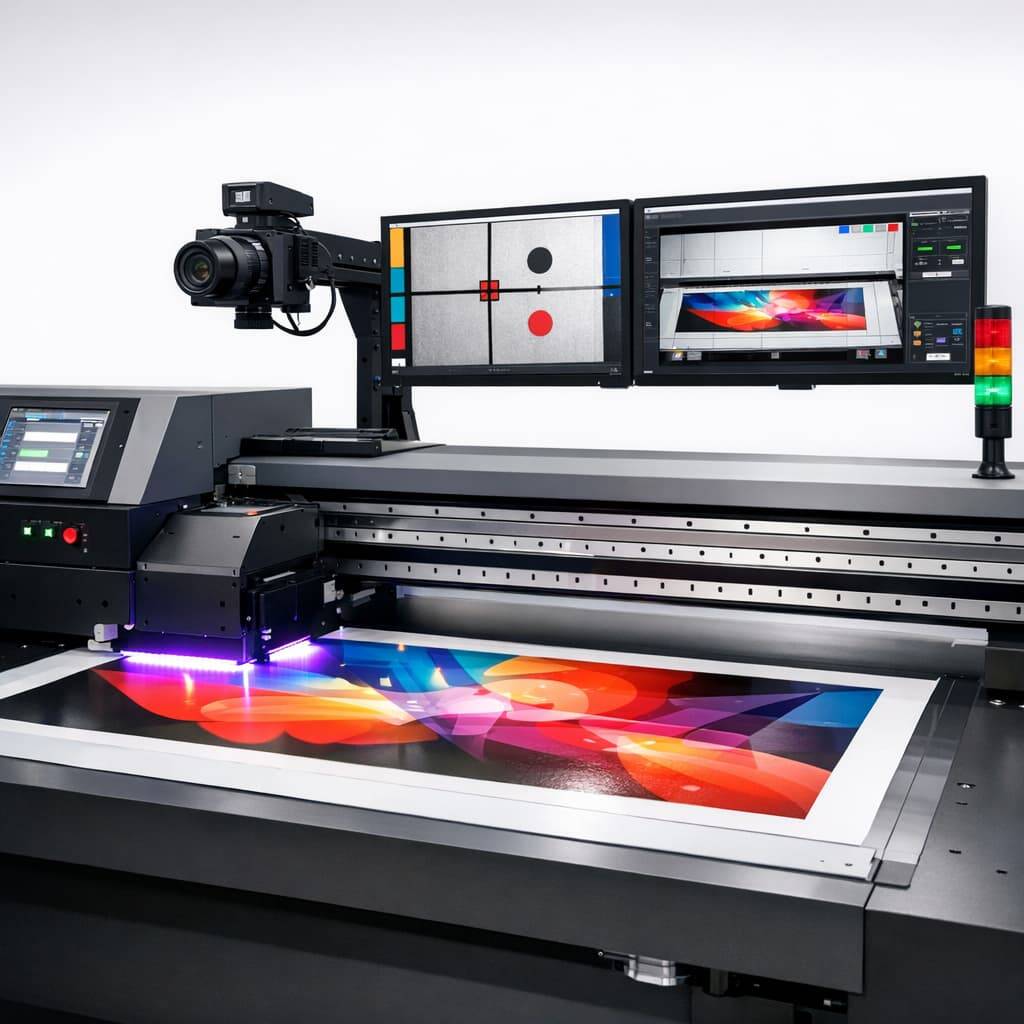
Large-format UV printing has rapidly become a backbone technology for industries like advertising, signage, packaging, and interior décor. As print sizes grow and client expectations rise, accuracy and efficiency are no longer optional—they’re essential.
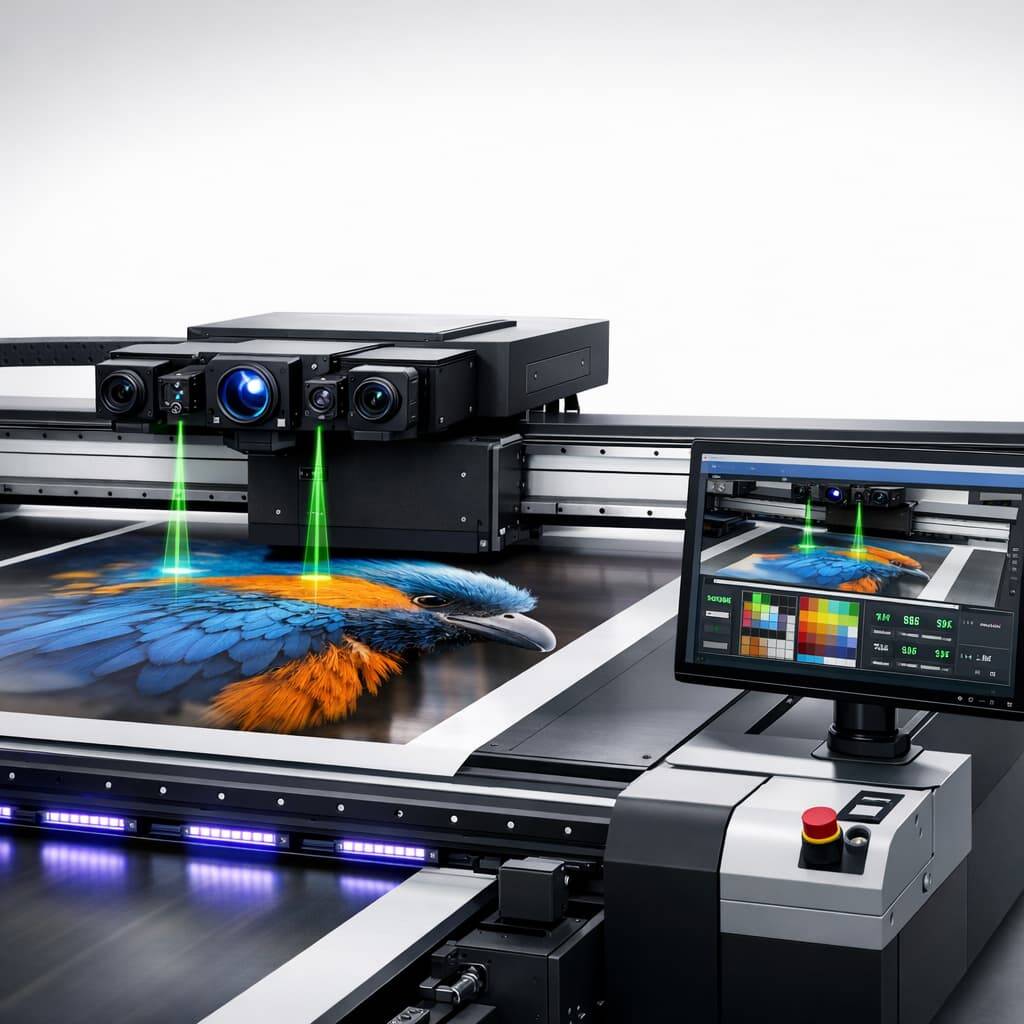
This is where augmented vision systems are transforming large-format UV printing. By combining high-resolution imaging with real-time data analysis, these systems help printers deliver consistent, high-quality results with minimal errors and waste.
Why Augmented Vision Is Essential in Large-Format UV Printing
Modern printing demands speed, precision, and repeatability—all at once. Manual monitoring is no longer sufficient for large-format UV jobs, where even a minor misalignment can lead to costly material loss.
Augmented vision systems act as an intelligent support layer, offering real-time visual insights that help operators make faster and more accurate decisions throughout the printing process.
Common Challenges in Large-Format UV Printing
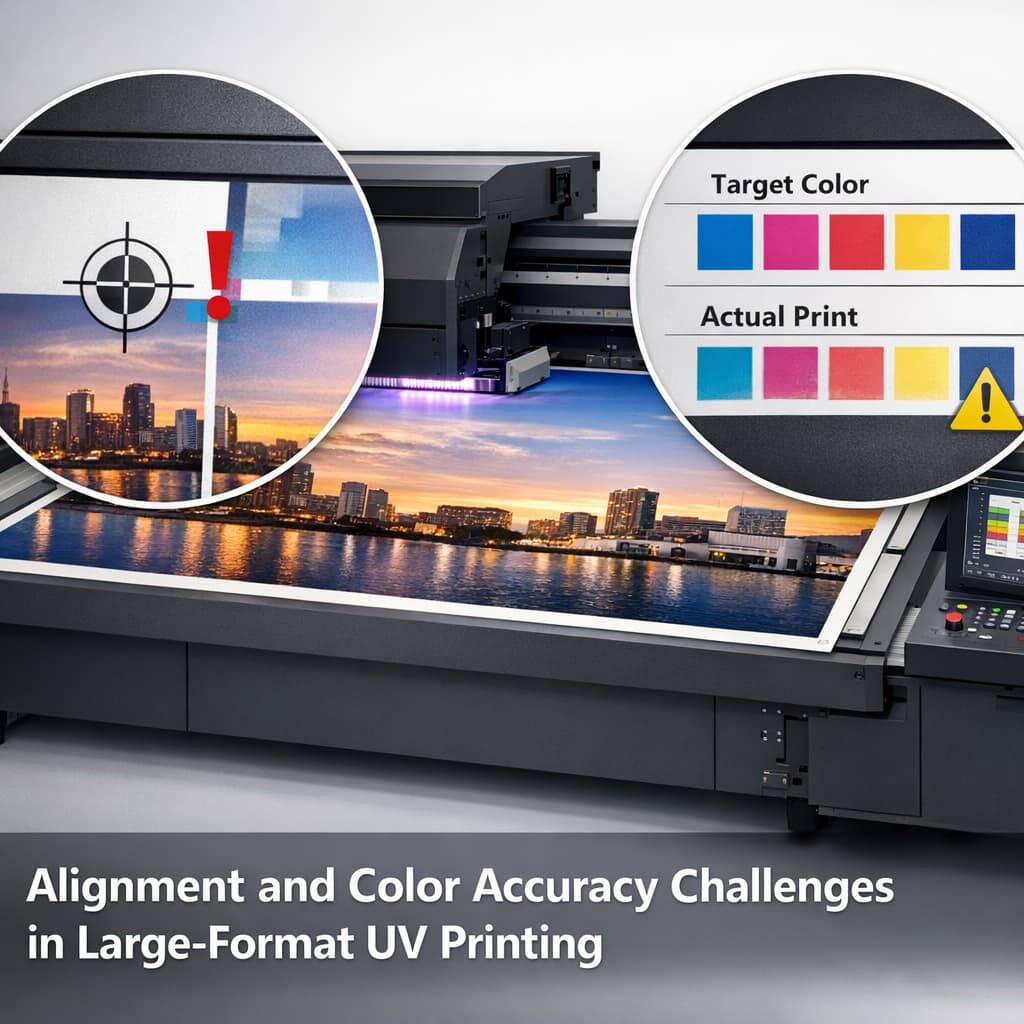
Despite technological advancements, large-format UV printing still presents several operational challenges:
Alignment and Registration Errors
Even slight alignment issues can ruin large prints, leading to reprints and wasted substrates.
Color Consistency Problems
Maintaining accurate and consistent colors is critical, especially for branding and marketing materials where precision matters.
Pressure to Increase Production Speed
Faster turnaround times often increase the risk of quality compromise without proper monitoring systems in place.
How Augmented Vision Systems Solve These Problems
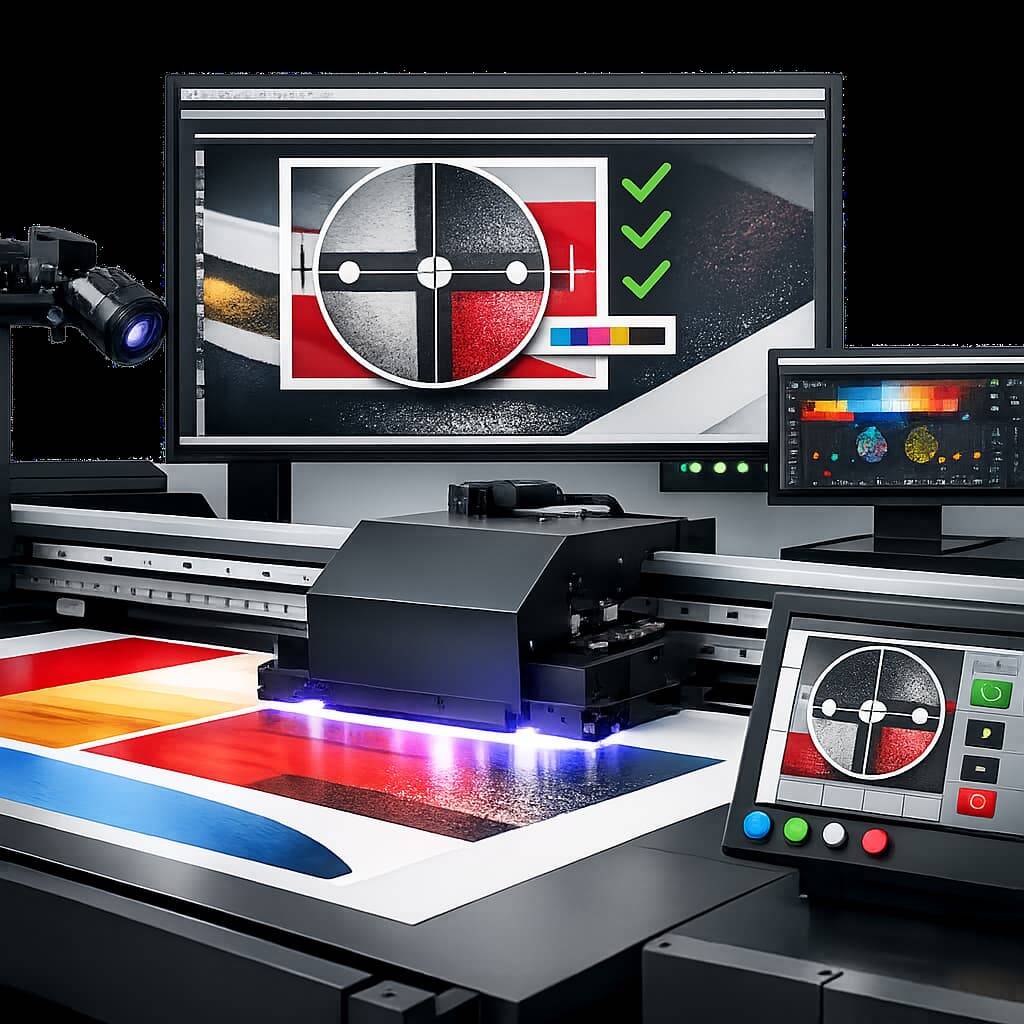
Augmented vision technology directly addresses these challenges by enhancing visibility and automation:
Real-Time Visual Feedback
Live monitoring allows operators to instantly detect misalignment and correct it before printing errors occur.
Advanced Color Calibration
Integrated sensors ensure accurate color reproduction across the entire print area, maintaining consistency from start to finish.
Automated Quality Checks
By automating inspection and adjustments, augmented vision systems reduce manual intervention while maintaining high output quality.
Key Benefits of Augmented Vision Systems in UV Printing
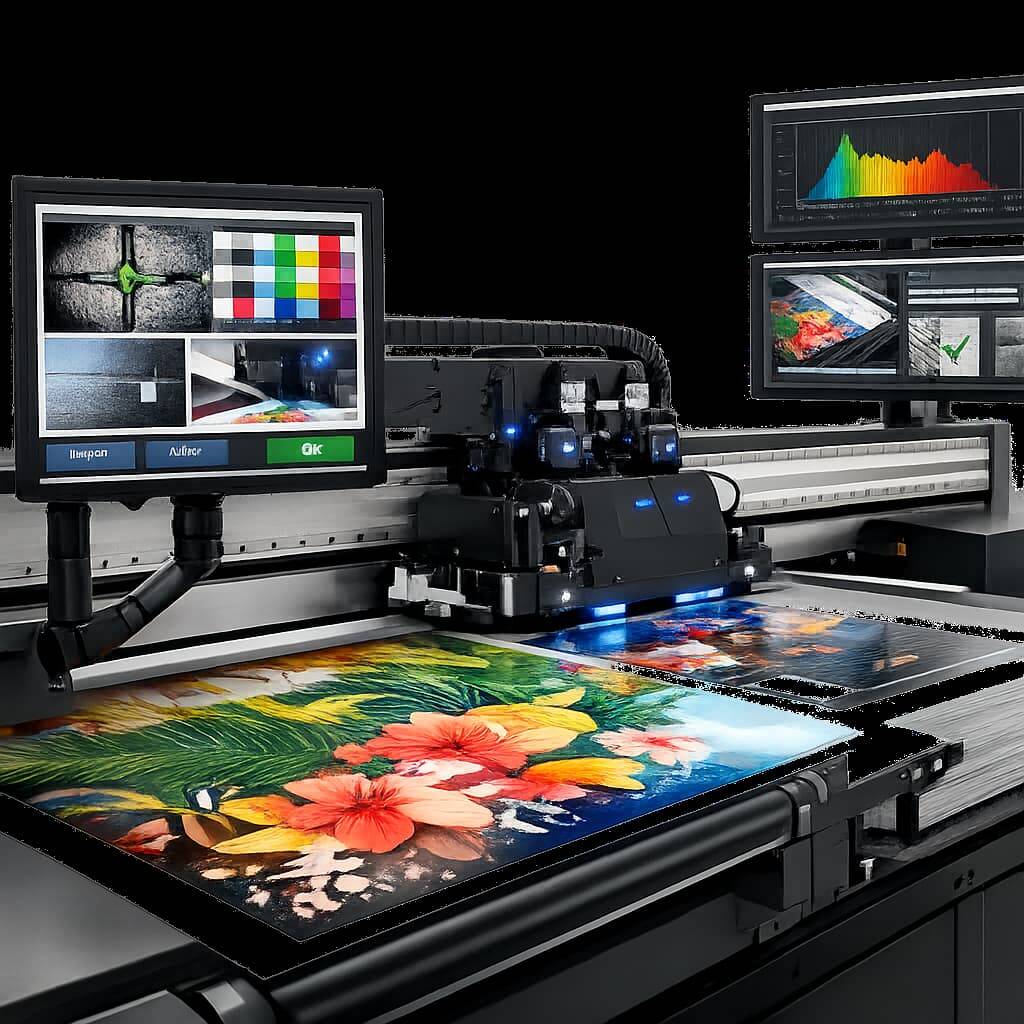
Investing in augmented vision technology delivers measurable advantages for printing businesses:
Higher Printing Accuracy
Precision imaging ensures perfect alignment and registration, significantly reducing rework and material waste.
Stronger Quality Control
Real-time inspection helps identify defects early, preventing small issues from becoming expensive problems.
Faster and Smoother Workflow
Automation minimizes repetitive tasks, allowing operators to focus on productivity and creative output.
Improved Cost Efficiency
Reduced waste, fewer errors, and faster production cycles directly lower operating costs and improve profit margins.
Core Features of Augmented Vision Systems
Understanding these features helps businesses evaluate the right solution for their UV printing needs:
High-Resolution Imaging Cameras
Detailed visuals enable accurate positioning, alignment, and defect detection across large print areas.
Real-Time Data Processing
Instant data analysis allows for on-the-spot corrections, keeping prints consistent and error-free.
User-Friendly Control Interface
Intuitive software ensures easy operation without the need for extensive training.
Seamless Workflow Integration
Most systems are designed to integrate smoothly with existing UV printers and production setups.
Conclusion
Augmented vision systems are no longer a luxury in large-format UV printing—they are a competitive necessity. By improving accuracy, streamlining workflows, and enhancing quality control, these systems empower printing businesses to deliver superior results with greater efficiency.
If you’re planning to upgrade your printing setup, visual positioning UV printers with augmented vision technology can help you stay ahead in an increasingly demanding market.explore our high-quality Visual Positioning UV printers here.
Frequently Asked Questions (FAQ)
What are augmented vision systems?
Augmented vision systems use advanced imaging and real-time visual feedback to enhance precision, alignment, and quality control in printing processes.
How do they improve large-format UV printing?
They improve alignment accuracy, maintain consistent colors, automate quality checks, and reduce printing errors.
Can these systems integrate with existing UV printers?
Yes, most augmented vision systems are designed for easy integration with current printing workflows.
What cost savings can businesses expect?
Reduced material waste, faster production times, and fewer reprints significantly lower overall operational costs.
Is special training required to use these systems?
No, user-friendly interfaces make them easy to operate with minimal training.