

 HOME
HOME PRODUCT CENTER
 ABOUT US
 DOWNLOAD CENTER
 SUPPORT CENTER
 SUBSCRIBE
 BLOG
BLOGBest Cameras and Optics for Visual Positioning UV Printers
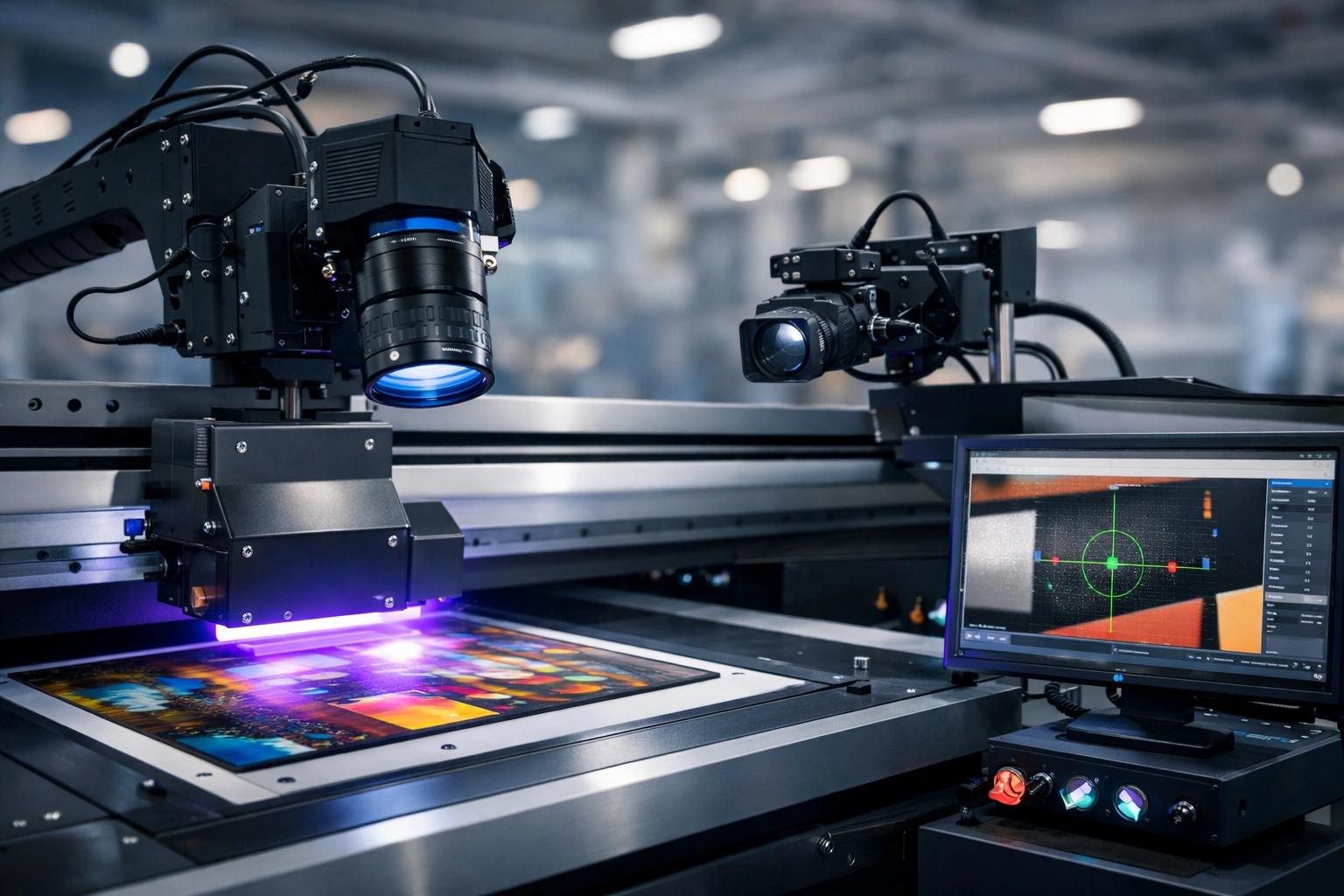
Visual positioning UV printers have become a cornerstone of modern digital printing, especially in industries where precision, consistency, and flexibility are non-negotiable. From customized promotional items to industrial-grade applications, these printers rely on advanced vision systems to accurately detect object placement and align print output in real time. At the heart of this capability lies a crucial yet often underestimated component: the camera and optics system.
While print heads, inks, and motion systems usually receive the most attention, the quality of cameras and lenses directly determines how accurately a visual positioning UV printer can “see” the substrate. Poor imaging leads to misalignment, registration errors, wasted material, and inconsistent output. On the other hand, a well-chosen camera and optics setup enables micron-level accuracy, stable workflows, and reliable high-volume production.
This in-depth guide explores the best cameras and optics for visual positioning UV printers. It explains how visual positioning works, what technical specifications truly matter, which camera types and lenses perform best, and how proper calibration and maintenance ensure long-term performance. The goal is to help you make informed, future-proof decisions while keeping the content fully original, practical, and optimized for search visibility.
What Is Visual Positioning in UV Printing?
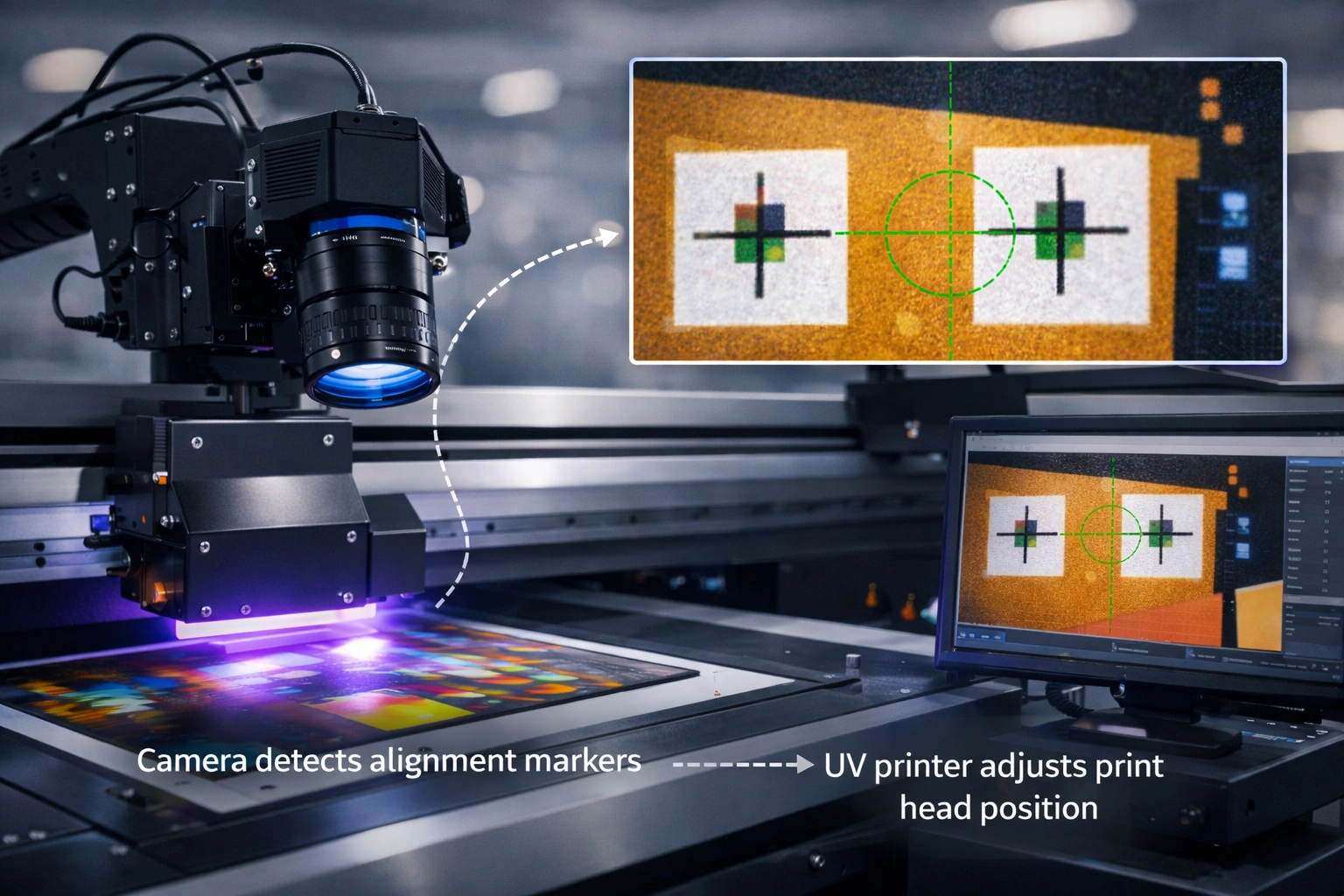
Visual positioning in UV printing refers to the use of camera-based vision systems to detect the exact position, orientation, and boundaries of an object before and during printing. Instead of relying solely on mechanical guides or fixed jigs, the printer uses real-time images to dynamically adjust print placement.
This approach is especially valuable when printing on:
Irregularly shaped objects
Pre-cut or pre-printed materials
Mixed batches with varying sizes
Objects placed manually rather than automatically
The camera captures an image of the substrate, software analyzes reference points or contours, and the printer adjusts the print path accordingly. UV curing ensures that ink dries instantly, making precise alignment even more critical because there is little margin for correction once ink is deposited.
Why Cameras and Optics Matter So Much
In a visual positioning UV printer, the camera acts as the printer’s “eyes,” and the lens determines how clearly and accurately those eyes perceive reality. Even the most advanced algorithms cannot compensate for poor image quality.
High-quality cameras and optics deliver:
Accurate edge detection
Consistent color and contrast recognition
Stable performance under changing lighting conditions
Faster alignment and reduced setup time
Conversely, low-quality imaging systems can cause false detections, blurred reference points, and frequent recalibration, all of which reduce productivity and increase operating costs.
Core Camera Specifications That Impact Performance
Choosing the right camera involves more than just picking the highest megapixel count. Several interdependent factors influence real-world performance in UV printing environments.
Resolution
Resolution determines how much detail the camera can capture. For most visual positioning UV printers, a minimum of 12 megapixels is recommended. Higher resolutions are particularly beneficial for:
Small objects with fine edges
Dense or intricate designs
High-precision industrial applications
However, extremely high resolution also increases data processing requirements, so balance is essential.
Sensor Size and Quality
A larger sensor generally captures more light and produces cleaner images with less noise. CMOS sensors are widely used due to their speed, efficiency, and affordability. Industrial-grade CMOS sensors are specifically designed to operate reliably in continuous production environments.
Frame Rate
Frame rate defines how many images the camera captures per second. In fast-moving or high-throughput systems, higher frame rates help maintain alignment without slowing down production. For static or semi-static printing setups, moderate frame rates are usually sufficient.
Shutter Type
Global shutter cameras are preferred for visual positioning UV printers because they capture the entire image at once, eliminating motion distortion. Rolling shutters, while cheaper, may introduce inaccuracies if there is any movement during image capture.
Connectivity and Integration
Industrial cameras often use USB 3.0, GigE, or Camera Link interfaces. Compatibility with the printer’s control system and software is essential for seamless integration and reliable data transfer.
Popular Camera Types for Visual Positioning UV Printers
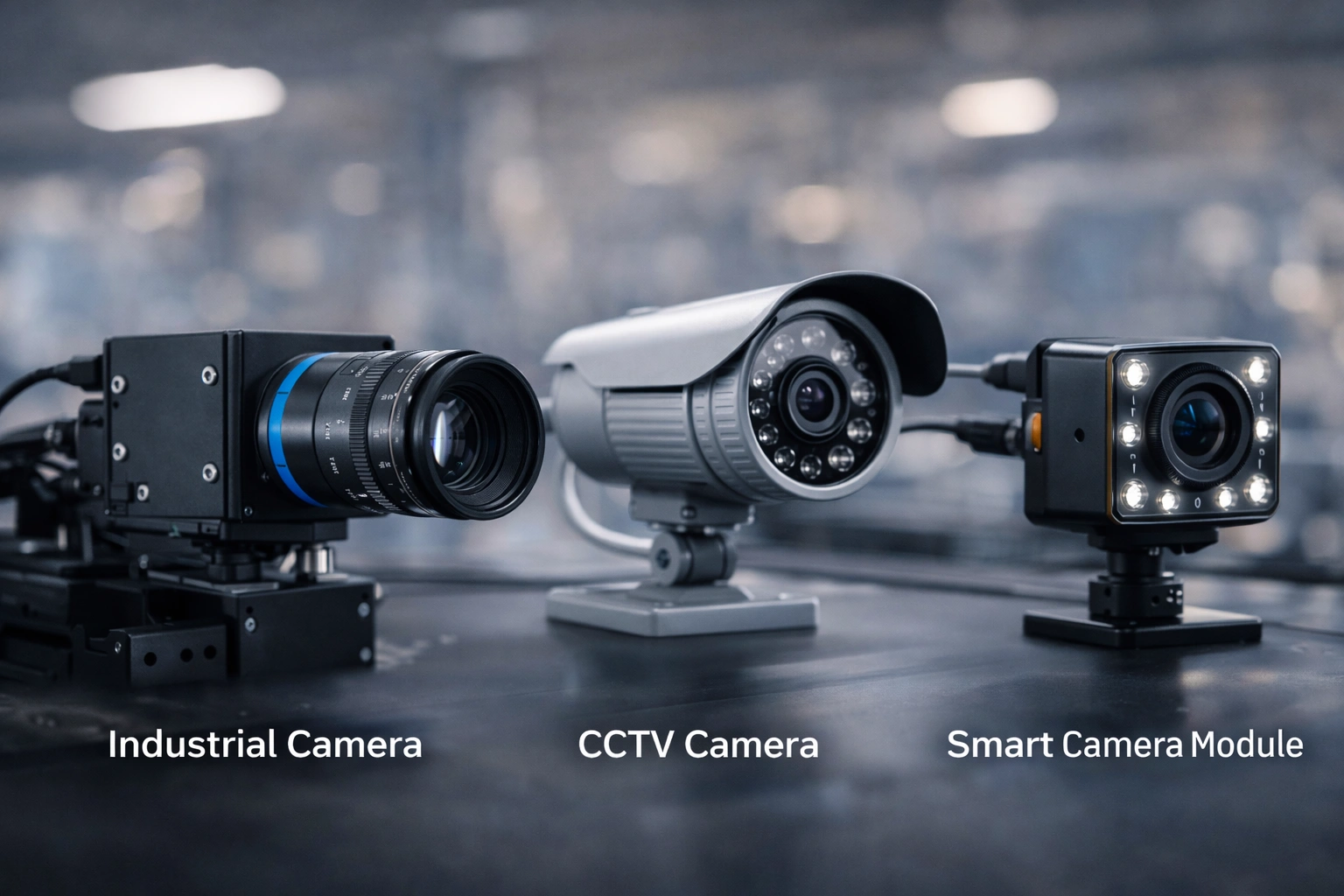
Different applications call for different camera solutions. Below are the most commonly used camera categories in visual positioning UV printing.
Industrial Machine Vision Cameras
Industrial cameras are purpose-built for precision imaging and long operating cycles. They offer superior stability, consistent output, and robust housings that withstand dust, vibration, and temperature variations.
Well-known manufacturers such as Basler and FLIR provide machine vision cameras specifically designed for automation and printing applications. These cameras excel in accuracy and longevity, making them ideal for professional UV printing environments.
CCTV and Board Cameras
CCTV-style cameras are often used in entry-level or cost-sensitive setups. They are compact, affordable, and relatively easy to integrate. While they may not match industrial cameras in terms of consistency and lifespan, they can still perform well for light-duty applications.
Their main limitations include lower sensor quality, reduced color accuracy, and limited software control.
Embedded and Smart Cameras
Embedded vision cameras combine imaging hardware with onboard processing. These are useful in compact UV printers or customized systems where space is limited. Some smart cameras can perform basic image analysis internally, reducing the load on the main controller.
Smartphone-Based Camera Modules
High-end smartphone camera modules are occasionally used in experimental or low-cost systems. Modern smartphone cameras offer impressive resolution and advanced image processing, but they are not designed for continuous industrial use. Long-term reliability and calibration stability can be challenging.
Understanding Optics and Lens Selection
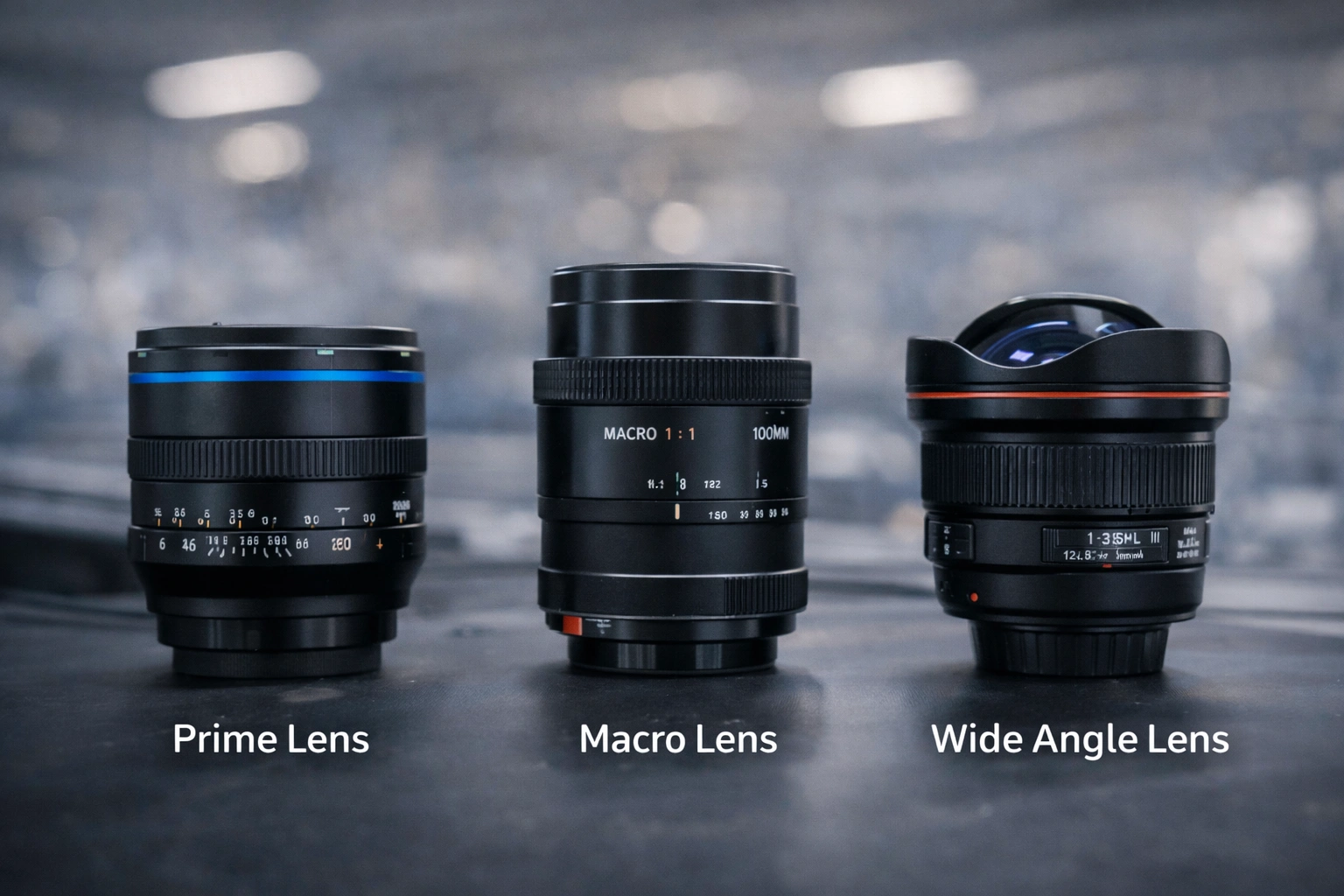
Even the best camera will underperform if paired with the wrong lens. Optics determine how light enters the sensor and how accurately the printed surface is represented.
Prime Lenses
Prime lenses have a fixed focal length and are known for superior sharpness, minimal distortion, and consistent performance. They are widely used in visual positioning UV printers because alignment accuracy matters more than zoom flexibility.
Prime lenses are ideal when:
The camera-to-object distance is fixed
Consistent framing is required
Maximum image clarity is a priority
Macro Lenses
Macro lenses are designed for close-up imaging and can capture extremely fine details. They are especially useful when printing on small objects such as electronic components, tags, or promotional items.
However, macro lenses often have a shallow depth of field, so precise mounting and calibration are critical.
Wide-Angle Lenses
Wide-angle lenses allow the camera to capture a larger area in a single frame. This can be useful for large substrates or when multiple objects need to be detected at once.
The trade-off is potential distortion at the edges, which must be corrected through software calibration.
Telecentric Lenses
For high-end applications, telecentric lenses are sometimes used. These lenses eliminate perspective distortion, ensuring that objects appear the same size regardless of their position within the field of view. While expensive, they offer unmatched measurement accuracy.
The Role of Lighting in Visual Positioning
Cameras and optics cannot perform optimally without proper lighting. In UV printing environments, lighting must be carefully controlled to avoid glare, shadows, and inconsistent exposure.
Key lighting considerations include:
Using diffuse LED lighting to reduce reflections
Selecting color temperatures that enhance contrast
Positioning lights consistently relative to the camera
Shielding the camera from UV curing light interference
Integrated lighting systems often deliver more stable results than external ambient lighting.
Camera and Optics Integration Best Practices
Successful integration involves aligning hardware, software, and mechanical design into a cohesive system.
Important integration steps include:
Rigid camera mounting to prevent vibration
Fixed and repeatable lens positioning
Shielding against dust and ink mist
Software configuration for consistent exposure and focus
Working with vendors who specialize in vision-guided printing systems can significantly reduce trial-and-error during setup.
Calibration and Its Impact on Accuracy
Calibration ensures that the camera’s view accurately corresponds to the printer’s coordinate system. Without proper calibration, even high-quality components cannot deliver precise results.
Calibration typically includes:
Lens distortion correction
Scale and orientation mapping
Reference point alignment
Periodic verification checks
Regular calibration is especially important when switching substrates, lenses, or camera positions.
Maintenance Tips for Long-Term Performance
Cameras and optics are precision instruments and require routine care.
Best maintenance practices include:
Cleaning lenses with lint-free microfiber cloths
Keeping camera housings sealed and dust-free
Checking cables and connectors regularly
Updating firmware and vision software
Recalibrating after mechanical adjustments
Preventive maintenance reduces downtime and preserves print quality over the long term.
Common Mistakes to Avoid
Many printing issues stem from avoidable imaging mistakes, such as:
Prioritizing resolution over sensor quality
Using cheap lenses with high-end cameras
Ignoring lighting design
Skipping calibration steps
Mounting cameras without vibration control
Avoiding these pitfalls can dramatically improve system reliability and output consistency.
Future Trends in Visual Positioning UV Printing
As UV printing technology evolves, camera and optics systems are also advancing. Emerging trends include:
AI-driven vision algorithms for faster alignment
Higher dynamic range sensors for difficult materials
Compact multi-camera setups for complex objects
Improved integration with automation and robotics
Investing in scalable and upgrade-friendly imaging systems ensures your printer remains competitive as technology progresses.
Conclusion
The performance of a visual positioning UV printer is only as strong as its vision system. Cameras and optics are not optional accessories; they are fundamental components that directly influence accuracy, efficiency, and print quality. By selecting the right camera type, pairing it with suitable optics, and maintaining proper calibration and lighting, you can unlock the full potential of visual positioning UV printing.explore our high-quality Visual Positioning UV printers here.
Whether you operate a small customization shop or an industrial-scale production line, thoughtful investment in imaging technology leads to fewer errors, faster workflows, and consistently superior results. In a competitive printing market, clarity of vision is not just a technical requirement—it is a strategic advantage.
Frequently Asked Questions
What is a visual positioning UV printer?
A visual positioning UV printer uses camera-based imaging to detect object placement and automatically align prints with high accuracy on various substrates.
Why is camera resolution important in UV printing?
Higher resolution allows the system to detect fine edges and details, improving alignment accuracy and reducing print errors.
Which lens type is best for visual positioning?
Prime lenses are the most commonly used due to their sharpness and low distortion, while macro lenses are ideal for small, detailed objects.
How often should calibration be performed?
Calibration should be checked regularly and repeated whenever the camera, lens, or substrate type changes.
Can non-industrial cameras be used for visual positioning?
Yes, but they are generally less reliable for long-term or high-volume production compared to industrial machine vision cameras.