

 HOME
HOME PRODUCT CENTER
 ABOUT US
 DOWNLOAD CENTER
 SUPPORT CENTER
 SUBSCRIBE
 BLOG
BLOGMachine Learning for UV Print Quality Control
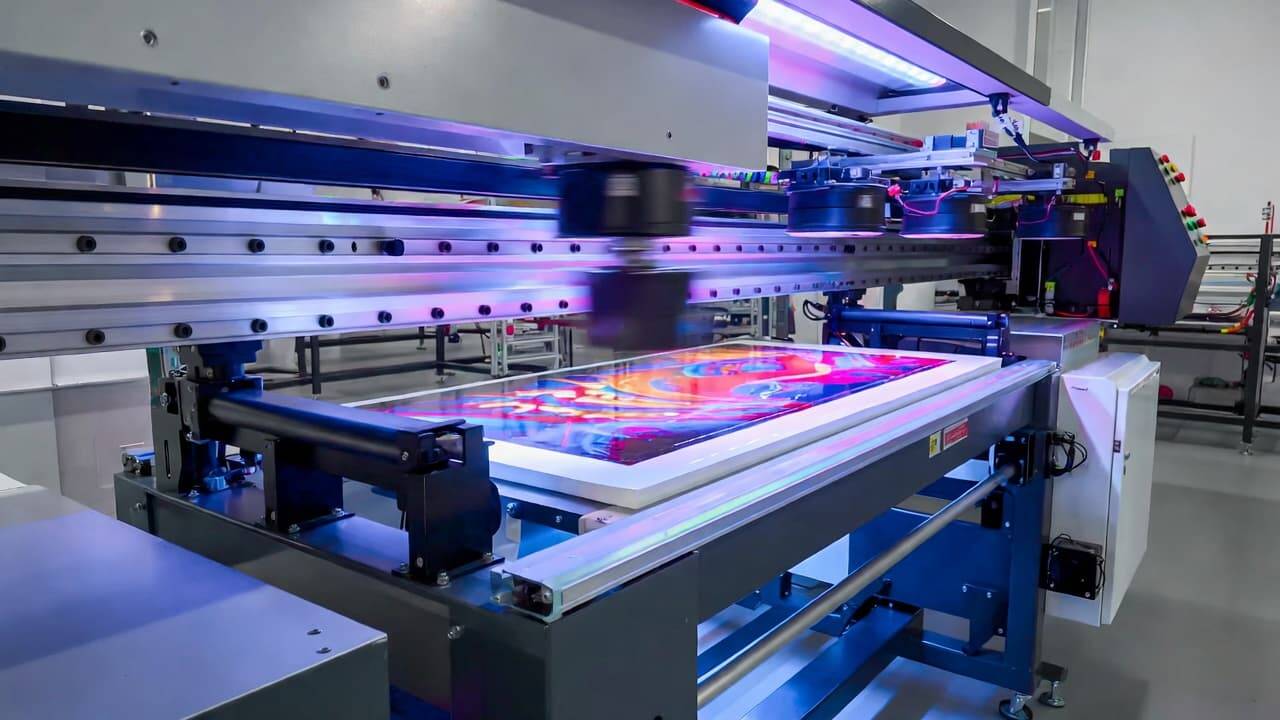
The digital printing industry has entered an era where precision, speed, and consistency are no longer optional—they are essential. Among the most advanced technologies in this space, UV printing stands out for its ability to produce vibrant, durable, and high-resolution prints on a wide range of substrates. However, even with cutting-edge hardware, maintaining flawless print quality at scale remains a complex challenge.
Variations in ink behavior, environmental fluctuations, mechanical inconsistencies, and substrate irregularities can all lead to defects such as banding, color shifts, misregistration, or uneven curing. Traditionally, operators relied on manual inspection and reactive adjustments to correct these problems. Today, machine learning (ML) is transforming this process by enabling real-time visual UV print correction driven by data and predictive intelligence.
This article explores how machine learning can be implemented for visual UV print correction, the technologies involved, the benefits for print businesses, and the practical steps required to deploy an intelligent quality control system in a UV printing environment.
Understanding UV Printing and Its Quality Challenges
What Is UV Printing?
UV printing is a digital printing process that uses ultraviolet light to instantly cure specially formulated inks as they are deposited onto a substrate. Unlike solvent-based or water-based inks that dry through evaporation, UV inks harden immediately when exposed to UV lamps.
This method provides several advantages:
High color vibrancy and sharp detail
Immediate curing for faster production
Compatibility with rigid and flexible substrates
Improved durability and scratch resistance
Reduced smudging and ink spread
UV printing is widely used for signage, packaging, promotional products, industrial labeling, decorative panels, and customized items.
Common Quality Issues in UV Printing
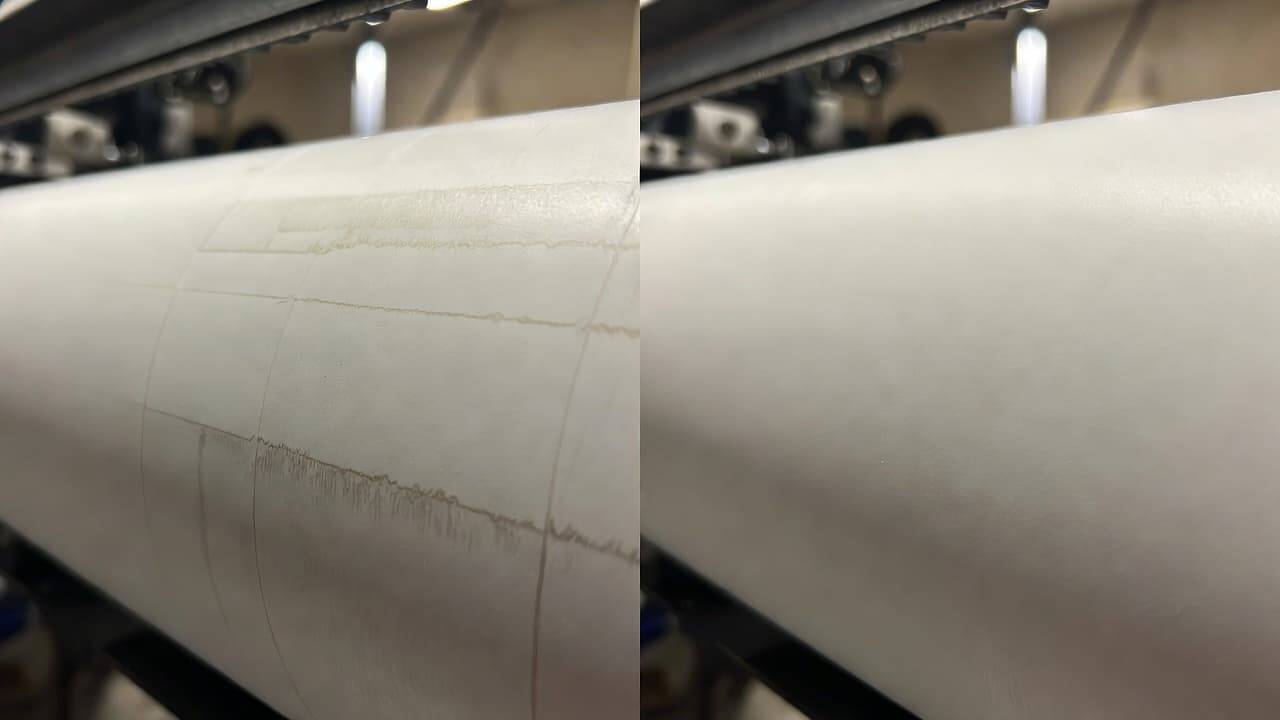
Despite its strengths, UV printing is not immune to production challenges. Some of the most frequent issues include:
Color inconsistency due to ink formulation or curing variations
Banding and streaking caused by printhead or carriage inconsistencies
Misalignment or registration errors in multi-layer printing
Ink adhesion problems on certain substrates
Over-curing or under-curing leading to brittleness or tackiness
Surface defects caused by dust or substrate irregularities
In high-volume production environments, even small deviations can result in significant material waste and customer dissatisfaction. This is where machine learning becomes a powerful ally.
What Is Machine Learning in the Context of Printing?
Machine learning is a branch of artificial intelligence that enables systems to learn from historical data and improve performance without being explicitly programmed for every scenario. Instead of relying on fixed rules, ML models detect patterns, recognize anomalies, and make predictions based on real-world data.
In UV printing, machine learning can:
Analyze visual output using camera systems
Compare live prints with reference standards
Detect deviations in color, texture, or alignment
Predict potential defects before they occur
Automatically adjust printing parameters in real time
Rather than reacting after defects are visible, ML-driven systems aim to prevent them during production.
How Machine Learning Enables Visual UV Print Correction
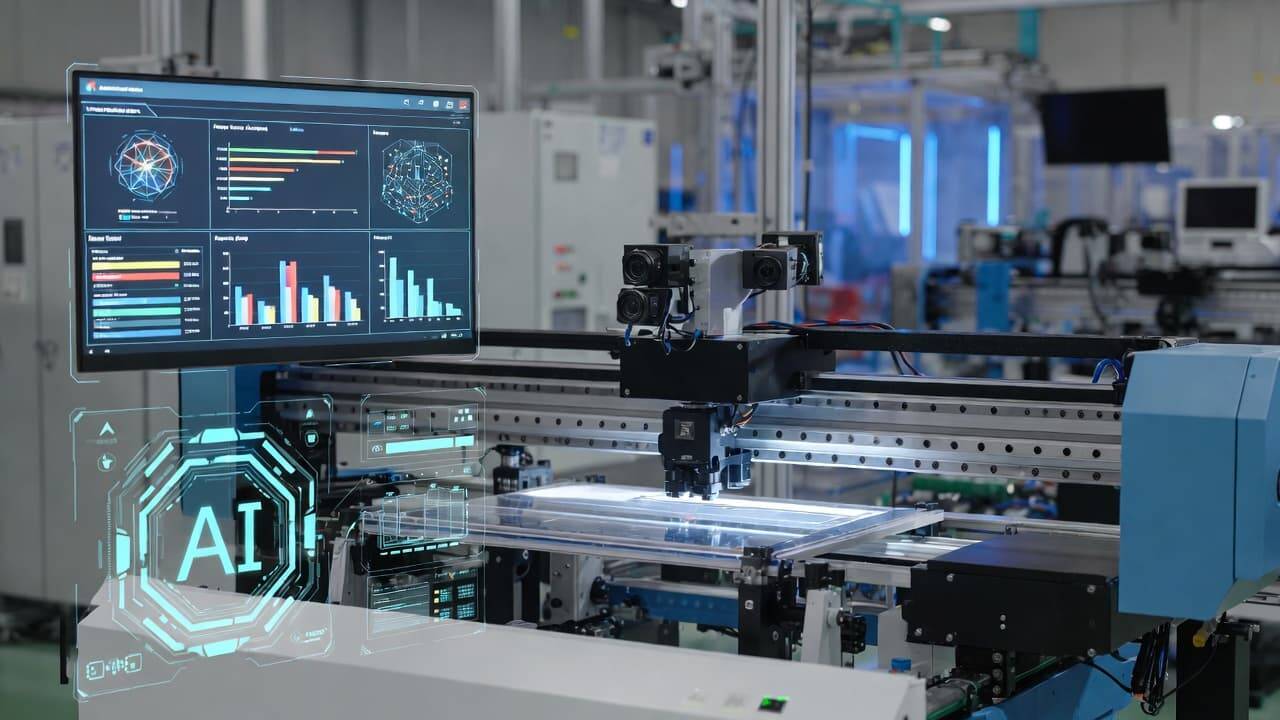
Implementing machine learning for UV print correction typically involves four core stages: data acquisition, model development, real-time monitoring, and automated correction.
1. Data Collection and Sensor Integration
The foundation of any machine learning system is data. In a UV printing environment, relevant data sources include:
High-resolution camera images of printed output
Spectrophotometer color measurements
Ink viscosity readings
UV lamp intensity levels
Printhead temperature data
Carriage speed and substrate feed rates
Environmental conditions (humidity, temperature)
Operator quality feedback
By collecting both process data and output data, businesses create a comprehensive dataset that reflects how printing conditions affect visual results.
2. Model Training and Pattern Recognition
Once sufficient historical data is gathered, machine learning algorithms are trained to identify relationships between printing parameters and final print quality.
Common algorithm types used in UV print correction include:
Regression models for predicting color variation
Decision trees for identifying defect causes
Convolutional neural networks (CNNs) for visual defect detection
Anomaly detection models for spotting irregularities in real time
For example, a neural network trained on thousands of printed samples can learn to recognize subtle banding patterns that may not be immediately obvious to the human eye.
Over time, the system becomes more accurate in predicting when a specific combination of ink flow rate and print speed may result in visible defects.
3. Real-Time Monitoring During Production
After training, the ML system is integrated into the live production workflow. Cameras and sensors continuously capture data as the printer operates.
The system compares:
Current visual output with reference files
Real-time color values with target profiles
Process parameters with optimal benchmarks
If the model detects deviations beyond predefined thresholds, it can:
Alert operators through the control interface
Pause production automatically
Recommend parameter adjustments
Trigger automated recalibration
This proactive approach prevents defective prints from reaching completion.
4. Automated Print Parameter Adjustment
The most advanced systems move beyond detection to active correction. By integrating machine learning with printer firmware and control software, adjustments can be made automatically.
Examples of automated corrections include:
Modifying ink density for color consistency
Adjusting carriage speed to eliminate banding
Recalibrating UV lamp intensity
Fine-tuning substrate alignment
Correcting layer registration in multi-pass printing
These dynamic adjustments ensure consistent output across long production runs.
Key Benefits of Machine Learning in UV Print Correction
1. Superior Print Quality
Machine learning enhances consistency across batches by minimizing human error and reacting faster than manual inspection. High-resolution defect detection improves output precision and brand reliability.
2. Reduced Material Waste
Early detection and prevention significantly reduce the number of rejected prints. This leads to lower ink consumption, fewer substrate losses, and improved sustainability.
3. Increased Production Efficiency
Automated monitoring reduces downtime caused by trial-and-error troubleshooting. Operators spend less time correcting errors and more time optimizing production.
4. Lower Operational Costs
Less waste, fewer reprints, and improved workflow efficiency translate directly into cost savings. Over time, ML systems can deliver measurable return on investment.
5. Data-Driven Decision Making
Machine learning platforms generate performance reports that reveal:
Most common defect types
Root causes of recurring issues
Optimal production conditions
Maintenance requirements
This data supports strategic planning and predictive maintenance scheduling.
6. Enhanced Customer Satisfaction
Consistent color accuracy and defect-free prints strengthen brand trust and reduce complaint rates.
Core Features of an ML-Driven UV Print Correction System
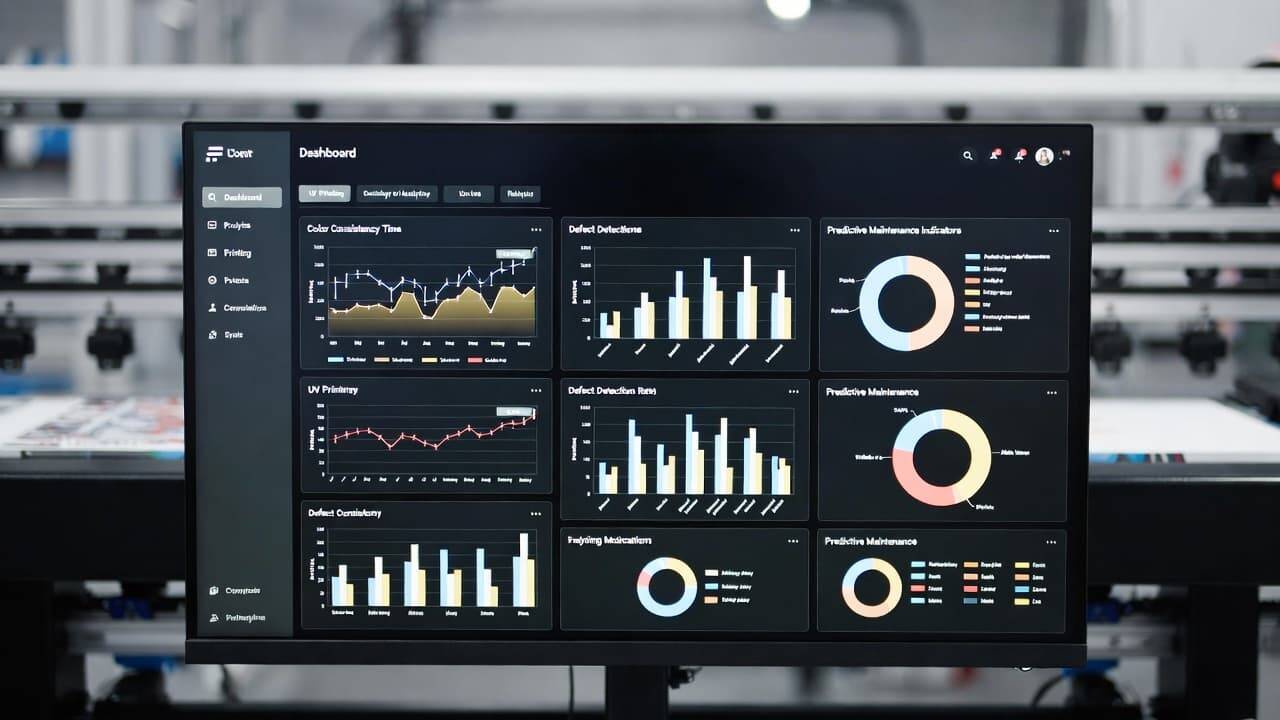
When selecting or developing a machine learning solution for UV printing, look for the following capabilities:
Visual Defect Detection
High-speed industrial cameras combined with computer vision algorithms identify imperfections such as:
Streaks
Dot gain variations
Registration errors
Surface inconsistencies
Predictive Maintenance Alerts
The system analyzes long-term performance trends to predict:
Printhead wear
UV lamp degradation
Ink system instability
This minimizes unexpected downtime.
Automated Calibration
Intelligent calibration tools automatically adjust color profiles and alignment settings based on real-time production data.
Adaptive Learning
Advanced systems continue learning as more data is collected, improving accuracy over time.
Customizable Reporting Dashboards
Interactive dashboards display:
Quality metrics
Error frequency
Production efficiency statistics
Operator performance insights
Implementation Roadmap for Printing Facilities
Successfully integrating machine learning into UV print correction requires careful planning.
Step 1: Evaluate Existing Workflow
Conduct a comprehensive audit of your printing operations. Identify:
Frequent quality issues
Bottlenecks in inspection
Available sensor infrastructure
Data storage capabilities
Understanding current weaknesses helps define implementation goals.
Step 2: Establish a Data Infrastructure
Ensure that production data is:
Consistently recorded
Properly labeled
Securely stored
Easily accessible for analysis
Clean and structured data significantly improves model performance.
Step 3: Select the Right Technology Partner
Choose providers with experience in:
Industrial machine vision
AI integration in manufacturing
UV printer hardware compatibility
Collaborating with specialists reduces deployment risks.
Step 4: Develop and Train the Model
Use historical data to build and validate your machine learning models. During this phase:
Test multiple algorithms
Compare accuracy rates
Validate predictions against real-world outcomes
Pilot testing on a single production line is recommended before full-scale deployment.
Step 5: Integrate With Printer Control Systems
Seamless integration ensures that corrective actions can be applied automatically. This may require firmware updates or API-based communication between systems.
Step 6: Train Operators and Technicians
Human involvement remains essential. Staff should understand:
How to interpret system alerts
When to override automated adjustments
How to maintain sensor equipment
Step 7: Continuous Optimization
Machine learning is not a one-time setup. Regular performance reviews and model retraining improve accuracy as production variables evolve.
Challenges and Considerations
While the benefits are substantial, businesses should also consider potential challenges:
Initial investment costs
Data security and privacy concerns
Integration complexity with legacy systems
Need for technical expertise
A phased approach helps mitigate risks and ensures smoother adoption.
Future Trends in AI-Driven UV Printing
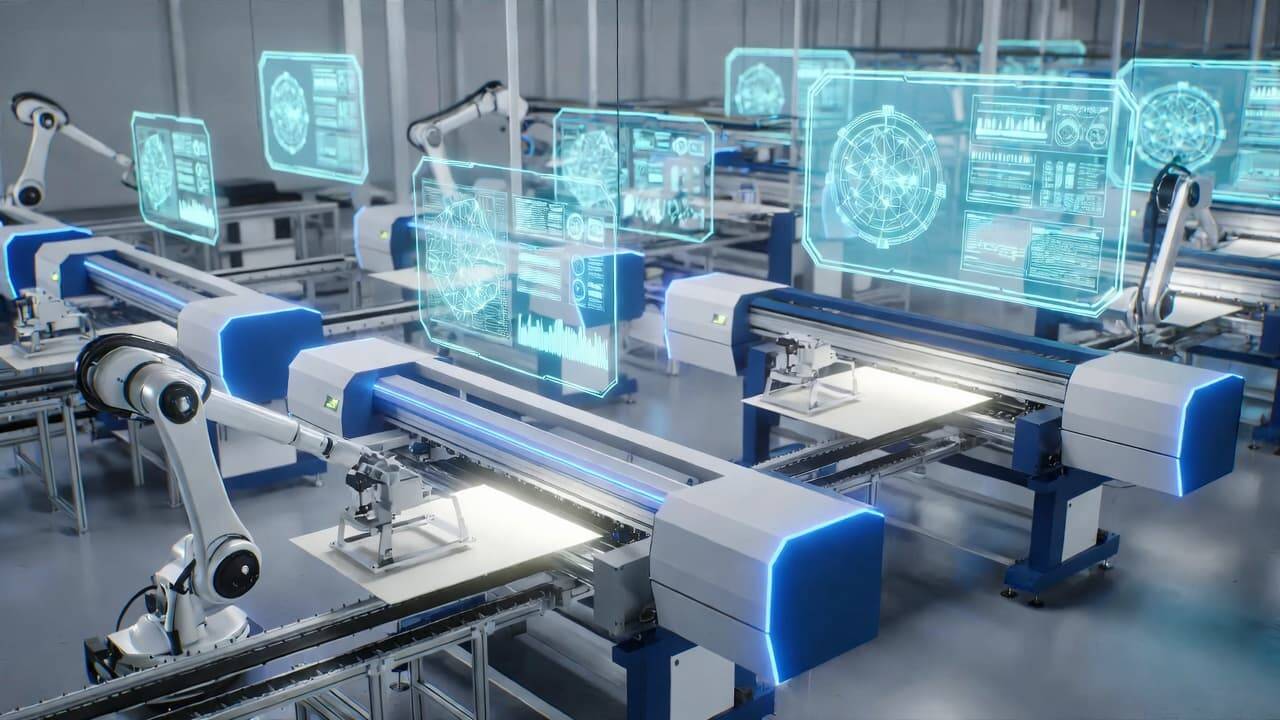
The future of UV printing will likely include:
Fully autonomous print quality management
Cloud-based AI platforms for multi-facility analytics
Edge computing for faster real-time decisions
Integration with Industry 4.0 smart factory systems
AI-assisted color profiling and substrate recognition
As AI technologies mature, visual UV print correction will become increasingly intelligent and self-optimizing.
Frequently Asked Questions
What is visual UV print correction?
Visual UV print correction refers to the process of identifying and fixing print defects in UV printing using camera systems, sensors, and intelligent software.
How does machine learning improve UV print quality?
Machine learning analyzes production data, detects deviations in real time, and recommends or applies adjustments to maintain consistent output quality.
Is machine learning suitable for small printing businesses?
Yes, scalable solutions exist for small and medium-sized print shops. Cloud-based AI tools can reduce infrastructure requirements.
Does machine learning replace human operators?
No. It enhances human decision-making by providing data-driven insights and automating repetitive quality checks.
How long does implementation take?
Implementation time varies depending on system complexity, data readiness, and integration requirements. Pilot programs typically last several months.
Conclusion
Machine learning is redefining how UV printing facilities approach quality control. By shifting from reactive inspection to predictive correction, businesses can dramatically improve print consistency, reduce waste, and optimize operational efficiency.explore our high-quality Visual Positioning UV printers here
The integration of intelligent visual inspection systems with UV printers represents a strategic investment in future-ready production. As competition intensifies and customer expectations rise, leveraging AI-powered UV print correction will become a defining factor in maintaining market leadership.
Adopting machine learning is not merely about upgrading technology—it is about building a smarter, more resilient, and more profitable printing operation.