

 HOME
HOME PRODUCT CENTER
 ABOUT US
 DOWNLOAD CENTER
 SUPPORT CENTER
 SUBSCRIBE
 BLOG
BLOGCloud-Connected Visual Positioning UV Printing
The printing industry is undergoing a major digital transformation, driven by the need for higher precision, faster turnaround times, and smarter operational control. As competition intensifies and customer expectations rise, print businesses are actively seeking technologies that can deliver consistent quality while reducing waste and downtime. One of the most impactful advancements in recent years is the integration of Visual Positioning UV printers with cloud monitoring systems.
Visual Positioning UV printers already represent a significant leap forward in print accuracy and flexibility. When combined with cloud-based monitoring and management platforms, these machines evolve into intelligent production assets capable of self-analysis, remote supervision, and data-driven optimization. This integration not only improves day-to-day operations but also reshapes long-term business strategies.
This article explores how cloud monitoring enhances Visual Positioning UV printing, the operational and financial benefits of integration, essential features to consider, real-world use cases, implementation strategies, and future trends. Whether you operate a single print facility or manage multiple production sites, understanding this integration can help you stay competitive in an increasingly digital printing landscape.
Understanding Visual Positioning UV Printers

Visual Positioning UV printers are advanced digital printing systems designed to deliver extremely accurate prints on irregular, pre-cut, or non-uniform substrates. Unlike conventional printers that rely on fixed alignment or manual placement, these machines use high-resolution cameras and intelligent software to detect the exact position of the substrate before printing.
The core technology behind these printers includes optical recognition, real-time image processing, and UV ink curing. The printer identifies the precise location and orientation of the material, adjusts the print path automatically, and then cures the ink instantly using ultraviolet light. This process ensures sharp edges, vibrant colors, and consistent output even on complex or variable surfaces.
These printers are widely used in applications such as signage, promotional products, packaging prototypes, industrial parts, glass, acrylic, leather, wood, and customized merchandise. Their ability to reduce setup time and eliminate alignment errors makes them especially valuable for short-run and personalized printing jobs.
The Role of Cloud Monitoring in Modern Printing

Cloud monitoring refers to the use of internet-based platforms to collect, store, analyze, and visualize data generated by machines and software systems. In the context of printing, cloud monitoring enables real-time oversight of printer performance, production status, and system health from any location.
Traditional printer management often relies on local control panels and manual reporting, which limits visibility and slows down decision-making. Cloud-based systems remove these barriers by centralizing data and making it accessible through secure dashboards. This shift allows print operators, managers, and owners to gain deeper insights into their operations without being physically present on the production floor.
Cloud monitoring also supports automation, predictive maintenance, and remote diagnostics. Instead of reacting to problems after they occur, businesses can anticipate issues, optimize workflows, and continuously improve efficiency using actionable data.
Why Integrating Visual Positioning UV Printers with the Cloud Matters
The integration of Visual Positioning UV printers with cloud monitoring systems creates a powerful ecosystem where hardware intelligence meets digital oversight. This combination transforms printers from standalone machines into connected assets that actively contribute to operational intelligence.
One of the key reasons this integration matters is scalability. As print businesses grow, managing multiple machines across different locations becomes increasingly complex. Cloud connectivity simplifies this complexity by providing unified control and standardized reporting.
Another critical factor is consistency. Cloud-based data allows businesses to maintain uniform print quality, operating standards, and maintenance routines across all machines, regardless of location or operator skill level.
Finally, integration supports long-term sustainability. By tracking energy usage, ink consumption, and material waste, businesses can reduce their environmental footprint while improving profitability.
Key Benefits of Cloud-Integrated Visual Positioning UV Printers
Enhanced Operational Efficiency
Cloud integration allows real-time tracking of printer activity, job status, and machine utilization. Managers can instantly see which printers are active, idle, or experiencing issues. This visibility enables better scheduling, faster troubleshooting, and improved resource allocation.
Production bottlenecks become easier to identify and resolve. Instead of relying on verbal updates or manual logs, teams can make informed decisions based on live data.
Superior Print Quality Control
Consistency is a major challenge in digital printing, especially when handling variable substrates. Cloud monitoring captures data related to print resolution, ink performance, curing consistency, and alignment accuracy. By analyzing this data, operators can fine-tune settings and maintain uniform quality across all jobs.
Any deviation from predefined quality standards can trigger alerts, allowing corrective action before defects accumulate. This proactive quality control reduces reprints, material waste, and customer complaints.
Data-Driven Decision Making
Cloud platforms store historical data that reveals patterns and trends in printer usage, maintenance frequency, and production output. Businesses can use these insights to evaluate machine performance, justify equipment upgrades, and refine pricing strategies.
For example, analyzing job duration and ink consumption can help estimate true production costs more accurately. This level of insight supports smarter budgeting and long-term planning.
Remote Monitoring and Control
One of the most valuable advantages of cloud integration is remote access. Operators and managers can monitor printers from anywhere with an internet connection. This capability is especially useful for multi-location businesses or owners who travel frequently.
Remote control features may include job approval, parameter adjustments, system restarts, and software updates. This reduces dependency on on-site staff and minimizes downtime caused by delayed responses.
Reduced Downtime and Maintenance Costs
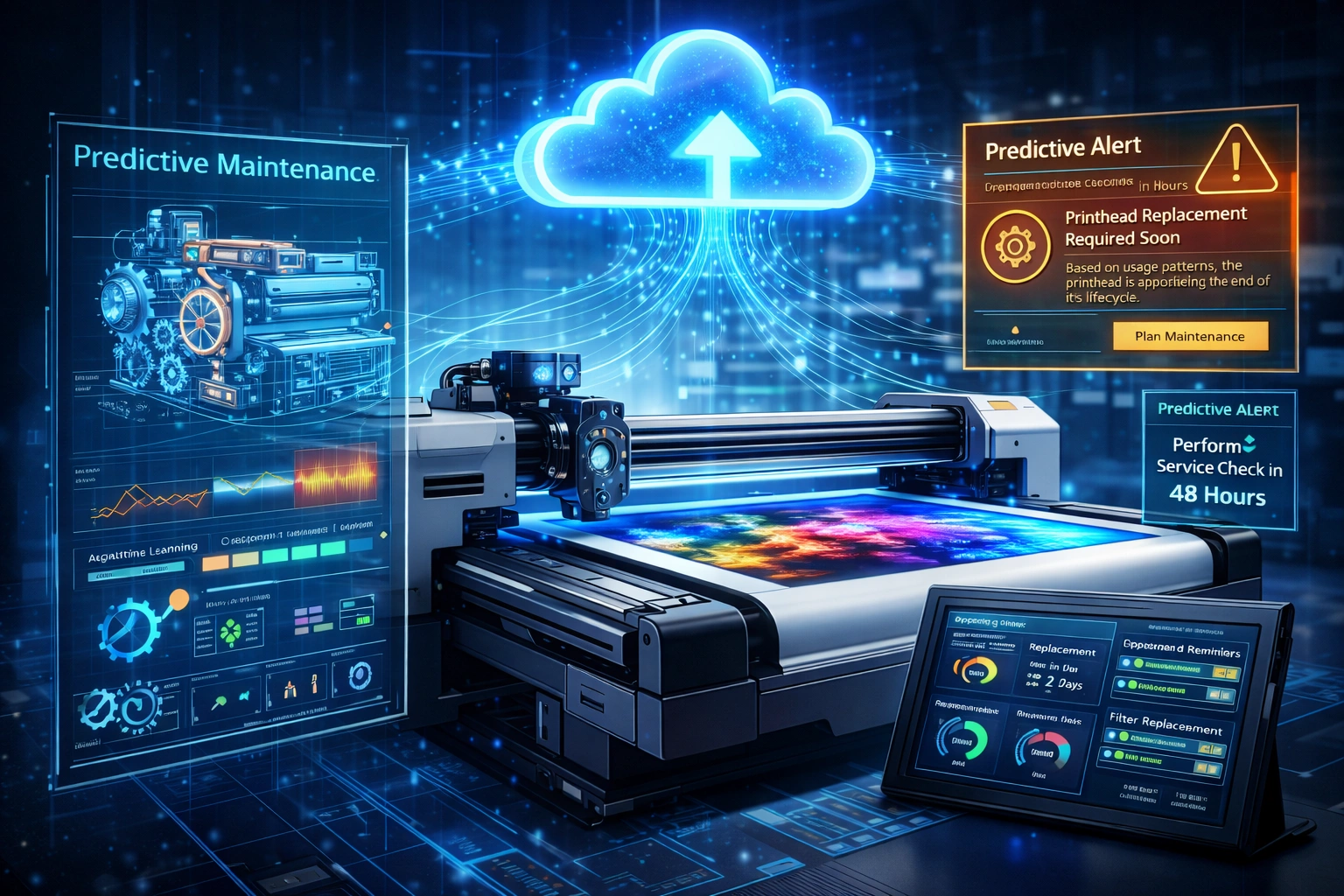
Cloud-based systems support predictive maintenance by analyzing usage patterns and performance indicators. Instead of following rigid maintenance schedules or waiting for breakdowns, businesses can service machines exactly when needed.
Predictive maintenance reduces unexpected failures, extends equipment lifespan, and lowers repair costs. Automated alerts notify teams of potential issues such as abnormal temperature, ink flow irregularities, or camera misalignment.
Core Features of Cloud-Connected Visual Positioning UV Printers
Real-Time Performance Monitoring
Real-time monitoring provides instant visibility into key performance indicators such as print speed, job completion rates, ink levels, and curing efficiency. This transparency ensures that production targets are met and deviations are addressed quickly.
Dashboards typically display data in an intuitive visual format, making it easy for users to interpret information without technical expertise.
Predictive Maintenance Intelligence
Advanced cloud platforms use algorithms to predict maintenance needs based on historical and real-time data. These systems can forecast component wear, identify early signs of malfunction, and recommend service actions.
Predictive maintenance not only prevents breakdowns but also helps schedule service during low-production periods, minimizing operational disruption.
Automated Alerts and Notifications
Cloud-integrated printers can send automatic alerts via email, mobile apps, or dashboards. Notifications may include low ink warnings, job completion updates, system errors, or maintenance reminders.
Automated alerts ensure that issues are addressed promptly, even outside regular working hours.
Centralized Data Storage and Analytics
All operational data is stored securely in the cloud, allowing easy access to historical records. Businesses can generate reports on productivity, cost efficiency, and machine performance with minimal effort.
Centralized data also supports compliance, audits, and performance benchmarking across different facilities.
User Role Management and Security
Modern cloud platforms offer role-based access control, ensuring that users only see and modify data relevant to their responsibilities. This enhances security and reduces the risk of accidental changes.
Encryption, secure authentication, and regular updates protect sensitive production and customer data from unauthorized access.
Practical Use Cases Across Industries
In the signage industry, cloud-connected Visual Positioning UV printers enable consistent branding across multiple outlets. Centralized control ensures that colors, layouts, and materials remain uniform regardless of location.
In packaging and prototyping, real-time monitoring helps manage short production cycles and rapid design changes. Data-driven adjustments improve speed without compromising accuracy.
For promotional product manufacturers, cloud integration supports high-mix, low-volume production. Printers can switch between jobs seamlessly while maintaining quality standards.
Industrial printing applications benefit from predictive maintenance and traceability, ensuring reliable output in demanding environments.
Implementation Considerations for Successful Integration
Selecting the Right Cloud Platform
Choosing a cloud monitoring solution that is compatible with your printer hardware is critical. The platform should support seamless integration, intuitive user interfaces, and scalable architecture.
Evaluate vendors based on reliability, customer support, data analytics capabilities, and long-term development roadmap.
Network Infrastructure and Connectivity
Stable internet connectivity is essential for cloud-based systems. Businesses should assess their network infrastructure to ensure sufficient bandwidth, redundancy, and security.
In environments with intermittent connectivity, offline data caching and synchronization features are valuable.
Staff Training and Change Management
Successful integration depends on user adoption. Employees should be trained not only on how to use the cloud platform but also on how to interpret data and apply insights effectively.
Encouraging a data-driven culture helps maximize the value of cloud monitoring.
Data Security and Compliance
Protecting operational data is a top priority. Implement strong authentication, encryption, and access control policies. Ensure that the cloud provider complies with relevant data protection regulations.
Regular audits and system updates further enhance security.
Challenges and How to Overcome Them
Some businesses hesitate to adopt cloud integration due to concerns about cost, complexity, or data security. However, these challenges can be managed with careful planning and phased implementation.
Starting with basic monitoring features and gradually expanding capabilities reduces risk and allows teams to adapt comfortably. Clear communication about benefits and ongoing support helps overcome resistance to change.
Future Trends in Cloud-Enabled UV Printing
The future of Visual Positioning UV printing lies in deeper automation and artificial intelligence. Cloud platforms will increasingly support self-optimizing systems that adjust settings automatically based on material type, environmental conditions, and job requirements.
Integration with enterprise resource planning systems will enable end-to-end workflow automation, from order intake to production and delivery.
Sustainability will also play a larger role, with cloud analytics helping businesses track carbon footprint, reduce waste, and meet environmental goals.
Conclusion
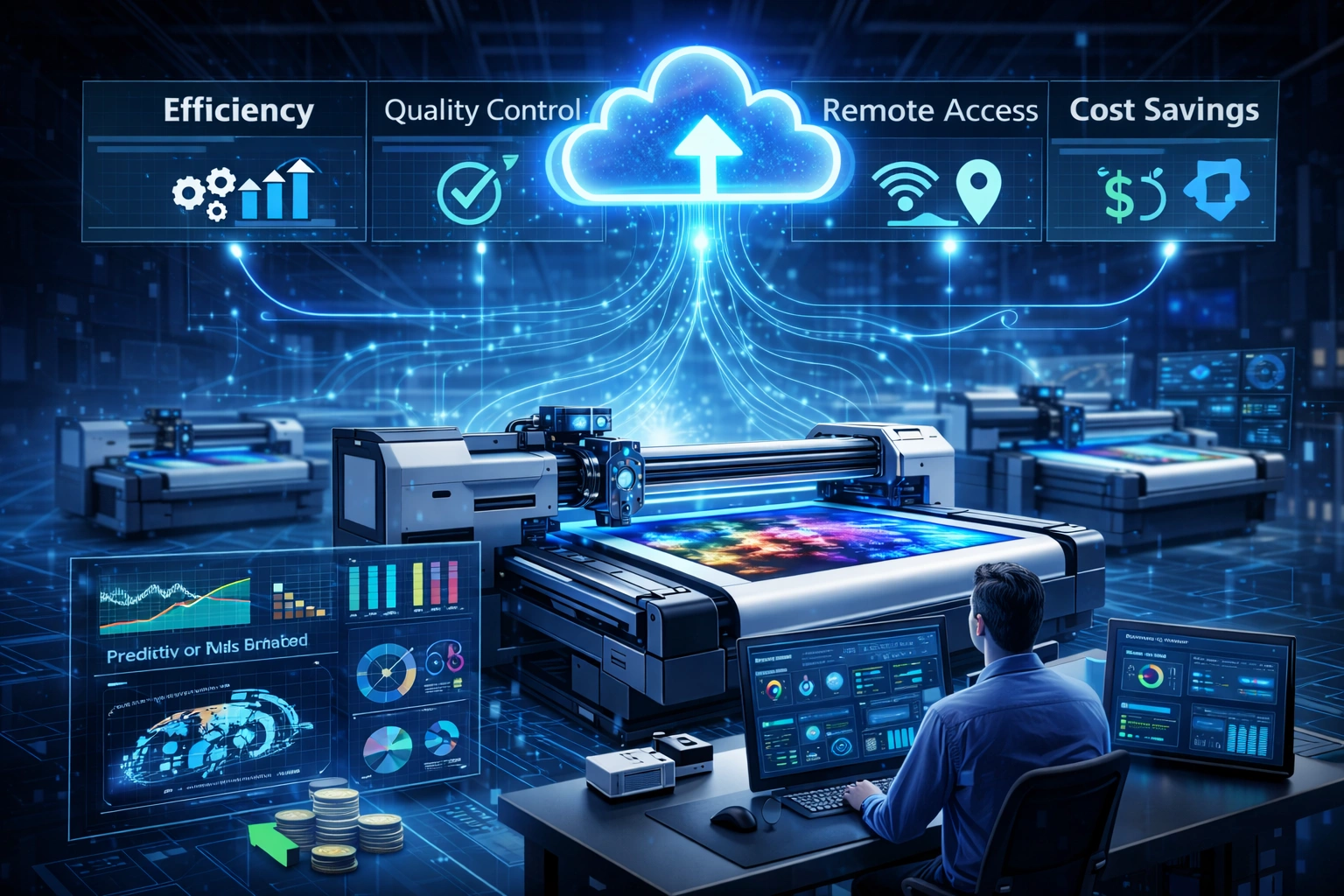
Integrating Visual Positioning UV printers with cloud monitoring systems represents a significant step toward smarter, more efficient, and more resilient print operations. This integration enhances visibility, improves quality control, reduces downtime, and empowers businesses with actionable insights.
As the printing industry continues to evolve, cloud-connected solutions will become essential rather than optional. Businesses that embrace this transformation early will be better positioned to meet customer demands, scale operations, and maintain a competitive edge in a rapidly changing market.
By investing in the right technology, training teams effectively, and leveraging data intelligently, print businesses can unlock the full potential of cloud-enabled Visual Positioning UV printing.
For those seeking to enhance their printing operations further, explore our high-quality Visual Positioning UV printers here.
Frequently Asked Questions
What makes Visual Positioning UV printers different from standard UV printers?
They use optical positioning systems to automatically detect substrate placement, ensuring high accuracy even on irregular surfaces.
How does cloud monitoring improve production efficiency?
It provides real-time visibility, predictive maintenance, and data-driven insights that reduce downtime and optimize workflows.
Is cloud integration suitable for small print businesses?
Yes, cloud platforms are scalable and can deliver significant efficiency gains even for small operations.
What type of data can be monitored through the cloud?
Data may include print speed, ink usage, maintenance status, error logs, job history, and quality metrics.
Are cloud-connected printers secure?
When implemented with proper security protocols, cloud-connected printers can be highly secure and reliable.