

 HOME
HOME PRODUCT CENTER
 ABOUT US
 DOWNLOAD CENTER
 SUPPORT CENTER
 SUBSCRIBE
 BLOG
BLOGArtificial Intelligence and Machine Vision in Printing
AI-Driven Precision
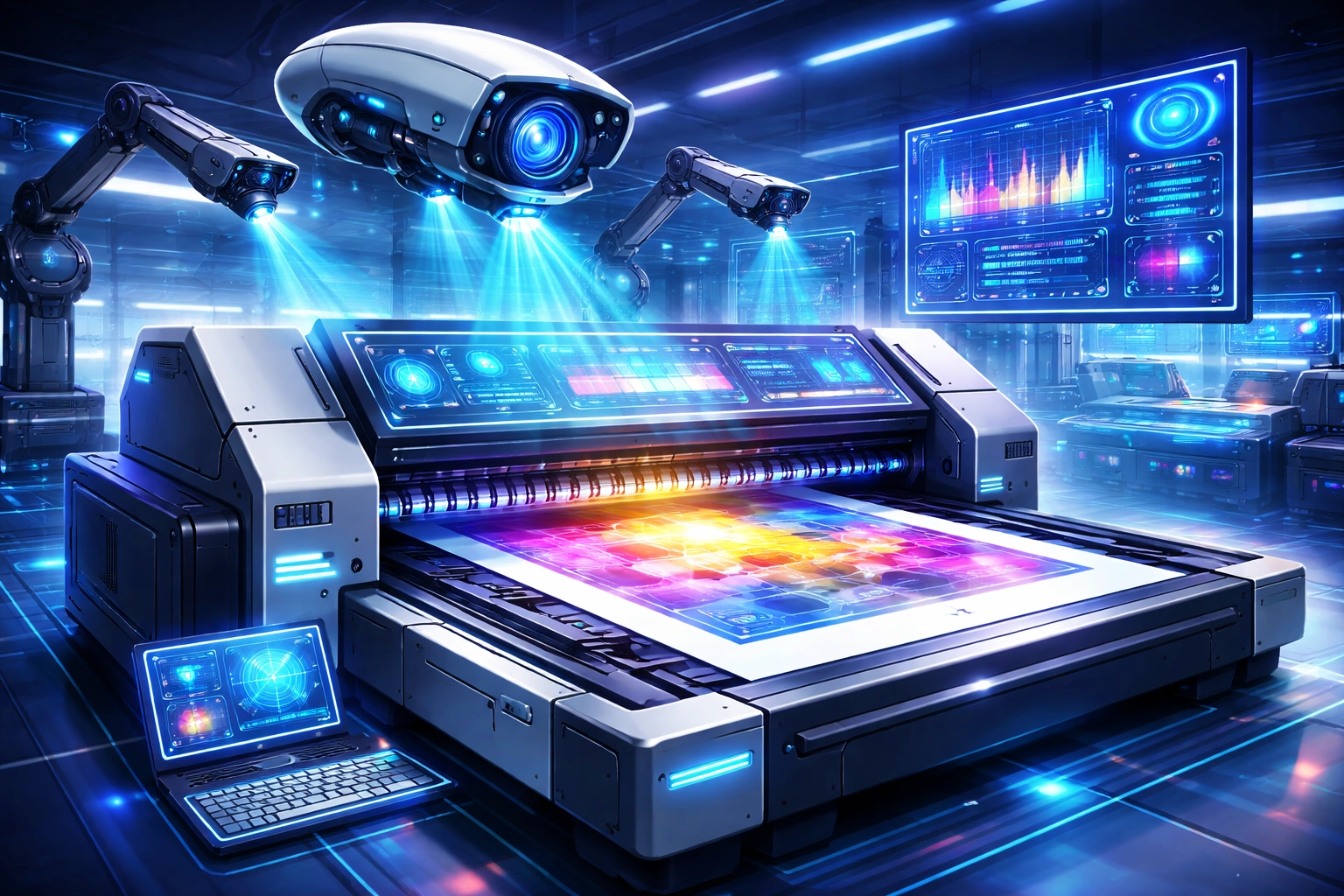
Artificial intelligence is redefining how visual printing systems operate. Machine vision algorithms can now process high-resolution images in milliseconds, enabling printers to detect even microscopic misalignments or defects.
AI allows visual printers to:
Recognize complex shapes and irregular surfaces
Print accurately on uneven or non-standard materials
Maintain consistency across long production runs
This level of precision was previously impossible with manual inspection.
Predictive Quality Control
One of the most impactful applications of AI in visual printing is predictive quality control. Instead of reacting to errors after they occur, AI systems can anticipate problems before they affect production.
By analyzing camera data and print behavior, these systems can:
Identify early signs of nozzle clogging
Detect substrate movement issues
Predict color shifts due to temperature changes
As a result, downtime is minimized and production reliability improves.
Sustainability and Eco-Friendly Printing Practices
Why Sustainability Matters in Printing
Environmental responsibility is no longer optional. As global awareness of climate change and waste increases, the printing industry faces growing pressure to adopt sustainable practices.
Traditional printing methods often involve:
High ink wastage
Excessive energy consumption
Non-recyclable materials
Chemical-heavy inks
Visual printing technology offers solutions that address many of these concerns.
Reduced Waste Through Visual Accuracy
One of the biggest advantages of visual printing is its ability to minimize waste. Real-time alignment and inspection reduce misprints, reprints, and rejected materials.
This leads to:
Lower material consumption
Reduced ink usage
Less energy spent on reprinting
Over time, these improvements significantly reduce the environmental footprint of printing operations.
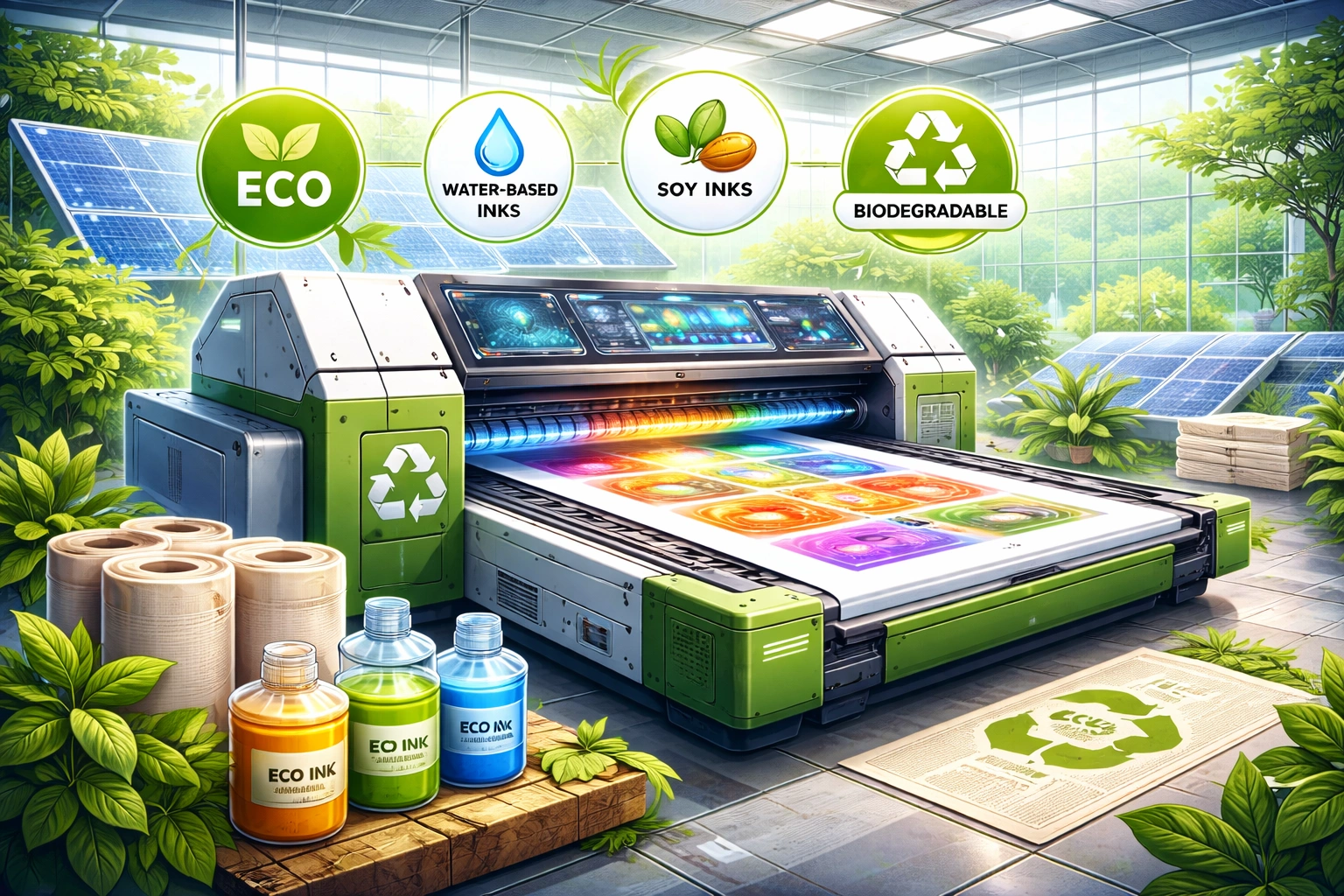
Eco-Friendly Inks and Materials
The future of visual printing will see wider adoption of:
Water-based inks
UV-curable eco-inks
Biodegradable substrates
Recyclable printing materials
These innovations help companies comply with environmental regulations while meeting consumer demand for sustainable products.
Will Sustainable Printing Become More Common?
Yes, sustainable printing is expected to become the industry standard rather than the exception. Governments, brands, and consumers are increasingly prioritizing environmentally responsible production methods.
Several factors will drive this shift:
Stricter environmental regulations
Rising energy costs
Consumer preference for eco-friendly products
Corporate sustainability commitments
Visual printing systems are uniquely positioned to support this transition due to their efficiency, precision, and compatibility with sustainable materials.
Cloud Connectivity and Remote Print Management
The Rise of Cloud-Connected Printers
Cloud technology is transforming how printing operations are managed. Modern visual printers can now connect to cloud platforms that allow remote monitoring, control, and analytics.
Cloud connectivity enables:
Real-time job tracking
Remote troubleshooting
Performance analytics
Centralized print management
This is particularly valuable for businesses operating multiple printers or production facilities.
Data-Driven Decision Making
With cloud integration, printers generate vast amounts of data related to performance, quality, and efficiency. Analyzing this data helps businesses:
Optimize workflows
Reduce downtime
Improve print quality
Forecast maintenance needs
In the future, data-driven printing decisions will become a key competitive advantage.
Personalization and On-Demand Production
The Demand for Customization
Consumers increasingly expect personalized products, from custom packaging to unique promotional items. Visual printing technology makes personalization scalable and cost-effective.
With visual alignment and intelligent workflows, printers can:
Print unique designs on every item
Handle variable data printing efficiently
Maintain quality across customized batches
This capability is fueling growth in industries such as e-commerce, gifting, and branding.
On-Demand Manufacturing
On-demand production eliminates the need for large inventories. Businesses can print products only when orders are received, reducing storage costs and waste.
Visual printing supports on-demand manufacturing by ensuring:
Fast setup times
Minimal material loss
Consistent quality across small runs
This model aligns perfectly with modern supply chain demands.
The Role of 3D Printing in the Future of Visual Printing
Expanding Beyond Flat Surfaces
3D printing introduces entirely new possibilities for visual printing technology. Instead of printing only on flat materials, businesses can now create complex three-dimensional objects with integrated designs.
This convergence allows for:
Customized product shapes
Functional prototypes
Decorative and industrial components
Visual printing systems enhance 3D printing by adding precise surface decoration and branding.
On-Demand and Localized Production
3D printing supports decentralized manufacturing, allowing products to be made closer to the end user. This reduces shipping costs, lead times, and environmental impact.
Combined with visual printing, 3D technology enables:
Rapid prototyping
Small-batch production
Personalized product design
As costs decrease, 3D printing will become a more common component of visual printing workflows.
Smart Materials and Advanced Substrates
Printing on New Material Types
The future of visual printing includes the ability to print on advanced and unconventional materials such as:
Flexible electronics
Smart packaging materials
Textured and curved surfaces
Mixed-material substrates
Machine vision systems allow printers to adapt instantly to these materials, maintaining accuracy and quality.
Interactive and Functional Prints
Visual printing will increasingly support functional applications, including:
Printed sensors
QR-enabled smart packaging
Conductive ink circuits
Interactive signage
These innovations blur the line between printing and technology, opening new markets and applications.
Workforce Evolution and Skill Requirements
Changing Roles in the Printing Industry
As automation and AI take over repetitive tasks, the role of human operators will shift toward:
System monitoring
Workflow optimization
Data analysis
Creative design
This evolution requires new skills but also creates opportunities for higher-value work.
Training and Adaptation
Companies investing in visual printing technology must also invest in workforce training. Understanding software, analytics, and machine vision will be essential for future print professionals.
Challenges Facing the Future of Visual Printing
Despite its advantages, visual printing technology faces several challenges:
High initial investment costs
Need for skilled operators
Integration with legacy systems
Cybersecurity concerns for cloud-connected printers
However, as technology matures and adoption increases, these challenges are expected to diminish.
Long-Term Industry Impact
The long-term impact of visual printing technology will extend beyond the printing industry itself. It will influence:
Manufacturing efficiency
Supply chain models
Product design processes
Sustainability standards
Industries that adopt these technologies early will gain a significant competitive edge.
Conclusion
The future of visual printing technology is defined by intelligence, sustainability, and adaptability. Automation, artificial intelligence, cloud connectivity, and 3D printing are not isolated trends but interconnected forces reshaping how products are designed, produced, and delivered.
Sustainable printing practices will become more common as environmental concerns grow, and visual printing systems will play a central role in reducing waste and energy consumption. Meanwhile, 3D printing will expand the creative and functional possibilities of visual printing, enabling complex designs and true on-demand manufacturing.
As these technologies continue to evolve, businesses that embrace visual printing innovation will be better positioned to meet changing market demands, reduce costs, and deliver high-quality, customized products in a rapidly shifting global landscape.
Explore our high-quality Visual Positioning UV printers here