

 HOME
HOME PRODUCT CENTER
 ABOUT US
 DOWNLOAD CENTER
 SUPPORT CENTER
 SUBSCRIBE
 BLOG
BLOGThe Role of Visual Sensors in Hybrid UV and DTF Printers
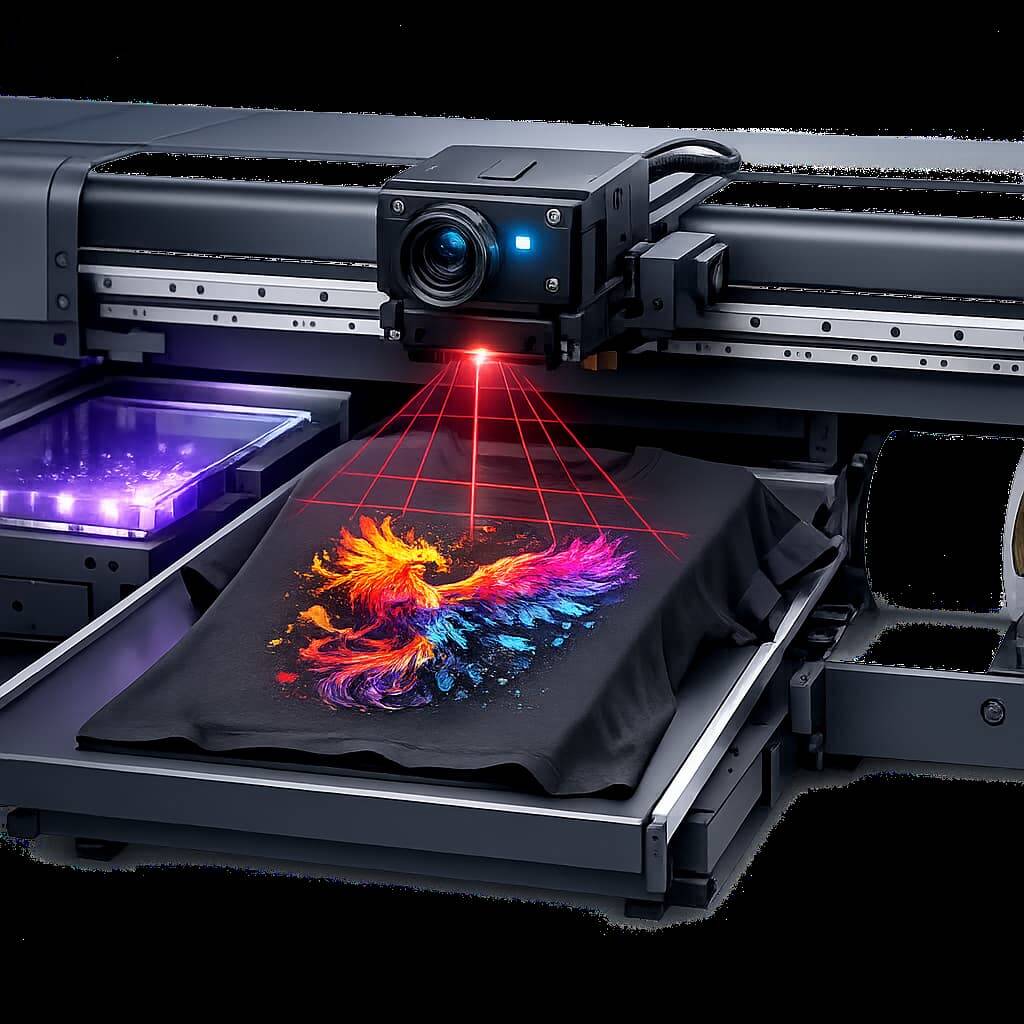
Printing technology is evolving rapidly, and today Hybrid UV and DTF printers have become a powerful solution in the printing industry. These printers are capable of delivering high-quality prints on a wide range of materials. However, their real strength is not only in the printing method but also in the visual sensor system integrated into them.
Visual sensors make these printers smart. They automatically check alignment, recognize materials, and monitor print quality in real time. In this article, you will understand how visual sensors play a crucial role in hybrid UV and DTF printers and how they elevate the entire printing process.
What Are Hybrid UV and DTF Printers?
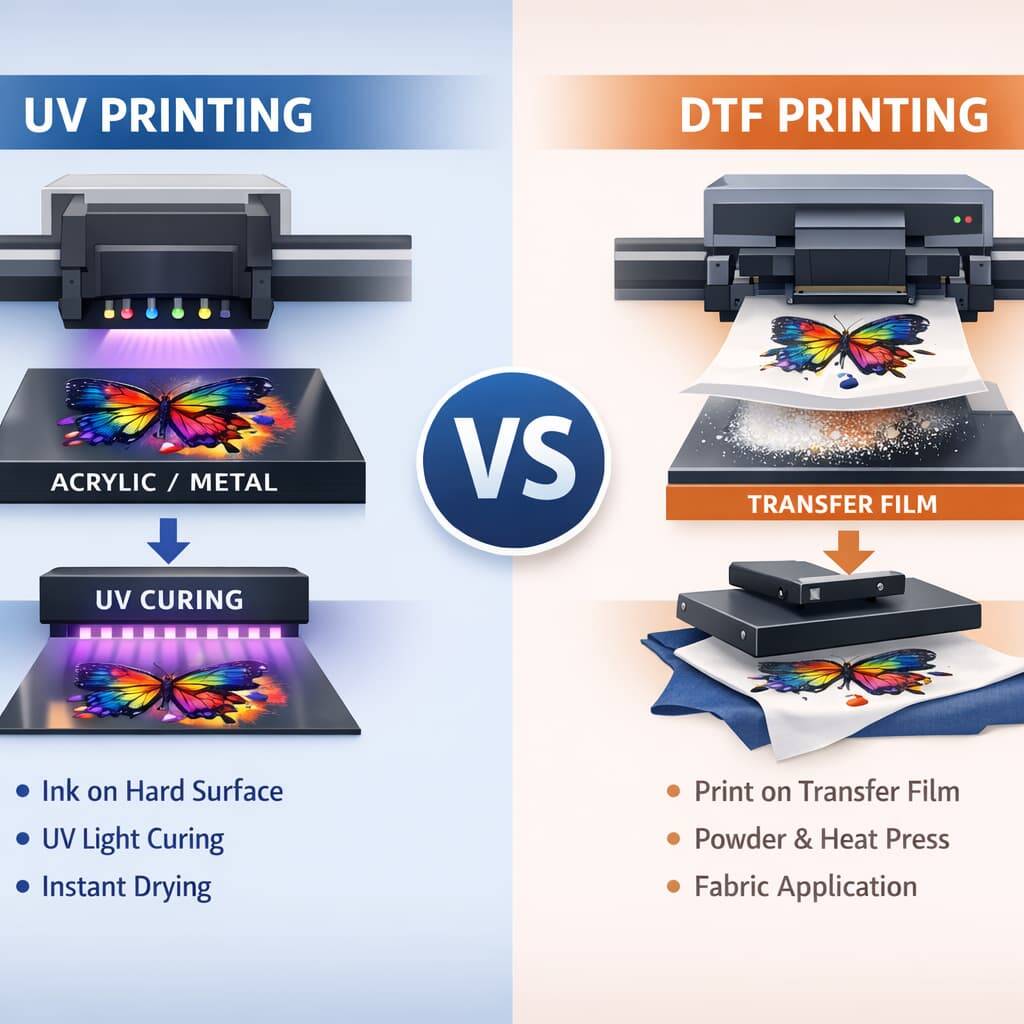
Hybrid printers combine the advantages of both UV and DTF technologies, allowing a single machine to print effectively on multiple surfaces.
UV Printing Technology
UV printing uses ultraviolet light to instantly cure (dry) the ink while printing. This results in:
Sharp details
Vibrant colors
The ability to print on hard surfaces like acrylic, glass, metal, plastic, and wood
DTF (Direct-to-Film) Printing Technology
In DTF printing, the design is first printed onto a film and then transferred onto fabric or textile materials. This offers:
Detailed textile printing
Long-lasting designs
Easy and durable fabric transfers
By combining these two technologies, a Hybrid UV + DTF printer becomes extremely versatile.
What Is a Visual Sensor in a Printer?
A visual sensor is a high-precision, camera-based system installed inside the printer. It scans the printing surface and provides real-time data to the printer to ensure perfect alignment and accuracy.
This system removes manual guesswork and enables intelligent automation.
Registration Accuracy: Perfect Alignment Every Time
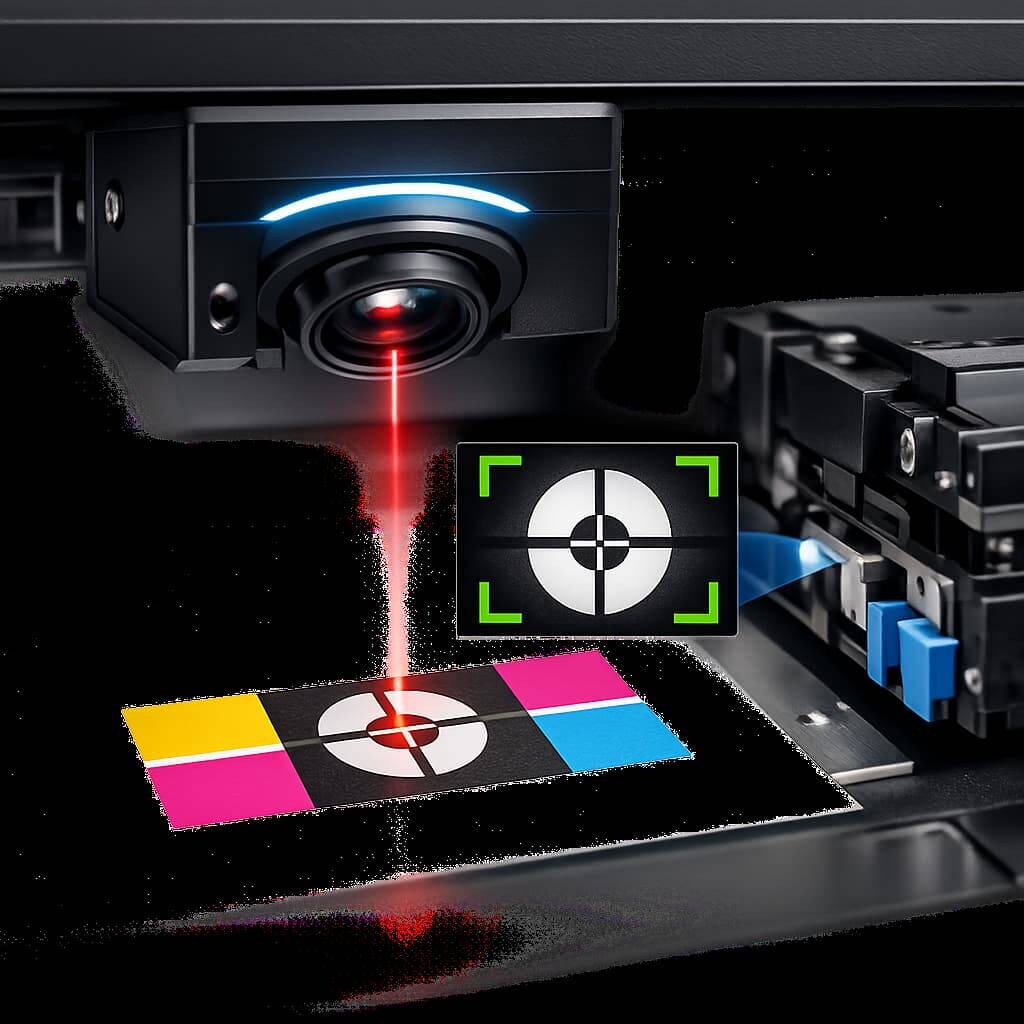
In multi-color or multi-layer printing, alignment is a common challenge. Even a slight shift can ruin the print.
Visual sensors:
Detect the exact position of the substrate
Automatically guide the printer for correct alignment
Ensure each layer overlaps perfectly
Result: zero misalignment and precise registration.
Real-Time Quality Control During Printing
Visual sensors do more than alignment — they continuously monitor print quality during the process.
They can detect:
Color variations
Ink streaks
Misprints
Print defects
If any issue is detected, the operator can immediately take action. This reduces waste and maintains consistent quality.
Material Recognition for Different Surfaces
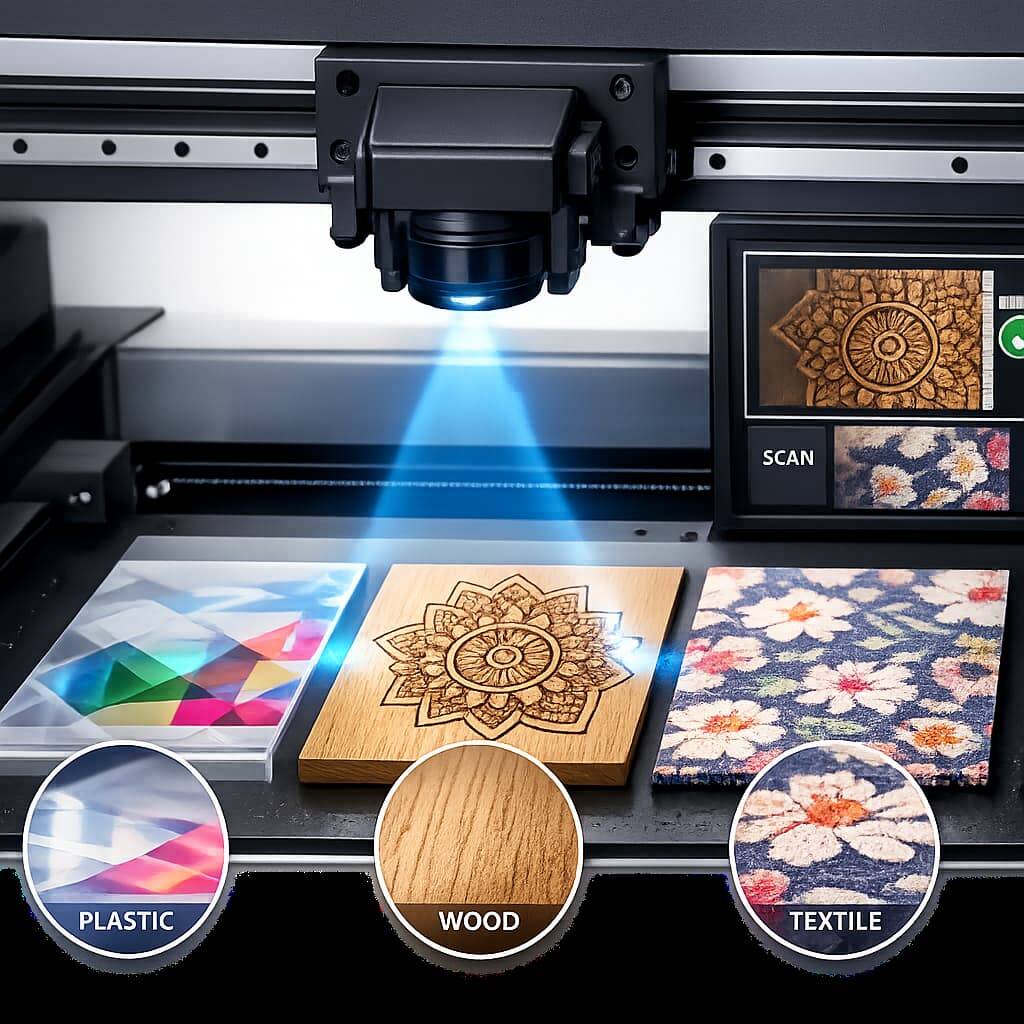
Hybrid printers work with various materials such as plastic, glass, wood, leather, textile, and more.
Visual sensors:
Identify surface texture
Detect material color and type
Automatically adjust printer settings
This improves ink adhesion and color accuracy for every material.
Key Benefits of Visual Sensors in Hybrid UV and DTF Printers
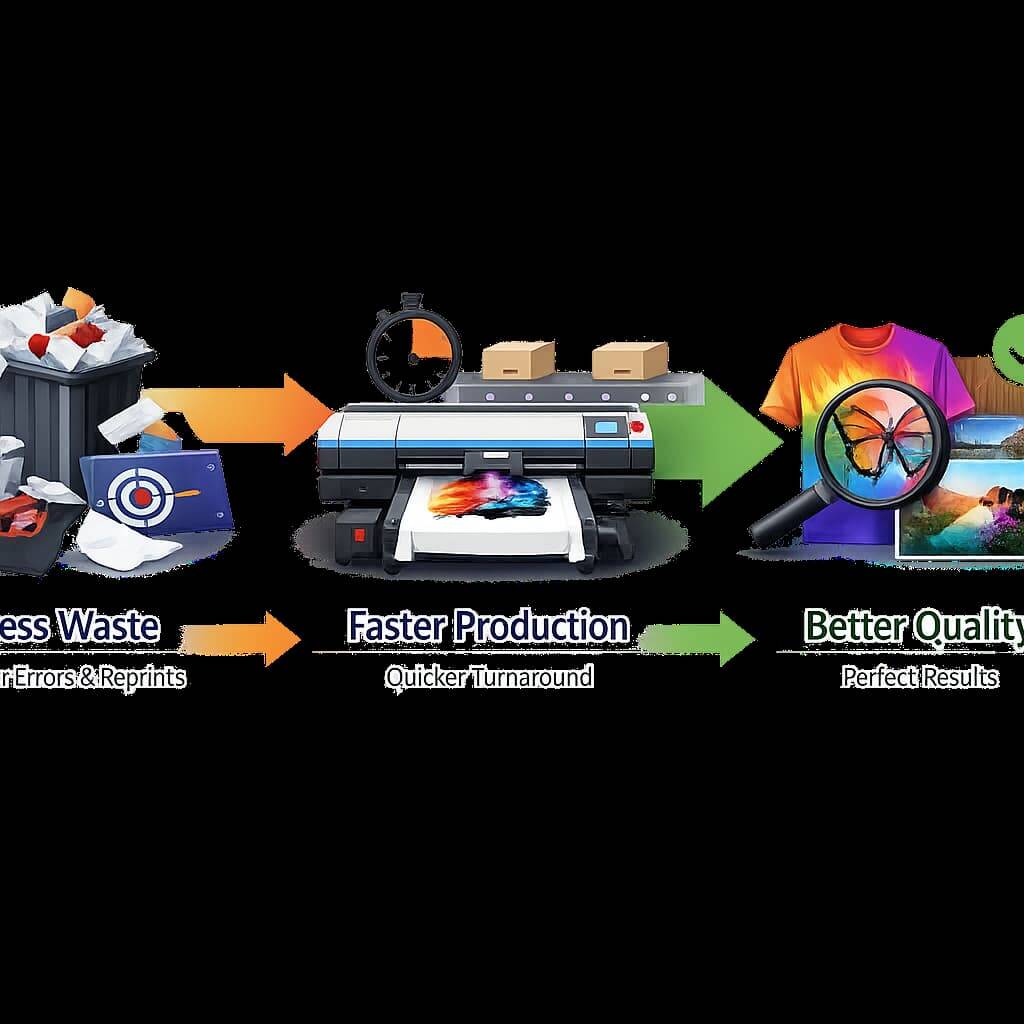
1. Faster Production Speed
Automatic adjustments reduce manual setup time.
2. Superior Print Quality
Perfect alignment and real-time monitoring produce flawless results.
3. Reduced Material Waste
Fewer errors mean fewer reprints and less wasted material.
4. Cost-Effective Printing
Less downtime, fewer mistakes, and higher productivity.
5. Easy Operation for Users
Operators do not need to manage complex settings manually.
Advanced Features of Visual Sensor Systems
High-Resolution Detection
Captures even the smallest details for precise printing.
Real-Time Feedback System
Allows corrections during the printing process.
Adaptive Learning Capability
Learns from previous jobs to improve future performance.
Multi-Mode Sensing
Can detect color, texture, and position within a single system.
Why Visual Sensors Are Essential in Modern Hybrid Printers
In today’s competitive printing market, having a good printer is not enough. You need a smart printer. Visual sensors make hybrid printers intelligent by enabling them to detect, adjust, and optimize automatically.
This technology is what truly differentiates hybrid UV and DTF printers from traditional machines.
Conclusion
Visual sensors have become the backbone of hybrid UV and DTF printers. They improve alignment, ensure quality control, and allow the printer to adapt to different materials. This results in faster, more accurate, and more cost-effective printing.explore our high-quality Visual Positioning UV printers here.
If you are looking for high-precision printing performance, investing in a hybrid UV and DTF printer equipped with visual sensors is a smart choice.
FAQs
Q1. What is the biggest advantage of a hybrid UV and DTF printer?
Versatility — it can print high-quality designs on multiple materials.
Q2. How do visual sensors improve the printing process?
They enhance alignment, quality monitoring, and material detection.
Q3. Do visual sensors work on all types of materials?
Yes, they recognize different surfaces and adjust settings accordingly.
Q4. Can visual sensors be added to older printers?
It is possible but may require significant modifications.
Q5. What should you check in a visual sensor when buying a printer?
Resolution, real-time feedback, adaptive learning, and material compatibility.