

 HOME
HOME PRODUCT CENTER
 ABOUT US
 DOWNLOAD CENTER
 SUPPORT CENTER
 SUBSCRIBE
 BLOG
BLOGDepth Mapping in Visual UV Printing
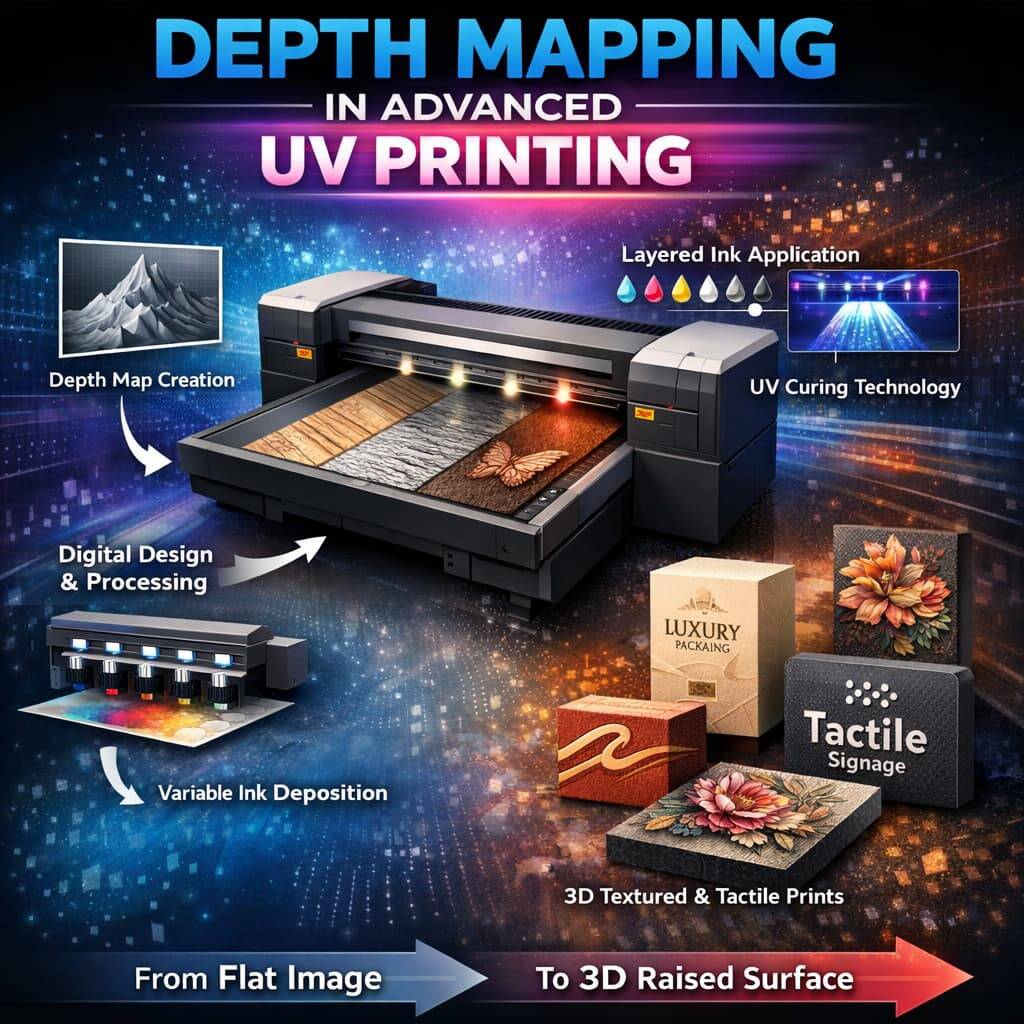
The UV printing industry is evolving rapidly, driven by growing demand for premium finishes, customization, and high-impact visual effects. Businesses today no longer want flat, one-dimensional prints—they want texture, dimension, and realism that elevate products and experiences. This is where depth mapping in advanced visual UV systems plays a transformative role.
Depth mapping allows UV printers to create layered, tactile surfaces that simulate real-world textures, contours, and dimensional effects on flat materials. From embossed packaging and raised signage to decorative panels and fine art reproductions, this technology bridges the gap between traditional printing and three-dimensional design. As industries compete for attention in crowded markets, depth mapping has emerged as a powerful differentiator, enabling brands to deliver richer visual storytelling and stronger emotional impact.
In this comprehensive guide, we will explore what depth mapping is, how it works in UV printing systems, its technical foundations, practical benefits, industry applications, implementation strategies, challenges, and future trends. Whether you are a print service provider, manufacturer, designer, or business owner considering an upgrade, this article will help you understand how depth mapping can unlock new creative and commercial opportunities in modern UV printing.
What Is Depth Mapping in Visual UV Systems?
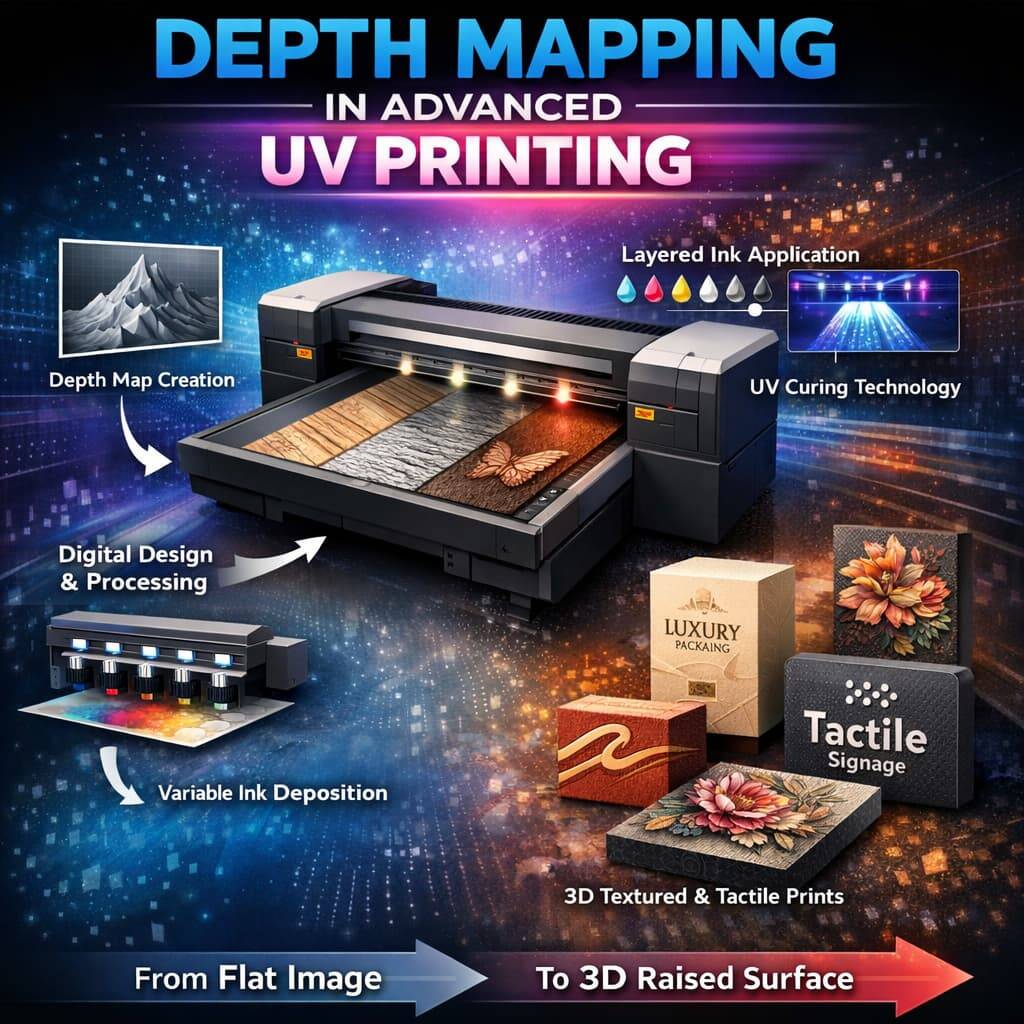
Depth mapping is a digital imaging technique that assigns depth values to different areas of an image, allowing software and hardware systems to understand how “high” or “low” each pixel or region should appear. Instead of treating an image as a flat, uniform surface, depth mapping introduces a third dimension—thickness or elevation—so that printing systems can vary ink volume or layering to simulate relief, texture, and form.
In advanced visual UV printing systems, depth mapping is used to control how UV-curable ink is deposited on a substrate. Areas intended to appear raised receive more ink layers, while recessed regions receive fewer. Once cured under ultraviolet light, the ink hardens instantly, preserving these variations in height. The result is a printed surface that feels and looks three-dimensional, even though it remains structurally flat.
This approach differs significantly from conventional UV printing, which focuses primarily on color accuracy and surface coverage. With depth mapping, printers gain the ability to reproduce effects such as embossing, engraving, brush strokes, leather grain, wood texture, Braille dots, and tactile logos—all without mechanical tooling or post-processing steps.
At its core, depth mapping turns UV printers into hybrid devices that blend digital imaging, precision engineering, and material science, opening the door to new levels of realism and customization in printed products.
Why Depth Mapping Matters in Modern UV Printing
As consumer expectations rise and product differentiation becomes more difficult, surface quality and tactile appeal have become critical factors in purchasing decisions. Flat graphics are no longer enough in markets such as luxury packaging, retail signage, décor, and promotional branding. Buyers increasingly seek experiences that engage multiple senses, including touch.
Depth mapping matters because it allows print providers to:
Enhance visual impact through light interaction with raised surfaces and shadows.
Add tactile value that improves user engagement and perceived quality.
Reduce reliance on traditional finishing techniques such as embossing, debossing, screen printing, or die cutting.
Enable short-run customization with variable data and textures, which is difficult or expensive using analog methods.
Moreover, depth mapping aligns with broader trends in digital manufacturing, including mass personalization, rapid prototyping, and on-demand production. It allows businesses to produce complex surface effects without tooling, molds, or setup-intensive processes, making it ideal for fast turnaround times and small batch production.
In essence, depth mapping transforms UV printing from a purely visual medium into a multisensory experience—one that blends design, texture, and dimensionality into a single digital workflow.
How Depth Mapping Works in Advanced Visual UV Systems
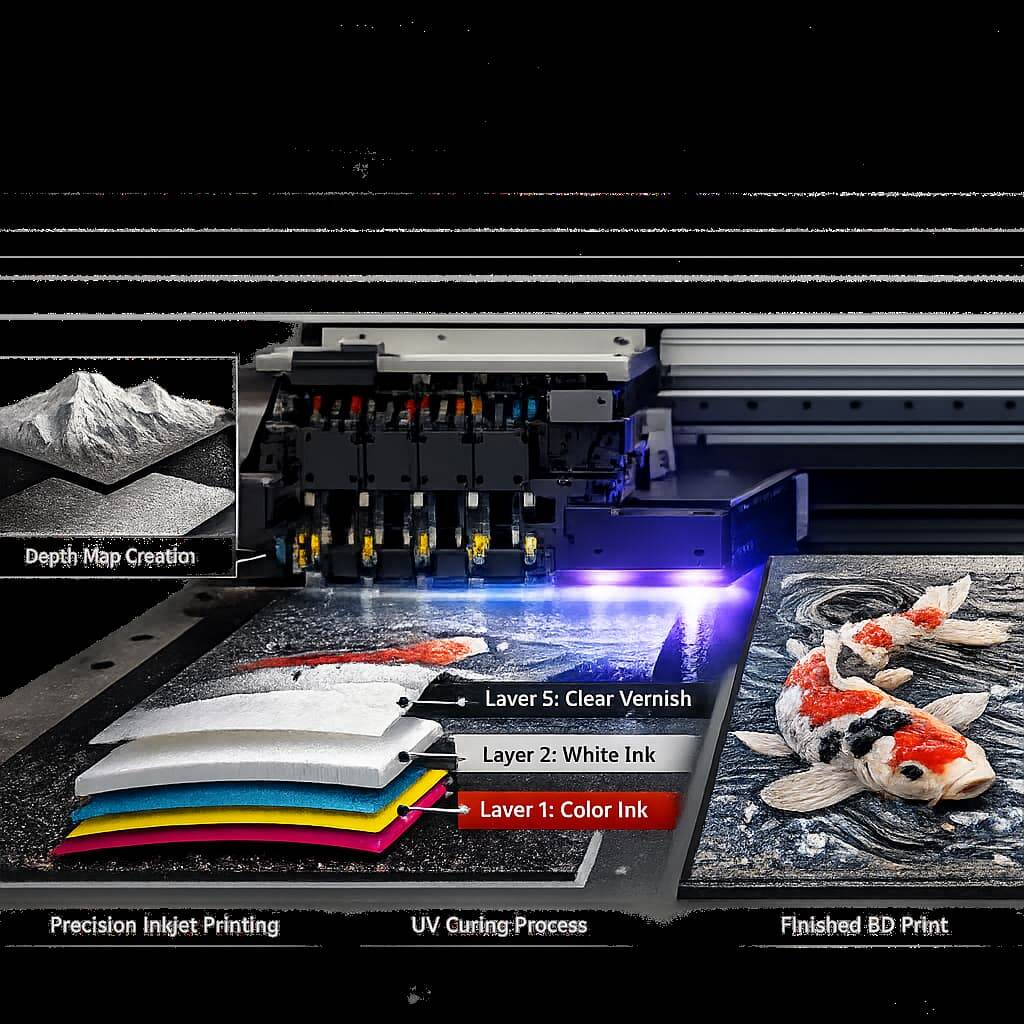
Depth mapping in UV printing relies on a combination of imaging technologies, software algorithms, and precision inkjet hardware. Each component plays a critical role in translating digital depth data into physical surface relief.
1. Depth Data Acquisition
Depth information can be created or obtained in several ways:
3D Scanning: Objects are scanned using structured light, laser, or photogrammetry systems to capture real-world surface contours. The resulting point cloud or mesh data is converted into a grayscale depth map.
Design Software: Designers can manually create depth maps in graphic or CAD software using grayscale layers, displacement maps, or 3D modeling tools.
Photographic Techniques: Advanced image processing can infer depth from lighting and shading in high-resolution photos.
In all cases, depth data is typically represented as a grayscale image, where darker values correspond to lower regions and lighter values represent higher elevations.
2. Depth Map Processing and Optimization
Once depth data is generated, it must be processed for printing. This step includes:
Normalization: Adjusting depth values to match the printer’s maximum ink thickness and curing capabilities.
Smoothing and Filtering: Removing noise or unwanted artifacts to ensure smooth surface transitions.
Layer Mapping: Translating depth values into discrete or continuous ink layers that the printer can reproduce accurately.
Advanced raster image processors (RIPs) and print workflow software handle this conversion, combining color data (CMYK, white, varnish, etc.) with depth layers into a single print job.
3. Variable Ink Deposition
Depth mapping becomes physical through variable ink deposition. Instead of applying a uniform ink layer across the entire surface, the printer adjusts droplet size, frequency, and layering based on the depth map.
Areas requiring more height receive multiple passes of UV-curable ink, while shallow areas receive fewer. Some systems also use clear or textured varnish layers to build relief without affecting color fidelity.
4. UV Curing and Surface Stabilization
UV curing is essential to depth mapping. As ink is deposited, ultraviolet lamps instantly cure each layer, preventing ink spread and preserving sharp edges between raised and recessed regions. This instant curing enables precise stacking of layers without collapse or deformation.
The final result is a durable, hardened surface with consistent dimensional accuracy, suitable for both functional and decorative applications.
Key Technologies Enabling Depth Mapping in UV Printing
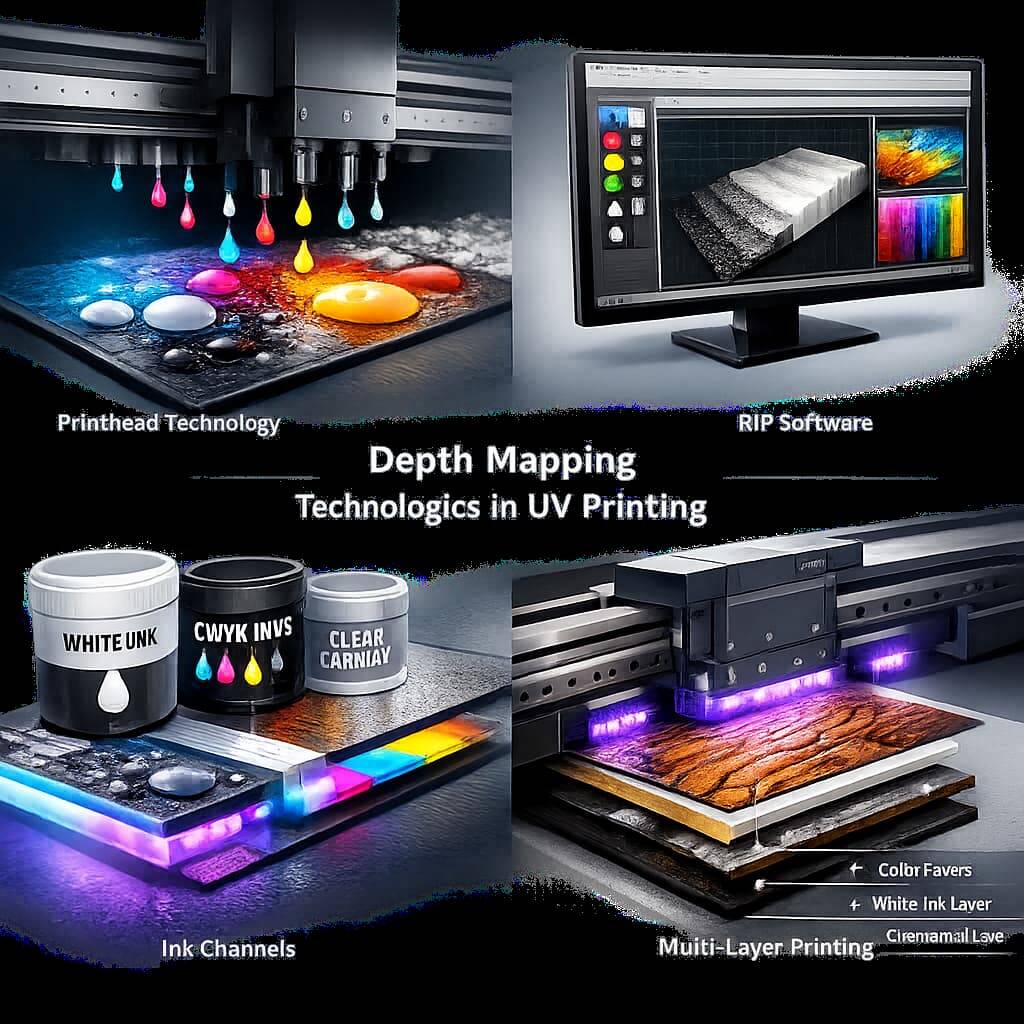
Depth mapping is made possible by several advanced technologies working together. Understanding these components helps businesses evaluate equipment capabilities and performance.
Variable Dot and Grayscale Printing
Modern UV inkjet printheads support variable droplet sizes, often referred to as grayscale printing. Instead of firing a single fixed-size droplet, printheads can dispense multiple droplet volumes, enabling smoother gradients and more accurate control over ink thickness.
This precision is critical for depth mapping, as it allows printers to build subtle surface transitions rather than abrupt steps between layers.
Multi-Layer Printing Architecture
Depth mapping requires printers to deposit multiple layers of ink in perfect registration. Advanced UV systems are designed with high-precision motion control, stable gantries, and sophisticated alignment algorithms that ensure each layer stacks correctly on the previous one.
Some systems support over ten or even twenty layers in a single print job, enabling dramatic relief effects while maintaining surface smoothness and detail fidelity.
White Ink and Clear Varnish Channels
White ink plays a crucial role in depth mapping by acting as a structural layer beneath color. Clear varnish channels further expand creative possibilities by adding gloss, matte, or textured finishes without altering color appearance.
By combining white ink layers with color and varnish layers, printers can achieve both visual depth and tactile contrast within the same print.
Advanced RIP Software and Workflow Engines
Depth mapping would not be possible without intelligent software. Modern RIPs support multi-layer file formats, grayscale depth channels, and complex print recipes that define how each pixel translates into ink volume and curing sequences.
These software systems also manage color profiling, substrate compensation, and print optimization, ensuring that dimensional effects remain consistent across different materials and production runs.
Benefits of Depth Mapping in Visual UV Printing
Depth mapping delivers value across creative, technical, and commercial dimensions. Below are the most important advantages.
1. Enhanced Realism and Visual Impact
Raised textures interact with light in ways flat prints cannot. Highlights, shadows, and surface variations create a sense of depth and authenticity that mimics real materials such as leather, stone, wood, metal engraving, or brush-painted canvases. This realism significantly improves visual engagement and perceived quality.
2. Tactile Experience and Sensory Branding
Touch is a powerful sense in branding and product design. Depth mapping enables tactile surfaces that invite interaction—whether it’s embossed logos, raised typography, or textured backgrounds. This multisensory appeal strengthens brand recall and emotional connection with products.
3. Greater Creative Freedom
Designers are no longer constrained to flat surfaces. With depth mapping, they can experiment with relief patterns, sculptural typography, layered imagery, and hybrid finishes that combine gloss, matte, and texture in a single pass. This opens new design languages and storytelling possibilities.
4. Reduced Need for Post-Processing
Traditional methods such as embossing, debossing, foil stamping, and screen printing often require additional tooling, dies, or secondary operations. Depth mapping eliminates many of these steps by producing dimensional effects directly during the printing process, saving time and reducing complexity.
5. Cost Efficiency for Short Runs and Customization
While conventional embossing and finishing become expensive at low volumes, depth mapping is digitally driven and does not require setup-intensive tooling. This makes it ideal for prototypes, limited editions, seasonal campaigns, and personalized products.
6. Durability and Environmental Resistance
UV-cured inks are highly resistant to abrasion, chemicals, moisture, and UV exposure. Raised textures produced through depth mapping maintain their integrity over time, making them suitable for indoor and outdoor applications alike.
7. Expanded Market Opportunities
By offering textured and dimensional prints, businesses can enter new markets such as premium packaging, architectural décor, tactile signage, accessibility products, and specialty promotional items—expanding both revenue streams and competitive positioning.
Applications of Depth Mapping Across Industries
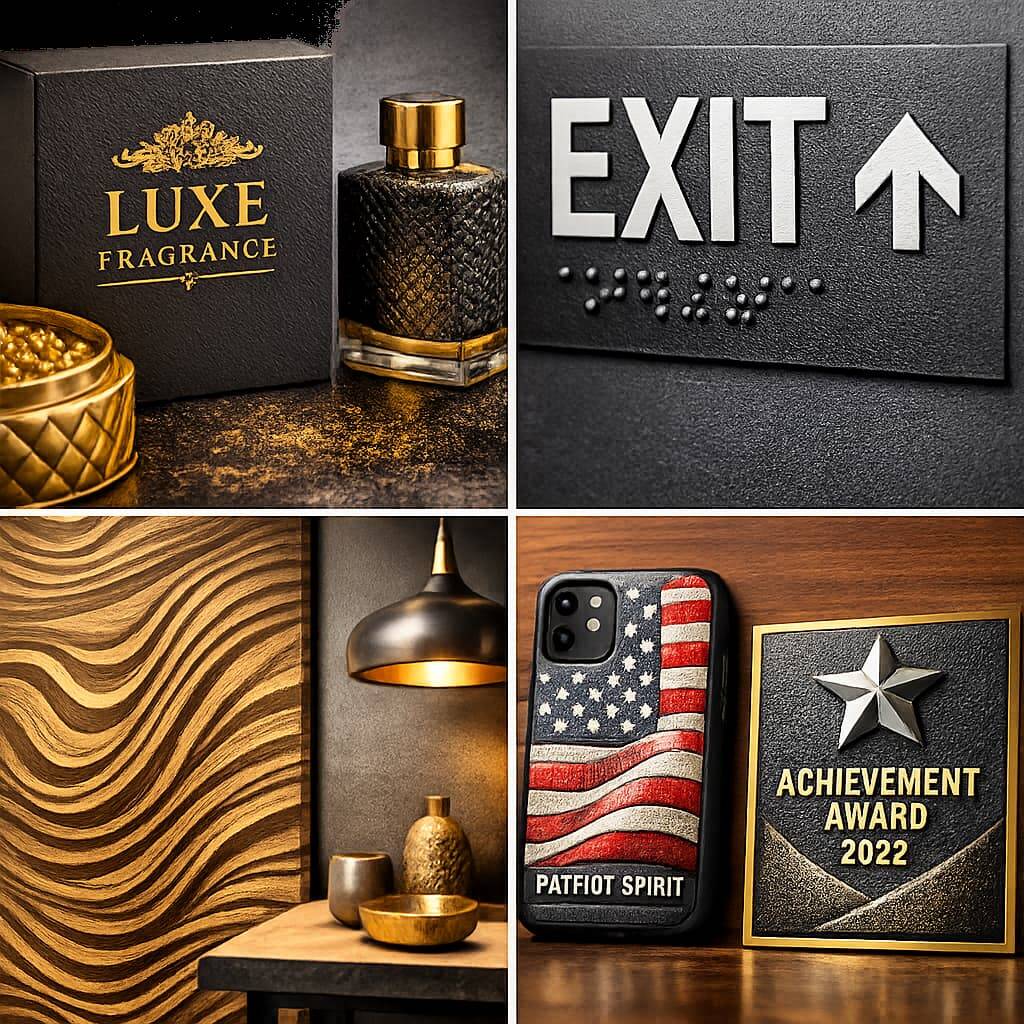
Depth mapping has broad applicability across diverse sectors. Below are some of the most impactful use cases.
1. Signage and Wayfinding
In signage, depth mapping creates bold, attention-grabbing visuals that stand out in busy environments such as retail stores, airports, malls, and exhibitions. Raised lettering improves readability from a distance, while tactile surfaces enhance brand presence.
Depth mapping is also valuable for accessibility signage, including Braille and tactile graphics, enabling compliance with standards while maintaining design aesthetics.
2. Packaging and Labeling
Packaging is one of the most prominent beneficiaries of depth mapping. Raised logos, textured backgrounds, and layered finishes elevate product appearance and perceived value. Luxury goods, cosmetics, beverages, and specialty foods often rely on tactile cues to convey quality and exclusivity.
Depth mapping allows brands to simulate embossing and varnish effects digitally, making premium packaging more accessible even for short runs and seasonal campaigns.
3. Interior Décor and Architectural Surfaces
From wall panels and murals to furniture finishes and decorative tiles, depth mapping enables designers to create immersive interior environments. Textured surfaces add warmth, sophistication, and dimensionality to spaces, transforming flat panels into architectural features.
UV printers with depth mapping can print directly onto materials such as glass, wood, acrylic, metal, ceramic tiles, and composite boards, making them ideal for custom décor projects.
4. Fine Art and Photography Reproduction
Artists and photographers increasingly use depth mapping to enhance reproductions with brushstroke textures, canvas grain, or sculptural relief. This technique bridges the gap between digital reproduction and traditional art, allowing collectors to experience prints that feel handcrafted and dimensional.
Depth mapping is also used in mixed-media artworks, where printed textures are combined with physical materials for layered artistic expression.
5. Promotional Products and Branding Merchandise
Custom promotional items such as phone cases, awards, trophies, signage plaques, nameplates, and branded gifts benefit from tactile finishes that increase perceived quality. Depth mapping enables raised logos, textured patterns, and layered graphics that make branded products more memorable.
6. Industrial Marking and Functional Surfaces
In industrial applications, depth mapping is used for functional markings, including control panels, overlays, safety signage, and equipment labels. Raised text and symbols improve visibility, usability, and durability in harsh environments.
7. Accessibility and Inclusive Design
Depth mapping supports inclusive design by enabling tactile graphics, Braille signage, and raised wayfinding elements that assist visually impaired users. This application extends beyond compliance into thoughtful design that improves user experience for diverse audiences.
Integrating Depth Mapping into Your UV Printing Workflow
Adopting depth mapping involves more than just purchasing new equipment. It requires strategic planning, training, and workflow adaptation. Below is a practical roadmap for successful implementation.
1. Evaluate Your Business Goals and Market Opportunities
Before investing, assess how depth mapping aligns with your business objectives. Are you targeting premium packaging, décor, signage, or personalization markets? Understanding demand will help determine the appropriate printer specifications, ink channels, and software features.
Conduct market research, analyze competitor offerings, and engage with existing clients to identify opportunities where textured and dimensional printing can deliver added value.
2. Assess Equipment Capabilities and Compatibility
Not all UV printers support true depth mapping. Key features to look for include:
Multi-layer printing support
White ink and clear varnish channels
Variable droplet technology
High-precision registration and motion control
Advanced RIP software compatibility
If you already own UV printing equipment, consult the manufacturer or distributor to determine whether firmware upgrades, printhead replacements, or software enhancements can enable depth mapping.
3. Invest in Software and Workflow Tools
Depth mapping requires software that can handle grayscale depth channels, multi-layer files, and complex print recipes. Ensure your RIP and design tools support:
Multi-channel image processing
White and varnish layer management
Depth normalization and preview simulation
Accurate color management across layered surfaces
Training designers and operators on these tools is essential to achieving consistent results and maximizing creative potential.
4. Train Operators and Designers
Depth mapping introduces new variables into the printing process, including layer height, curing intensity, substrate interaction, and surface finish control. Operators must understand how to calibrate machines, manage ink stacking, and troubleshoot surface defects.
Designers must learn how to create effective depth maps, balance visual and tactile elements, and optimize artwork for multi-layer output. Investing in training accelerates adoption and reduces costly trial-and-error cycles.
5. Test Materials and Develop Profiles
Different substrates respond differently to layered UV ink. Factors such as surface energy, porosity, rigidity, and thermal stability affect adhesion, texture sharpness, and curing performance.
Developing material profiles for commonly used substrates ensures predictable outcomes. Conduct test prints to optimize:
Ink layer thickness limits
Curing intensity and lamp settings
Surface smoothness and edge definition
Long-term durability and wear resistance
6. Build Sample Libraries and Demonstration Kits
One of the most effective ways to sell depth mapping is through physical samples. Create sample books or kits showcasing various textures, finishes, and applications across different materials.
These samples help clients visualize possibilities, understand tactile effects, and make informed purchasing decisions. They also serve as internal references for quality control and process standardization.
Best Practices for High-Quality Depth Mapping Results
To achieve professional-grade results with depth mapping, consider the following best practices:
Optimize Depth Levels for Substrate and Application
Excessive ink layering can lead to cracking, delamination, or surface distortion, especially on flexible materials. Balance depth height with substrate characteristics and intended use. For high-touch or functional surfaces, prioritize durability and comfort alongside visual impact.
Maintain Precise Registration and Calibration
Multi-layer printing requires accurate alignment between layers. Regularly calibrate printheads, motion systems, and registration sensors to ensure consistent stacking and sharp edge definition.
Use High-Quality Source Files
Depth mapping quality is only as good as the input data. Use high-resolution grayscale maps, smooth gradients, and well-defined transitions. Avoid noisy or low-contrast depth images that can result in uneven surfaces or banding.
Combine Depth with Color and Finish Strategically
Not every design element needs relief. Use depth selectively to highlight logos, typography, patterns, or focal points while keeping background areas flatter for contrast. Combine matte and gloss varnish layers with raised surfaces to enhance visual richness.
Perform Durability and Wear Testing
For applications such as packaging, signage, and industrial labels, conduct abrasion, chemical, UV exposure, and environmental testing to ensure long-term performance. Adjust ink formulations, curing settings, or surface coatings as needed.
Challenges and Limitations of Depth Mapping
While depth mapping offers substantial benefits, it also introduces certain challenges that businesses must address.
Increased File Complexity and Processing Time
Multi-layer files with depth channels require more processing power and longer RIP times. Efficient workflow management, high-performance workstations, and optimized RIP settings are essential for maintaining productivity.
Higher Ink Consumption
Building raised surfaces requires additional ink layers, particularly white and clear varnish. This increases consumable costs and may affect pricing strategies. Businesses must balance aesthetic benefits with material economics.
Learning Curve and Training Requirements
Depth mapping introduces new technical concepts and production variables. Without proper training, operators may struggle with calibration, file preparation, and defect resolution. Structured onboarding and ongoing education are critical.
Substrate Compatibility Constraints
Not all materials can support heavy ink layering. Flexible substrates may warp or crack, while low-energy plastics may require special surface treatments for adhesion. Material testing and profiling mitigate these risks.
Production Speed Considerations
Multi-layer printing can reduce throughput compared to flat single-pass printing. However, the elimination of secondary finishing steps often offsets this impact. Strategic job scheduling and automation can further optimize efficiency.
Depth Mapping vs. Traditional Embossing and Finishing
Understanding how depth mapping compares with conventional finishing methods helps businesses make informed investment decisions.
Tooling and Setup
Traditional embossing and debossing require custom dies and setup, which are costly and time-consuming—especially for short runs. Depth mapping is entirely digital, eliminating tooling costs and enabling rapid iteration.
Customization and Variable Data
Depth mapping excels in variable data applications, allowing each print to have unique textures or raised elements. Traditional embossing is limited to fixed patterns and designs.
Turnaround Time
Digital depth mapping supports faster turnaround times by consolidating printing and finishing into a single process. Traditional methods often require multiple production stages and external vendors.
Material Versatility
UV depth mapping can be applied to a wide range of rigid and flexible substrates, including plastics, glass, wood, metal, acrylic, and composites. Traditional embossing is primarily suited to paper and certain foils.
Cost Structure
While depth mapping may involve higher ink consumption and equipment investment, it reduces labor, tooling, and setup costs—particularly for short runs and custom projects. Over time, this can deliver strong return on investment.
Future Trends in Depth Mapping and UV Printing
Depth mapping continues to evolve alongside advancements in digital manufacturing, materials science, and imaging technologies. Several trends are shaping its future trajectory.
AI-Driven Depth Generation
Artificial intelligence and machine learning are increasingly used to generate depth maps automatically from 2D images, photographs, or design files. These tools reduce manual labor and enable designers to experiment rapidly with dimensional effects.
Higher-Resolution and Micro-Texture Printing
Next-generation printheads and ink formulations are enabling finer droplet sizes and thinner layers, allowing for micro-textures and subtle surface effects previously impossible with digital printing. This expands depth mapping into areas such as security printing, luxury packaging, and fine art reproduction.
Expanded Material Compatibility
Ongoing innovations in UV-curable inks, primers, and surface treatments are improving adhesion and flexibility across challenging substrates, including soft-touch films, elastomers, and curved surfaces. This broadens the application scope of depth mapping beyond flat rigid media.
Integration with 3D Printing and Additive Manufacturing
Hybrid workflows that combine UV printing with 3D printing are emerging, allowing designers to integrate surface textures and color directly onto three-dimensional objects. Depth mapping plays a key role in aligning surface relief with underlying 3D geometry.
Sustainable and Low-Energy Solutions
Environmental sustainability is becoming a central focus in printing technology. Advances in low-energy UV curing, eco-friendly ink formulations, and waste reduction strategies are making depth mapping more sustainable and cost-effective.
Measuring Return on Investment (ROI) for Depth Mapping
Investing in depth mapping technology requires a clear understanding of its financial impact. Key factors influencing ROI include:
Increased average order value through premium finishes and higher-margin products
Expanded market reach into packaging, décor, and specialty applications
Reduced outsourcing costs by bringing finishing processes in-house
Faster turnaround times, leading to improved customer satisfaction and retention
Lower setup and tooling expenses compared to traditional embossing
To maximize ROI, businesses should develop targeted product offerings, educate customers on the benefits of tactile and dimensional printing, and integrate depth mapping into their core value proposition rather than treating it as a niche add-on.
Frequently Asked Questions (FAQ)
What materials are suitable for depth mapping in UV printing?
Depth mapping works well on a wide range of materials, including acrylic, PVC, wood, glass, metal, ceramics, composite boards, coated papers, and certain flexible films. Material testing is recommended to optimize adhesion and surface quality.
Is depth mapping expensive to implement?
Initial investment in compatible UV printers, software, and training can be significant. However, long-term benefits such as reduced finishing costs, higher margins, and expanded market opportunities often outweigh upfront expenses.
Can depth mapping be used for small production runs?
Yes. Depth mapping is ideally suited for short runs, prototypes, seasonal campaigns, and personalized products because it does not require tooling or setup-intensive processes.
How durable are raised UV surfaces?
UV-cured inks offer excellent resistance to abrasion, chemicals, moisture, and UV exposure. When properly cured and applied to suitable substrates, raised surfaces remain stable and durable in both indoor and outdoor environments.
Does depth mapping slow down production?
Multi-layer printing can increase print time per job, but this is often offset by eliminating secondary finishing steps such as embossing or varnishing. Overall production efficiency frequently improves when workflows are optimized.
Can depth mapping be combined with color management and branding standards?
Yes. Advanced RIP software ensures accurate color reproduction even across layered surfaces. With proper profiling and calibration, depth mapping can be fully integrated into brand color standards and quality control systems.
Conclusion
Depth mapping represents one of the most powerful advancements in modern UV printing, transforming flat graphics into immersive, tactile, and visually striking surfaces. By combining advanced imaging, precision inkjet technology, and instant UV curing, depth mapping enables printers to deliver dimensional effects that were once achievable only through costly and labor-intensive finishing methods.
From premium packaging and architectural décor to signage, fine art, accessibility design, and industrial applications, the versatility of depth mapping opens new creative and commercial frontiers. Businesses that adopt this technology gain the ability to differentiate their offerings, increase perceived value, streamline production workflows, and meet growing demand for customization and sensory engagement.
While challenges such as increased ink consumption, workflow complexity, and training requirements exist, they are outweighed by the strategic advantages depth mapping provides. As software intelligence, hardware precision, and material compatibility continue to evolve, depth mapping will become an increasingly standard feature of high-performance UV printing systems.explore our high-quality Visual Positioning UV printers here.
For print providers and manufacturers seeking to stay competitive in a rapidly changing market, understanding and leveraging depth mapping is no longer optional—it is essential. By embracing this technology today, businesses position themselves at the forefront of innovation, ready to deliver the next generation of visually compelling, tactile, and value-driven printed products.