

 HOME
HOME PRODUCT CENTER
 ABOUT US
 DOWNLOAD CENTER
 SUPPORT CENTER
 SUBSCRIBE
 BLOG
BLOGVisual Positioning UV Printers for Industrial Nameplates and Tags
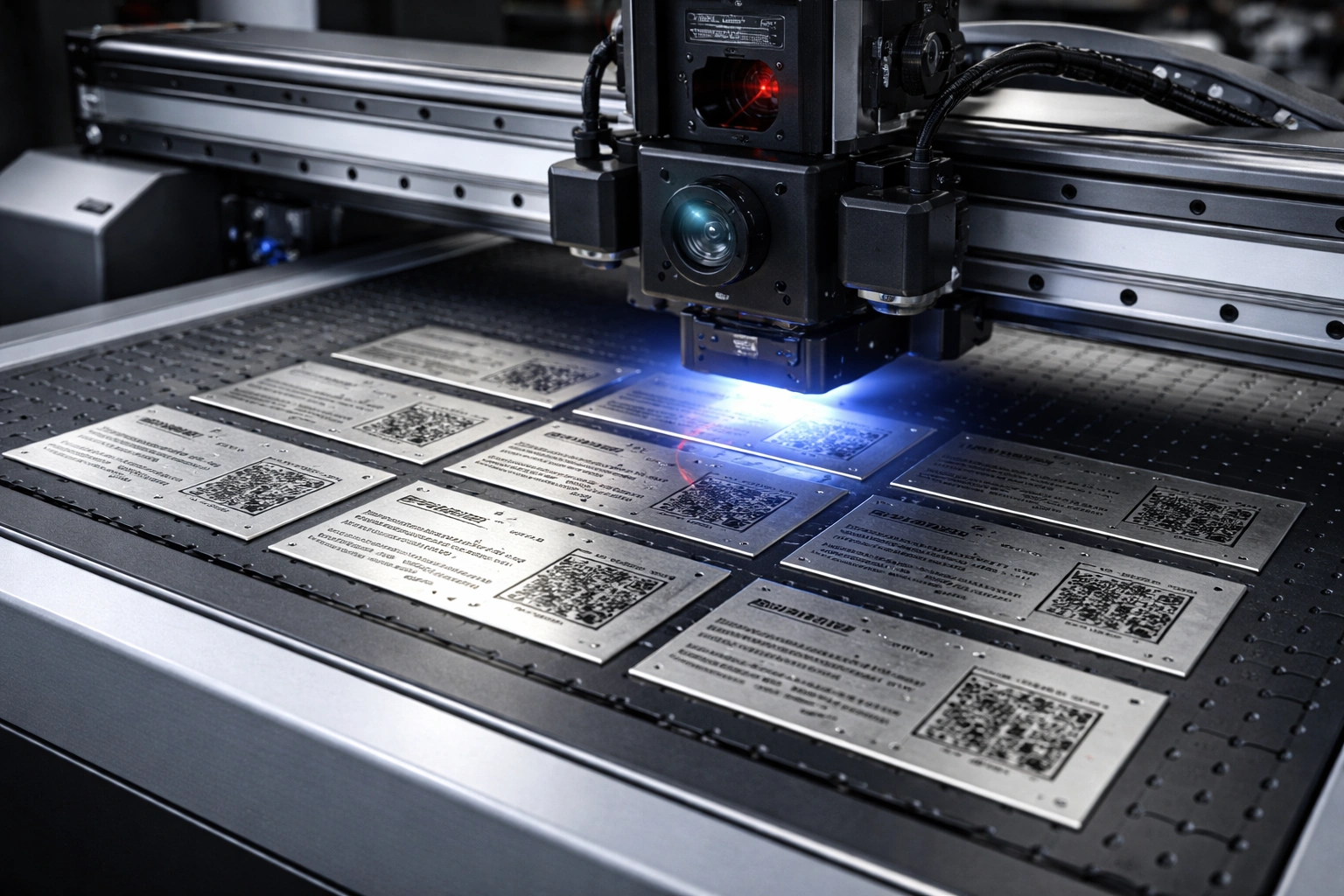
In modern industrial environments, identification is not a minor detail—it is a critical requirement. From machinery plates and safety warnings to serial number tags and compliance labels, industrial nameplates and tags play a vital role in traceability, safety, branding, and regulatory compliance. These components must remain legible, accurate, and durable despite constant exposure to heat, chemicals, abrasion, moisture, and harsh operating conditions.
Traditional printing and engraving methods have long been used to produce industrial nameplates and tags. However, as manufacturing standards evolve and customization demands increase, these conventional approaches are often unable to meet modern expectations for speed, precision, flexibility, and visual quality.
This is where Visual Positioning UV Printers emerge as a transformative solution. By combining ultraviolet curing technology with intelligent camera-based visual positioning systems, these printers enable ultra-precise, high-resolution printing directly onto a wide range of rigid and flexible substrates. For manufacturers seeking accuracy, efficiency, and long-term durability in industrial identification, visual positioning UV printing has become a game-changing technology.
This article provides a detailed, practical, and in-depth exploration of how visual positioning UV printers are reshaping the production of industrial nameplates and tags, covering their working principles, advantages, applications, material compatibility, compliance benefits, and future potential.
Understanding Industrial Nameplates and Tags
Industrial nameplates and tags are information carriers permanently or semi-permanently attached to products, machines, or components. Their primary purpose is to communicate essential data such as:
Manufacturer name and logo
Model and serial numbers
Electrical ratings and specifications
Safety warnings and instructions
Certification and compliance details
Barcodes, QR codes, and tracking identifiers
Unlike consumer labels, industrial identification must endure extreme physical and environmental stress without fading or peeling. Failure of a nameplate or tag can result in safety hazards, regulatory violations, operational downtime, and costly replacements.
As industries move toward automation, traceability, and smart manufacturing, the demand for precise, machine-readable, and visually consistent nameplates has increased significantly.
What Are Visual Positioning UV Printers?
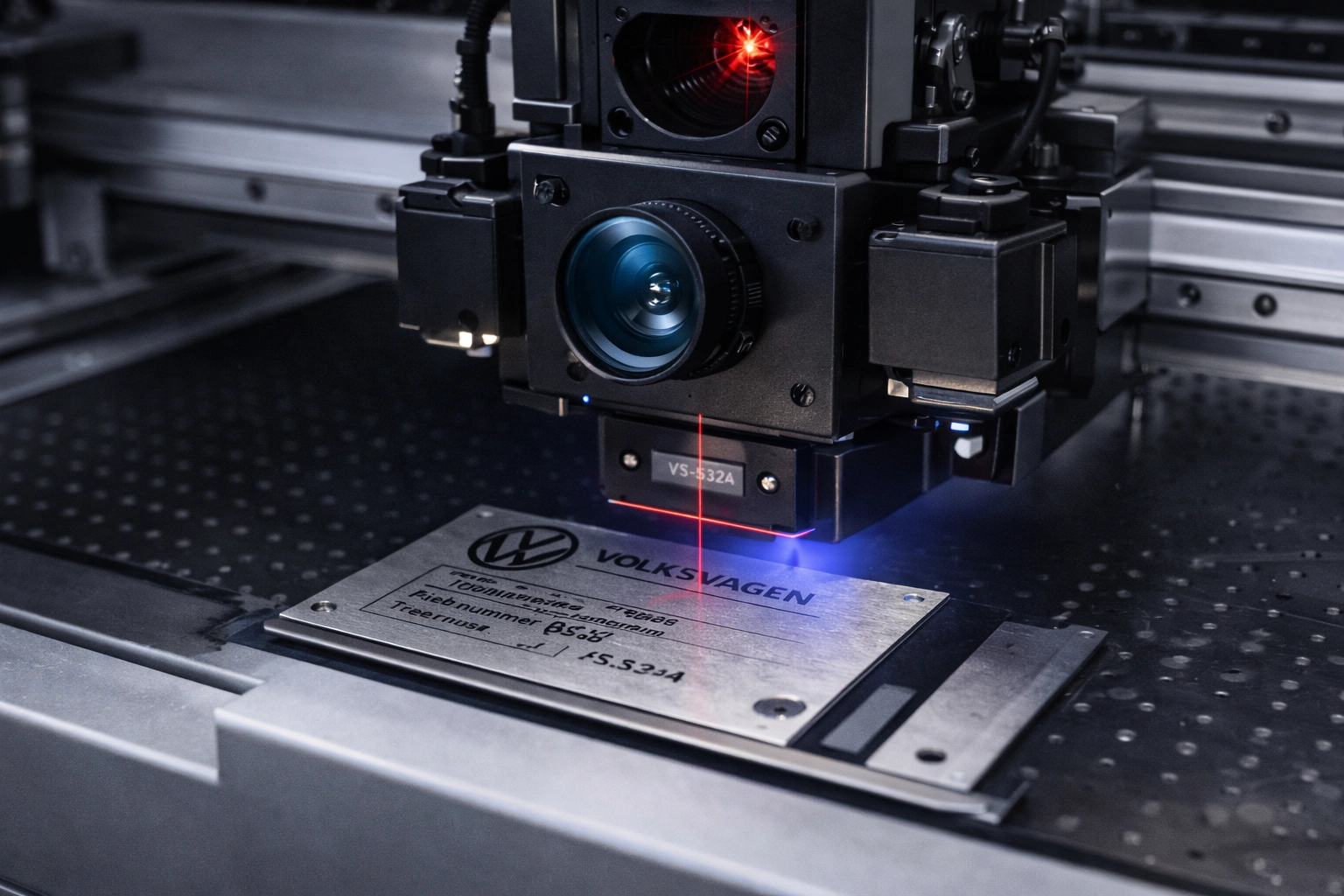
Visual positioning UV printers are advanced digital printing systems equipped with high-resolution cameras and intelligent software that detect the exact position, orientation, and shape of a substrate before printing. Unlike traditional UV printers that rely on fixed templates or manual alignment, visual positioning systems automatically adjust the print path to match the real-time placement of each item.
The UV printing process uses ultraviolet light to instantly cure specially formulated inks. As soon as the ink is deposited on the surface, UV lamps harden it immediately, creating a durable and scratch-resistant print.
When combined, visual positioning and UV curing deliver unmatched accuracy, efficiency, and reliability—making these printers ideal for industrial nameplates and tags.
Why Visual Positioning Matters in Industrial Printing
Industrial nameplates are rarely uniform. Variations in size, shape, hole placement, and surface finish are common, especially in batch or customized production. Manual alignment or fixed jigs can lead to misprints, wastage, and inconsistent quality.
Visual positioning technology eliminates these challenges by:
Automatically detecting the exact print area
Compensating for rotation or misalignment
Adapting to irregular shapes and cutouts
Printing multiple items with different layouts in a single run
This capability is particularly valuable for industrial environments where precision is non-negotiable.
Key Advantages of Visual Positioning UV Printers
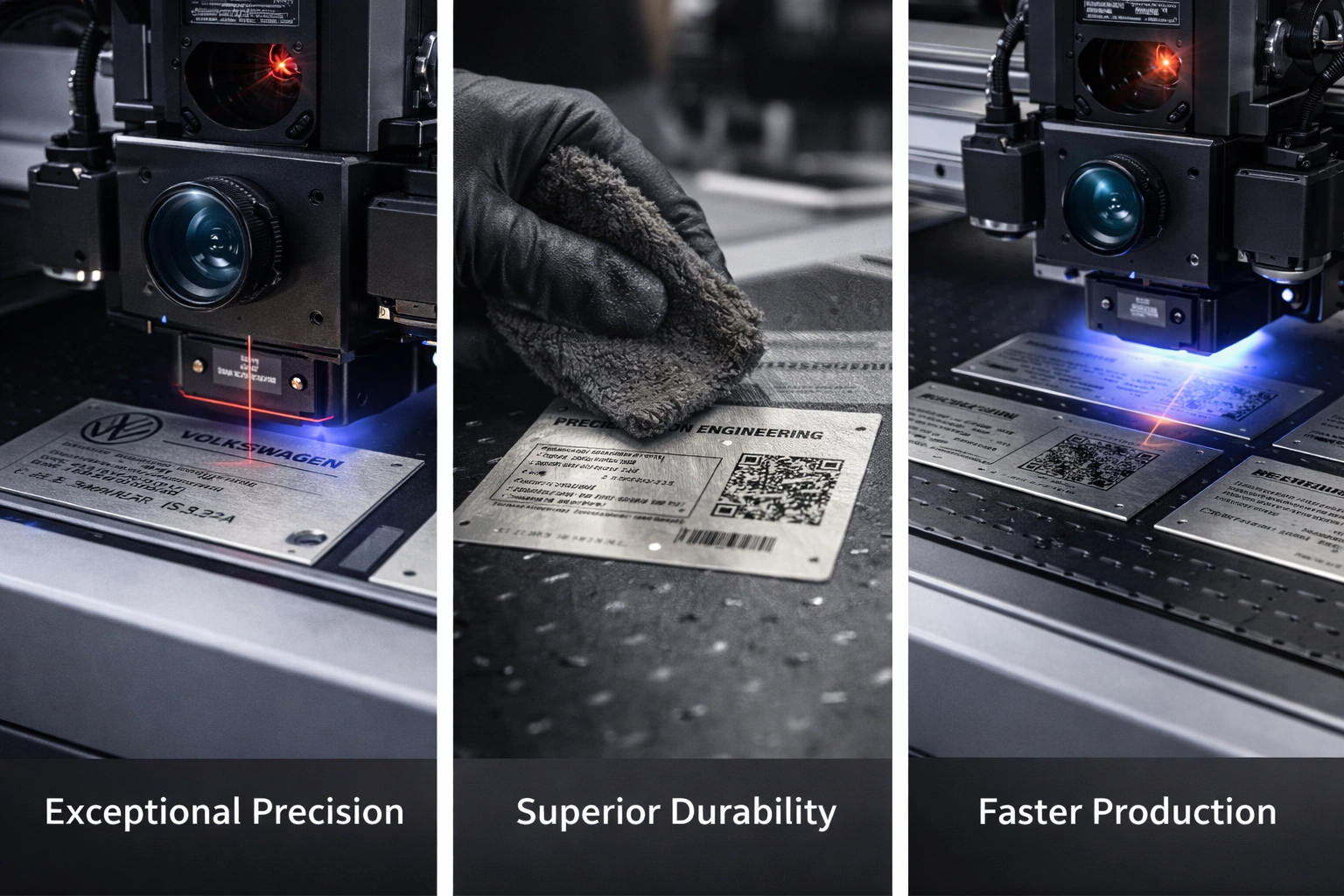
Exceptional Print Precision
Visual positioning ensures that text, logos, barcodes, and symbols are placed exactly where intended. This level of accuracy is essential for small-font technical data and machine-readable codes that must remain scannable throughout the product’s lifecycle.
Superior Durability
UV-cured inks bond strongly to industrial materials, offering resistance to abrasion, chemicals, UV exposure, moisture, and temperature fluctuations. This makes printed nameplates suitable for indoor and outdoor use, even in harsh environments.
Faster Production Cycles
Instant ink curing eliminates drying time, allowing parts to be handled, assembled, or packaged immediately. This significantly improves throughput and reduces production bottlenecks.
Reduced Material Waste
Automated alignment minimizes misprints and rejects, lowering material costs and improving overall production efficiency.
Design Flexibility and Customization
Variable data printing allows unique serial numbers, QR codes, and compliance information to be printed on each individual tag without slowing down production.
Long-Term Cost Efficiency
Although the initial investment may be higher, reduced rework, lower consumable usage, and higher productivity result in strong long-term returns.
Core Features of Visual Positioning UV Printers
Advanced Camera-Based Alignment
High-resolution cameras capture real-time images of the substrate, enabling precise detection of print zones even on reflective or textured surfaces.
High-Resolution Output
With resolutions reaching up to 1200 dpi or more, these printers produce crisp text, fine lines, and sharp graphics suitable for detailed industrial specifications.
Multi-Substrate Compatibility
Visual positioning UV printers can print directly on metals, plastics, acrylics, laminates, coated surfaces, and more—without additional labels or adhesives.
Intelligent Printing Software
User-friendly interfaces allow operators to manage layouts, variable data, color profiles, and batch jobs with minimal training.
Instant UV Curing System
Integrated UV lamps cure ink instantly, preventing smudging and enabling multilayer printing for raised textures or tactile elements.
Materials Commonly Used for Industrial Nameplates and Tags
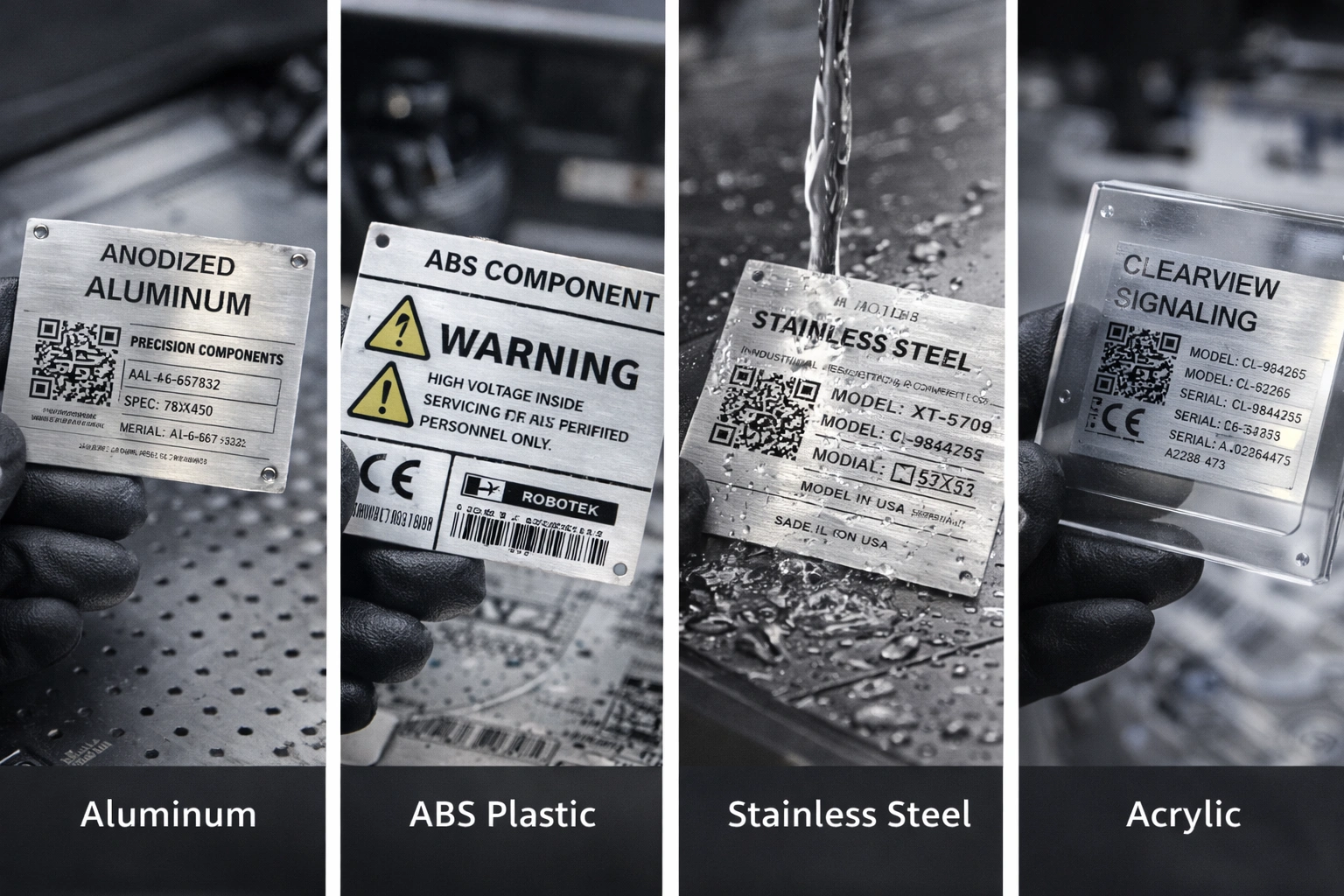
Visual positioning UV printers support a wide range of materials, including:
Aluminum and anodized aluminum
Stainless steel
Brass and copper
ABS and polycarbonate plastics
Acrylic sheets
Laminated composites
Coated metals and painted surfaces
This versatility allows manufacturers to select materials based on durability, aesthetics, cost, and application requirements.
Industrial Applications of Visual Positioning UV Printing
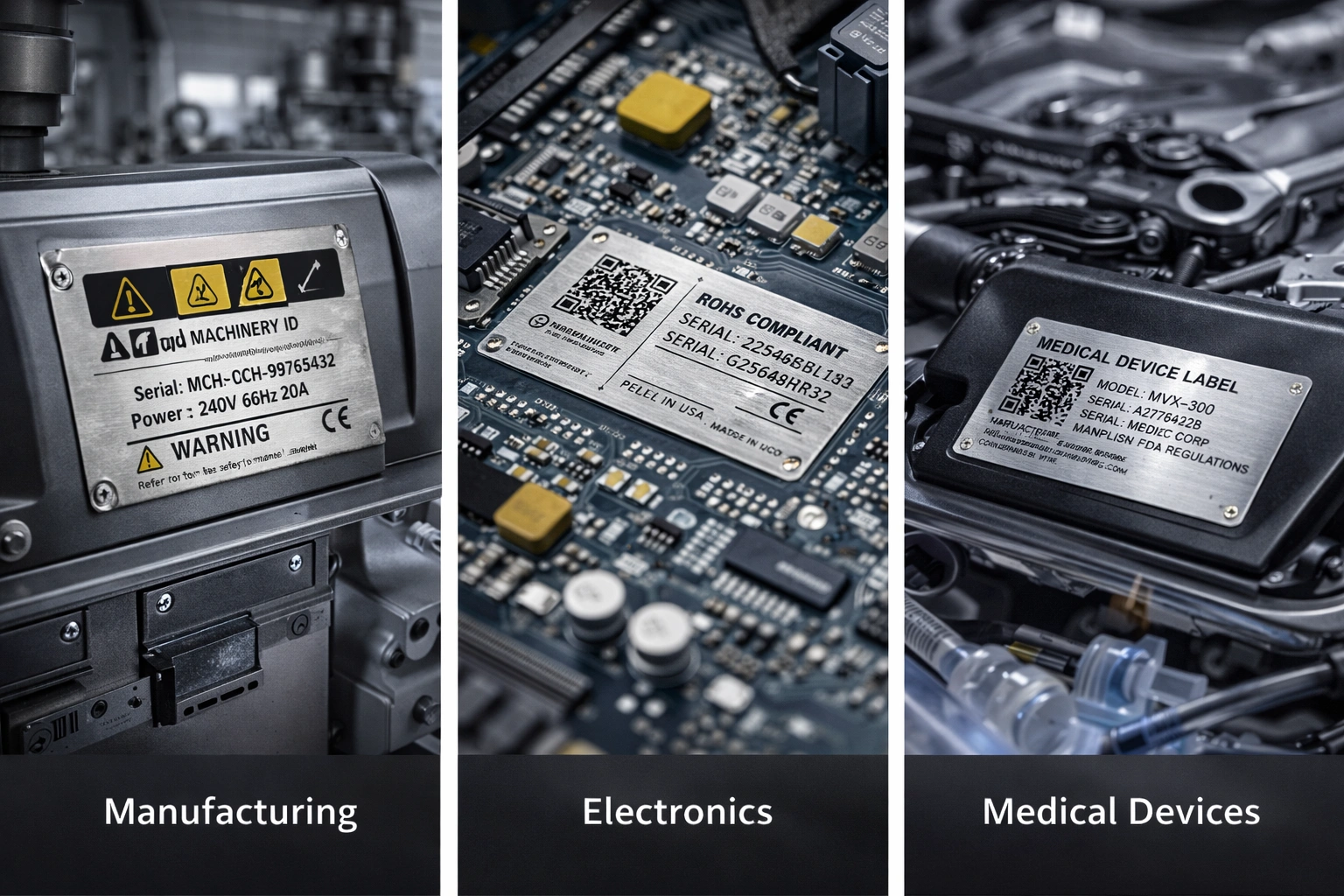
Manufacturing and Heavy Industry
Machine identification plates, safety labels, and equipment tags must remain readable despite oil, vibration, and heat. UV printing ensures long-lasting clarity and compliance.
Electrical and Power Equipment
Control panels, switchgear, and transformers require precise labeling for voltage ratings, wiring diagrams, and safety instructions.
Automotive and Transportation
Vehicle components demand durable nameplates resistant to corrosion, temperature changes, and mechanical stress.
Aerospace and Defense
High-precision labeling is essential for traceability, safety, and regulatory adherence under extreme operating conditions.
Medical Devices and Equipment
Medical labels must remain legible after sterilization and frequent cleaning, while meeting strict compliance standards.
Oil, Gas, and Chemical Plants
Tags and plates must withstand chemicals, pressure, and outdoor exposure without degradation.
Compliance and Regulatory Benefits
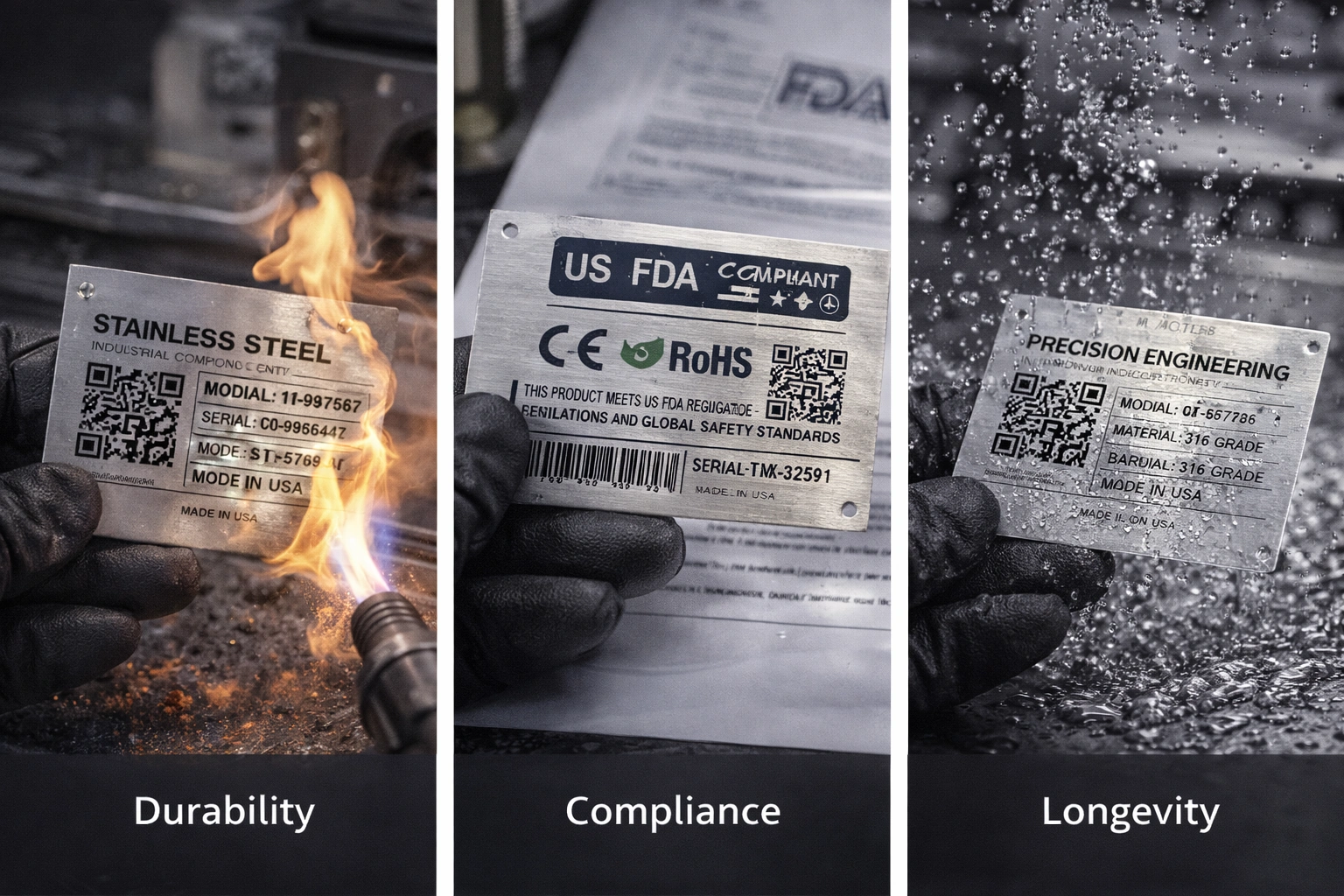
Many industries require nameplates and tags to comply with international standards related to safety, traceability, and durability. Visual positioning UV printers help meet these requirements by producing consistent, permanent, and high-quality markings.
Machine-readable codes printed using UV technology maintain scan accuracy over time, supporting asset tracking, maintenance records, and regulatory audits.
Comparing UV Printing with Traditional Methods
Traditional methods such as engraving, screen printing, and laser marking each have limitations. Engraving lacks color flexibility, screen printing requires setup for each design, and laser marking may struggle with contrast on certain materials.
Visual positioning UV printing combines the strengths of digital printing with industrial durability, offering full-color capability, variable data printing, and rapid turnaround without compromising quality.
Factors to Consider When Choosing a Visual Positioning UV Printer
Production Volume
High-volume operations may require larger print beds and faster throughput capabilities.
Material Thickness and Size
Ensure the printer supports the thickness and dimensions of your nameplates or tags.
Software Capabilities
Look for support for variable data, barcode generation, and color management.
Maintenance and Support
Reliable after-sales service and technical support are critical for minimizing downtime.
Scalability
Choose a system that can grow with your production needs and evolving requirements.
Sustainability and Environmental Impact
UV printing is considered more environmentally responsible than many traditional methods. It produces minimal waste, uses low-VOC inks, and reduces energy consumption by eliminating long drying processes.
For manufacturers aiming to meet sustainability goals, visual positioning UV printers offer a cleaner and more efficient alternative.
Future Trends in Industrial UV Printing
As Industry 4.0 continues to advance, visual positioning UV printers are expected to integrate more deeply with automation systems, robotics, and smart factories. AI-driven defect detection, cloud-based monitoring, and enhanced variable data capabilities will further expand their role in industrial identification.
Customization, traceability, and rapid production will remain key drivers of adoption across industries.
Conclusion
Visual positioning UV printers have redefined the standards for producing industrial nameplates and tags. By delivering unmatched precision, durability, flexibility, and efficiency, they address the growing demands of modern manufacturing environments.
From heavy industry and automotive manufacturing to medical devices and aerospace applications, this technology ensures that critical identification elements remain accurate, compliant, and visually professional throughout their lifecycle.
For businesses seeking reliable, future-ready solutions for industrial identification, investing in visual positioning UV printing is not just an upgrade—it is a strategic advantage.
Explore our high-quality Visual Positioning UV printers here to find the perfect solution for your industrial needs.