

 HOME
HOME PRODUCT CENTER
 ABOUT US
 DOWNLOAD CENTER
 SUPPORT CENTER
 SUBSCRIBE
 BLOG
BLOG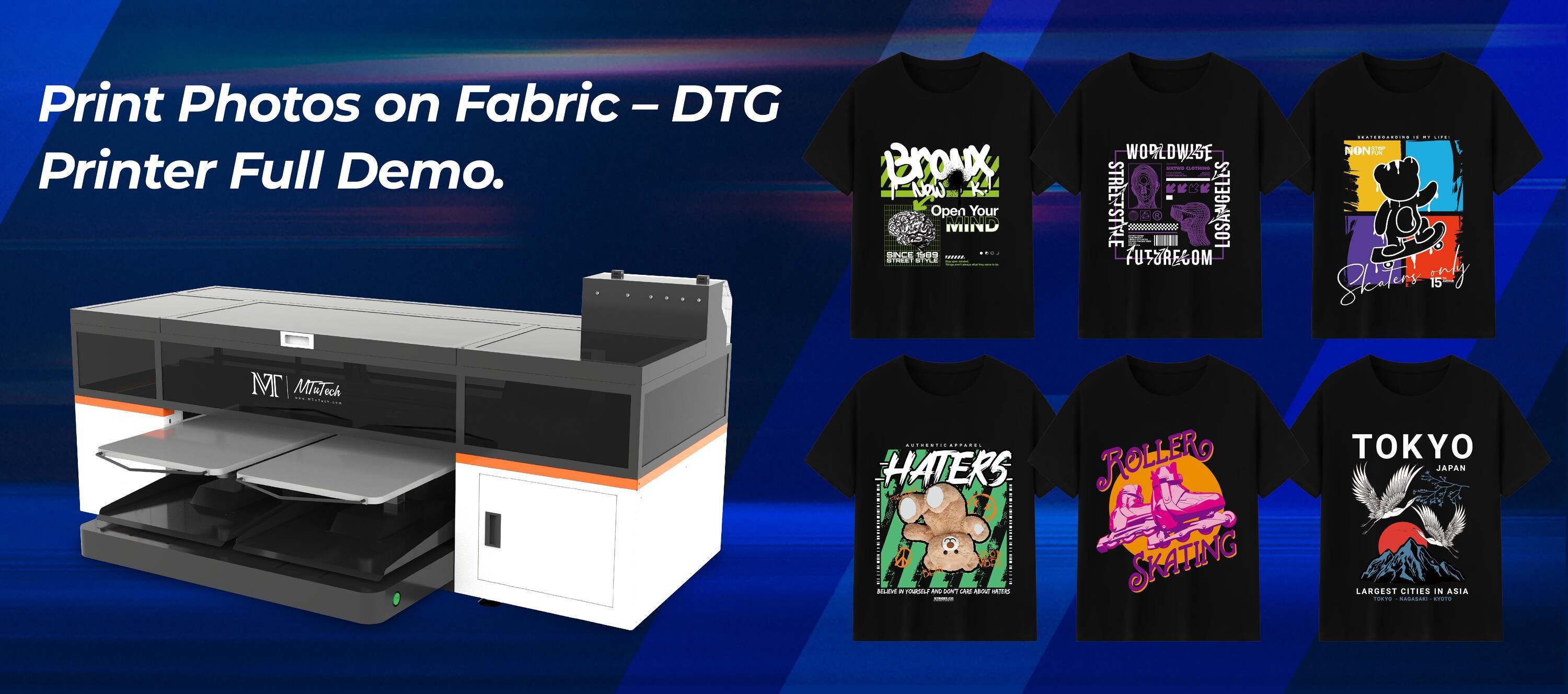 As businesses evolve and consumer demands grow, the printing industry must also adapt. Printing businesses that constantly seek elevated quality, efficiency and versatility should consider the transition from Direct-to-Garment (DTG) printing to Hybrid or Direct-to-Film (DTF) printing. While DTG printing has served well for many years, Hybrid and DTF printing offer a new technological leap that could be immensely beneficial to your business.
If you're at a point where you're considering making this migration, this blog will guide you through the process, benefits, and features of Hybrid or DTF printing technologies.
Introduction
DTG, Hybrid, and DTF are three different types of printing technologies used in the fabric printing industry. While DTG technology has been popular for years, recently, there’s been a significant buzz around Hybrid and DTF printing. These latter technologies offer improved efficiency, precision, and flexibility, making them attractive options for businesses looking to upgrade their printing capabilities.
Migration from DTG to either of these advanced printing technologies necessitates careful planning and can yield massive dividends if done correctly. Explore our high-quality DTG printers here to have a point of comparison when considering the upgrade.
Benefits of Migrating to Hybrid or DTF Printing
Enhanced Quality and Precision
One of the created benefits of Hybrid and DTF printing technologies is the ability to produce superior quality prints. Due to the advancements in these technologies, the prints have significantly higher resolution, leading to more detailed imaging and sharper colors.
Increased Efficiency
DTF and Hybrid technologies are designed to cater to high-volume orders, a feature that DTG printers often struggle with. The sheer speed and efficiency of these printers allow businesses to meet larger demands in shorter time frames, thus increasing turnover rates and client satisfaction.
Versatility in fabric compatibility
Another significant advantage of DTF and Hybrid printing is their compatibility with a wider range of fabrics. Whether it's cotton, polyester, rayon, or blends, these technologies can handle them all, providing print solutions for various apparel and fabric types.
Features of Hybrid and DTF Printing Technologies
Hybrid Printing Technology
Hybrid printers utilize a two-step process that enables printing directly onto a substrate and then utilizing a traditional screen printing technique for color application. This amalgamation of the two processes leads to high-resolution imaging with vibrant colors.
DTF Printing Technology
In DTF technology, the design is digitally printed on a special film before transferring it to the fabric. The print is then heat-pressed onto the garment, creating a durable and high-quality print. This technology is especially useful for more complex designs and orders at scale.
Conclusion
Transitioning from DTG to Hybrid or DTF printing technologies can mark a transformative phase for your printing business. The shift may appear intimidating at first, given the associated training and initial costs of new machinery. However, the long-term efficiency, quality, flexibility benefits make the move worthy of serious consideration.
FAQ Section
Are Hybrid or DTF printers more expensive than DTG printers?
While upfront costs for Hybrid and DTF printers are generally higher than for DTG printers, these costs are frequently offset by the potential for higher efficiency and output volume.
Do I need specific training to operate Hybrid or DTF printers?
While operating Hybrid or DTF printers does require understanding the process, it's not excessively complex. Simple training sessions can suffice to get your workforce up to speed.
Can Hybrid or DTF printers handle all types of designs?
Yes, these printers offer expansive design possibilities. Whether it's complex imaging or simple logos, these printers can handle a wide variety of designs with superior precision.