

 HOME
HOME PRODUCT CENTER
 ABOUT US
 DOWNLOAD CENTER
 SUPPORT CENTER
 SUBSCRIBE
 BLOG
BLOGUV DTF Printing for Automotive Customization
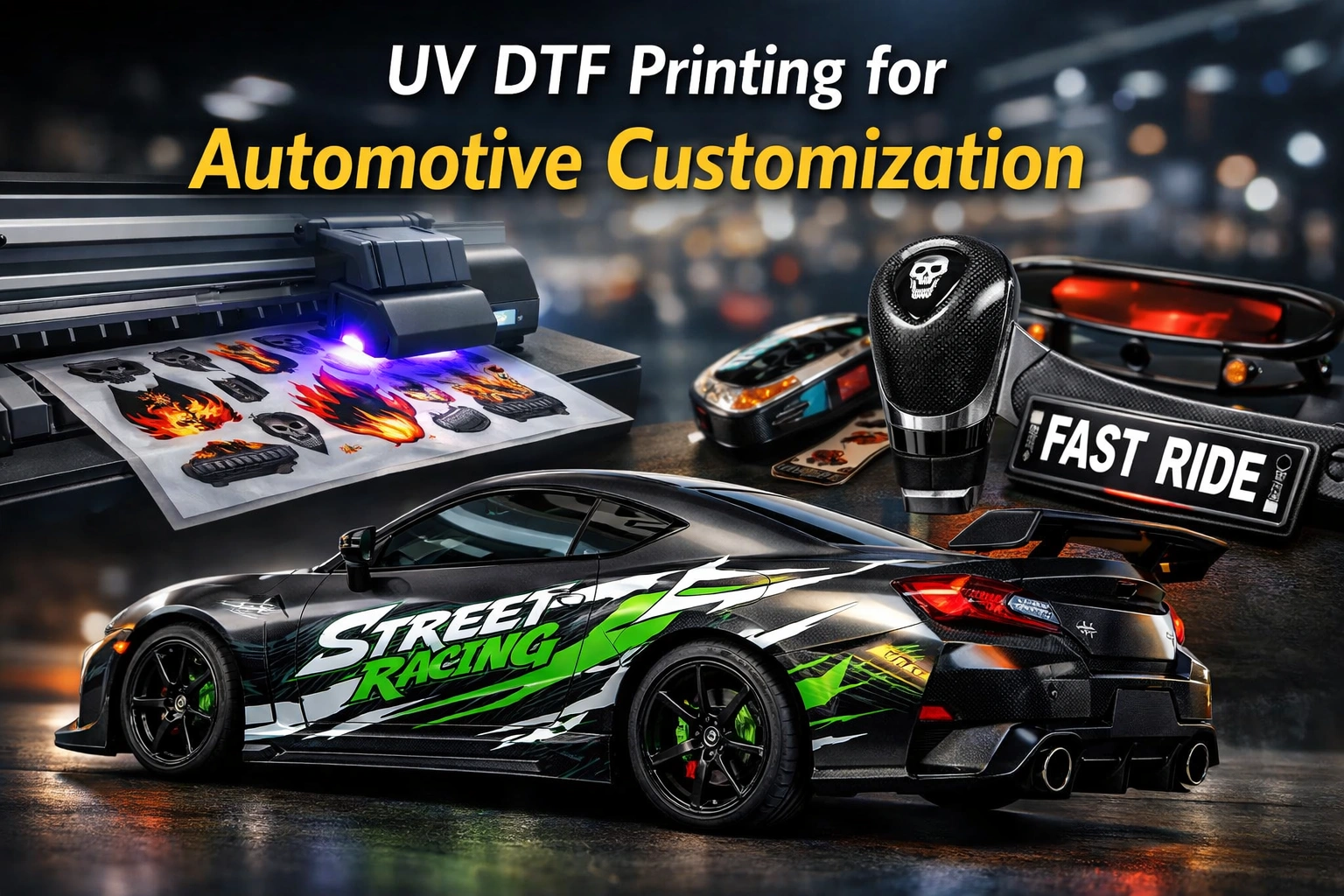
The automotive industry has evolved far beyond basic transportation. Today, vehicles represent personality, status, creativity, and brand identity. From personalized car decals to premium interior accessories, customization has become a powerful trend driving demand across global automotive markets. As customers seek unique, durable, and visually striking designs, printing technology has stepped in to meet these expectations.
One of the most impactful innovations in this space is UV Direct-to-Film (UV DTF) printing. This advanced printing method is redefining how automotive accessories and decals are produced. It allows businesses to create long-lasting, high-resolution graphics that adhere seamlessly to a wide range of automotive surfaces.
This article explores UV DTF printing in depth—how it works, why it is ideal for automotive applications, its key benefits, features, use cases, and how businesses can leverage this technology to stay competitive in an increasingly customization-driven market.
What Is UV DTF Printing?
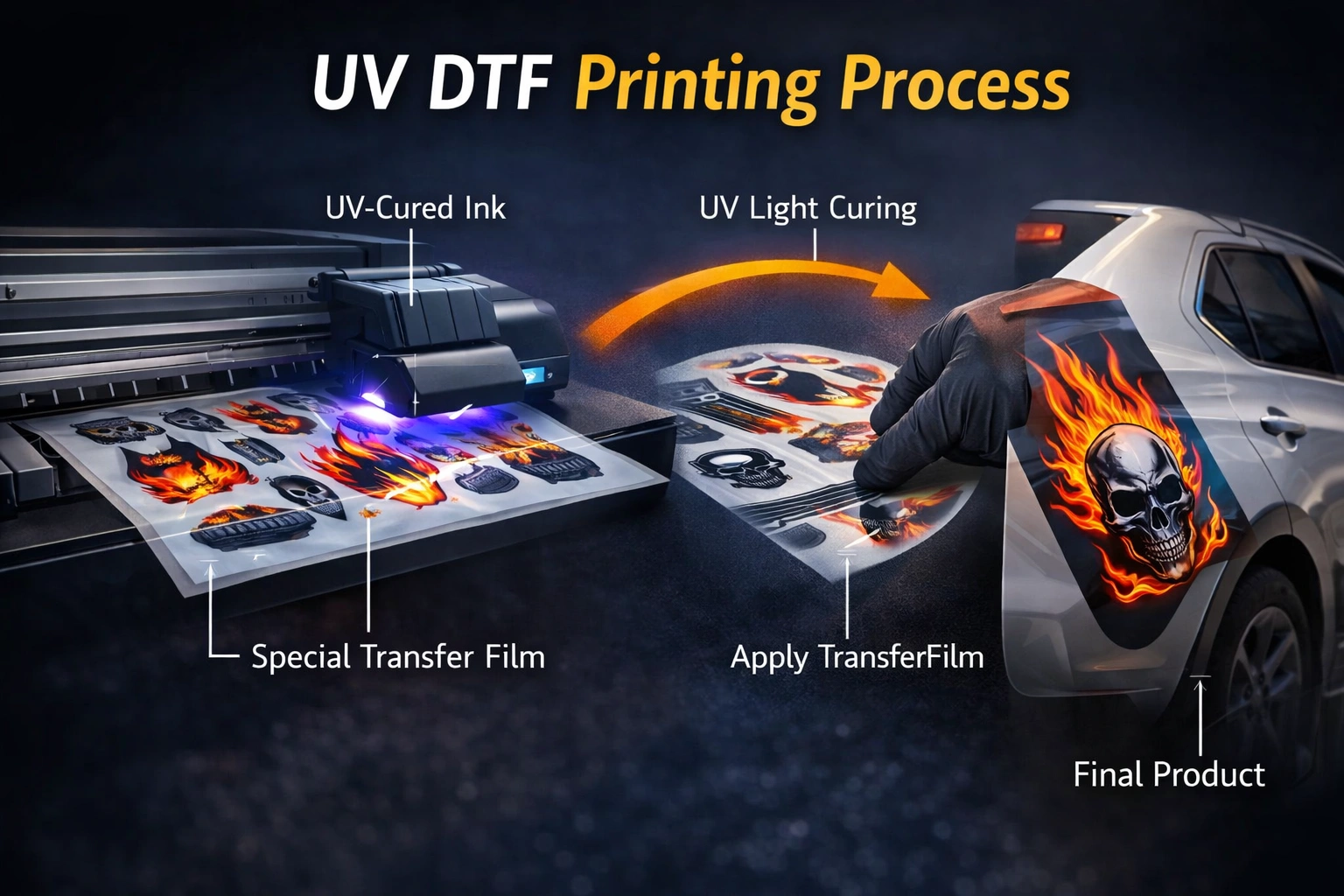
UV DTF printing is a modern hybrid printing process that combines UV ink technology with direct-to-film transfer methods. Instead of printing directly onto the final surface, the design is first printed onto a specially coated transfer film using UV-curable inks. These inks are instantly cured using ultraviolet light, forming a strong, flexible, and highly detailed image.
Once printed and cured, the design is transferred from the film to the target surface using pressure. This approach eliminates many limitations of traditional direct printing, especially on uneven, curved, or sensitive materials commonly found in automotive products.
Unlike conventional vinyl or solvent-based printing, UV DTF creates a thicker ink layer that bonds exceptionally well to surfaces without cracking or peeling.
Why UV DTF Printing Is Ideal for Automotive Accessories
Automotive environments are harsh. Heat, sunlight, rain, dust, friction, and chemicals constantly challenge printed designs. UV DTF printing excels in this demanding setting due to its unique technical advantages.
Strong Adhesion on Multiple Surfaces
Automotive accessories are made from diverse materials such as plastics, metals, coated surfaces, and glass. UV DTF transfers bond securely to:
ABS and PVC plastics
Painted and powder-coated metals
Acrylic and polycarbonate parts
Glass and mirrors
Leather-like and synthetic interior materials
This flexibility allows manufacturers to use one printing solution across multiple product lines.
Key Benefits of UV DTF Printing for Automotive Use
1. Exceptional Durability
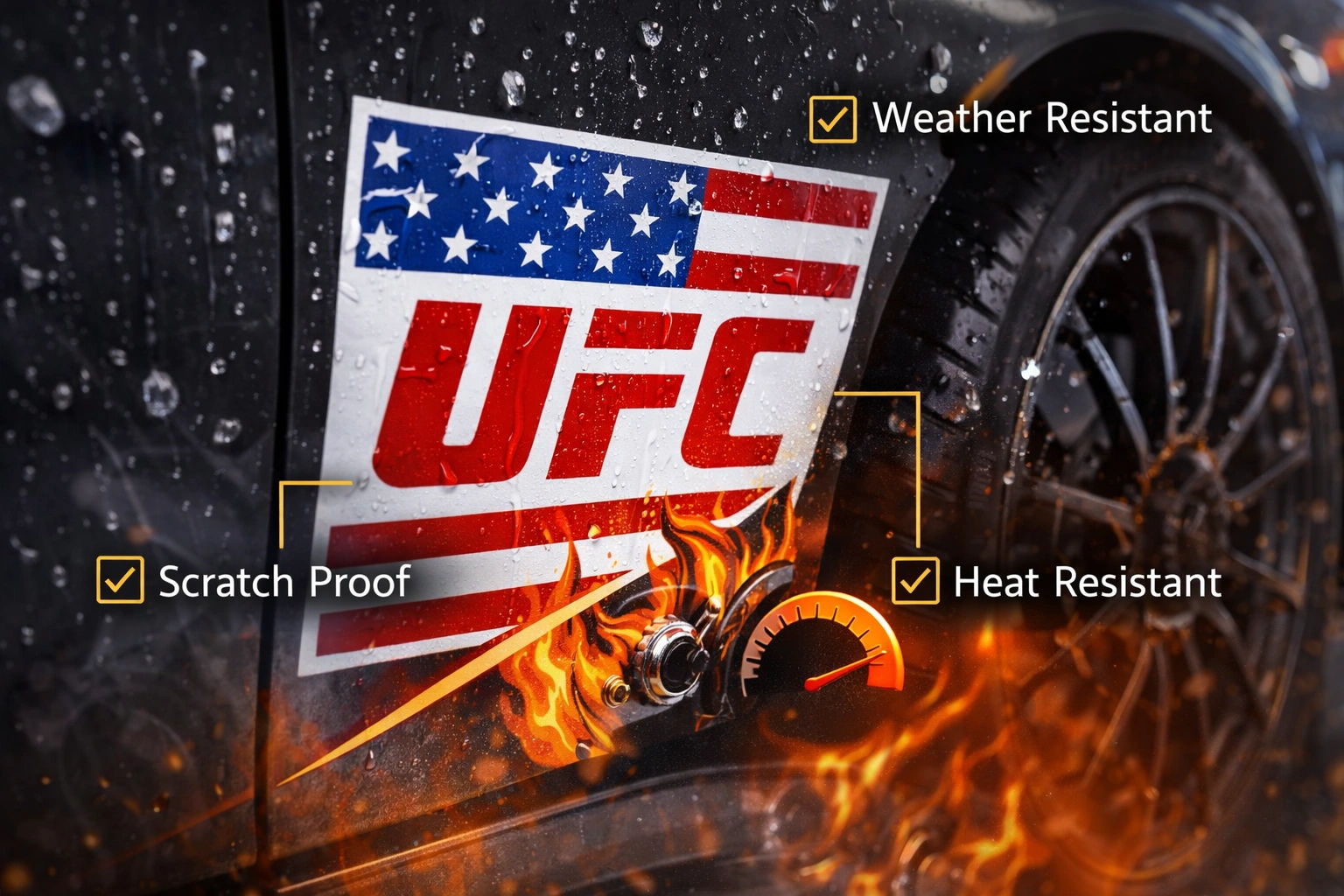
Durability is non-negotiable in automotive applications. UV-cured inks create a hard yet flexible layer that resists:
UV radiation and color fading
Water and humidity
Scratches and abrasion
Heat and temperature fluctuations
As a result, decals and accessories retain their appearance for years, even under extreme driving conditions.
2. High-Definition Print Quality
UV DTF printers deliver outstanding resolution and color accuracy. Fine details, sharp edges, gradients, and photographic elements are reproduced with remarkable clarity. This makes the technology perfect for:
Brand logos
Racing graphics
Premium decorative designs
Complex typography
The addition of white ink further enhances vibrancy, especially on dark or transparent surfaces.
3. No Cutting or Weeding Required
Unlike vinyl decals that require cutting, peeling, and manual finishing, UV DTF transfers are applied as complete designs. This significantly reduces labor time, production errors, and material waste—making the workflow faster and more efficient.
4. Eco-Friendly Printing Solution
Environmental responsibility is becoming a key factor in consumer purchasing decisions. UV DTF printing supports sustainability by:
Using UV-curable inks with low VOC emissions
Reducing ink waste through precise application
Eliminating solvent evaporation
Consuming less energy due to instant curing
For automotive brands promoting eco-friendly practices, UV DTF technology aligns well with green manufacturing goals.
5. Cost-Effective Long-Term Production
While the upfront cost of UV DTF equipment may be higher than entry-level printers, the long-term savings are significant. Businesses benefit from:
Minimal consumable waste
Lower maintenance requirements
Faster production cycles
Reduced rework and returns
Over time, this translates into higher profit margins and a strong return on investment.
Advanced Features of Modern UV DTF Printers
Precision Ink Layering
UV DTF printers support multi-layer printing, including color, white ink, and protective varnish layers. This improves depth, texture, and visual impact—especially for premium automotive accessories.
Integrated UV Curing Systems
Built-in UV lamps instantly cure the ink as it is printed. This ensures consistent quality, faster output, and smudge-free results without additional drying time.
User-Friendly Software and Controls
Modern UV DTF systems are designed for ease of use. Intuitive RIP software enables color management, print previews, and layout optimization, making it accessible even for small teams or startups.
Custom Ink and Finish Options
Manufacturers can experiment with gloss, matte, or textured finishes to differentiate their automotive products. This level of customization adds value and exclusivity to the final output.
Applications of UV DTF Printing in the Automotive Industry
Custom Car Decals and Emblems
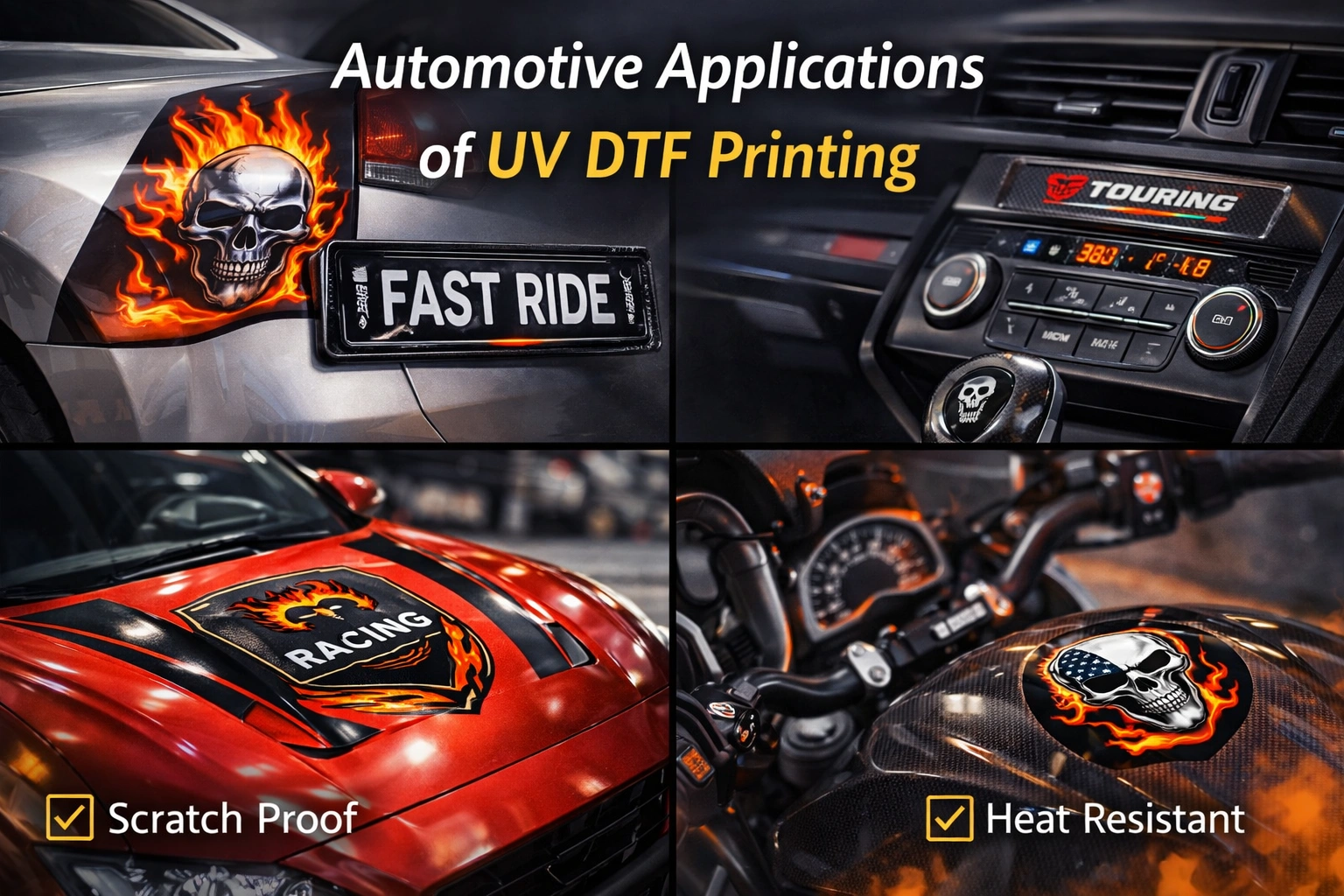
UV DTF printing is widely used for logos, branding decals, racing stripes, and decorative graphics. These decals adhere perfectly to curved panels, mirrors, and bumpers.
Vehicle Branding and Promotional Graphics
Fleet vehicles, taxis, and commercial cars often require durable branding. UV DTF decals provide long-lasting visibility without damaging the vehicle’s surface.
Interior Automotive Accessories
Dashboard trims, center console panels, door inserts, and decorative interior elements can be customized with UV DTF prints, offering a premium look and feel.
License Plate Frames and Covers
Personalized license plate frames featuring names, logos, or slogans are popular customization items. UV DTF ensures clarity and weather resistance.
Motorcycle and Bike Accessories
Beyond cars, UV DTF printing is extensively used for motorcycles, scooters, helmets, and bike panels due to its strong adhesion and flexibility.
How UV DTF Printing Improves Business Scalability
UV DTF technology allows businesses to scale without complexity. Small workshops can start with limited runs, while large manufacturers can integrate high-volume production lines.
Because designs are printed on film rather than directly on products, inventory management becomes easier. Businesses can print transfers in advance and apply them as orders come in—reducing storage needs and production delays.
Quality Control and Consistency
Consistency is critical in automotive manufacturing. UV DTF printers maintain uniform ink thickness, color accuracy, and curing across batches. This ensures that every product meets the same quality standards, improving brand trust and customer satisfaction.
Maintenance and Longevity of UV DTF Printers
Proper maintenance is straightforward and essential for optimal performance. Regular tasks include:
Print head cleaning
Ink circulation checks
Film alignment calibration
UV lamp inspection
Following manufacturer guidelines ensures long equipment life and consistent print quality.
Future of UV DTF Printing in Automotive Customization
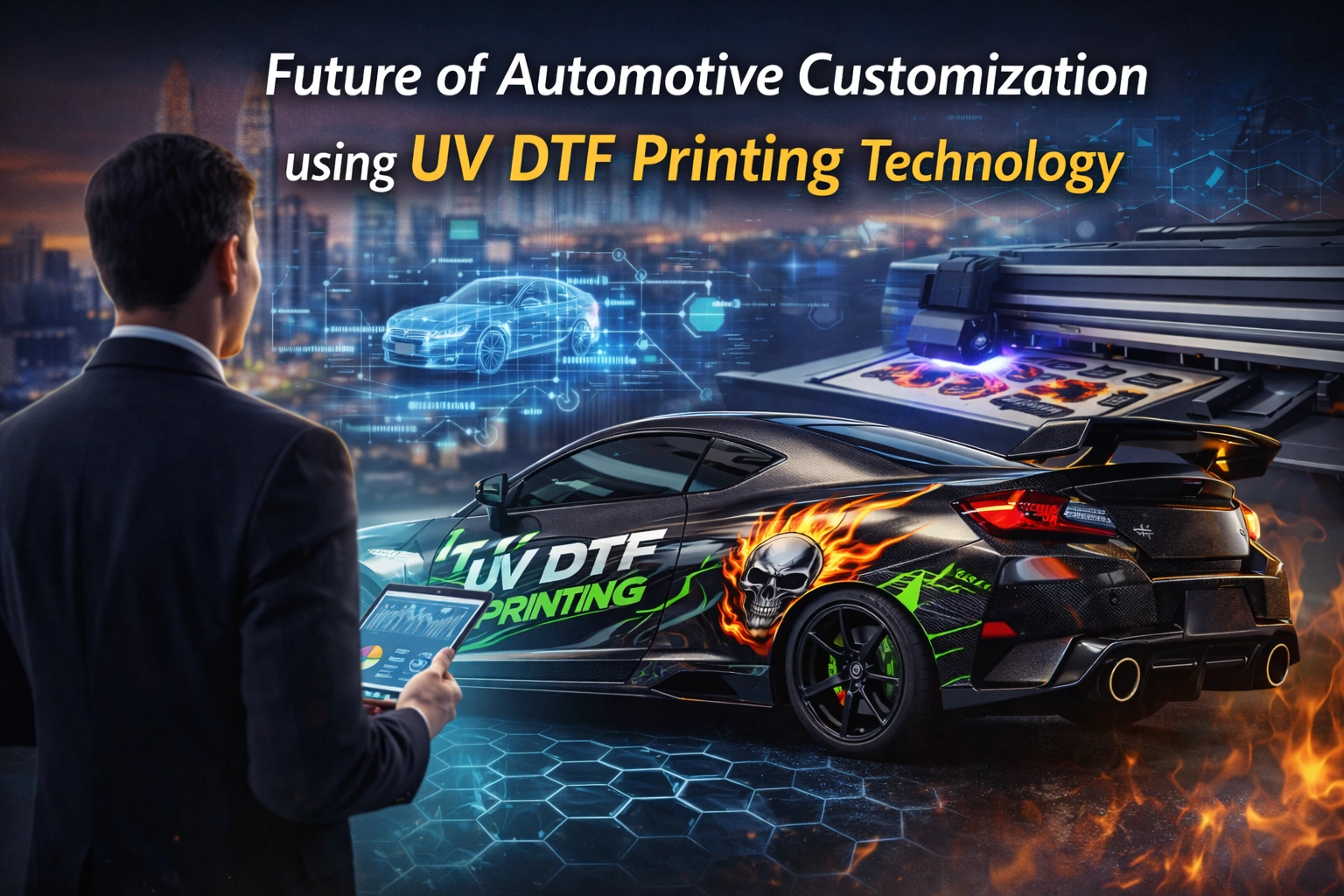
As consumer demand for personalization grows, UV DTF printing is set to play a major role in the future of automotive design. Advancements in ink formulations, faster curing systems, and smarter software integration will further expand its capabilities.
Businesses that adopt UV DTF technology early gain a competitive edge by offering faster turnaround times, premium finishes, and unmatched durability.
Conclusion
UV DTF printing has emerged as a game-changing solution for automotive accessories and decals. Its ability to deliver durable, high-resolution, and versatile designs makes it ideal for the demanding automotive environment. From exterior decals to interior enhancements, UV DTF technology empowers businesses to meet modern customization trends efficiently and profitably.
By investing in UV DTF printing, automotive brands and manufacturers can future-proof their operations, enhance product quality, and stand out in an increasingly competitive market.Explore our high-quality UV-DTF printers here
Frequently Asked Questions (FAQ)
What makes UV DTF different from traditional UV printing?
Traditional UV printing prints directly onto the surface, which can be limiting on curved or uneven materials. UV DTF uses a transfer film, allowing greater flexibility and stronger adhesion across diverse surfaces.
Can UV DTF prints be removed from vehicles?
Yes, UV DTF decals can be removed with proper techniques without damaging the surface, making them suitable for temporary branding and promotions.
Is white ink available in UV DTF printing?
Yes, white ink is a standard feature in most UV DTF printers and is essential for vibrant colors on dark or transparent surfaces.
Is UV DTF printing suitable for small businesses?
Absolutely. UV DTF printers are available in various sizes and configurations, making them suitable for startups, customization shops, and large manufacturers alike.
What types of automotive products can be customized using UV DTF?
UV DTF printing can be used for decals, interior panels, license plate frames, bike parts, helmets, branding elements, and many other automotive accessories.