

 HOME
HOME PRODUCT CENTER
 ABOUT US
 DOWNLOAD CENTER
 SUPPORT CENTER
 SUBSCRIBE
 BLOG
BLOGSmart Financing for UV DTF Printers
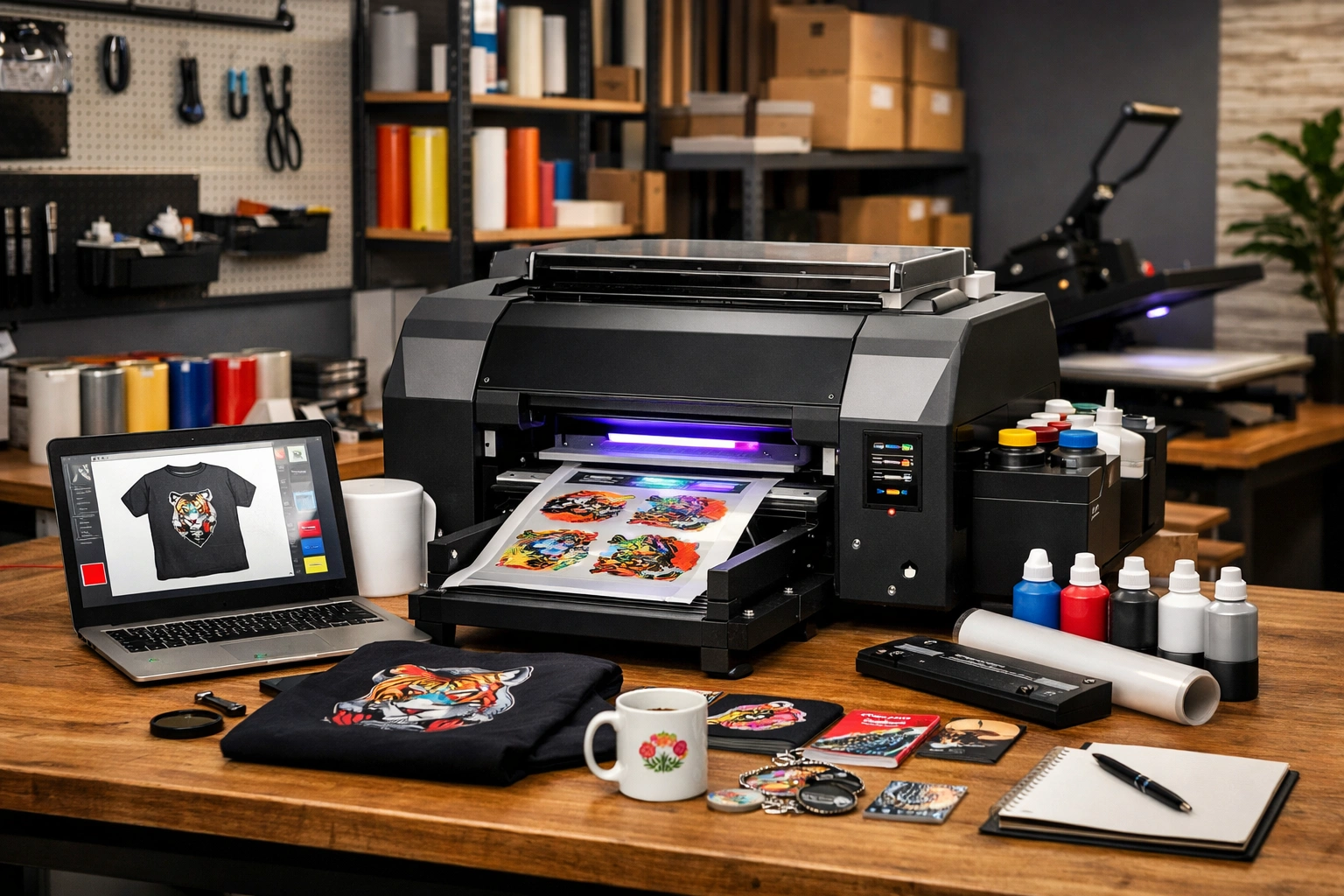
For small and medium-sized businesses in the custom printing industry, staying competitive often means upgrading to modern technology. One such powerful upgrade is a UV Direct to Film (UV DTF) printer. These machines allow businesses to deliver premium-quality prints on a wide range of materials with excellent durability and color accuracy.
However, despite their advantages, UV DTF printers represent a significant financial investment. Many small business owners hesitate not because they doubt the technology, but because they are unsure how to manage the cost. This is where smart financing becomes essential.
Understanding different financing methods can help you acquire a UV DTF printer without putting unnecessary pressure on your cash flow. With the right funding strategy, even a small business can adopt high-end printing technology and scale operations confidently.
Understanding UV DTF Printing Technology
UV DTF printing is a modern printing method that uses ultraviolet light to instantly cure ink printed onto a special film. The printed design can then be transferred onto various surfaces, including glass, acrylic, metal, plastic, wood, ceramics, and coated textiles.
Unlike traditional printing methods, UV DTF printing does not require heat pressing on the final product. This makes it ideal for fragile, uneven, or heat-sensitive materials. The result is a highly detailed, scratch-resistant, and long-lasting print that meets professional standards.
For small businesses, this technology opens doors to new product categories such as customized signage, promotional merchandise, branded packaging, personalized gifts, and industrial labels.
Why Financing a UV DTF Printer Makes Sense
Purchasing a UV DTF printer outright may not always be the best financial decision, especially for growing businesses. Financing allows you to spread the cost over time while still enjoying the benefits of the equipment immediately.
Some key reasons why financing is a practical approach include:
Preserving working capital for daily operations
Avoiding large upfront payments
Matching equipment costs with revenue generation
Enabling faster business expansion
Reducing financial risk during growth phases
Instead of waiting years to save capital, financing helps businesses start earning from the machine almost immediately.
Common Financing Options for UV DTF Printers
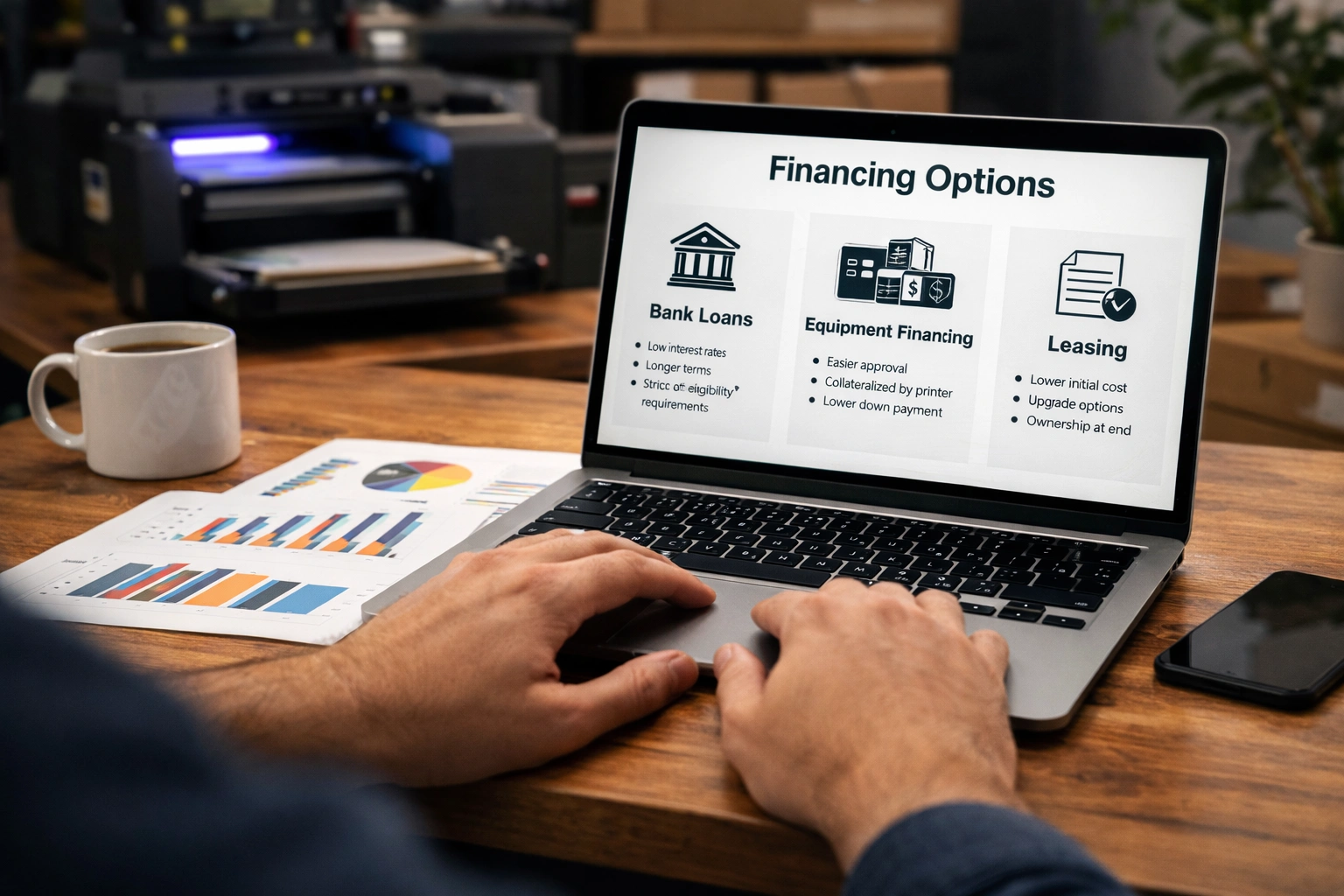
There are multiple ways to finance a UV DTF printer, each suited to different business situations. Understanding these options helps you choose the most cost-effective and flexible solution.
Traditional Bank Loans
Bank loans are one of the oldest and most commonly used financing methods for business equipment.
Key Characteristics
Fixed or variable interest rates
Repayment periods ranging from 2 to 7 years
Ownership of the printer from day one
Advantages
Lower interest rates for strong credit profiles
Predictable monthly payments
Builds long-term credit history
Challenges
Strict eligibility criteria
Detailed documentation required
Longer approval time
Bank loans are best suited for established businesses with stable revenue and strong credit records.
Equipment Financing
Equipment financing is specifically designed for purchasing machinery like UV DTF printers. In this model, the printer itself acts as collateral.
Why It’s Popular
Easier approval compared to bank loans
Lower upfront payment requirements
Faster processing
Benefits
Reduced risk to personal assets
Flexible repayment terms
Payments aligned with machine lifespan
Equipment financing is ideal for small businesses that want ownership without heavy initial investment.
Leasing a UV DTF Printer
Leasing allows you to use the printer without owning it immediately. This option is especially attractive for businesses that want flexibility and access to the latest technology.
Types of Leases
Operating lease
Finance lease
Lease-to-own
Benefits
Minimal upfront cost
Easier upgrades to newer models
Predictable monthly expenses
Considerations
Higher long-term cost than purchase
Ownership may require an additional payment
Leasing works well for businesses that expect rapid growth or frequent technology upgrades.
Business Credit Cards
Business credit cards can be used for partial financing, accessories, or initial down payments.
Pros
Instant access to funds
Reward points and cashback
Flexible repayment options
Cons
Higher interest rates
Limited credit limits
This option is best for short-term financing or supplementary expenses related to UV DTF printing.
Microloans for Small Businesses
Microloans are smaller loans designed to support startups and micro-enterprises.
Key Features
Loan amounts typically up to $50,000
Easier approval for new businesses
Support from nonprofit organizations
Advantages
Flexible credit requirements
Lower borrowing risk
Business mentoring support
Microloans are ideal for first-time buyers or small-scale printing startups.
Vendor Financing Programs
Some UV DTF printer suppliers offer in-house financing or partnerships with financial institutions.
Benefits
Simplified application process
Industry-specific payment plans
Faster equipment delivery
Things to Check
Interest rates
Hidden fees
Warranty and service terms
Vendor financing is convenient but should always be compared with external options.
Choosing the Right Financing Option
Selecting the best financing method depends on your business goals, financial position, and growth strategy.
Key Factors to Evaluate
Monthly cash flow
Credit score and history
Expected printer usage
Long-term expansion plans
Technology upgrade frequency
A well-matched financing plan ensures sustainable growth without financial stress.
Cost Breakdown Beyond the Printer
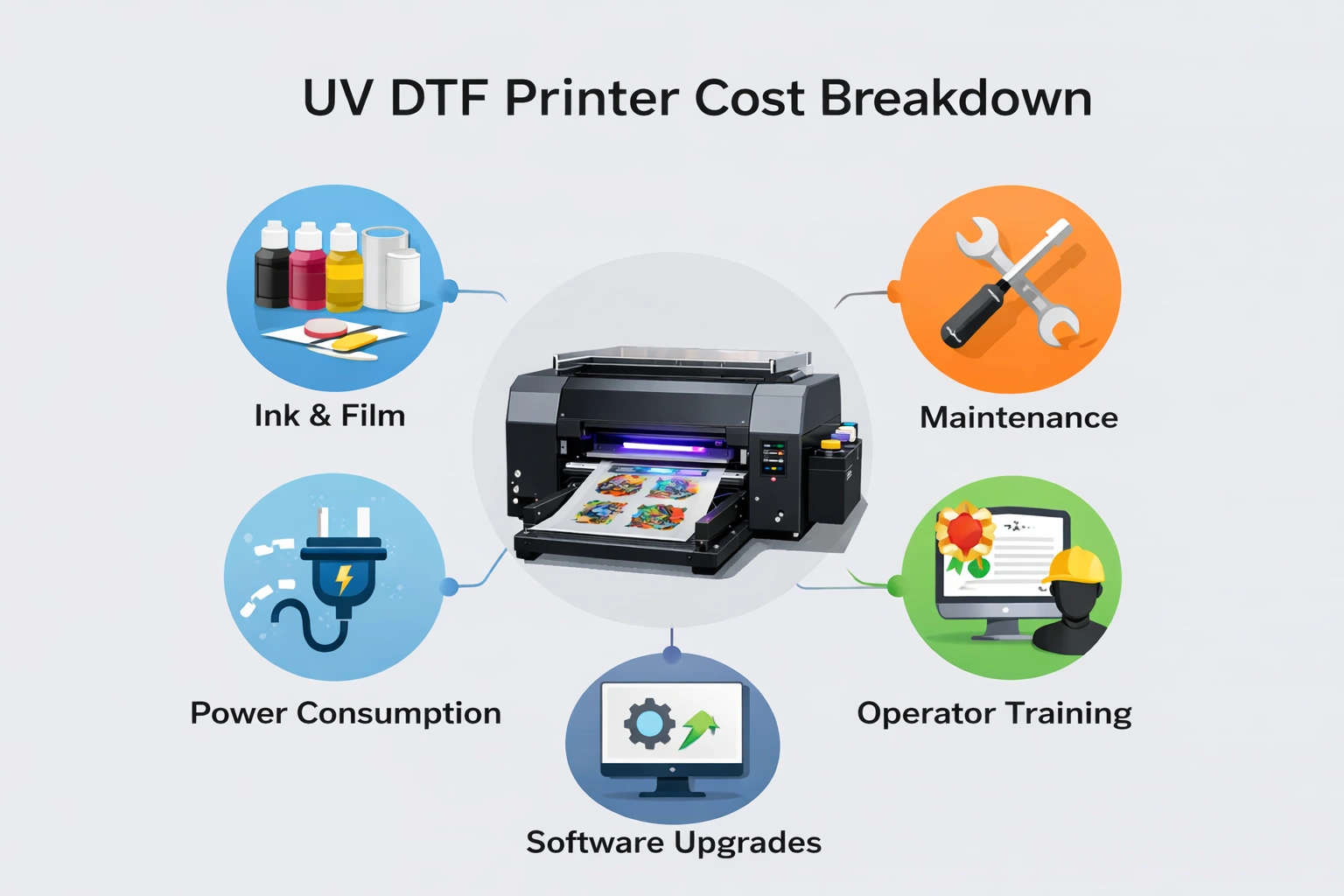
When financing a UV DTF printer, it’s important to consider additional costs that impact overall investment.
Additional Expenses
UV inks and films
Maintenance and servicing
Power consumption
Operator training
Software upgrades
Factoring these costs into your financing plan helps avoid unexpected expenses later.
Tax Benefits and Financial Advantages
In many regions, financed equipment may qualify for tax deductions, depreciation benefits, or expense write-offs.
Possible Benefits
Reduced taxable income
Improved accounting flexibility
Better cash flow management
Consulting a financial advisor ensures you maximize available tax advantages.
Business Growth Opportunities with UV DTF Printing

Once installed, a UV DTF printer can significantly expand your revenue potential.
New Revenue Streams
Customized corporate gifts
Branded packaging
Interior décor printing
Industrial labeling
Promotional merchandise
With proper marketing, many businesses recover their investment faster than expected.
Risk Management Tips
To ensure successful financing, consider the following best practices:
Avoid over-borrowing
Choose realistic repayment terms
Maintain emergency funds
Track return on investment regularly
Keep maintenance schedules updated
Smart planning reduces financial risk and ensures smooth operations.
Long-Term Value of a UV DTF Printer
Beyond immediate profits, a UV DTF printer strengthens your brand reputation, improves customer satisfaction, and positions your business as a premium service provider.
High-quality output, fast turnaround, and material versatility give your business a competitive edge in crowded markets.
Conclusion
Financing a UV DTF printer is not just a financial decision—it is a strategic move toward business growth and long-term success. With multiple financing options available, small businesses no longer need to delay adopting advanced printing technology.
By carefully evaluating loans, leasing, equipment financing, and alternative funding methods, you can choose a solution that fits your budget and growth plans. When financed wisely, a UV DTF printer becomes a revenue-generating asset that pays for itself over time.
Invest smartly, plan strategically, and let modern printing technology elevate your business to the next level.explore our high-quality UV-DTF printers here
Frequently Asked Questions (FAQ)
What is the best financing option for small businesses?
It depends on cash flow, credit score, and long-term goals. Equipment financing and leasing are popular choices for small businesses.
Can startups finance a UV DTF printer?
Yes, startups can use microloans, vendor financing, or leasing options with flexible terms.
Is leasing better than buying?
Leasing offers flexibility and lower upfront cost, while buying provides long-term ownership and lower total cost.
How long does financing approval take?
Approval time ranges from a few days to a few weeks, depending on the financing method.
Will financing affect business cash flow?
When planned correctly, financing improves cash flow by spreading costs while generating revenue simultaneously.