

 HOME
HOME PRODUCT CENTER
 ABOUT US
 DOWNLOAD CENTER
 SUPPORT CENTER
 SUBSCRIBE
 BLOG
BLOGUV DTF Printing on Uneven Surfaces
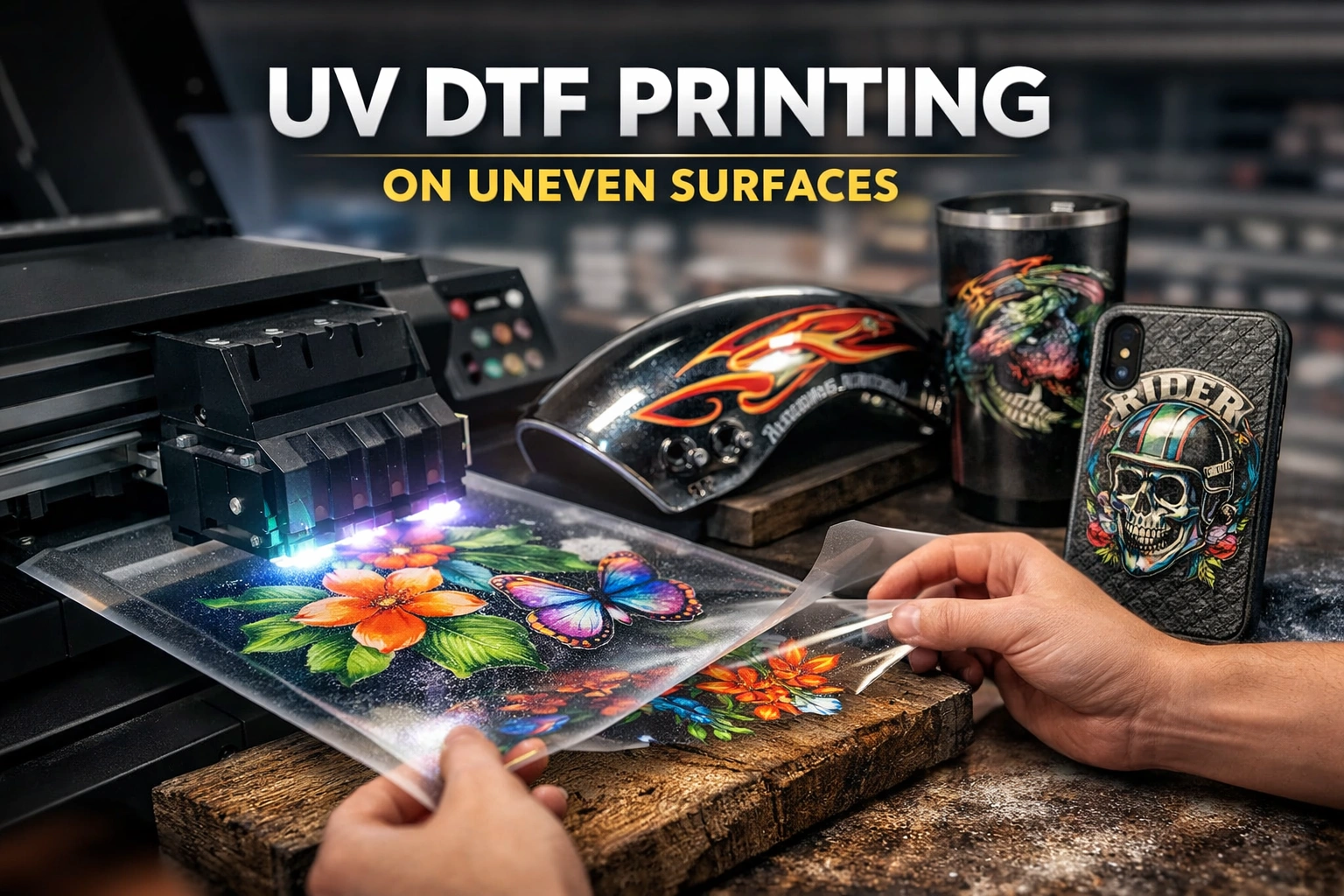
UV DTF (Ultraviolet Direct to Film) printing has rapidly emerged as one of the most innovative printing technologies in the modern customization and manufacturing industry. Unlike conventional printing methods that struggle with irregular textures, curves, and non-flat materials, UV DTF printing offers a flexible and highly durable solution for printing on uneven surfaces. This capability has opened new opportunities for businesses, creators, and manufacturers who want high-quality prints on complex substrates.
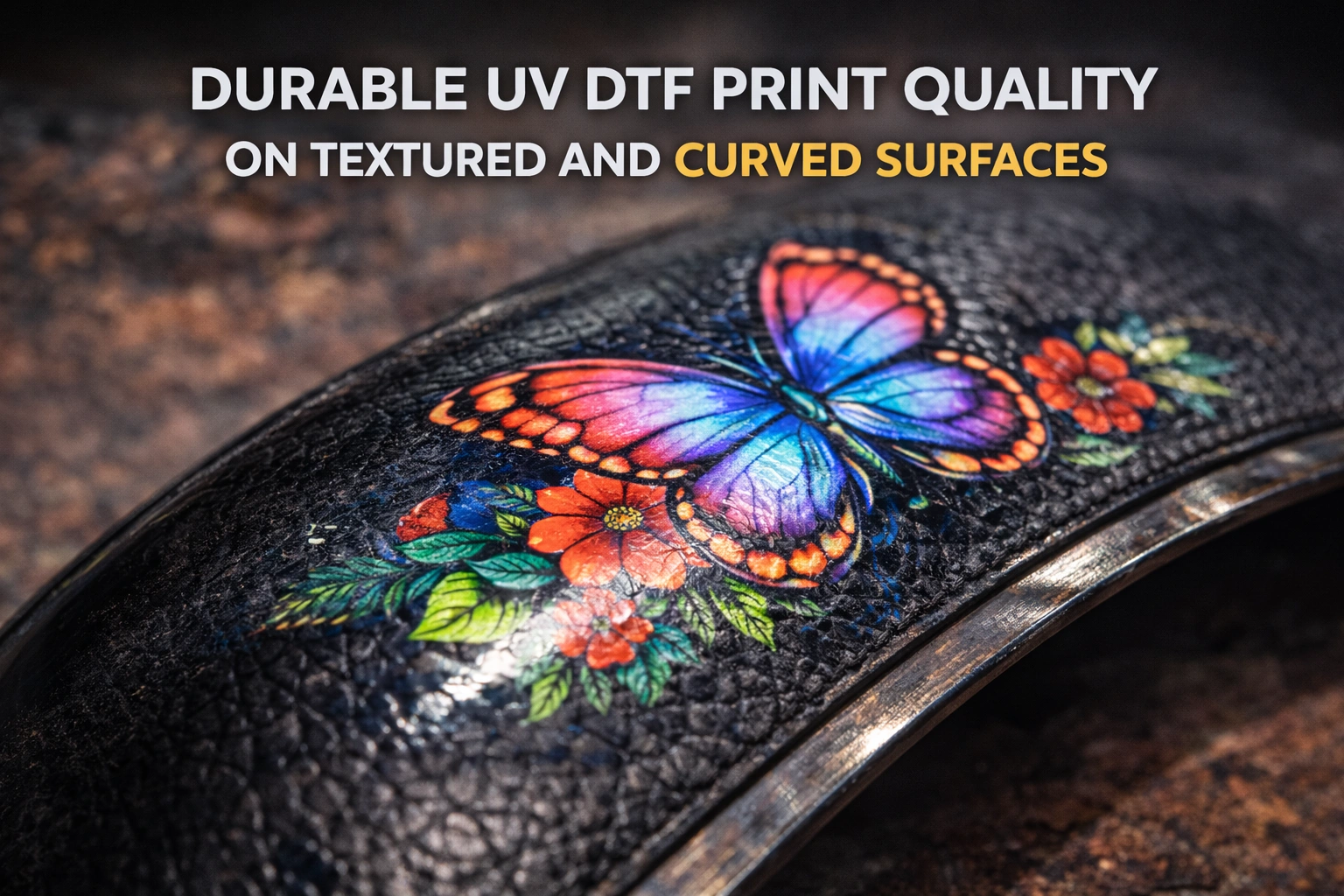
Traditional printing techniques often require perfectly flat surfaces to maintain clarity and adhesion. Uneven materials such as textured plastics, curved metal parts, handcrafted items, and irregular promotional products present significant challenges. UV DTF printing eliminates many of these limitations by allowing designs to be transferred smoothly and securely onto a wide range of surfaces without compromising quality.
In this detailed guide, we will explore how UV DTF printing works, why it is especially effective for uneven surfaces, best practices to achieve professional results, common challenges and solutions, and real-world applications. This article is designed to help beginners and professionals alike understand how to maximize the potential of UV DTF printing while maintaining consistency, durability, and visual appeal.
What Is UV DTF Printing?
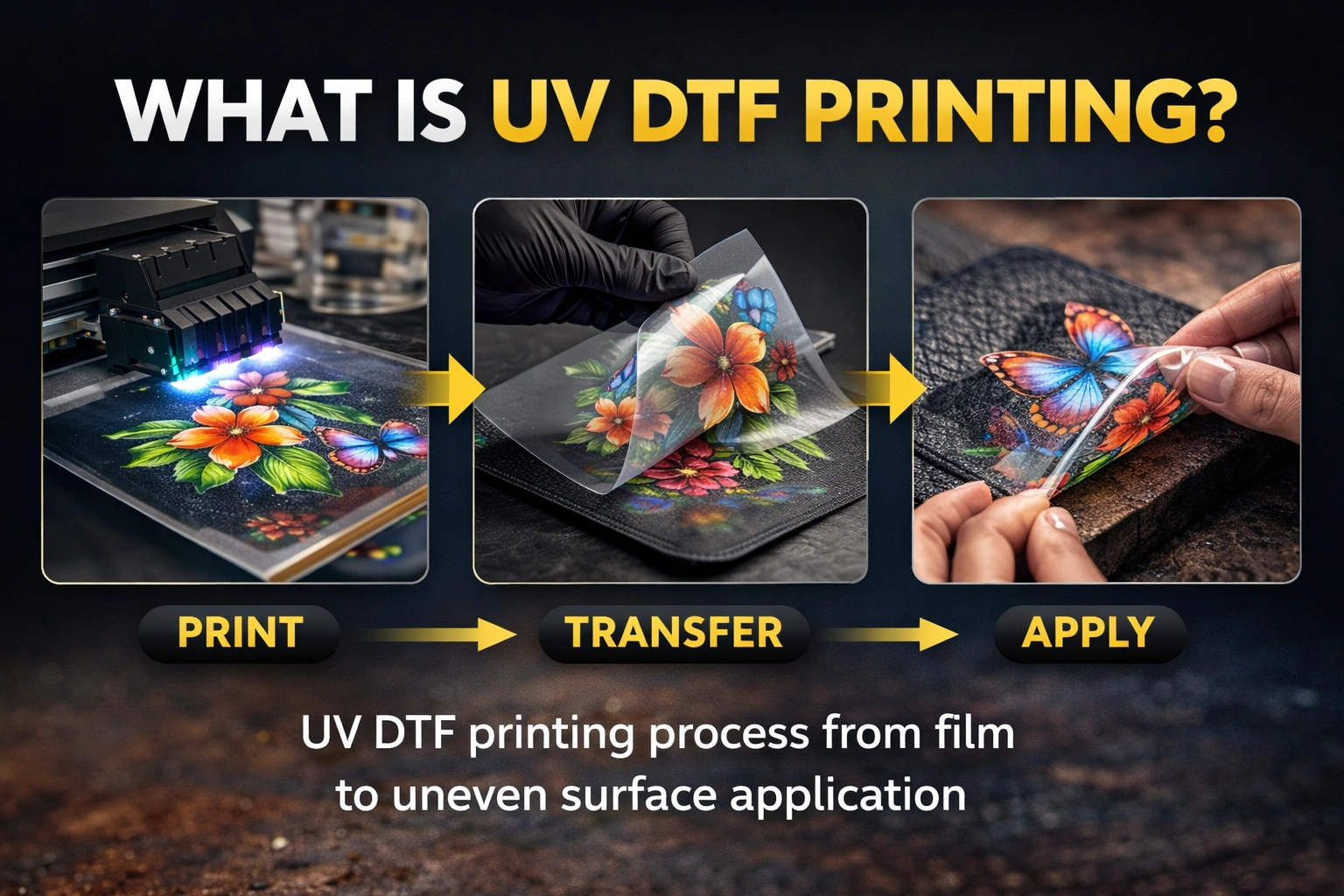
UV DTF printing is a modern digital printing process that combines UV ink technology with a film-based transfer system. Instead of printing directly onto the final surface, the design is first printed onto a special transfer film using UV-curable inks. These inks are instantly cured using ultraviolet light, creating a solid, durable print layer.
Once the design is ready, it is transferred from the film to the target surface using pressure and controlled heat or manual application, depending on the workflow. This indirect printing approach allows the design to adapt to surface irregularities, making UV DTF particularly suitable for uneven, curved, or textured materials.
Unlike heat transfer vinyl or sublimation, UV DTF does not require high temperatures that could damage sensitive substrates. The result is a strong bond with excellent resistance to wear, moisture, chemicals, and UV exposure.
Why UV DTF Is Ideal for Uneven Surfaces
Uneven surfaces pose multiple challenges in printing, including inconsistent ink deposition, poor adhesion, and distortion of designs. UV DTF printing addresses these issues through its flexible transfer mechanism and instant curing process.
The printed film can conform to the shape of the surface during application, allowing the ink layer to settle evenly across ridges, curves, and textures. Because the ink is already cured before transfer, it maintains its structure and clarity even when applied to complex shapes.
This makes UV DTF printing a preferred choice for applications where traditional flatbed or direct printing methods fail or require costly setup adjustments.
Key Advantages of UV DTF Printing
Versatility Across Materials
UV DTF printing works on a wide range of substrates, including plastic, metal, glass, wood, acrylic, leather, ceramics, and coated fabrics. This versatility makes it suitable for diverse industries and product categories.
Exceptional Durability
UV-cured inks create a hard yet flexible layer that resists scratches, fading, chemicals, and environmental exposure. This ensures long-lasting prints even on frequently handled or outdoor products.
High Color Accuracy and Detail
UV DTF printing delivers sharp details, smooth gradients, and vibrant colors. Fine lines and intricate designs remain clear, even on textured or curved surfaces.
Faster Production Workflow
The instant curing of UV inks significantly reduces drying time. This allows faster turnaround times and higher productivity, especially for small-batch or custom orders.
Eco-Friendly Printing
UV DTF printing produces minimal waste and releases fewer volatile organic compounds compared to solvent-based printing methods. This makes it a more environmentally responsible choice.
Surface Preparation for Uneven Materials
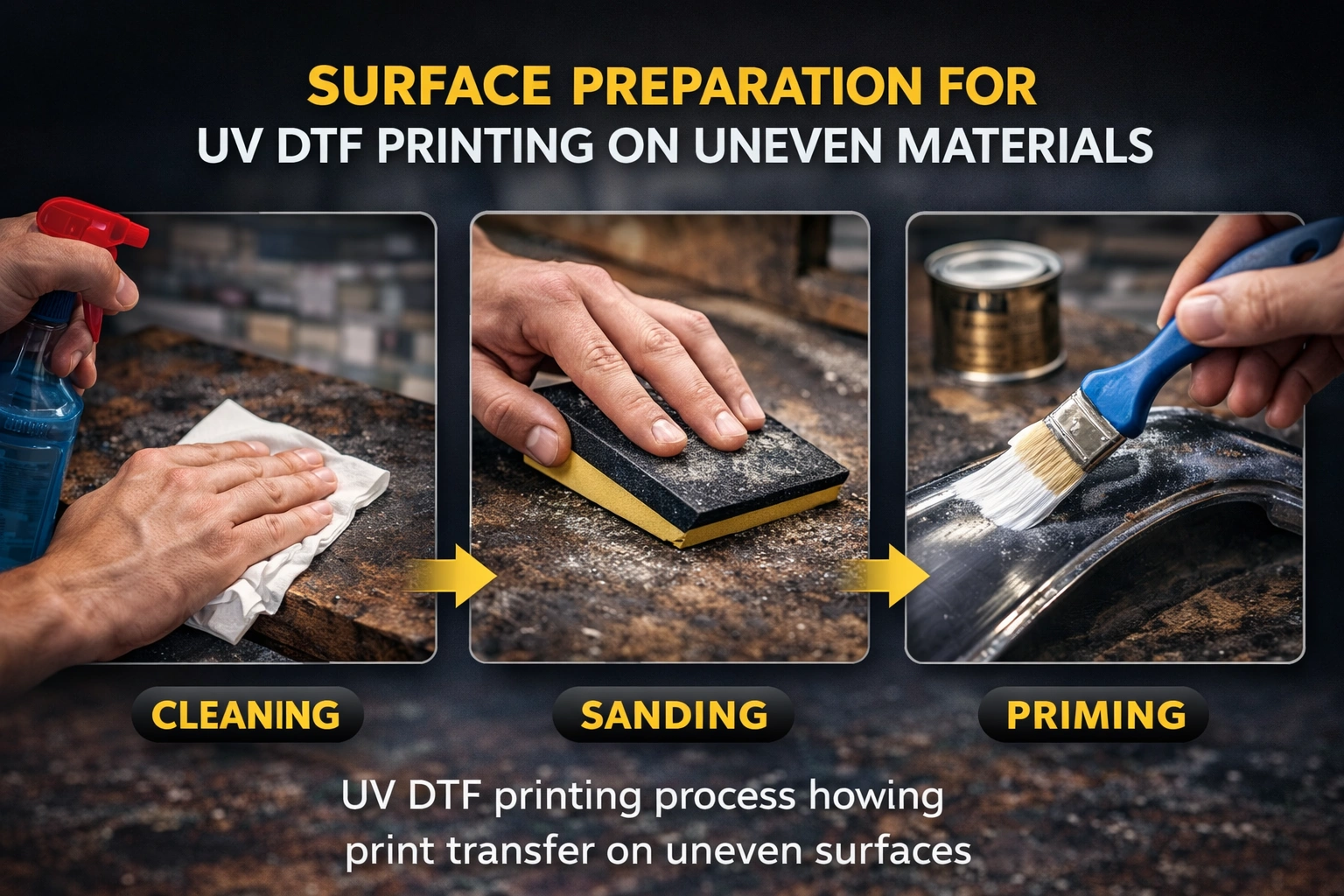
Proper surface preparation is essential for successful UV DTF printing, especially on uneven surfaces. Skipping this step often leads to poor adhesion or premature peeling.
Cleaning the Surface
All dust, oil, moisture, and residues must be removed before application. Even minor contaminants can interfere with adhesion and reduce print lifespan.
Light Sanding When Necessary
For highly textured or rough surfaces, light sanding can help smooth extreme irregularities. This improves contact between the print and the substrate without altering the overall texture.
Using Primers
Certain materials, such as low-energy plastics or coated metals, may benefit from a compatible primer. Primers enhance bonding strength and improve long-term durability.
Choosing the Right UV DTF Film
The quality and characteristics of the transfer film play a crucial role in printing on uneven surfaces.
Flexibility
A flexible film allows the design to adapt to curves, grooves, and textures without cracking or lifting during application.
Film Thickness
Thicker films generally provide better stability and durability, while still conforming to surface variations.
Coating Quality
Specialized coatings improve ink adhesion and release during transfer. Films designed specifically for UV DTF applications produce more consistent results on uneven materials.
Optimizing Printer Settings for Uneven Surfaces
Adjusting printer settings is essential when preparing prints intended for uneven substrates.
Print Head Height
Increasing print head clearance prevents contact with thicker ink layers and reduces the risk of nozzle damage.
Ink Density Control
Balanced ink density ensures full coverage without excessive buildup, which could affect flexibility during transfer.
Pass Count
Using multiple passes improves color saturation and consistency, particularly for textured surfaces that require stronger visual impact.
Applying UV DTF Prints Correctly
Application technique is just as important as printing quality.
Pressure Control
Even, moderate pressure ensures proper adhesion across the entire design. Excessive pressure can distort the print, while insufficient pressure may cause weak bonding.
Temperature Awareness
While UV DTF generally does not rely on high heat, ambient temperature can influence adhesive behavior. Controlled conditions produce more reliable results.
Gradual Application
Applying the film slowly helps prevent air bubbles and ensures the print conforms smoothly to surface irregularities.
Post-Processing for Enhanced Durability
Post-processing adds an extra layer of protection and improves the overall appearance of the final product.
Sealing and Coating
Applying a transparent protective layer enhances resistance to abrasion, moisture, and chemicals, especially for outdoor or high-use products.
Edge Finishing
Trimming excess film and smoothing edges improves aesthetics and reduces the risk of peeling.
Common Challenges and Practical Solutions
Inconsistent Print Quality
This often results from uneven pressure or incorrect film selection. Re-evaluating application technique and material compatibility can resolve the issue.
Adhesion Failures
Poor surface preparation is the most common cause. Thorough cleaning and proper priming usually fix adhesion problems.
Ink Cracking or Lifting
Using flexible inks and high-quality films designed for UV DTF reduces cracking, especially on curved surfaces.
Equipment Maintenance Issues
Regular cleaning and calibration of the printer help maintain consistent ink flow and print quality.
Applications of UV DTF Printing on Uneven Surfaces
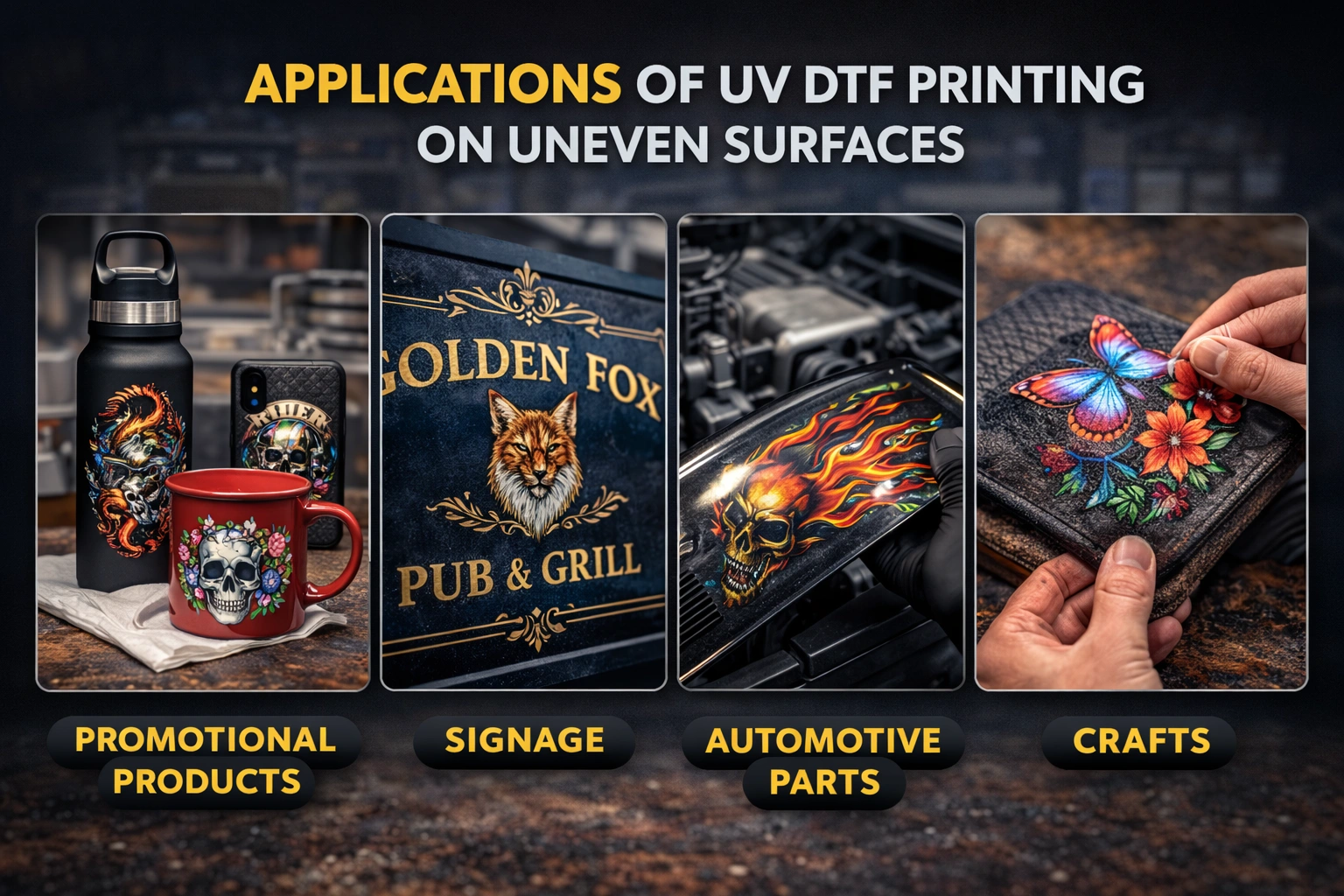
Promotional Products
Customized bottles, mugs, phone cases, and corporate gifts benefit from UV DTF’s adaptability to irregular shapes.
Signage and Displays
UV DTF prints offer durable, vibrant graphics for indoor and outdoor signage on textured panels and curved surfaces.
Decorative and Craft Items
Handmade products, home décor, and artistic pieces gain premium-quality customization without damaging delicate materials.
Automotive and Industrial Parts
UV DTF printing is used for branding and labeling on textured automotive components and industrial equipment.
Fashion and Accessories
Prints on uneven fabrics, leather goods, and accessories add unique design possibilities with long-lasting quality.
Cost Efficiency and Business Benefits
UV DTF printing is cost-effective for both small businesses and large-scale operations. Lower material waste, reduced setup time, and fast production cycles contribute to higher profit margins. The ability to offer customization on complex surfaces also helps businesses stand out in competitive markets.
Future of UV DTF Printing Technology
As UV ink formulations and film technologies continue to improve, UV DTF printing is expected to become even more versatile and accessible. Advances in automation, color management, and eco-friendly materials will further expand its applications across industries.
Conclusion
UV DTF printing on uneven surfaces represents a significant advancement in modern printing technology. By combining flexibility, durability, and exceptional print quality, it overcomes many limitations of traditional printing methods. With proper surface preparation, correct material selection, optimized settings, and careful application, businesses and creators can achieve professional-grade results on even the most challenging substrates.
For those looking to expand their customization capabilities and deliver high-value products, UV DTF printing offers a reliable, efficient, and future-ready solution.explore our high-quality UV-DTF printers here
Frequently Asked Questions
What materials are suitable for UV DTF printing?
UV DTF printing works on plastic, metal, glass, wood, ceramics, acrylic, leather, and coated textiles.
Is UV DTF printing durable for outdoor use?
Yes, UV-cured inks provide excellent resistance to UV light, moisture, and environmental wear.
Does UV DTF require heat pressing?
UV DTF typically relies on pressure rather than high heat, making it suitable for heat-sensitive materials.
Is UV DTF printing beginner-friendly?
With proper guidance and basic training, beginners can quickly learn UV DTF workflows and achieve consistent results.
Is UV DTF printing profitable for small businesses?
Yes, its low waste, fast turnaround, and ability to handle custom orders make it highly profitable for small and medium businesses.