

 HOME
HOME PRODUCT CENTER
 ABOUT US
 DOWNLOAD CENTER
 SUPPORT CENTER
 SUBSCRIBE
 BLOG
BLOG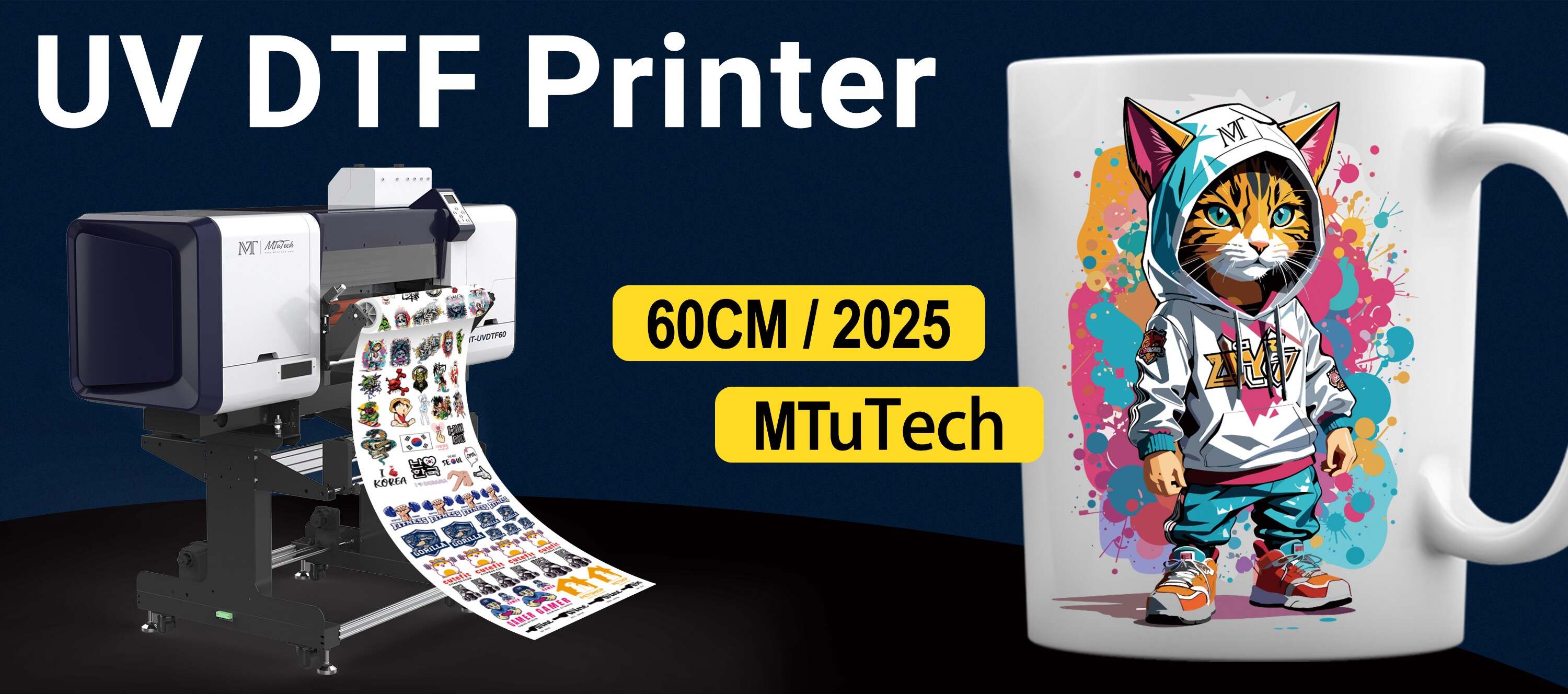
Introduction
In the realm of modern printing technologies, two methods have gained significant attention: Direct-to-Film (DTF) printing and Ultraviolet Direct-to-Film (UV DTF) printing. Additionally, traditional UV printing continues to hold its ground with unique advantages. As businesses strive for high-quality, durable prints, understanding the differences between UV DTF, DTF, and UV printing becomes essential. In this article, we will explore the key differences among these printing techniques, their benefits, features, and when to use each method effectively.
Understanding the Printing Technologies
What is DTF Printing?
Direct-to-Film (DTF) printing is a process that involves printing designs onto a special transfer film using water-based ink. This film is then applied to the desired substrate (like clothing or textiles) with the help of a heat press. DTF printing is particularly popular for its vibrant colors and impressive print quality.
What is UV DTF Printing?
UV DTF printing takes the DTF concept a step further by employing ultraviolet light to cure the ink. This technology allows for immediate drying and offers enhanced durability and adhesion compared to traditional DTF methods. The UV DTF printing is especially beneficial for materials that may be more challenging to adhere to, providing a broader range of substrates compared to standard DTF.
What is UV Printing?
UV printing is a well-established method that uses ultraviolet light to dry or cure ink as it is printed. This technique is commonly used for non-porous surfaces such as plastic, glass, and metal. UV printing offers exceptional print quality, durability, and the ability to print on a wide variety of materials, making it a versatile choice for many applications.
Key Differences Among UV DTF, DTF, and UV Printing
1. Ink Technology
DTF Printing: Utilizes water-based inks that require heat for transfer, providing vibrant colors.
UV DTF Printing: Employs UV inks that cure immediately under UV light, ensuring quick drying and superior durability.
UV Printing: Also uses UV inks but applies them directly onto the substrate, making it suited for rigid surfaces.
2. Substrate Compatibility
DTF Printing: Primarily designed for textiles, especially cotton and blends, making it ideal for custom apparel.
UV DTF Printing: Can print on a diverse range of materials, including textiles, metals, wood, and more.
UV Printing: Excels on non-porous surfaces like glass, plastic, and ceramics, often used for signage and promotional items.
3. Print Quality and Durability
DTF Printing: Offers good quality but can fade over time, especially if exposed to harsh conditions.
UV DTF Printing: Provides enhanced durability, with colors that remain vibrant longer due to the curing process.
UV Printing: Known for its outstanding print quality and durability; UV-printed items are resistant to scratches, fading, and moisture.
4. Production Speed
DTF Printing: Generally slower as it involves multiple steps for transfer.
UV DTF Printing: Faster than DTF due to immediate curing, enabling quicker production times.
UV Printing: Offers rapid output as well, particularly for larger volume prints.
5. Cost Considerations
DTF Printing: Typically lower in terms of initial investment and materials but may require additional costs in heat pressing and transfers.
UV DTF Printing: Higher start-up costs due to the technology but can be justified with versatility and durability.
UV Printing: Initial investment may be significant, but operational costs can be lower with high-quality outputs.
Benefits of Each Printing Method
Benefits of DTF Printing
Cost-effective for smaller production runs.
Excellent for custom apparel and intricate designs.
Easy to use and apply, even for businesses with limited printing experience.
Benefits of UV DTF Printing
Versatile and compatible with various substrates, expanding potential business applications.
Quick curing time allows for faster turnarounds and greater efficiency.
High-quality, vibrant prints with lasting durability.
Benefits of UV Printing
Exceptional quality and detail, ideal for professional applications.
Long-lasting prints resistant to environmental factors.
Ability to print on a wide range of materials beyond textiles.
Conclusion
Choosing between UV DTF, DTF, and UV printing depends significantly on your specific needs and the materials you plan to use. DTF printing excels in textile applications, especially for custom designs, while UV DTF printing broadens the range of substrates and offers quicker production. On the other hand, traditional UV printing remains a powerful choice for durable and high-quality prints on non-porous surfaces. Understanding these differences will empower you to select the most suitable printing method for your projects, enhancing quality and efficiency in your printing endeavors.
FAQ
What is the primary advantage of UV DTF over traditional DTF?
The primary advantage of UV DTF over traditional DTF is its immediate curing process. This allows for faster production rates, increased adhesion to a wider variety of materials, and enhanced durability of the printed images.
Can I use DTF printing for promotional items other than clothing?
While DTF printing is primarily designed for textiles, it can also be applied to some promotional items, such as bags and soft surfaces. However, for hard surfaces like plastic or glass, UV printing is more suitable.
Is UV printing more expensive than DTF printing?
Yes, UV printing generally has higher initial costs due to the equipment and materials involved. However, it can prove more cost-effective in the long run due to its durability and lower operational costs in high-volume production.
What type of ink is used in DTF printing?
DTF printing uses specially formulated water-based inks that create vibrant colors and can transfer to fabrics effectively when heat is applied.
Where can I find high-quality UV DTF printers?
You can explore our high-quality UV-DTF printers here for professional and reliable equipment that meets your printing needs.