

 HOME
HOME PRODUCT CENTER
 ABOUT US
 DOWNLOAD CENTER
 SUPPORT CENTER
 SUBSCRIBE
 BLOG
BLOGUV Printing for Product Line Expansion
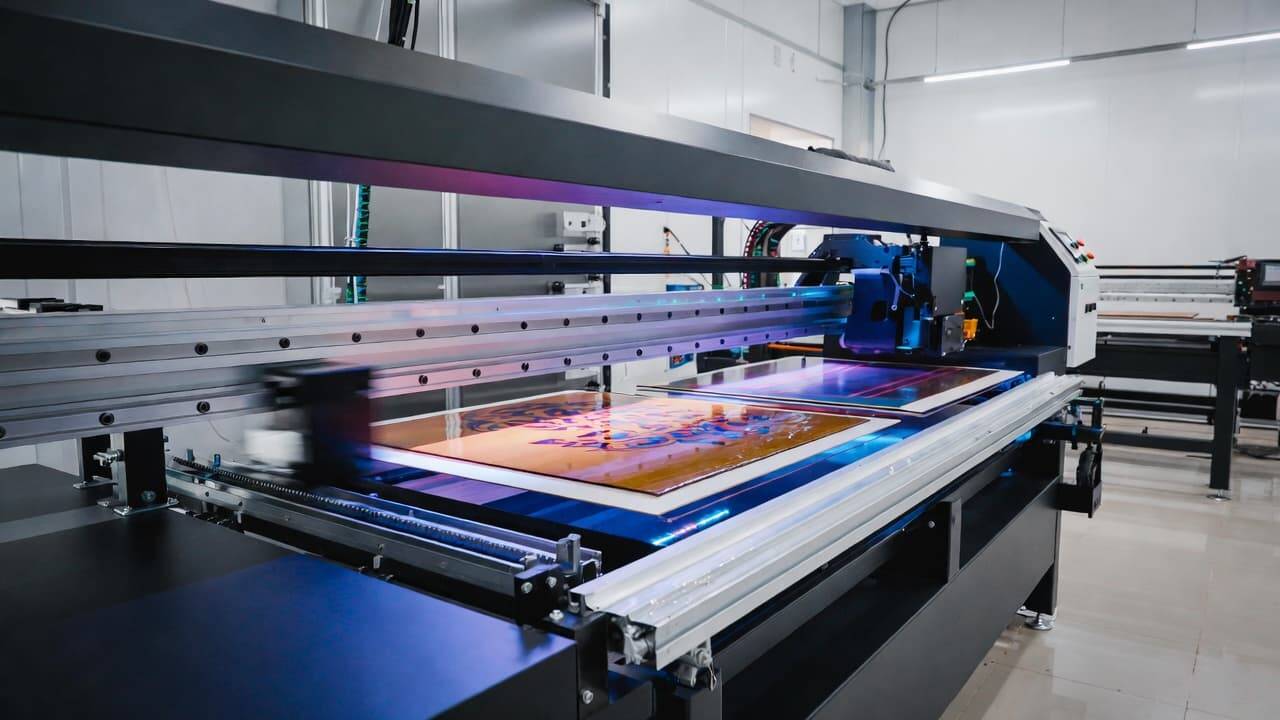
In a rapidly evolving marketplace, businesses must continuously innovate to remain competitive and relevant. Customers today expect personalization, premium quality, and faster delivery—all while demanding sustainable production practices. One technology that enables companies to meet these expectations simultaneously is UV (Ultraviolet) printing.
UV printing has transformed modern manufacturing and customization by allowing high-resolution printing directly onto a wide range of materials beyond traditional paper. From promotional merchandise and signage to décor products and industrial applications, UV printing unlocks entirely new product categories with minimal setup changes.
This article explores how UV printing works, why it has become a preferred technology for forward-thinking businesses, and how it can help expand your product line strategically while improving efficiency and profitability.
What Is UV Printing?
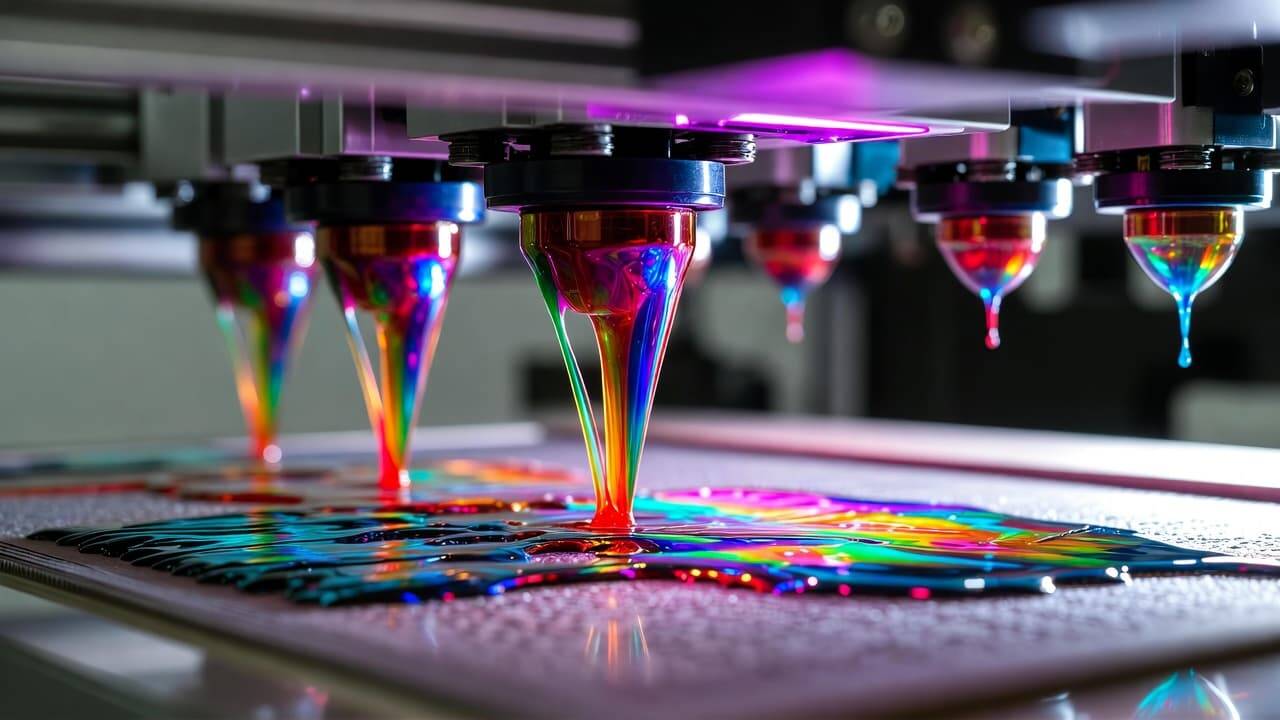
UV printing is a digital printing process that uses ultraviolet light to instantly cure specially formulated inks as they are deposited onto a surface. Unlike conventional printing methods that rely on heat or air drying, UV inks harden immediately when exposed to UV light, forming a durable layer bonded to the substrate.
Because the ink cures instantly, it does not spread or absorb into the material. This allows printing on surfaces that were previously difficult—or impossible—to print on, including:
Acrylic and glass
Wood and MDF
Metal sheets
Plastics and PVC
Leather and synthetic materials
Ceramic tiles
Promotional products and packaging materials
The result is a crisp, vibrant, and highly durable print that maintains detail even on textured or non-porous surfaces.
Why UV Printing Is a Game-Changer for Modern Businesses
Businesses today are not just selling products—they are selling experiences, customization, and brand identity. UV printing supports this shift by enabling short-run production, on-demand personalization, and premium finishes without the need for costly tooling.
Let’s explore the key advantages that make UV printing an ideal solution for product diversification.
Key Benefits of UV Printing
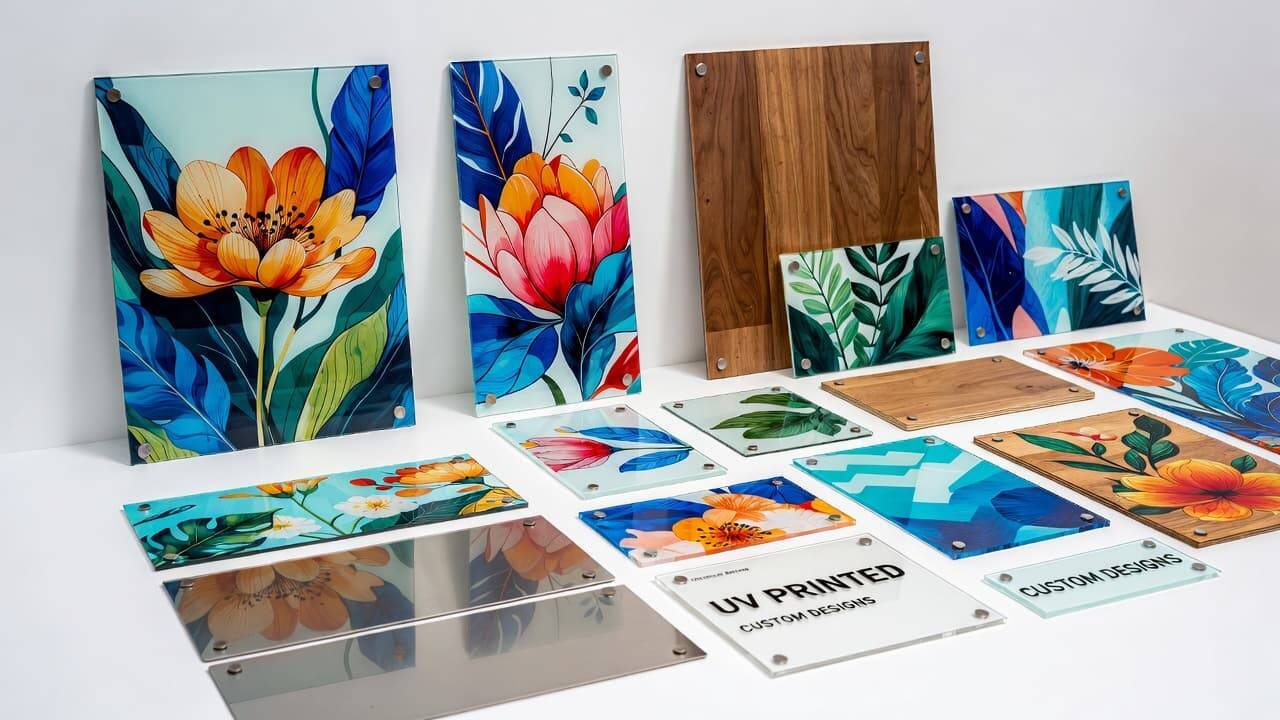
1. Exceptional Versatility
One of the strongest advantages of UV printing is its ability to print on nearly any flat or slightly curved surface. This eliminates the need for multiple printing technologies and allows businesses to explore entirely new product categories using a single machine.
You can transition from printing signage to customized gifts or industrial labels without changing production infrastructure.
2. Instant Curing for Faster Production
UV inks cure immediately under UV light, which means:
No drying time
Faster turnaround
Immediate handling and packaging
Increased production efficiency
This is especially valuable for businesses handling urgent orders or short-run customization jobs.
3. Superior Durability
UV-cured prints are highly resistant to:
Scratching and abrasion
Fading due to UV exposure
Moisture and chemicals
Outdoor weather conditions
This makes UV printing ideal for both indoor décor and outdoor signage applications.
4. High-Quality Visual Output
UV printers produce sharp images, vibrant colors, and precise detailing. Many systems also support white ink and varnish layers, allowing businesses to create:
Textured effects
Spot gloss finishes
Layered designs
Premium packaging aesthetics
This enhances product value and differentiates offerings in competitive markets.
5. Eco-Conscious Printing Process
Compared to traditional solvent-based printing, UV printing produces fewer volatile organic compounds (VOCs) and generates minimal waste. Since the ink cures instantly, there is no evaporation or chemical runoff.
This supports sustainability initiatives while appealing to environmentally conscious customers.
6. Ideal for Customization and Short Runs
UV printing thrives in low-volume, high-value production environments. Businesses can offer:
Personalized corporate gifts
Custom interior décor
On-demand branding solutions
Limited-edition merchandise
This reduces inventory risk and supports agile production models.
Identifying Opportunities for Product Line Expansion
Before adopting UV printing, businesses should evaluate where it can add the most value. Strategic planning ensures that the investment leads to measurable growth rather than simply adding another machine.
Evaluate Existing Offerings
Start by reviewing your current product range. Ask:
Which products could benefit from customization?
Where are you outsourcing printing work?
Are there customer requests you currently cannot fulfill?
For example, a signage company could expand into branded promotional items, while a gift supplier could introduce personalized décor panels.
Study Market Demand
Trends such as personalization, branded environments, and customized interiors are driving demand for UV-printed products.
High-growth segments include:
Corporate branding materials
Home décor customization
Retail display graphics
Event and exhibition materials
Industrial labeling solutions
Understanding these trends helps align new offerings with real market needs.
Explore New Materials
UV printing removes material limitations, allowing businesses to work with substrates they previously ignored.
This opens doors to:
Glass décor panels
Wooden signage
Metal nameplates
Acrylic photo printing
Customized packaging prototypes
Such diversification increases revenue streams without requiring multiple production technologies.
Implementing UV Printing in Your Business
Adopting UV printing successfully requires more than purchasing equipment. It involves aligning operations, skills, and product strategy.
Choose the Right UV Printer
Selecting equipment that matches your target applications is essential. Consider:
Flatbed vs. hybrid systems
Print size requirements
Ink configuration (CMYK, white, varnish)
Production speed
Software compatibility
Investing in reliable technology ensures consistent output and long-term scalability.
Train Your Team
UV printing introduces new workflows, including substrate preparation, color management, and curing control. Proper operator training ensures:
Reduced material waste
Consistent quality
Efficient job setup
Faster adoption of advanced features
Skilled teams unlock the full creative potential of UV technology.
Encourage Experimentation and Prototyping
Innovation often comes from hands-on experimentation. Businesses should allocate time for:
Testing new materials
Creating sample kits
Developing unique finishes
Evaluating customer feedback
This research-driven approach leads to differentiated products that competitors cannot easily replicate.
Product Ideas You Can Launch Using UV Printing
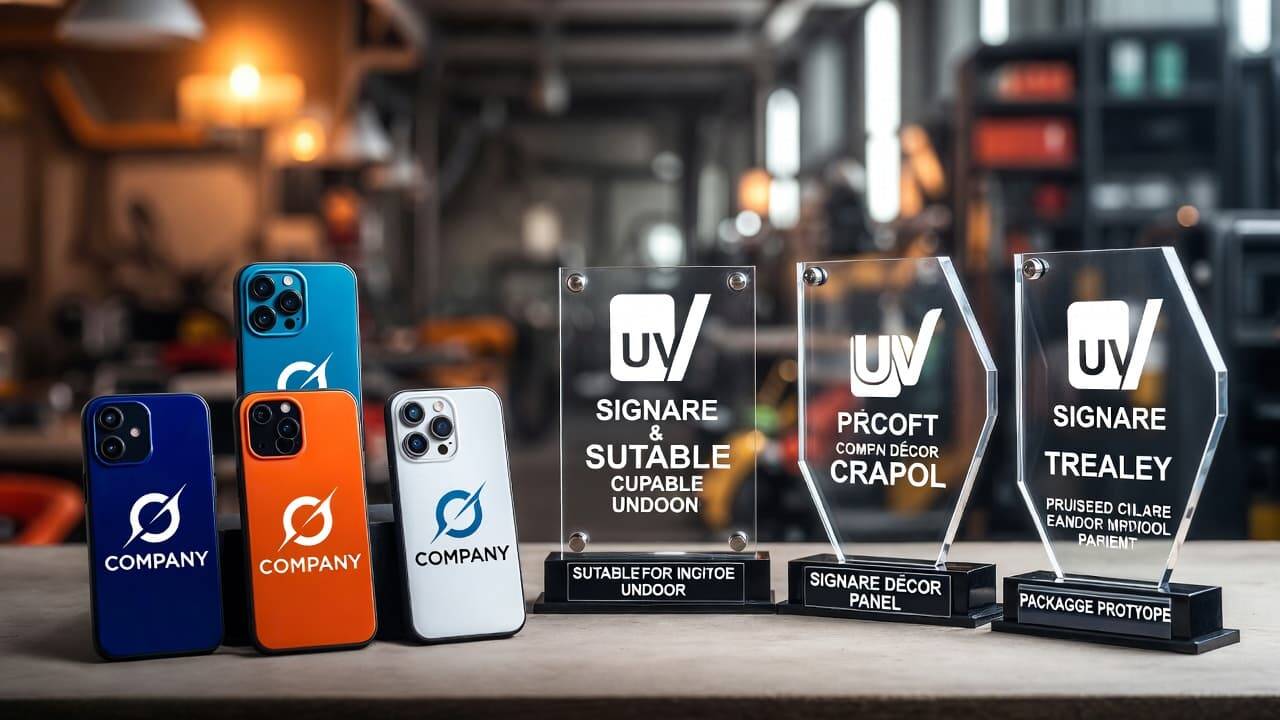
UV printing supports a wide variety of high-margin products, including:
Customized corporate gifts
Branded phone cases and accessories
Interior décor panels and wall art
Personalized awards and plaques
Retail display graphics
Industrial control panels
Architectural signage
Luxury packaging prototypes
Each of these categories allows businesses to enter niche markets with strong profit potential.
Marketing Strategies for Your Expanded Product Line
Introducing new UV-printed products requires a well-planned marketing approach to communicate value and attract the right customers.
Showcase Visual Impact
UV printing is highly visual. Use high-quality photography and real-world applications to highlight:
Texture and dimensional effects
Vibrant color reproduction
Material versatility
Demonstrations often convert interest into sales faster than technical explanations.
Build a Customization-Focused Brand Message
Promote the ability to create one-of-a-kind products. Customers increasingly value personalization over mass production.
Campaign ideas include:
“Design Your Own” product series
Limited-edition collections
Corporate branding packages
Personalized gifting solutions
Optimize Your Website for Search Visibility
To rank well on search engines, integrate relevant keywords naturally throughout your content, such as:
UV printing services
Custom UV printed products
Direct-to-substrate printing
Industrial UV printing solutions
Personalized UV printing
Focus on helpful, informative content that answers customer questions rather than keyword stuffing.
Use Sample Kits to Attract B2B Clients
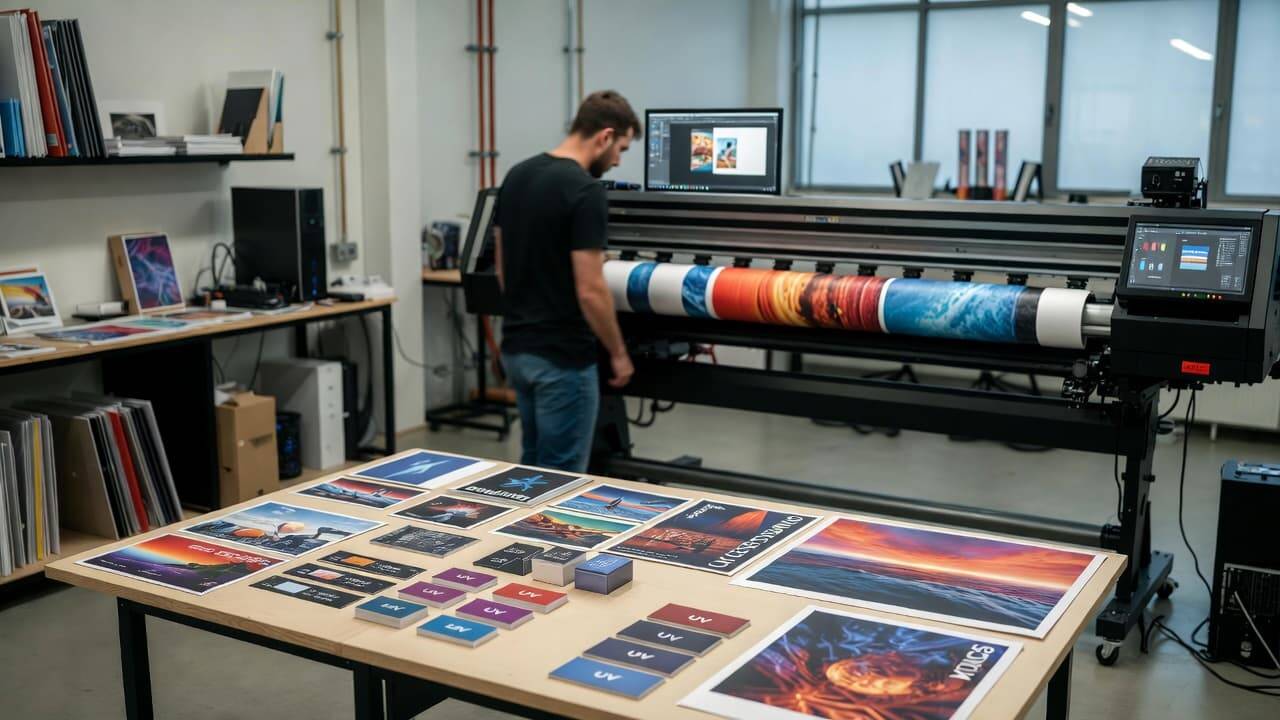
For corporate and industrial buyers, physical samples build confidence. Providing material kits showcasing different finishes and substrates can significantly improve conversion rates.
Real-World Applications of UV Printing in Business Growth
Many businesses have successfully leveraged UV printing to transform their offerings.
A promotional product supplier, for example, expanded into premium corporate gifting using UV printing on metal, glass, and acrylic items. This allowed them to target high-value clients rather than competing in low-margin bulk merchandise.
Similarly, a signage company diversified into interior décor and architectural graphics, using the same UV equipment to produce customized wall panels and branded environments.
In both cases, UV printing enabled entry into higher-margin markets without dramatically increasing operational complexity.
Operational Advantages That Improve Profitability
Beyond product expansion, UV printing contributes to operational efficiency:
Reduced outsourcing costs
Faster production cycles
Lower inventory requirements
Greater control over customization
Ability to handle short-run orders profitably
These advantages make UV printing not just a production upgrade—but a strategic business tool.
Challenges to Consider Before Adoption
While UV printing offers many benefits, businesses should plan for:
Initial capital investment
Learning curve for operators
Material testing requirements
Maintenance and environmental control
Addressing these factors early ensures smoother implementation and faster ROI.
Future Trends in UV Printing
UV printing continues to evolve with advancements such as:
Higher-speed industrial UV systems
Expanded automation and workflow integration
Sustainable ink technologies
Enhanced texture and 3D printing effects
Greater compatibility with smart manufacturing environments
These developments suggest that UV printing will play an even larger role in digital manufacturing and customization-driven markets.
Conclusion
UV printing has emerged as one of the most versatile and future-ready technologies in the printing and manufacturing landscape. Its ability to print directly on diverse materials, deliver exceptional durability, and support rapid customization makes it a powerful solution for businesses seeking to expand their product lines.explore our high-quality UV printers here.
By carefully identifying opportunities, investing in the right equipment, training teams, and adopting strong marketing strategies, companies can unlock new revenue streams and differentiate themselves in competitive markets.
Rather than simply improving print quality, UV printing enables businesses to rethink what they can create, how they produce it, and how they deliver value to customers.
For organizations focused on innovation, flexibility, and long-term growth, UV printing is not just an upgrade—it is a strategic transformation.
Frequently Asked Questions (FAQ)
How does UV printing differ from traditional printing?
UV printing cures ink instantly using ultraviolet light, whereas traditional printing relies on drying or heat. This allows faster production and printing on non-porous materials.
Is UV printing suitable for outdoor applications?
Yes, UV-cured prints are highly resistant to weather, fading, and abrasion, making them ideal for outdoor signage and displays.
What materials can be printed using UV technology?
UV printers can print on materials such as glass, wood, acrylic, plastic, metal, leather, and many other rigid or semi-rigid substrates.
Is UV printing environmentally friendly?
UV printing produces fewer emissions and reduces waste because inks cure instantly without solvents, making it a more sustainable option.
Can UV printing support small batch customization?
Absolutely. UV printing is especially effective for short runs and personalized production, allowing businesses to offer tailored products without large inventory commitments.