

 HOME
HOME PRODUCT CENTER
 ABOUT US
 DOWNLOAD CENTER
 SUPPORT CENTER
 SUBSCRIBE
 BLOG
BLOGAI Vision Correction in UV Printing
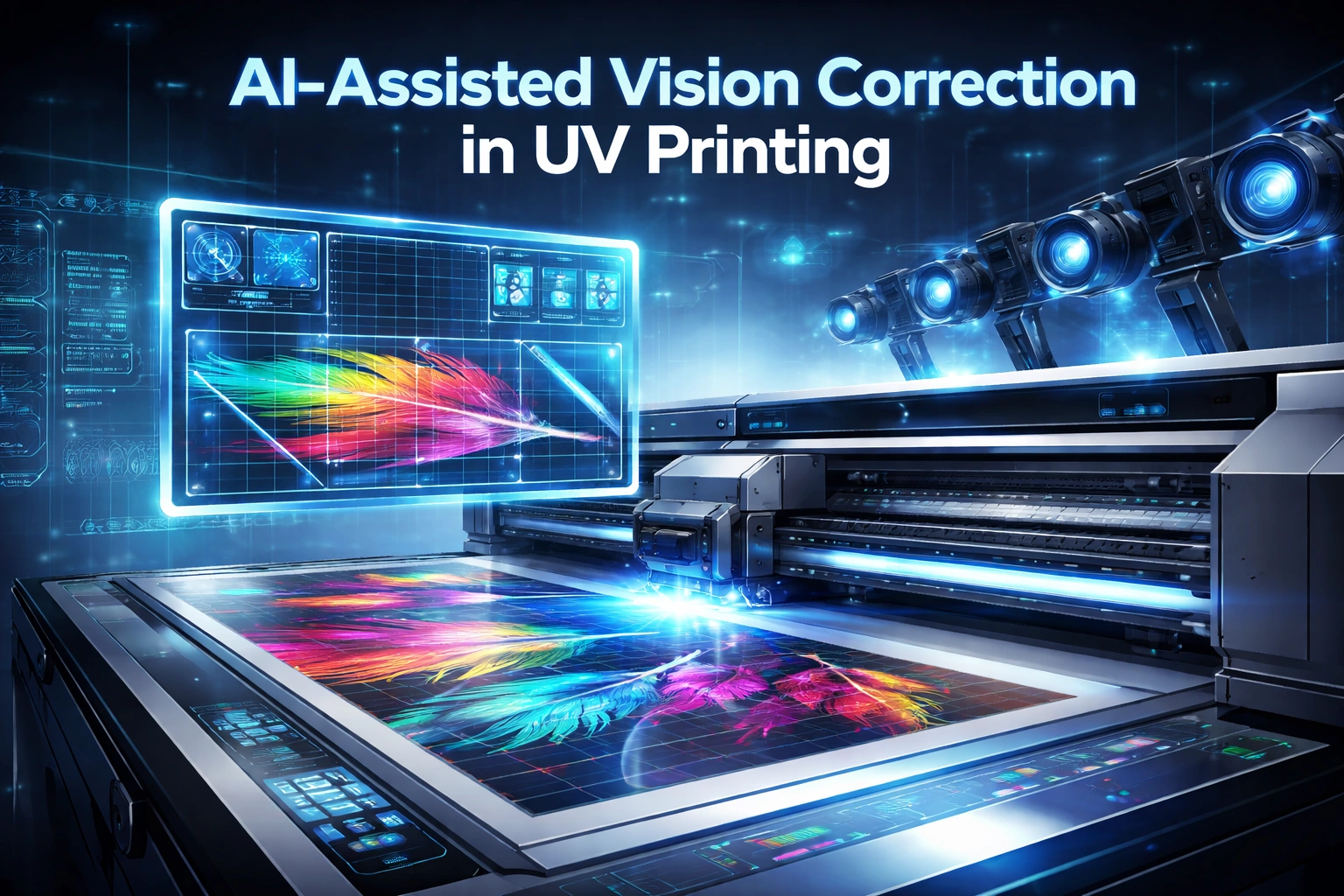
The UV printing industry has undergone rapid transformation over the last decade. What was once considered a premium or niche printing technology has now become a mainstream solution for businesses that demand speed, durability, and exceptional print quality. As competition grows and customer expectations rise, printers are under constant pressure to deliver flawless results with minimal waste and faster turnaround times.
One of the most impactful developments addressing these demands is AI-assisted vision correction. This technology has fundamentally changed how UV printers detect, analyze, and correct printing errors. Instead of relying heavily on manual calibration and operator experience, modern UV printers are now capable of “seeing” substrates, understanding variations, and making intelligent decisions in real time.
This renewed article explores AI-assisted vision correction in depth—how it works, why it matters, the tangible benefits it offers, and how it is shaping the future of UV printing. The content is fully reworked, SEO-focused, and original, designed to help this topic rank well on Google while avoiding copyright risks.
The Evolution of Vision Systems in UV Printers
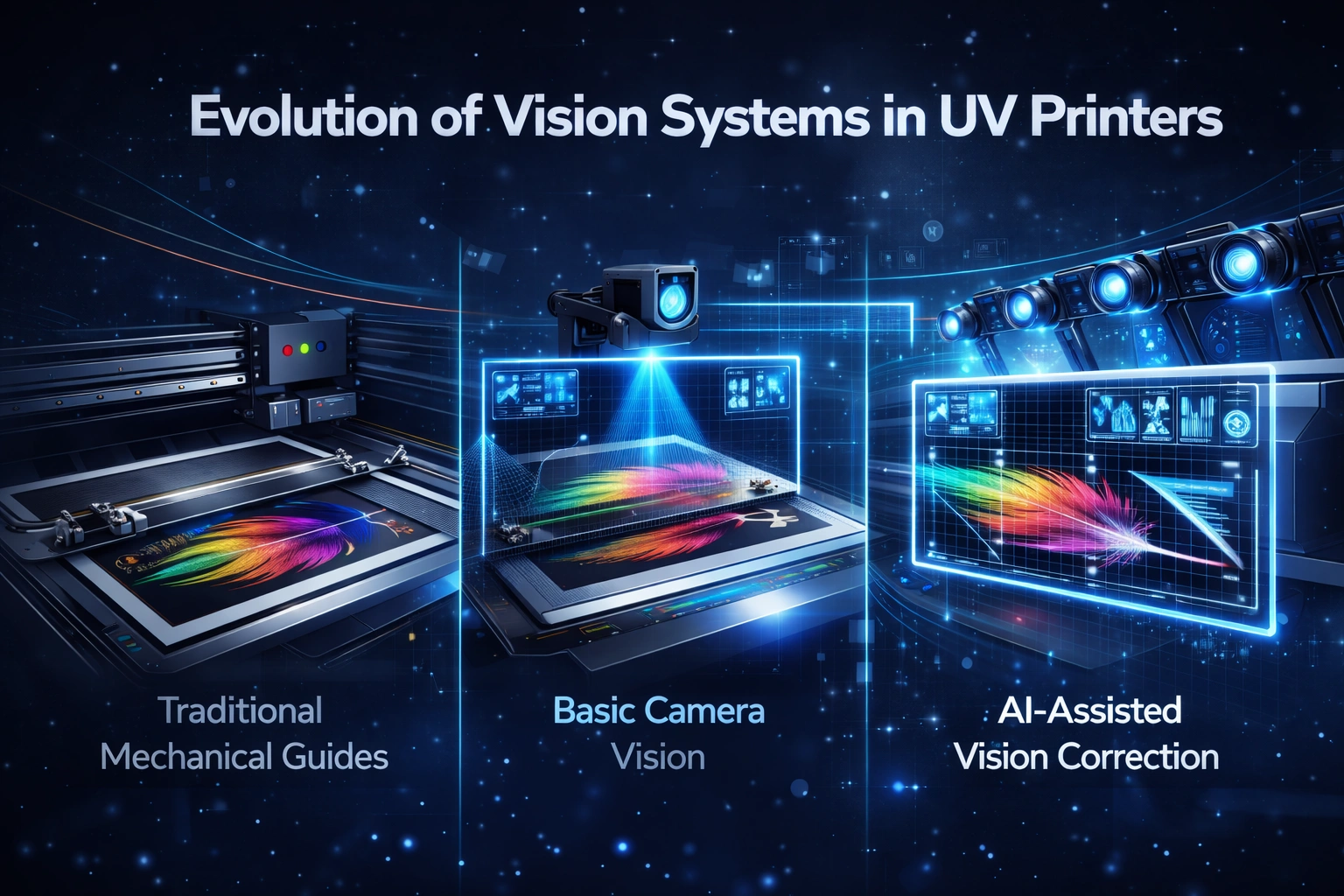
In the early days of UV printing, alignment and positioning depended largely on mechanical guides, fixed jigs, and operator judgment. While these methods worked to a degree, they often resulted in inconsistencies—especially when printing on irregular, transparent, or pre-cut materials.
Basic camera-based vision systems were later introduced to improve alignment. These systems could detect reference points or registration marks, but they were limited by static rules. If lighting conditions changed, substrates warped slightly, or designs varied, accuracy suffered.
AI-assisted vision correction represents the next stage of this evolution. Instead of simply “detecting,” AI systems analyze, learn, and adapt. They continuously improve based on historical data and real-time feedback, making UV printers smarter and more autonomous than ever before.
What Is AI-Assisted Vision Correction?
AI-assisted vision correction is the integration of artificial intelligence, machine learning, and advanced imaging into the UV printing workflow. It allows printers to automatically identify the exact position, orientation, and condition of a substrate and then correct printing parameters accordingly.
Unlike traditional vision systems that follow predefined instructions, AI-powered systems evaluate thousands of data points simultaneously. They can recognize patterns, predict potential errors, and adjust print alignment even before defects occur.
In simple terms, AI vision correction enables UV printers to:
Detect substrates with extreme accuracy
Compensate for shifts, rotations, or distortions
Maintain consistent quality across long production runs
Reduce reliance on manual setup and rework
How AI-Assisted Vision Correction Works
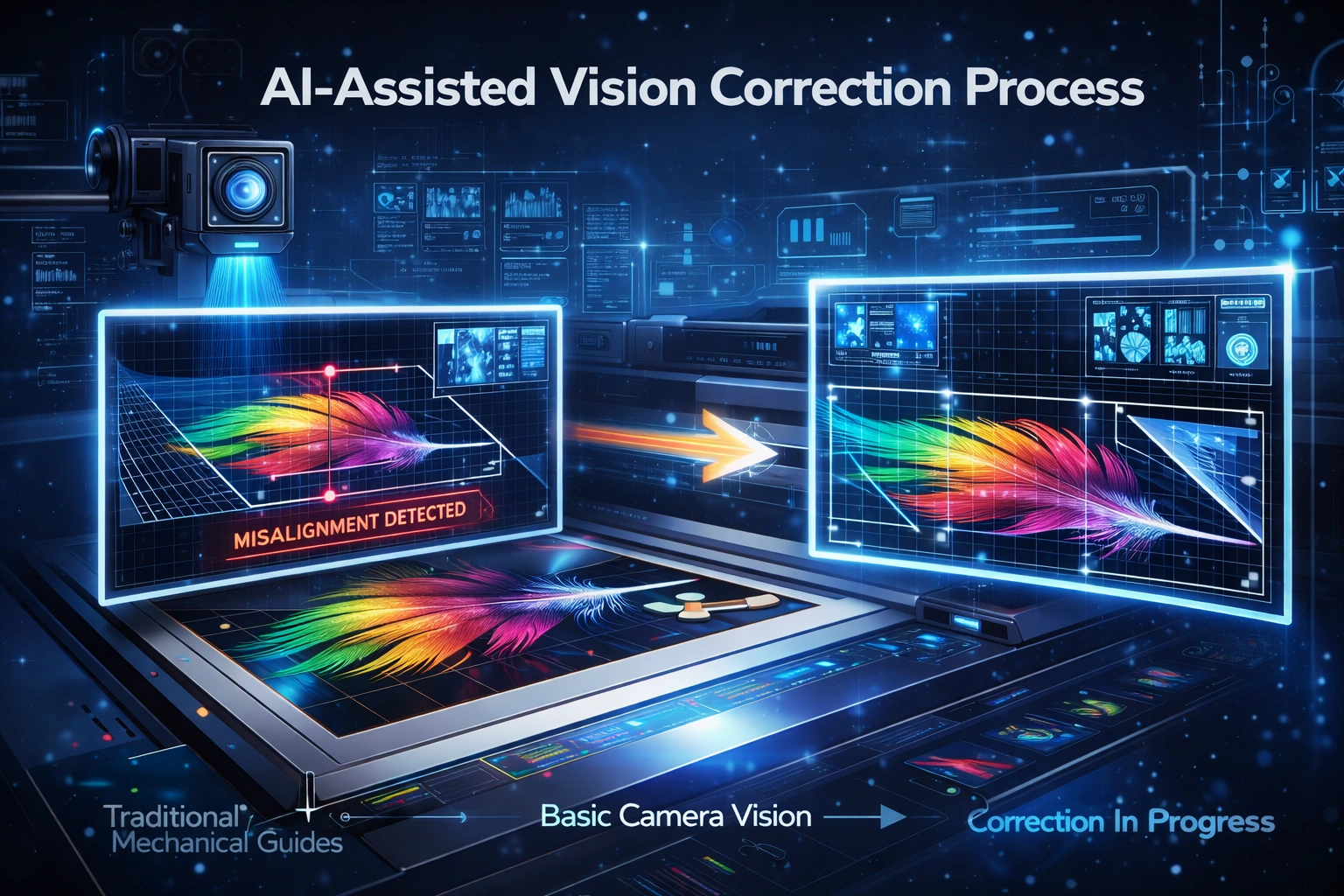
Advanced Image Capture
High-resolution industrial cameras capture images of the substrate placed on the printer bed. These cameras operate under controlled lighting conditions to ensure consistent and accurate visual data, even on reflective or transparent materials.
Intelligent Image Processing
AI algorithms process the captured images in real time. They identify edges, shapes, textures, and reference points on the substrate. Unlike rule-based systems, AI does not depend solely on pre-programmed markers—it can recognize irregular outlines and natural variations.
Machine Learning Analysis
As the printer completes more jobs, the AI system learns from previous data. It understands how different materials behave, how environmental factors affect alignment, and which corrections lead to the best results. Over time, this learning significantly improves accuracy and efficiency.
Real-Time Correction
Once analysis is complete, the system automatically adjusts print positioning, scaling, and alignment. These corrections happen instantly, allowing printing to continue without pauses or manual intervention.
Why Vision Correction Is Critical in UV Printing
UV printing often involves non-standard substrates such as acrylic sheets, wooden panels, leather, glass, metal, and pre-shaped promotional items. These materials are rarely perfectly uniform. Even a minor shift can result in misprints, color overlaps, or wasted products.
AI-assisted vision correction ensures that every print aligns perfectly with the substrate, regardless of minor placement errors or material inconsistencies. This is especially crucial for industries where precision is non-negotiable, such as packaging, electronics, and luxury branding.
Key Benefits of AI-Assisted Vision Correction
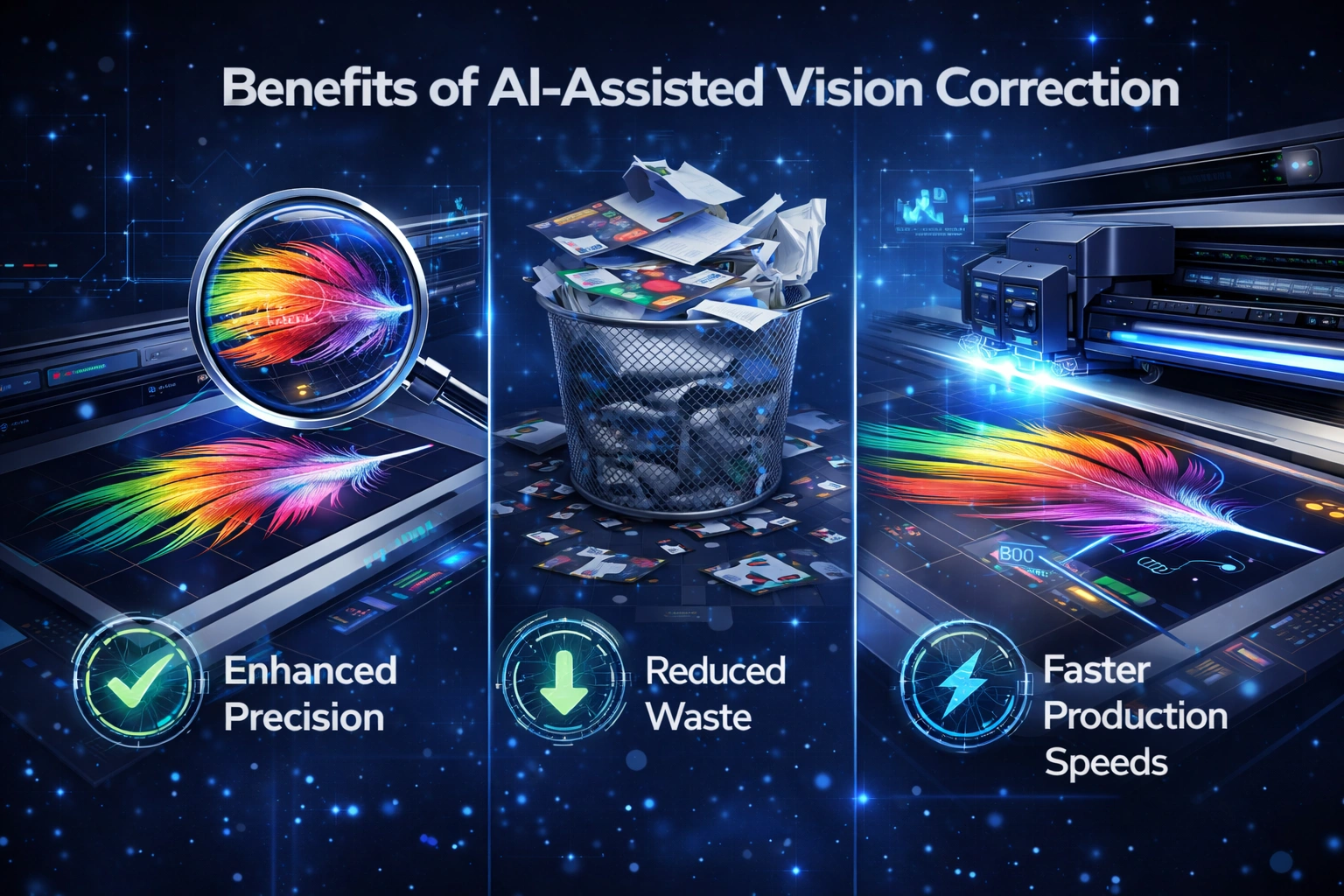
Superior Print Accuracy
AI systems can detect deviations measured in fractions of a millimeter. This level of precision ensures sharp edges, perfect registration, and consistent placement—even on complex or irregular surfaces.
Significant Waste Reduction
By identifying errors before ink is deposited, AI-assisted vision correction minimizes rejected prints. Less waste means lower material costs, reduced ink consumption, and improved sustainability.
Faster Production Speeds
Because manual alignment and repeated test prints are no longer necessary, production workflows become much faster. Printers can handle higher volumes without sacrificing quality.
Lower Operational Costs
Although AI-enabled UV printers may have higher upfront costs, the long-term savings are substantial. Reduced waste, fewer reprints, and minimal downtime translate into improved profitability.
Reduced Skill Dependency
AI-assisted systems simplify operation, making it easier for new or less-experienced operators to achieve professional results. This reduces training time and dependency on highly skilled technicians.
Intelligent Features Enabled by AI Vision Correction
Automatic Substrate Recognition
AI systems can automatically identify substrate size, shape, and position. This eliminates the need for manual measurements and setup, ensuring consistent results across multiple jobs.
Smart Calibration
Instead of fixed calibration routines, AI adjusts calibration dynamically based on real-time conditions. This ensures stable performance even when environmental factors change.
Continuous Quality Monitoring
AI continuously monitors print output and compares it against predefined quality standards. If deviations occur, corrections are applied instantly without stopping production.
Predictive Maintenance Insights
By analyzing performance data, AI can detect early signs of mechanical or electronic issues. This allows maintenance to be scheduled proactively, reducing unexpected downtime.
Applications Across Industries
AI-assisted vision correction is not limited to one sector. Its impact can be seen across multiple industries:
Packaging and Labeling: Accurate alignment on die-cut and pre-printed materials
Signage and Advertising: Consistent results on large or irregular boards
Promotional Products: Precision printing on customized items
Interior Décor: Perfect placement on tiles, panels, and decorative surfaces
Industrial Manufacturing: Reliable marking and branding on components
Each of these applications benefits from improved accuracy, speed, and repeatability.
AI Vision Correction vs Traditional Vision Systems
Traditional vision systems rely on fixed parameters and predefined reference points. While effective in controlled environments, they struggle with variation. AI-assisted systems, on the other hand, adapt to change.
They learn from errors, improve over time, and handle complex scenarios without constant human intervention. This adaptability makes AI-based vision correction far more suitable for modern, high-mix printing environments.
Integration with Smart Manufacturing
AI-assisted vision correction plays a vital role in the broader movement toward smart manufacturing. When combined with automation, data analytics, and connected workflows, UV printers become intelligent production units capable of self-optimization.
This integration enables better production planning, accurate job tracking, and real-time performance insights—helping businesses scale efficiently.
Challenges and Considerations
While the benefits are significant, businesses should consider a few factors before adoption:
Initial Investment: AI-enabled systems may require higher upfront costs
Software Updates: Regular updates are essential to maintain performance
Data Quality: The effectiveness of AI depends on clean and accurate data
However, for most commercial operations, these challenges are outweighed by long-term gains.
Future of AI-Assisted Vision Correction in UV Printing
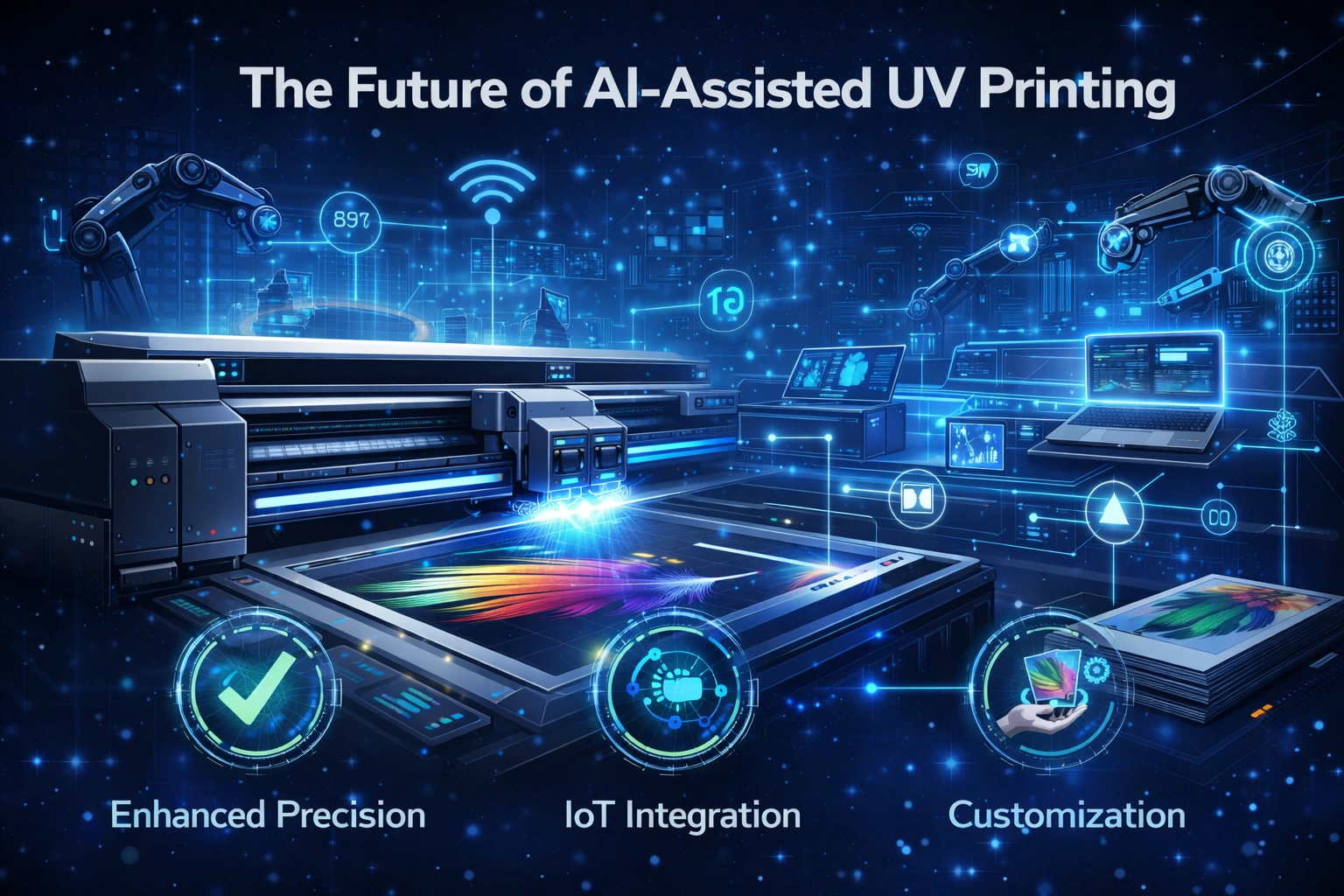
The future of UV printing is deeply connected to artificial intelligence. As algorithms become more advanced, vision systems will achieve even greater accuracy and autonomy.
We can expect improvements such as:
Deeper learning from global print data
Enhanced customization for niche applications
Smarter integration with robotic handling systems
Greater energy and resource efficiency
These advancements will continue to push UV printing toward fully autonomous production environments.
Conclusion
AI-assisted vision correction has emerged as a game-changing innovation in UV printing. By combining intelligent imaging, machine learning, and real-time correction, it solves long-standing challenges related to alignment, accuracy, and waste.
For printing businesses aiming to stay competitive, adopting AI-driven vision technology is no longer a luxury—it is a strategic necessity. As this technology continues to evolve, it will redefine quality standards and operational efficiency across the entire UV printing industry. explore our high-quality Visual Positioning UV printers here
Frequently Asked Questions
What is AI-assisted vision correction in UV printers?
It is a technology that uses artificial intelligence and advanced imaging to automatically detect and correct alignment issues during the printing process.
Does AI vision correction improve print quality?
Yes, it significantly enhances accuracy, consistency, and overall print quality by making real-time adjustments.
Can existing UV printers be upgraded with AI vision systems?
Some manufacturers offer upgrade options, but compatibility depends on hardware and software architecture.
Is AI-assisted vision correction suitable for small businesses?
Yes, especially for businesses seeking reduced waste, faster production, and consistent quality without heavy reliance on skilled labor.
What is the long-term value of AI vision correction?
Over time, it lowers operational costs, improves productivity, and future-proofs printing operations against rising quality demands.