

 HOME
HOME PRODUCT CENTER
 ABOUT US
 DOWNLOAD CENTER
 SUPPORT CENTER
 SUBSCRIBE
 BLOG
BLOGHow Visual Positioning Helps in Automated Print Inspection
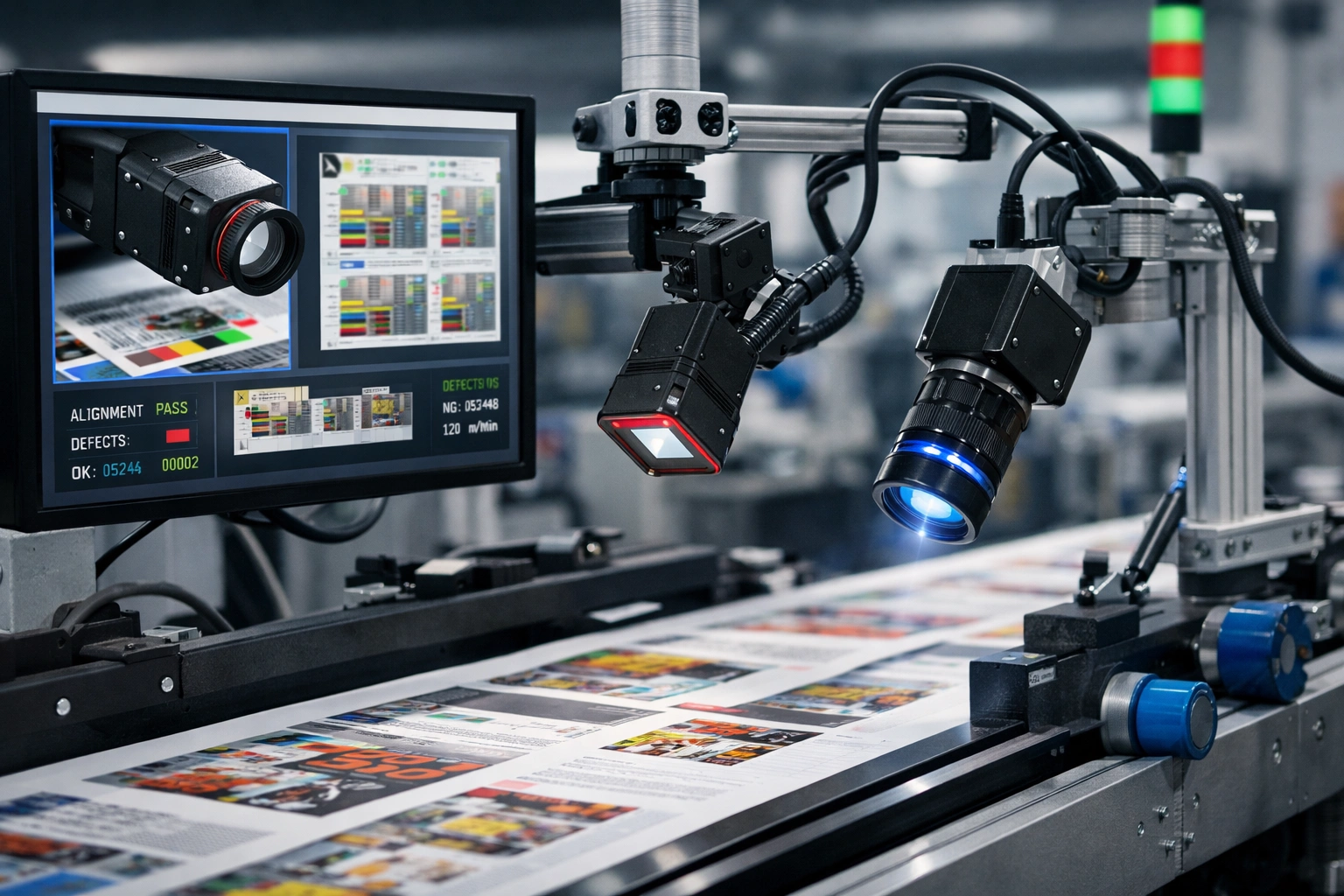
In today’s highly competitive printing industry, quality is no longer optional—it is a strict requirement. Whether it is packaging, labels, promotional materials, or industrial printing, customers expect flawless and consistent output every time. Traditional manual inspection methods are no longer sufficient to meet modern speed and accuracy demands. This is where automated print inspection, combined with visual positioning technology, becomes a powerful solution.
Visual positioning systems use advanced cameras, intelligent software, and automation to monitor and inspect prints in real time. These systems not only detect defects instantly but also improve overall production efficiency. In this article, we will explore how visual positioning enhances automated print inspection, how it works, its key benefits, challenges, and the future of this technology in the printing industry.
What Is Automated Print Inspection?
Automated print inspection is a quality control process in which printed materials are checked automatically during or immediately after printing. It uses hardware and software systems to analyze prints against predefined quality standards.
Compared to manual inspection, automated inspection offers:
Faster inspection speed
Reduced human error
Consistent quality evaluation
Better suitability for high-volume production
However, automated inspection becomes truly effective when advanced technologies like visual positioning are integrated into the system.
What Is Visual Positioning?
Visual positioning is a technology that uses cameras and vision-based software to detect the exact position, alignment, and orientation of printed objects. The primary goal of this system is to accurately identify the printed product and compare it with a reference image.
In printing applications, visual positioning systems:
Verify accurate print placement
Check alignment between design and substrate
Detect micro-level defects
Identify variations instantly
In simple terms, visual positioning gives automated inspection systems “eyes” that continuously monitor every detail of the printing process.
How Visual Positioning Improves Automated Print Inspection
1. Accurate Alignment Verification
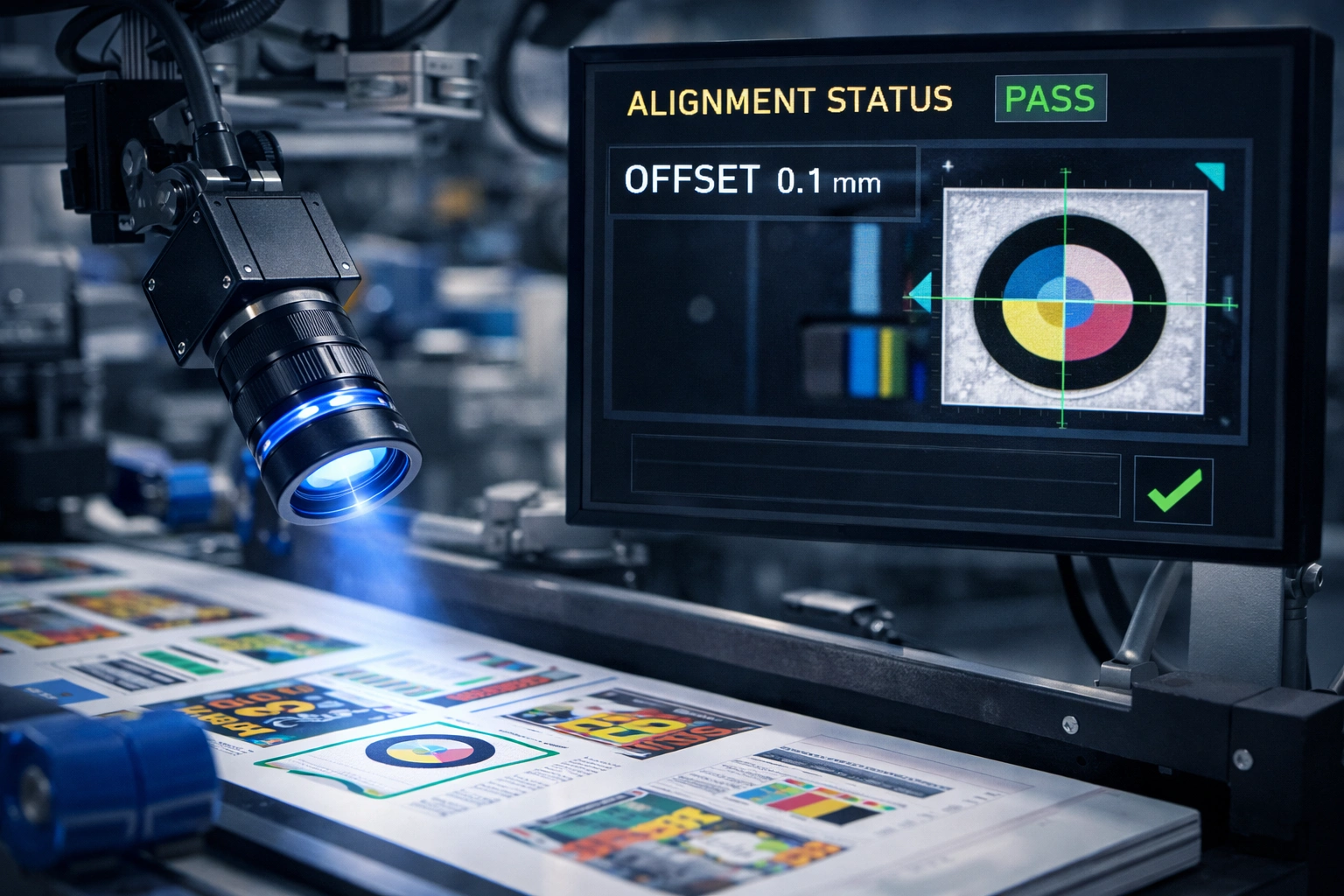
One of the most common problems in printing is misalignment. Even a slight shift in the design can lead to product rejection. Visual positioning systems compare the printed output with a reference image to verify exact placement.
This helps to:
Detect offset issues instantly
Identify skewed or rotated prints
Eliminate registration errors
2. Real-Time Defect Detection
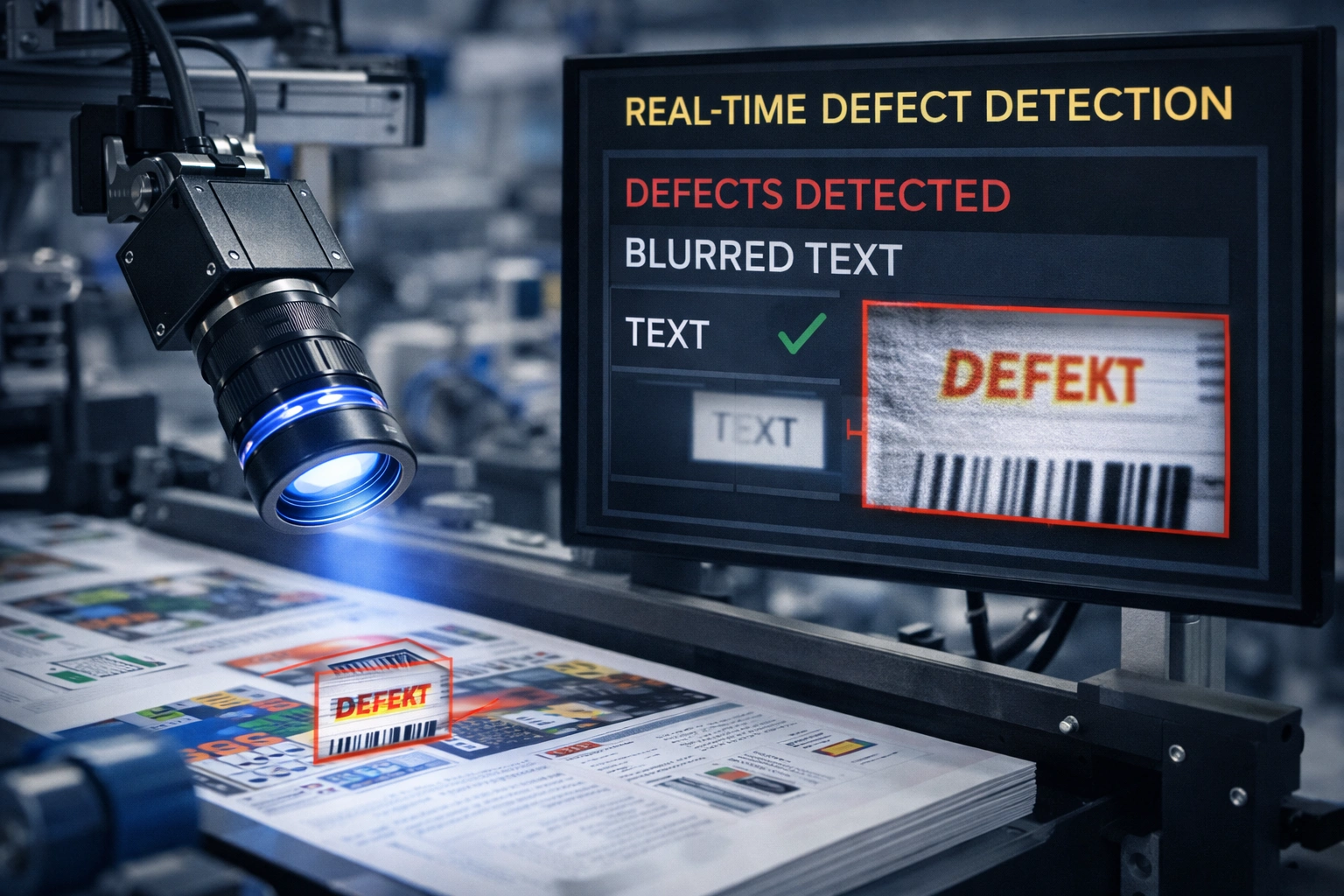
Visual positioning systems perform inspection in real time while printing is in progress. The system captures continuous image frames and searches for defects as they occur.
Common defects detected include:
Color variations
Ink spreading or smudging
Missing design elements
Blurred text
Scratches or dust marks
Real-time detection allows operators to take immediate corrective action, significantly reducing waste.
3. Repeatability and Consistency
Manual inspection results can vary due to fatigue, experience, or human judgment. Visual positioning systems operate using fixed parameters, ensuring that every print is evaluated using the same standards.
The result is:
Uniform quality
Strong brand consistency
Zero subjective decision-making
Key Benefits of Visual Positioning in Print Inspection
Enhanced Accuracy
High-resolution cameras combined with intelligent algorithms can detect defects at a microscopic level. This accuracy is far superior to manual inspection.
Increased Production Speed
Since inspection is automated, production lines do not slow down. The system runs continuously in the background, maintaining high throughput.
Reduced Waste and Reprints
Early defect detection minimizes rejected prints and rework, saving raw materials, ink, and time.
Lower Operational Costs
Although the initial investment may be high, long-term savings from reduced labor costs, waste, and downtime make visual positioning a cost-effective solution.
Improved Customer Satisfaction
Consistent, defect-free printing builds customer trust and strengthens brand reputation.
Core Components of Visual Positioning Systems
High-Resolution Cameras
These cameras capture detailed images from multiple angles and lighting conditions, making even the smallest defects visible.
Advanced Vision Software
The software analyzes captured images and compares them with reference data to detect alignment issues, color deviations, and pattern mismatches.
AI and Machine Learning Integration
Modern systems use machine learning to improve over time. By learning from previous defects, the system becomes more accurate with each print run.
Lighting Systems
Controlled LED lighting reduces shadows and reflections, ensuring consistent image capture for accurate inspection.
User Interface and Control Panel
An operator-friendly interface allows easy rule setting, monitoring, alert management, and report generation.
Industries That Benefit Most from Visual Positioning
Packaging Industry
Food, pharmaceutical, and cosmetic packaging requires zero-tolerance quality control. Visual positioning ensures compliance and brand consistency.
Label Printing
Accurate barcode, QR code, and micro-text inspection is critical, making visual positioning essential.
Textile Printing
Maintaining pattern alignment and color consistency on fabrics is challenging, and visual positioning simplifies this process.
Promotional Products
Customized promotional items require uniform quality across large batches, which is difficult without automated visual inspection.
Challenges of Implementing Visual Positioning
High Initial Investment
Advanced cameras and software systems can be expensive, especially for small businesses.
Technical Training Requirements
Operators need proper training to run and maintain the system effectively.
Data Management
Continuous inspection generates large volumes of data that must be stored and analyzed efficiently.
Regular Calibration
Visual positioning systems require periodic calibration to maintain inspection accuracy.
Visual Positioning vs Traditional Inspection
| Factor | Traditional Inspection | Visual Positioning Inspection |
|---|---|---|
| Speed | Slow | Very fast |
| Accuracy | Moderate | High |
| Consistency | Variable | Uniform |
| Human Dependency | High | Minimal |
| Scalability | Limited | High |
Future of Visual Positioning in Print Inspection
The future of visual positioning lies in deeper automation and intelligence. AI-driven predictive analysis, cloud-based monitoring, and self-calibrating systems are expected to become industry standards.
Key future trends include:
Fully autonomous inspection lines
Predictive maintenance alerts
Integration with ERP and MIS systems
Higher-resolution imaging with faster processing
Together, these advancements will make printing operations more efficient, reliable, and quality-driven.
Conclusion
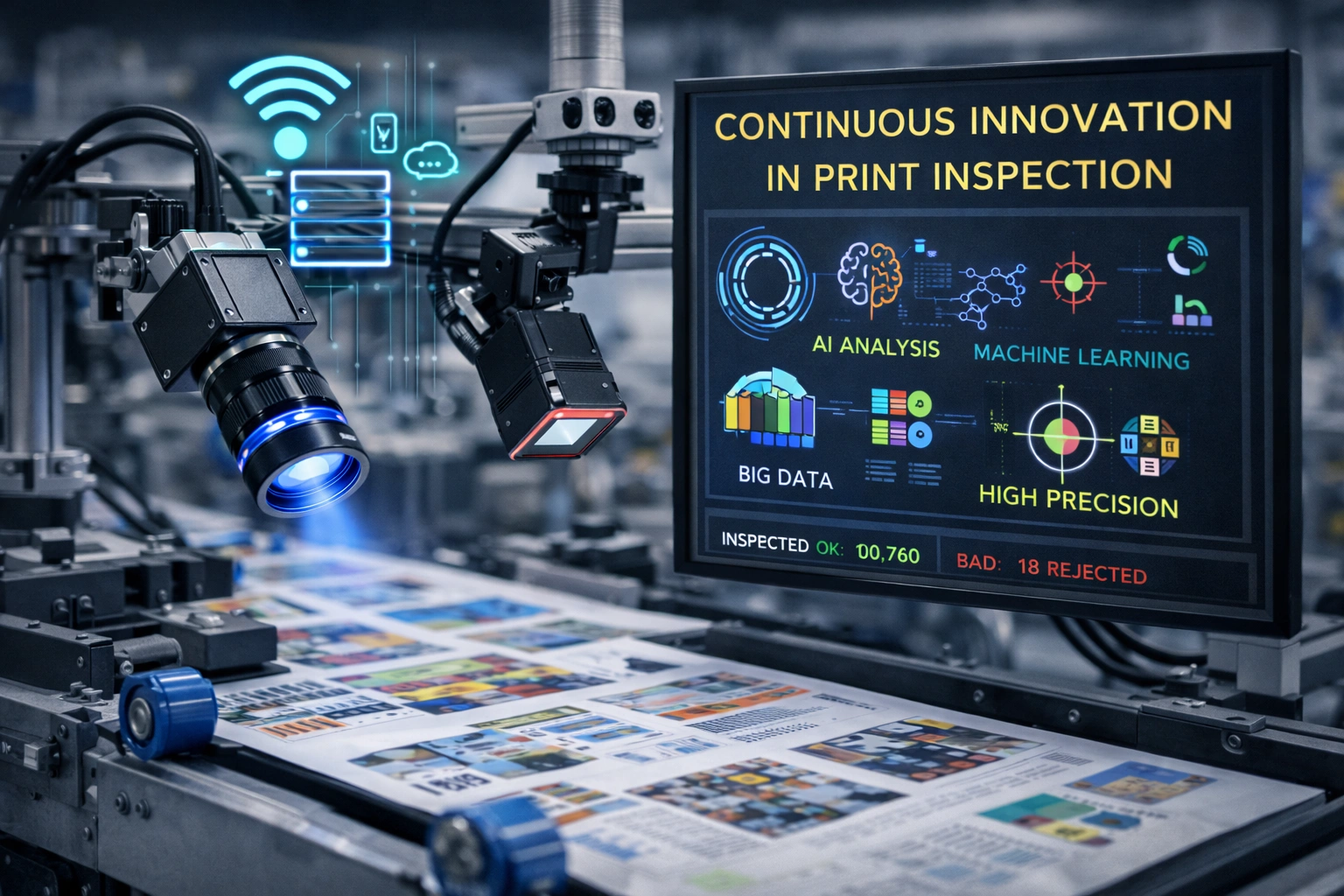
Visual positioning has become the backbone of modern automated print inspection. It does more than simply monitor the printing process—it actively improves it. With benefits such as higher accuracy, faster production, consistent quality, and long-term cost savings, visual positioning is a smart investment for printing businesses.
Whether you operate a small print shop or a large industrial facility, adopting visual positioning technology is a strategic step toward staying competitive in today’s quality-focused market. explore our high-quality Visual Positioning uv printers here
Frequently Asked Questions
Which industries benefit most from visual positioning in print inspection?
Packaging, labels, textiles, promotional products, and commercial printing benefit significantly from this technology.
How is visual positioning better than manual inspection?
It offers higher accuracy, consistency, speed, and eliminates human error.
Is maintenance expensive for visual positioning systems?
While regular maintenance is required, overall savings from reduced waste and reprints outweigh the costs.
Can visual positioning systems integrate with existing equipment?
Yes, most systems are designed to integrate smoothly with existing printing machines and software.
Is visual positioning a future-proof technology?
Yes, with continuous advancements in AI and automation, visual positioning will remain a key technology in print inspection.