

 HOME
HOME PRODUCT CENTER
 ABOUT US
 DOWNLOAD CENTER
 SUPPORT CENTER
 SUBSCRIBE
 BLOG
BLOGReducing Print Alignment Errors with Real-Time Vision Control in UV Printing
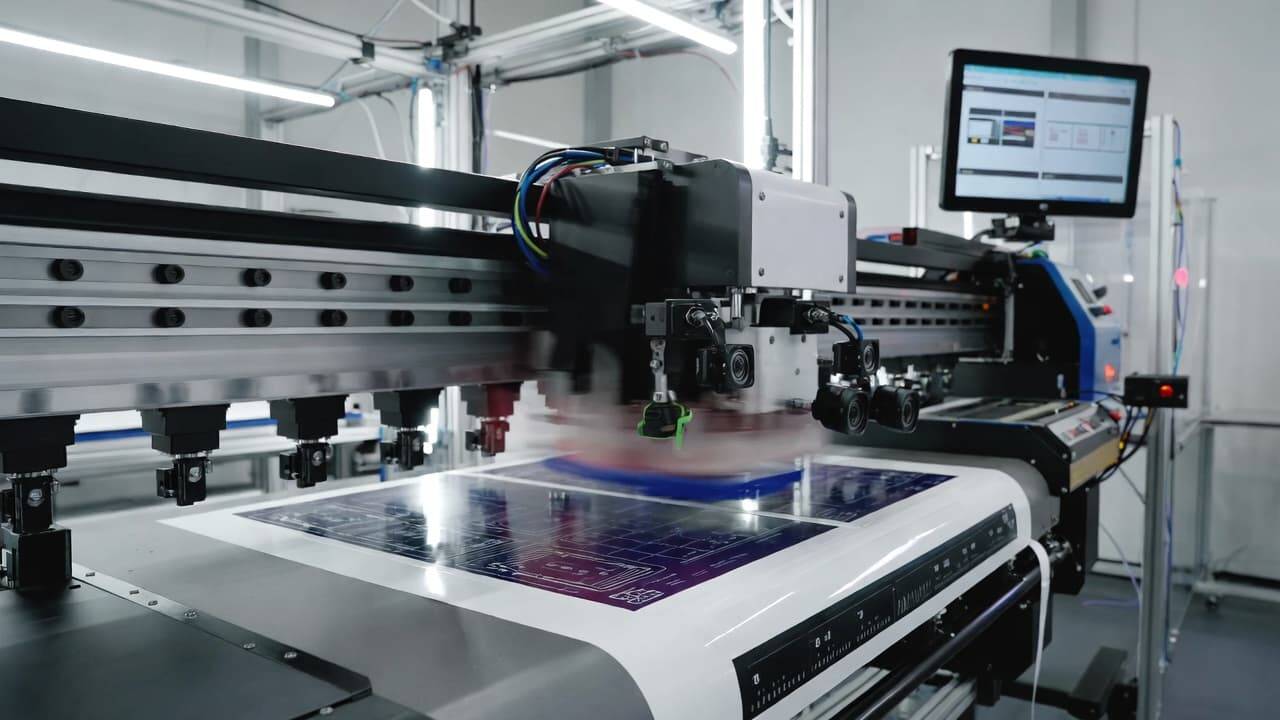
In modern UV printing and industrial digital printing, precision is not just a technical requirement—it is a competitive advantage. Whether you are printing on acrylic, metal, glass, wood, PVC, or packaging materials, even a minor alignment shift can compromise the entire job. Misaligned graphics, skewed text, and inaccurate overprints can lead to rejected products, wasted substrates, and dissatisfied customers.
As printing speeds increase and production volumes grow, traditional inspection methods are no longer sufficient. Manual checks are slow, inconsistent, and reactive rather than preventive. This is where real-time vision control technology transforms the workflow. By continuously monitoring and correcting alignment during the printing process, vision systems significantly reduce errors before they become costly problems.
In this comprehensive guide, we will explore what causes print alignment errors, how real-time vision control works, its key advantages, implementation strategies, and why it is becoming essential for UV printers and advanced printing operations aiming to improve quality, efficiency, and profitability.
Understanding Print Alignment Errors
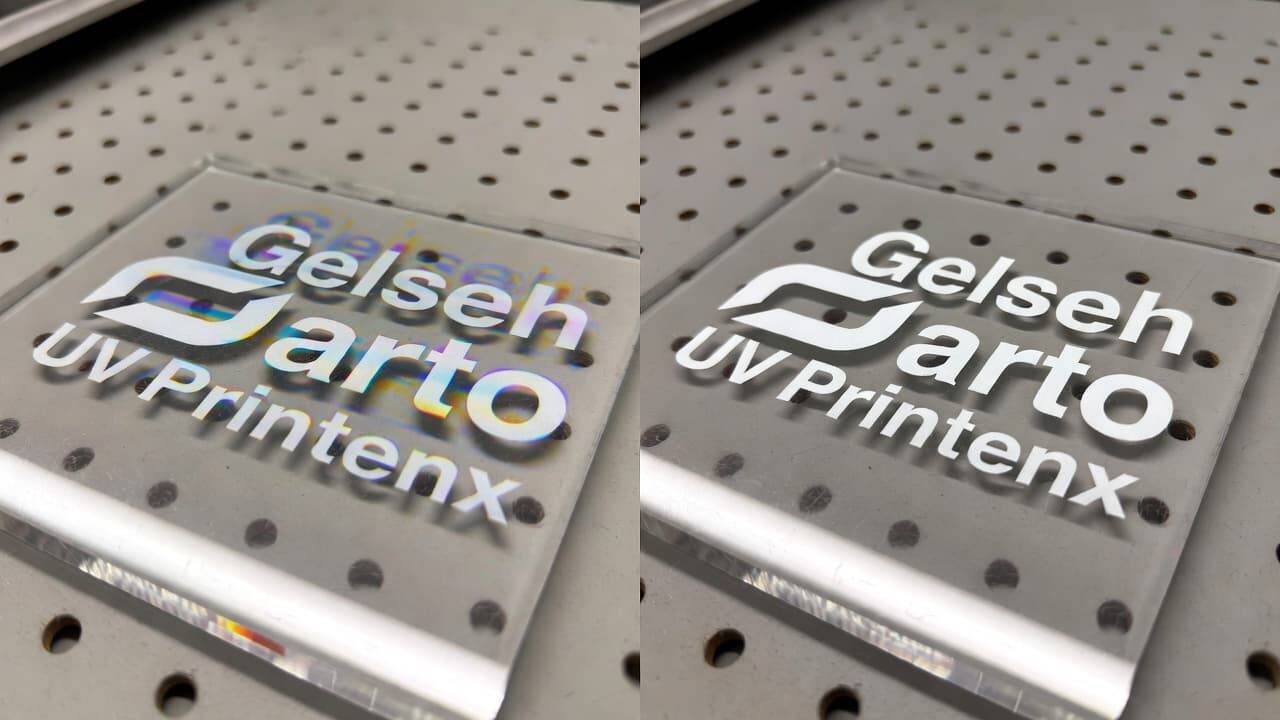
Print alignment errors occur when the printed output does not match the intended design position. In high-precision UV printing environments, alignment must remain consistent across every substrate, layer, and production cycle.
Common Types of Print Alignment Errors
Skewed Graphics or Text
Images or typography appear tilted or slightly rotated from their intended orientation.Layer Misregistration
In multi-layer UV printing (such as white + color + varnish), layers may not align perfectly, causing ghosting or blurred edges.Inconsistent Margins
Designs shift from their original layout position, resulting in uneven borders.Substrate Drift
Material movement during printing causes positional deviation.Double Imaging or Shadow Effects
Often caused by improper overprinting alignment or mechanical vibration.
Why Alignment Errors Happen
Alignment problems typically arise due to:
Mechanical vibrations in the printer
Inconsistent substrate placement
Belt or conveyor movement irregularities
Thermal expansion of materials
Printhead calibration issues
Speed variations during high-volume production
In UV flatbed and roll-to-roll printers, where materials vary in thickness and texture, these factors can become even more pronounced.
The challenge is not only detecting errors—but detecting them instantly and correcting them before additional materials are wasted.
What Is Real-Time Vision Control?
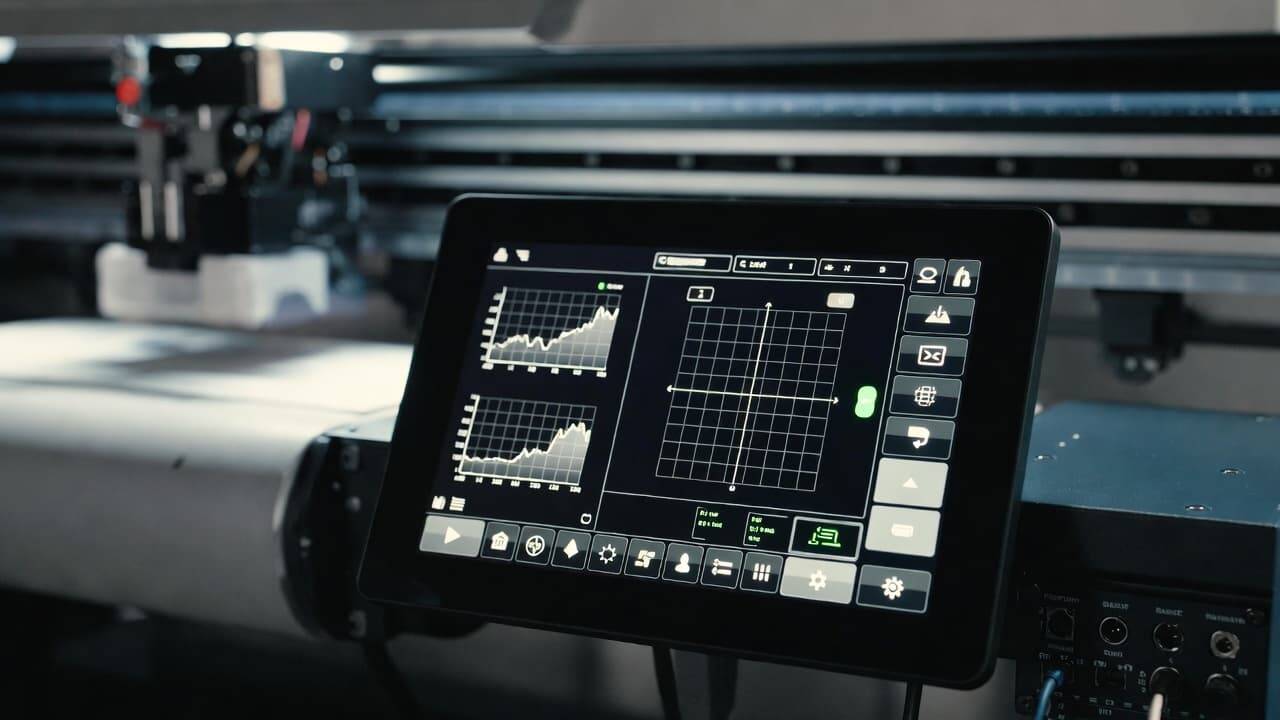
Real-time vision control is an automated inspection and correction system that uses high-speed cameras, sensors, and intelligent software to monitor the printing process continuously.
Unlike traditional quality inspection—where errors are discovered after printing—real-time vision control works during the printing process.
How Real-Time Vision Control Works
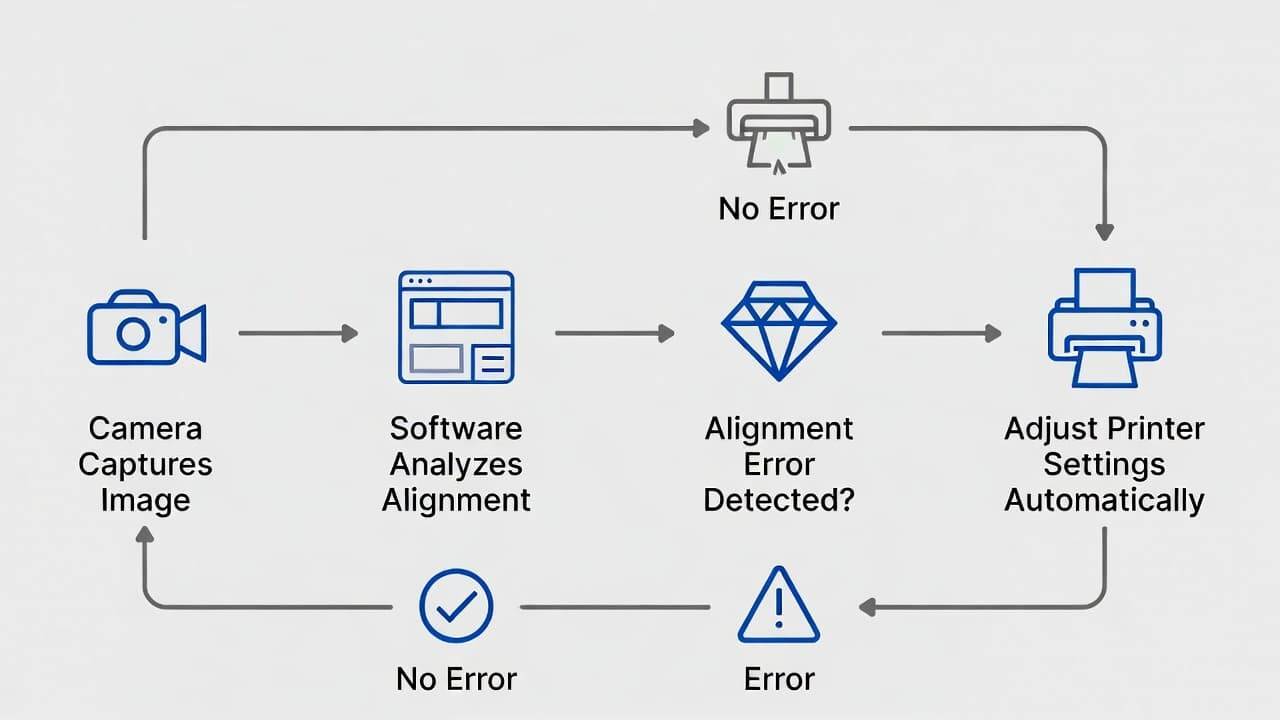
The system operates through a closed-loop process:
1. Image Capture
High-resolution industrial cameras are positioned near the print zone. These cameras capture images of registration marks, design edges, or reference points at extremely high speeds.
2. Digital Analysis
Advanced software analyzes the captured image in milliseconds. It compares the live print data with predefined parameters such as:
Position accuracy
Alignment tolerance
Rotation angle
Size variation
Edge consistency
3. Error Detection
If the system detects deviation beyond acceptable limits, it immediately identifies the type and degree of misalignment.
4. Instant Correction
The printer receives automatic adjustment instructions. These may include:
Printhead repositioning
Substrate movement correction
Layer alignment compensation
Speed recalibration
This entire process happens in real time—often within fractions of a second—preventing visible alignment defects.
Why Real-Time Vision Control Is Essential in UV Printing
UV printing technology has expanded into industries that demand extreme precision, such as:
Industrial product decoration
Electronic panel printing
Promotional item customization
Packaging and labeling
Glass and acrylic décor printing
In these sectors, even a small positional error can render a product unusable. Real-time vision control ensures consistent performance across diverse materials and complex designs.
Key Benefits of Real-Time Vision Control
1. Higher Print Accuracy
Continuous monitoring ensures precise placement of each printed element. This is particularly important in multi-layer UV printing where white ink, CMYK colors, and varnish must align perfectly.
2. Reduced Material Waste
Misprints result in wasted substrates, ink, and production time. By correcting errors instantly, vision systems drastically lower scrap rates.
3. Increased Production Speed
Since the system automatically corrects deviations, operators no longer need to stop production frequently for manual inspection or recalibration.
4. Improved Quality Consistency
Consistency is critical for bulk production. Real-time control ensures that the first print and the thousandth print maintain identical alignment standards.
5. Lower Labor Dependency
Automation reduces reliance on manual inspection, decreasing human error and improving operational efficiency.
6. Enhanced Brand Reputation
Consistently delivering high-quality, perfectly aligned prints builds customer trust and long-term client relationships.
Applications of Real-Time Vision Control in UV Printing
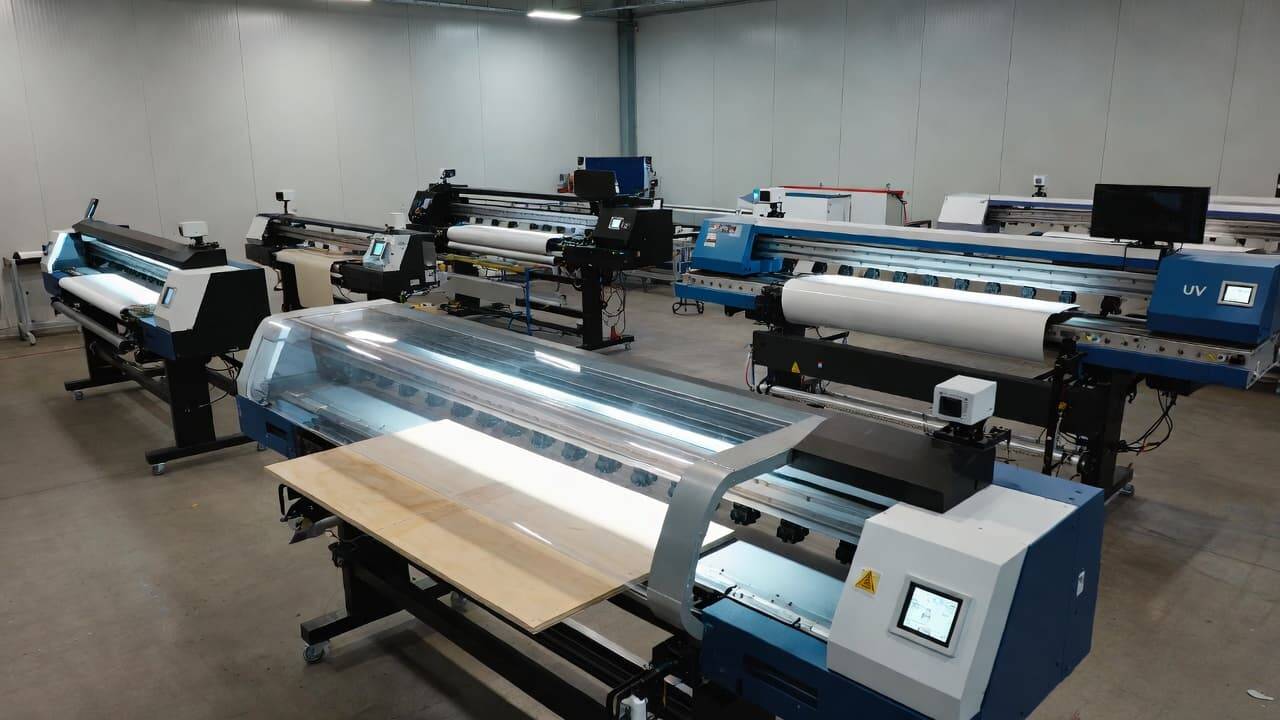
Real-time vision systems are widely used across multiple printing processes.
UV Flatbed Printing
Ensures precise alignment when printing directly on rigid materials such as:
Acrylic sheets
Wood panels
Metal plates
Ceramic tiles
Phone cases
Roll-to-Roll UV Printing
Maintains consistent positioning on flexible media like:
Vinyl
Film
Banners
Wallpapers
UV DTF (Direct to Film) Printing
Guarantees accurate layering for transfer applications where misalignment can affect final adhesion and appearance.
Industrial Product Decoration
Used in manufacturing environments where printed elements must align with physical product structures.
Core Features to Look for in a Vision Control System
When selecting a real-time vision system for your UV printer, consider the following features:
High-Speed Image Processing
The system must analyze images instantly without slowing production.
High-Resolution Cameras
Clear and detailed image capture is essential for detecting micro-level alignment shifts.
Advanced Algorithms
AI-powered or machine learning algorithms improve detection accuracy over time.
User-Friendly Interface
Operators should easily monitor system performance and adjust tolerance settings.
Seamless Integration
The system must integrate smoothly with:
RIP software
Printer firmware
Production management systems
Adjustable Tolerance Settings
Different materials require different precision thresholds. Customizable settings increase flexibility.
How to Implement Real-Time Vision Control in Your Printing Setup
Step 1: Evaluate Current Error Patterns
Analyze production data to identify:
Frequency of misalignment
Specific materials causing issues
Stages where errors occur
Understanding the root cause improves system integration.
Step 2: Choose a Compatible System
Ensure compatibility with:
Your UV printer model
Printhead configuration
Production speed requirements
Existing software
Consult with experienced equipment suppliers when necessary.
Step 3: Install and Calibrate
Proper installation is crucial. Camera positioning, lighting conditions, and reference markers must be accurately configured.
Step 4: Train Operators
Even automated systems require knowledgeable operators who understand:
How to interpret alerts
How to adjust tolerance limits
How to perform routine maintenance
Step 5: Monitor Performance
Track key performance indicators such as:
Waste reduction percentage
Reprint frequency
Production speed improvements
Quality consistency rates
Regular evaluation ensures maximum return on investment.
Comparing Real-Time Vision Control with Traditional Inspection
| Traditional Inspection | Real-Time Vision Control |
|---|---|
| Manual checks after printing | Continuous monitoring during printing |
| Reactive problem solving | Preventive correction |
| Higher material waste | Lower scrap rates |
| Slower production | Optimized speed |
| Inconsistent human inspection | Consistent automated precision |
The shift from reactive inspection to proactive correction is what makes vision control revolutionary.
Cost Considerations and ROI
While the initial investment in real-time vision control technology can be significant, the long-term financial benefits often outweigh the cost.
Savings Come From:
Reduced material waste
Lower ink consumption
Fewer rejected jobs
Less downtime
Increased production efficiency
For medium to high-volume UV printing operations, the return on investment can be realized within a relatively short period due to substantial waste reduction and productivity gains.
Future Trends in Vision-Controlled Printing
The printing industry is moving toward smarter automation. Emerging trends include:
AI-powered predictive alignment correction
Machine learning-based defect recognition
Cloud-connected performance analytics
Integration with Industry 4.0 manufacturing systems
As technology advances, real-time vision control will likely become a standard feature in high-end UV printers rather than an optional upgrade.
Best Practices for Maintaining Optimal Performance
To ensure long-term reliability:
Clean camera lenses regularly
Maintain stable lighting conditions
Perform routine calibration
Update firmware and software
Monitor alignment tolerance thresholds
Preventive maintenance keeps detection accuracy at peak levels.
Frequently Asked Questions
What types of printing benefit most from real-time vision control?
Any printing process that requires high positional accuracy, including UV flatbed, roll-to-roll, UV DTF, digital packaging, and industrial decoration printing.
Can older UV printers be upgraded with vision systems?
Many existing printers can be retrofitted, depending on mechanical compatibility and software integration capabilities.
Does real-time correction slow down printing?
Modern systems are designed for high-speed environments and typically operate without reducing production speed.
Is this technology suitable for small businesses?
While more common in industrial setups, growing print businesses can also benefit—especially those handling premium or high-value print jobs.
Conclusion
Reducing print alignment errors is essential for achieving consistent quality, minimizing waste, and maintaining profitability in competitive printing markets. Real-time vision control technology offers a proactive, automated solution that transforms how UV printing operations manage alignment accuracy.
By integrating intelligent cameras, high-speed image processing, and instant correction mechanisms, businesses can eliminate common misalignment problems and significantly improve production reliability.
As UV printing continues to expand into high-precision applications, adopting real-time vision control is no longer just an upgrade—it is a strategic investment in quality, efficiency, and long-term growth.explore our high-quality Visual Positioning UV printers here
If you aim to enhance your UV printing performance and reduce costly alignment issues, implementing real-time vision control could be the most impactful step forward for your operation.