

 HOME
HOME PRODUCT CENTER
 ABOUT US
 DOWNLOAD CENTER
 SUPPORT CENTER
 SUBSCRIBE
 BLOG
BLOGVision Technology in Luxury Print Alignment

Luxury packaging is no longer just about wrapping a product—it is about creating an experience. In premium markets such as cosmetics, perfumes, spirits, electronics, and gourmet foods, packaging is often the first physical interaction a customer has with a brand. Any flaw, even a millimeter-level misalignment, can reduce perceived value instantly. This is why print alignment has become one of the most critical quality parameters in luxury packaging production.
As packaging designs grow more complex—featuring metallic foils, embossing, micro-text, layered graphics, and high-contrast colors—traditional alignment methods are no longer sufficient. Manual checks and basic sensors struggle to meet the precision and consistency demanded by luxury brands. This gap is filled by vision technology, an advanced system that uses cameras, software, and real-time data processing to achieve near-perfect print alignment.
This article explores the role of vision technology in luxury packaging print alignment, how it works, why it matters, its benefits, challenges, real-world applications, and how it is shaping the future of premium packaging production.
What Is Vision Technology in Printing?
Vision technology in printing refers to the use of high-precision cameras combined with intelligent software to inspect, measure, and correct printed output during production. Unlike traditional quality control methods that rely on human inspection or post-production sampling, vision systems work continuously and automatically.
In luxury packaging, vision technology is used to:
Detect alignment errors in real time
Compare printed output with digital design references
Adjust print positions automatically
Maintain consistency across long production runs
The system functions like a highly trained digital eye that never gets tired and never misses minute details. It ensures that every logo, line, pattern, and text element appears exactly where it is supposed to be—on every single package.
Why Print Alignment Is Critical in Luxury Packaging
Print alignment is far more important in luxury packaging than in standard commercial printing. Small deviations that might be acceptable in mass-market packaging are unacceptable in premium products.
Brand Integrity
Luxury brands invest heavily in visual identity. Misaligned logos or off-center graphics can damage brand credibility and reduce consumer trust.
Visual Precision
Luxury packaging often includes symmetrical layouts, fine typography, and layered design elements. Even the smallest alignment error can disrupt visual harmony.
Customer Perception
Premium customers associate flawless packaging with product quality. Poor alignment subconsciously signals carelessness, even if the product itself is excellent.
Cost Control
Misalignment leads to rejected batches, reprints, material wastage, and production delays—all of which significantly increase costs in high-value packaging.
Limitations of Traditional Alignment Methods
Before vision technology became widely adopted, print alignment relied on:
Manual operator adjustments
Mechanical guides
Basic optical sensors
Post-production inspection
These methods have several drawbacks:
High dependency on operator skill
Inconsistent results across shifts
Slow response to alignment drift
Increased waste before errors are detected
As luxury packaging demands moved toward ultra-tight tolerances, these traditional approaches became insufficient.
How Vision Technology Improves Print Alignment
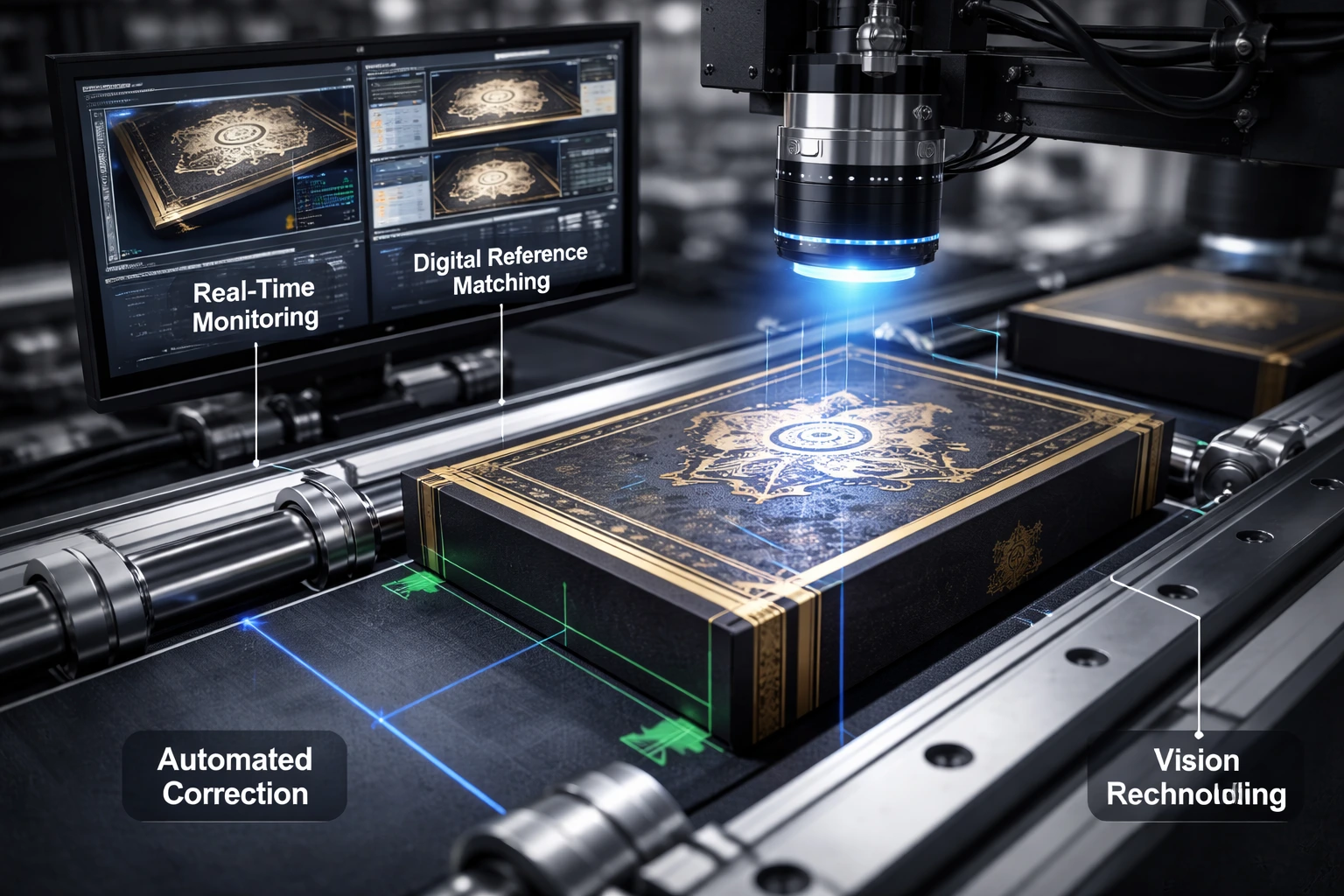
Vision technology enhances print alignment through a combination of hardware precision and software intelligence.
Real-Time Visual Monitoring
High-resolution cameras capture live images of printed material as it moves through the press. This allows immediate detection of even microscopic alignment shifts.
Digital Reference Matching
The system compares each printed output with a stored digital template. Any deviation from the reference—whether in position, angle, or scale—is instantly identified.
Automated Correction
Once a misalignment is detected, the system communicates directly with the printer controls to adjust positioning automatically. This eliminates manual intervention and reduces downtime.
Continuous Learning
Advanced systems adapt to environmental changes such as temperature, substrate variation, and ink behavior, maintaining consistent alignment throughout long runs.
Vision Technology in Complex Luxury Packaging Designs
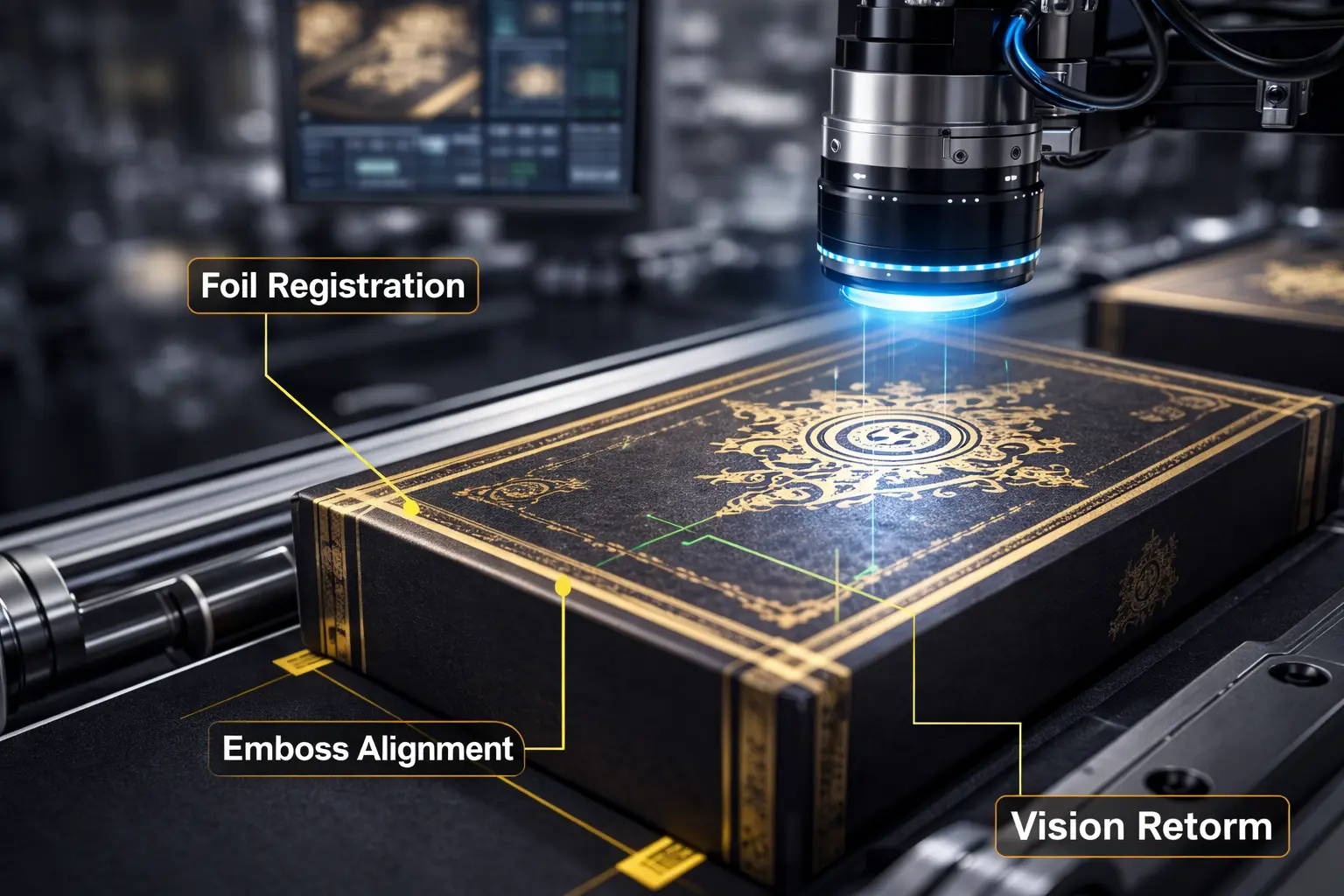
Luxury packaging often involves more than simple flat printing. Vision systems are especially valuable in handling complex applications such as:
Multi-Layer Printing
When multiple layers of ink, varnish, or effects are applied, vision technology ensures perfect registration between each layer.
Foil and Emboss Alignment
Metallic foils and embossed elements require extreme precision. Vision systems align these features exactly with printed graphics.
Irregular Shapes and Materials
Luxury packaging frequently uses non-standard shapes, textured materials, and specialty substrates. Vision technology adjusts alignment dynamically for these variations.
Key Benefits of Vision Technology for Luxury Brands
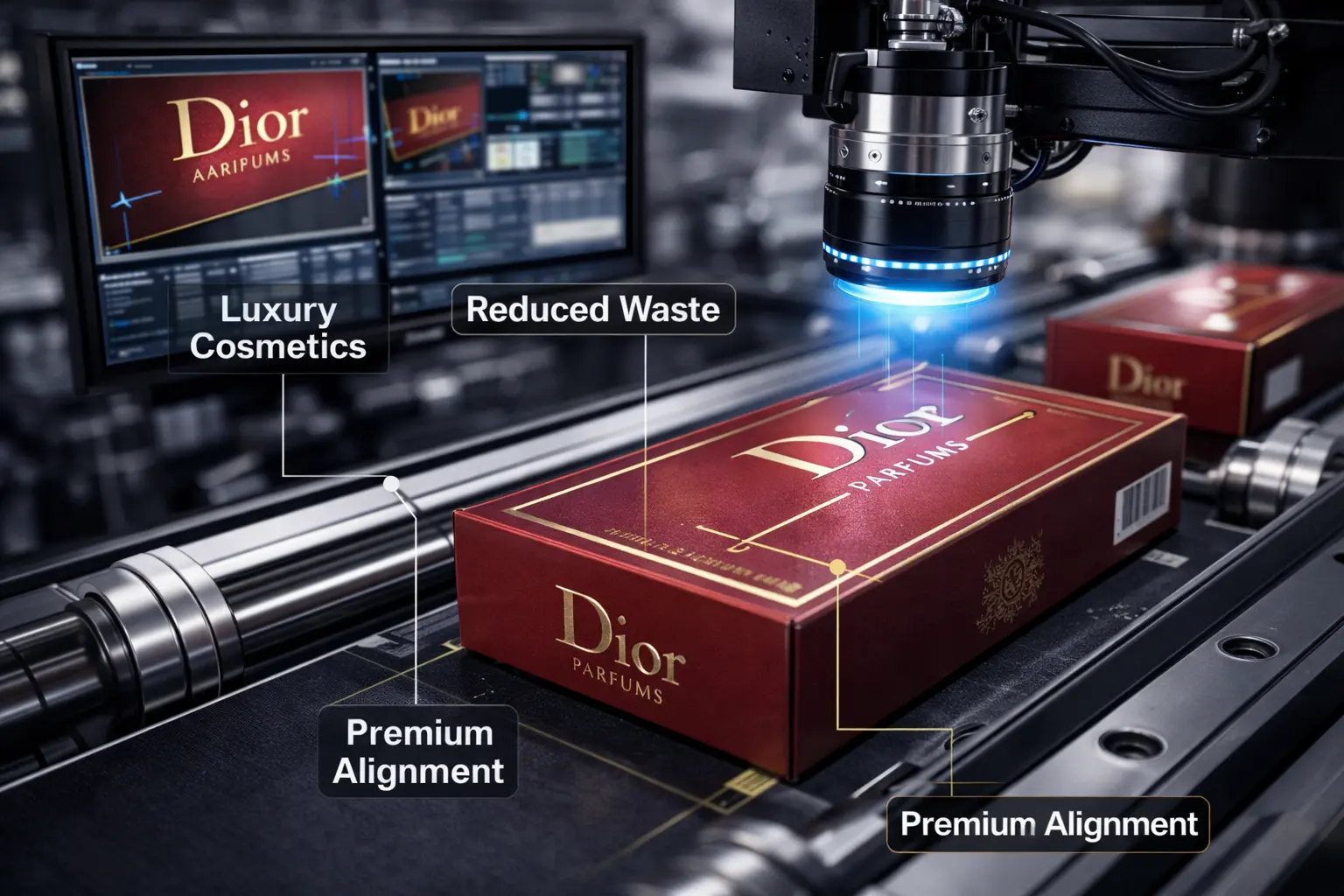
Superior Quality Control
Every unit is inspected, not just samples. This guarantees consistent premium quality across the entire production run.
Reduced Waste
Errors are corrected immediately, preventing large volumes of misprinted packaging from being produced.
Higher Production Efficiency
Automated monitoring and correction reduce stoppages and rework, improving overall throughput.
Stronger Brand Reputation
Flawless packaging reinforces a brand’s premium positioning and builds long-term customer loyalty.
Operational Advantages for Manufacturers
For packaging manufacturers serving luxury brands, vision technology offers competitive advantages:
Faster setup times for new designs
Reduced reliance on skilled manual labor
Ability to meet strict brand specifications
Lower rejection rates during brand audits
Manufacturers using vision systems are often preferred partners for high-end brands due to their consistency and reliability.
Integration with Modern Printing Systems
Modern vision technology integrates seamlessly with advanced printing equipment. Data flows between the vision system and printer controls in real time, creating a closed-loop system.
This integration enables:
Automatic alignment adjustments
Digital reporting and traceability
Consistent output across multiple machines
Scalable production without quality loss
Such integration is essential for meeting the fast turnaround times demanded by luxury markets.
Challenges in Adopting Vision Technology
Despite its advantages, adopting vision technology requires careful planning.
Initial Investment
High-precision cameras, software, and integration can involve significant upfront costs. However, long-term savings usually outweigh the initial expense.
Training Requirements
Operators must be trained to understand system feedback, interpret data, and maintain equipment.
System Calibration
Regular calibration is essential to maintain accuracy. Neglecting maintenance can reduce system effectiveness.
Real-World Applications in Luxury Packaging
Premium Cosmetics
Vision systems ensure perfect alignment of logos, ingredient text, and decorative elements on small, high-value packaging.
Luxury Spirits and Wines
Label alignment on bottles is critical for shelf appeal. Vision technology ensures consistent placement across curved surfaces.
High-End Electronics
Minimalist packaging designs demand extreme precision, making vision alignment essential.
Impact on Sustainability
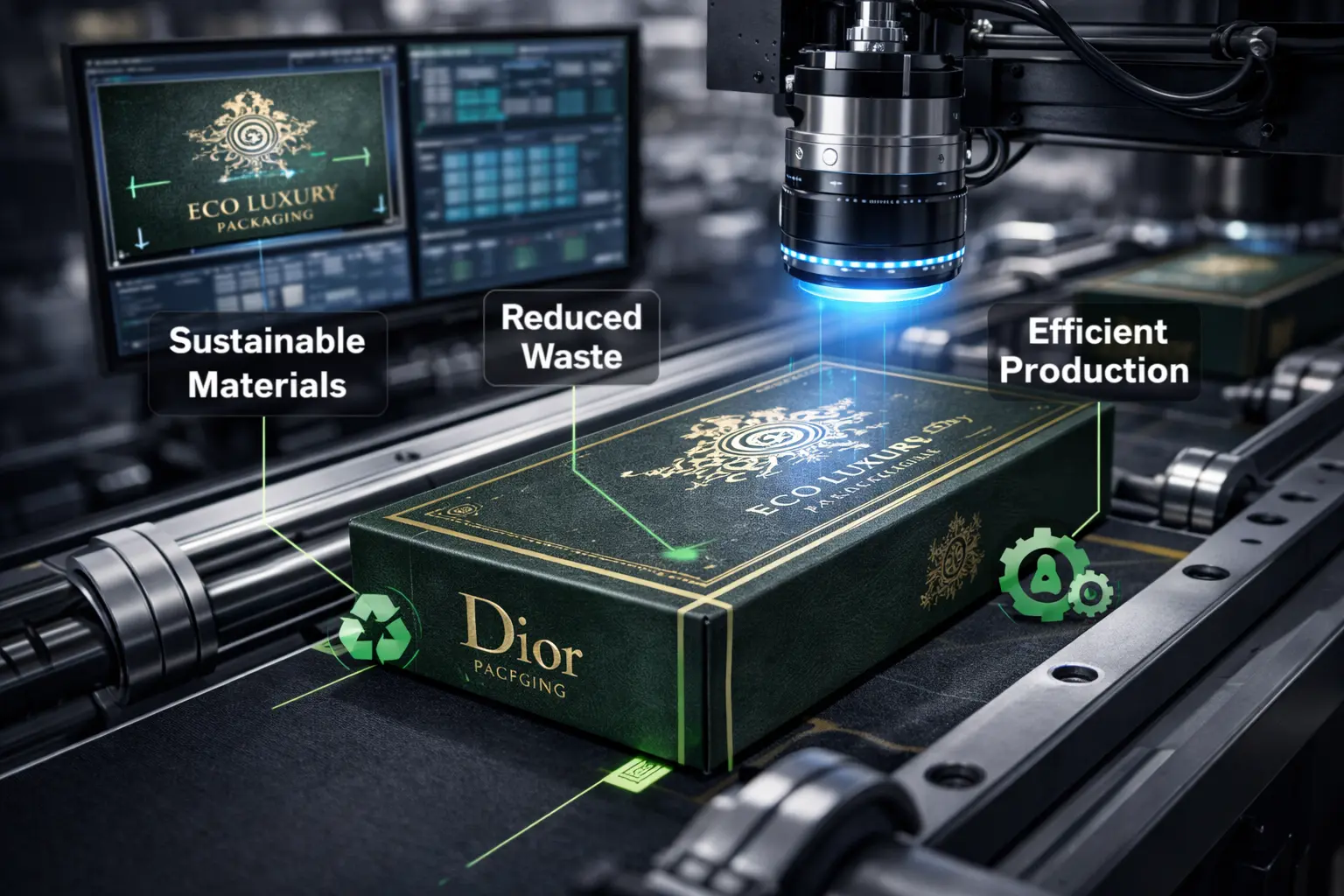
Vision technology also supports sustainable packaging goals by:
Reducing material waste
Minimizing reprints
Lowering energy consumption per unit
Improving overall production efficiency
Luxury brands increasingly value sustainability alongside aesthetics, making vision technology a strategic investment.
The Future of Vision Technology in Luxury Packaging
As artificial intelligence and machine learning continue to advance, vision systems will become even more intelligent. Future developments are likely to include:
Predictive error prevention
Self-optimizing alignment systems
Deeper integration with smart factories
Enhanced defect classification
These innovations will further raise quality standards in luxury packaging.
Conclusion
Vision technology has transformed print alignment from a manual, error-prone process into a precise, automated, and intelligent system. In the luxury packaging sector—where perfection is not optional—it plays a decisive role in maintaining brand value, ensuring consistency, and reducing production costs.
As luxury brands continue to demand higher quality, faster turnaround, and sustainable production, vision technology will remain a cornerstone of premium packaging manufacturing. Investing in this technology is no longer a competitive advantage—it is a necessity for anyone operating in the luxury packaging space.
Frequently Asked Questions
What is vision technology in printing?
Vision technology uses cameras and intelligent software to inspect and correct print alignment in real time.
Why is print alignment so important in luxury packaging?
Because even minor alignment errors can reduce perceived product value and damage brand reputation.
Does vision technology increase production costs?
While initial investment is higher, long-term savings from reduced waste and higher efficiency usually outweigh the cost.
Can vision technology handle complex designs?
Yes, it is especially effective for multi-layer, foil, embossed, and irregular packaging designs.
Is vision technology suitable for small luxury batches?
Yes, it ensures consistent quality even in short, high-value production runs.
high-quality Visual Positioning UV printers,