

 HOME
HOME PRODUCT CENTER
 ABOUT US
 DOWNLOAD CENTER
 SUPPORT CENTER
 SUBSCRIBE
 BLOG
BLOGVision Systems in Multi-Pass UV Printing
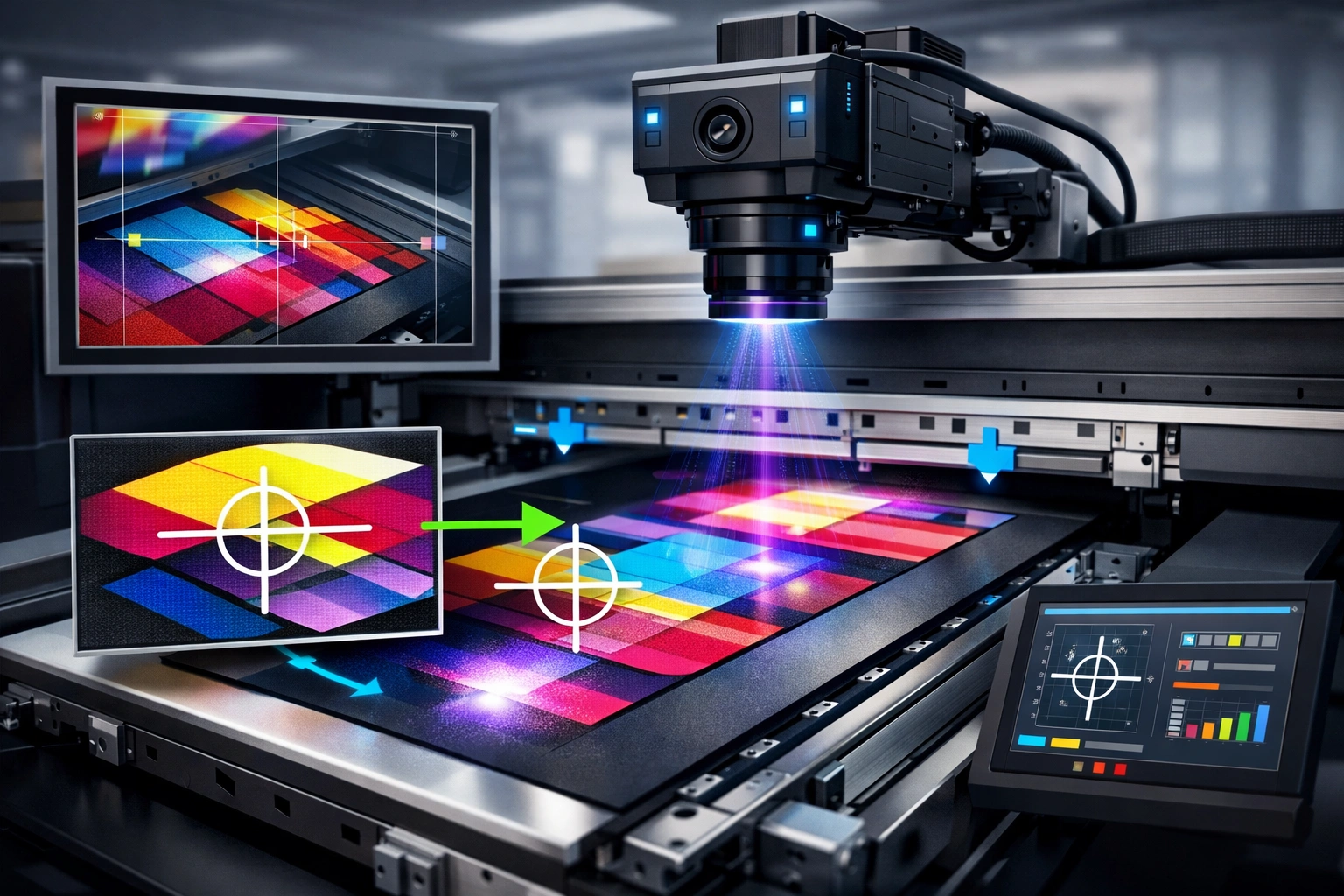
The printing industry has evolved rapidly over the last decade, driven by growing demands for precision, customization, and consistent quality. Among the most advanced techniques shaping modern print production is multi-pass UV printing. This method allows printers to achieve exceptional color depth, fine details, and durability across a wide range of substrates.
However, as print quality expectations increase, so do technical challenges. One of the most critical challenges in multi-pass UV printing is maintaining perfect alignment across multiple print passes. Even the smallest deviation can lead to visible banding, color mismatches, or blurred details.
This is where vision systems play a transformative role. By combining high-resolution cameras, intelligent software, and real-time feedback mechanisms, vision systems enable seamless alignment, precise ink placement, and consistent output. This article explores how vision systems enhance multi-pass UV printing, the technology behind them, their benefits, implementation considerations, and future trends shaping the industry.
Understanding Multi-Pass UV Printing
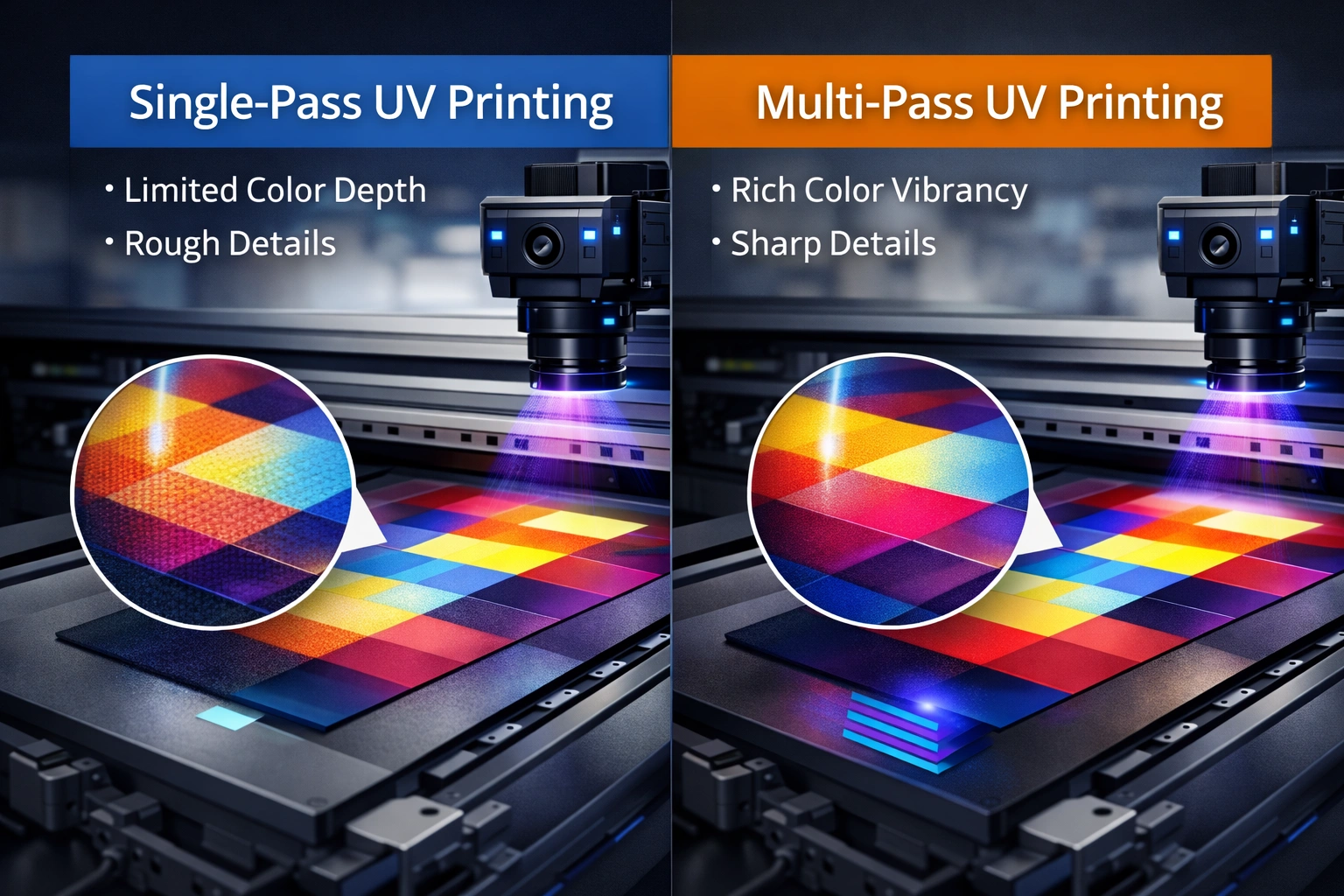
Multi-pass UV printing involves printing an image in several overlapping passes instead of completing it in a single sweep. During each pass, UV-curable ink is applied and instantly cured using ultraviolet light. The process is repeated until the final image reaches the desired color density, texture, and detail.
Why Multi-Pass Printing Is Widely Used
Multi-pass UV printing is preferred in applications where quality outweighs speed. It is commonly used in signage, packaging, decorative printing, industrial labeling, and customized products.
Key advantages include:
Superior color vibrancy and tonal gradients
Higher resolution and sharper details
Reduced risk of ink bleeding
Better adhesion on complex or uneven surfaces
Improved control over ink layering
Despite these benefits, multi-pass printing introduces complexity. Every pass must align perfectly with the previous one. Any mechanical vibration, substrate movement, or environmental variation can compromise print accuracy.
The Alignment Challenge in Multi-Pass Printing
In multi-pass UV printing, alignment errors can occur due to several factors:
Substrate expansion or contraction
Mechanical tolerances in the printer
Variations in feed accuracy
Thermal changes during curing
Inconsistent positioning of irregular materials
Without a correction mechanism, these factors accumulate across passes, resulting in visible defects. Traditional mechanical calibration methods are often insufficient because they cannot respond dynamically to real-time changes.
This limitation makes vision systems essential for achieving reliable and repeatable results.
What Are Vision Systems in UV Printing?
Vision systems are intelligent monitoring and correction solutions that use industrial cameras and image-processing software to observe the printing process in real time. They continuously capture images of the substrate and printed layers, analyze their position, and compare them against reference data.
When misalignment or deviation is detected, the system automatically adjusts the print head position, ink deposition, or movement parameters to correct errors before the next pass begins.
In simple terms, vision systems act as the eyes and brain of modern UV printers.
How Vision Systems Enable Seamless Multi-Pass Printing
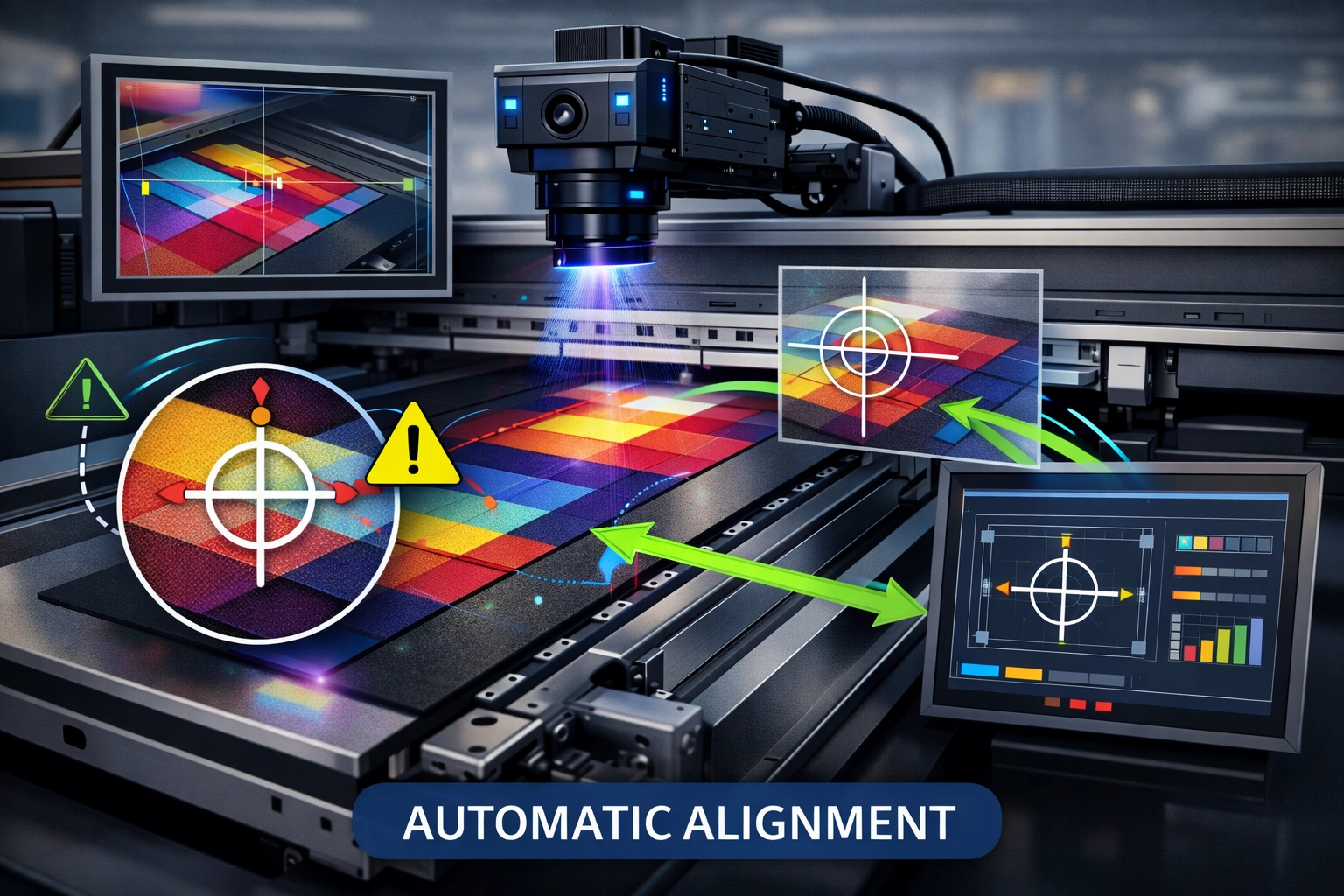
1. Real-Time Substrate Detection
Vision systems detect the exact position of the substrate before each pass. This is especially important when printing on pre-cut, shaped, or non-uniform materials.
The system identifies reference points, edges, or printed markers and ensures that every pass aligns with these references.
2. Dynamic Pass-to-Pass Alignment
Instead of relying on fixed mechanical positioning, vision systems dynamically adjust alignment between passes. If a substrate shifts even slightly, the system compensates instantly.
This ensures:
No overlapping errors
No gaps between passes
Uniform color density
3. Automated Error Correction
Vision systems can detect:
Skewing
Stretching
Shrinking
Rotational misalignment
Once detected, the printer automatically corrects the issue without stopping production, significantly reducing waste and reprints.
4. Consistent Ink Layer Registration
Accurate ink registration is crucial for achieving smooth gradients and solid colors. Vision systems ensure that each ink layer is deposited exactly where intended, maintaining consistency across the entire print.
Real-Time Quality Control with Vision Systems
One of the biggest advantages of vision systems is continuous quality monitoring.
Instead of checking prints only after completion, vision systems inspect the print during production. They can identify defects such as:
Missing ink
Uneven curing
Color inconsistencies
Registration errors
Surface defects
By catching issues early, operators can correct problems immediately, preventing large-scale material loss.
Productivity and Efficiency Gains
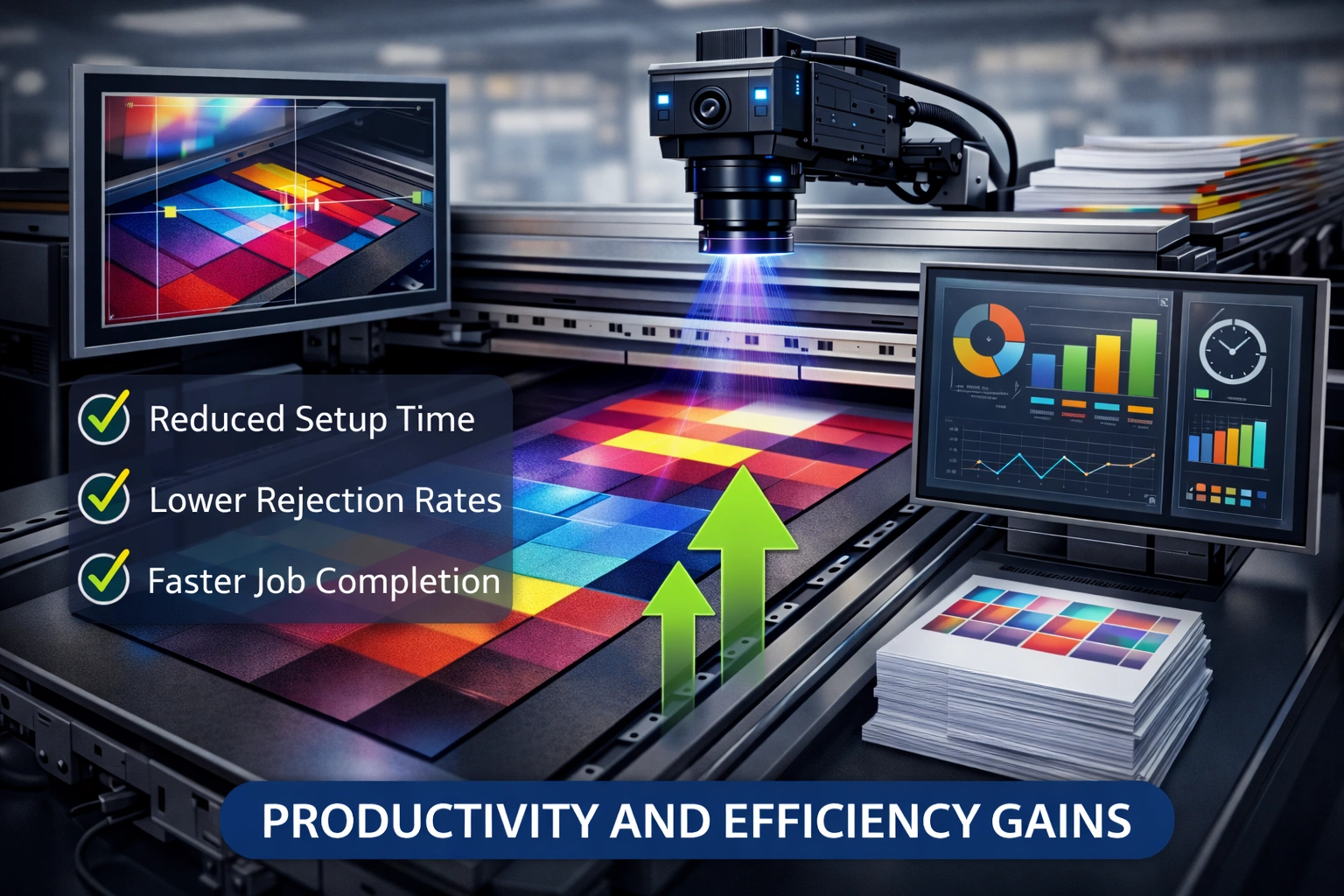
Vision systems do more than improve quality—they also enhance productivity.
Reduced Setup Time
Manual alignment and calibration can be time-consuming. Vision systems automate these tasks, allowing faster job setup and quicker changeovers.
Lower Rejection Rates
By eliminating alignment errors, printers experience fewer rejected prints and less material waste.
Faster Job Completion
With fewer interruptions and reprints, production cycles become smoother and more predictable.
Higher Throughput
Improved efficiency allows printing businesses to handle higher workloads without compromising quality.
Financial Benefits of Vision-Assisted UV Printing
Although vision systems require an initial investment, the long-term financial benefits often outweigh the cost.
Cost Savings from Reduced Waste
Misprints, reworks, and material waste can significantly impact profitability. Vision systems minimize these losses.
Lower Labor Costs
Automation reduces dependency on manual inspection and correction, freeing skilled operators to focus on higher-value tasks.
Improved Customer Satisfaction
Consistent quality leads to fewer complaints, stronger client relationships, and repeat business.
Flexibility Across Applications and Materials
Vision systems enable multi-pass UV printers to work effectively across a wide variety of applications:
Rigid boards
Flexible films
Glass and acrylic
Metal and wood
Textured or uneven surfaces
This flexibility allows print businesses to expand their service offerings without sacrificing quality.
Choosing the Right Vision System for Multi-Pass UV Printing
Not all vision systems are the same. Selecting the right solution requires careful evaluation.
Camera Resolution and Accuracy
High-resolution cameras are essential for detecting fine details and small deviations. The resolution should match the printer’s output capability.
Software Intelligence
Advanced image-processing algorithms ensure faster and more accurate corrections. Look for systems that support pattern recognition, edge detection, and adaptive learning.
Integration Compatibility
The vision system must integrate smoothly with your existing printer hardware and control software.
Ease of Use
User-friendly interfaces reduce training time and improve operational efficiency.
Scalability and Upgradability
Choose a system that can grow with your business, supporting future upgrades and expanded capabilities.
Maintenance and Reliability Considerations
Vision systems are highly reliable, but regular maintenance ensures consistent performance.
Common maintenance tasks include:
Periodic camera calibration
Cleaning lenses and sensors
Software updates
System diagnostics
Well-maintained vision systems provide stable, long-term performance with minimal downtime.
Future Trends in Vision-Based UV Printing
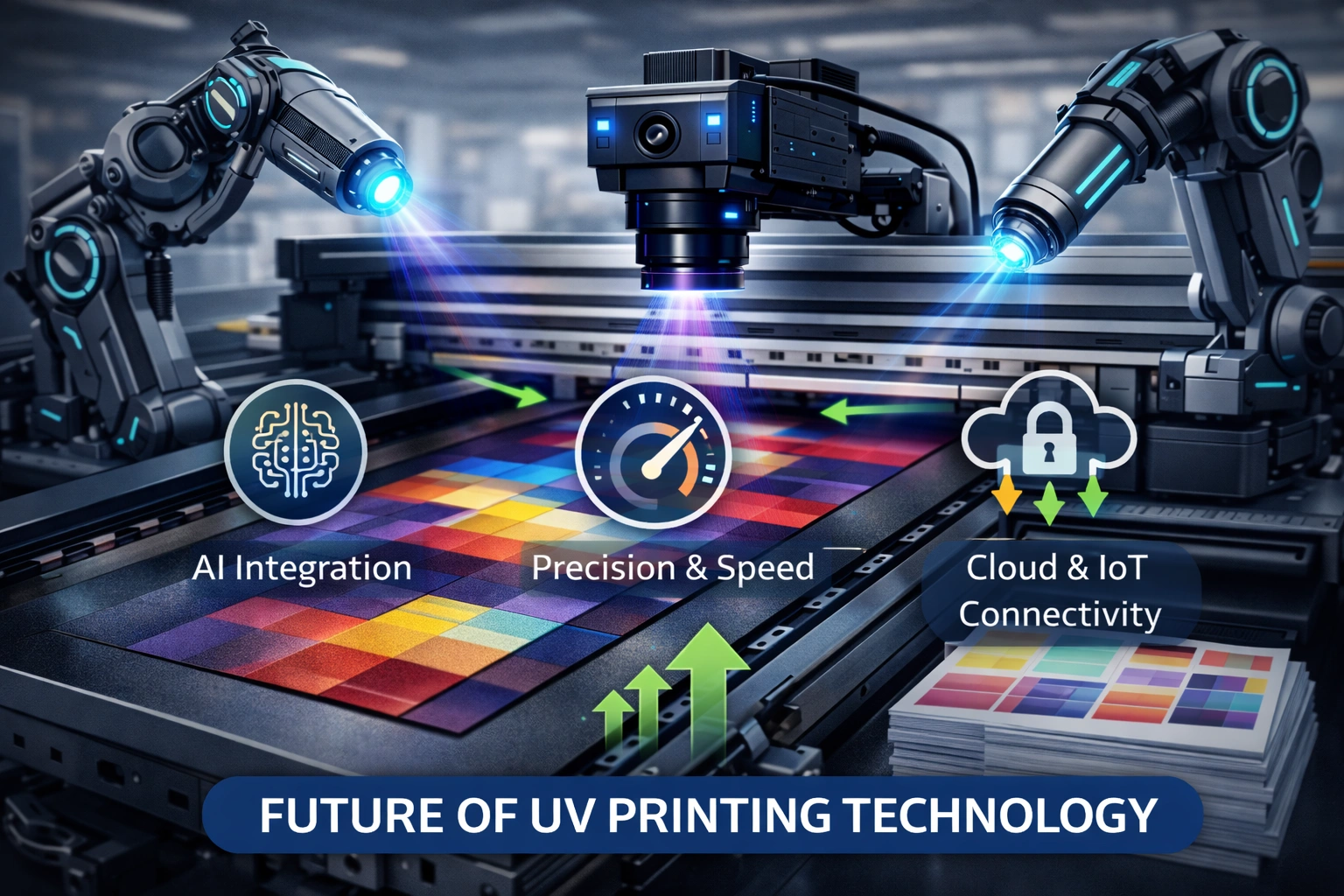
The role of vision systems in UV printing will continue to expand as technology advances.
AI-Powered Vision Systems
Artificial intelligence is enabling smarter defect detection and predictive maintenance.
Faster Image Processing
Improved processing speeds allow real-time corrections even at higher print speeds.
Fully Autonomous Printing
Future systems will require minimal human intervention, enabling lights-out manufacturing environments.
Enhanced Customization
Vision systems will play a key role in personalized, short-run, and variable-data printing applications.
Why Vision Systems Are Becoming Industry Standard
As competition increases, print businesses must deliver:
Higher quality
Faster turnaround
Greater consistency
Vision systems provide a competitive edge by ensuring precision and reliability across complex multi-pass workflows. For many professional printers, they are no longer optional but essential.
Conclusion
Vision systems have fundamentally changed the way multi-pass UV printing operates. By enabling precise alignment, real-time quality control, and automated correction, they eliminate many of the limitations traditionally associated with multi-pass printing.
For print businesses focused on quality, efficiency, and long-term growth, integrating vision systems into multi-pass UV printing workflows is a strategic investment. As technology continues to evolve, vision-assisted printing will set new standards for accuracy, productivity, and innovation in the printing industry.
explore our high-quality Visual Positioning UV printers here to find a solution that fits your needs.
Frequently Asked Questions (FAQ)
What is multi-pass UV printing?
Multi-pass UV printing is a technique where an image is printed in multiple layers or passes using UV-curable inks, allowing for higher resolution, richer colors, and better surface coverage.
How do vision systems improve print accuracy?
Vision systems monitor substrate position and printed layers in real time, detecting misalignment and automatically correcting it before the next print pass.
Are vision systems compatible with existing UV printers?
Many modern vision systems are designed to integrate with existing UV printing setups, provided hardware and software compatibility requirements are met.
Do vision systems increase production speed?
While the primary benefit is accuracy, improved automation and reduced reprints often result in faster overall production cycles.
Is maintenance required for vision systems?
Yes, basic maintenance such as camera cleaning, calibration, and software updates is necessary to ensure optimal performance.