

 HOME
HOME PRODUCT CENTER
 ABOUT US
 DOWNLOAD CENTER
 SUPPORT CENTER
 SUBSCRIBE
 BLOG
BLOGVisual Positioning UV Printer Brands Compared
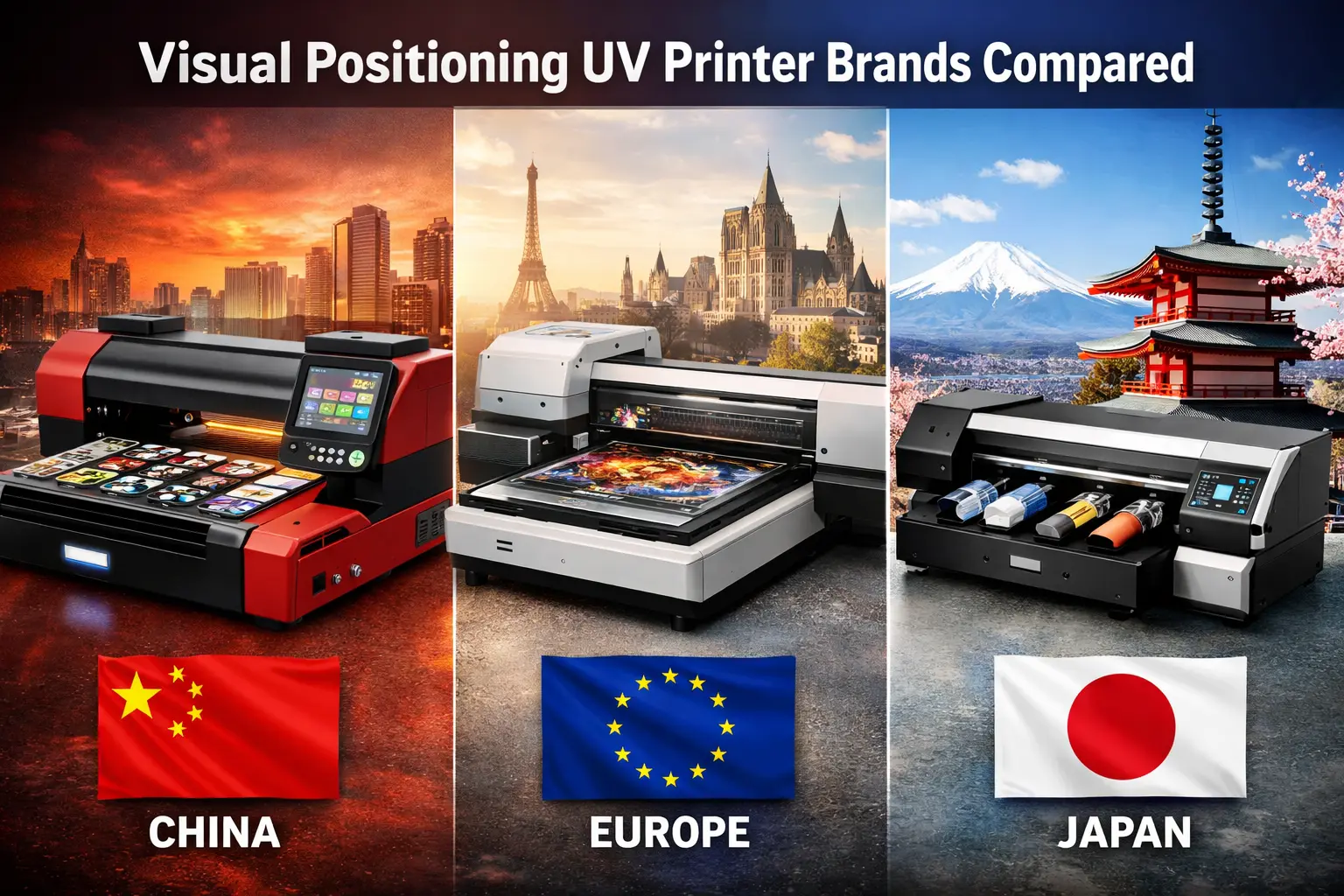
The printing industry has transformed rapidly over the last decade, driven by demand for precision, speed, and material versatility. One of the most impactful innovations in this space is the visual positioning UV printer. Unlike traditional flatbed or roll printers, these advanced machines use camera-based alignment systems combined with UV-curable inks to deliver unmatched accuracy on irregular, pre-cut, or non-standard substrates.
As adoption increases across signage, packaging, industrial decoration, and promotional product manufacturing, buyers face a critical question: Which region produces the best visual positioning UV printers—Chinese, European, or Japanese brands?
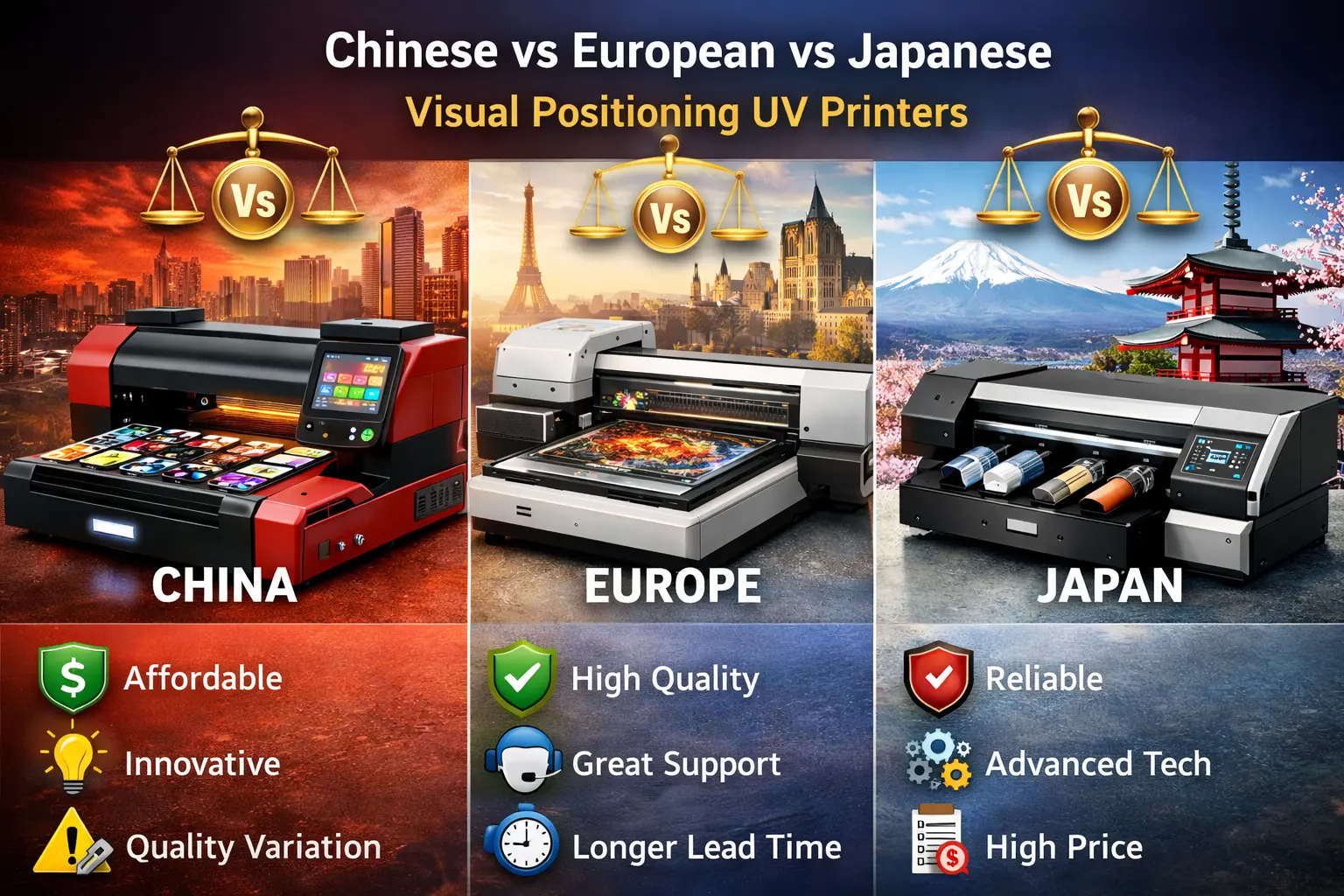
Each region brings a distinct philosophy to design, manufacturing, pricing, and long-term performance. Chinese brands emphasize affordability and rapid innovation, European manufacturers focus on engineering precision and compliance, while Japanese companies are known for reliability and consistency.
This article provides a deep, unbiased, and SEO-ready comparison of visual positioning UV printer brands from China, Europe, and Japan—helping business owners, print service providers, and industrial buyers make informed decisions.
Understanding Visual Positioning UV Printing Technology
Before comparing brands, it is essential to understand what makes visual positioning UV printers different from conventional UV flatbed machines.
What Is a Visual Positioning UV Printer?
A visual positioning UV printer is a digitally controlled printing system that uses industrial cameras and image recognition software to detect the exact position, angle, and shape of an object placed on the print bed. Instead of relying solely on manual alignment or fixed jigs, the printer automatically adjusts the print path to match the real-world placement of the substrate.
This technology is particularly valuable for:
Pre-cut acrylic sheets
Phone covers and electronic components
Irregular shapes and variable batches
Small objects requiring high registration accuracy
How Visual Positioning Works
The process generally follows these steps:
Object placement on the print bed (manual or robotic)
Camera scanning to detect edges, contours, and reference points
Software alignment matching artwork to the detected object
UV ink deposition with real-time correction
Instant UV curing for a finished, ready-to-use product
This automation significantly reduces material waste, setup time, and human error.
Key Advantages of Visual Positioning UV Printers
Visual positioning UV printers offer multiple operational and commercial benefits that make them attractive across industries.
High Accuracy and Repeatability
Camera-guided alignment ensures consistent print placement even when objects are slightly misaligned.
Instant Ink Curing
UV lamps cure ink immediately, eliminating drying time and enabling faster production cycles.
Wide Material Compatibility
These printers work on plastic, metal, glass, wood, leather, ceramics, and coated composites.
Reduced Setup and Labor Costs
Minimal jig usage and automated alignment reduce operator dependency.
Scalable Production
Suitable for both short-run customization and high-volume industrial workflows.
Chinese Visual Positioning UV Printer Brands
China has become the largest manufacturing hub for UV printing equipment globally. Over the last few years, Chinese manufacturers have invested heavily in camera systems, motion control, and UV ink chemistry.
Manufacturing Philosophy
Chinese brands prioritize:
Cost-effective production
Rapid product development
Broad model availability
Fast adaptation to market trends
This makes them particularly appealing to startups and growing print businesses.
Strengths of Chinese UV Printers
Competitive Pricing
Chinese machines are typically 30–60% more affordable than European or Japanese equivalents.
Wide Product Range
From entry-level desktop models to large industrial flatbeds, Chinese brands cover nearly every price segment.
Quick Feature Adoption
AI cameras, dual-head systems, rotary attachments, and hybrid workflows are often introduced faster.
Customization Options
Buyers can often request machine modifications, software tweaks, or private labeling.
Limitations to Consider
Quality Consistency
Performance can vary significantly between manufacturers and even between batches.
After-Sales Support
Support quality depends heavily on the distributor rather than the manufacturer.
Software Stability
Some systems may require updates or manual calibration more frequently.
Best Use Cases for Chinese Printers
Promotional product printing
Small to mid-scale signage businesses
Custom phone covers and gift items
Startups with limited capital
European Visual Positioning UV Printer Brands
European manufacturers are widely respected for engineering excellence, regulatory compliance, and long-term reliability. Their printers are often used in mission-critical industrial environments.
Design and Engineering Focus
European brands emphasize:
Precision mechanics
Certified safety standards
Environment-friendly ink systems
Long equipment lifespan
Advantages of European UV Printers
Exceptional Build Quality
Heavy-duty frames, premium linear guides, and stable electronics ensure consistent output.
Superior Color Management
Advanced RIP integration and color calibration deliver accurate brand colors.
Strong Customer Support
Professional installation, operator training, and global service networks are standard.
Regulatory Compliance
CE, RoHS, and environmental standards are strictly followed.
Potential Drawbacks
Higher Capital Investment
Initial costs are significantly higher compared to Chinese machines.
Longer Delivery Times
Custom builds or upgrades may require extended lead times.
Limited Entry-Level Options
Fewer budget-friendly models are available.
Ideal Applications for European Printers
Industrial packaging
Architectural décor printing
High-end signage and display production
Long-term manufacturing facilities
Japanese Visual Positioning UV Printer Brands
Japanese brands are known worldwide for precision manufacturing, consistency, and reliability. Their approach prioritizes long-term operational stability over rapid feature expansion.
Technology Philosophy
Japanese manufacturers focus on:
Proven engineering
Minimal failure rates
Long product life cycles
Continuous internal R&D
Key Benefits of Japanese UV Printers
Outstanding Reliability
Machines are designed for continuous operation with minimal downtime.
Stable Print Quality
Consistent output across long production runs.
Excellent Component Integration
Print heads, electronics, and ink systems are perfectly matched.
Lower Maintenance Frequency
Reduced breakdowns and predictable servicing schedules.
Considerations Before Buying
Premium Pricing
Initial investment is comparable to or higher than European machines.
Limited Model Variety
Fewer configurations and customization options.
Conservative Feature Rollout
New technologies are introduced only after extensive testing.
Best-Fit Use Cases
Electronics decoration
Industrial component printing
Medical and precision labeling
Quality-critical production environments
Comparative Analysis: China vs Europe vs Japan
Cost vs Performance Balance
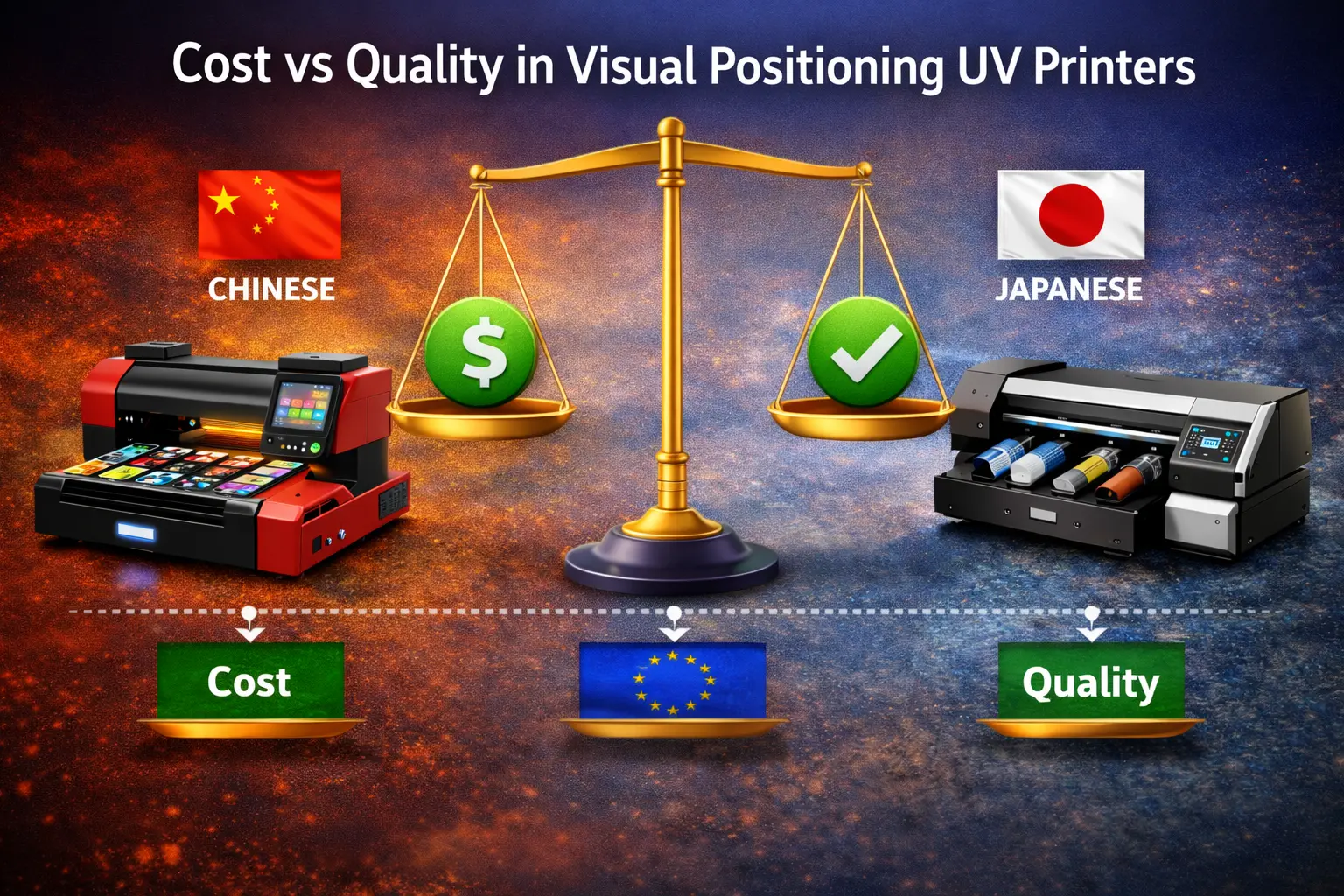
Chinese printers excel in affordability and fast ROI. European and Japanese machines justify their price through longevity, consistency, and professional support.
Innovation Speed
Chinese brands lead in rapid innovation and feature adoption. European and Japanese manufacturers prioritize stability and validation.
Reliability and Lifespan
Japanese printers offer the highest reliability, followed closely by European brands. Chinese printers vary depending on manufacturer quality.
Support and Training
European brands typically offer the most structured support, followed by Japanese brands. Chinese support quality depends heavily on the local distributor.
Industry Applications of Visual Positioning UV Printers
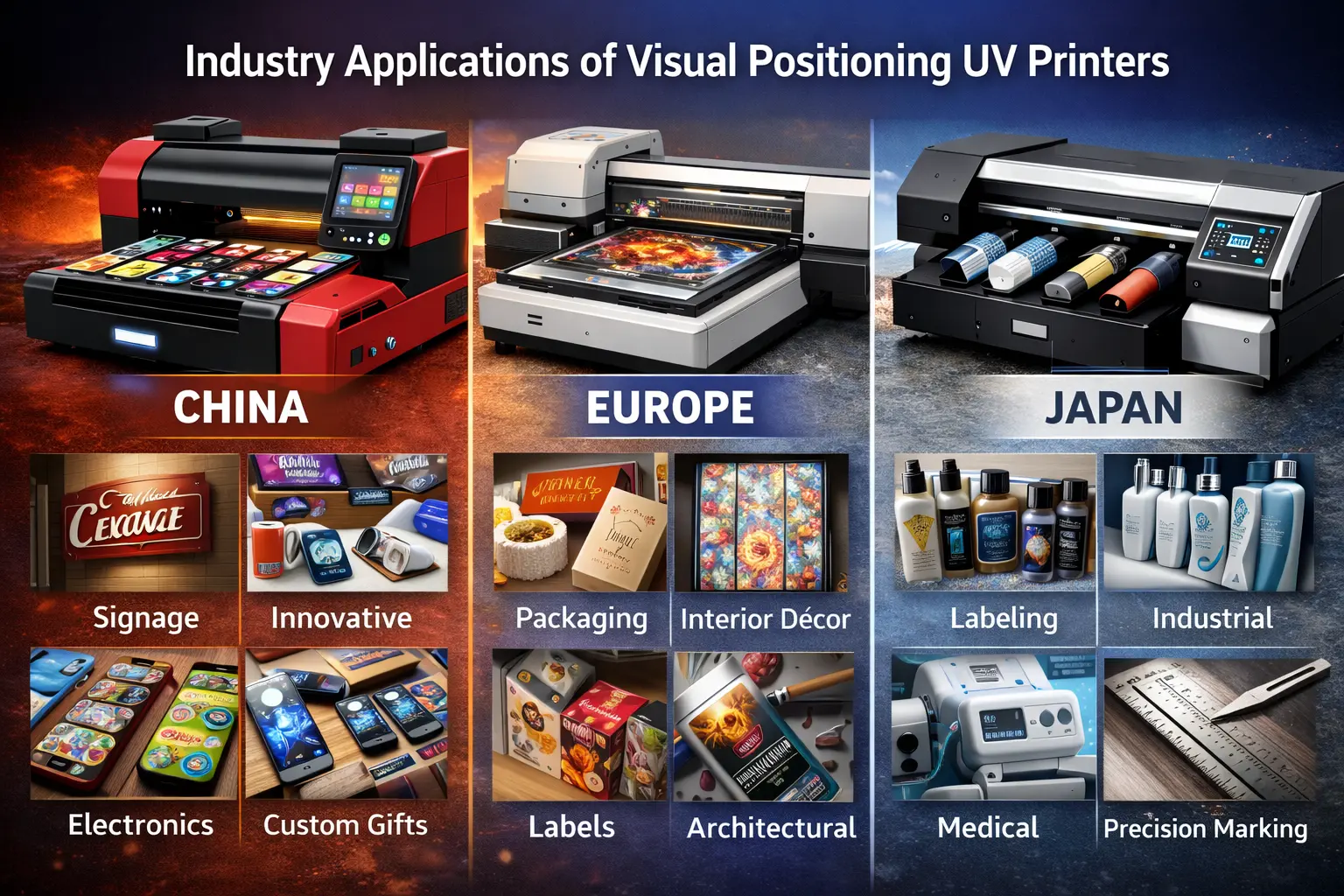
These printers are widely used across industries, including:
Advertising and signage
Packaging and labeling
Promotional products
Electronics and accessories
Interior décor panels
Industrial part marking
How to Choose the Right Visual Positioning UV Printer
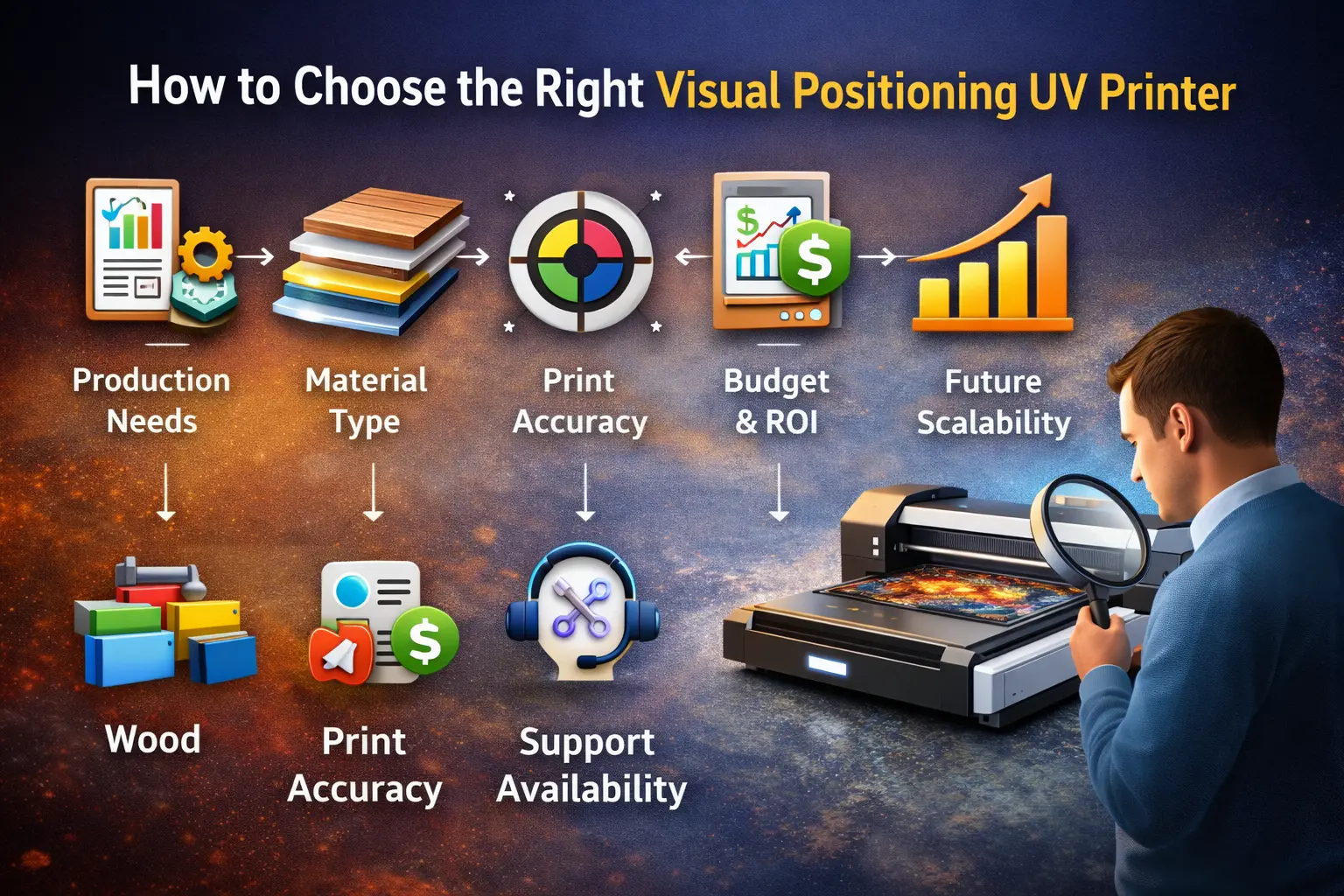
When selecting a printer, consider the following factors:
Monthly production volume
Material types and sizes
Required print accuracy
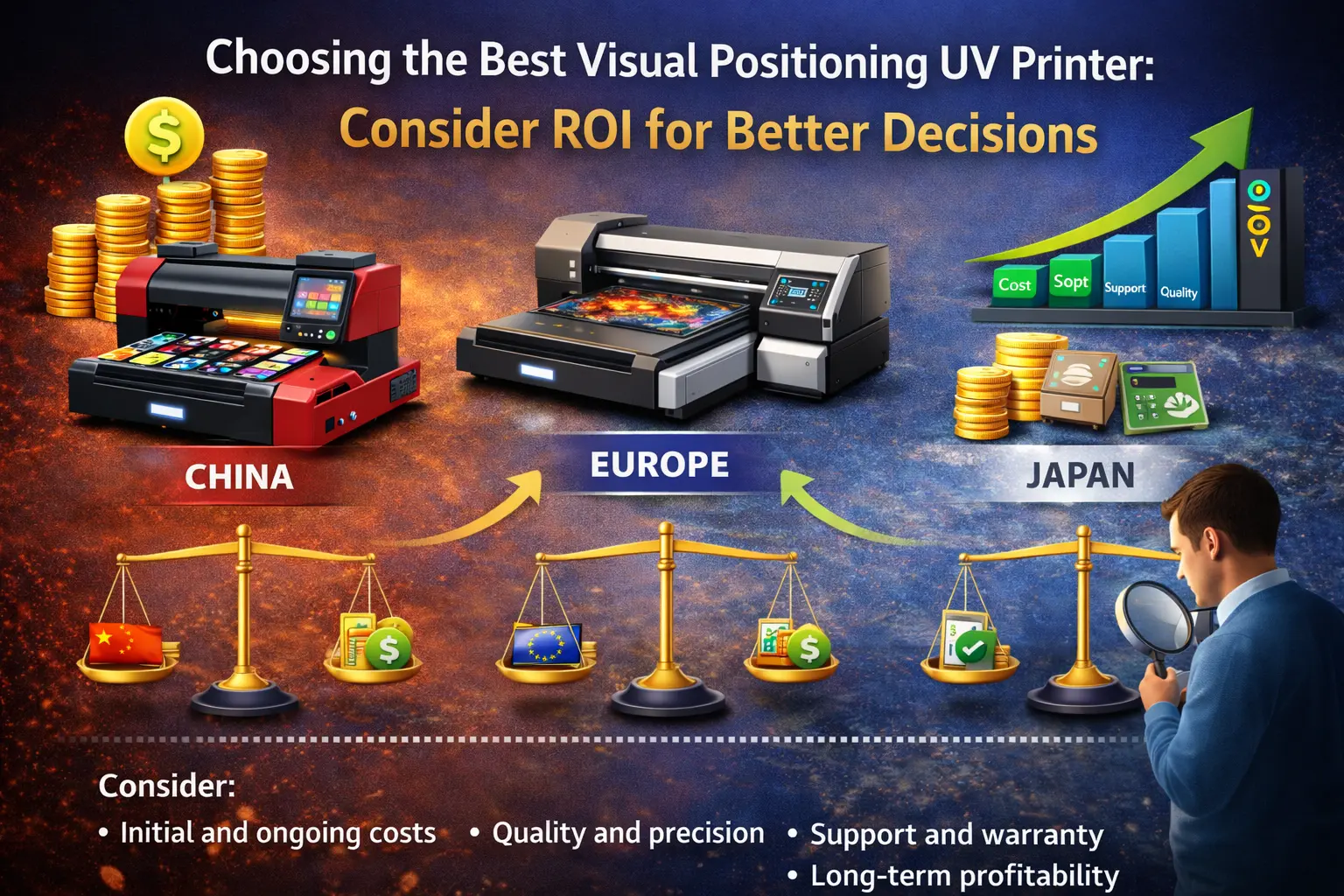
Budget and ROI expectations
Local technical support availability
Future scalability
There is no single “best” option—only the best fit for your business goals.
Conclusion
Visual positioning UV printers have reshaped modern printing by enabling precision, automation, and material flexibility. Chinese, European, and Japanese manufacturers each bring unique strengths to the table.
Chinese brands offer affordability and rapid innovation
European brands deliver engineering excellence and professional support
Japanese brands excel in reliability and long-term stability
The right choice depends on your production scale, budget, and quality expectations. With careful evaluation, investing in the right visual positioning UV printer can significantly enhance productivity and profitability.
Frequently Asked Questions (FAQ)
What is the biggest advantage of visual positioning UV printers?
Their ability to print accurately on irregular or pre-cut objects without manual alignment.
Are Chinese visual positioning UV printers suitable for commercial use?
Yes, especially for small to medium businesses, provided the brand and distributor are reliable.
Why are European and Japanese printers more expensive?
They use premium components, strict quality control, and offer long-term reliability and support.
Can UV prints withstand outdoor conditions?
Yes, UV-cured inks are durable and resistant to fading, making them suitable for outdoor use.