

 HOME
HOME PRODUCT CENTER
 ABOUT US
 DOWNLOAD CENTER
 SUPPORT CENTER
 SUBSCRIBE
 BLOG
BLOGVisual Positioning UV Printers and Pixel-to-Millimeter Accuracy Explained
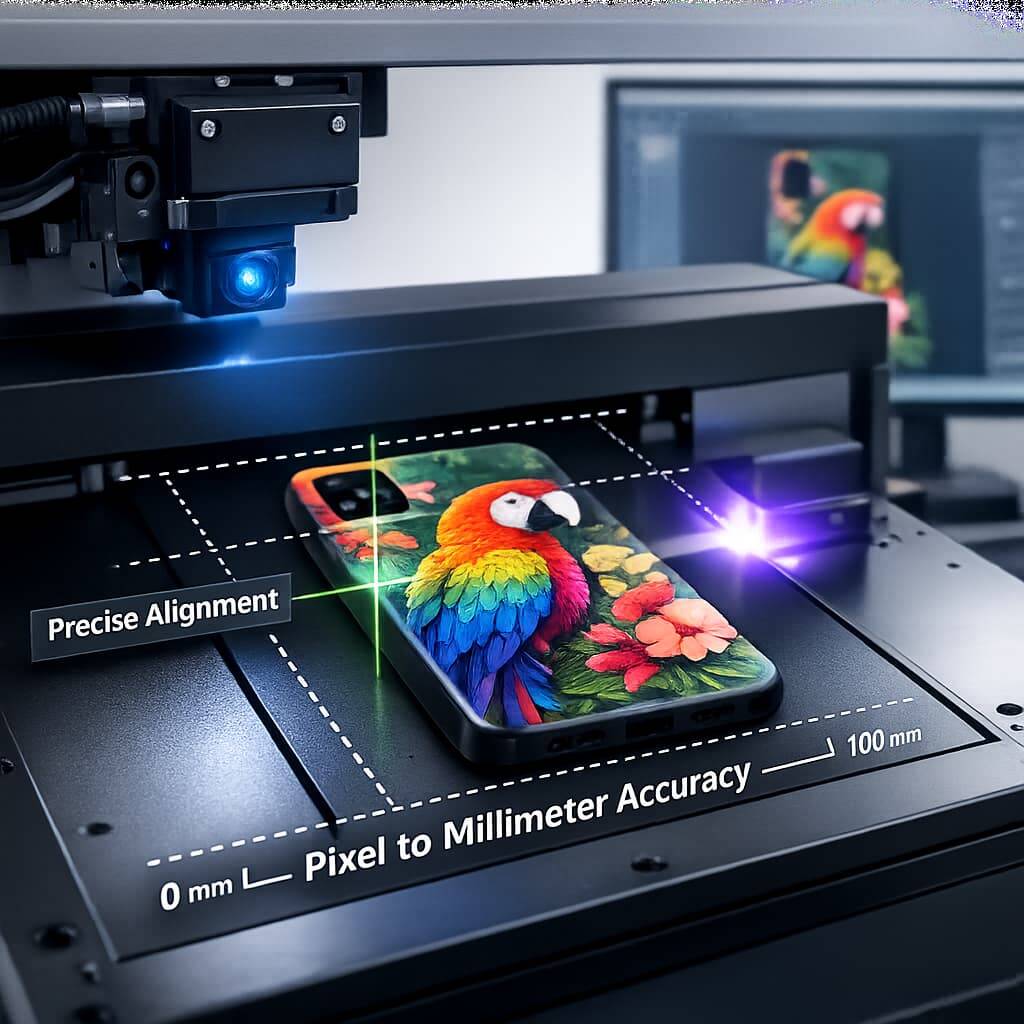
In today’s competitive digital printing industry, accuracy is no longer optional—it is essential. As customer expectations rise and print applications become more complex, even the smallest measurement error can lead to wasted materials, rejected jobs, and damaged brand reputation. This is where visual positioning UV printers have emerged as a powerful solution.
One of the defining strengths of visual positioning UV printers is their ability to convert digital pixels into precise real-world measurements. Known as pixel-to-millimeter conversion accuracy, this capability ensures that what you design on the screen is exactly what appears on the final printed product.
In this detailed guide, we’ll explore how visual positioning UV printers work, why pixel-to-millimeter accuracy matters, their key features, real-world applications, and how businesses can benefit from investing in this advanced printing technology.
Understanding Pixel-to-Millimeter Conversion in UV Printing
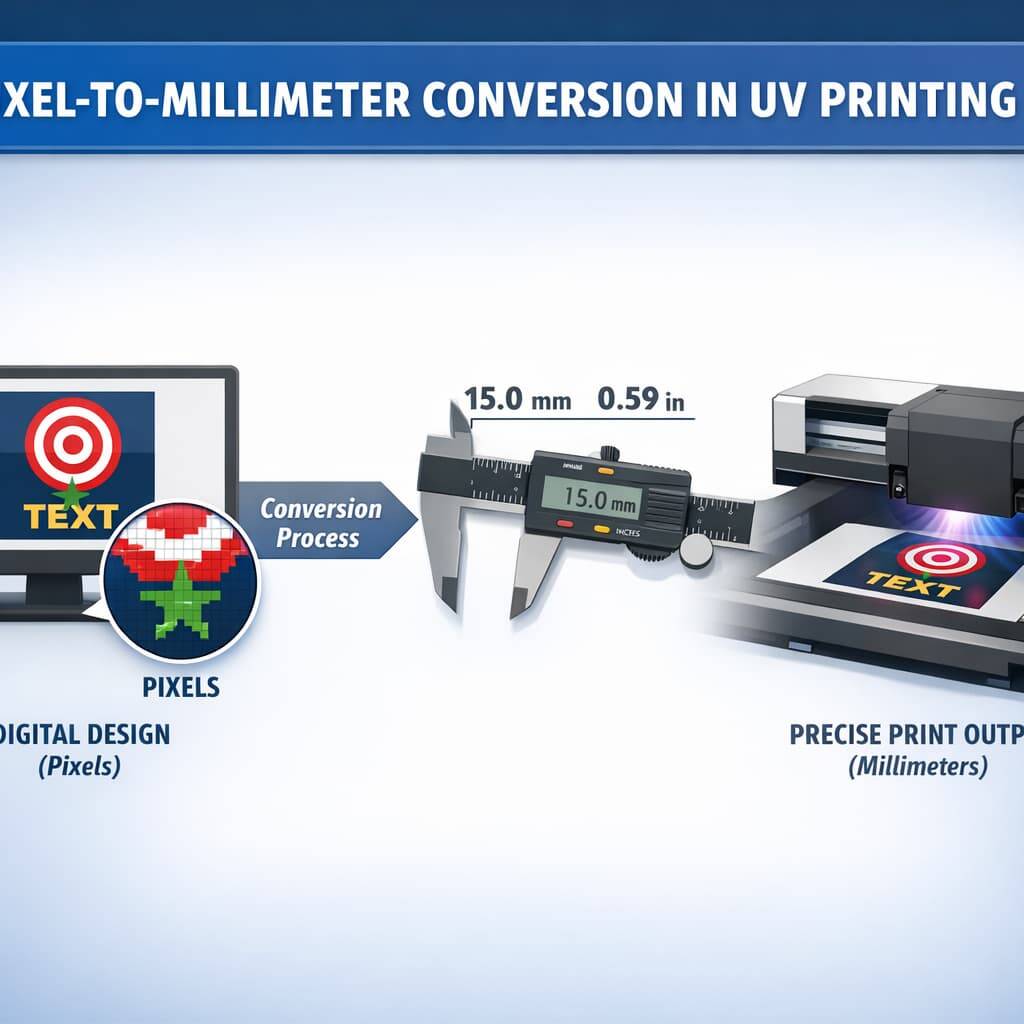
What Does Pixel-to-Millimeter Conversion Mean?
Pixel-to-millimeter conversion is the process of translating a digital design—made up of pixels—into accurate physical dimensions during printing. Every image or graphic file is created using pixels, but printing requires converting those pixels into millimeters, inches, or other physical units.
If this conversion is even slightly off, the printed output may appear stretched, compressed, misaligned, or incorrectly positioned. In industries where precision matters, such errors can make a product unusable.
Why UV Printing Demands High Accuracy
UV printing is widely used for custom products, industrial printing, packaging, signage, labels, and promotional items. Many of these applications involve:
Pre-cut materials
Irregular shapes
Fixed print areas
High-value substrates
Because UV inks cure instantly, there is little room for correction once printing starts. This makes accurate pixel-to-millimeter conversion especially critical.
Why Pixel-to-Millimeter Accuracy Matters So Much
1. Brand Consistency and Professional Output
For businesses that rely on logos, typography, and exact layouts, consistency is everything. Even a one-millimeter misalignment can distort a logo or make text appear off-center.
Accurate pixel-to-millimeter conversion ensures:
Logos are placed exactly where intended
Text remains sharp and aligned
Repeated print jobs look identical every time
This level of consistency helps businesses maintain a strong and professional brand image.
2. Reduced Material Waste and Cost Savings
Printing errors cost money. Misprints often lead to:
Wasted substrates
Lost ink
Increased labor time
By ensuring precise conversion from digital design to physical print, visual positioning UV printers significantly reduce material waste. Over time, this leads to lower operating costs and higher profit margins.
3. Improved Customer Satisfaction
Customers expect accuracy—especially for customized products. When designs match expectations perfectly, it builds trust and long-term relationships.
High accuracy means:
Fewer reprints
Faster order fulfillment
Higher customer confidence
Satisfied customers are far more likely to return and recommend your services.
What Is a Visual Positioning UV Printer?
A visual positioning UV printer uses advanced camera systems and intelligent software to detect the exact position of the substrate before printing. Instead of relying on manual alignment or fixed print coordinates, the printer visually scans the material and adjusts the print placement automatically.
This technology allows the printer to:
Identify edges, shapes, and reference points
Adjust designs in real time
Maintain consistent accuracy across different materials
The result is unmatched precision, especially for complex or irregular printing tasks.
How Visual Positioning Technology Enhances Accuracy
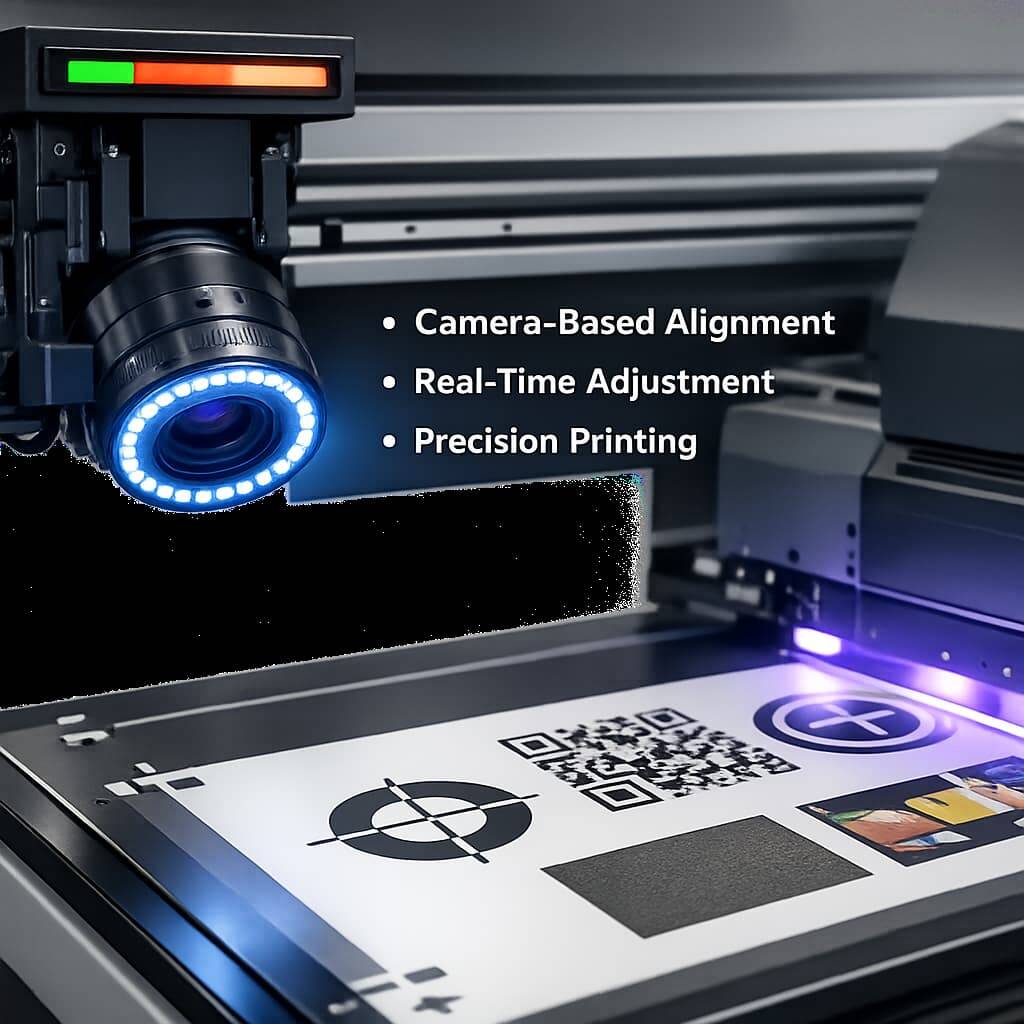
Intelligent Camera Recognition
High-resolution cameras scan the printing surface and capture real-time data. The system identifies reference marks, contours, or object boundaries to ensure exact placement.
Automatic Design Adjustment
Based on the scanned data, the printer software automatically adjusts the design’s position and scale. This ensures that pixel-to-millimeter conversion remains accurate even if the substrate is slightly misaligned.
Real-Time Error Correction
Visual positioning systems continuously monitor alignment during the printing process. If minor deviations occur, the system corrects them instantly—something traditional printers cannot do.
Key Benefits of Visual Positioning UV Printers
1. Exceptional Printing Precision
Visual positioning UV printers offer accuracy that goes beyond conventional printing methods. This is especially valuable for:
Labels and stickers
Packaging prototypes
Electronic components
Custom promotional items
Precision remains consistent from the first print to the last.
2. Wide Application Versatility
Because pixel-to-millimeter accuracy is so reliable, these printers can handle a wide range of materials and applications, including:
Rigid substrates: wood, glass, acrylic, metal, plastic
Flexible materials: vinyl, leather, fabric, films
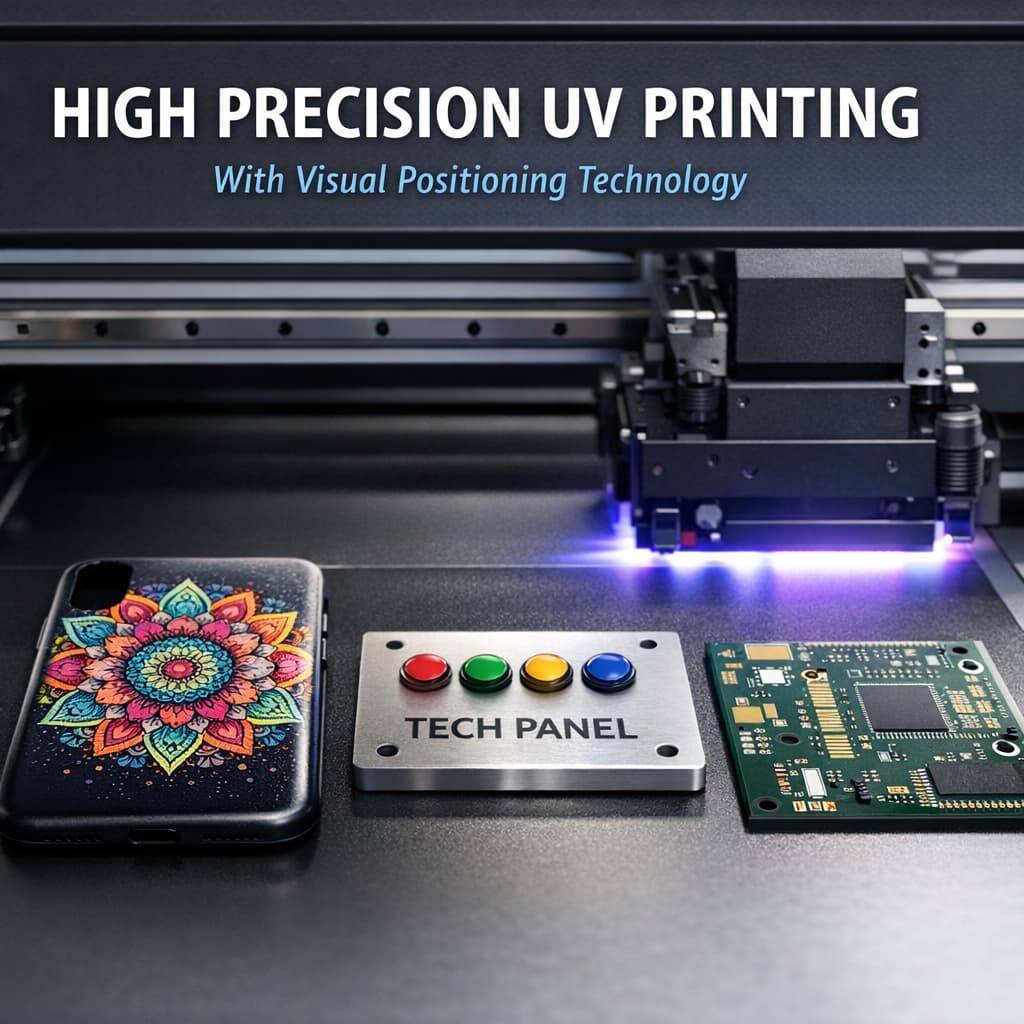
Special items: phone cases, control panels, nameplates
Large-format prints: boards, signage, displays
This versatility allows businesses to expand their service offerings without investing in multiple machines.
3. Faster Setup and Production
Manual alignment takes time and skill. Visual positioning eliminates much of this effort by automating the setup process.
Benefits include:
Faster job preparation
Reduced operator errors
Higher daily production capacity
For businesses handling bulk or urgent orders, this speed becomes a major competitive advantage.
Core Features of Visual Positioning UV Printers
Intelligent Alignment Systems
Advanced alignment systems use cameras and sensors to ensure perfect positioning of every print. The printer automatically compensates for slight material shifts, maintaining consistent density and placement.
High-Resolution Output
Most visual positioning UV printers support high resolutions, often up to 1440 DPI or higher. This allows:
Sharp text
Smooth gradients
Fine details in complex designs
High resolution combined with precise alignment results in premium-quality prints.
Advanced Color Management
Built-in color calibration systems ensure accurate color reproduction across different print jobs. What you see on the screen closely matches the final printed output, reducing color mismatch issues.
User-Friendly Software Interface
Modern visual positioning UV printers come with intuitive software that simplifies pixel-to-millimeter conversion. Common features include:
Drag-and-drop design tools
Real-time previews
Automated scaling options
Easy file compatibility
Even operators with limited experience can achieve professional results.
Industries That Benefit from Visual Positioning UV Printing

Packaging and Labeling
Accurate positioning is essential for packaging and labels, especially when printing on pre-cut or die-cut materials. Visual positioning ensures each print aligns perfectly with the package shape.
Advertising and Signage
Large format boards, acrylic signs, and promotional displays require precise alignment for professional presentation. Visual positioning UV printers deliver consistent results across large surfaces.
Electronics and Industrial Printing
Control panels, circuit boards, and industrial components demand extreme accuracy. Visual positioning technology ensures that markings and graphics align precisely with functional elements.
Customized Product Manufacturing
From phone covers to gift items, customization requires exact placement. Visual positioning UV printers allow mass customization without sacrificing accuracy.
How to Choose the Right Visual Positioning UV Printer
1. Assess Your Print Volume
High-volume businesses should opt for industrial-grade machines with faster speeds and larger print areas. Smaller businesses may find compact models more cost-effective.
2. Consider Material Compatibility
Ensure the printer supports the types of substrates you work with most often. A versatile printer offers better long-term value.
3. Evaluate Software Capabilities
The software plays a crucial role in pixel-to-millimeter conversion. Look for systems with real-time previews, automatic alignment, and easy calibration tools.
4. Check Support and Warranty
Reliable after-sales support and warranty coverage are essential. Strong technical support minimizes downtime and protects your investment.
Future of Visual Positioning UV Printing
As automation and AI continue to advance, visual positioning UV printers are expected to become even more intelligent. Future developments may include:
AI-driven defect detection
Fully automated job setups
Improved camera precision
Faster processing speeds
These innovations will further improve accuracy, efficiency, and scalability.explore our high-quality Visual Positioning UV printers here.
Conclusion
Visual positioning UV printers have redefined precision in digital printing. By delivering exceptional pixel-to-millimeter conversion accuracy, they ensure that digital designs translate perfectly into physical prints. From brand consistency and cost efficiency to customer satisfaction and production speed, the benefits are clear.
For businesses seeking reliable, high-quality, and scalable printing solutions, investing in a visual positioning UV printer is a smart and future-ready decision.
Frequently Asked Questions (FAQ)
What is pixel-to-millimeter conversion in UV printing?
It is the process of converting digital pixels into accurate physical measurements during printing, ensuring that the printed output matches the original design dimensions.
Why is pixel accuracy important in professional printing?
Accurate measurement prevents misalignment, reduces waste, maintains brand consistency, and ensures customer satisfaction.
How does visual positioning technology improve accuracy?
It uses cameras and intelligent software to detect substrate position and automatically adjust print placement in real time.
Are visual positioning UV printers suitable for multiple materials?
Yes, they are designed to print on a wide range of rigid and flexible materials with consistent accuracy.
What should I consider before buying a visual positioning UV printer?
Key factors include print volume, material compatibility, software features, resolution, and after-sales support.