

 HOME
HOME PRODUCT CENTER
 ABOUT US
 DOWNLOAD CENTER
 SUPPORT CENTER
 SUBSCRIBE
 BLOG
BLOGBest UV Printers for Trade Show Graphics
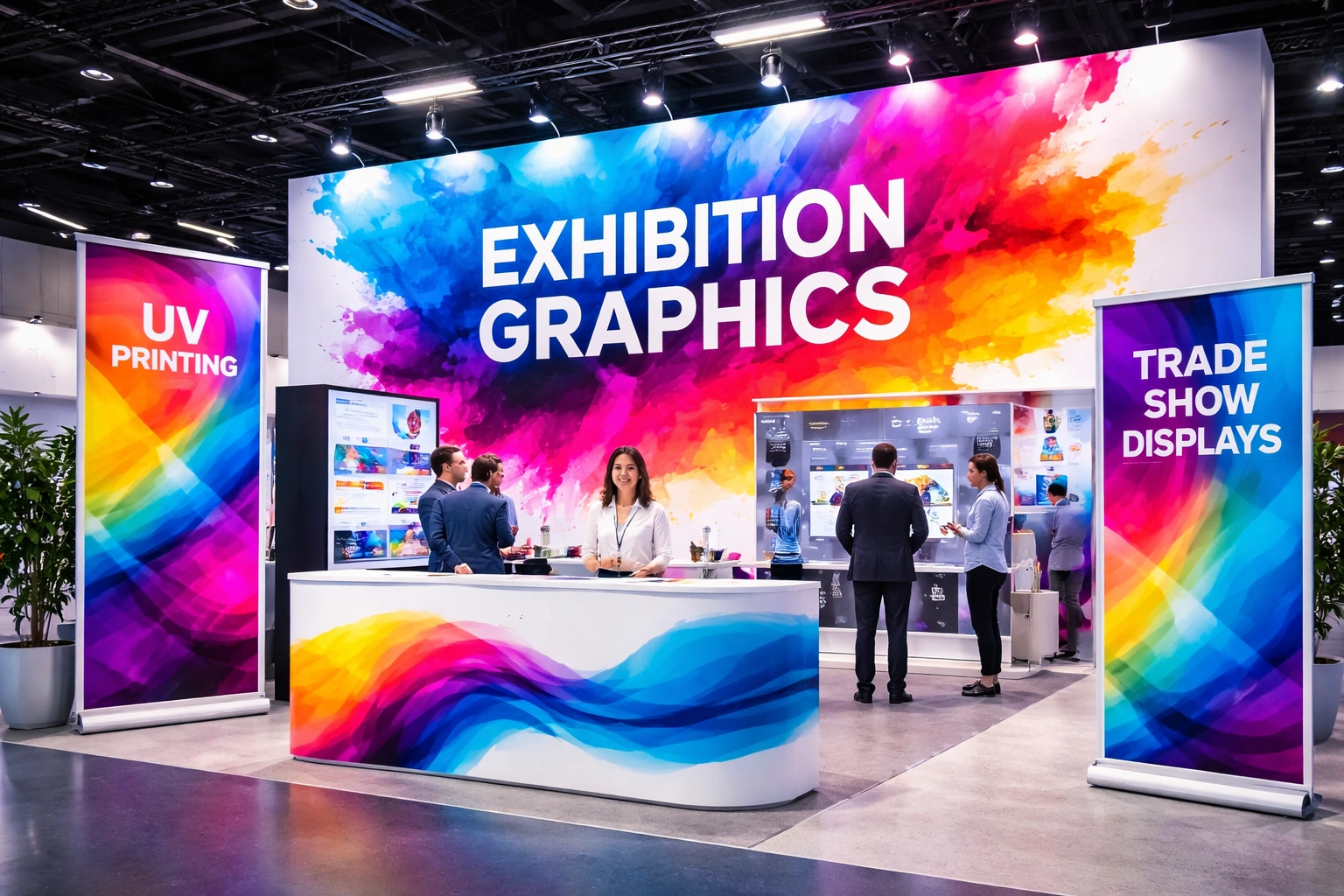
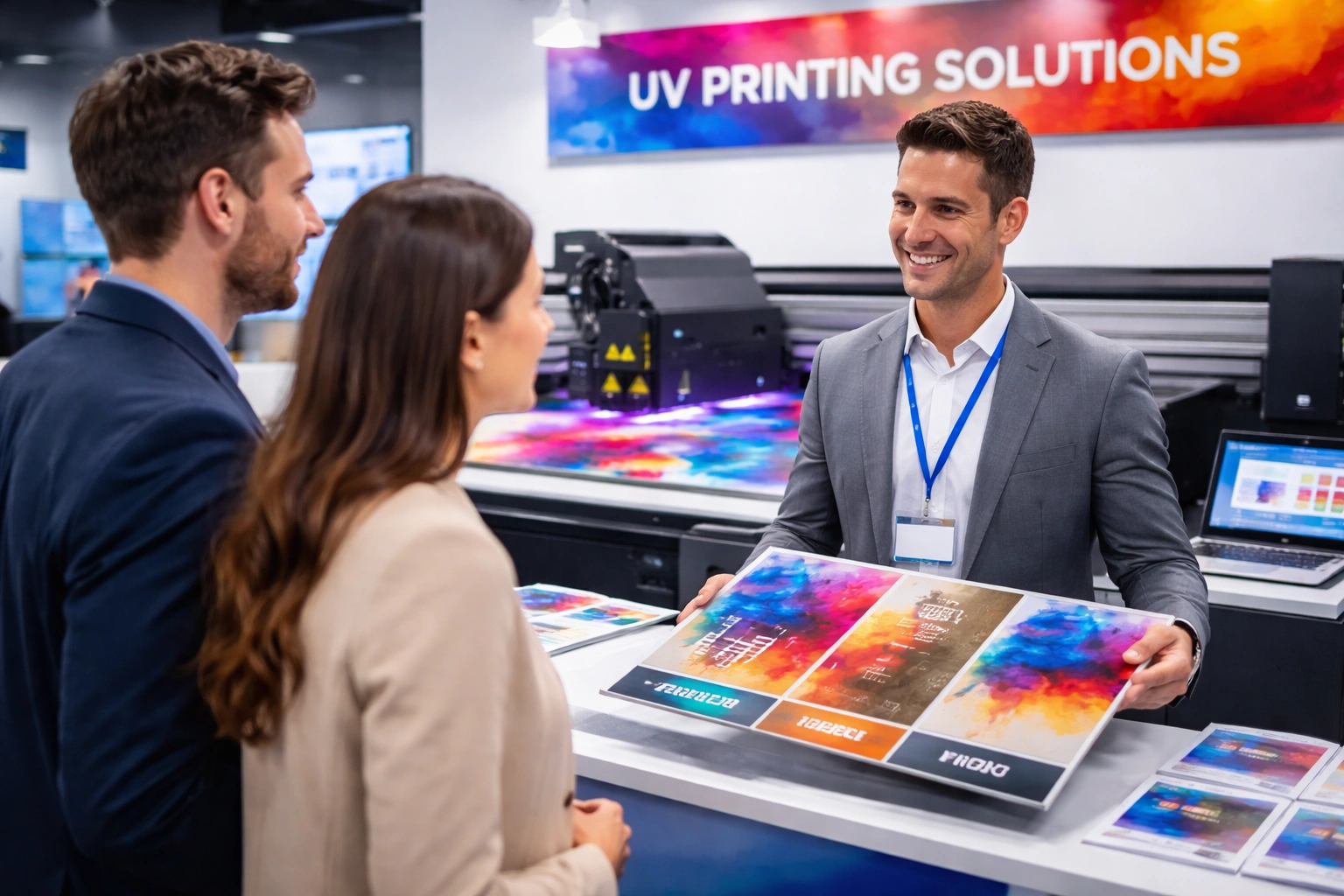
Trade shows and exhibitions are among the most competitive marketing environments for any business. Hundreds of brands compete for attention in a limited space, making visual impact a deciding factor in success. In such scenarios, high-quality, durable, and vibrant graphics are not just optional—they are essential. This is where UV printing technology has become a game changer for exhibition and trade show graphics.
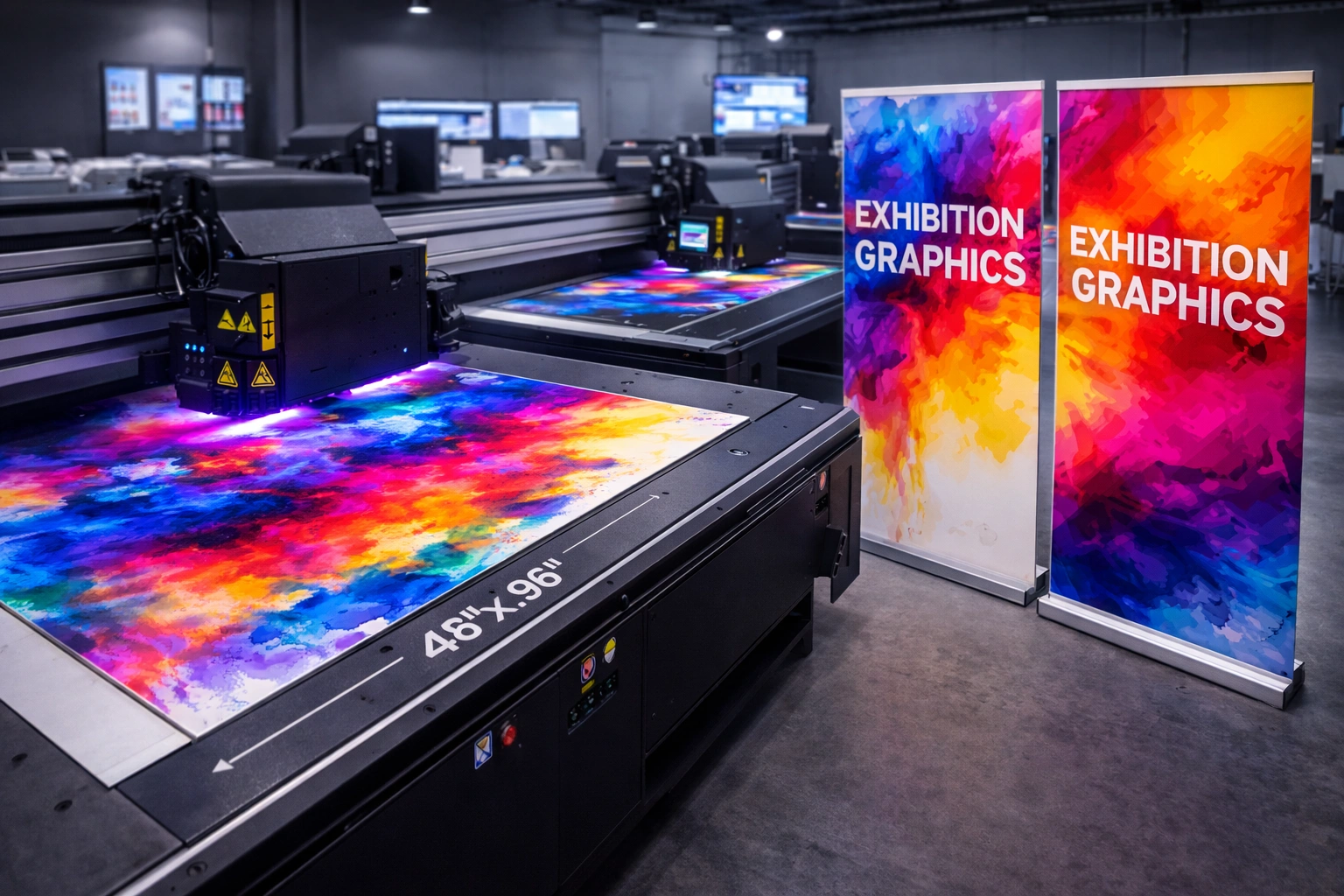
UV printers offer unmatched versatility, allowing businesses to print directly on rigid and flexible materials with stunning color accuracy and instant curing. From large backlit displays and banners to custom promotional panels and branded merchandise, UV printing enables exhibitors to create professional, eye-catching visuals that stand out in crowded exhibition halls.
This article explores why UV printers are ideal for trade show graphics, the most important features to consider before investing, an in-depth look at leading UV printer models, and practical guidance to help businesses choose the right solution for their exhibition needs.
Understanding UV Printing Technology
UV printing is a digital printing method that uses ultraviolet light to instantly cure specially formulated inks as they are printed onto a surface. Unlike traditional solvent or water-based inks that dry through evaporation, UV inks harden immediately when exposed to UV light.
This instant curing process results in sharper images, richer colors, and stronger adhesion to a wide range of materials. Because the ink does not spread or soak into the substrate, UV printing produces exceptionally crisp graphics with fine details—an essential requirement for high-impact trade show displays.
Another key advantage is that UV printing allows for printing on non-porous and rigid materials, opening creative possibilities that are not achievable with conventional printing methods.
Why UV Printers Are Ideal for Trade Shows and Exhibitions
Exceptional Visual Impact
Trade show graphics must grab attention within seconds. UV printing delivers vivid colors, high contrast, and sharp resolution that remain visually striking even under bright exhibition lighting. The ability to produce white ink and layered effects further enhances design flexibility.
Wide Material Compatibility
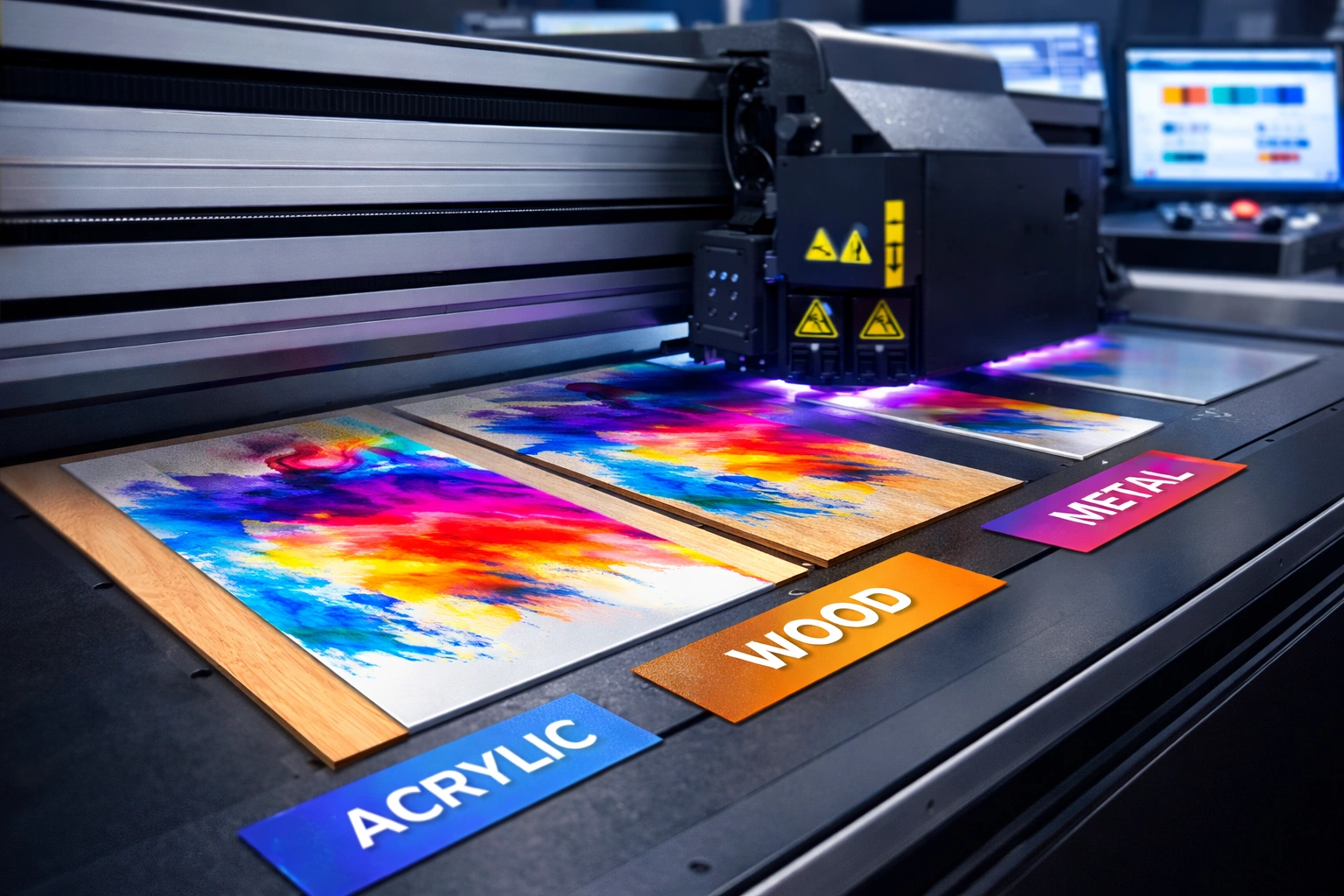
UV printers can print on materials commonly used in exhibitions, including acrylic sheets, PVC boards, foam boards, glass panels, wood, metal, vinyl, leather, and even ceramics. This versatility allows brands to maintain a consistent visual identity across different display elements.
Instant Drying and Faster Turnaround
Trade show deadlines are often tight. UV ink cures instantly, eliminating drying time and allowing prints to be handled, cut, or installed immediately. This significantly reduces production time and enables last-minute design changes.
High Durability
Exhibition graphics are frequently transported, assembled, dismantled, and reused. UV prints are highly resistant to scratches, fading, moisture, and chemicals, ensuring graphics maintain their quality over multiple events.
Eco-Friendly Printing Option
Modern UV inks contain low or zero volatile organic compounds (VOCs). This makes UV printing safer for indoor exhibition environments and more environmentally responsible compared to solvent-based printing.
Key Features to Consider When Choosing a UV Printer
Selecting the right UV printer for trade show applications requires careful evaluation of technical and operational factors. Below are the most important features to consider.
Print Bed Size and Media Capacity
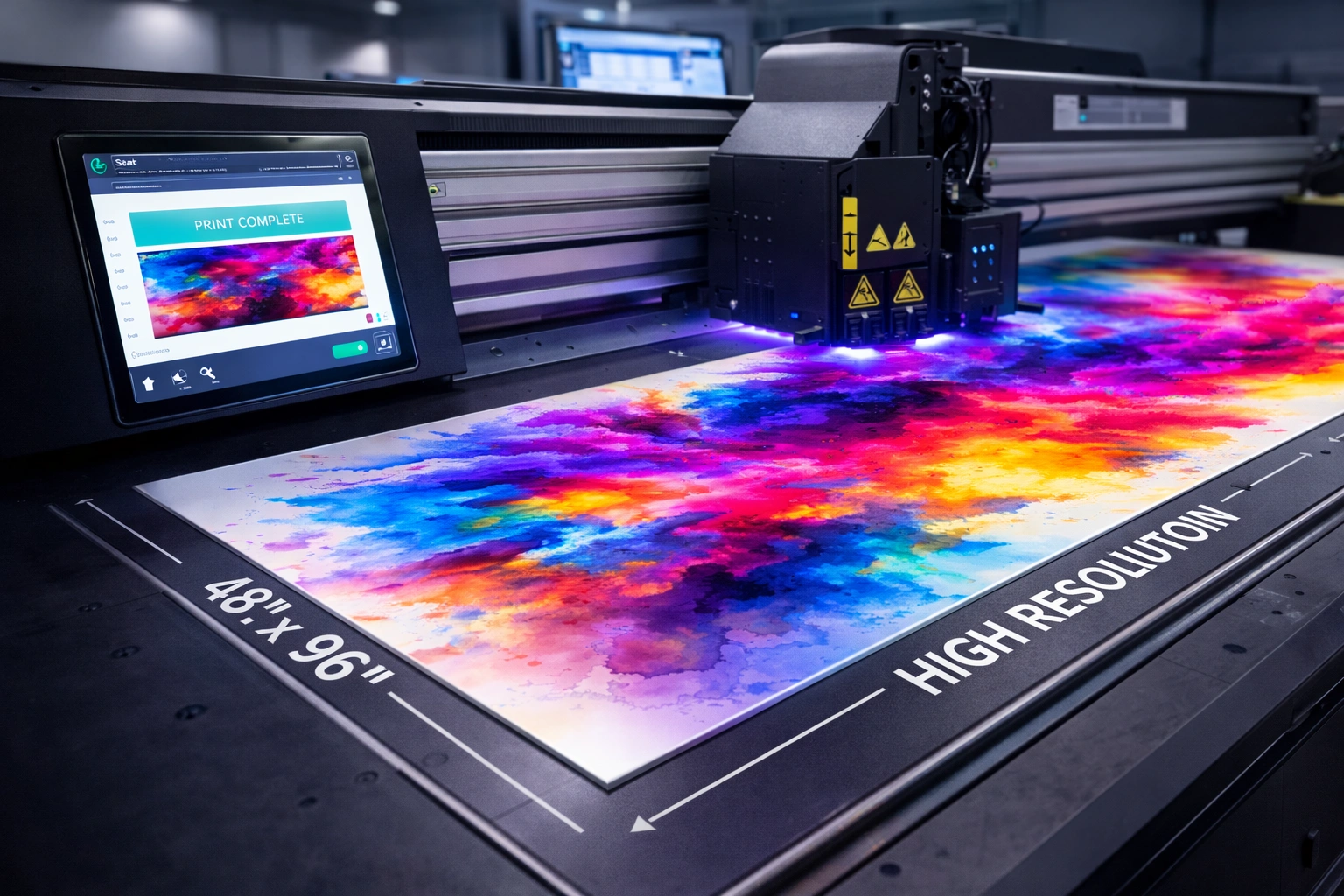
Trade show graphics often include large panels and boards. A printer with a larger bed size allows printing bigger graphics in a single pass, reducing seams and alignment issues. Consider the maximum substrate thickness and weight the printer can handle.
Print Resolution and Color Accuracy
High resolution is critical for producing sharp text, fine lines, and photographic images. Look for printers that offer at least 1200 dpi resolution and advanced color management systems for consistent and accurate color reproduction.
Print Speed and Productivity
For businesses producing graphics for multiple exhibitions, print speed plays a crucial role. Faster printers improve productivity and help meet tight deadlines without compromising quality.
Ink Technology and White Ink Capability
White ink is especially valuable for printing on transparent or colored substrates. A UV printer with stable white ink circulation ensures consistent output without clogging issues.
Software Compatibility and Workflow
Seamless integration with graphic design and RIP software simplifies file preparation and color control. User-friendly software reduces errors and shortens the learning curve for operators.
Maintenance and Reliability
Trade show production often runs on strict schedules. A reliable printer with easy maintenance features minimizes downtime and ensures consistent output during peak production periods.
Top UV Printers for Trade Show and Exhibition Graphics
Mimaki UJF-3042 MkII
The Mimaki UJF-3042 MkII is a popular choice for businesses seeking a compact yet powerful UV flatbed printer. Despite its relatively small footprint, it delivers professional-grade output suitable for high-end exhibition graphics.
It supports printing on a wide variety of rigid materials and offers excellent ink adhesion. The printer is particularly well-suited for producing signage, display panels, promotional boards, and branded accessories for trade shows.
Its precision printing capabilities make it ideal for businesses focusing on detailed graphics and customized exhibition elements.
Epson SureColor L-6450U
The Epson SureColor L-6450U is designed for large-format UV printing applications. Known for its superior color accuracy, this printer excels at producing banners, backdrops, wall graphics, and large exhibition displays.
The advanced UV ink technology ensures vibrant colors and long-lasting durability, even in high-traffic exhibition environments. Its wide printing width makes it a strong choice for companies that frequently produce large-scale trade show visuals.
This model is especially suitable for print service providers handling high-volume exhibition work.
Roland VersaUV LEF-300
The Roland VersaUV LEF-300 is widely recognized for its versatility and precision. It is capable of printing directly onto three-dimensional objects and thicker substrates, making it ideal for customized promotional items used at exhibitions.
From branded gift items to unique display components, this printer allows businesses to expand beyond traditional flat graphics. Its high-resolution output ensures premium-quality results, even on complex surfaces.
This printer is a strong option for exhibitors looking to create distinctive, customized marketing materials that leave a lasting impression.
HP Scitex FB10000
The HP Scitex FB10000 is a high-performance industrial UV printer designed for large-scale and high-volume production. It is particularly suitable for producing oversized exhibition graphics, rigid panels, and high-impact signage.
With exceptional speed and consistent quality, this printer is ideal for businesses that regularly handle major trade shows and large exhibition projects. Its ability to handle both rigid and flexible media adds significant operational flexibility.
This printer is best suited for established print houses and large exhibition graphics manufacturers.
Brother GTX Pro
The Brother GTX Pro stands out as a versatile solution that combines UV printing capabilities with garment and promotional printing applications. It is particularly useful for exhibitors who want to offer branded apparel alongside traditional display graphics.
With fast processing speeds and a user-friendly interface, it allows efficient production of custom clothing and promotional materials. This flexibility makes it a valuable addition for businesses offering complete exhibition branding solutions.
Comparing UV Printing with Other Printing Technologies
When planning trade show graphics, businesses often consider alternatives such as solvent printing, latex printing, and dye sublimation. While each method has its strengths, UV printing offers a balanced combination of speed, durability, and versatility.
Unlike solvent printing, UV printing does not require long drying times and produces minimal odor. Compared to latex printing, UV offers superior compatibility with rigid substrates. Dye sublimation, while excellent for fabric, is limited in material options and durability for rigid displays.
For exhibitors seeking a single solution capable of handling diverse materials and applications, UV printing remains the most practical choice.
Cost Considerations and Return on Investment
UV printers represent a significant upfront investment, but they offer strong long-term value. Factors such as reduced material waste, faster production times, and the ability to offer premium services contribute to a higher return on investment.
Businesses involved in frequent trade shows benefit from in-house UV printing by eliminating outsourcing costs and gaining complete control over production timelines. Additionally, the durability of UV prints allows reuse across multiple events, further reducing long-term expenses.
Careful evaluation of production volume and application requirements helps ensure the selected printer delivers maximum value.
Maintenance and Operational Best Practices
Proper maintenance is essential for keeping a UV printer running efficiently. Regular cleaning of print heads, monitoring ink circulation, and following manufacturer guidelines prevent common issues such as clogging and color inconsistency.
Maintaining a clean working environment and using recommended substrates also contributes to consistent print quality. Investing in operator training ensures the printer is used to its full potential and minimizes costly errors.
Future Trends in UV Printing for Exhibitions
The UV printing industry continues to evolve with advancements such as faster curing systems, improved white ink stability, and enhanced automation. Sustainability is also becoming a major focus, with manufacturers developing more energy-efficient printers and eco-friendly ink formulations.
Customization and short-run printing are expected to play an even bigger role in future exhibitions, further increasing the demand for UV printing solutions that offer flexibility and speed.
Conclusion
UV printing has become an essential technology for creating high-impact trade show and exhibition graphics. Its ability to deliver vibrant colors, exceptional durability, and compatibility with a wide range of materials makes it an ideal choice for exhibitors and print service providers alike.
Whether you need compact precision printing, large-format production, or customized promotional items, there is a UV printer suited to your requirements. Investing in the right UV printing solution not only enhances visual appeal but also strengthens brand presence and ensures long-term value for exhibition marketing efforts.Explore our high-quality UV printers here
Frequently Asked Questions
What materials can UV printers print on?
UV printers can print on plastic, acrylic, metal, wood, glass, PVC, vinyl, leather, fabric, and many other rigid and flexible materials.
Are UV prints suitable for outdoor exhibitions?
Yes, UV prints are highly resistant to fading, moisture, and scratches, making them suitable for both indoor and outdoor exhibition use.
Do UV printers support white ink printing?
Most modern UV printers support white ink, allowing printing on transparent or dark-colored substrates.
Is UV printing safe for indoor environments?
UV printing uses low-VOC inks, making it safe for indoor spaces such as exhibition halls and trade show venues.
How long do UV prints last?
With proper care, UV prints can maintain their quality for several years, even with repeated use and transportation.