

 HOME
HOME PRODUCT CENTER
 ABOUT US
 DOWNLOAD CENTER
 SUPPORT CENTER
 SUBSCRIBE
 BLOG
BLOGHow to Avoid Overpaying for UV Printers
Investing in a UV printer can be a game-changing decision for printing businesses, sign makers, packaging companies, and industrial manufacturers. UV printing technology allows you to produce sharp, durable, and vibrant prints on a wide variety of surfaces, including glass, wood, metal, plastic, acrylic, leather, and ceramics. Because of this versatility, UV printers are often positioned as premium machines in the market.
However, the growing demand for UV printers has also led to a flood of models with confusing specifications, exaggerated marketing claims, and inflated prices. Many buyers—especially first-time investors—end up paying far more than necessary because they lack the technical knowledge or market awareness to evaluate true value.
This guide is designed to help you clearly understand UV printer technology, identify overpriced machines, avoid hidden costs, and negotiate better deals with confidence. By the end of this article, you will be equipped with practical, real-world strategies to ensure your investment delivers maximum return without unnecessary financial risk.
What Is a UV Printer?
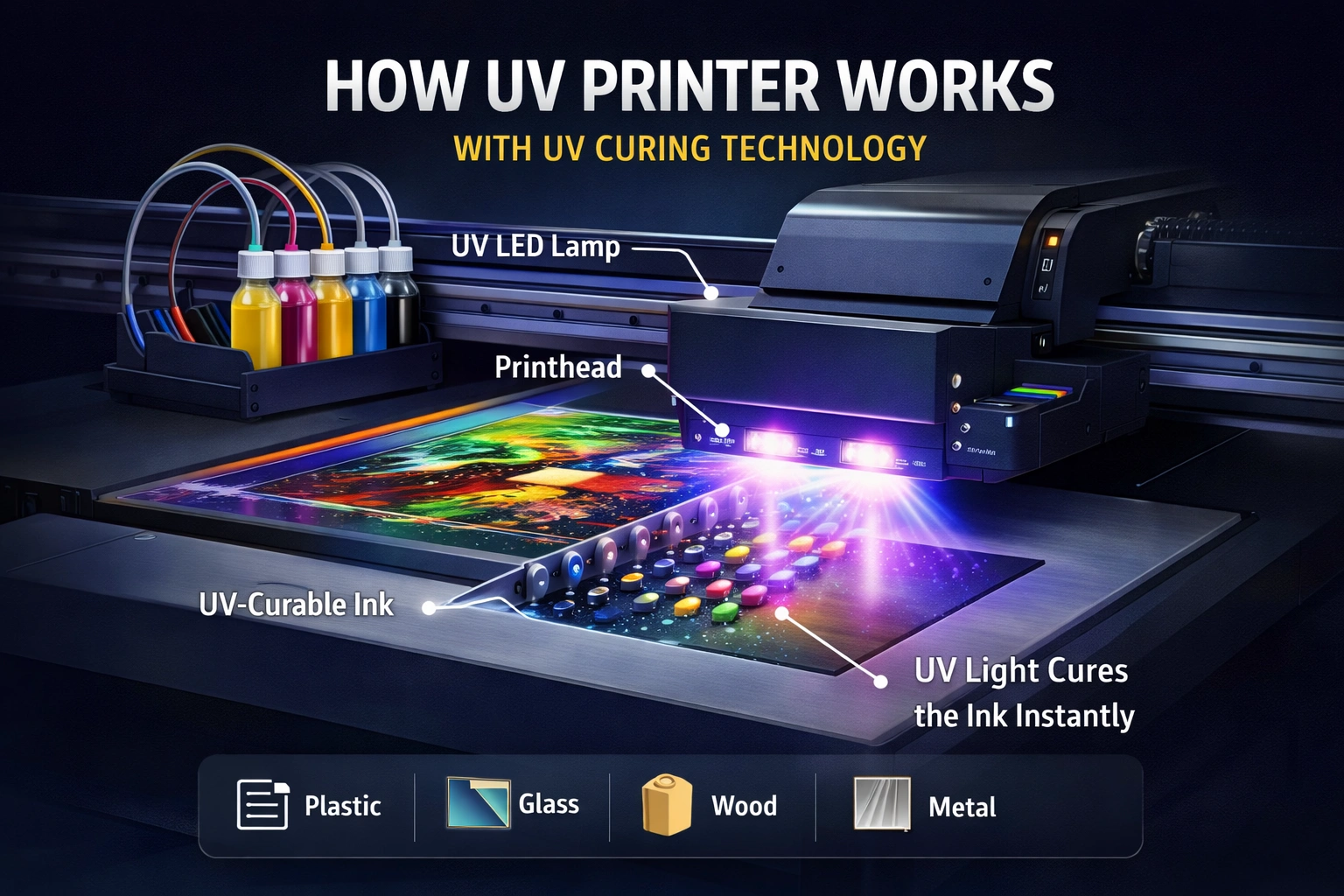
A UV printer is a digital printing machine that uses ultraviolet light to instantly cure ink as it is deposited onto a surface. Unlike traditional solvent or water-based printing, UV ink dries immediately, preventing ink spread and allowing for high-precision printing on both rigid and flexible materials.
How UV Printing Works
The UV printing process involves three main components:
UV-curable ink that remains liquid until exposed to UV light
Print heads that deposit ink with extreme accuracy
UV LED or mercury lamps that instantly cure the ink
Because the ink cures instantly, there is no absorption into the substrate. This results in:
Brighter colors
Sharper edges
Greater durability
Minimal smudging or bleeding
Why UV Printers Are Often Overpriced
UV printers are commonly marketed as “industrial-grade” or “premium technology,” which makes them vulnerable to overpricing. Many sellers rely on buzzwords, complex technical terms, and limited transparency to justify inflated costs.
Common reasons for overpricing include:
Imported machines rebranded as local products
Minor feature upgrades marketed as major innovations
Artificially high “list prices” followed by fake discounts
Bundled services that are unnecessary or overpriced
Understanding the real value behind the machine is the only way to avoid paying more than it is worth.
Key Features That Truly Determine UV Printer Value
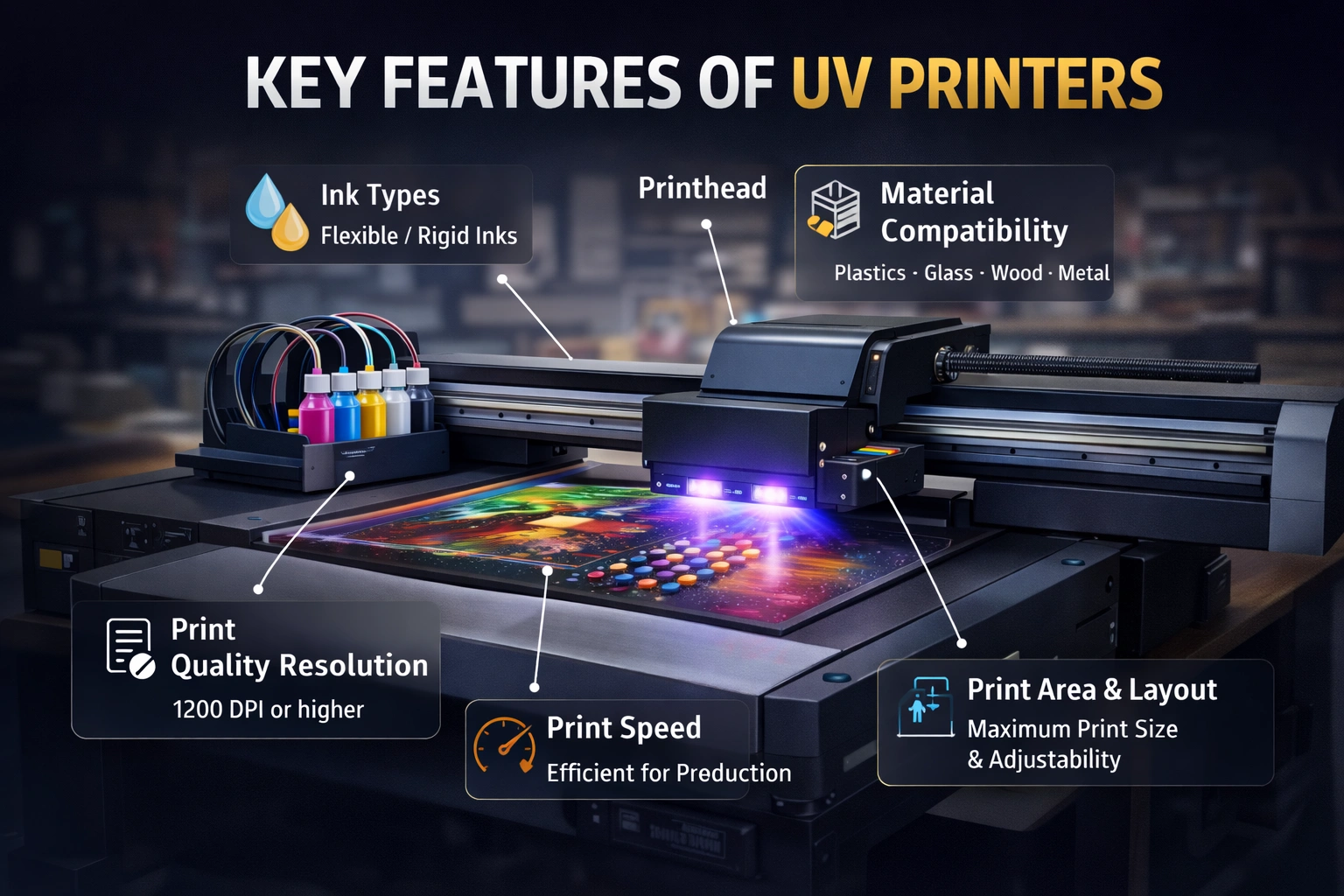
Before comparing prices, you must understand which features actually matter and which are often exaggerated.
1. Print Resolution and Quality
Resolution is usually measured in DPI (dots per inch). While many sellers promote extremely high DPI numbers, practical business applications rarely require more than 1200 DPI.
What truly affects print quality:
Print head brand and condition
Ink stability and curing accuracy
Mechanical precision of the printer
A higher DPI number alone does not guarantee better output.
2. Print Speed vs. Production Speed
Advertised print speed is often measured under ideal conditions that are rarely achievable in real production environments.
Consider:
Actual usable speed at commercial quality
Multi-pass printing requirements
Downtime between jobs
A slightly slower but consistent machine can outperform a “fast” printer that requires frequent maintenance.
3. Material Compatibility
A valuable UV printer should handle a wide range of materials without constant adjustments. Overpriced printers often exaggerate material compatibility without offering reliable performance.
Check for:
Adjustable print height
Stable vacuum bed or clamping system
Ink adhesion performance across substrates
4. Ink System and Consumption
Ink costs play a massive role in long-term expenses. Some printers are intentionally priced low but lock you into expensive proprietary inks.
Evaluate:
Ink consumption per square meter
Availability of third-party ink options
Shelf life and clog resistance
A cheaper machine with expensive ink can become more costly over time.
5. Build Quality and Mechanical Design
The internal structure of the printer affects accuracy, vibration control, and durability.
Signs of solid build quality:
Heavy, rigid metal frame
Linear rails instead of belt-driven systems
Stable carriage movement
Cosmetic design should never justify a higher price.
How to Identify an Overpriced UV Printer
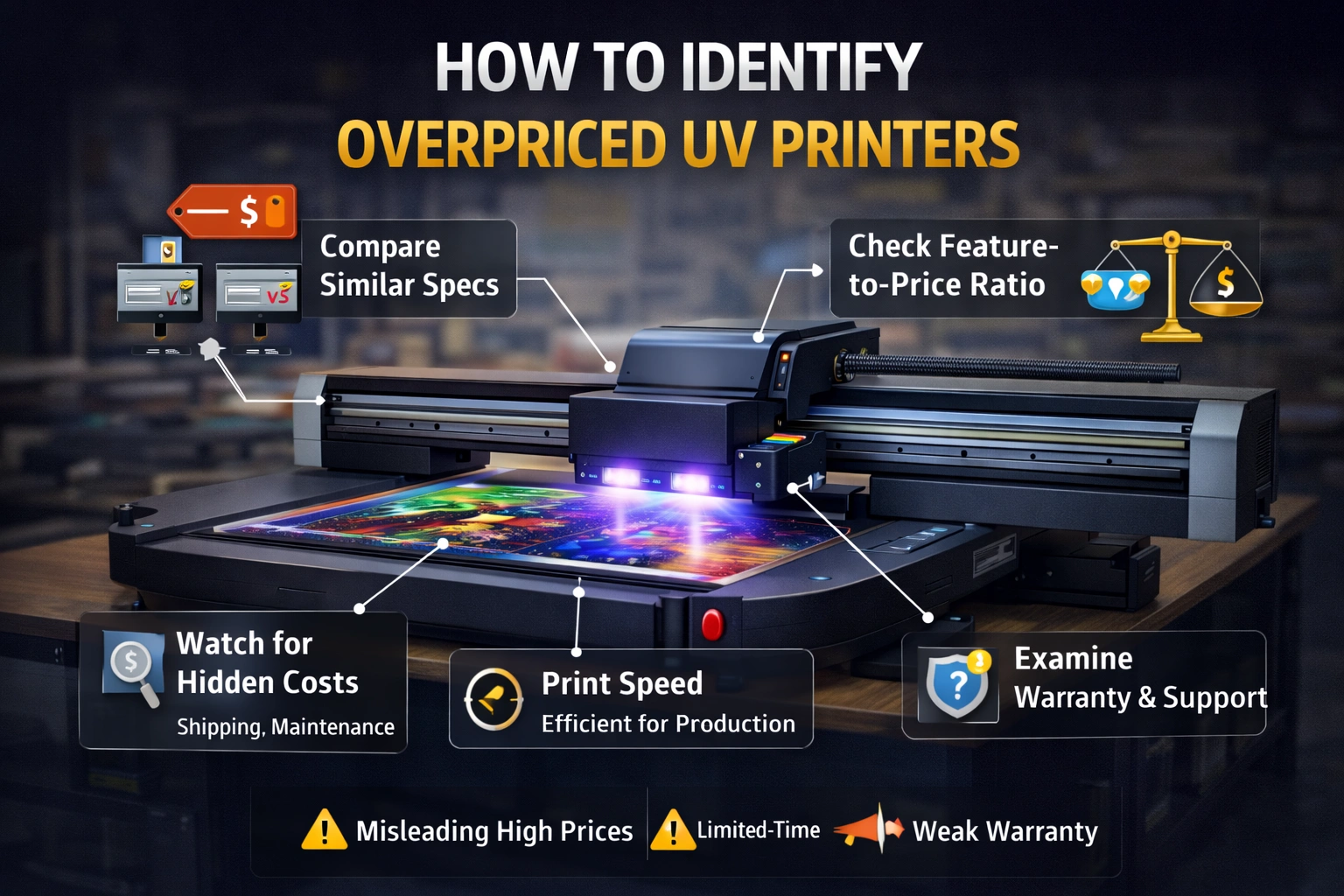
1. Compare Similar Specifications Across Brands
Always compare machines with similar print heads, ink systems, and sizes. If one machine costs significantly more without offering tangible advantages, it is likely overpriced.
Focus on:
Same print head model
Similar bed size
Comparable ink configuration
Marketing language should never replace technical comparison.
2. Analyze the Price-to-Feature Ratio
A higher price should always deliver measurable benefits such as:
Faster real-world output
Lower maintenance frequency
Better warranty coverage
If benefits are vague or unproven, the price is not justified.
3. Watch for Hidden and Post-Purchase Costs
Overpricing often hides beyond the initial purchase price.
Common hidden costs include:
Installation charges
Mandatory training fees
Expensive spare parts
Annual software licensing
Always request a full cost breakdown before committing.
4. Examine Warranty and Support Carefully
A premium-priced printer should offer strong after-sales support.
Check:
Length of warranty on print heads
Response time for service calls
Availability of local technicians
Weak support is a red flag for an overpriced machine.
5. Be Skeptical of “Limited-Time Offers”
Artificial urgency is a common sales tactic.
If a seller claims:
“Price will increase tomorrow”
“Only one unit left”
“Special deal only for today”
Pause, research, and verify independently.
Smart Negotiation Strategies for UV Printer Buyers
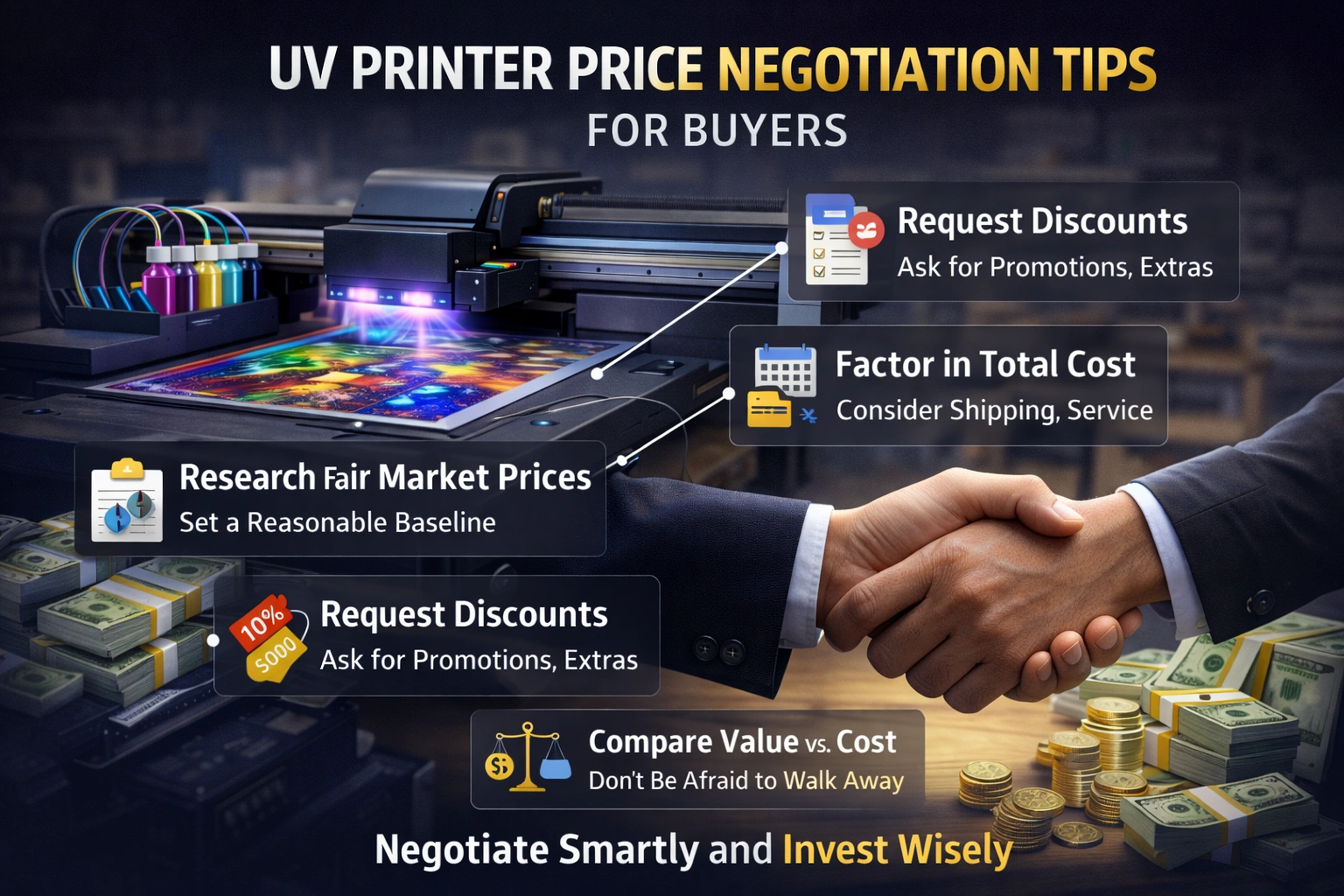
1. Enter Negotiations Fully Prepared
Knowledge is your strongest bargaining tool. Bring:
Competing quotations
Specification comparisons
Market price data
This immediately shifts the power balance in your favor.
2. Use Competitive Pricing as Leverage
Sellers often have flexible margins. Showing proof of lower prices from competitors forces them to reconsider.
Even a small concession can save a significant amount.
3. Negotiate Value, Not Just Price
Instead of only asking for discounts, request:
Free installation
Extra ink supply
Extended warranty
Free spare parts
These additions reduce long-term costs significantly.
4. Time Your Purchase Strategically
Best times to negotiate:
End of financial quarters
Trade show periods
Year-end inventory clearance
Sellers are more motivated to close deals during these times.
5. Be Ready to Walk Away
Walking away is not losing—it is leverage. Many sellers return with better offers once they realize you are serious and informed.
Common Buyer Mistakes That Lead to Overpaying
1. Buying Based on Brand Name Alone
Brand reputation does not always equal value. Many lesser-known machines perform equally well at lower prices.
2. Ignoring Total Cost of Ownership
Initial price is only one part of the investment.
Total cost includes:
Ink
Maintenance
Spare parts
Downtime losses
A cheaper printer with high operating costs can become expensive over time.
3. Skipping Live Demos and Sample Tests
Never buy without testing:
Your own materials
Your own designs
Real-world production speed
Marketing samples are often optimized to look perfect.
4. Rushing the Decision
A UV printer is a long-term investment. Rushed decisions usually result in regret, additional expenses, or underutilized equipment.
How to Calculate True ROI Before Buying
To evaluate whether a UV printer is worth its price, calculate:
Monthly production capacity
Average profit per print
Expected maintenance costs
Break-even period
A properly priced machine should help you recover your investment within a reasonable timeframe.
Final Thoughts
Buying a UV printer is not just about acquiring a machine—it is about investing in your business’s future. Overpriced printers often look attractive on paper but fail to deliver proportional value in real-world use.
By understanding core features, researching market prices, identifying hidden costs, and negotiating strategically, you can avoid overpaying and secure a machine that truly supports your growth goals.
A well-informed buyer always wins. Take your time, ask the right questions, and never let marketing pressure dictate your investment decisions.
explore our high-quality UV-DTF printers here.
Frequently Asked Questions (FAQ)
What makes a UV printer expensive?
Print head type, ink system, build quality, and support services mainly influence pricing.
Can UV printer prices be negotiated?
Yes. Most sellers have flexible margins, especially when you present competitive data.
Is a higher DPI always better?
No. Print head quality and ink curing matter more than raw DPI numbers.
Are cheap UV printers risky?
They can be if support, spare parts, and ink quality are unreliable. Always assess total cost.
Should I buy during promotions?
Promotions can help, but only if the base price reflects real market value.