

 HOME
HOME PRODUCT CENTER
 ABOUT US
 DOWNLOAD CENTER
 SUPPORT CENTER
 SUBSCRIBE
 BLOG
BLOGVariable Data Printing with UV Technology
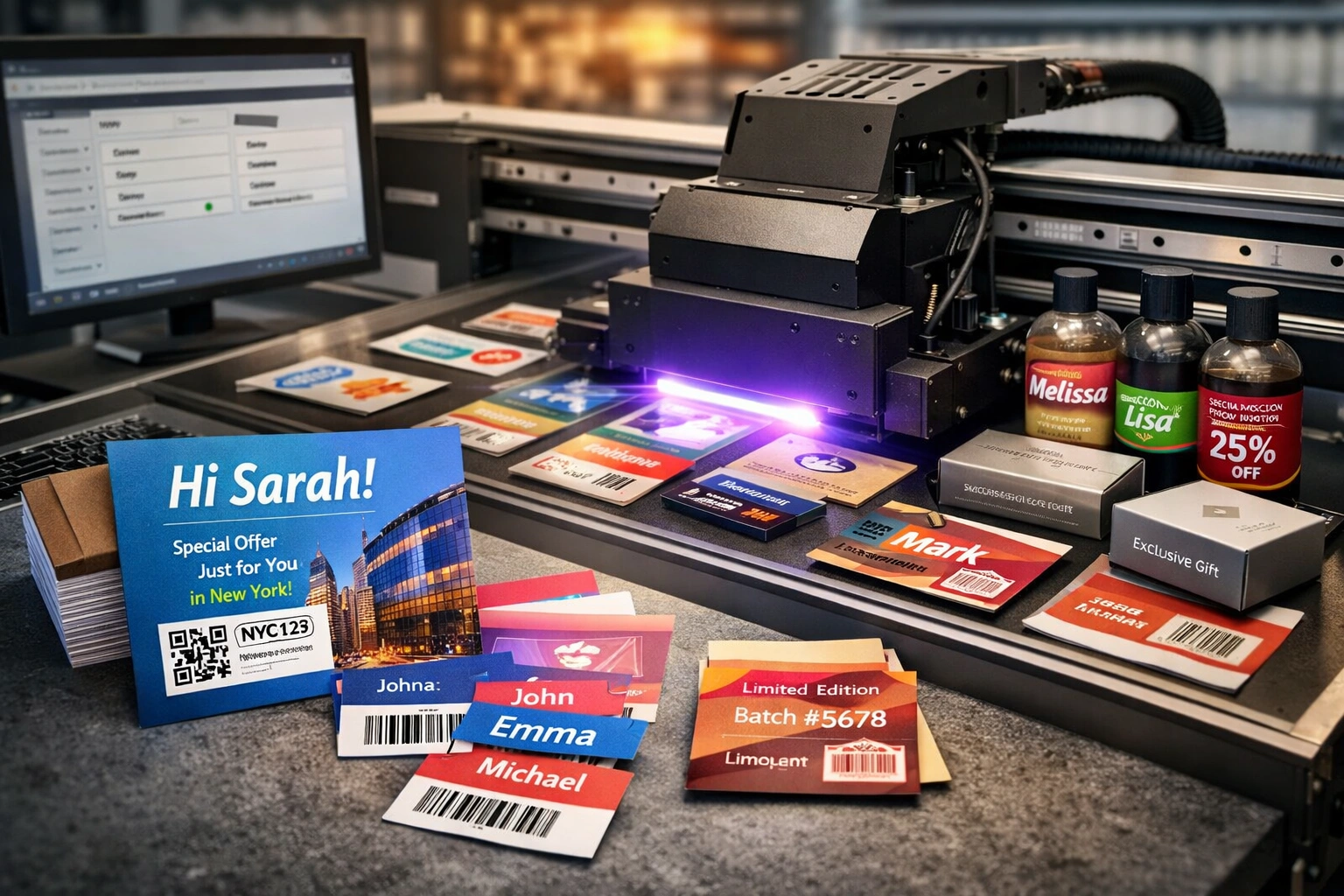
In today’s highly competitive and fast-paced marketing environment, businesses are constantly searching for smarter ways to communicate with their audiences. Generic, one-size-fits-all print materials are no longer enough to capture attention or drive meaningful engagement. This is where Variable Data Printing (VDP) has become a powerful solution.
Variable Data Printing allows every printed piece to be unique, customized, and directly relevant to the recipient. When this advanced personalization capability is combined with UV printing technology, the result is a highly efficient, visually striking, and scalable printing solution that delivers measurable marketing impact.
This article explores Variable Data Printing in depth, explains how it works with UV printers, and highlights why this combination is transforming modern printing and marketing strategies. From technical fundamentals to real-world applications, benefits, challenges, and future trends, this comprehensive guide is designed to help businesses understand and adopt VDP using UV printing effectively.
What Is Variable Data Printing (VDP)?
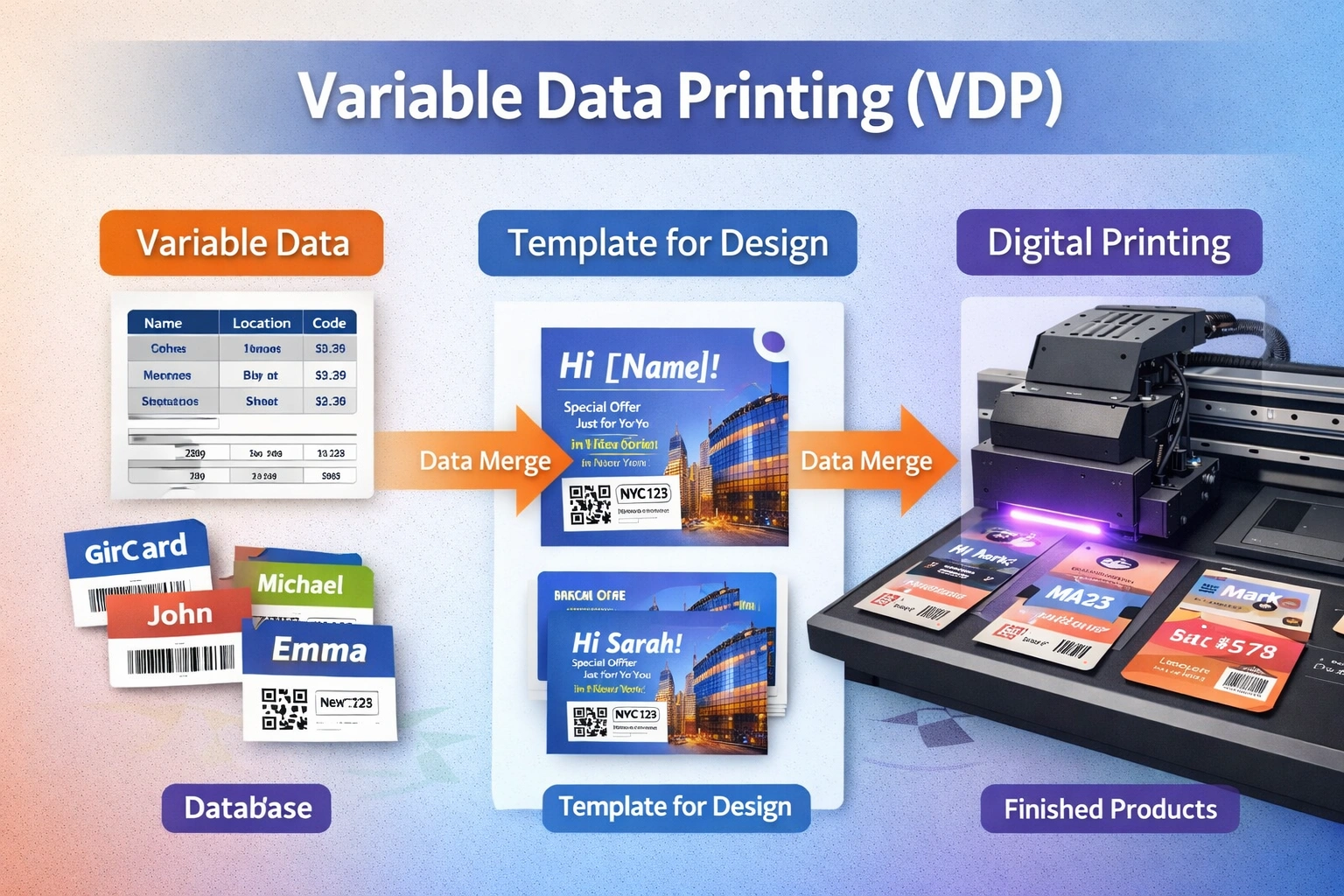
Variable Data Printing is a digital printing process that enables changes to text, graphics, images, colors, or layouts from one printed piece to the next without stopping or slowing down the printing process. Unlike traditional printing methods, where every copy is identical, VDP allows personalization at scale.
For example, a single print run can include:
Different names on each piece
Unique addresses or locations
Personalized offers or discount codes
Customized images based on demographics
Individual QR codes or serial numbers
This capability is achieved by connecting design templates with databases containing customer or campaign-specific information. The printer dynamically pulls data for each impression, ensuring that every output is unique while maintaining consistent quality.
Why Personalization Matters in Modern Marketing
Consumers today expect brands to understand their preferences, needs, and behaviors. Personalized communication is no longer optional—it is a competitive necessity.
Increased Attention and Engagement
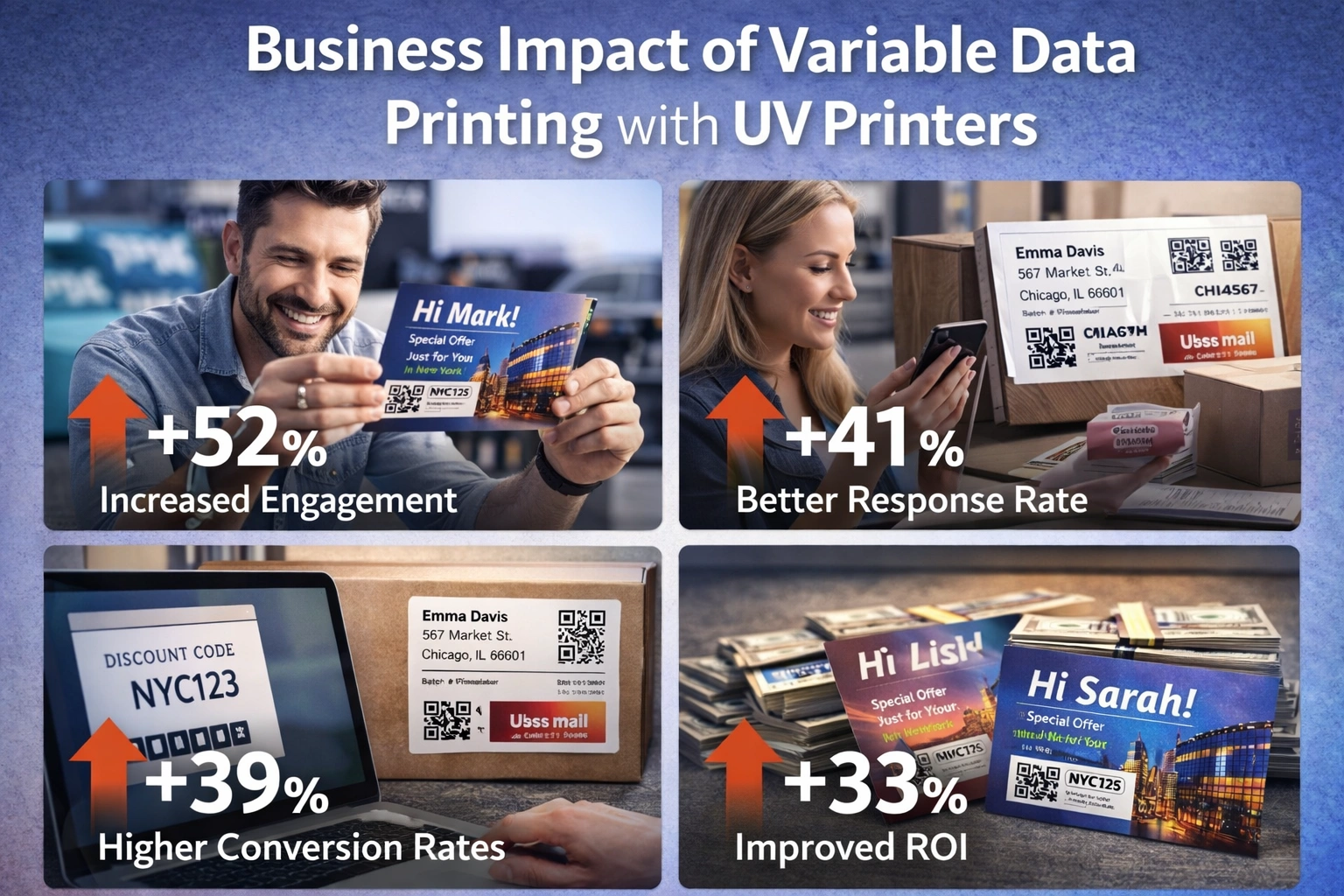
Personalized print materials are far more likely to be noticed and read. A piece that includes a recipient’s name or relevant message immediately feels more valuable and less like mass advertising.
Higher Conversion Rates
Studies consistently show that personalized marketing drives higher response and conversion rates. When offers are relevant to the recipient, the likelihood of action increases significantly.
Stronger Brand Relationships
VDP enables brands to communicate in a more human and targeted way. This builds trust, improves brand recall, and encourages long-term loyalty.
Reduced Marketing Waste
Instead of printing thousands of generic pieces, businesses can tailor their messaging and print only what is needed, improving efficiency and ROI.
How Variable Data Printing Works
VDP relies on a combination of software, data management, and digital printing technology. The process typically involves the following steps:
1. Data Collection
Businesses gather variable information such as names, addresses, purchase history, preferences, or campaign-specific details. This data is usually stored in spreadsheets, CRM systems, or databases.
2. Template Design
A base design template is created using professional design software. Fixed elements like logos, branding, and layout remain constant, while variable fields are defined for dynamic content.
3. Data Integration
The variable fields in the design are linked to the data source. Each field corresponds to specific data points such as name, location, or unique code.
4. Print Execution
The printer processes each record individually, replacing variable fields in real time while maintaining consistent speed and quality.
This entire workflow requires precision, speed, and reliability—qualities that make UV printers particularly well suited for VDP.
Understanding UV Printing Technology
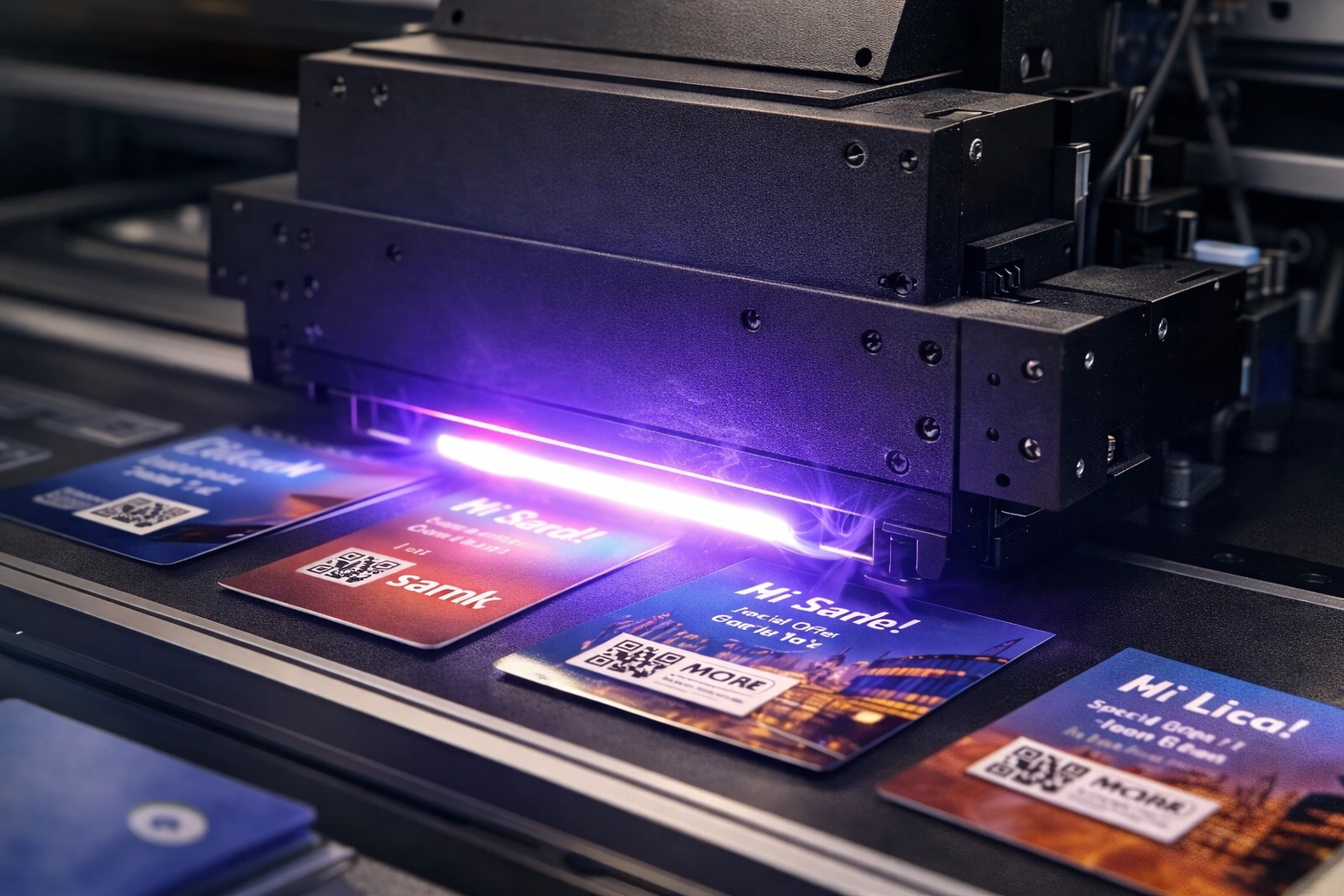
UV printing is a digital printing method that uses ultraviolet light to instantly cure or dry ink as it is printed. Unlike conventional inks that dry through evaporation or absorption, UV inks harden immediately when exposed to UV light.
Key Characteristics of UV Printing
Instant ink curing
Sharp, high-resolution output
Excellent color vibrancy
Strong adhesion on diverse materials
Minimal ink spread or dot gain
Because the ink cures instantly, prints can be handled, finished, or packaged immediately after printing.
Why UV Printers Are Ideal for Variable Data Printing
The combination of VDP and UV printing offers unmatched advantages for businesses seeking speed, quality, and flexibility.
1. High-Speed Production
Instant curing eliminates drying time, allowing faster turnaround even for large, data-heavy print jobs. This is especially important for time-sensitive marketing campaigns.
2. Consistent Print Quality
UV printers maintain uniform color accuracy and sharp detail across every piece, ensuring that personalization does not compromise visual consistency.
3. Wide Substrate Compatibility
UV printers can print on:
Paper and cardstock
Plastics and acrylic
Metal surfaces
Wood and MDF
Glass and ceramics
This opens up creative opportunities for personalized products, signage, packaging, and promotional materials.
4. Reduced Waste and Setup Costs
Unlike traditional printing, UV printing requires minimal setup and produces fewer test prints. This aligns perfectly with short-run and variable print jobs.
5. Environmentally Responsible Printing
UV inks typically produce fewer volatile organic compounds and reduce overall material waste, supporting sustainable printing practices.
Key Applications of VDP Using UV Printers
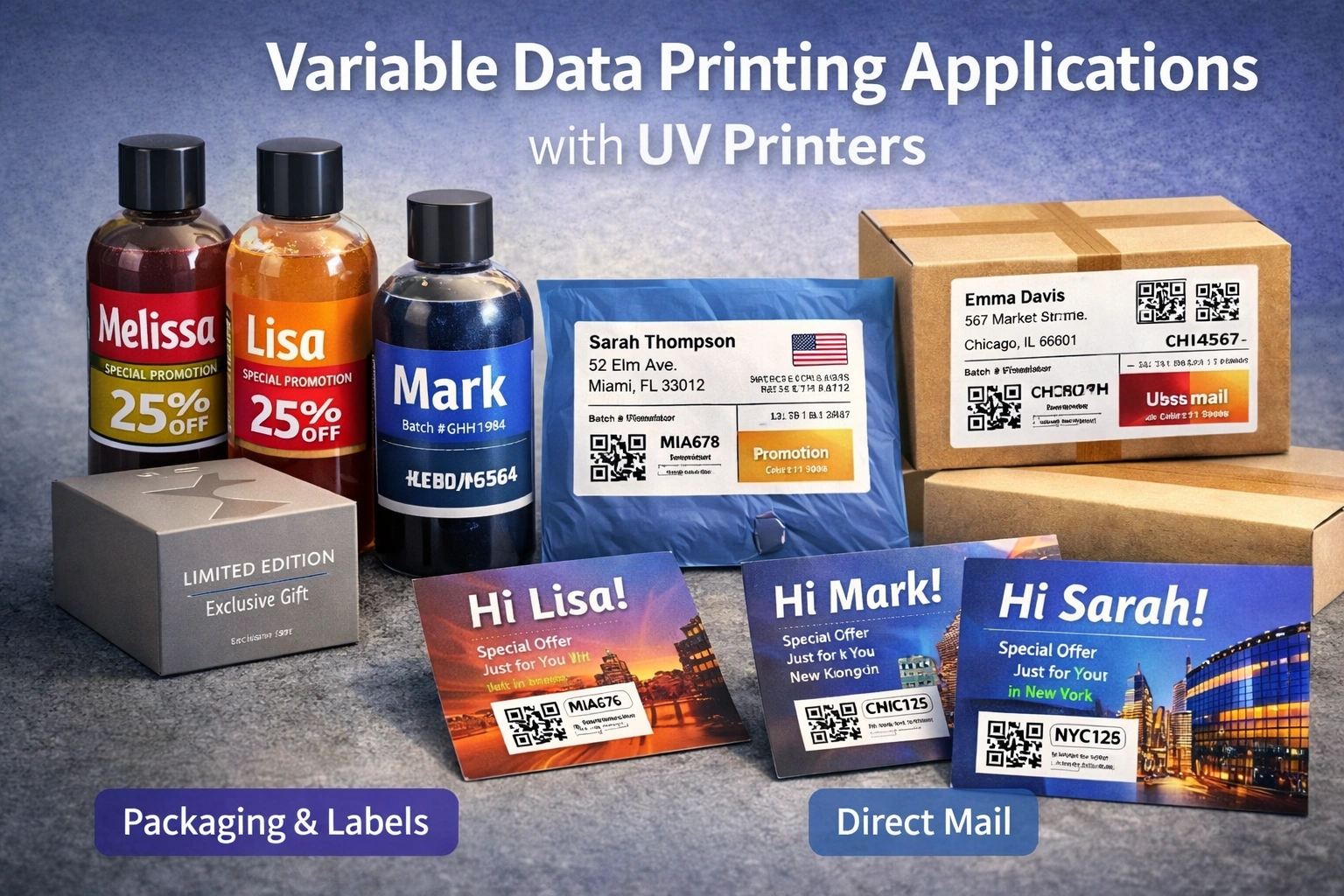
Direct Mail Marketing
Personalized direct mail remains one of the most effective marketing channels. VDP enables customized messaging, offers, and imagery that directly address the recipient, significantly increasing response rates.
Promotional Materials
Brochures, flyers, postcards, and catalogs can be tailored for different customer segments, industries, or geographic regions within a single print run.
Labels and Packaging
VDP allows variable information such as batch numbers, expiration dates, QR codes, and promotional messages on packaging and labels without disrupting production flow.
Retail and Point-of-Sale Displays
Retail signage can be customized for locations, campaigns, or customer demographics while maintaining brand consistency.
Event and Corporate Printing
Personalized invitations, badges, signage, and branded materials enhance professionalism and attendee experience at events, exhibitions, and conferences.
Benefits of Combining VDP with UV Printing
Improved customer engagement
Higher marketing ROI
Faster turnaround times
Superior visual quality
Greater creative flexibility
Efficient short-run production
Reduced operational waste
This combination enables businesses to deliver premium, personalized print solutions without sacrificing speed or scalability.
Challenges and Considerations
While the benefits are significant, businesses should consider certain factors before adopting VDP with UV printing.
Initial Investment
UV printing equipment and professional software can require a higher upfront cost. However, long-term efficiency and increased demand often justify the investment.
Data Accuracy and Management
VDP depends heavily on accurate data. Errors in databases can lead to incorrect personalization, making data validation essential.
Technical Expertise
Staff must be trained to manage variable data workflows, software integration, and printer operation effectively.
Software Compatibility
Choosing reliable software that integrates seamlessly with UV printers is critical for smooth production.
Best Practices for Successful VDP with UV Printing
Maintain clean, well-organized databases
Test variable templates thoroughly
Start with small campaigns before scaling
Invest in staff training
Monitor print quality and consistency regularly
Align personalization with clear marketing objectives
Future Trends in Variable Data Printing
The future of VDP lies in deeper personalization and smarter data integration. Emerging trends include:
AI-driven content customization
Personalized QR and augmented reality experiences
On-demand localized printing
Increased use of sustainable materials
As consumer expectations evolve, VDP combined with UV printing will continue to play a critical role in high-impact marketing communication.
Conclusion
Variable Data Printing powered by UV printing technology represents a major shift in how businesses approach print marketing. By enabling mass customization without sacrificing speed or quality, this combination delivers stronger engagement, better brand recall, and higher returns on investment.
From direct mail and packaging to retail displays and event materials, VDP with UV printing offers unmatched flexibility and efficiency. Businesses that embrace this technology gain a competitive edge in an increasingly personalized marketplace.
As printing and data technologies continue to advance, investing in Variable Data Printing with UV technology is not just an upgrade—it is a strategic move toward smarter, more effective communication.
Frequently Asked Questions (FAQ)
What is Variable Data Printing?
Variable Data Printing allows each printed piece to include unique text, images, or information, enabling personalized communication at scale.
Why is UV printing suitable for VDP?
UV printing offers instant ink curing, high print quality, material versatility, and efficient short-run production, making it ideal for variable data workflows.
Which industries benefit most from VDP with UV printing?
Marketing, retail, packaging, events, manufacturing, and direct mail industries benefit significantly from personalized UV-printed materials.
Is VDP expensive to implement?
While initial investment can be higher, long-term benefits such as reduced waste, higher engagement, and better ROI often outweigh the costs.
How can businesses get started with VDP using UV printers?
Start by identifying personalization goals, organizing data, selecting compatible software, training staff, and investing in a reliable UV printing system.