

 HOME
HOME PRODUCT CENTER
 ABOUT US
 DOWNLOAD CENTER
 SUPPORT CENTER
 SUBSCRIBE
 BLOG
BLOGUV Printing on Cylindrical and Irregular Objects
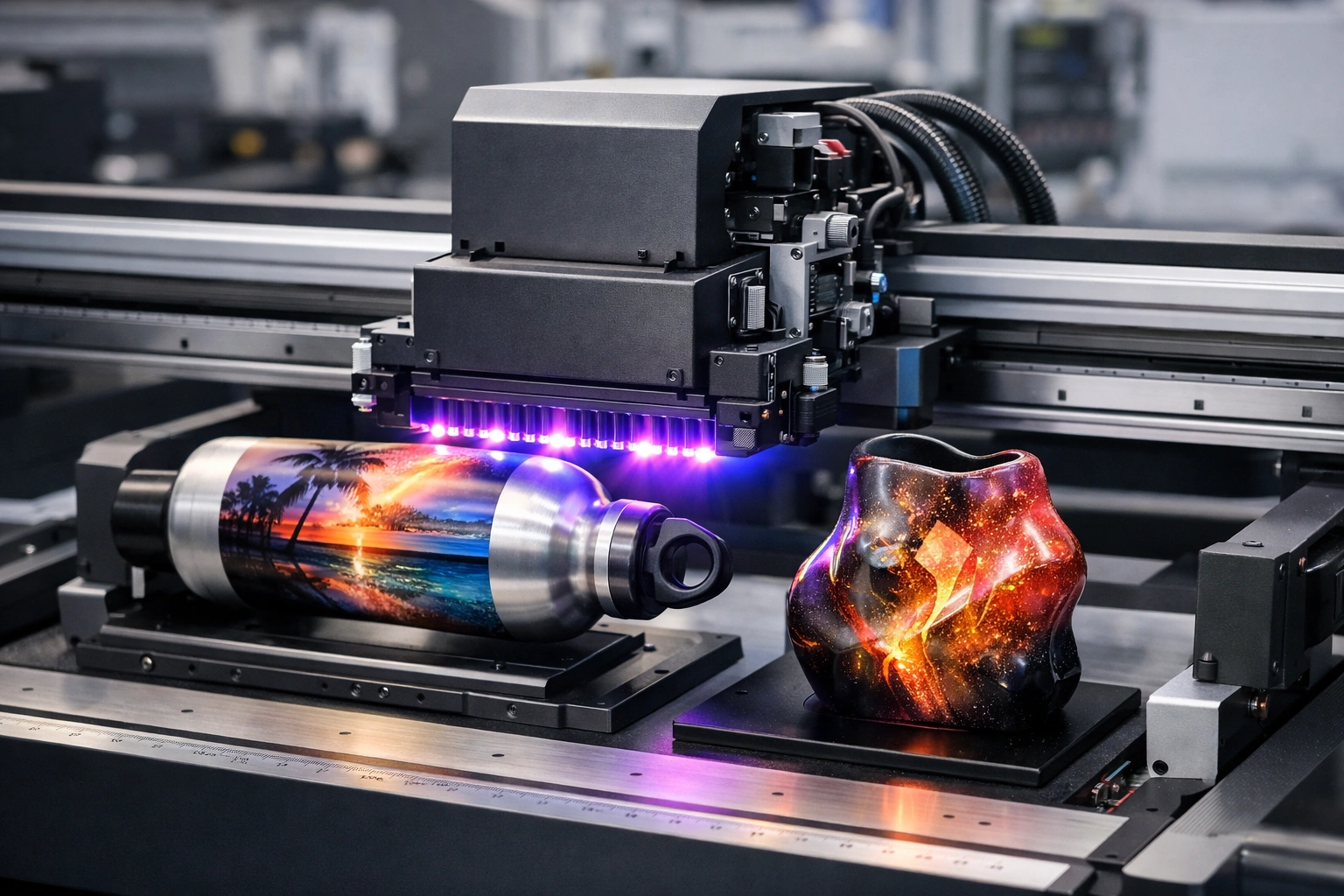
UV printing has rapidly transformed the modern printing industry by breaking the limitations of traditional flat-surface printing. Today, businesses are no longer restricted to paper, boards, or flat sheets. With advanced UV printing technology, it is now possible to print directly on cylindrical and irregular-shaped objects with exceptional precision, durability, and color accuracy.
From bottles and tubes to curved promotional items and uniquely shaped industrial components, UV printing opens new creative and commercial possibilities. As demand grows for customized products, premium branding, and short-run production, understanding how UV printing works on non-flat surfaces has become increasingly important for manufacturers, marketers, and creative professionals.
This article provides an in-depth look at UV printing on cylindrical and irregular objects, covering how the technology works, its benefits, applications, challenges, and future trends. If you are considering UV printing for your business or want to explore its potential, this guide will give you a complete and practical understanding.
What Is UV Printing?
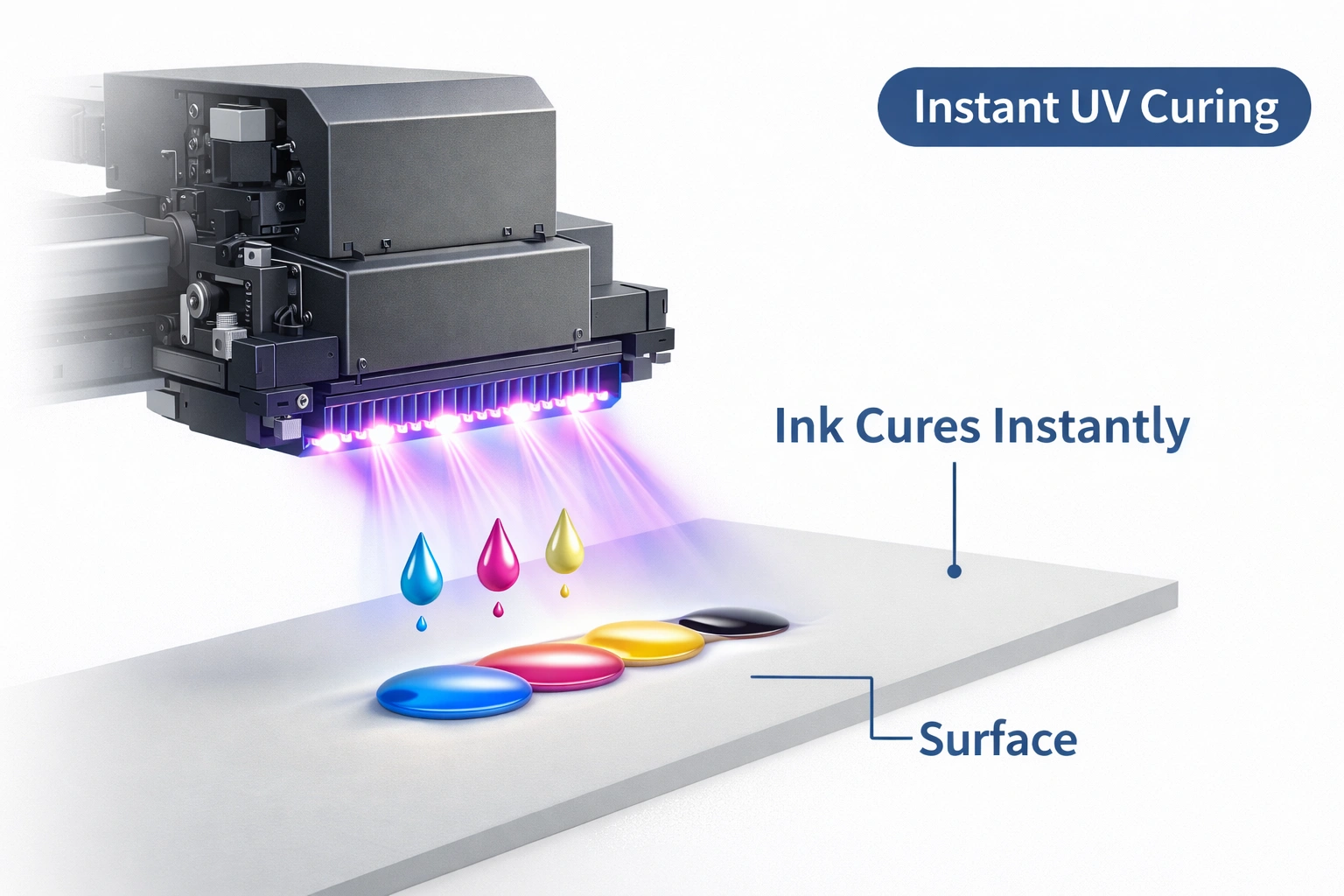
UV printing is a digital printing process that uses ultraviolet light to instantly cure or harden specially formulated inks as they are deposited onto a surface. Unlike conventional solvent or water-based inks, UV inks do not evaporate or soak into the material. Instead, they remain on the surface and solidify immediately when exposed to UV light.
This instant curing process results in sharper images, richer colors, and stronger adhesion. Because the ink does not spread or absorb into the material, UV printing delivers consistent, high-resolution output across a wide range of substrates.
When applied to cylindrical and irregular objects, UV printing relies on precise motion control, specialized fixtures, and sometimes rotary attachments to ensure uniform ink placement on curved or uneven surfaces.
How UV Printing Works on Cylindrical and Irregular Shapes
Printing on curved or uneven objects requires more advanced handling than flatbed printing. UV printers designed for such applications use one or more of the following mechanisms:
Rotary attachments that rotate cylindrical objects like bottles, tubes, or jars while the print head moves along the surface.
Custom jigs or fixtures that securely hold irregular items in place to prevent movement during printing.
Adjustable print heads that maintain a consistent distance from uneven surfaces.
Multi-pass printing techniques to ensure even ink coverage across curves and edges.
These systems allow the printer to maintain accuracy and alignment, ensuring that designs wrap smoothly around cylindrical objects or adapt to irregular contours without distortion.
Key Benefits of UV Printing on Cylindrical and Irregular Objects
1. Exceptional Versatility
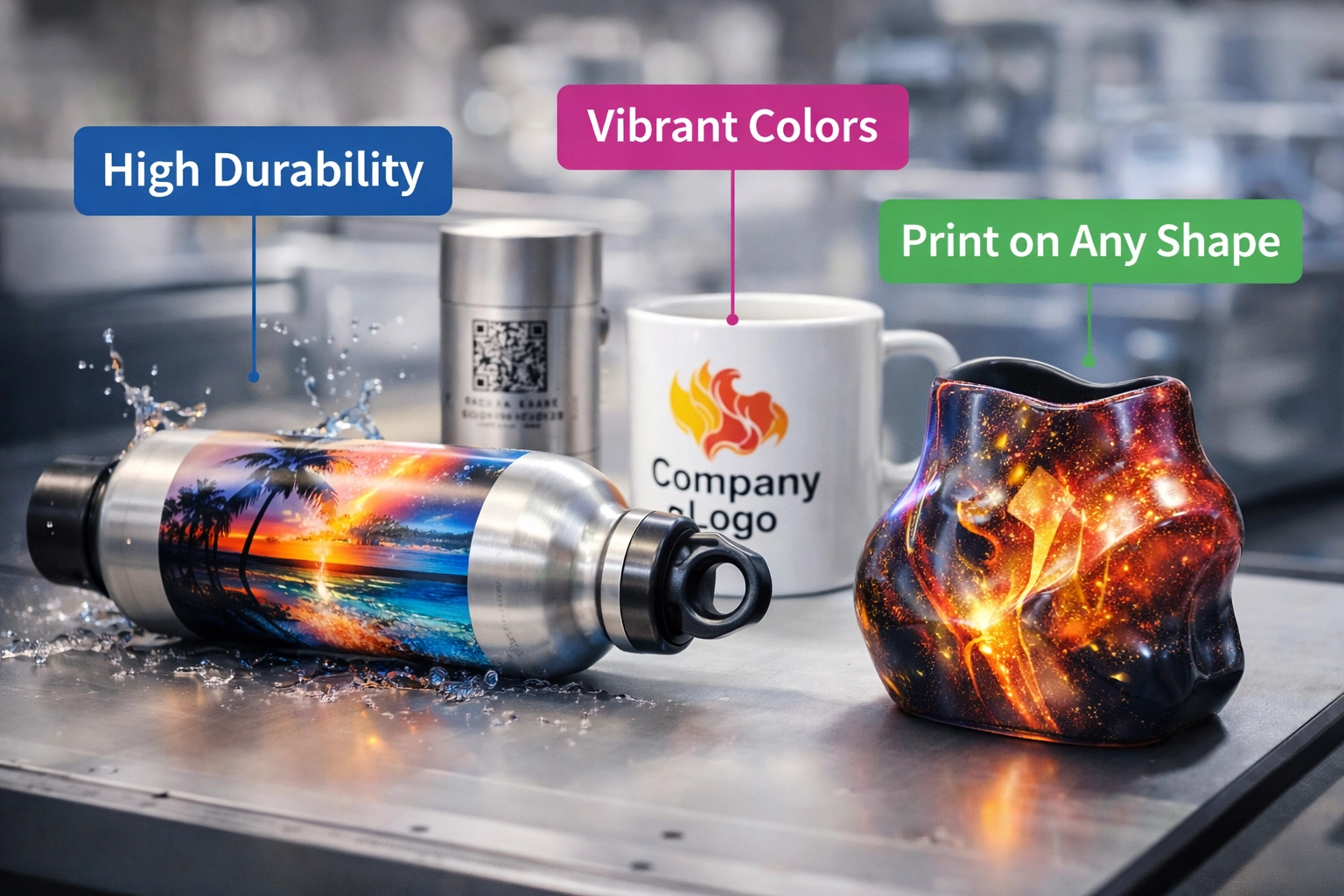
One of the biggest advantages of UV printing is its ability to handle a wide range of shapes, sizes, and materials. Cylindrical bottles, tapered containers, curved promotional items, and asymmetrical industrial components can all be printed directly without labels or transfers.
This versatility allows businesses to expand their product offerings and enter new markets without investing in multiple printing technologies.
2. High-Resolution and Vibrant Output
UV inks cure instantly, preventing ink spread and maintaining sharp edges and fine details. This makes UV printing ideal for complex designs, small text, gradients, and photographic images, even on curved surfaces.
The result is a premium finish that enhances product appearance and brand perception.
3. Long-Lasting Durability
UV-printed designs are highly resistant to:
Scratches and abrasion
Moisture and water exposure
Chemicals and cleaning agents
UV light and fading
This durability is especially important for products that are handled frequently, stored outdoors, or exposed to harsh environments.
4. Eco-Friendly Printing Process
UV printing is considered more environmentally responsible compared to many traditional printing methods. Since UV inks do not release solvents into the air, they produce very low levels of volatile organic compounds (VOCs).
Additionally, instant curing reduces energy consumption by eliminating long drying processes and minimizing material waste.
5. Cost-Effective Customization
UV printing supports short runs and on-demand production without the need for plates or extensive setup. This makes it ideal for:
Personalized products
Limited-edition items
Prototypes and samples
Variable data printing
Businesses can easily customize designs for different clients or campaigns without increasing production costs significantly.
Applications of UV Printing on Cylindrical and Irregular Objects
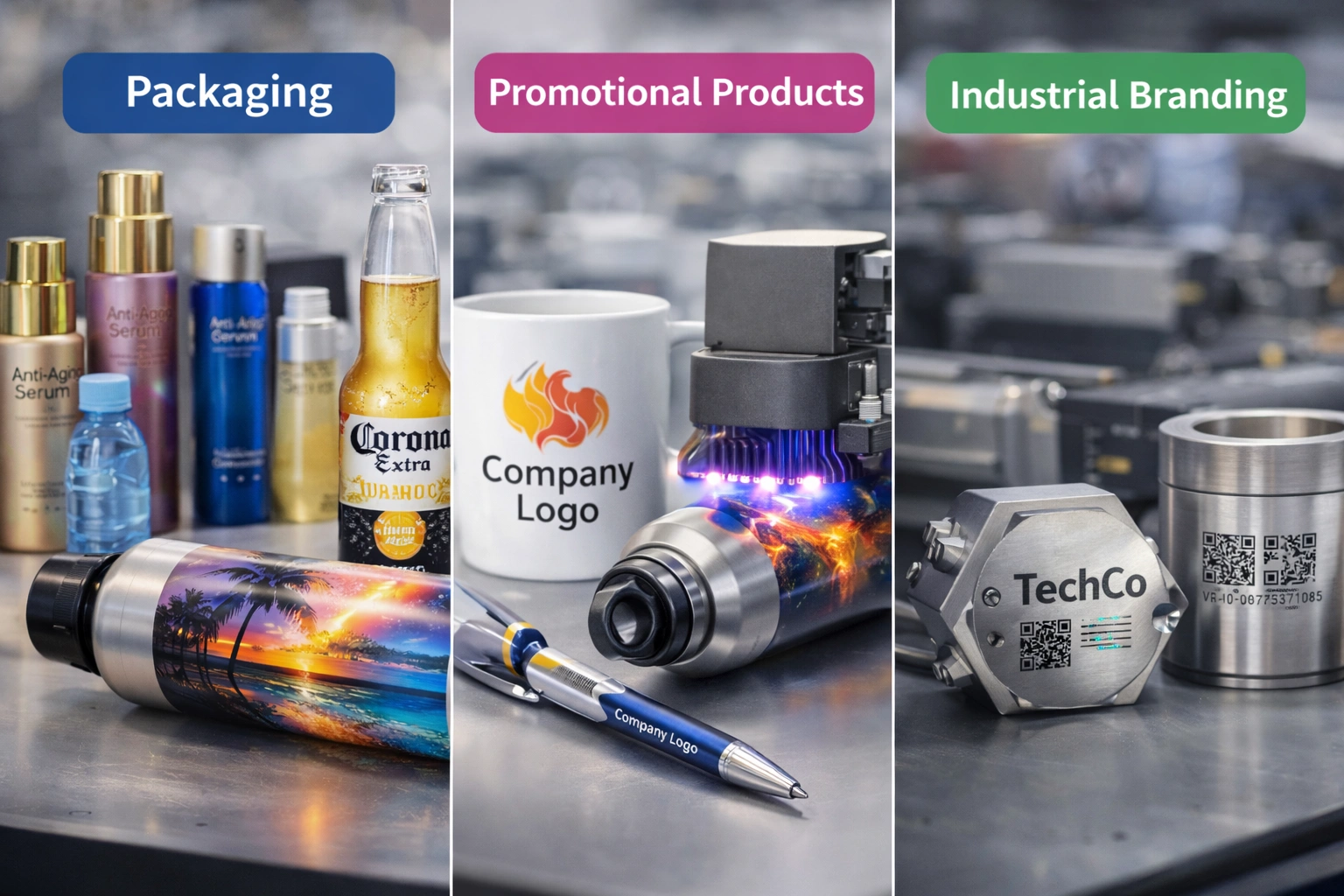
1. Packaging Industry
UV printing is widely used in packaging, especially for bottles, jars, and containers in industries such as:
Beverages
Cosmetics and skincare
Pharmaceuticals
Food packaging
Direct UV printing eliminates the need for labels, resulting in a cleaner, more premium look while reducing additional material costs.
2. Promotional Products and Corporate Gifts
Promotional items like mugs, tumblers, pens, flasks, and custom gifts benefit greatly from UV printing. The ability to print directly on curved surfaces ensures long-lasting branding that does not peel or fade.
This makes UV-printed promotional products more attractive and effective for marketing campaigns.
3. Product Branding and Identification
UV printing is ideal for adding logos, serial numbers, QR codes, and barcodes directly onto products. This is commonly used in:
Electronics
Automotive parts
Industrial tools
Consumer goods
The durability of UV prints ensures that important identification information remains readable throughout the product’s lifecycle.
4. Decorative and Artistic Objects
Artists and designers use UV printing to personalize decorative items such as:
Glass bottles and vases
Sculptures and art pieces
Home décor products
UV printing enables creative freedom by allowing detailed artwork to be applied directly to unconventional shapes and materials.
5. Industrial and Manufacturing Applications
In industrial settings, UV printing is used for marking components, control panels, and equipment parts. Its resistance to chemicals and abrasion makes it suitable for harsh operational environments.
Advanced Features of UV Printing Technology
Instant Curing and Faster Production
Because UV ink cures immediately, products can be handled, packed, or shipped as soon as printing is complete. This significantly reduces turnaround time and improves production efficiency.
Multi-Material Compatibility
UV printers can print on materials such as:
Glass
Plastic
Metal
Wood
Acrylic
Ceramic
This flexibility allows businesses to serve multiple industries using a single printing solution.
Direct-to-Object Printing
UV printing eliminates the need for intermediary steps such as labeling, lamination, or heat transfer. This reduces labor, material costs, and production complexity.
Textured and Layered Effects
UV printing supports layered ink application, allowing for raised textures, embossed effects, and tactile finishes. These features add visual and physical depth to designs, increasing perceived product value.
Challenges of UV Printing on Non-Flat Surfaces
1. Setup and Alignment Complexity
Printing on cylindrical and irregular objects requires precise alignment. Improper setup can lead to misprints or uneven ink distribution. Skilled operators and proper fixtures are essential for consistent results.
2. Ink Adhesion on Different Materials
Some materials may require surface treatment or primers to ensure strong ink adhesion. Without proper preparation, prints may peel or wear over time.
3. Slower Printing Speeds
Compared to flatbed printing, printing on irregular surfaces can take longer due to rotation, multiple passes, and careful calibration.
4. Equipment Investment
High-quality UV printers capable of handling cylindrical and irregular objects may require higher upfront investment. However, the long-term return on investment is often favorable due to reduced operating costs and expanded capabilities.
Best Practices for Successful UV Printing
Use proper fixtures or rotary attachments for stability
Clean and prepare surfaces before printing
Test ink adhesion on new materials
Optimize print settings for curved surfaces
Perform regular maintenance and calibration
Following these practices ensures consistent quality and minimizes production issues.
Future Trends in UV Printing
Automation and Smart Technology
Future UV printers are expected to integrate automation, AI-based calibration, and smart monitoring systems to improve accuracy and reduce operator dependency.
More Sustainable Ink Formulations
Manufacturers are developing UV inks with even lower environmental impact, improved flexibility, and enhanced adhesion across more materials.
Growing Demand for Personalization
As consumers increasingly demand customized products, UV printing will continue to play a major role in small-batch and personalized manufacturing.
Expansion into New Industries
UV printing is expected to expand further into healthcare, electronics, and industrial manufacturing as technology continues to advance.
Conclusion
UV printing on cylindrical and irregular-shaped objects has redefined what is possible in modern printing. Its ability to deliver high-quality, durable, and vibrant prints on complex surfaces makes it an invaluable tool for businesses across industries.
From packaging and branding to decorative art and industrial marking, UV printing offers unmatched versatility and efficiency. While challenges exist, advancements in technology continue to make the process more accessible and reliable.
For businesses seeking innovation, customization, and premium output, UV printing provides a powerful solution that meets today’s market demands and prepares for future growth.explore our high-quality UV printers here.
Frequently Asked Questions (FAQ)
What materials can be printed using UV printing?
UV printing works on glass, plastic, metal, wood, acrylic, ceramic, and many other materials.
Is UV printing suitable for small batch production?
Yes, UV printing is ideal for small runs and personalized products due to minimal setup requirements.
How durable are UV prints on curved surfaces?
UV prints are highly durable and resistant to scratches, water, chemicals, and fading.
Is UV printing environmentally friendly?
Compared to traditional methods, UV printing produces fewer VOCs and uses energy-efficient curing.